Loreful
HomeDiscover
Search series, authors…⌘K
Loreful

Reading orders for SF/F series and shared universes — with your place kept in every one.

Explore

UniversesSeriesWorksAuthorsAtlas

Help

FAQAboutSite map

Account & legal

Sign inCreate accountPrivacyTerms

Data

Built on ISFDB, Wikipedia, Wikidata and Open Library. Curated reading orders carry their reasoning on the page; the rest follow publication order. Data sources & licenses

© Loreful · data: ISFDB · CC BY

More like Bone Walker

anchored on:historical mysterynorth america

but

Mood

The mood the book leaves you in.

  • The reading experience is propelled by journeys, exploration, and physical risk; excitement and forward momentum dominate over dread or introspection.
  • Joy and loss are deliberately mixed; the resolution grants characters something real while taking something else away, leaving warmth and sorrow together.
  • The book demands work from the reader — dense prose, difficult structure, unfamiliar ideas, or morally uncomfortable material — as part of its intended effect.
  • Grim events, cruelty, or despair dominate the atmosphere, and the book does not soften them with comfort or comic relief.
  • The atmosphere is quietly unsettling — wrongness, unease, and the uncanny pervade the book without necessarily escalating into overt horror.
  • The book is built to move the reader; character feeling is foregrounded and major scenes aim at a strong emotional response.
  • Humor is a primary aim and the prose plays for laughs — comic situations, wit, or dialogue produce sustained comedy, not occasional levity.
  • The book insists that things can improve; effort and decency are shown to matter, and the arc bends toward better outcomes even through hardship.
  • The book teaches as it goes — real facts, history, science, or craft are conveyed in enough depth that learning is part of the reading experience.
  • The book is designed to uplift and motivate, presenting perseverance or achievement in a way that invites the reader to aspire or act.
  • The overall register is cheerful and easygoing; stakes are kept gentle and the book avoids dwelling on pain or dread.
  • Withheld information drives the experience; the book sustains enigmas and secrets the reader wants resolved, whatever its genre.
  • The book is contemplative and inward-looking, giving more weight to thought, memory, and meaning than to external events.
  • The book works as comfort reading — low tension, a soothing pace, and an atmosphere the reader can unwind in.
  • Grief, loss, or melancholy set the dominant register, and the book lets sorrow stand rather than resolving it into comfort.
  • Sustained suspense is the point; the book keeps the reader braced for what happens next through danger, pressure, or impending revelation.
  • Playful invention and charm define the register — fanciful conceits, light absurdity, and a narration that delights in its own oddity.

About

What the story runs on.

  • Stories in which extraterrestrial beings are central — as characters, cultures, or the object of the plot.
  • Stories about minds with paranormal abilities — telepathy, telekinesis, precognition, empathy — and how societies handle those who have them.
  • Stories structured as a quest — a journey undertaken to find, deliver, or destroy something of great import.
  • Stories in which staying alive against nature, catastrophe, or scarcity is the central problem.
  • Stories of lovers kept apart by law, family, faith, or station, where the obstacle to love is the plot.
  • Stories of growing up — a young protagonist crossing from childhood into adult knowledge and responsibility.
  • Stories about who a character truly is — self-discovery, doubled lives, and the search for a self.
  • Stories about mourning — living through the death of a loved one and what loss does to the survivors.
  • Stories in which a buried family truth — hidden parentage, crimes, or shames — surfaces and reorders the present.
  • Stories driven by maneuvering for power — factions, conspiracies, and statecraft conducted in shadow.
  • Stories in which war itself is the subject — combat, occupation, and what warfare does to soldiers and civilians.
  • Stories organized around investigating a killing — the case, the clues, and the pursuit of the killer, in any genre's clothing.

Shelf

Where it sits in the library.

    • Fiction built on magic or other supernatural elements that have no scientific explanation.
    • Secondary-world fantasy at large scale, where the fate of nations or the world turns on the protagonists' struggle.
    • Fantasy set in a recognizably modern city or contemporary world where the supernatural intrudes on everyday life.
    • Fantasy that blends in horror's atmosphere and imagery, keeping a fantastical frame around grim or frightening material.
    • Action-driven fantasy following warriors or rogues with personal stakes against sorcerous threats, rather than world-spanning conflicts.
    • Fantasy set in a real historical period or a close analogue of one, with magic woven into the era.
    • Fantasy in which protagonists cross from the ordinary world into another world through a portal or similar passage.
    • Fiction that retells or reworks a traditional fairy tale in a new form or setting.
    • Fantasy drawing directly on myths, legends, and folklore, retelling them or building on their figures and logic.
    • Fantasy of ghosts, vampires, shapeshifters, psychics, and similar phenomena, usually set in an otherwise ordinary world.
    • Fiction mixing science-fictional trappings with overtly magical or impossible elements in one setting.
    • Low-stakes fantasy emphasizing comfort, community, and everyday pleasures over conflict and peril.
    • Speculative fiction of pervasive moral ambiguity, violence, and cynicism that rejects heroic conventions — fantasy and SF alike.
      • Fiction that extrapolates from science and technology — future societies, space travel, or speculative inventions — within at least nominally natural laws.
      • Science fiction of interstellar scope — starships, galactic polities, and adventure across star systems.
      • Science fiction committed to scientific rigor, where technical plausibility constrains the story.
      • Science fiction centered on armed forces and warfare, told largely from a military point of view.
      • Science fiction of networked, corporate-dominated near futures, pairing high technology with social decay.
      • Science fiction styled on nineteenth-century steam-powered technology, often in a Victorian or pseudo-Victorian setting.
      • Fiction depicting an oppressive or catastrophic society, presented as a warning.
      • Fiction set after civilization's collapse, following survivors in the ruins of the old world.
      • Fiction in which characters move between past and future, and the mechanics or consequences of that travel drive the plot.
      • Fiction exploring a world where a historical event went differently and history diverged from ours.
      • Science fiction about humanity's first encounter and communication with an alien intelligence.
      • Science fiction in which extraterrestrial forces attack or occupy Earth and humanity resists.
      • Fiction whose primary aim is to frighten or unsettle the reader through dread, menace, or the monstrous.
      • Horror of vast, indifferent, incomprehensible entities before which humanity is insignificant, in the Lovecraft tradition.
      • Horror of decaying houses, buried family secrets, and oppressive atmosphere in the Gothic literary tradition.
      • Horror centered on hauntings and the returning dead.
      • Horror located in the mind — paranoia, obsession, and unreliable perception rather than external monsters.
      • Horror built around the reanimated dead and survival amid their outbreaks.
      • Horror defined by explicit, transgressive gore that refuses to cut away from violence.
      • Speculative fiction of the strange and uncanny that resists both natural explanation and standard genre categories.
      • Fiction organized around solving a crime or puzzle, typically following an investigator toward the identification of a culprit.
      • A puzzle-first mystery that lays out clues so the culprit's identity can be deduced before the reveal.
      • Crime fiction of moral ambiguity, fatalism, and hard-edged style, set among the corrupt and the doomed.
      • A mystery following the realistic routines of police work — forensics, interviews, and case-building.
      • A gentle mystery with an amateur sleuth, a small community, and violence kept off the page.
      • A mystery set in a past era, where the investigation works within that period's methods and society.
      • Fast-paced fiction driven by imminent danger, pursuit, or high-stakes conspiracy, built to sustain tension.
      • A thriller of espionage — agents, tradecraft, and intelligence services in conflict.
      • A thriller centered on lawyers and the courtroom, where litigation carries the suspense.
      • A thriller driven by detailed contemporary or near-future technology, often military or scientific.
      • A thriller whose tension comes from mental states and manipulation between characters rather than external action.
      • Fiction whose central plot is a romantic relationship and its development toward an emotionally satisfying resolution.
      • Romance in which one or both partners are supernatural beings, blending fantasy elements into the love story.
      • A fantasy-romance hybrid in which the romantic arc and the fantasy plot carry equal weight.
      • Romance set in a past era, with courtship shaped by the period's society and manners.
      • Romance set in the present day, without supernatural or historical elements.
      • Fiction set in a real past period, where the historical setting materially shapes characters and events.
        • General and literary fiction emphasizing prose style, character interiority, or formal ambition over genre plot conventions.
        • Fiction in a realistic world where magical events occur and are treated as ordinary, in the tradition of Latin American literature.
        • Fiction that ridicules people, institutions, or society in order to criticize them.
        • Fiction of dreamlike, irrational imagery and logic that breaks from realistic representation.
        • Fiction that plays with narrative convention through metafiction, fragmentation, and self-reference.
        • Fiction propelled by journeys, exploration, and physical peril, where action and survival carry the plot.
        • Adventure fiction of ships and seafaring — naval engagements, voyages, and life at sea.
        • Fiction of the American frontier West — gunmen, ranchers, and lawmen, typically in the late nineteenth century.
        • Fiction centered on soldiers, campaigns, and the experience of warfare, historical or imagined.
          • Fiction written primarily to amuse, using comedic situations, wit, or parody as its organizing principle.
            • Multi-generational fiction following a family or dynasty across decades, with inheritance and kinship as the through-line.
              • Fiction whose world runs on explicit game mechanics — levels, stats, and skills that characters can see and exploit.
                • Fiction about costumed or superpowered heroes and their conflicts with comparable villains.

                Practical

                How long a commitment, whether it stands alone, and whether it has finished.

                Tap a chip to ask for it · tap again to rule it out · once more to clear. Numbers show what would be left.

                • Cover of Anasazi Mysteries
                  Anasazi Mysteries

                  series · 6 books · 1999

                  similar byhistorical mysterynorth america+3 more

                • Cover of Exorcist
                  Exorcist

                  series · 6 books · 1971

                  similar bynorth america+3 more

                  William Peter Blatty's The Exorcist (1971) follows two Catholic priests trying to save a twelve-year-old girl from a violent demonic possession, and became the basis of the acclaimed 1973 film. Blatty returned to the story in 1983 with Legion, in which police detective Bill Kinderman's investigation of a string of ritual murders leads him back to the aftermath of that exorcism and the fate of Father Karras; Legion was later filmed as The Exorcist III. Other Exorcist books are tie-in and franchise material rather than further novels by Blatty himself.

                • Cover of The Handmaid's Tale
                  The Handmaid's Tale

                  series · 3 books · 1985

                  similar bytensenorth america+2 more

                  The Handmaid's Tale is Margaret Atwood's 1985 novel set in Gilead, a totalitarian theocracy that has overthrown the United States and forces fertile women into reproductive servitude as Handmaids; it is narrated by one such woman, Offred. Atwood returned to the world in her 2019 sequel The Testaments, set fifteen years later and narrated by three women, including the regime's Aunt Lydia. Together the two novels move from Gilead's grip on power toward the first cracks in it.

                • Cover of Carrie
                  Carrie

                  Stephen King · standalone novel · 1974

                  similar byfaith and religiontensenorth america

                  In one way or another, everybody abused Carrie. This sixteen-year-old misfit was forbidden everything that was young and fun by her fanatical mother. She was teased and taunted by her classmates, misunderstood by her teachers, and given up as hopeless by almost everyone. But Carrie had a secret: She possessed terrifying telekinetic powers that could make inanimate objects move, a lighted candle fall, or a door lock. Carrie could make all kinds of startling bizarre, and malevolent things happen. (WorldCat)

                • Cover of Benjamin January
                  Benjamin January

                  series · 21 books · 1997

                  similar byhistorical mysterynorth americamurder investigation+3 more

                  The Benjamin January mysteries is a series of historical murder mystery novels by Barbara Hambly. The series is named after the main character of the books, an African American surgeon, pianist, teacher and amateur sleuth.

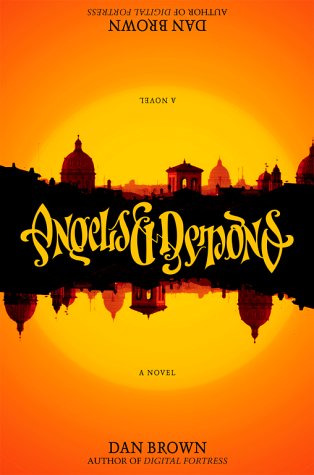
                • Cover of Robert Langdon
                  Robert Langdon

                  series · 6 books · 2000

                  similar byfaith and religiontensemysterious+1 more

                  The Robert Langdon novel series is named after Robert Langdon, the protagonist of the novels by American author Dan Brown. Langdon is portrayed as a Harvard University professor of religious iconology and symbology, a fictional field related to the study of historic symbols, which is not methodologically connected to the actual discipline of semiotics. Brown's novels that feature the lead character also include historical themes and Christianity as motifs, and as a result have generated controversy. Brown states on his website that his novels are not anti-Christian, and that he is on a "constant spiritual journey" himself.

                • Cover of Alienist
                  Alienist

                  series · 2 books · 1994

                  completed

                  similar byhistorical mysterytensenorth americamurder investigation+1 more

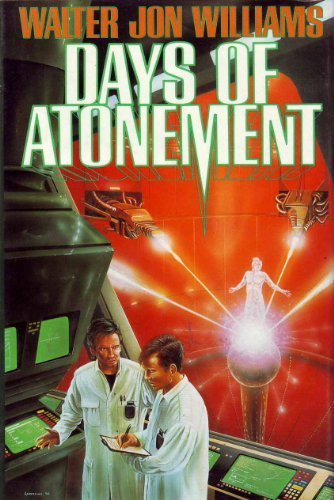
                • Cover of Days of Atonement
                  Days of Atonement

                  Walter Jon Williams · standalone novel · 1991

                  similar bytensenorth americamurder investigationmysterious+1 more

                  Loren Hawn is a traditional Western peace officer walking the streets of 21st Century New Mexico, and seemingly unaware that times have changed. And when a dying man named Randal falls out of a bullet-riddled car and dies in Loren’s arm, Loren finds he isn’t the only man living in the wrong time--- because he remembers pulling Randal’s dead body out of a wrecked car twenty years before. He knows the car belongs to a scientist who works at the high-security laboratory built on the outskirts of town, and he knows that if he doesn’t work fast, all evidence of a crime will disappear into national security vaults. In order to bring justice back to his community, Loren will have to risk everything, his life, his job, his faith, and his family.

                • Cover of Dune
                  Dune

                  series · 20 books · 1963

                  part of Dune Universe

                  similar byfaith and religiondesert+1 more

                  Frank Herbert's Dune Chronicles opens with 1965's Dune, set on the desert planet Arrakis where House Atreides takes control of the only source of the vital spice melange and young Paul Atreides is pulled into a struggle over its politics and religion. Herbert carried the story forward across five further novels — Dune Messiah, Children of Dune, God Emperor of Dune, Heretics of Dune, and Chapterhouse: Dune — following Paul's line over the following millennia, before Brian Herbert and Kevin J. Anderson later extended the saga. Many other editions of these six novels are omnibus and box-set repackagings rather than separate stories.

                • Cover of Lost Boys
                  Lost Boys

                  Orson Scott Card · standalone novel · 1992

                  similar byfaith and religiontensenorth america+1 more

                  Lost Boys (1992) is a horror novel by American author Orson Scott Card. The premise of the novel revolves around the daily lives of a Mormon family, and the challenges they face after a move to North Carolina. The story primarily follows the family's troubles at work, church, and the oldest child Stevie's difficulty fitting in at school, which lead to him becoming increasingly withdrawn.

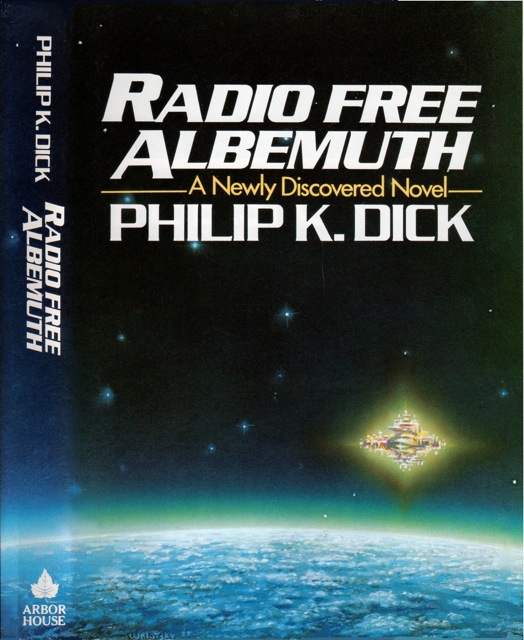
                • Cover of Radio Free Albemuth
                  Radio Free Albemuth

                  Philip K. Dick · standalone novel · 1986

                  similar byfaith and religiontensenorth america

                  Radio Free Albemuth is a dystopian novel by Philip K. Dick, written in 1976 and published posthumously in 1985. Originally titled VALISystem A, it was his first attempt to deal in fiction with his experiences of early 1974. When his publishers at Bantam requested extensive rewrites he canned the project and reworked it into the VALIS trilogy. Arbor House acquired the rights to Radio Free Albemuth in 1985. They then published an edition under the current title, prepared from the corrected typescript given by Dick to his friend Tim Powers.

                • Cover of Languedoc Trilogy
                  Languedoc Trilogy

                  series · 3 books · 2005

                  similar bytensemysterioushistorical fiction+3 more

                  Kate Mosse's Languedoc Trilogy opens with Labyrinth, alternating between a present-day archaeologist in southern France and a woman living through the Cathar crusades eight centuries earlier, both entangled with the same hidden, grail-like relic. Sepulchre and Citadel repeat the dual-timeline structure with different centuries and protagonists, all tied to the same Languedoc region. The books share setting and structural device rather than a continuous cast.

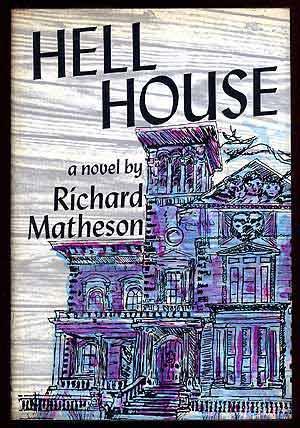
                • Cover of Hell House
                  Hell House

                  Richard Matheson · standalone novel · 1971

                  similar bytensenorth america+1 more

                  A dying millionaire wants proof, once and for all, of what happens after death, and hires physicist-turned-parapsychologist Dr. Lionel Barrett to spend a week investigating the Belasco House in Maine -- a mansion so thoroughly associated with atrocity that it's known simply as Hell House, where every previous investigation has ended in death or madness. Barrett brings his wife Edith along with two mediums, the spiritualist Florence Tanner and Benjamin Franklin Fischer, survivor of an earlier disastrous visit, whose scientific skepticism and spiritualist convictions clash from the first night inside. Richard Matheson's haunted-house novel, later filmed as The Legend of Hell House.

                • Cover of Stranger in a Strange Land
                  Stranger in a Strange Land

                  Robert A. Heinlein · standalone novel · 1961

                  similar byfaith and religionnorth america+1 more

                  Stranger in a Strange Land is a 1961 science fiction novel by the American author Robert A. Heinlein. It tells the story of Valentine Michael Smith, a human who comes to Earth in early adulthood after being born on the planet Mars and raised by Martians, and explores his interaction with and eventual transformation of Terran culture.

                • Cover of The Chrysalids
                  The Chrysalids

                  John Wyndham · standalone novel · 1955

                  similar bytense+2 more

                  The Chrysalids is a science fiction novel by British writer John Wyndham, first published in 1955 by Michael Joseph. It is the least typical of Wyndham's major novels, but regarded by some as his best. An early manuscript version was entitled Time for a Change.

                • Cover of Divine Evil
                  Divine Evil

                  Nora Roberts · standalone novel · 1992

                  similar bytensenorth americamurder investigation+1 more

                  Kurzbeschreibung Dunkle Herzen (Divine Evil) - Nora Roberts Die erfolgreiche New Yorker Bildhauerin Clare Kimball wird immer wieder von einem Alptraum gequält: Auf einer einsamen Waldlichtung in der Nähe ihres Heimatortes Emmitsboro in Maryland zelebrieren maskierte Mnner orgiastisch eine schwarze Messe. Clare will endlich herausfinden, was es mit dem Traum auf sich hat. Sie kehrt zurück nach Emmitsboro, trotz der Warnungen guter Freunde. In Cameron Raffery, dem neuen Sheriff, findet Clare schnell einen Verbündeten. Aber auch er kann nicht ahnen, dass hinter der biederen Fassade der Kleinstadt Ungeheuerliches passiert - und dass Clare sich schon bald in ernster Gefahr befindet... Ein atemberaubender Psychothriller um satanische Rituale in einer amerikanischen Kleinstadt.

                • Cover of Restoration Series
                  Restoration Series

                  series · 4 books · 2005

                  similar byfaith and religiontensenorth americamurder investigation

                • Cover of The Bone Garden
                  The Bone Garden

                  Tess Gerritsen · standalone novel · 2007

                  similar byhistorical mysterytensenorth americamurder investigation+1 more

                  The Bone Garden is a 2007 novel written by Chinese-American novelist Tess Gerritsen, loosely part of the Jane Rizzoli / Maura Isles series.

                • Cover of Jennifer Talldeer
                  Jennifer Talldeer

                  series · 2 books · 1994

                  similar bynorth america+4 more

                • Cover of Fire, Burn!
                  Fire, Burn!

                  John Dickson Carr · standalone novel · 1957

                  similar byhistorical mysterytensemurder investigationmysterious+1 more

                  Fire, Burn! is a 1957 historical mystery novel by John Dickson Carr. Carr considered this one of his best impossible crime novels.

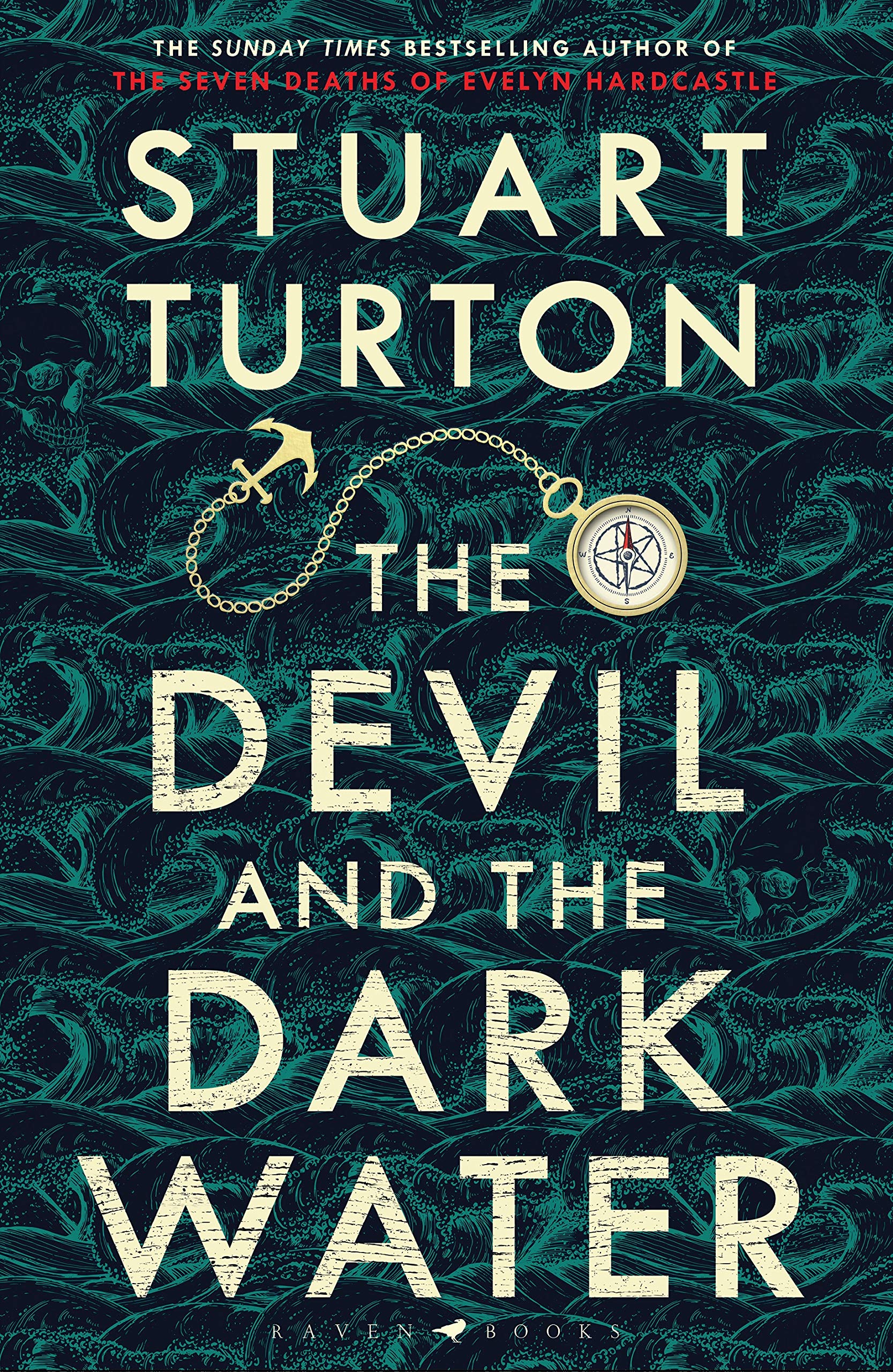
                • Cover of The Devil and the Dark Water
                  The Devil and the Dark Water

                  Stuart Turton · standalone novel · 2020

                  similar byhistorical mysterytensemurder investigationmysterioushistorical fiction

                  The Devil and the Dark Water is a 2020 genre-bending novel by Stuart Turton, combining elements of historical fiction, murder mystery, and horror. Set in 1634, it features a detective trying to solve a series of inexplicable crimes aboard an East Indiaman ship.

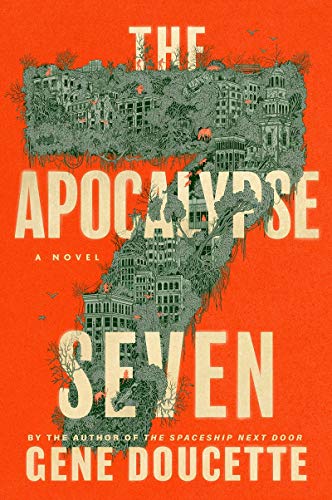
                • Cover of The Apocalypse Seven
                  The Apocalypse Seven

                  Gene Doucette · standalone novel · 2021

                  similar bytensenorth americamysterious+1 more

                  The whateverpocalypse. That's what Toure, a twenty-something Cambridge coder, calls it after waking up one morning to find himself seemingly the only person left in the city. Once he finds Robbie and Carol, two equally disoriented Harvard freshmen, he realizes he isn't alone, but the name sticks: Whateverpocalypse. But it doesn't explain where everyone went. It doesn't explain how the city became overgrown with vegetation in the space of a night. Or how wild animals with no fear of humans came to roam the streets. Add freakish weather to the mix, swings of temperature that spawn tornadoes one minute and snowstorms the next, and it seems things can't get much weirder. Yet even as a handful of new survivors appear--Paul, a preacher as quick with a gun as a Bible verse; Win, a young professional with a horse; Bethany, a thirteen-year-old juvenile delinquent; and Ananda, an MIT astrophysics adjunct--life in Cambridge, Massachusetts gets stranger and stranger. The self-styled Apocalypse Seven are tired of questions with no answers. Tired of being hunted by things seen and unseen. Now, armed with curiosity, desperation, a shotgun, and a bow, they become the hunters. And that's when things truly get weird.

                • Cover of Silver Screen Historical Mysteries
                  Silver Screen Historical Mysteries

                  series · 4 books · 2021

                  similar byhistorical mysterynorth americamurder investigationmysterious+1 more

                • Cover of Punish the Sinners
                  Punish the Sinners

                  John Saul · standalone novel · 1978

                  similar byfaith and religiontensenorth america

                  Punish the Sinners is a horror novel and the second novel by author John Saul, first published in 1978. The novel concerns a rash of violent suicides at a Catholic high school. There is an audiobook narrated by Jonathan Davis on Audible. Punish the Sinners was the first book with a UPC code on the cover.