Loreful
HomeDiscover
Search series, authors…⌘K
Loreful

Reading orders for SF/F series and shared universes — with your place kept in every one.

Explore

UniversesSeriesWorksAuthorsAtlas

Help

FAQAboutSite map

Account & legal

Sign inCreate accountPrivacyTerms

Data

Built on ISFDB, Wikipedia, Wikidata and Open Library. Curated reading orders carry their reasoning on the page; the rest follow publication order. Data sources & licenses

© Loreful · data: ISFDB · CC BY

More like Boomsday

anchored on:satirenorth americacontemporaryliterary & generalpolitical intrigueclass conflict+1 more

but

Mood

The mood the book leaves you in.

  • The reading experience is propelled by journeys, exploration, and physical risk; excitement and forward momentum dominate over dread or introspection.
  • Joy and loss are deliberately mixed; the resolution grants characters something real while taking something else away, leaving warmth and sorrow together.
  • The book demands work from the reader — dense prose, difficult structure, unfamiliar ideas, or morally uncomfortable material — as part of its intended effect.
  • Grim events, cruelty, or despair dominate the atmosphere, and the book does not soften them with comfort or comic relief.
  • The atmosphere is quietly unsettling — wrongness, unease, and the uncanny pervade the book without necessarily escalating into overt horror.
  • The book is built to move the reader; character feeling is foregrounded and major scenes aim at a strong emotional response.
  • Humor is a primary aim and the prose plays for laughs — comic situations, wit, or dialogue produce sustained comedy, not occasional levity.
  • The book insists that things can improve; effort and decency are shown to matter, and the arc bends toward better outcomes even through hardship.
  • The book teaches as it goes — real facts, history, science, or craft are conveyed in enough depth that learning is part of the reading experience.
  • The book is designed to uplift and motivate, presenting perseverance or achievement in a way that invites the reader to aspire or act.
  • The overall register is cheerful and easygoing; stakes are kept gentle and the book avoids dwelling on pain or dread.
  • Withheld information drives the experience; the book sustains enigmas and secrets the reader wants resolved, whatever its genre.
  • The book is contemplative and inward-looking, giving more weight to thought, memory, and meaning than to external events.
  • The book works as comfort reading — low tension, a soothing pace, and an atmosphere the reader can unwind in.
  • Grief, loss, or melancholy set the dominant register, and the book lets sorrow stand rather than resolving it into comfort.
  • Sustained suspense is the point; the book keeps the reader braced for what happens next through danger, pressure, or impending revelation.
  • Playful invention and charm define the register — fanciful conceits, light absurdity, and a narration that delights in its own oddity.

About

What the story runs on.

  • Stories in which extraterrestrial beings are central — as characters, cultures, or the object of the plot.
  • Stories structured as a quest — a journey undertaken to find, deliver, or destroy something of great import.
  • Stories in which staying alive against nature, catastrophe, or scarcity is the central problem.
  • Stories of lovers kept apart by law, family, faith, or station, where the obstacle to love is the plot.
  • Stories in which a friendship — its making, testing, or loss — is the emotional center.
  • Stories of growing up — a young protagonist crossing from childhood into adult knowledge and responsibility.
  • Stories about who a character truly is — self-discovery, doubled lives, and the search for a self.
  • Stories about mourning — living through the death of a loved one and what loss does to the survivors.
  • Stories in which a buried family truth — hidden parentage, crimes, or shames — surfaces and reorders the present.
  • Stories driven by maneuvering for power — factions, conspiracies, and statecraft conducted in shadow.
  • Stories in which war itself is the subject — combat, occupation, and what warfare does to soldiers and civilians.
  • Stories organized around investigating a killing — the case, the clues, and the pursuit of the killer, in any genre's clothing.

Shelf

Where it sits in the library.

    • Fiction built on magic or other supernatural elements that have no scientific explanation.
    • Secondary-world fantasy at large scale, where the fate of nations or the world turns on the protagonists' struggle.
    • Fantasy set in a recognizably modern city or contemporary world where the supernatural intrudes on everyday life.
    • Fantasy that blends in horror's atmosphere and imagery, keeping a fantastical frame around grim or frightening material.
    • Action-driven fantasy following warriors or rogues with personal stakes against sorcerous threats, rather than world-spanning conflicts.
    • Fantasy set in a real historical period or a close analogue of one, with magic woven into the era.
    • Fantasy in which protagonists cross from the ordinary world into another world through a portal or similar passage.
    • Fiction that retells or reworks a traditional fairy tale in a new form or setting.
    • Fantasy drawing directly on myths, legends, and folklore, retelling them or building on their figures and logic.
    • Fantasy of ghosts, vampires, shapeshifters, psychics, and similar phenomena, usually set in an otherwise ordinary world.
    • Fiction mixing science-fictional trappings with overtly magical or impossible elements in one setting.
    • Low-stakes fantasy emphasizing comfort, community, and everyday pleasures over conflict and peril.
    • Speculative fiction of pervasive moral ambiguity, violence, and cynicism that rejects heroic conventions — fantasy and SF alike.
      • Fiction that extrapolates from science and technology — future societies, space travel, or speculative inventions — within at least nominally natural laws.
      • Science fiction of interstellar scope — starships, galactic polities, and adventure across star systems.
      • Science fiction committed to scientific rigor, where technical plausibility constrains the story.
      • Science fiction centered on armed forces and warfare, told largely from a military point of view.
      • Science fiction of networked, corporate-dominated near futures, pairing high technology with social decay.
      • Science fiction styled on nineteenth-century steam-powered technology, often in a Victorian or pseudo-Victorian setting.
      • Fiction depicting an oppressive or catastrophic society, presented as a warning.
      • Fiction set after civilization's collapse, following survivors in the ruins of the old world.
      • Fiction in which characters move between past and future, and the mechanics or consequences of that travel drive the plot.
      • Fiction exploring a world where a historical event went differently and history diverged from ours.
      • Science fiction about humanity's first encounter and communication with an alien intelligence.
      • Science fiction in which extraterrestrial forces attack or occupy Earth and humanity resists.
      • Fiction whose primary aim is to frighten or unsettle the reader through dread, menace, or the monstrous.
      • Horror of vast, indifferent, incomprehensible entities before which humanity is insignificant, in the Lovecraft tradition.
      • Horror of decaying houses, buried family secrets, and oppressive atmosphere in the Gothic literary tradition.
      • Horror centered on hauntings and the returning dead.
      • Horror located in the mind — paranoia, obsession, and unreliable perception rather than external monsters.
      • Horror built around the reanimated dead and survival amid their outbreaks.
      • Horror defined by explicit, transgressive gore that refuses to cut away from violence.
      • Speculative fiction of the strange and uncanny that resists both natural explanation and standard genre categories.
      • Fiction organized around solving a crime or puzzle, typically following an investigator toward the identification of a culprit.
      • A puzzle-first mystery that lays out clues so the culprit's identity can be deduced before the reveal.
      • Crime fiction of moral ambiguity, fatalism, and hard-edged style, set among the corrupt and the doomed.
      • A mystery following the realistic routines of police work — forensics, interviews, and case-building.
      • A gentle mystery with an amateur sleuth, a small community, and violence kept off the page.
      • A mystery set in a past era, where the investigation works within that period's methods and society.
      • Fast-paced fiction driven by imminent danger, pursuit, or high-stakes conspiracy, built to sustain tension.
      • A thriller of espionage — agents, tradecraft, and intelligence services in conflict.
      • A thriller centered on lawyers and the courtroom, where litigation carries the suspense.
      • A thriller driven by detailed contemporary or near-future technology, often military or scientific.
      • A thriller whose tension comes from mental states and manipulation between characters rather than external action.
      • Fiction whose central plot is a romantic relationship and its development toward an emotionally satisfying resolution.
      • Romance in which one or both partners are supernatural beings, blending fantasy elements into the love story.
      • A fantasy-romance hybrid in which the romantic arc and the fantasy plot carry equal weight.
      • Romance set in a past era, with courtship shaped by the period's society and manners.
      • Romance set in the present day, without supernatural or historical elements.
      • Fiction set in a real past period, where the historical setting materially shapes characters and events.
        • General and literary fiction emphasizing prose style, character interiority, or formal ambition over genre plot conventions.
        • Fiction in a realistic world where magical events occur and are treated as ordinary, in the tradition of Latin American literature.
        • Fiction that ridicules people, institutions, or society in order to criticize them.
        • Fiction of dreamlike, irrational imagery and logic that breaks from realistic representation.
        • Fiction that plays with narrative convention through metafiction, fragmentation, and self-reference.
        • Fiction propelled by journeys, exploration, and physical peril, where action and survival carry the plot.
        • Adventure fiction of ships and seafaring — naval engagements, voyages, and life at sea.
        • Fiction of the American frontier West — gunmen, ranchers, and lawmen, typically in the late nineteenth century.
        • Fiction centered on soldiers, campaigns, and the experience of warfare, historical or imagined.
          • Fiction written primarily to amuse, using comedic situations, wit, or parody as its organizing principle.
            • Multi-generational fiction following a family or dynasty across decades, with inheritance and kinship as the through-line.
              • Fiction whose world runs on explicit game mechanics — levels, stats, and skills that characters can see and exploit.
                • Fiction about costumed or superpowered heroes and their conflicts with comparable villains.

                Practical

                How long a commitment, whether it stands alone, and whether it has finished.

                Tap a chip to ask for it · tap again to rule it out · once more to clear. Numbers show what would be left.

                • Cover of God Bless You, Mr. Rosewater or Pearls Before Swine
                  God Bless You, Mr. Rosewater or Pearls Before Swine

                  Kurt Vonnegut & Jr. · standalone novel · 1965

                  similar byfunnynorth americacontemporaryclass conflictsatireliterary & general

                  The Rosewater Foundation was built to shield the family fortune from taxes, but its current steward, war veteran and committed alcoholic Eliot Rosewater, has other ideas: he moves the foundation's offices to rural Rosewater County, Indiana, and starts handing out 'unlimited amounts of love and limited sums of money' to anyone who asks. His disgusted father, Senator Lister Rosewater, watches the family name become a punchline. Meanwhile a distant, downtrodden cousin, Fred Rosewater, is approached by an ambitious young lawyer with a scheme to have Eliot declared insane and the fortune redirected. A satire of American philanthropy, class and sanity from Kurt Vonnegut.

                • Cover of Breakfast of Champions
                  Breakfast of Champions

                  Kurt Vonnegut & Jr. · standalone novel · 1973

                  similar byfunnycontemporarysatirenorth americaliterary & general

                  The author decides to liberate the characters he created, including an author who decides to try to help a mentally ill reader who was driven over the edge by the book's assertion that he was the only creature with free will in a universe of preprogrammed automatons.

                • Cover of The Constant Rabbit
                  The Constant Rabbit

                  Jasper Fforde · standalone novel · 2020

                  similar byfunnycontemporarypolitical intrigueclass conflictsatire

                  The Constant Rabbit is a 2020 science fantasy allegorical novel by Jasper Fforde. It was published by Hodder & Stoughton.

                • Cover of Little Green Men
                  Little Green Men

                  Christopher Buckley · standalone novel · 1999

                  similar byfunnynorth americacontemporarypolitical intriguesatire

                  Little Green Men is a satirical novel by Christopher Buckley, first published in 1999. The novel follows a fictional "Inside the Beltway" talk-show host whose career and life is altered forever when he is abducted by aliens.

                • Cover of For Us, the Living: A Comedy of Customs
                  For Us, the Living: A Comedy of Customs

                  Robert A. Heinlein · standalone novel · 2004

                  similar byfunnynorth americapolitical intriguesatire+1 more

                  For Us, the Living: A Comedy of Customs is a science fiction novel by American writer Robert A. Heinlein. It was written in 1938 and published for the first time in 2003. Heinlein admirer and science fiction author Spider Robinson titled his introductory essay "RAH DNA", as he believes this first, unpublished novel formed the DNA of Heinlein's later works.

                • Cover of Jennifer Government
                  Jennifer Government

                  Max Barry · standalone novel · 2003

                  similar byfunnynorth americapolitical intrigueclass conflictsatire

                  In the near future, where most of the English-speaking world is part of the United States, whose government has become vestigial, police departments are for hire, and corporations and their customer loyalty alliances possess almost unlimited power; a sundry cast of characters are caught up in various levels of a power struggle.

                • Cover of A Specter Is Haunting Texas
                  A Specter Is Haunting Texas

                  Fritz Leiber · standalone novel · 1968

                  similar byfunnynorth americapolitical intrigueclass conflictsatire

                  A Specter is Haunting Texas is a science fiction novel by American writer Fritz Leiber, first published as a novel in 1969. It was originally published as a three-part serial in the magazine Galaxy Science Fiction in 1968. The title appears to be based on a Karl Marx quote from The Communist Manifesto: "A spectre is haunting Europe...the spectre of communism."

                • Cover of Gladiator-at-Law
                  Gladiator-at-Law

                  C. M. Kornbluth & Frederik Pohl · standalone novel · 1955

                  similar byfunnynorth americaclass conflictsatire

                  Gladiator-At-Law is a satirical science fiction novel by American writers Frederik Pohl and Cyril M. Kornbluth. It was first published in 1955 by Ballantine Books and republished in 1986 by Baen Books.

                • Cover of The People's Police
                  The People's Police

                  Norman Spinrad · standalone novel · 2017

                  similar bynorth americacontemporarypolitical intrigueclass conflictsatire+1 more

                  The first American edition was preceded by the French edition by more than two years. Amazon: ... a sharp commentary on politics with an interesting twist. Martin Luther Martin is a hard-working New Orleans cop, who has come up from the gangland of Alligator Swamp through hard work. When he has to serve his own eviction notice, he decides he's had enough and agrees to spearhead a police strike. Brothel owner and entrepreneur J. B. Lafitte also finds himself in a tight spot when his whorehouse in the Garden District goes into foreclosure. Those same Fat Cats responsible for the real estate collapse after Katrina didn't differentiate between social strata or vocation. MaryLou Boudreau, aka Mama Legba, is a television star and voodoo queen--with a difference. The loa really do ride and speak through her. These three, disparate people are pulled together by a single moment in the television studio when Martin, hoping for publicity and support from the people against the banks, corporate fat cats, and corrupt politicians. But no one expects Papa Legba himself to answer, and his question changes everything. "What do you offer?"

                • Cover of Black No More
                  Black No More

                  George S. Schuyler · standalone novel · 1931

                  similar byfunnynorth americaclass conflictsatire

                  Black No More: Being an Account of the Strange and Wonderful Workings of Science in the Land of the Free, A.D. 1933-1940 is a 1931 Harlem Renaissance satire on American race relations by George S. Schuyler. In the novel, Schuyler targets both the Ku Klux Klan and NAACP in condemning the ways in which race functions as both an obsession and a commodity in early twentieth-century America. The central premise of the novel is that an African American scientist invents a process that can transform Black people into white people. Those who have internalized white racism, those who are tired of inferior opportunities socially and economically, and those who simply want to expand their sexual horizons, undergo the procedure. As the country "whitens", the economic importance of racial segregation in the South as a means of maintaining elite white economic and social status becomes increasingly apparent, as the South relies on Black labor through sharecropping.

                • Cover of Our Landlady
                  Our Landlady

                  series · 49 books · 1890

                  completed

                  similar byfunnynorth americapolitical intriguesatireliterary & general+1 more

                • Cover of The Napoleon of Notting Hill
                  The Napoleon of Notting Hill

                  G. K. Chesterton · standalone novel · 1904

                  similar byfunnypolitical intriguesatire+1 more

                  The Napoleon of Notting Hill is a novel written by G. K. Chesterton in 1904, set in a nearly unchanged London in 1984.

                • Cover of The Big U
                  The Big U

                  Neal Stephenson · standalone novel · 1984

                  similar byfunnynorth americaclass conflictsatireliterary & general

                  The Big U (1984) is a novel by American writer Neal Stephenson. His first published novel, it is a satire of campus life.

                • Cover of Skinny Legs and All
                  Skinny Legs and All

                  Tom Robbins · standalone novel · 1990

                  similar byfunnynorth americacontemporaryliterary & generalsatire

                  Skinny Legs and All, novelist Tom Robbins's fifth book, was published in 1990 by Bantam Books. As with all of Robbins's novels, it weaves disparate and seemingly unrelated themes into a single narrative.

                • Cover of Winkie
                  Winkie

                  Clifford Chase · standalone novel · 2006

                  similar byfunnynorth americacontemporaryliterary & generalsatire

                  Winkie is a 2006 allegorical novel by Clifford Chase about a sentient teddy bear who is accused of terrorism.

                • Cover of The Vertical Smile
                  The Vertical Smile

                  Richard Condon · standalone novel · 1971

                  similar byfunnynorth americaclass conflictsatireliterary & general

                  "The Vertical Smile" focuses on money and power plus a great deal of heavy-handed satire about the sexual revolution and the youth revolution of the late 1960s and early 1970s, all set in a semi-dysfunctional New York City in which armed gangs control the streets and a church of Christ, Computer is an important part of society.

                • Cover of Fight Club
                  Fight Club

                  Chuck Palahniuk · standalone novel · 1996

                  similar bynorth americacontemporaryclass conflictsatireliterary & general

                  Fight Club is a 1996 satirical novel by Chuck Palahniuk. It was Palahniuk's first published novel, and follows the experiences of an unnamed protagonist struggling with insomnia. The protagonist finds relief by impersonating a seriously ill person in several support groups, after his doctor remarks that insomnia is not "real suffering" and that he should find out what it is really like to suffer. The protagonist then meets a mysterious man named Tyler Durden and establishes an underground fighting club as radical psychotherapy.

                • Cover of Crooked Little Vein
                  Crooked Little Vein

                  Warren Ellis · standalone novel · 2007

                  similar byfunnynorth americacontemporarysatire+1 more

                  Crooked Little Vein is the first novel by comic book writer Warren Ellis, published by William Morrow on July 24, 2007.

                • Cover of Another Roadside Attraction
                  Another Roadside Attraction

                  Tom Robbins · standalone novel · 1971

                  similar byfunnycontemporarynorth americaliterary & generalsatire

                  Speculative elements are primarily centered around Plucky Purcell, when the Vatican is cracked open by an earthquake, finding the corpse of Jesus hidden in the Vatican. He smuggles the body out, and the story follows what happens with that body.

                • Cover of England, England
                  England, England

                  Julian Barnes · standalone novel · 1998

                  similar byfunnysatirecontemporaryliterary & general+1 more

                  England, England is a satirical postmodern novel by Julian Barnes, published and shortlisted for the Booker Prize in 1998. While researchers have also pointed out the novel's characteristic dystopian and farcical elements, Barnes himself described the novel as a "semi-farce".

                • Cover of Coyote Blue
                  Coyote Blue

                  Christopher Moore · standalone novel · 1994

                  similar byfunnynorth americacontemporary+2 more

                  Coyote Blue is a novel by American writer Christopher Moore, published in 1994. It has been widely reviewed.

                • Cover of Knight Life
                  Knight Life

                  series · 3 books · 1987

                  completed

                  similar byfunnynorth americacontemporarypolitical intrigue

                • Cover of Dead Babies
                  Dead Babies

                  Martin Amis · standalone novel · 1975

                  similar byfunnycontemporarysatireliterary & general

                  Dead Babies is Martin Amis's second novel, published in 1975 by Jonathan Cape. Its first UK and US paperback edition was published under the title Dark Secrets. Amis's second novel—a parody of Agatha Christie's country-house mysteries—takes place over a single weekend at a manor called Appleseed Rectory. In 2000, the book was adapted into a film of the same name, starring Paul Bettany and Olivia Williams. In 2001, BBC critic David Wood wrote "Amis's second novel ranks among his most incendiary with its mordant wit, black comedy, and sense of the violently absurd." It has an epigraph attributed to the Cynic Menippus and the novel has been interpreted as a Menippean satire.

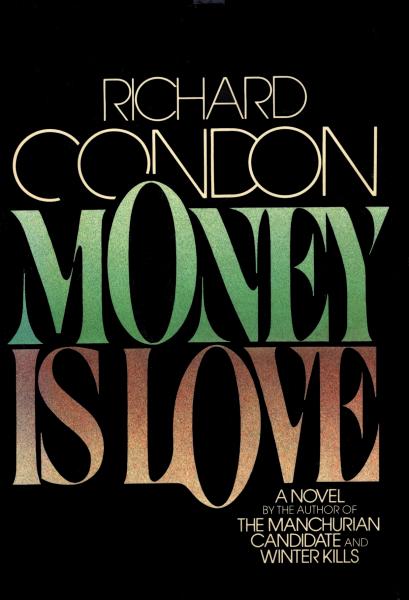
                • Cover of Money Is Love
                  Money Is Love

                  Richard Condon · standalone novel · 1975

                  similar byfunnycontemporarypolitical intriguenorth americasatire

                  Richard Condon wrote fast-paced, complexly plotted, semi-humorous novels that, to varying degrees, can be called satiric, political fables, political thrillers, secret histories, or conspiracy novels; all of them revolve around power and money. "Money Is Love", while containing all of the above elements and set in contemporary New York City, also has the classical god Zeus and his attendant gods and goddesses as major characters coming to Earth in human form, thus making it Condon's sole speculative fiction novel.