More like Brasyl
anchored on:science fictionlatin americacontemporaryparallel universebig citychallenging+1 more
but
- Dune
series20 books1963
part of Dune Universe
similar bypolitical intriguescience fiction+1 more
Frank Herbert's Dune Chronicles opens with 1965's Dune, set on the desert planet Arrakis where House Atreides takes control of the only source of the vital spice melange and young Paul Atreides is pulled into a struggle over its politics and religion. Herbert carried the story forward across five further novels — Dune Messiah, Children of Dune, God Emperor of Dune, Heretics of Dune, and Chapterhouse: Dune — following Paul's line over the following millennia, before Brian Herbert and Kevin J. Anderson later extended the saga. Many other editions of these six novels are omnibus and box-set repackagings rather than separate stories.
- The Ministry for the Future
Kim Stanley Robinsonstandalone novel2020
similar bypolitical intriguescience fictionchallengingmultiple pov
The Ministry for the Future is a climate fiction novel by American science fiction writer Kim Stanley Robinson, published in 2020. Set in the near future, the novel follows a subsidiary body, established under the Paris Agreement, whose mission is to act as an advocate for the world's future generations of citizens as if their rights were as valid as the present generation's. While the ministry pursues various ambitious projects, the effects of climate change are determined to be the most consequential. The plot primarily follows Mary Murphy, the head of the titular Ministry for the Future, and Frank May, an American aid worker traumatized by experiencing a deadly heat wave in India. Many chapters are devoted to other characters' accounts of future events, as well as their ideas about ecology, economics, and other subjects.
- The Fresco
Sheri S. Tepperstandalone novel2000
similar bypolitical intriguescience fictionchallengingcontemporary
The Fresco is a science fiction novel by American writer Sheri S. Tepper, published in 2000. It describes Earth's contact with a confederation of intelligent alien races. The Fresco was on the shortlist for 2001 James Tiptree, Jr. Award
- Making History
Stephen Frystandalone novel1996
similar bypolitical intriguescience fictionchallengingcontemporary
Making History (1996) is the third novel by Stephen Fry. Its plot involves the creation of an alternative historical timeline in which Adolf Hitler never existed. While most of the book is written in standard prose, a couple of chapters are written in the format of a screenplay. The book won the Sidewise Award for Alternate History.
- Exordia
Seth Dickinsonstandalone novel2024
similar byscience fictionchallengingcontemporarymultiple pov+1 more
Exordia is a 2024 epic science fiction novel by American author Seth Dickinson. The story follows multiple protagonists in a nonlinear fashion following a devastating first contact event, and the pursuit of an artifact hidden on Earth that could change the ruling hierarchy of the galaxy. The novel explores themes of consciousness, free will, game theory, Kurdish nationalism, the mathematical universe hypothesis, divinity, and the simulation Hypothesis.
- Past Master
R. A. Laffertystandalone novel1968
similar bypolitical intriguescience fictionchallenging
Past Master is a science fiction novel by American writer R. A. Lafferty, first published in 1968. The novel follows the attempt of a future Utopian society in preventing its decline, by bringing Sir Thomas More to the year 2535.
- Triton
Samuel R. Delanystandalone novel1976
similar bypolitical intriguescience fictionchallenging
Trouble on Triton: An Ambiguous Heterotopia (1976) is a science fiction novel by American writer Samuel R. Delany. It was nominated for the 1976 Nebula Award for Best Novel, and was shortlisted for a retrospective James Tiptree, Jr. Award in 1995. It was originally published under the shorter title Triton.
- New York 2140
Kim Stanley Robinsonstandalone novel2017
similar bypolitical intriguescience fictionmultiple povbig city+1 more
New York 2140 is a 2017 climate fiction novel by American science fiction author Kim Stanley Robinson. The novel is set in a New York City that has been flooded and altered by rising water.
- Under the Dome
Stephen Kingstandalone novel2009
similar bypolitical intriguescience fictioncontemporarymultiple pov
A small town in Maine finds itself suddenly cut off from the outside world by an impenetrable barrier, and the clash of personalities of the trapped people takes its inexorable devastating course.
- Dune Universe
universe78 books1963
Start hereDune · Start here
similar bypolitical intriguescience fiction
Arrakis. Dune. The desert planet, where empire runs on a single substance: the spice melange, which folds space, prolongs life, and unlocks prescience, and which exists nowhere else in the known universe. Frank Herbert's saga is a meditation dressed as an adventure — feudal houses and a secret sisterhood, engineered messiahs and the patient ecology of a world without water, all turning on the terrible gravity of who commands the spice. It reads like scripture and schemes like a war room, ten thousand years hence, among people who have outlawed the thinking machine and made instruments of themselves instead. At its heart stand Herbert's original six — Dune, Dune Messiah, Children of Dune, God Emperor of Dune, Heretics of Dune, Chapterhouse: Dune — a single deepening arc across millennia, arguing the whole way between prophecy and free will. Around that spine his son Brian Herbert and Kevin J. Anderson have raised a vast prequel architecture: Prelude to Dune, tracing the great houses a generation before Paul; Legends of Dune, reaching back to the crusade that broke the machines; the Schools of Dune cycle on the founding of Bene Gesserit, Mentat, and Navigator; the Caladan Trilogy and Heroes of Dune filling years the originals left in shadow. Many hands, dozens of volumes, one desert. What sets Dune apart is its refusal of the simple: religion is manufactured, heroes are hazards, and the sand itself — worm, water, ecology — acts as a political power. Begin where the universe did, with Frank Herbert's Dune (1965), and read the original six in order; you need nothing else to feel the full weight. The prequels are a country to explore afterward, taken by era. Beginnings are delicate times.
- Singularity Sky
series2 books2003
similar byscience fictionchallenging+1 more
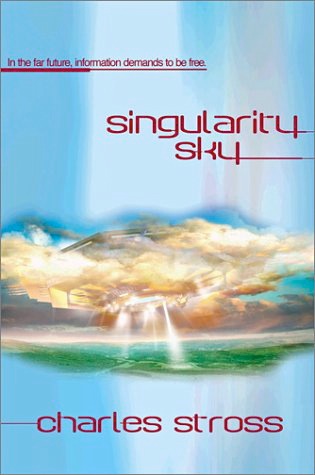
Singularity Sky and its sequel Iron Sunrise are collectively known as the Eschaton novels, after the godlike posthuman intelligence that seeded human colonies across space on the condition they never attempt time travel or threaten causality - rules tested when a low-tech colony world is destabilized by a group calling itself the Festival. Charles Stross uses the setup for a mix of space opera, economics, and diplomatic intrigue.
- Gravity's Rainbow
Thomas Pynchonstandalone novel1973
similar bypolitical intriguechallengingmultiple pov+1 more
Gravity's Rainbow is a 1973 postmodern novel by Thomas Pynchon. The narrative is set primarily in Europe at the end of World War II and centers on the design, production and dispatch of V-2 rockets by the German military. In particular, it features the quest undertaken by several characters to uncover the secret of a mysterious device, the Schwarzgerät, which is slated to be installed in a rocket with the serial number "00000".
- The Power
Naomi Aldermanstandalone novel2016
similar bypolitical intriguescience fictionchallenging
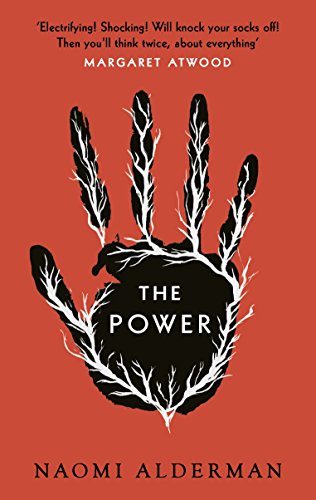
The Power is a 2016 science fiction novel by the British writer Naomi Alderman. Its central premise is of women developing the ability to release electrical jolts from their fingers, which allows them to become the dominant sex. In 2017, it won the Baileys Women's Prize for Fiction.
- Embassytown
China Miévillestandalone novel2011
similar bypolitical intriguescience fictionchallenging
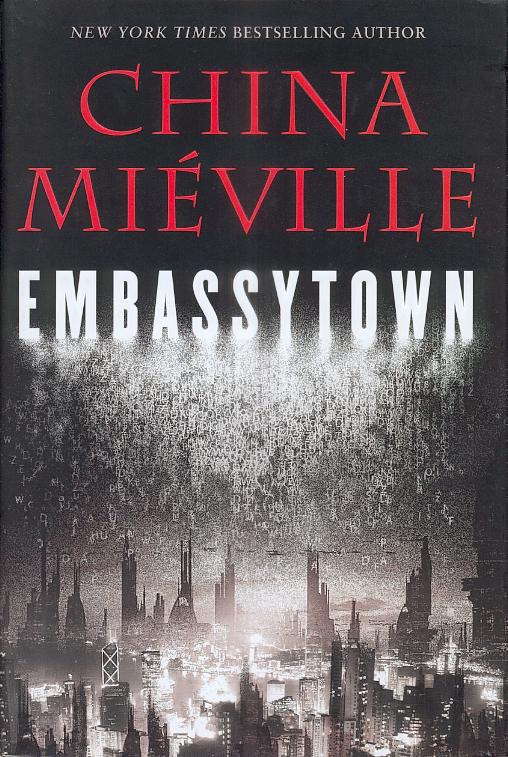
In the far future, humans have colonized a distant planet, home to the enigmatic Ariekei, sentient beings famed for a language unique in the universe, one that only a few altered human ambassadors can speak. Avice Benner Cho, a human colonist, has returned to Embassytown after years of deep-space adventure. She cannot speak the Ariekei tongue, but she is an indelible part of it, having long ago been made a figure of speech, a living simile in their language. When distant political machinations deliver a new ambassador to Arieka, the fragile equilibrium between humans and aliens is violently upset. Catastrophe looms, and Avice is torn between competing loyalties—to a husband she no longer loves, to a system she no longer trusts, and to her place in a language she cannot speak yet speaks through her.
- Atlas Shrugged
Ayn Randstandalone novel1957
similar bypolitical intriguechallengingscience fiction
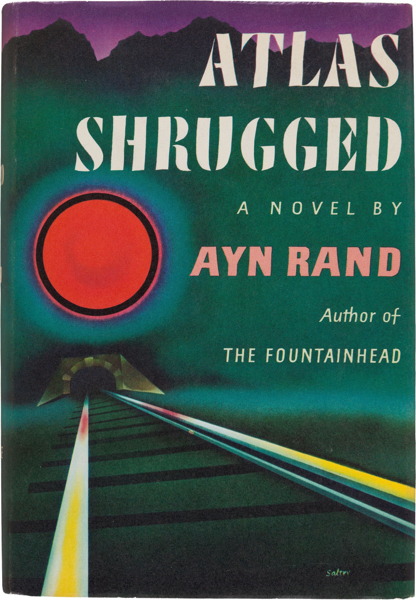
Atlas Shrugged is a 1957 novel by Ayn Rand. It is her longest novel, the fourth and final one published during her lifetime, and the one she considered her magnum opus in the realm of fiction writing. She described the theme of Atlas Shrugged as "the role of man's mind in existence" and it includes elements of science fiction, mystery, and romance. The book explores a number of philosophical themes from which Rand would subsequently develop Objectivism, including reason, property rights, individualism, rational egoism, and laissez-faire capitalism and depicts what Rand saw as the evil of altruism and governmental coercion. Of Rand's works of fiction, it contains her most extensive statement of her philosophical system.
- Dhalgren
Samuel R. Delanystandalone novel1975
similar byscience fictionchallengingcontemporarybig city
Dhalgren is a 1975 science fiction novel by American writer Samuel R. Delany. It features an extended trip to and through Bellona, a fictional city in the American Midwest cut off from the rest of the world by an unknown catastrophe. It is number 33 on the 20th Century's Greatest Hits: 100 English-Language Books of Fiction list.
- Fourth Mansions
R. A. Laffertystandalone novel1969
similar byscience fictioncontemporary+2 more
Fourth Mansions is a science fiction novel by American author R. A. Lafferty, first published as an Ace Science Fiction Special in 1969. A UK hardcover was issued by Dennis Dobson in 1972, with a Star Books paperback following in 1977. A French translation appeared in 1973. American reprint editions were later issued by Bart Books and by Wildside Press.
- Culture
series15 books1987
completed
part of The Culture
similar byscience fiction+2 more
The Culture series is a science fiction series written by Scottish author Iain M. Banks and released from 1987 until 2012. The stories centre on The Culture, a utopian, post-scarcity space society of humanoid aliens and advanced superintelligent artificial intelligences living in artificial habitats spread across the Milky Way galaxy. The main themes of the series are the dilemmas that an idealistic, more-advanced civilization faces in dealing with smaller, less-advanced civilizations that do not share its ideals, and whose behaviour it sometimes finds barbaric. In some of the stories, action takes place mainly in non-Culture environments, and the leading characters are often on the fringes of the Culture, sometimes acting as agents of the Culture in its plans to civilize the galaxy. Each novel is a self-contained story with new characters, although reference is occasionally made to the events of previous novels.
- Terra Ignota
series4 books2016
similar bypolitical intriguescience fictionchallenging
Terra Ignota is a quartet of science fiction and philosophical novels by the American author Ada Palmer. The series consists of Too Like the Lightning (2016), Seven Surrenders (2017), The Will to Battle (2017), and Perhaps the Stars (2021). After three centuries of a global near-utopia, a minor crime and a miracle child begin to unravel the social system and lead the world to technologically advanced total war. The first three books cover the events leading up to the war and the final book covers the war itself. The novels have won several awards, including a 2017 Compton Crook Award. The first novel was a finalist for the 2017 Hugo Award for Best Novel, and the series as a whole was a finalist for the 2022 Hugo Award for Best Series.
- Mars (Kim Stanley Robinson)
series36 books1982
similar byscience fiction+2 more
The Mars trilogy is a series of science fiction novels by Kim Stanley Robinson that chronicles the settlement and terraforming of the planet Mars through the personal and detailed viewpoints of a wide variety of characters spanning 187 years, from 2026 to 2212. Ultimately more utopian than dystopian, the story focuses on egalitarian, sociological, and scientific advances made on Mars, while Earth suffers from overpopulation and ecological disaster.
- Jerry Cornelius
series50 books1965
similar byscience fictionchallenging+3 more
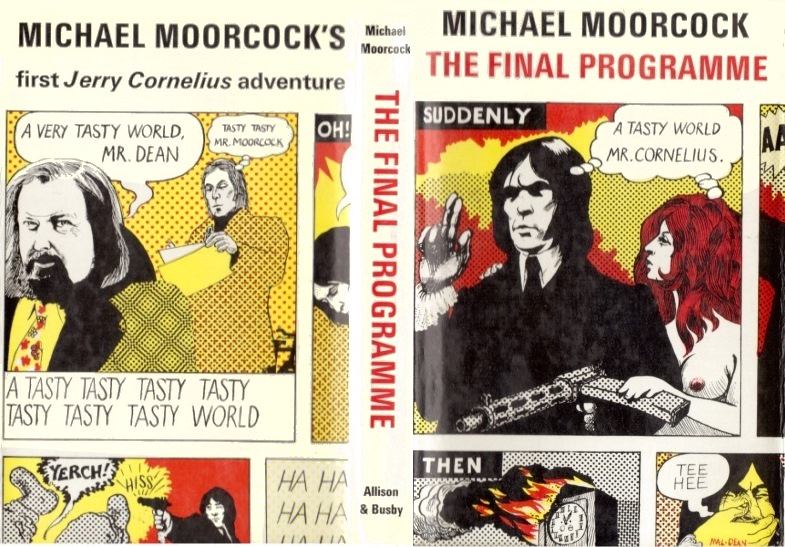
Jerry Cornelius is a fictional character created by English author Michael Moorcock. The character is an urban adventurer and an incarnation of the author's Eternal Champion concept. Cornelius is a hipster of ambiguous and occasionally polymorphous gender. Many of the same characters feature in each of several Cornelius books, though the individual books have little connection with one another, having a more metafictional than causal relationship. The first Jerry Cornelius book, The Final Programme, was made into a 1973 film starring Jon Finch and Jenny Runacre. Notting Hill in London features prominently in the stories.
- A Modern Utopia
H. G. Wellsstandalone novel1905
similar bypolitical intriguescience fictionparallel universe+1 more
Two travelers, an unnamed narrator and his skeptical companion, find themselves transported to a parallel world: a planet identical to Earth in geography and even population, down to duplicates of everyone they know, but shaped by a different history. There they examine a global order run by a voluntary elite called the Samurai, who try to hold together progress and stability without the coercion Wells thought inevitable in the utopias that came before his. Framed less as a story than as a philosophical travelogue, it is Wells's own argument with the utopian tradition, tested through the world he invents to make it.
- Shaper/Mechanist
series6 books1982
similar byscience fictionchallenging+1 more
Shaper/Mechanist is Bruce Sterling's future-history of a fractured solar system, split between the genetically engineered Shapers and the cybernetically augmented Mechanists as humanity spreads beyond Earth. Schismatrix, the only full-length novel in the setting, follows a diplomat-schemer across decades of shifting factions and post-human politics. Schismatrix Plus collects that novel together with five earlier short stories set in the same future.