More like Brothers in Arms
anchored on:epic fantasywizardssecondary worldsword and sorcerycoming of ageadventurous+2 more
but
- The Hobbit
series2 books1937
completed
part of Tolkien's legendarium
similar byadventuroussecondary worldfantasyepic fantasydragons+2 more
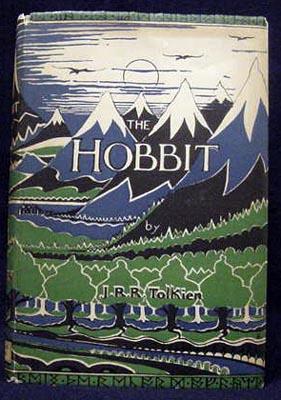
The Hobbit (1937) is J. R. R. Tolkien's children's fantasy novel following the reluctant burglar Bilbo Baggins, who joins a company of dwarves and the wizard Gandalf on a journey to reclaim treasure guarded by the dragon Smaug. It stands as a complete adventure on its own, but shares its setting with the rest of Tolkien's legendarium and leads into the events of The Lord of the Rings.
- Riftwar Saga
series7 books1982
part of The Riftwar Universe
similar byadventuroussecondary worldepic fantasyfantasywar+2 more
The Riftwar Saga is Raymond E. Feist's debut fantasy trilogy, opening with Magician, in which an orphaned apprentice named Pug is swept up when otherworldly invaders emerge through a dimensional rift into the frontier kingdom of Midkemia. Silverthorn and A Darkness at Sethanon carry the resulting war to its close, and the trilogy became the founding entry of Feist's much larger Riftwar Cycle.
- The Immortals
series6 books1992
part of Tortall
similar byadventuroussecondary worldcoming of agewizardsfantasy+1 more
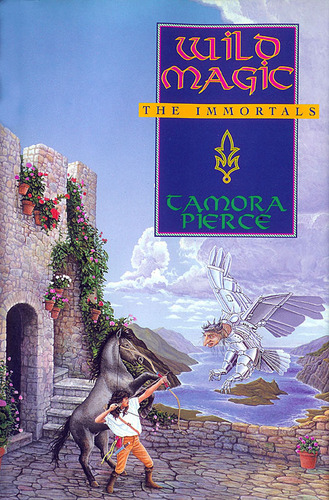
Tamora Pierce's Immortals quartet follows Daine, a young woman whose 'wild magic' lets her communicate with and shapeshift among animals, as she's drawn into the kingdom of Tortall's defense against immortal creatures -- griffins, dragons and darker things -- released back into the world after centuries sealed away. Beginning with Wild Magic, the four books pair Daine's personal coming-of-age with an escalating magical threat, and connect to Pierce's earlier Song of the Lioness quartet through several shared characters.
- The Crescent Moon Kingdoms
series1 book2012
similar byadventuroussecondary worldepic fantasywizardssword and sorceryfantasy+1 more
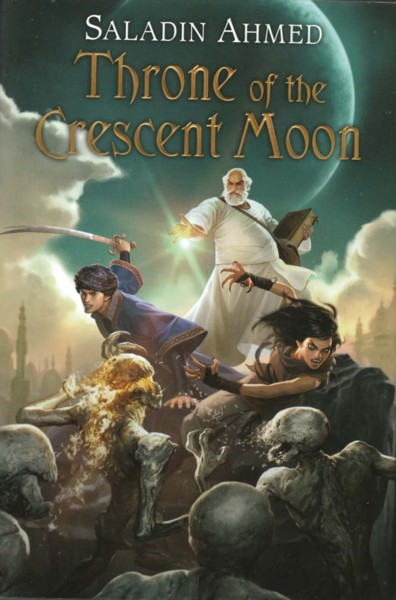
Saladin Ahmed's The Crescent Moon Kingdoms opens with Throne of the Crescent Moon, set in a realm of djenn and ghuls where a power struggle between an iron-fisted Khalif and a mysterious master thief called the Falcon Prince erupts alongside a series of brutal, supernatural murders. A handful of reluctant heroes must uncover the truth behind the killings before the kingdom tears itself apart.
- The Lord of the Rings
series13 books1954
part of Tolkien's legendarium
similar bysecondary worldepic fantasy+4 more
The Lord of the Rings is an epic high fantasy novel written by the English author and scholar J. R. R. Tolkien. Set in Middle-earth, the story began as a sequel to Tolkien's 1937 children's book The Hobbit but eventually developed into a much larger work. Written in stages between 1937 and 1949, The Lord of the Rings is one of the best-selling books ever written, with over 150 million copies sold.
- Earthsea Cycle
series18 books1964
completed
part of Earthsea
similar bysecondary worldwizardsfantasyepic fantasy+2 more
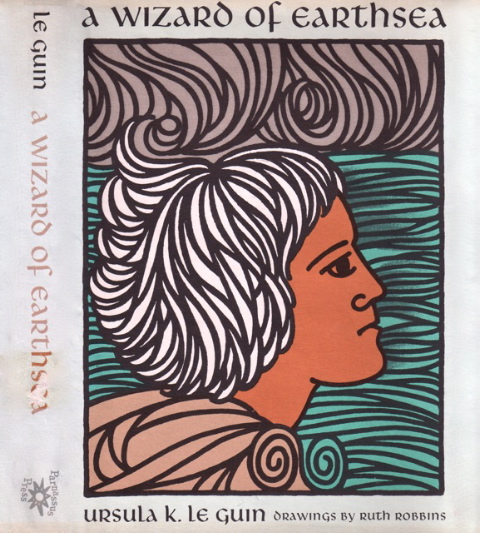
The Earthsea Cycle, also known as Earthsea, is a series of high fantasy books written by American author Ursula K. Le Guin. Beginning with A Wizard of Earthsea (1968), The Tombs of Atuan (1970), and The Farthest Shore (1972), the series was continued in Tehanu (1990), and Tales from Earthsea and The Other Wind. In 2018, all the novels and short stories were published in a single volume, The Books of Earthsea: The Complete Illustrated Edition, with artwork by Charles Vess.
- Narnia
series26 books1950
part of Narnia Universe
similar byadventuroussecondary worldcoming of agefantasy+2 more
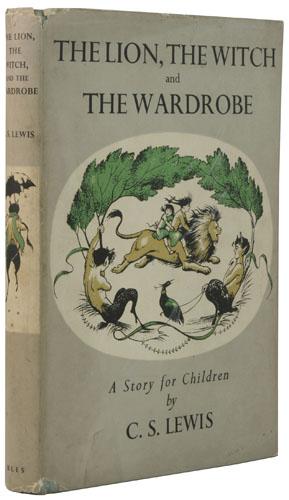
The Chronicles of Narnia is a series of seven portal fantasy novels by British author C. S. Lewis. Illustrated by Pauline Baynes and originally published between 1950 and 1956, the series is set in the fictional realm of Narnia, a fantasy world of magic, mythical beasts, and talking animals. It narrates the adventures of various children who play central roles in the unfolding history of the Narnian world. Except in The Horse and His Boy, the protagonists are all children from the real world who are magically transported to Narnia, where they are sometimes called upon by the lion Aslan to protect Narnia from evil. The books span the entire history of Narnia, from its creation in The Magician's Nephew to its eventual destruction in The Last Battle.
- Halfblood Chronicles
series3 books1991
similar byadventuroussecondary worldepic fantasywizardsfantasydragons
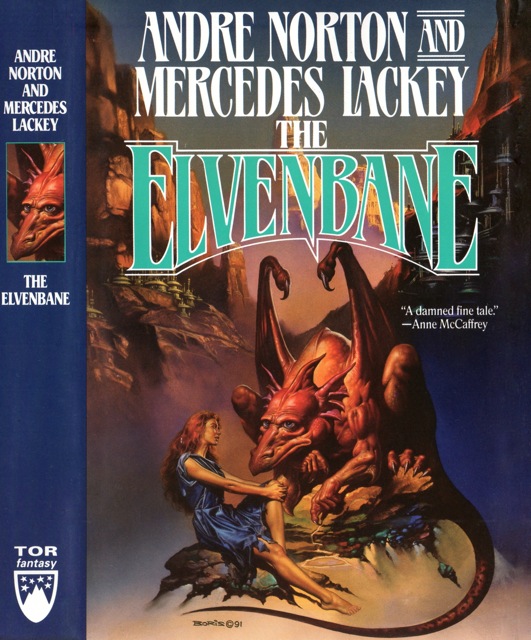
The Halfblood Chronicles is a series of fantasy books originally written by Andre Norton and Mercedes Lackey. The series is set in a mystical world of elves, wizards and dragons. The series was originally released by Tor Books, and comprised three books: Elvenbane (1991), Elvenblood (1995), Elvenborn (2002). Elvenbred, the fourth book in the series, remained unfinished due to the death of Andre Norton.
- A Song of Ice and Fire
series14 books1996
part of World of Ice and Fire
similar bysecondary worldepic fantasydarkfantasywar+1 more
A Song of Ice and Fire is a series of high fantasy novels by the American author George R. R. Martin. Martin began writing the first volume, A Game of Thrones, in 1991, and published it in 1996. Martin, who originally envisioned the series as a trilogy, has released five out of seven planned volumes. The most recent entry in the series, A Dance with Dragons, was published in 2011. Since then, Martin has been working on the sixth novel, titled The Winds of Winter. A seventh novel, A Dream of Spring, is planned to follow.
- The Grisha
series9 books2012
part of Grishaverse
similar byadventuroussecondary worldepic fantasyfantasy+4 more
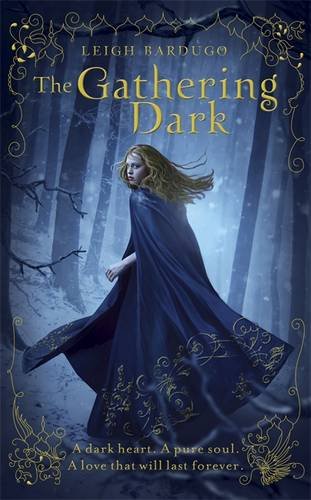
Leigh Bardugo is an American fantasy author. She is best known for her young adult Grishaverse novels, which include the Shadow and Bone trilogy and the Six of Crows and King of Scars duologies. She also received acclaim for her paranormal fantasy adult debut, Ninth House. The Shadow and Bone and Six of Crows series have been adapted into Shadow and Bone by Netflix, and Ninth House will be adapted by Amazon Studios; Bardugo is an executive producer on both works.
- Forgotten Realms: The Legend of Drizzt
series39 books1988
part of Forgotten Realms
similar bysecondary worldadventurousepic fantasyfantasy+3 more
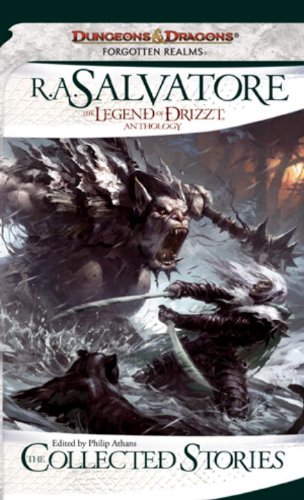
The Legend of Drizzt is a series of fantasy novels by R. A. Salvatore that began in 1988, and consists of 39 books as of August 15, 2023. They are based in the Forgotten Realms setting in the dimension of Abeir-Toril on the continent Faerûn in the Dungeons & Dragons universe currently published and owned by Wizards of the Coast. It combines the series The Dark Elf Trilogy, The Icewind Dale Trilogy, Legacy of the Drow, Paths of Darkness, The Hunter's Blades Trilogy, and other sets into an abridged compilation. Drizzt Do'Urden is the main character of most of the books.
- The Drenai Saga
series15 books1984
completed
similar bysecondary worldadventurousepic fantasyfantasywar+2 more
David Andrew Gemmell was a British author of heroic fantasy, best known for his debut novel, Legend. A former journalist and newspaper editor, Gemmell had his first work of fiction published in 1984. He went on to write over thirty novels. Gemmell's works display violence, yet also explore themes of honour, loyalty and redemption. There is always a strong heroic theme but nearly always the heroes are flawed in some way. With over one million copies sold, his work continues to sell worldwide.
- The Riftwar Universe
universe44 books1982
Start hereRiftwar Saga · Start here
similar bysecondary worldepic fantasyfantasy+2 more
On the world of Midkemia a tear opens in the air itself, a rift hung between stars, and through it march the armies of an empire from another world entirely. So begins the chronicle Raymond E. Feist has kept for three decades: the tale of Pug, a castle kitchen boy apprenticed to a magician on the very day the invasion lands, and of Tomas, his friend, who inherits the armor and the ancient fury of a dead dragon-lord. Around these two the Riftwar Cycle turns, widening book by book from one besieged frontier keep into the whole history of a world of kingdoms, guilds, thieves' dens and mage-towers. The cycle runs to roughly thirty novels, gathered into arcs a newcomer can enter and finish on their own. The founding Riftwar Saga (Magician, Silverthorn, A Darkness at Sethanon) sets the board; the Serpentwar Saga, Krondor's Sons and the Conclave of Shadows carry the story down the generations; the Darkwar, Demonwar and Chaoswar sagas bring it toward its close. Crossing the rift to the rival world of Kelewan, Feist and Janny Wurts wrote the Empire trilogy, opening with Daughter of the Empire, a court intrigue told wholly from the invaders' side and for many the finest thing here. Shorter Legends of the Riftwar and the game-born Riftwar Legacy fill the corners; later still, Feist opens an altogether new world in the Firemane books. Feist writes fantasy in its most companionable key: apprentices who grow into archmages, tavern boys who become spies and dukes, a world you return to the way you return to an old inn. The mood is adventure before dread, friendship and rank and hard-won craft, wars that cost something, all of it rendered plainly and at a gallop. Begin where it began, with Magician, then follow the arcs in the order they were written, and the rift will carry you the rest of the way.
- The Wizard Knight
series2 books2004
completed
similar byadventuroussecondary worldcoming of ageepic fantasyfantasy+2 more
The Wizard Knight is a series of epistolary novels written by fantasy and science fiction author Gene Wolfe. It chronicles the journey of Able of the High Heart, an American boy transported to a magical world and supernaturally aged to adulthood. Able becomes a knight, and because of his connection with the magical and spiritual elements of the world around him is soon also dubbed a wizard.
- Corum
series6 books1971
part of Moorcock's Multiverse
similar bysecondary worldadventurousepic fantasyfantasy+2 more
- Song of the Lioness
series5 books1983
part of Tortall
similar byadventuroussecondary worldcoming of agefirst personfantasy
The Song of the Lioness is a young adult series of fantasy novels published in the 1980s by Tamora Pierce. The series consists of four books: Alanna: The First Adventure (1983), In the Hand of the Goddess (1984), The Woman Who Rides Like a Man (1986) and Lioness Rampant (1988).
- The Saga of Recluce
series48 books1991
similar bysecondary worldepic fantasywizardsfantasy+2 more
The Saga of Recluce is a series of fantasy novels written by L. E. Modesitt Jr. The initial novel in the series, The Magic of Recluce, was published in 1991. The series is still in publication with the latest novel published in June 2026. In 2015 Modesitt stated that the (then) 20 novels in the Recluce series had sold nearly three million copies.
- Guardians of Ga'hoole
series17 books2003
similar byadventuroussecondary worldcoming of agefantasyepic fantasywar
Guardians of Ga'Hoole is a fantasy book series written by Kathryn Lasky and published by Scholastic. The series contains a total of 16 books, and although it was originally intended to conclude with the 2008 publication of The War of the Ember, it has a prequel, The Rise of a Legend, published in 2013. Apart from the main series, there are a few more books and spin-offs set in the same universe. The first three books of the series were adapted into the 2010 animated 3D film Legend of the Guardians: The Owls of Ga'Hoole, directed by Zack Snyder.
- The Kingkiller Chronicle
series8 books2002
similar bysecondary worldfirst personfantasy+5 more
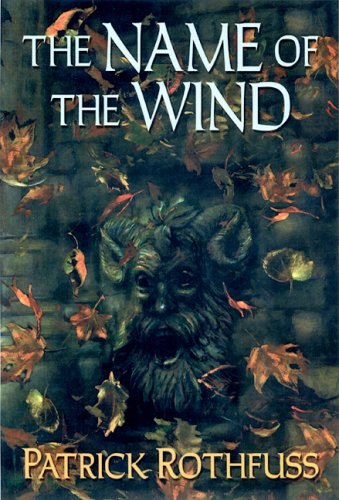
The Kingkiller Chronicle is a planned fantasy trilogy by the American writer Patrick Rothfuss. The first two books, The Name of the Wind and The Wise Man's Fear, were released in 2007 and 2011. The books released in the series have sold over 10 million copies.
- Dragon Trilogies
series6 books1988
similar bysecondary worldepic fantasyfantasydragons+2 more
The Dragon Prince and Dragon Star trilogies comprise six connected fantasy novels written by Melanie Rawn. The Dragon Prince trilogy focuses on Prince Rohan of the Desert and his Sunrunner wife, Sioned, while the Dragon Star trilogy focuses on their son, Pol. The Dragon Prince trilogy consists of novels Dragon Prince, The Star Scroll, and Sunrunner's Fire. The books in the Dragon Star trilogy are Stronghold, The Dragon Token, and Skybowl.
- The Princess and the Goblin
series2 books1871
completed
similar byadventuroussecondary worldcoming of agefantasy
- The Ancestor
series4 books2017
similar bysecondary worldcoming of agedarkepic fantasyfirst personfantasy+2 more
The Book of the Ancestor trilogy is a series of three fantasy novels by Mark Lawrence. It comprises Red Sister (2017), Grey Sister (2018), and Holy Sister (2019). The three novels tell the story of Nona Grey, a peasant girl with mystical abilities. Red Sister was nominated for the 2018 David Gemmell Awards for Fantasy.
- Sparhawk
universe6 books1989
Start hereElenium · Start here
similar byadventuroussecondary worldepic fantasyfantasy+1 more
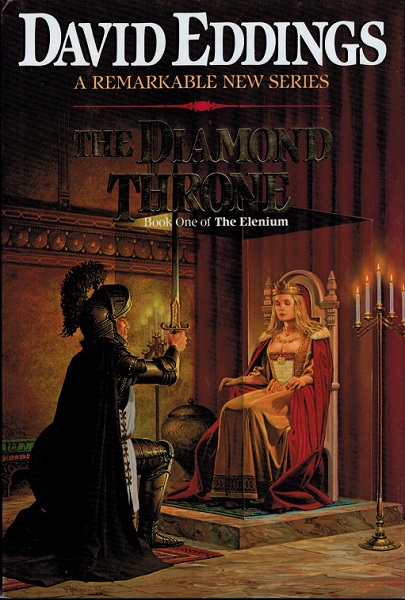
Sir Sparhawk is not a young man, and he has little patience for the pageantry his order pretends to. A Pandion Knight of the militant Elene Church, he rides home from a long exile to find his kingdom rotten with intrigue and his young queen, Ehlana, poisoned — kept alive only inside a shell of living crystal. To wake her he must find Bhelliom, a jewel with the power to remake the world or unmake it. So begins a long ride across the continent of Eosia. This is warm, character-first epic fantasy from David Eddings, told across two trilogies. The Elenium — The Diamond Throne, The Ruby Knight, The Sapphire Rose — pits Sparhawk against a corrupt church and a hungry elder god. The Tamuli — Domes of Fire, The Shining Ones, The Hidden City — carries him east into the vast Tamul Empire, where older enemies stir. Around him gathers a quarrelsome company: the Styric sorceress Sephrenia, the thief-boy Talen, the plain-spoken squire Kurik, and a small, imperious goddess who plays a set of pipes and always, somehow, gets her way. The pleasure here is the talk — grizzled knights trading dry insults between miracles and murders, a hero who solves as many problems with patience as with a sword. It never reaches for grimness or grand obscurity; it wants your good company for a long journey. Newcomers begin with The Diamond Throne and read the six in order: the Elenium stands whole on its own before the Tamuli widens the map.
- Sun Wolf and Starhawk
series7 books1984
similar bysecondary worldadventurouswizardssword and sorceryfantasy+1 more
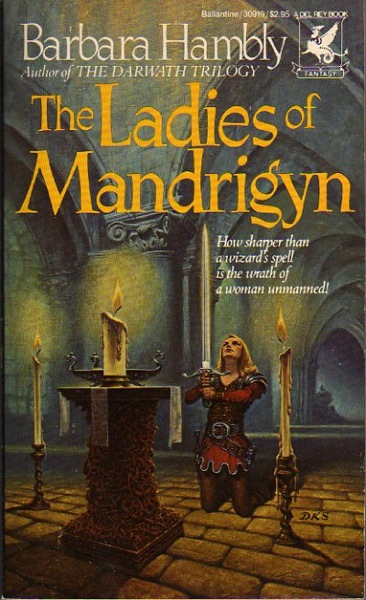
Barbara Hambly's series begins with the city of Mandrigyn conquered and its men enslaved in the mines of the wizard-king Altiokis, forcing surviving noblewoman Sheera Galernas to kidnap the mercenary captain Sun Wolf and press him into training the city's women as fighters. Sun Wolf's partnership with his lieutenant Starhawk carries across The Ladies of Mandrigyn, The Witches of Wenshar, and further volumes as both are drawn deeper into magic neither originally wanted.