Loreful
HomeDiscover
Search series, authors…⌘K
Loreful

Reading orders for SF/F series and shared universes — with your place kept in every one.

Explore

UniversesSeriesWorksAuthorsAtlas

Help

FAQAboutSite map

Account & legal

Sign inCreate accountPrivacyTerms

Data

Built on ISFDB, Wikipedia, Wikidata and Open Library. Curated reading orders carry their reasoning on the page; the rest follow publication order. Data sources & licenses

© Loreful · data: ISFDB · CC BY

More like Bundle 5

anchored on:early 20th centurydarkfantasy

but

Mood

The mood the book leaves you in.

  • The reading experience is propelled by journeys, exploration, and physical risk; excitement and forward momentum dominate over dread or introspection.
  • Joy and loss are deliberately mixed; the resolution grants characters something real while taking something else away, leaving warmth and sorrow together.
  • The book demands work from the reader — dense prose, difficult structure, unfamiliar ideas, or morally uncomfortable material — as part of its intended effect.
  • Grim events, cruelty, or despair dominate the atmosphere, and the book does not soften them with comfort or comic relief.
  • The atmosphere is quietly unsettling — wrongness, unease, and the uncanny pervade the book without necessarily escalating into overt horror.
  • The book is built to move the reader; character feeling is foregrounded and major scenes aim at a strong emotional response.
  • Humor is a primary aim and the prose plays for laughs — comic situations, wit, or dialogue produce sustained comedy, not occasional levity.
  • The book insists that things can improve; effort and decency are shown to matter, and the arc bends toward better outcomes even through hardship.
  • The book teaches as it goes — real facts, history, science, or craft are conveyed in enough depth that learning is part of the reading experience.
  • The book is designed to uplift and motivate, presenting perseverance or achievement in a way that invites the reader to aspire or act.
  • The overall register is cheerful and easygoing; stakes are kept gentle and the book avoids dwelling on pain or dread.
  • Withheld information drives the experience; the book sustains enigmas and secrets the reader wants resolved, whatever its genre.
  • The book is contemplative and inward-looking, giving more weight to thought, memory, and meaning than to external events.
  • The book works as comfort reading — low tension, a soothing pace, and an atmosphere the reader can unwind in.
  • Grief, loss, or melancholy set the dominant register, and the book lets sorrow stand rather than resolving it into comfort.
  • Sustained suspense is the point; the book keeps the reader braced for what happens next through danger, pressure, or impending revelation.
  • Playful invention and charm define the register — fanciful conceits, light absurdity, and a narration that delights in its own oddity.

About

What the story runs on.

  • Stories in which extraterrestrial beings are central — as characters, cultures, or the object of the plot.
  • Stories structured as a quest — a journey undertaken to find, deliver, or destroy something of great import.
  • Stories in which staying alive against nature, catastrophe, or scarcity is the central problem.
  • Stories of lovers kept apart by law, family, faith, or station, where the obstacle to love is the plot.
  • Stories in which a friendship — its making, testing, or loss — is the emotional center.
  • Stories of growing up — a young protagonist crossing from childhood into adult knowledge and responsibility.
  • Stories about who a character truly is — self-discovery, doubled lives, and the search for a self.
  • Stories about mourning — living through the death of a loved one and what loss does to the survivors.
  • Stories in which a buried family truth — hidden parentage, crimes, or shames — surfaces and reorders the present.
  • Stories driven by maneuvering for power — factions, conspiracies, and statecraft conducted in shadow.
  • Stories in which war itself is the subject — combat, occupation, and what warfare does to soldiers and civilians.
  • Stories organized around investigating a killing — the case, the clues, and the pursuit of the killer, in any genre's clothing.

Shelf

Where it sits in the library.

    • Fiction built on magic or other supernatural elements that have no scientific explanation.
    • Secondary-world fantasy at large scale, where the fate of nations or the world turns on the protagonists' struggle.
    • Fantasy set in a recognizably modern city or contemporary world where the supernatural intrudes on everyday life.
    • Fantasy that blends in horror's atmosphere and imagery, keeping a fantastical frame around grim or frightening material.
    • Action-driven fantasy following warriors or rogues with personal stakes against sorcerous threats, rather than world-spanning conflicts.
    • Fantasy set in a real historical period or a close analogue of one, with magic woven into the era.
    • Fantasy in which protagonists cross from the ordinary world into another world through a portal or similar passage.
    • Fiction that retells or reworks a traditional fairy tale in a new form or setting.
    • Fantasy drawing directly on myths, legends, and folklore, retelling them or building on their figures and logic.
    • Fantasy of ghosts, vampires, shapeshifters, psychics, and similar phenomena, usually set in an otherwise ordinary world.
    • Fiction mixing science-fictional trappings with overtly magical or impossible elements in one setting.
    • Low-stakes fantasy emphasizing comfort, community, and everyday pleasures over conflict and peril.
    • Speculative fiction of pervasive moral ambiguity, violence, and cynicism that rejects heroic conventions — fantasy and SF alike.
      • Fiction that extrapolates from science and technology — future societies, space travel, or speculative inventions — within at least nominally natural laws.
      • Science fiction of interstellar scope — starships, galactic polities, and adventure across star systems.
      • Science fiction committed to scientific rigor, where technical plausibility constrains the story.
      • Science fiction centered on armed forces and warfare, told largely from a military point of view.
      • Science fiction of networked, corporate-dominated near futures, pairing high technology with social decay.
      • Science fiction styled on nineteenth-century steam-powered technology, often in a Victorian or pseudo-Victorian setting.
      • Fiction depicting an oppressive or catastrophic society, presented as a warning.
      • Fiction set after civilization's collapse, following survivors in the ruins of the old world.
      • Fiction in which characters move between past and future, and the mechanics or consequences of that travel drive the plot.
      • Fiction exploring a world where a historical event went differently and history diverged from ours.
      • Science fiction about humanity's first encounter and communication with an alien intelligence.
      • Science fiction in which extraterrestrial forces attack or occupy Earth and humanity resists.
      • Fiction whose primary aim is to frighten or unsettle the reader through dread, menace, or the monstrous.
      • Horror of vast, indifferent, incomprehensible entities before which humanity is insignificant, in the Lovecraft tradition.
      • Horror of decaying houses, buried family secrets, and oppressive atmosphere in the Gothic literary tradition.
      • Horror centered on hauntings and the returning dead.
      • Horror located in the mind — paranoia, obsession, and unreliable perception rather than external monsters.
      • Horror built around the reanimated dead and survival amid their outbreaks.
      • Horror defined by explicit, transgressive gore that refuses to cut away from violence.
      • Speculative fiction of the strange and uncanny that resists both natural explanation and standard genre categories.
      • Fiction organized around solving a crime or puzzle, typically following an investigator toward the identification of a culprit.
      • A puzzle-first mystery that lays out clues so the culprit's identity can be deduced before the reveal.
      • Crime fiction of moral ambiguity, fatalism, and hard-edged style, set among the corrupt and the doomed.
      • A mystery following the realistic routines of police work — forensics, interviews, and case-building.
      • A gentle mystery with an amateur sleuth, a small community, and violence kept off the page.
      • A mystery set in a past era, where the investigation works within that period's methods and society.
      • Fast-paced fiction driven by imminent danger, pursuit, or high-stakes conspiracy, built to sustain tension.
      • A thriller of espionage — agents, tradecraft, and intelligence services in conflict.
      • A thriller centered on lawyers and the courtroom, where litigation carries the suspense.
      • A thriller driven by detailed contemporary or near-future technology, often military or scientific.
      • A thriller whose tension comes from mental states and manipulation between characters rather than external action.
      • Fiction whose central plot is a romantic relationship and its development toward an emotionally satisfying resolution.
      • Romance in which one or both partners are supernatural beings, blending fantasy elements into the love story.
      • A fantasy-romance hybrid in which the romantic arc and the fantasy plot carry equal weight.
      • Romance set in a past era, with courtship shaped by the period's society and manners.
      • Romance set in the present day, without supernatural or historical elements.
      • Fiction set in a real past period, where the historical setting materially shapes characters and events.
        • General and literary fiction emphasizing prose style, character interiority, or formal ambition over genre plot conventions.
        • Fiction in a realistic world where magical events occur and are treated as ordinary, in the tradition of Latin American literature.
        • Fiction that ridicules people, institutions, or society in order to criticize them.
        • Fiction of dreamlike, irrational imagery and logic that breaks from realistic representation.
        • Fiction that plays with narrative convention through metafiction, fragmentation, and self-reference.
        • Fiction propelled by journeys, exploration, and physical peril, where action and survival carry the plot.
        • Adventure fiction of ships and seafaring — naval engagements, voyages, and life at sea.
        • Fiction of the American frontier West — gunmen, ranchers, and lawmen, typically in the late nineteenth century.
        • Fiction centered on soldiers, campaigns, and the experience of warfare, historical or imagined.
          • Fiction written primarily to amuse, using comedic situations, wit, or parody as its organizing principle.
            • Multi-generational fiction following a family or dynasty across decades, with inheritance and kinship as the through-line.
              • Fiction whose world runs on explicit game mechanics — levels, stats, and skills that characters can see and exploit.
                • Fiction about costumed or superpowered heroes and their conflicts with comparable villains.

                Practical

                How long a commitment, whether it stands alone, and whether it has finished.

                Tap a chip to ask for it · tap again to rule it out · once more to clear. Numbers show what would be left.

                • Cover of The Reformatory
                  The Reformatory

                  Tananarive Due · standalone novel · 2023

                  similar bydarkrace and racismnorth americaearly 20th centuryhorror

                  The Reformatory is a 2023 novel by Tananarive Due which combines elements of horror, historical fiction, and literary fiction. It is loosely based on the Dozier School for Boys and the atrocities committed there. The novel received critical acclaim, including a win for the 2024 Bram Stoker Award for Best Novel and 2024 World Fantasy Award for Best Novel.

                • Cover of Time's Arrow
                  Time's Arrow

                  Martin Amis · standalone novel · 1991

                  similar bydarkwarearly 20th century+1 more

                  From Amazon description: In this icy, knife's-edge story of a life that progresses backward through time, unfolding into one of the darkest episodes of the 20th century, Amis ("at his intriguing, heedful, and powerful best" —Time Out), finds a chillingly original approach to the Holocaust in fiction • From the acclaimed author of Zone of Interest "The narrative moves with irresistible momentum.... [Amis is] a daring, exacting writer willing to defy the odds in pursuit of his art." —Newsday Tod. T. Friendly is living his life in reverse. Doctor Friendly has just died, but he moves "out of blackest sleep" to find himself surrounded by doctors and on the deathbed of a man in whose body he is imprisoned. After weeks of improving in the hospital, he is sent home to his affable, melting-pot, primary-colors existence in suburban America. As Friendly breaks up with his lovers in a prelude to seducing them and mangles his patients before he sends them home, his life races backward toward the one appalling moment in modern history when such reversals make sense. From the fresh-cut lawns of his retirement to the hustle of New York, and then back to the boat which reverses his course to the war-torn Europe Friendly came from, Amis brings the steeliest nerve to the job of realizing the novel's inevitable logic. Trapped in his body from grave to cradle, Friendly's consciousness can only watch as he struggles to make sense of the good doctor's most ambitious project yet—the final solution.

                • Cover of The Pact
                  The Pact

                  William Schoell · standalone novel · 1988

                  similar bydarkwarnorth americaearly 20th centuryhorror

                  "Fear of war gripped the heart of young naval recruit Steven Russell. It gnawed at his innards, screamed at him from every New York newspaper, blasted at him from the radio. Poet, dreamer, visionary...he saw a future of blood and bombs...spattered bodies...severed limbs. no stranger to the occult, he took the ultimate survival measure, Steven Russell sold his soul to the Devil in exchange for the promise that he would live through World War II. Kissing his bride good-bye, he sailed off with a knowing smile...but the Devil had the last laugh." ― paraphrased from this book's product page on the Goodreads.com website as of 2018-12-13.

                • Cover of Siren Queen
                  Siren Queen

                  Nghi Vo · standalone novel · 2022

                  similar bydarkrace and racismnorth americaearly 20th centuryfantasy

                  Siren Queen (2022) is a historical fantasy novel by Nghi Vo set in a magical 1930s Los Angeles. The story follows an aspiring actor known as Luli Wei, who hopes to achieve immortality through stardom. Hollywood provides obstacles in the form of racism, sexism, queerphobia, and dark magic. Luli rejects stereotypical roles on-screen and off, instead embracing the power of playing movie monsters. The book was Vo's first novel to be written, but the second to be published, preceded by The Chosen and the Beautiful (2021) in a similar magical universe. It received positive reviews in speculative fiction venues, and was a 2023 finalist for the World Fantasy Award, the Locus Award, and the Ignyte Award.

                • Cover of Sorrowland
                  Sorrowland

                  Rivers Solomon · standalone novel · 2021

                  similar bydarkrace and racismnorth america+2 more

                  Sorrowland is a 2021 gothic science fiction novel by American writer Rivers Solomon.

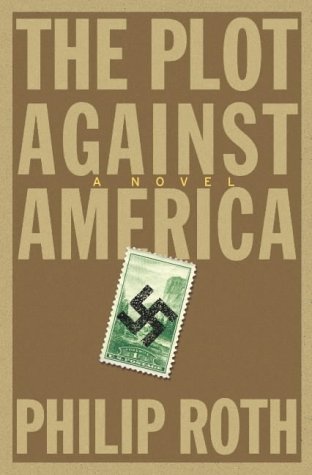
                • Cover of The Plot Against America
                  The Plot Against America

                  Philip Roth · standalone novel · 2004

                  similar bydarkrace and racismnorth americaearly 20th century

                  Roosevelt is defeated in 1940 by Charles Lindbergh, who guides the US towards fascism and anti-Semitism.

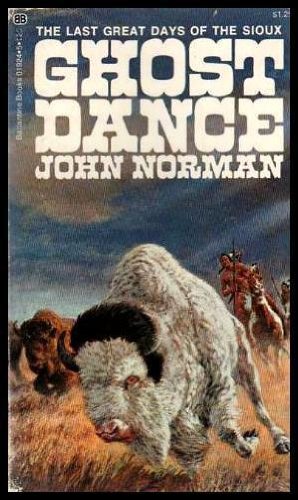
                • Cover of Ghost Dance
                  Ghost Dance

                  John Norman · standalone novel · 1970

                  similar bydarkrace and racismnorth america+1 more

                  Ghost Dance is a 1970 historical fiction novel by John Norman. A Sioux man and his tradition comes into conflict with a white woman and her civilization as the Wounded Knee Massacre approaches. As with his Gor series, his main body of work, Norman displays both philosophical reaction and an affinity with incorporating historical events into the plotlines of fictional characters.

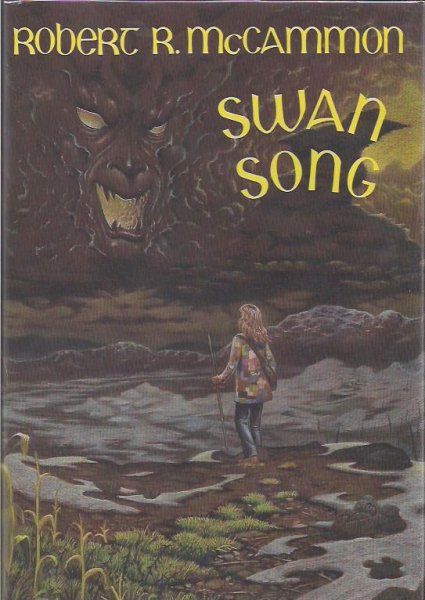
                • Cover of Swan Song
                  Swan Song

                  Robert R. McCammon · standalone novel · 1987

                  similar bydarknorth americahorror+2 more

                  Swan Song is a 1987 post-apocalyptic horror novel by American novelist Robert R. McCammon. Published June 1, 1987, the novel describes the aftermath of a nuclear war that provokes an evolution in humankind. Swan Song won the 1987 Bram Stoker award, tying with Stephen King's Misery.

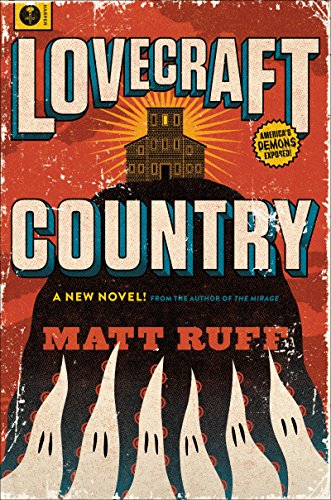
                • Cover of Lovecraft Country
                  Lovecraft Country

                  series · 2 books · 2016

                  similar bydarkrace and racismnorth americahorrorcosmic horror

                  Matt Ruff's Lovecraft Country follows Atticus Turner, a Black Korean War veteran and science-fiction fan, and his extended family as they navigate both cosmic horror and the everyday terror of Jim Crow-era America in the 1950s. Structured as eight interlinked stories rather than one continuous plot, it moves between sorcerous lodges, haunted houses, and cursed heirlooms, all set in motion by the manipulative occultist Caleb Braithwhite. A 2023 sequel novel, The Destroyer of Worlds, returns to the same characters.

                • Cover of Days of Infamy
                  Days of Infamy

                  series · 2 books · 2004

                  similar bydarkwarnorth americaearly 20th century

                  Harry Turtledove's Days of Infamy duology reimagines the Pacific theater of World War II with an alternate outcome at Pearl Harbor: a Japanese invasion and occupation of Hawaii rather than a single carrier strike. Days of Infamy covers the invasion itself, while End of the Beginning follows the ensuing occupation and eventual counter-invasion. As in his other alternate-history work, Turtledove follows the changed war through a wide, rotating cast of civilian and military viewpoints.

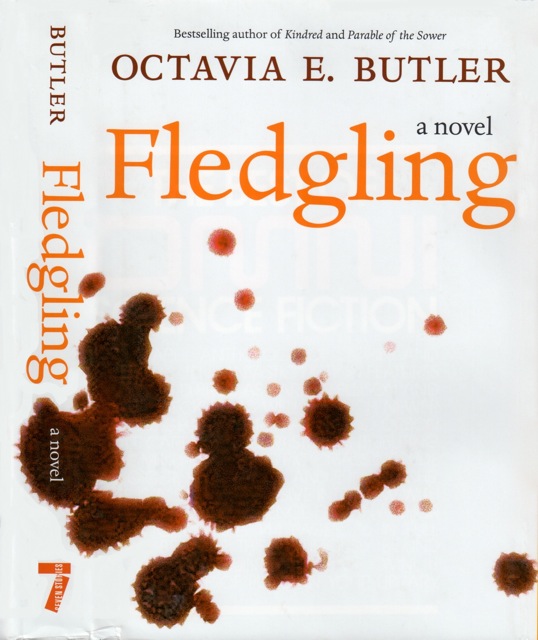
                • Cover of Fledgling
                  Fledgling

                  Octavia E. Butler · standalone novel · 2005

                  similar bydarkrace and racismnorth americafantasy

                  Fledgling is a science fiction vampire novel by American writer Octavia E. Butler, published in 2005. It was the author's final book published before her death in 2006.

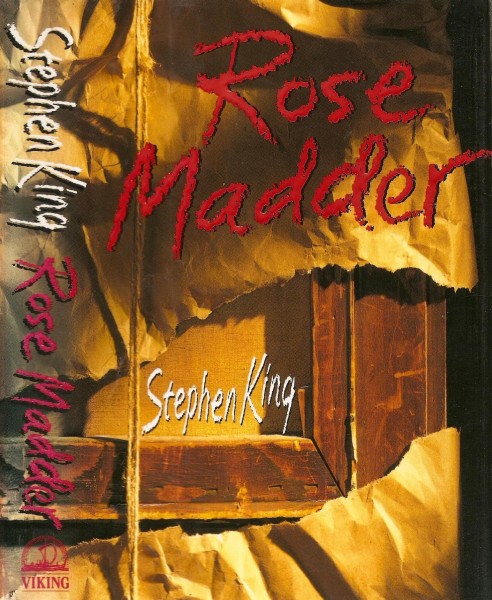
                • Cover of Rose Madder
                  Rose Madder

                  Stephen King · standalone novel · 1995

                  similar bydarknorth americafantasyhorror

                  Rose Madder is a horror/fantasy novel by American writer Stephen King, published in 1995. It deals with the effects of domestic violence and, unusually for a King novel, relies for its fantastic element on Greek mythology. In his memoir, On Writing, King states that Rose Madder and Insomnia are "stiff, trying-too-hard novels."

                • Cover of Trouble the Saints
                  Trouble the Saints

                  Alaya Dawn Johnson · standalone novel · 2020

                  similar bydarkrace and racismnorth americaearly 20th centuryfantasy

                  Trouble the Saints is a 2020 historical fantasy novel by Alaya Dawn Johnson. It was first published by Tor Books/Macmillan Publishers.

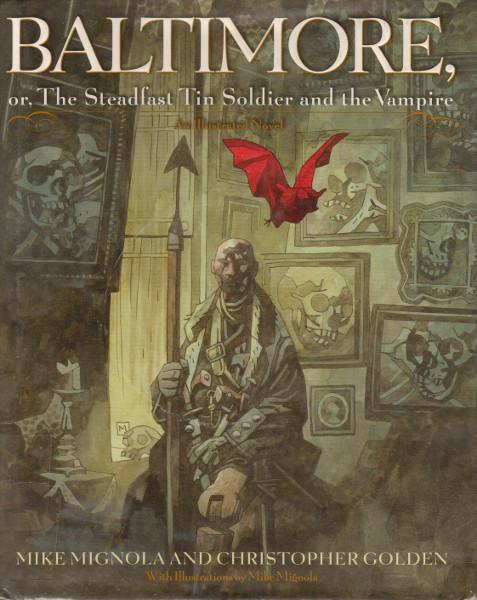
                • Cover of Baltimore, or, the Steadfast Tin Soldier and the Vampire
                  Baltimore, or, the Steadfast Tin Soldier and the Vampire

                  Christopher Golden & Mike Mignola · standalone novel · 2007

                  similar bydarkearly 20th centuryfantasyhorror+1 more

                  Baltimore, or, The Steadfast Tin Soldier and the Vampire is a 2007 illustrated novel written by Mike Mignola and Christopher Golden, and illustrated by Mignola. It follows the quest of Lord Henry Baltimore, a British officer during World War I who inadvertently changes the course of the war, and his own life, by wounding a vampire on the battlefield.

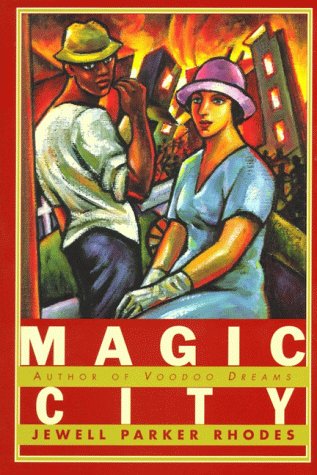
                • Cover of Magic City
                  Magic City

                  Jewell Parker Rhodes · standalone novel · 1997

                  similar bydarkrace and racismnorth americaearly 20th century

                  Based on true events, Magic City is the powerful story of two people who unwittingly lit the match that burned the community of Greenwood to the ground and erased it from the history books. Jewell Parker Rhodes imagines this tragedy through the eyes of Joe Samuels and Mary Keane, two people fundamentally divided by race but forever joined by fate. When Joe, a young man entranced by Houdini, is falsely accused of rape, he must perform his greatest escape by eluding a bloodthirsty lynch mob. Haunted by the mystery of his brother's death and the dark truth behind his father's success, Joe soon learns that he has been running all his life and that this may actually be the moment to turn and fight. Mary, the motherless daughter of a poor farmer who tries to marry her off to the farmhand who viciously raped her, is barely able to imagine what life could be like outside the prison of her own home. Now, however, she must unlock the courage to help exonerate the man she has accused with her panicked cry. Magic City, a mythic tale of violent revenge, is a portrait of an era, climaxing in the heroic but doomed stand that ultimately pitted the National Guard against a small band of black men determined to defend the town they had built into the "Negro Wall Street." Depicted against a backdrop of jail escapes, ghosts, family betrayal, and lost loves, it is a tale at once harrowing and redemptive.

                • Cover of How Few Remain Universe
                  How Few Remain Universe

                  series · 11 books · 1997

                  similar bywarnorth americaearly 20th century+1 more

                  How Few Remain opens Harry Turtledove's Southern Victory timeline, imagining a North America where the Confederacy won the Civil War. Set mostly in 1881-1882, it follows political and military figures on both sides of a divided continent as old grievances resurface into a new war. It's a single novel here, but the starting point for a much longer alternate-history sequence Turtledove extended across both twentieth-century world wars.

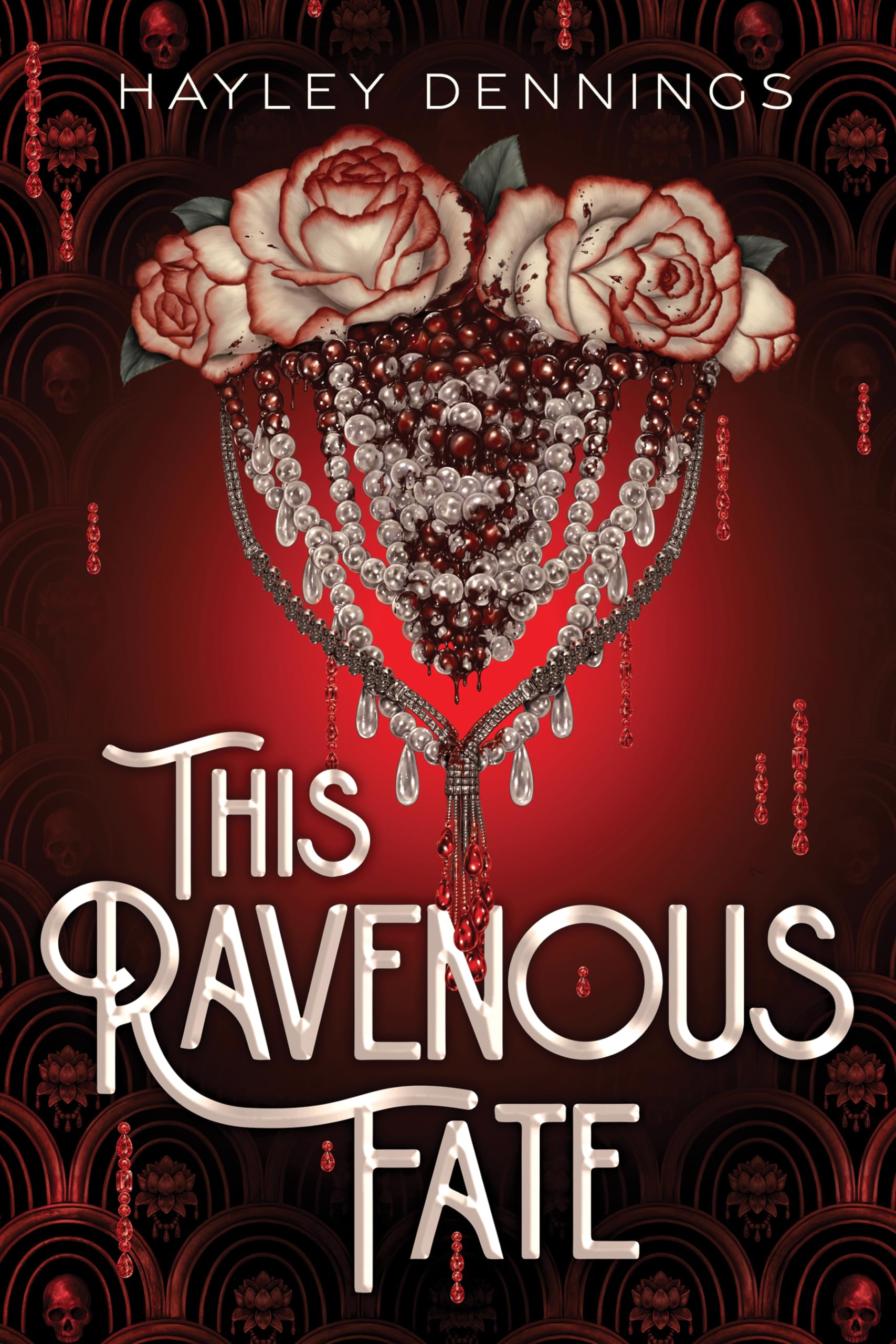
                • Cover of This Ravenous Fate
                  This Ravenous Fate

                  series · 2 books · 2024

                  similar bydarknorth americaearly 20th centuryfantasy

                • Cover of The Broken Sword
                  The Broken Sword

                  Poul Anderson · standalone novel · 1954

                  similar bydarkfantasy+1 more

                  The Broken Sword is a fantasy novel by American writer Poul Anderson, originally published on 5 November 1954. A revised edition was issued by Ballantine Books in January 1971 as the twenty-fourth volume of their Ballantine Adult Fantasy series. The original text was reissued by Gollancz in 2002. Set during the Viking Age, the novel features numerous references to Norse mythology.

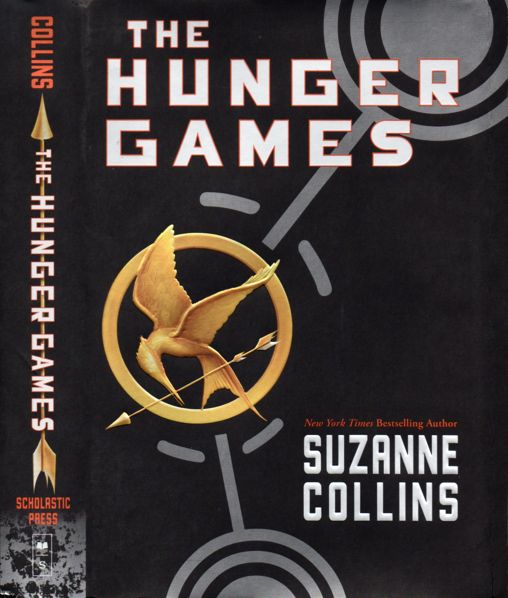
                • Cover of The Hunger Games
                  The Hunger Games

                  series · 3 books · 2008

                  part of The Hunger Games Universe

                  similar bydarknorth america+1 more

                  The Hunger Games is a series of young adult dystopian novels written by American author Suzanne Collins. The series consists of a trilogy that follows teenage protagonist Katniss Everdeen, as well as two prequels. The Hunger Games universe is a dystopia set in Panem, a post-apocalyptic North American country consisting of the wealthy Capitol and 12 districts in varying states of poverty. As punishment for rebellion, the Capitol hosts an annual battle royale competition called The Hunger Games. Each of the 12 districts must send two children between the ages of 12 and 18 to participate, and the last surviving child is dubbed the victor.

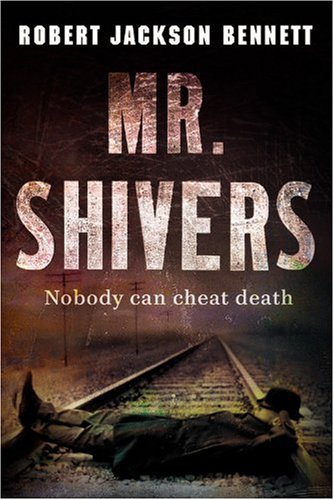
                • Cover of Mr. Shivers
                  Mr. Shivers

                  Robert Jackson Bennett · standalone novel · 2009

                  similar bydarknorth americaearly 20th centuryhorror

                  Mr. Shivers is a 2010 novel by Robert Jackson Bennett and marks his literary debut. It was first published in hardback in the United States by Orbit Books on January 15, 2010. A paperback and audiobook release was also published during the same year; the audiobook is narrated by T. Ryder Smith. Set during the Great Depression, the book follows one man's attempt to take his revenge against the one who murdered his daughter. It has been described by the Los Angeles Review of Books as featuring "a band of Depression-era hobo vigilantes who trek across the Dust Bowl after the supernatural boogeyman, a metaphorical specter who haunts the starved nation".

                • Cover of The Weight of Blood
                  The Weight of Blood

                  Tiffany D. Jackson · standalone novel · 2022

                  similar bydarkrace and racismnorth americahorror

                  The Weight of Blood is a 2022 young adult horror novel by Tiffany D. Jackson. Set in the fictional "sundown town" of Springville, Georgia, the story follows Maddy Washington, a biracial high school senior who has been forced by her racist father to hide her ethnicity by passing as white and straightening her hair. When a rainstorm leads to her hair reverting to its natural form, her heritage is revealed and a viral bullying video exposes the racism at Springville High. In a bid to salvage the school’s reputation, popular and high-achieving Wendy Quinn convinces her Black football star boyfriend to take Maddy to prom. However, a revenge prank pulled by one of her bullies on prom night humiliates Maddy, setting off a chain of events that destroy the town and leave her classmates dead.

                • Cover of The Other
                  The Other

                  Thomas Tryon · standalone novel · 1971

                  similar bydarknorth americaearly 20th centuryhorror

                  On a rural New England farm in 1935, thirteen-year-old identical twins Niles and Holland Perry share an unnervingly close bond, finishing each other's thoughts the way twins in family lore are supposed to. But the boys are not alike underneath: one is gentle and well-liked, the other carries something cold and cruel that the adults around them keep failing to notice. As a string of unsettling accidents and small cruelties start happening around the family's property, the people who love the twins begin, too slowly, to wonder whether both of them are really still there to blame. Thomas Tryon's debut novel, a work of quiet, Gothic-inflected horror.

                • Cover of The Wild Blue and the Gray
                  The Wild Blue and the Gray

                  William Sanders · standalone novel · 1991

                  similar bywarrace and racismearly 20th century+2 more

                  Fifty years after the South won the Civil War, a representative of the Cherokee Nation is attached to a Confederate air squadron fighting in France.

                • Cover of Pan's Labyrinth: The Labyrinth of the Faun
                  Pan's Labyrinth: The Labyrinth of the Faun

                  Cornelia Funke & Guillermo Del Toro · standalone novel · 2019

                  similar bydarkearly 20th century+2 more

                  Inspired by the film of the same name.