More like Bwana
anchored on:science fictionterraformingother star systemsfar futurefaith and religioncolonialism+2 more
but
- Kirinyaga
series12 books1988
completed
similar byscience fictionreflectivefar futureterraformingfaith and religioncolonialismother star systems+2 more
Kirinyaga: A Fable of Utopia is a science fiction novel published in 1998 by Mike Resnick. It is a series of parables about one man's attempt to preserve traditional African culture on a terraformed utopia.
- Dune
series20 books1963
part of Dune Universe
similar byscience fictionfar futureother star systemsfaith and religion+2 more
Frank Herbert's Dune Chronicles opens with 1965's Dune, set on the desert planet Arrakis where House Atreides takes control of the only source of the vital spice melange and young Paul Atreides is pulled into a struggle over its politics and religion. Herbert carried the story forward across five further novels — Dune Messiah, Children of Dune, God Emperor of Dune, Heretics of Dune, and Chapterhouse: Dune — following Paul's line over the following millennia, before Brian Herbert and Kevin J. Anderson later extended the saga. Many other editions of these six novels are omnibus and box-set repackagings rather than separate stories.
- A Time of Changes
Robert Silverbergstandalone novel1971
similar byscience fictionreflectivefar futurefaith and religionother star systems+1 more
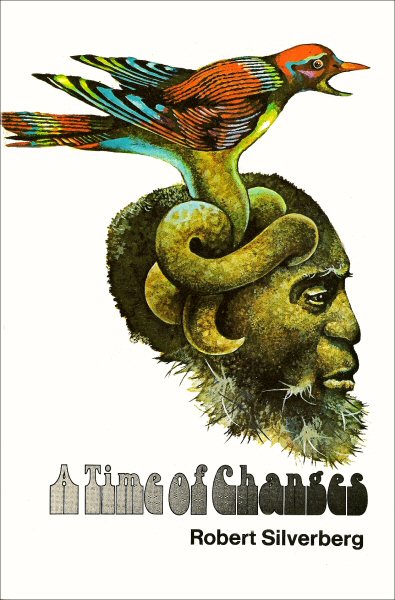
A Time of Changes is a 1971 science fiction novel by American writer Robert Silverberg. It won the Nebula Award for that year, and was also nominated for the 1972 Hugo and Locus Awards.
- Hainish
series33 books1964
completed
similar byscience fictionfar futurereflectiveother star systems
The Hainish Cycle consists of a number of science fiction novels and stories by Ursula K. Le Guin. The cycle is set in a future history that features civilizations of human beings on planets orbiting a number of nearby stars, including Terra ("Earth"); these humans are contacting each other for the first time and establishing diplomatic relations, as well as setting up a confederacy under the guidance of the oldest of the human worlds, the peaceful planet Hain. In this history, human beings did not evolve on Earth, but they were instead the result of interstellar colonies planted by Hain in the distant past, after which interstellar travel ceased for an extended period. Some of the human races have new genetic traits, a result of ancient Hainish experiments in genetic engineering; this includes people who can dream while awake, and a world of hermaphroditic people who only enter active sexuality once per month, not knowing which sex will manifest in them. In keeping with Le Guin's narrative approach, she uses varied social and environmental settings to explore the anthropological and sociological outcomes of human evolution in those environments. The author often discounted the characterization of a so-called "Hainish Cycle".
- Building Harlequin's Moon
Larry Niven & Brenda Cooperstandalone novel2005
similar byscience fictionreflectivefar futureterraformingother star systemschallenging
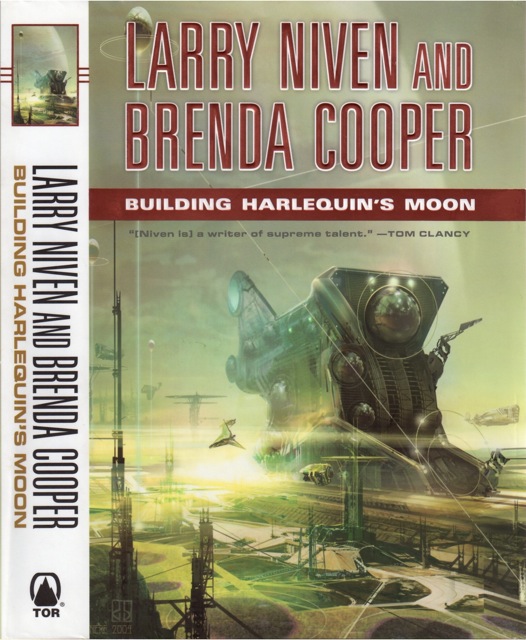
The first interstellar starship, John Glenn, fled a Solar System populated by rogue AIs and machine/human hybrids, threatened by too much nanotechnology and rife with political dangers. The John Glenn’s crew intended to terraform the nearly pristine planet Ymir, in hopes of creating a utopian society that will limit intelligent technology. But by some miscalculation they have landed in another solar system, and extremely low on the antimatter needed to continue to Ymir, they must shape the nearby planet Harlequin’s moon, Selene, into a new, temporary home. Their only hope of ever reaching Ymir is to rebuild their store of antimatter through decades of terraforming the moon. Gabriel, the head terraformer, must lead this nearly impossible task, with all the wrong materials. His primary tools are the uneducated and nearly illiterate children of the original colonists, born and bred to build Harlequin’s moon into a virtual antimatter factory. With no concept of the future and with life defined as duty, one girl, Rachel Vanowen, begins to ask herself the question: what will become of the children of Selene once the terraforming is complete.
- Downward to the Earth
Robert Silverbergstandalone novel1969
similar byscience fictionreflectivefar futurecolonialismother star systems
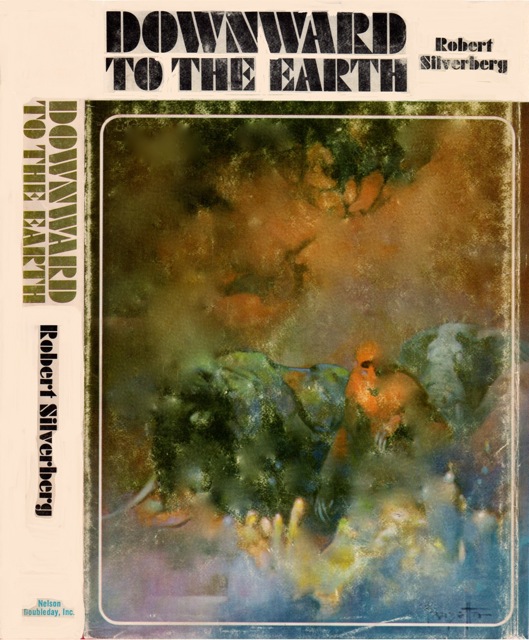
Edmund Gunderson was the Terran administrator of the colony world of Belzagor, and he returns to it after it has gained independence, feeling a sense of guilt for the way he has treated its dominant species, the elephant-like nildoror, whose animalistic appearance had kept Gunderson from taking them seriously as sentient beings. On his return, he feels a new sense of kinship with the natives, perhaps more than for the Terran tourists. The nildoror undergo a process of rebirth, and Gunderson's greatest guilt comes from having denied rebirth to seven nildoror to make them help him repair flood damage.(From Wikipedia)
- The City and the Stars
Arthur C. Clarkestandalone novel1956
similar byscience fictionreflectivefar futureother star systems
The City and the Stars is a science fiction novel by British writer Arthur C. Clarke, published in 1956. This novel is a complete rewrite of Clarke's earlier Against the Fall of Night, his first novel, which had been published in Startling Stories magazine in 1948 after being rejected by the editor of Astounding Science-Fiction, according to the author.
- 2312
Kim Stanley Robinsonstandalone novel2012
similar byscience fictionreflectivefar futureterraformingother star systems
In the eponymous year, when Earth's ecology is degraded and humanity has settled throughout the solar system by terraforming and genetic engineering, mysterious disasters strike some human communities and an assortment of human types from throughout the system seek to find and eliminate the cause.
- Stranger in a Strange Land
Robert A. Heinleinstandalone novel1961
similar byscience fictionreflectivefaith and religionchallenging
Stranger in a Strange Land is a 1961 science fiction novel by the American author Robert A. Heinlein. It tells the story of Valentine Michael Smith, a human who comes to Earth in early adulthood after being born on the planet Mars and raised by Martians, and explores his interaction with and eventual transformation of Terran culture.
- The Languages of Pao
Jack Vancestandalone novel1958
similar byscience fictionreflectivefar futurecolonialismother star systems
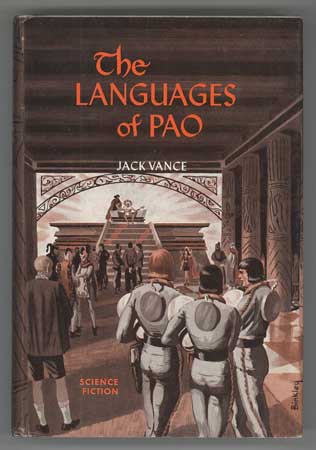
The Languages of Pao is a science fiction novel by American writer Jack Vance, first published in 1958, based on the Sapir–Whorf hypothesis, which asserts that a language's structure and grammar construct the perception and consciousness of its speakers. In the novel, the placid people from the planet Pao rely on other planets for technological innovations and manufactured goods and they do not resist when an invading force occupies the land and levies heavy taxes. To expel the aggressors and make the planet more independent, three new languages are introduced. A scientific language induces its speakers to innovate more; a well-ordered language encourages its speakers to be industrious; and a warlike language induces competitiveness and aggression. The new languages change the culture and Pao ousts their overlords and develops a sophisticated modern economy.
- Triton
Samuel R. Delanystandalone novel1976
similar byscience fictionreflectivefar futureother star systemschallenging
Trouble on Triton: An Ambiguous Heterotopia (1976) is a science fiction novel by American writer Samuel R. Delany. It was nominated for the 1976 Nebula Award for Best Novel, and was shortlisted for a retrospective James Tiptree, Jr. Award in 1995. It was originally published under the shorter title Triton.
- Aurora
Kim Stanley Robinsonstandalone novel2015
similar byscience fictionreflectivefar futurechallengingother star systems+1 more
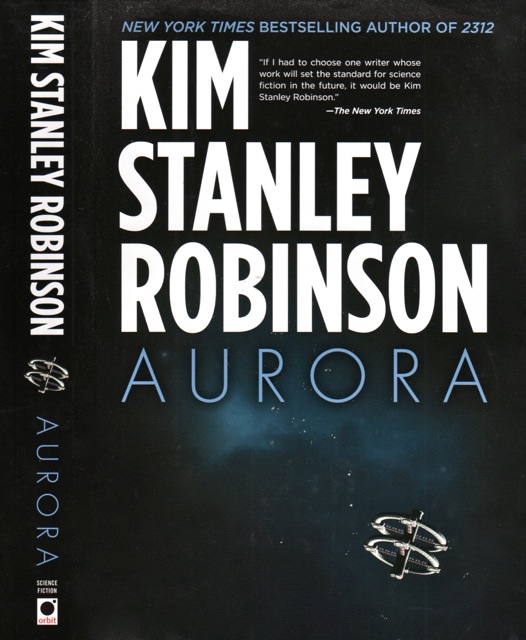
Aurora is a 2015 novel by American science fiction author Kim Stanley Robinson. The novel concerns a generation ship built in the style of a Stanford torus, traveling to Tau Ceti to start a human colony. The novel's primary narrative voice is that of the starship's artificial intelligence. Aurora was well received by critics.
- Helliconia
series4 books1982
completed
similar byscience fictionreflectivefar futureother star systemschallenging
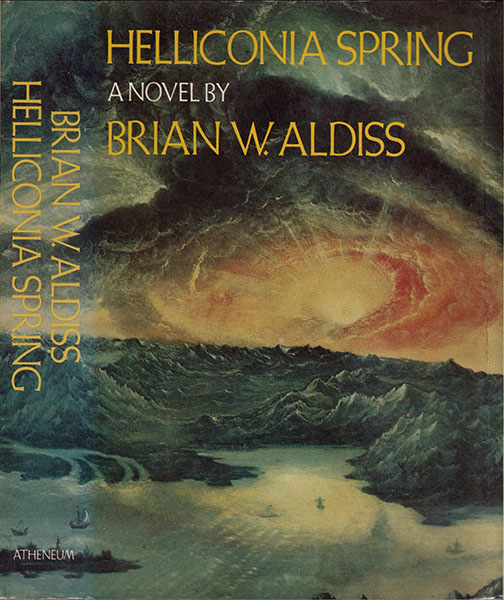
The Helliconia trilogy is a series of science fiction books by British writer Brian W. Aldiss, set on the Earth-like planet Helliconia. It is an epic chronicling the rise and fall of a civilisation over thousands of years as the planet progresses through its incredibly long seasons, which last for centuries.
- Sin of Origin
John Barnesstandalone novel1988
similar byscience fictionreflectivefar futurefaith and religioncolonialismother star systems+1 more
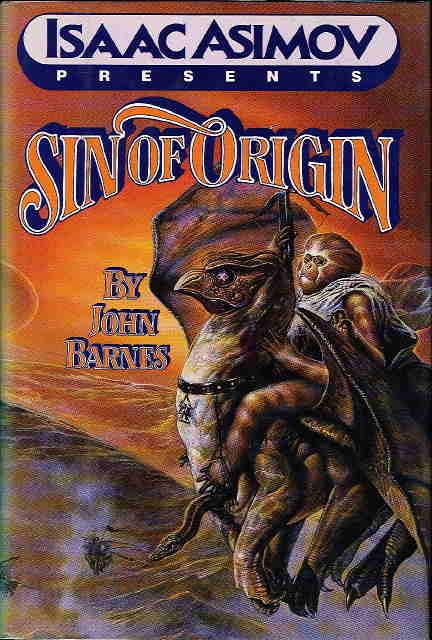
From the front flap of the Congdon & Weed first printing: "In the distant future, the planet Randall becomes the focus of human exploration. Not even Earth before its end boasted the existence of three such highly developed intelligent species. Forming an interdependent triumvirate being, the griffinlike "wingpersons," the multiarmed "handpersons," and the telepathic "handsnakes" find their ancient alliance threatened by missionaries who want to bring the Randallans peacefully into the Christian commonwealth. After more than a millennium of peaceful coexistence, the Randallans once again begin to fight among themselves because the human teachings undermine key cultural doctrines that united them. Brother Hauskyld Gomez and Dr. Clio Yeremenko, a Communist xenist stowaway, join forces with a captain of the Templars (whose reputation for planetary "domestication" is infamous) and with the High Kings of Randall to bring about a tenuous peace Thus begins their remarkable friendship with Kuf, a xhu'gha griffin, one who is not part of a triple. Kuf converts to Christianity after being commanded to meet with the missionaries; he later becomes a prisoner because of his newfound beliefs, then is appointed ambassador. And that is only the beginning for this wise, sad creature."
- Wyrms
Orson Scott Cardstandalone novel1987
similar byscience fictionreflectivefar futureother star systems+1 more
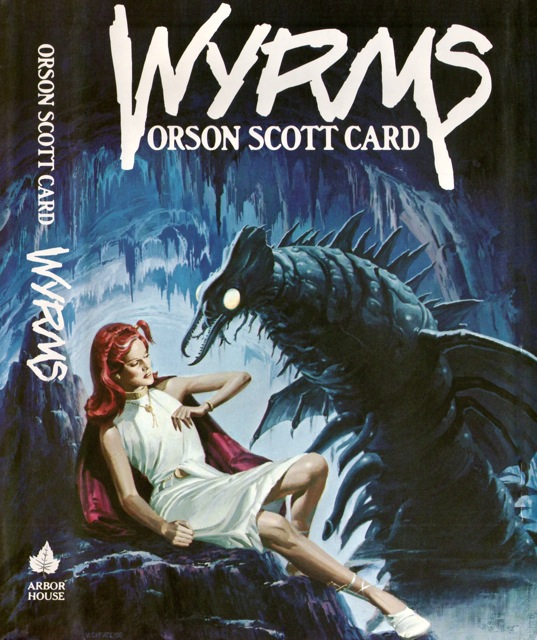
Wyrms (1987) is a science fiction novel by American writer Orson Scott Card. The story examines desire, wisdom, and human will. Card describes a version of the tri-partite soul, similar to that articulated by Plato in the Republic.
- This Immortal
series2 books1966
similar byscience fictionreflectivefar futurecolonialism
This Immortal is a single science fiction novel by Roger Zelazny, expanded from his 1965 serial ...And Call Me Conrad. In a depopulated future Earth largely toured by an alien race, its long-lived, secretive protagonist Conrad Nomikos is assigned to guide and protect a visiting alien across the ruins of Greece and Egypt, uncovering old grudges and assassination plots along the way. The novel shared the 1966 Hugo Award for Best Novel with Frank Herbert's Dune.
- The Chrysalids
John Wyndhamstandalone novel1955
similar byscience fictionreflectivefar future+1 more
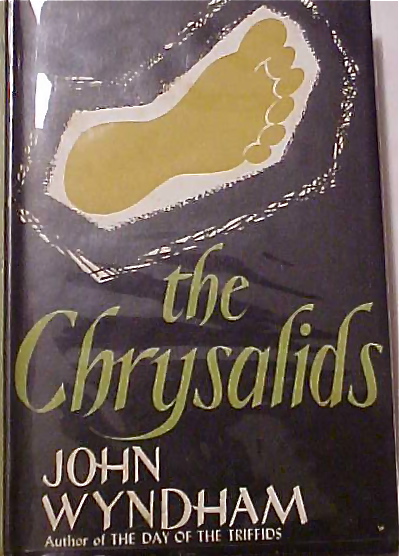
The Chrysalids is a science fiction novel by British writer John Wyndham, first published in 1955 by Michael Joseph. It is the least typical of Wyndham's major novels, but regarded by some as his best. An early manuscript version was entitled Time for a Change.
- The Eye of the Heron
Ursula K. Le Guinstandalone novel1978
similar byscience fictionreflectivefar futurecolonialismother star systems
The Eye of the Heron is a 1978 science fiction novel by American author Ursula K. Le Guin which was first published in the science fiction anthology Millennial Women.
- Saint Leibowitz
series6 books1955
completed
similar byscience fictionfar futurefaith and religion+1 more
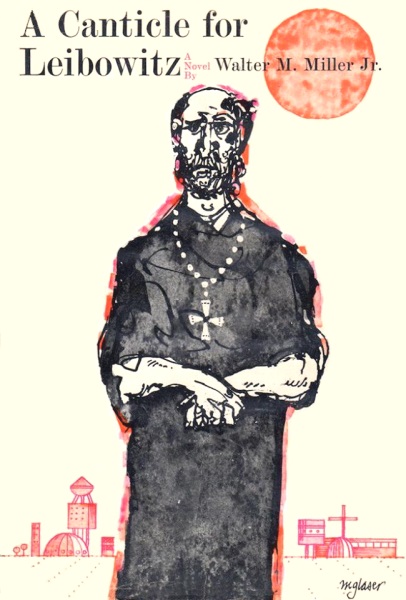
Walter M. Miller Jr.'s A Canticle for Leibowitz (1959), assembled from three novellas he had published earlier in the decade, follows the monks of a Catholic monastery in the post-nuclear American Southwest as they preserve fragments of scientific knowledge across centuries, watching civilization slowly rebuild itself and edge back toward the mistakes that destroyed it. Miller's posthumous sequel, Saint Leibowitz and the Wild Horse Woman, completed by Terry Bisson from his notes after his death and published in 1997, returns to the same abbey and its world decades later. Together the two novels form a sparse, decades-spanning series about memory, faith, and the cycles of civilization.
- Dune Universe
universe78 books1963
Start hereDune · Start here
similar byscience fictionfar futureother star systems
Arrakis. Dune. The desert planet, where empire runs on a single substance: the spice melange, which folds space, prolongs life, and unlocks prescience, and which exists nowhere else in the known universe. Frank Herbert's saga is a meditation dressed as an adventure — feudal houses and a secret sisterhood, engineered messiahs and the patient ecology of a world without water, all turning on the terrible gravity of who commands the spice. It reads like scripture and schemes like a war room, ten thousand years hence, among people who have outlawed the thinking machine and made instruments of themselves instead. At its heart stand Herbert's original six — Dune, Dune Messiah, Children of Dune, God Emperor of Dune, Heretics of Dune, Chapterhouse: Dune — a single deepening arc across millennia, arguing the whole way between prophecy and free will. Around that spine his son Brian Herbert and Kevin J. Anderson have raised a vast prequel architecture: Prelude to Dune, tracing the great houses a generation before Paul; Legends of Dune, reaching back to the crusade that broke the machines; the Schools of Dune cycle on the founding of Bene Gesserit, Mentat, and Navigator; the Caladan Trilogy and Heroes of Dune filling years the originals left in shadow. Many hands, dozens of volumes, one desert. What sets Dune apart is its refusal of the simple: religion is manufactured, heroes are hazards, and the sand itself — worm, water, ecology — acts as a political power. Begin where the universe did, with Frank Herbert's Dune (1965), and read the original six in order; you need nothing else to feel the full weight. The prequels are a country to explore afterward, taken by era. Beginnings are delicate times.
- Pennterra
Judith Moffettstandalone novel1987
similar byscience fictionreflectivefar futurecolonialismother star systems+1 more
Pennterra is a science fiction novel by American author Judith Moffett, first published in 1987. Isaac Asimov wrote an introduction for the book and published it under his "Isaac Asimov Presents" series. Pennterra was reprinted in 2009 by Fantastic Books, an imprint of Warren Lapine's Wilder Publications.
- Project Pope
Clifford D. Simakstandalone novel1981
similar byscience fictionreflectivefar futurefaith and religionother star systems
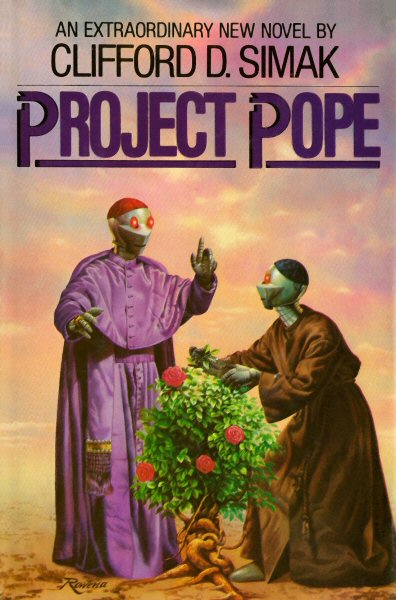
Project Pope is a science fiction novel by the American author Clifford Simak, published in 1981 by Ballantine Books. The novel is about a group of robots and humans living on a planet called the End of Nothing. Their mission is to search the universe and other dimensions to seek out true religion and knowledge. They add the information they gather to their Pope, a robotic supercomputer, in order to make an infallible authority of all knowledge and religion. The novel was nominated for both a Hugo Award for Best Novel and a Locus Award for Best SF novel in 1982.
- The Face of the Waters
Robert Silverbergstandalone novel1991
similar byscience fictionreflectivefar futureother star systems+1 more
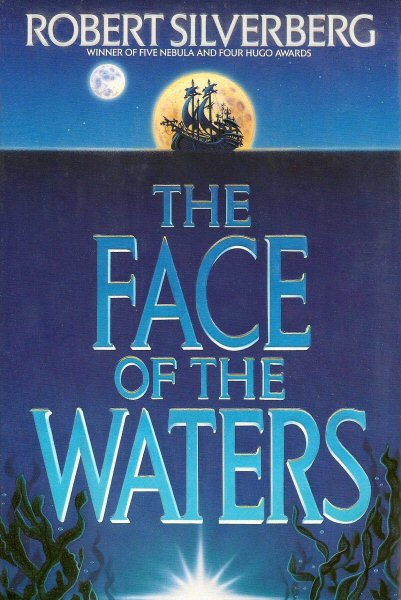
On the ocean world of Hydros -- a planet with no land beyond a scatter of artificial floating islands -- the human settlers of Sorve commit an offense against the native aquatic Hydrans serious enough to get their community banished, forbidden from settling on any other island. With nowhere else to go, Sorve's people set out across the water in a makeshift flotilla, chasing rumors of a mythical island called the Face of the Waters that may or may not exist, forced to reckon with what they owe the world they've spent generations treating as theirs. A Robert Silverberg novel of exile and search, told through Sorve's displaced islanders.
- Imperial Radch
series7 books2012
part of Radchaai Universe
similar byscience fictionfar futureother star systems+2 more
Ann Leckie's Imperial Radch trilogy (Ancillary Justice, Ancillary Sword, Ancillary Mercy, 2013-2015) follows Breq, the sole surviving fragment of an AI that once inhabited both a troop-transport starship and dozens of soldier bodies, now alone and hunting for revenge inside the vast, expansionist Radch empire. Breq's quest widens across the trilogy into a conflict with the empire's own fractured ruler, and the books use her alien difficulty perceiving gender to unsettle the space-opera conventions around her.