More like Caesar Clark
anchored on:science fiction
but
- Future History
series42 books1939
completed
similar byscience fiction+2 more
The Future History is a series of science fiction stories written by American author Robert A. Heinlein (1907–1988). It describes a projected future of the human race from the middle of the 20th century through the early 23rd century. The term Future History was coined by John W. Campbell Jr. in the February 1941 issue of Astounding Science Fiction. Campbell published an early draft of Heinlein's chart of the series in the May 1941 issue.
- Cities in Flight
series10 books1950
completed
similar byscience fictionspace colonization+1 more
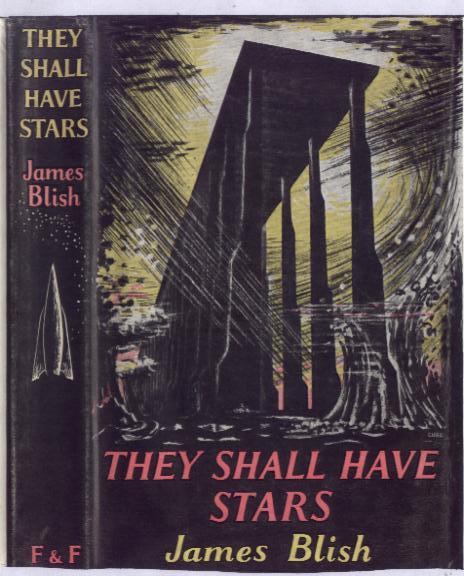
Cities in Flight is a four-volume series of science fiction novels and short stories by American writer James Blish, originally published between 1950 and 1962, which were first known collectively as the "Okie" novels. The series features entire cities that are able to fly through space using an anti-gravity device, the spindizzy. The stories cover roughly two thousand years, from the very near future to the end of the universe. One story, "Earthman, Come Home", won a Retro Hugo Award in 2004 for Best Novelette. Since 1970, the primary edition has been the omnibus volume first published in paperback by Avon Books. Over the years James Blish made many changes to these stories in response to points raised in letters from readers.
- H. G. Wells' War of the Worlds
universe65 books1898
Start hereThe War of the Worlds · Start here
similar byscience fiction+1 more
No one would have believed, in the closing years of the nineteenth century, that human affairs were being watched keenly and closely from the timeless worlds of space. And then the cylinders fell. H. G. Wells' War of the Worlds opens in the quiet of the Surrey commons, where a falling star proves to be the first Martian craft — and from the pit rise the towering tripods, the Heat-Ray, the choking Black Smoke and the creeping red weed, wielded by minds that regard mankind much as we regard the creatures we boil for supper. This is invasion rendered as natural disaster: cold, methodical, and vast beyond argument. Wells' 1898 novel is the seed; everything else grows from that Martian soil. The catalogue gathers direct sequels and continuations alongside a wide field of other hands. In War of the Worlds: Global Dispatches the invasion is retold across the whole planet through the eyes of Twain, Verne, Tolstoy, Lowell and Kipling; in the Manly Wade and Wade Wellman crossover, Sherlock Holmes, Watson and Professor Challenger take the field against the machines; and Scott Washburn's Great Martian War stretches the fighting into a decades-long alternate history of steam, artillery and grinding attrition. It is a loose shared world — no single decreed sequence, many voices answering one calamity. What sets this world apart is its refusal of heroics: the invaders fall not to generals but to the smallest things of Earth, humbling and indifferent. Begin, always, with Wells' original novel — it is short, and it is the ground every later book stands upon. From there follow your appetite: Global Dispatches for the panorama, the Holmes campaign for adventure, Washburn for the long war.
- Thunder and Lightning
series4 books2003
completed
similar byscience fictionnear future+4 more
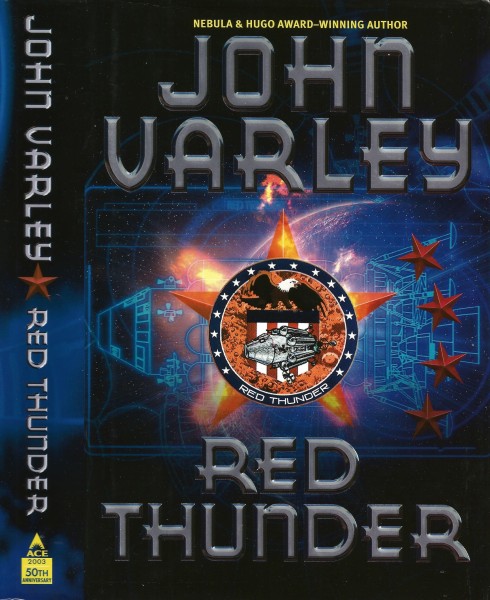
John Varley's Thunder and Lightning books follow the Broussard family across two generations as a backyard fusion-power breakthrough turns an eccentric Florida inventor's homemade spacecraft into the opening move of an independent human expansion to Mars and beyond. Red Thunder and Red Lightning follow the first generation's improvised trip to Mars; Rolling Thunder and Dark Lightning pick up decades later with their descendants.
- Flood
series6 books2008
similar byscience fictionsurvivalnear future+3 more
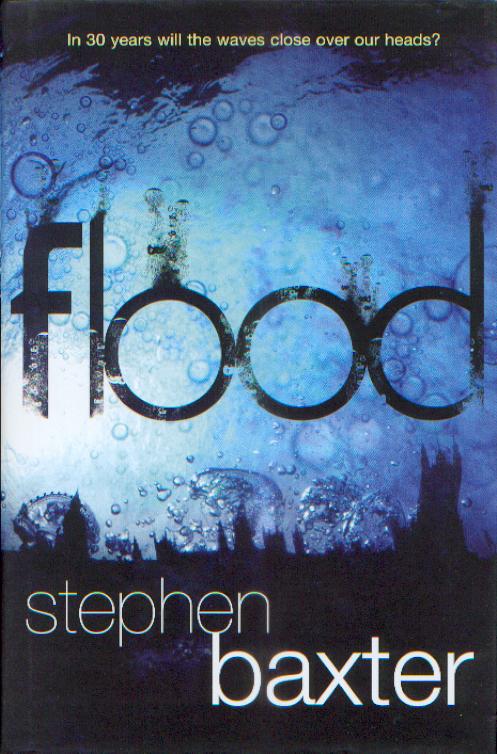
In Stephen Baxter's Flood, sudden seismic upheaval releases immense reservoirs of water trapped deep beneath Earth's crust, and sea levels begin climbing far faster than anyone can adapt to, forcing a handful of survivors to watch coastlines and then continents disappear. The 2009 sequel, Ark, follows a parallel thread of people who instead gamble everything on a desperate escape from the drowning planet. Together the two books trace roughly a half-century of civilizational collapse and reinvention as dry land runs out.
- Nicholas Seafort
series7 books1994
completed
similar byscience fictiontense+1 more
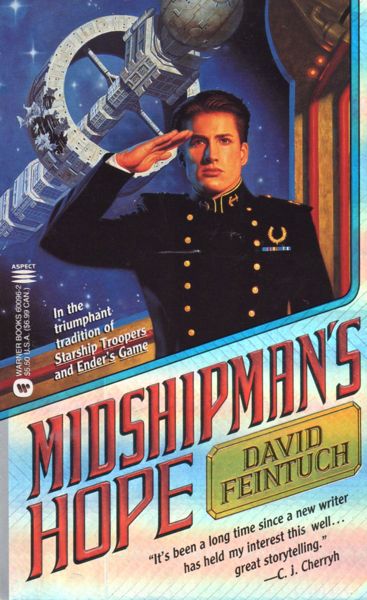
The Seafort Saga is a series of science fiction novels written by American author David Feintuch. The novels are set from the late 22nd century to the mid-23rd century and relate the adventures of Nicholas Seafort, an officer in the (fictional) UNNS| United Nations Naval Service. The series is a collection of personal accounts, usually from the perspective of Nicholas Seafort, describing Seafort's adventures, beginning as a lowly midshipman, to the elected leader of earth, and finally to the captain of the UNNS flagship Olympiad. Although most books in the series are told from a single perspective, usually Seafort's, Voices of Hope is a collection of accounts from several sources: Seafort's son, PT, the son of a friend of Seafort's, and a transient boy named Pook. Additionally, Children of Hope is narrated by Randy Carr, the son of a close friend of Seafort.
- Pandora
series4 books1966
similar byscience fictionsurvival+3 more
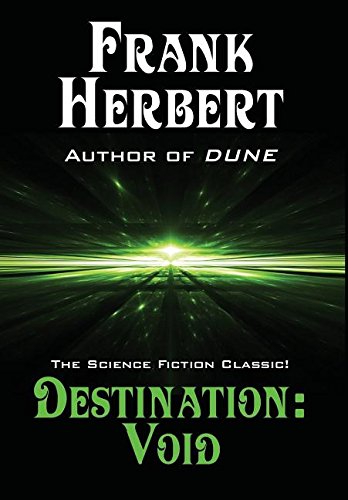
The Pandora Sequence opens with Frank Herbert's solo novel Destination: Void, in which a starship crew must jury-rig a working artificial consciousness after their vessel's control systems fail. Bill Ransom co-writes the three novels that follow, carrying the survivors to the world Pandora, where they must contend with both a manipulative machine intelligence and the planet's own hostile ecology. Across its four books the series moves from a claustrophobic ship-bound crisis to a generations-long struggle over faith, control, and survival on a dangerous new world.
- Company Wars
series7 books1981
part of Alliance-Union Universe
similar byscience fictiontense+3 more
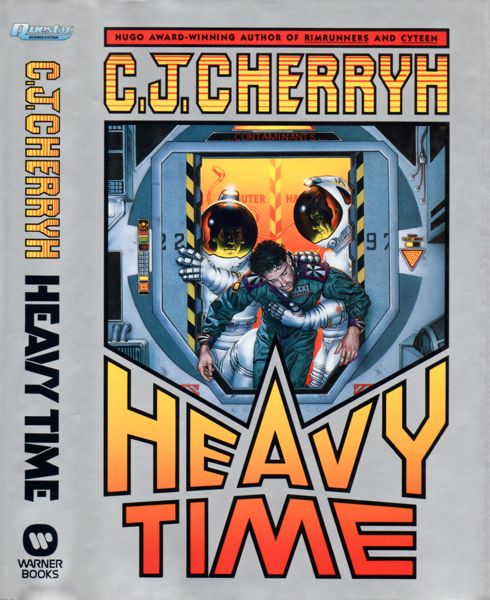
Company Wars gathers the novels C. J. Cherryh set during the breakaway conflict between Earth's colonial Company and the newly independent Union, within her wider Alliance-Union future history. Anchored by the Hugo Award-winning Downbelow Station, the books follow different ships, stations, and crews caught on either side, from merchanter traders to military spacers, rather than a single continuing cast. Read in any order, they build up a picture of the political and economic pressure that reshapes Cherryh's larger Alliance-Union universe.
- Patternist
series6 books1976
completed
similar byscience fiction+2 more
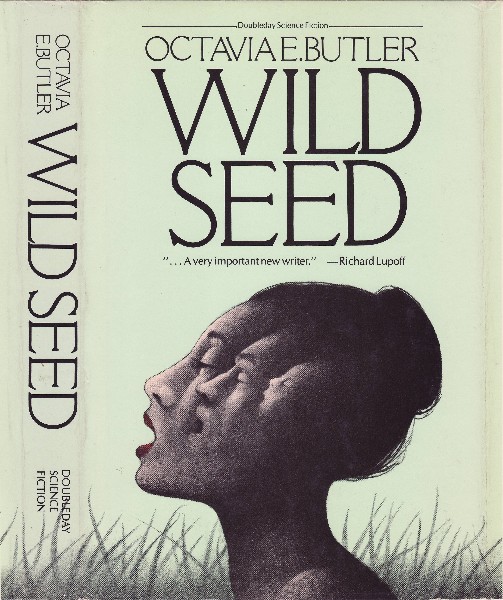
The Patternist series is a group of science fiction novels by Octavia E. Butler that detail a secret history continuing from the Ancient Egyptian period to the far future that involves telepathic mind control and an extraterrestrial plague. A profile of Butler in Black Women in America notes that the themes of the series include "racial and gender-based animosity, the ethical implications of biological engineering, the question of what it means to be human, ethical and unethical uses of power, and how the assumption of power changes people."
- Bronson Beta
series5 books1933
similar byscience fiction+4 more
When Worlds Collide (1933) and its sequel After Worlds Collide (1934), written together by Edwin Balmer and Philip Wylie, follow a small group of survivors who escape a doomed Earth as the rogue planet Bronson Alpha destroys it, landing on its companion world Bronson Beta to begin again. The two novels form a self-contained disaster-and-survival duology.
- Alliance-Union Universe
universe173 books1976
Start hereCompany Wars · The central sequence
similar byscience fiction+2 more
The dark between the stars belongs to no one, and everyone who lives out here knows it: the merchanter Families hauling cargo between stations that cannot feed themselves, the Earth Company clutching at colonies it can no longer supply, the Union breeding its cloned azi to settle worlds faster than birth allows. C. J. Cherryh's Alliance-Union is a future history of humankind's spread across the third and fourth millennia, told from inside the pressure — no clean empires, only stations, ships, treaties, and the people caught in the machinery of who holds the jump-points. The sequence runs from the first laborious pre-FTL stations through the Company Wars, the independence struggle that breaks over Pell in Downbelow Station (Hugo, 1981), to the genetics and cold politics of Union's homeworld in Cyteen (Hugo, 1988) and its sequel Regenesis. Around that spine cluster the merchanter novels of trader Families, the Faded Sun trilogy of human envoys among the martial alien Mri, and the Chanur books, narrated from the hierarchical, whiskered viewpoint of the hani. On the isolated world of Merovin, the Merovingen Nights anthologies open the setting to other hands — Mercedes Lackey, Janet and Chris Morris, Nancy Asire — a shared world braided into the whole. What sets it apart is intimacy at scale. Cherryh drops you without a map into a single skull and lets you assemble the politics from what that person fears and bargains for; the aliens are genuinely alien, loyalty is always provisional, and the real antagonist is usually logistics. Most books stand alone, in her words, "like real history." The surest way in is Downbelow Station — the war seen from one besieged station — then Cyteen, for the mind that shaped the other side.
- Ender's Shadow
series5 books1999
part of Ender's Game Universe
similar byscience fictiontense
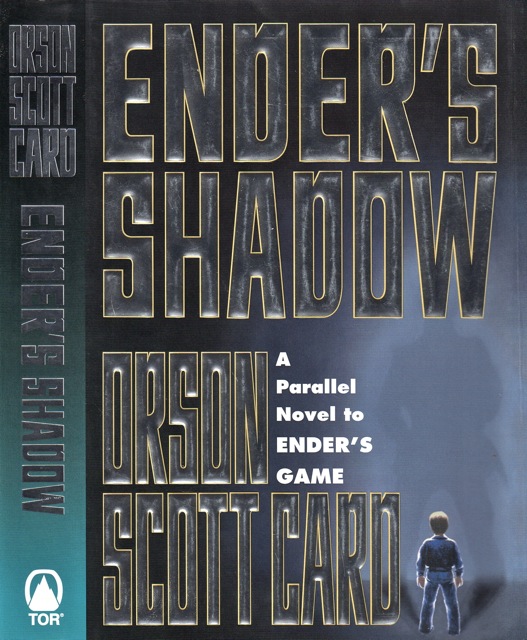
Orson Scott Card's Ender's Shadow retells the events of Ender's Game from the perspective of Bean, a physically stunted but ferociously intelligent street child recruited into the same Battle School program as Ender Wiggin. It launches the Shadow series, which follows Bean and other secondary Battle School characters into the political aftermath of the Formic Wars back on Earth, running parallel to and eventually past the timeline of Card's main Ender Quintet.
- Xenogenesis / Lilith's Brood
series4 books1987
completed
similar byscience fiction+4 more
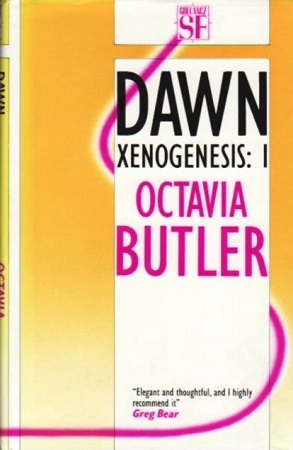
Lilith's Brood, previously known as the Xenogenesis Trilogy, is a collection of three science fiction works by Octavia E. Butler: Dawn, Adulthood Rites, and Imago.
- Bio of a Space Tyrant
series6 books1983
similar byscience fiction+1 more
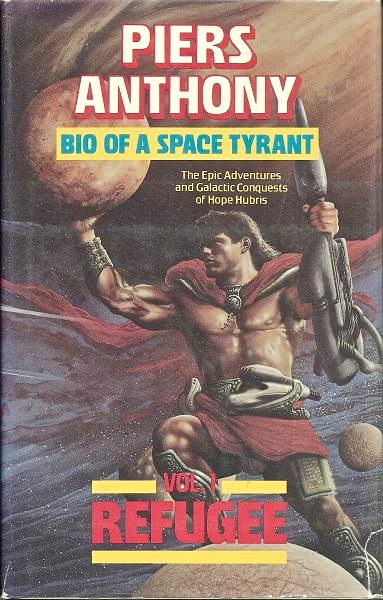
Bio of a Space Tyrant series is a six-book science-fiction series by Piers Anthony based within the Solar System. The series revolves around the character Hope Hubris and his family, and charts Hope's ascent from poor Hispanic refugee to Tyrant of Jupiter, a single person heading the Executive, Judicial and Legislative branches of the government. It is considerably more adult-themed than many of Anthony's earlier works.
- Ender Wiggin
series14 books1977
part of Ender's Game Universe
similar byscience fiction+1 more
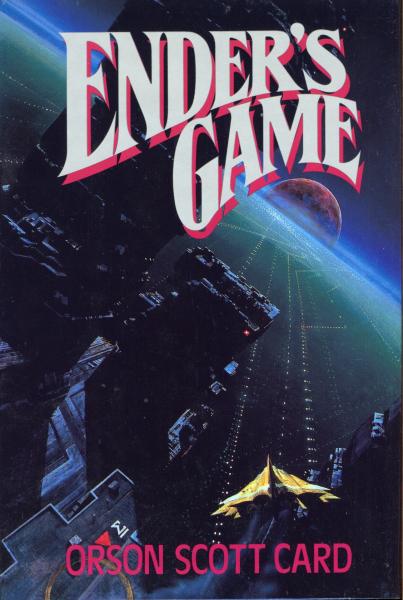
Orson Scott Card's Ender's Game (1985, expanded from his 1977 novella) follows child prodigy Andrew "Ender" Wiggin as he is recruited into a military training program built to prepare Earth's defenses for an anticipated third war against an insectoid alien species known as the Formics. The saga continues years later through Speaker for the Dead and Xenocide, following an older Ender as he confronts the moral weight of his role in that earlier conflict, and concludes the core arc in Children of the Mind, with Ender in Exile filling in the years between the first two books. Set within the wider Ender's Game universe, the series shifts from military coming-of-age story to slower, more philosophical science fiction as it progresses.
- Colony
Ben Bovastandalone novel1978
similar byscience fictiontensespace colonizationsurvivalnear future
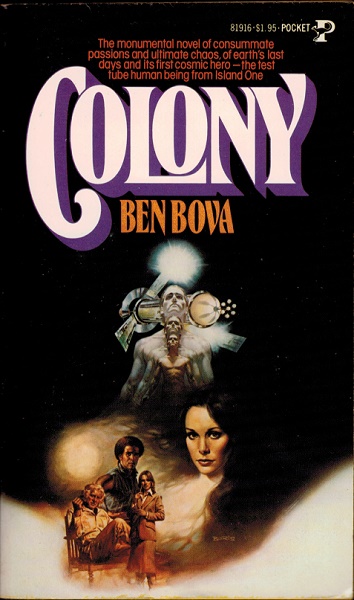
Colony continues the story Ben Bova began in Millennium, following astronaut-turned-administrator Chet Kinsman years later as the head of an orbiting space habitat that has become Earth's only real refuge from a planet buckling under overpopulation, food shortages and unrest. Getting a place in the habitat is a matter of life and death for millions who will never be chosen, and as Earth's governments grow more desperate to control or dismantle the colony outright, Kinsman has to decide how far he'll go to protect the world he's built off-world. Bova later folded both novels together into the omnibus The Kinsman Saga. Part of Ben Bova's Chet Kinsman series.
- Academy / Priscilla (Hutch) Hutchins
series16 books1983
similar byscience fiction
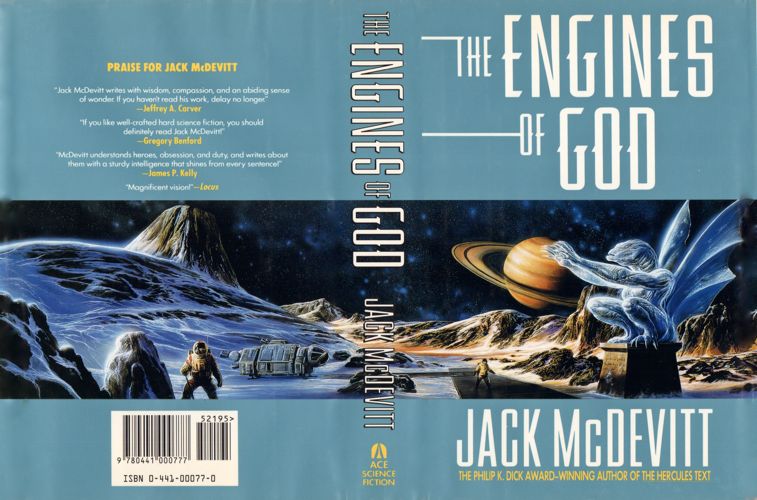
Jack McDevitt's Academy novels follow Priscilla 'Hutch' Hutchins, a starship pilot turned administrator, across a series of archaeological mysteries involving vanished alien civilizations and inexplicable ancient artifacts scattered through human space. Beginning with The Engines of God, the series treats deep time and the near-total absence of intelligent alien life as its central mystery, favoring slow-burn discovery over action. McDevitt returned to Hutch across three decades of publication.
- Seveneves
Neal Stephensonstandalone novel2015
similar byscience fictiontensespace colonizationsurvivalnear future
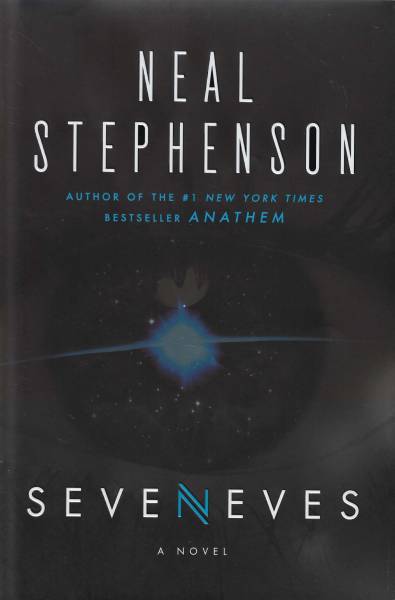
Seveneves is a science fiction novel by Neal Stephenson published in 2015. The story tells of the desperate efforts to preserve Homo sapiens in the wake of apocalyptic events on Earth after the unexplained disintegration of the Moon and the remaking of human society as a space-based civilization after a severe genetic bottleneck.
- To the Stars (Harrison)
series3 books1980
completed
similar byscience fictiontense+3 more
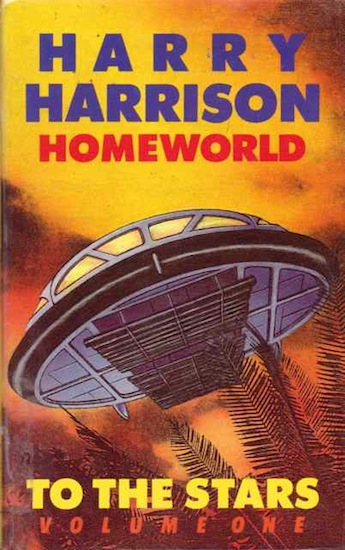
The To the Stars trilogy is a series of science fiction novels by Harry Harrison, first published in 1980 (Homeworld) and 1981. The three books were re-published in an omnibus edition in 1981.
- Remnants
series14 books2001
similar byscience fictiontensesurvival+3 more
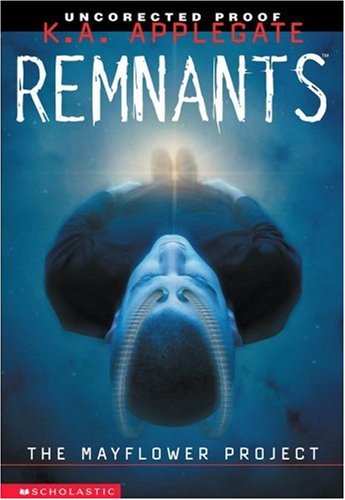
Remnants is a series of 14 young adult science fiction books co-authored by Katherine Applegate and her husband Michael Grant, writing together under the name K. A. Applegate, published between July 2001 and September 2003. The series centres around a group of humans launched into space in a desperate attempt to survive following an asteroid collision with the Earth.
- The Winds of Altair
Ben Bovastandalone novel1973
similar byscience fictiontensespace colonizationnear future+1 more
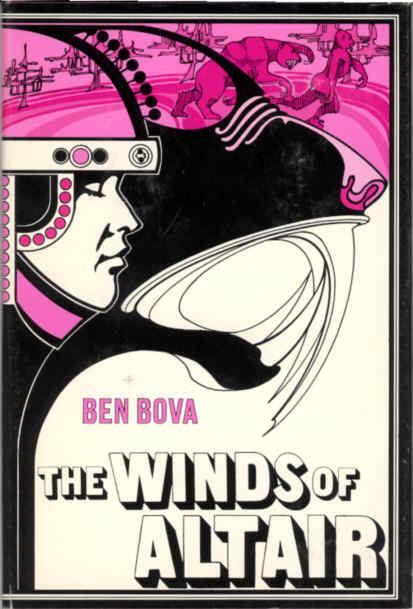
From back cover Tor trade paperback May 1983: MORALITY VS. SURVIVAL... Even before the human scientists arrived at the sixth planet of Altair they knew they had their work cut out for them. Star probes had long before informed them that Altair VI had flourishing ecology with one very tough beast at the top of the food chain, a beast that would have to be dealt with before the human colony ships arrived. What they didn't know was that the beast was not only tough, it was as smart as a man -- and that the only human capable of real communication with the wolfcats of Altair would want to become one...
- The Martian
series2 books2012
similar byscience fictiontensesurvivalnear future
Andy Weir's novel The Martian, first self-published in 2011 before a commercial re-release, follows astronaut Mark Watney after he is stranded alone on Mars when his crew presumes him dead and departs. Using scientific improvisation and dark humor, Watney works to keep himself alive long enough for a rescue to reach him. It is a single, self-contained survival story.
- Exiles (Ben Bova)
series3 books1971
completed
similar byscience fiction+3 more
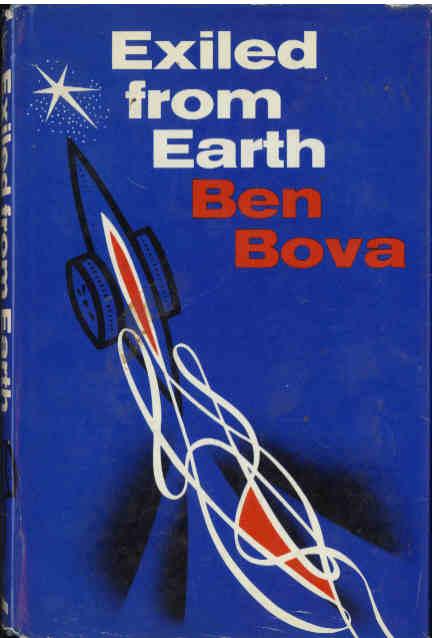
Ben Bova's Exiles trilogy — Exiled from Earth, Flight of Exiles, and End of Exile — follows a group of people exiled from Earth aboard a starship, forced to search for a new home for later generations. Published in the early 1970s and catalogued partly under children's fiction, the trilogy was aimed at younger as well as adult science-fiction readers.
- Laurie Jo Hansen
series10 books1971
completed
part of CoDominium
similar byscience fictiontensespace colonizationnear future+1 more
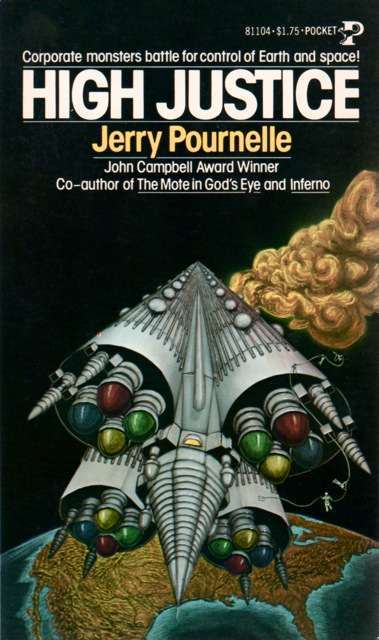
Laurie Jo Hansen groups Jerry Pournelle's early CoDominium-universe stories and the novel Exiles to Glory (1978), part of the same future history that produced his Falkenberg's Legion novels.