More like Calculating Minds
anchored on:science fictionspaceother star systems
but
- Foundation Universe
universe123 books1940
Start hereFoundation · Start here
similar byscience fiction+2 more
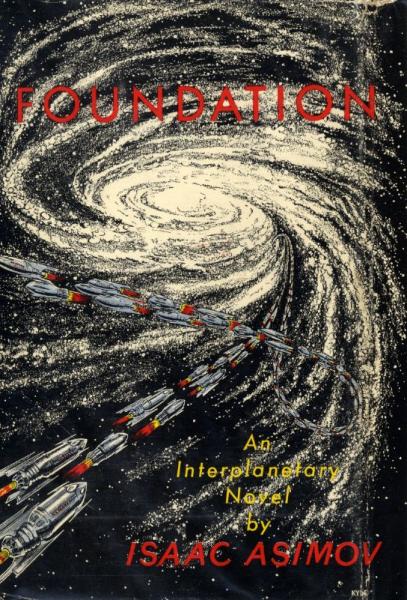
There is a science that reads the future of quadrillions the way an astronomer reads the orbits of stars. It is called psychohistory, and its equations foresee something the ruling Galactic Empire cannot admit: the throne is rotting, and thirty thousand years of barbarism are coming. One man, Hari Seldon, cannot stop the fall. He can only shorten it — by seeding a Foundation of scholars at the rim of the galaxy, a fragile institution built to carry knowledge across the dark and cut the interregnum to a single millennium. This is a universe told in the register of history itself: the long view, the calm of deep time, empires measured in centuries and men measured against them. The spine is Asimov's original trilogy — Foundation, Foundation and Empire, Second Foundation — followed decades later by the sequels Foundation's Edge and Foundation and Earth and the prequels Prelude to Foundation and Forward the Foundation. Late in life Asimov braided this in with his other future histories: the Robot novels of detective Elijah Baley and his humaniform partner R. Daneel Olivaw (The Caves of Steel, The Naked Sun, The Robots of Dawn, Robots and Empire) and the early Galactic Empire novels (Pebble in the Sky and its kin), until one continuous chronicle ran from the first thinking robots to the Second Empire. Other hands extend it — the Second Foundation Trilogy by Gregory Benford, Greg Bear, and David Brin, and shared-world spinoffs such as Robot City — so the corpus sprawls beyond a single author's tidy shelf. What distinguishes it is that the drama is intellectual: crises resolved by insight, nerve, and dialogue rather than fleets and blades, each turn hinging on the hidden logic of the Seldon Plan. Begin where readers have always begun — with Foundation, and the original trilogy in publication order. The rest opens outward from there.
- Forge of God
series2 books1987
completed
similar byscience fictionaliens+4 more
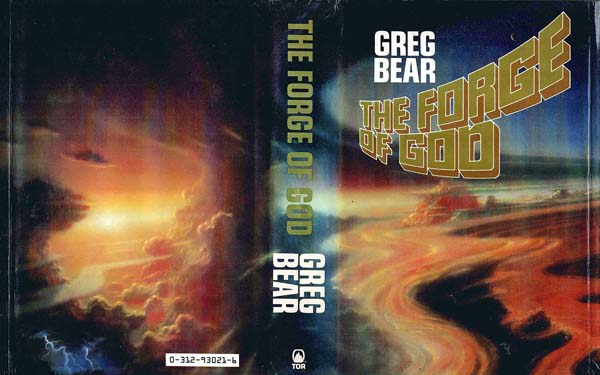
The Forge of God (1987) is Greg Bear's science fiction novel about Earth's discovery that it is the target of an incomprehensible, overwhelming alien attack, following scientists and ordinary people as they try to understand what is destroying the planet. Its 1992 sequel, Anvil of Stars, follows a group of young survivors sent on a mission of interstellar retaliation, continuing directly from the first book's ending.
- Ocean / Galactic Center
series12 books1972
similar byscience fictionalienshard science fiction+4 more
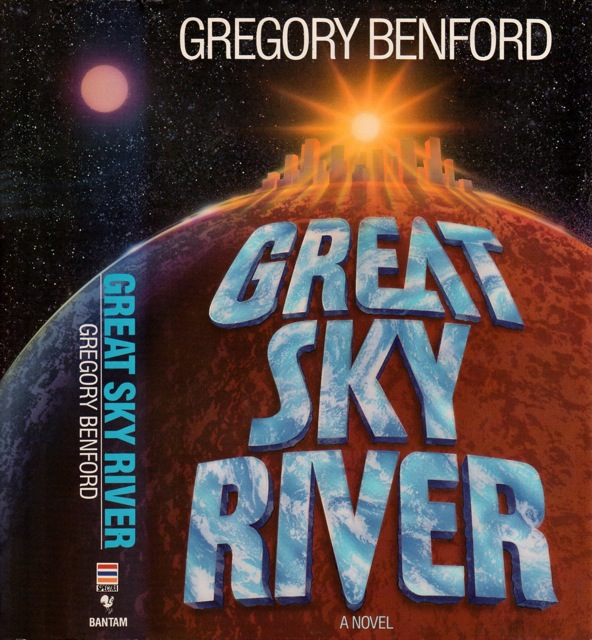
The Galactic Center Saga is a series of books by author Gregory Benford detailing a galactic war between mechanical and biological life.In the Ocean of Night (1977) — 1977 Nebula Award nominee, 1978 Locus Award nominee Across the Sea of Suns (1984) Great Sky River (1987) — 1988 Nebula Nominee Tides of Light (1989) — 1990 Locus Award nominee Furious Gulf (1994) Sailing Bright Eternity (1996) "A Hunger for the Infinite" a novella published in the anthology Far Horizons
- The Android's Dream
series2 books2006
similar byscience fictionartificial intelligencealiensnear futurespaceother star systems
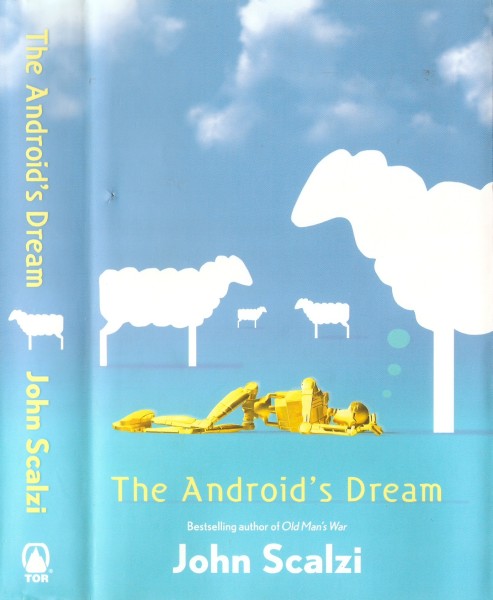
A minor diplomatic insult with a genetically engineered sheep breed spirals into a full interstellar crisis when the last surviving specimen of the 'Android's Dream' breed, needed for a critical ceremony with the alien Nidu, turns out to have been hunted to extinction by a Nidu faction bent on provoking war. John Scalzi's The Android's Dream follows ex-soldier Harry Creek as the hunt for a replacement leads him to Robin Baker, an ordinary woman carrying hidden sheep DNA that makes her the key to avoiding a war. It's a standalone comic space opera rather than an ongoing series.
- Salvation
series3 books2018
similar byscience fictionspaceother star systems+3 more
By 2204, instantaneous jump-gate travel has made distance nearly meaningless, connecting Earth to its scattered colonies in a single step -- until a crashed alien ship of unknown origin turns up on a world eighty-nine light years away, carrying something far more dangerous than wreckage. Peter F. Hamilton's Salvation follows the investigation team sent to assess the find, one of whom may not be who they claim, while a second timeline set generations later shows the far-future fallout of what they discover. The trilogy continues through Salvation Lost and The Saints of Salvation.
- Ender Wiggin
series14 books1977
part of Ender's Game Universe
similar byscience fictionaliensother star systems+2 more
Orson Scott Card's Ender's Game (1985, expanded from his 1977 novella) follows child prodigy Andrew "Ender" Wiggin as he is recruited into a military training program built to prepare Earth's defenses for an anticipated third war against an insectoid alien species known as the Formics. The saga continues years later through Speaker for the Dead and Xenocide, following an older Ender as he confronts the moral weight of his role in that earlier conflict, and concludes the core arc in Children of the Mind, with Ender in Exile filling in the years between the first two books. Set within the wider Ender's Game universe, the series shifts from military coming-of-age story to slower, more philosophical science fiction as it progresses.
- Ender's Shadow
series5 books1999
part of Ender's Game Universe
similar byscience fiction+2 more
Orson Scott Card's Ender's Shadow retells the events of Ender's Game from the perspective of Bean, a physically stunted but ferociously intelligent street child recruited into the same Battle School program as Ender Wiggin. It launches the Shadow series, which follows Bean and other secondary Battle School characters into the political aftermath of the Formic Wars back on Earth, running parallel to and eventually past the timeline of Card's main Ender Quintet.
- Poseidon's Children
series3 books2012
similar byscience fictionspaceother star systems+4 more
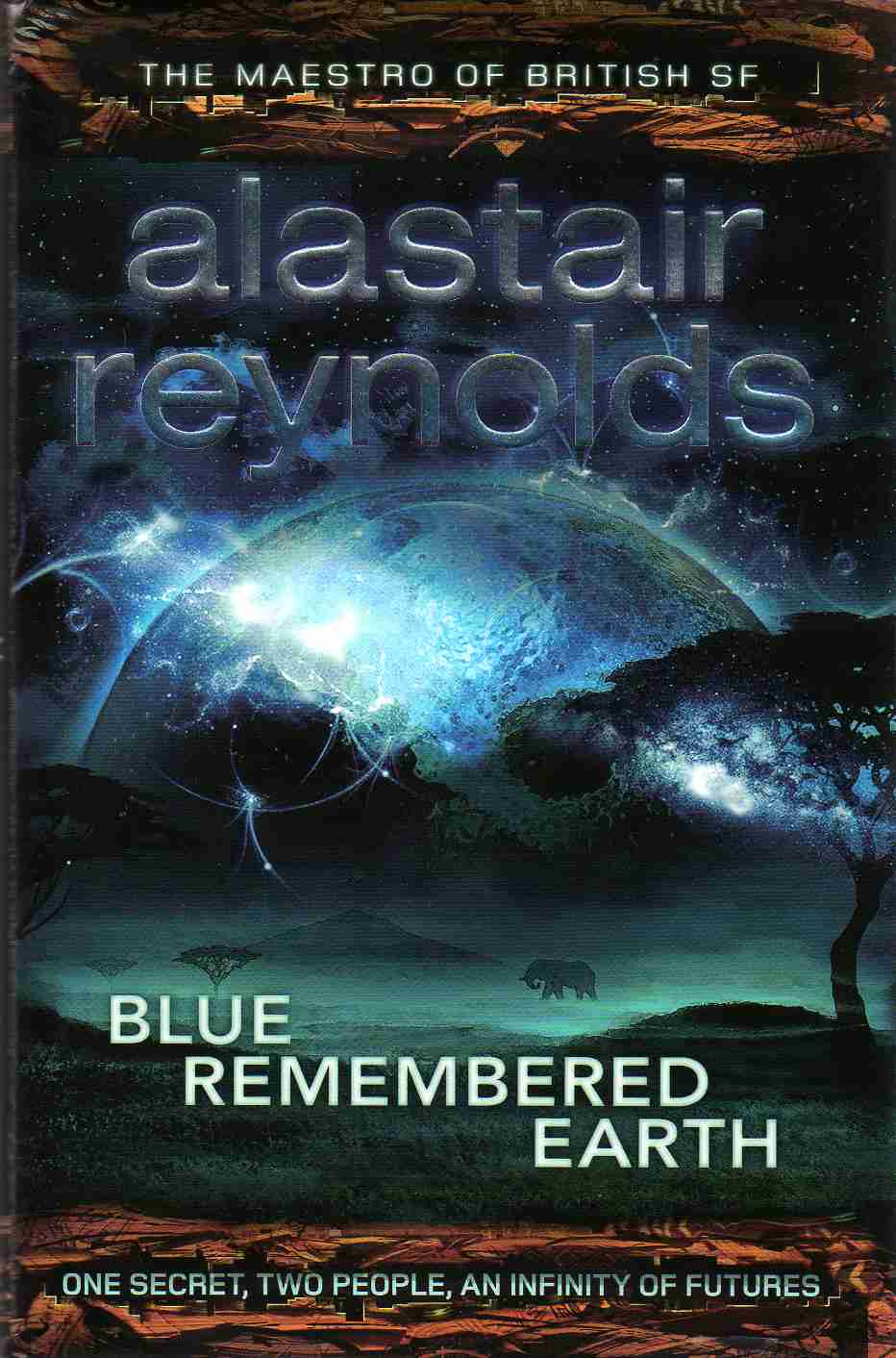
Alastair Reynolds' Poseidon's Children trilogy follows humanity — and its transhuman descendants — expanding into the galaxy over the course of centuries, beginning with Blue Remembered Earth (2012) and continuing through On the Steel Breeze and the concluding Poseidon's Wake (2015).
- A Meeting with Medusa
series2 books1971
similar byscience fictionaliensspaceother star systemshard science fiction+1 more
Arthur C. Clarke's A Meeting with Medusa follows an astronaut, badly injured in an earlier disaster, on a solo balloon expedition into Jupiter's atmosphere, where he encounters vast floating lifeforms unlike anything previously catalogued. Decades later, Stephen Baxter and Alastair Reynolds continued the story in The Medusa Chronicles, following the same protagonist across a much longer span of future history. The original novella won the 1972 Nebula Award.
- Blindsight / Firefall
series3 books2006
similar byscience fictionartificial intelligencealiensspacehard science fiction+2 more
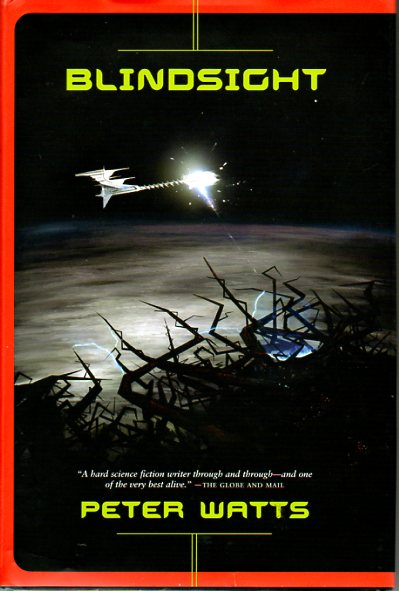
Blindsight sends a crew of radically modified posthumans (including a resurrected, genetically restored vampire) out to the Oort cloud after humanity detects an alien signal, only to make contact with something intelligent, wildly capable, and possibly not conscious at all — a first-contact story built around the question of whether self-awareness is actually useful. Peter Watts's Echopraxia is a same-timeframe "sidequel" rather than a direct sequel, following different characters through the fallout of the same first-contact event.
- Forever War
series10 books1972
similar byscience fictionspace+1 more
Joe Haldeman's The Forever War (1974) follows a soldier conscripted into a centuries-long interstellar war against the alien Taurans, using relativistic space travel so that months spent in transit correspond to years or decades passing back on Earth. Haldeman later returned to the same conflict in Forever Peace (1997), a thematically connected but separate story, and Forever Free (1999), a direct sequel set years after the original war's end. The first novel won the Hugo, Nebula, and Locus awards and is considered a foundational work of military science fiction.
- The Lightspeed Trilogy
series4 books2016
similar byscience fictionspaceother star systems+2 more
Ken MacLeod's recent trilogy imagines the accidental discovery of faster-than-light travel by a present-day physicist and the political fallout once humanity gets access to a wider galaxy that turns out not to be empty. Beyond the Hallowed Sky opens on an Earth still riven by bloc politics as the discovery becomes a new front in great-power rivalry, with the sequels carrying the consequences off-world. It treats first contact as a geopolitical problem as much as a scientific one.
- Heechee
series19 books1972
completed
similar byscience fictionaliensspaceother star systems
The Heechee Saga, also known as the Gateway series, is a series of science fiction novels and short stories by Frederik Pohl. The Heechee are an advanced alien race that visited the Solar System hundreds of millennia ago and then mysteriously disappeared. They left behind bases containing artifacts, including working starships, which are discovered and exploited by humanity.
- Time Odyssey
series3 books2003
similar byscience fictionaliensspace+2 more
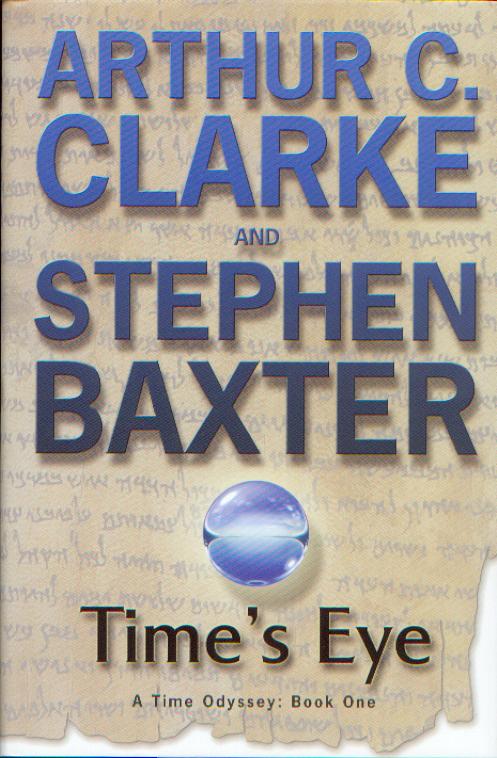
A Time Odyssey is a trilogy of science fiction novels co-written by Arthur C. Clarke and Stephen Baxter. As of 2008, the series consists of:Vol. 1 – Time's Eye Vol. 2 – Sunstorm Vol. 3 – Firstborn
- Academy / Priscilla (Hutch) Hutchins
series16 books1983
similar byscience fictionaliensspaceother star systems+1 more
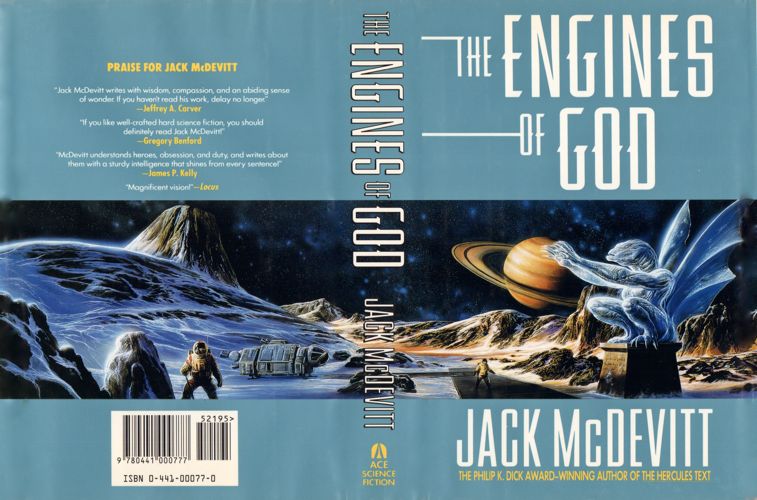
Jack McDevitt's Academy novels follow Priscilla 'Hutch' Hutchins, a starship pilot turned administrator, across a series of archaeological mysteries involving vanished alien civilizations and inexplicable ancient artifacts scattered through human space. Beginning with The Engines of God, the series treats deep time and the near-total absence of intelligent alien life as its central mystery, favoring slow-burn discovery over action. McDevitt returned to Hutch across three decades of publication.
- Cities in Flight
series10 books1950
completed
similar byscience fictionspace+1 more
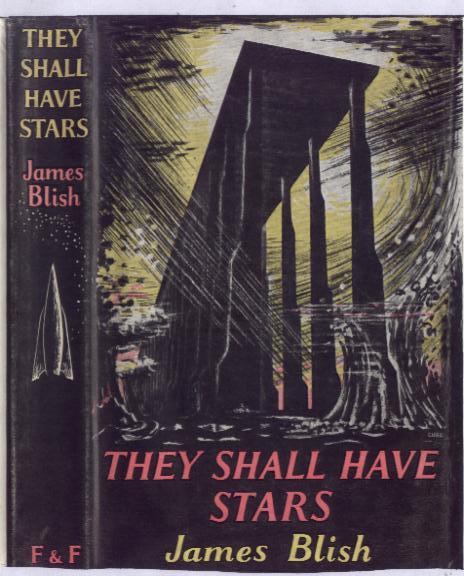
Cities in Flight is a four-volume series of science fiction novels and short stories by American writer James Blish, originally published between 1950 and 1962, which were first known collectively as the "Okie" novels. The series features entire cities that are able to fly through space using an anti-gravity device, the spindizzy. The stories cover roughly two thousand years, from the very near future to the end of the universe. One story, "Earthman, Come Home", won a Retro Hugo Award in 2004 for Best Novelette. Since 1970, the primary edition has been the omnibus volume first published in paperback by Avon Books. Over the years James Blish made many changes to these stories in response to points raised in letters from readers.
- Uplift
series5 books1980
part of Uplift Universe
similar byscience fictionaliensother star systemsspace+1 more
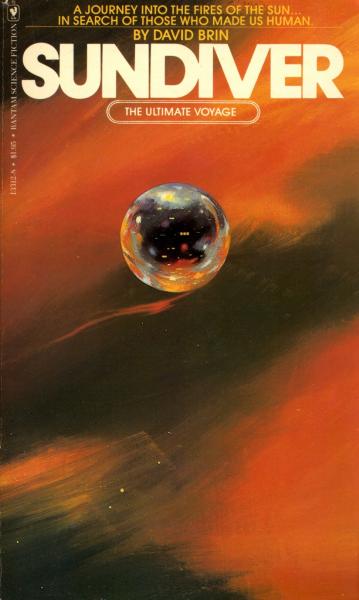
David Brin's Uplift trilogy opens with Sundiver, sending human explorers into the Sun itself, then follows a dolphin-crewed starship on the run from hostile aliens in Startide Rising and a fight over the colony world Garth in The Uplift War. The books sit inside Brin's wider Uplift Universe, built on the idea that spacefaring "patron" species genetically engineer younger "client" species into full sapience, with humanity an anomaly that reached the stars without a patron of its own.
- Children of Time
series6 books2015
similar byscience fictionother star systemsspace+3 more
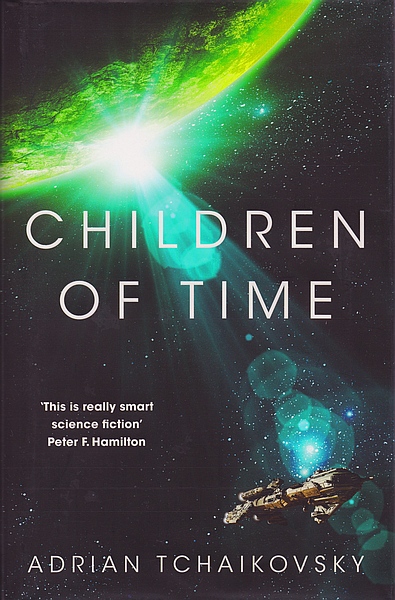
Adrian Tchaikovsky's Children of Time follows two threads: a terraformed planet where an experimental nanovirus meant to accelerate primate evolution instead uplifts a species of spiders into a technological civilization guided by the recorded personality of a human scientist, and the last survivors of Earth aboard a generation ark ship searching for a new home. The two threads collide across mismatched timescales as the ark ship's crew, cycling in and out of cryosleep, finally reach the spiders' world. It's the first of a loosely connected series that applies the same premise to different alien biologies in each subsequent book.
- The Martian Chronicles
series30 books1946
completed
similar byscience fictionnear future+1 more
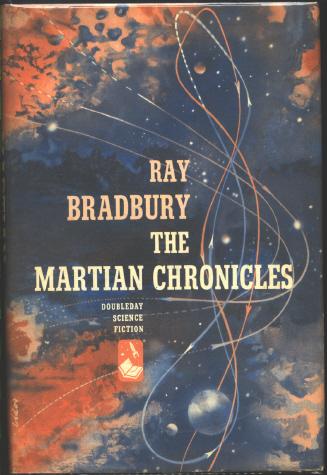
The Martian Chronicles (1950) is Ray Bradbury's fix-up novel, a chain of linked short stories following waves of settlers leaving a troubled Earth to colonize Mars and encountering its native Martians, before Earth itself is ultimately consumed by nuclear war.
- The Mountain in the Sea
Ray Naylerstandalone novel2022
similar byscience fictionnear futureother star systems
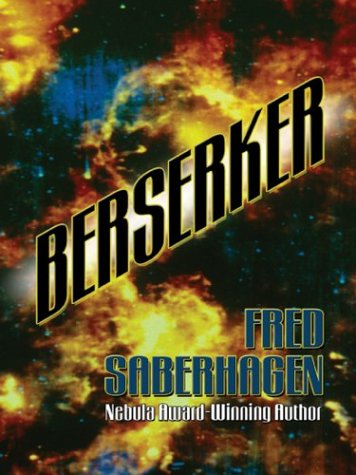
- Berserker (Fred Saberhagen)
series59 books1963
similar byscience fictionartificial intelligencespaceother star systems
The Berserker series is a series of space opera science fiction short stories and novels by Fred Saberhagen, in which robotic self-replicating machines strive to destroy all life.