Loreful
HomeDiscover
Search series, authors…⌘K
Loreful

Reading orders for SF/F series and shared universes — with your place kept in every one.

Explore

UniversesSeriesWorksAuthorsAtlas

Help

FAQAboutSite map

Account & legal

Sign inCreate accountPrivacyTerms

Data

Built on ISFDB, Wikipedia, Wikidata and Open Library. Curated reading orders carry their reasoning on the page; the rest follow publication order. Data sources & licenses

© Loreful · data: ISFDB · CC BY

More like Catligula

anchored on:middle gradehumor

but

Mood

The mood the book leaves you in.

  • The reading experience is propelled by journeys, exploration, and physical risk; excitement and forward momentum dominate over dread or introspection.
  • Joy and loss are deliberately mixed; the resolution grants characters something real while taking something else away, leaving warmth and sorrow together.
  • The book demands work from the reader — dense prose, difficult structure, unfamiliar ideas, or morally uncomfortable material — as part of its intended effect.
  • Grim events, cruelty, or despair dominate the atmosphere, and the book does not soften them with comfort or comic relief.
  • The atmosphere is quietly unsettling — wrongness, unease, and the uncanny pervade the book without necessarily escalating into overt horror.
  • The book is built to move the reader; character feeling is foregrounded and major scenes aim at a strong emotional response.
  • Humor is a primary aim and the prose plays for laughs — comic situations, wit, or dialogue produce sustained comedy, not occasional levity.
  • The book insists that things can improve; effort and decency are shown to matter, and the arc bends toward better outcomes even through hardship.
  • The book teaches as it goes — real facts, history, science, or craft are conveyed in enough depth that learning is part of the reading experience.
  • The book is designed to uplift and motivate, presenting perseverance or achievement in a way that invites the reader to aspire or act.
  • The overall register is cheerful and easygoing; stakes are kept gentle and the book avoids dwelling on pain or dread.
  • Withheld information drives the experience; the book sustains enigmas and secrets the reader wants resolved, whatever its genre.
  • The book is contemplative and inward-looking, giving more weight to thought, memory, and meaning than to external events.
  • The book works as comfort reading — low tension, a soothing pace, and an atmosphere the reader can unwind in.
  • Grief, loss, or melancholy set the dominant register, and the book lets sorrow stand rather than resolving it into comfort.
  • Sustained suspense is the point; the book keeps the reader braced for what happens next through danger, pressure, or impending revelation.
  • Playful invention and charm define the register — fanciful conceits, light absurdity, and a narration that delights in its own oddity.

About

What the story runs on.

  • Stories in which extraterrestrial beings are central — as characters, cultures, or the object of the plot.
  • Stories structured as a quest — a journey undertaken to find, deliver, or destroy something of great import.
  • Stories in which staying alive against nature, catastrophe, or scarcity is the central problem.
  • Stories of lovers kept apart by law, family, faith, or station, where the obstacle to love is the plot.
  • Stories in which a friendship — its making, testing, or loss — is the emotional center.
  • Stories of growing up — a young protagonist crossing from childhood into adult knowledge and responsibility.
  • Stories about who a character truly is — self-discovery, doubled lives, and the search for a self.
  • Stories about mourning — living through the death of a loved one and what loss does to the survivors.
  • Stories in which a buried family truth — hidden parentage, crimes, or shames — surfaces and reorders the present.
  • Stories driven by maneuvering for power — factions, conspiracies, and statecraft conducted in shadow.
  • Stories in which war itself is the subject — combat, occupation, and what warfare does to soldiers and civilians.
  • Stories organized around investigating a killing — the case, the clues, and the pursuit of the killer, in any genre's clothing.

Shelf

Where it sits in the library.

    • Fiction built on magic or other supernatural elements that have no scientific explanation.
    • Secondary-world fantasy at large scale, where the fate of nations or the world turns on the protagonists' struggle.
    • Fantasy set in a recognizably modern city or contemporary world where the supernatural intrudes on everyday life.
    • Fantasy that blends in horror's atmosphere and imagery, keeping a fantastical frame around grim or frightening material.
    • Action-driven fantasy following warriors or rogues with personal stakes against sorcerous threats, rather than world-spanning conflicts.
    • Fantasy set in a real historical period or a close analogue of one, with magic woven into the era.
    • Fantasy in which protagonists cross from the ordinary world into another world through a portal or similar passage.
    • Fiction that retells or reworks a traditional fairy tale in a new form or setting.
    • Fantasy drawing directly on myths, legends, and folklore, retelling them or building on their figures and logic.
    • Fantasy of ghosts, vampires, shapeshifters, psychics, and similar phenomena, usually set in an otherwise ordinary world.
    • Fiction mixing science-fictional trappings with overtly magical or impossible elements in one setting.
    • Low-stakes fantasy emphasizing comfort, community, and everyday pleasures over conflict and peril.
    • Speculative fiction of pervasive moral ambiguity, violence, and cynicism that rejects heroic conventions — fantasy and SF alike.
      • Fiction that extrapolates from science and technology — future societies, space travel, or speculative inventions — within at least nominally natural laws.
      • Science fiction of interstellar scope — starships, galactic polities, and adventure across star systems.
      • Science fiction committed to scientific rigor, where technical plausibility constrains the story.
      • Science fiction centered on armed forces and warfare, told largely from a military point of view.
      • Science fiction of networked, corporate-dominated near futures, pairing high technology with social decay.
      • Science fiction styled on nineteenth-century steam-powered technology, often in a Victorian or pseudo-Victorian setting.
      • Fiction depicting an oppressive or catastrophic society, presented as a warning.
      • Fiction set after civilization's collapse, following survivors in the ruins of the old world.
      • Fiction in which characters move between past and future, and the mechanics or consequences of that travel drive the plot.
      • Fiction exploring a world where a historical event went differently and history diverged from ours.
      • Science fiction about humanity's first encounter and communication with an alien intelligence.
      • Science fiction in which extraterrestrial forces attack or occupy Earth and humanity resists.
      • Fiction whose primary aim is to frighten or unsettle the reader through dread, menace, or the monstrous.
      • Horror of vast, indifferent, incomprehensible entities before which humanity is insignificant, in the Lovecraft tradition.
      • Horror of decaying houses, buried family secrets, and oppressive atmosphere in the Gothic literary tradition.
      • Horror centered on hauntings and the returning dead.
      • Horror located in the mind — paranoia, obsession, and unreliable perception rather than external monsters.
      • Horror built around the reanimated dead and survival amid their outbreaks.
      • Horror defined by explicit, transgressive gore that refuses to cut away from violence.
      • Speculative fiction of the strange and uncanny that resists both natural explanation and standard genre categories.
      • Fiction organized around solving a crime or puzzle, typically following an investigator toward the identification of a culprit.
      • A puzzle-first mystery that lays out clues so the culprit's identity can be deduced before the reveal.
      • Crime fiction of moral ambiguity, fatalism, and hard-edged style, set among the corrupt and the doomed.
      • A mystery following the realistic routines of police work — forensics, interviews, and case-building.
      • A gentle mystery with an amateur sleuth, a small community, and violence kept off the page.
      • A mystery set in a past era, where the investigation works within that period's methods and society.
      • Fast-paced fiction driven by imminent danger, pursuit, or high-stakes conspiracy, built to sustain tension.
      • A thriller of espionage — agents, tradecraft, and intelligence services in conflict.
      • A thriller centered on lawyers and the courtroom, where litigation carries the suspense.
      • A thriller driven by detailed contemporary or near-future technology, often military or scientific.
      • A thriller whose tension comes from mental states and manipulation between characters rather than external action.
      • Fiction whose central plot is a romantic relationship and its development toward an emotionally satisfying resolution.
      • Romance in which one or both partners are supernatural beings, blending fantasy elements into the love story.
      • A fantasy-romance hybrid in which the romantic arc and the fantasy plot carry equal weight.
      • Romance set in a past era, with courtship shaped by the period's society and manners.
      • Romance set in the present day, without supernatural or historical elements.
      • Fiction set in a real past period, where the historical setting materially shapes characters and events.
        • General and literary fiction emphasizing prose style, character interiority, or formal ambition over genre plot conventions.
        • Fiction in a realistic world where magical events occur and are treated as ordinary, in the tradition of Latin American literature.
        • Fiction that ridicules people, institutions, or society in order to criticize them.
        • Fiction of dreamlike, irrational imagery and logic that breaks from realistic representation.
        • Fiction that plays with narrative convention through metafiction, fragmentation, and self-reference.
        • Fiction propelled by journeys, exploration, and physical peril, where action and survival carry the plot.
        • Adventure fiction of ships and seafaring — naval engagements, voyages, and life at sea.
        • Fiction of the American frontier West — gunmen, ranchers, and lawmen, typically in the late nineteenth century.
        • Fiction centered on soldiers, campaigns, and the experience of warfare, historical or imagined.
          • Fiction written primarily to amuse, using comedic situations, wit, or parody as its organizing principle.
            • Multi-generational fiction following a family or dynasty across decades, with inheritance and kinship as the through-line.
              • Fiction whose world runs on explicit game mechanics — levels, stats, and skills that characters can see and exploit.
                • Fiction about costumed or superpowered heroes and their conflicts with comparable villains.

                Practical

                How long a commitment, whether it stands alone, and whether it has finished.

                Tap a chip to ask for it · tap again to rule it out · once more to clear. Numbers show what would be left.

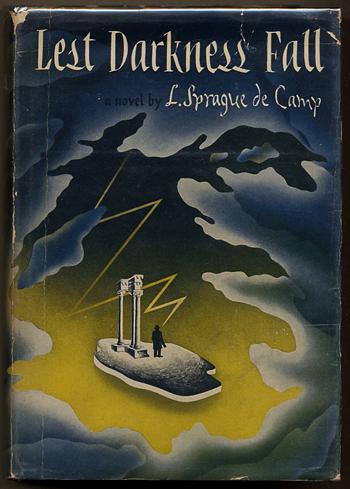
                • Cover of Lest Darkness Fall
                  Lest Darkness Fall

                  series · 4 books · 1941

                  similar byancient world+3 more

                  L. Sprague de Camp's Lest Darkness Fall (1939) is a single alternate-history novel in which archaeologist Martin Padway is thrown by a lightning strike from 1938 Rome back to Ostrogothic Italy in 535 AD, where he uses his knowledge of later history and technology -- distilling brandy, building a printing press, reworking military tactics -- to try to head off Europe's slide into the Dark Ages. David Drake's later novella To Bring the Light, sometimes packaged alongside it, borrows the same time-travel-to-Rome premise with a different protagonist.

                • Cover of The Camulod Chronicles
                  The Camulod Chronicles

                  series · 9 books · 1992

                  completed

                  similar byancient world+3 more

                  Published in North America as the Camulod Chronicles (and elsewhere as A Dream of Eagles), Jack Whyte's series retells the Arthurian legend as grounded historical fiction, stripping away magic in favor of a plausible post-Roman Britain. Uther, the volume tracked here, centers on Uther Pendragon himself, one of the saga's recurring figures on the road to Arthur's own generation.

                • Cover of The Mouse That Roared
                  The Mouse That Roared

                  series · 6 books · 1955

                  completed

                  similar byhumorfunny+3 more

                  The Mouse That Roared launches Leonard Wibberley's satirical series about the tiny fictional Duchy of Grand Fenwick, a European microstate whose leaders declare war on the United States purely to lose quickly and collect the postwar reconstruction aid given to defeated nations. The 1955 novel uses Fenwick's mismatched ambitions to poke fun at Cold War politics and the nuclear arms race, and Wibberley kept the joke going across four more novels into the 1970s. Later entries send the duchy into further absurd confrontations with the wider world, including a race to the Moon and a scheme on Wall Street.

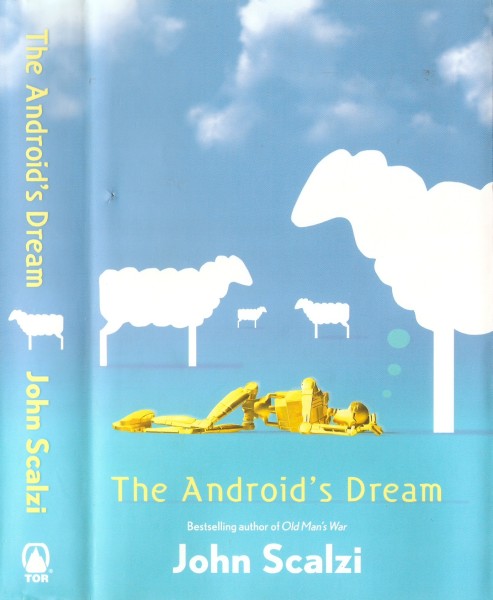
                • Cover of The Android's Dream
                  The Android's Dream

                  series · 2 books · 2006

                  similar bypolitical intriguehumoradventurousfunny

                  A minor diplomatic insult with a genetically engineered sheep breed spirals into a full interstellar crisis when the last surviving specimen of the 'Android's Dream' breed, needed for a critical ceremony with the alien Nidu, turns out to have been hunted to extinction by a Nidu faction bent on provoking war. John Scalzi's The Android's Dream follows ex-soldier Harry Creek as the hunt for a replacement leads him to Robin Baker, an ordinary woman carrying hidden sheep DNA that makes her the key to avoiding a war. It's a standalone comic space opera rather than an ongoing series.

                • Cover of Artemis Fowl
                  Artemis Fowl

                  series · 15 books · 2001

                  similar byadventurousour worldmiddle gradefantasy+1 more

                  Artemis Fowl is a series of eleven fantasy novels by Irish author Eoin Colfer, revolving around various members of the Fowl family. The first cycle, the Artemis Fowl series, consists of eight books, and the second cycle, The Fowl Twins series, is a trilogy. Both releases have received commercial success and positive critical reception in the children's literature genre, and also originated graphic novel adaptations. As of 2013, the novels have sold more than 21 million copies in 44 languages, and are one of the best-selling series of all time. In 2010, Artemis Fowl was voted by readers as their favorite Puffin Books title of all time.

                • Cover of The Change / The Event
                  The Change / The Event

                  series · 41 books · 1998

                  similar byadventurous+1 more

                  The Change: Tales of Downfall and Rebirth is a shared-world anthology of stories set in the years right after a mysterious global event instantly disables gunpowder, electricity, and combustion engines, the founding premise of S. M. Stirling's Emberverse. Sixteen different authors, coordinated by Stirling, each contribute stories set in various corners of the suddenly de-industrialized world as survivors scramble to rebuild. It's a companion volume to the Change/Emberverse novels rather than a novel itself.

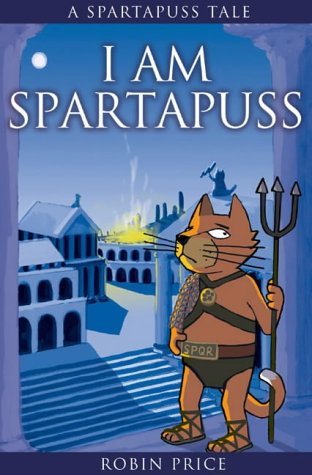
                • Cover of Spartapuss Tales
                  Spartapuss Tales

                  series · 5 books · 2004

                  similar bymiddle grade+4 more

                • Cover of Mention My Name in Atlantis
                  Mention My Name in Atlantis

                  John Jakes · standalone novel · 1972

                  similar bypolitical intriguehumoradventurousfunnyfantasy

                  From the back cover of the DAW Books first edition: The continent of Atlantis had troubles enough before Conax the Barbarian washed ashore. For Hoptor the Vintner, who considered himself a citizen of importance, things were going from bad to worse. The king was on his last legs, his generals were plotting, there were those scary lights in the sky, and Hoptor's favorite girl was being put up for auction on the slave block. Then Conax, the self-styled king of Chimeria - a place nobody ever heard of - turned up at the auction with his broadsword, his barbaric manners, and his hair-trigger temper. That wast the last straw. From then on Atlantis was doomed!

                • Cover of Praetor War
                  Praetor War

                  series · 3 books · 2015

                  similar byadventurousancient worldmiddle gradefantasy+3 more

                • Cover of Bartimaeus
                  Bartimaeus

                  series · 4 books · 2003

                  similar bypolitical intrigueadventurousfantasy+2 more

                  The Bartimaeus Sequence is a series of young adult novels of alternate history, fantasy and magic. It was written by British writer Jonathan Stroud and consists of a trilogy published from 2003 to 2005 and a prequel novel published in 2010. The story follows the career of a teenage magician Nathaniel and a five-thousand-year-old djinni Bartimaeus, whom he has summoned and nominally controls, through the alternate history of the peak of London's domination as a magical oligarchy.

                • Cover of Master Li
                  Master Li

                  series · 3 books · 1984

                  completed

                  similar byadventurousancient worldfantasy+2 more

                • Cover of Ancient Egyptian
                  Ancient Egyptian

                  series · 9 books · 1993

                  similar byadventurousancient world+1 more

                  Wilbur Smith's Ancient Egypt novels open with River God (1993), narrated by the loyal eunuch slave Taita as he guides the royal family's flight from the Hyksos invasion and their eventual return to power. The series, later continued by Smith with co-author Mark Chadbourn, follows Taita and Egypt's rulers across further installments including The Seventh Scroll, Warlock, and Desert God, spanning three decades of publication.

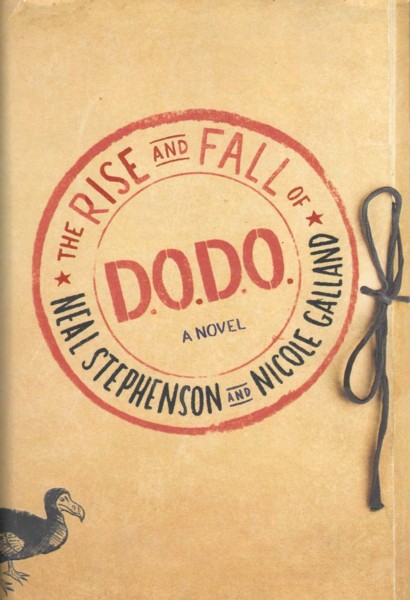
                • Cover of D. O. D. O. (Department of Diachronic Operations)
                  D. O. D. O. (Department of Diachronic Operations)

                  series · 2 books · 2017

                  similar bypolitical intrigueadventurousour worldeurope+2 more

                  Neal Stephenson and Nicole Galland's D.O.D.O. novels center on the Department of Diachronic Operations, a covert U.S. government agency that discovers magic vanished from the world in the nineteenth century and sets out to use time travel to bring it back. The Rise and Fall of D.O.D.O. (2017) is followed by Master of the Revels, continuing the pair's earlier collaboration on The Mongoliad.

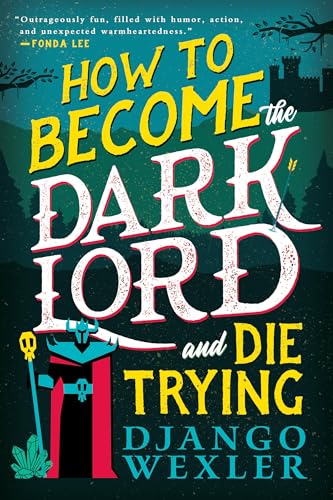
                • Cover of Dark Lord Davi
                  Dark Lord Davi

                  series · 3 books · 2024

                  similar byhumoradventurousfunnyfantasy+1 more

                • Cover of Wolves Chronicles
                  Wolves Chronicles

                  series · 12 books · 1962

                  completed

                  similar byadventurous+2 more

                  The Wolves Chronicles is Joan Aiken's long-running alternate-history series for young readers, set in a nineteenth-century England ruled by the Stuart dynasty and beset by wolves that have migrated across a Channel land-bridge. It opens with The Wolves of Willoughby Chase, in which two girls outwit a scheming governess sent to ruin them, and expands over twelve books into a sprawling saga of orphans, conspiracies, and journeys through a Britain quite unlike the real one. Aiken kept adding to the same timeline across more than four decades, including later prequels set before the first book.

                • Cover of Temeraire
                  Temeraire

                  series · 48 books · 2006

                  similar byadventurousfantasy+2 more

                  Temeraire is a series of nine alternate history fantasy novels written by American author Naomi Novik. The novels follow the adventures of Captain William Laurence and his dragon, the eponymous Temeraire, and reimagine events of the Napoleonic Wars with "an air force of dragons, manned by crews of aviators". His Majesty's Dragon, the first entry in the series, won the Compton Crook Award in 2007 and was nominated for the Hugo Award for Best Novel the same year. Temeraire: In the Service of the King, an omnibus volume collecting the first three novels, won the Locus Award for Best First Novel in 2007. Temeraire was nominated for the Hugo Award for Best Series in 2017.

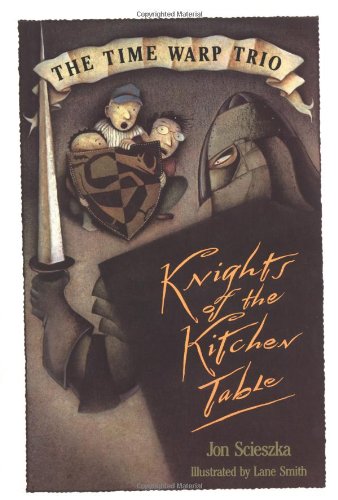
                • Cover of The Time Warp Trio
                  The Time Warp Trio

                  series · 16 books · 1991

                  similar byadventurousmiddle gradefunny+4 more

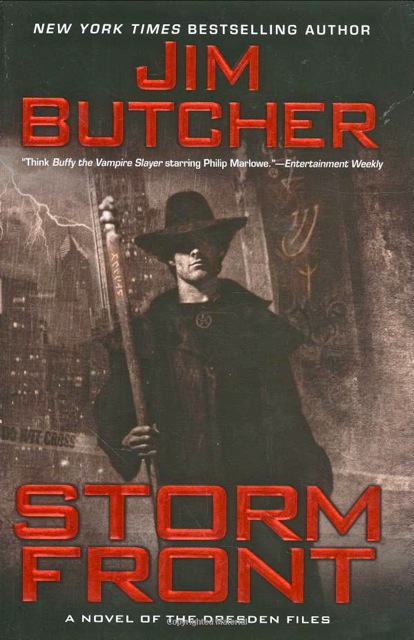
                • Cover of The Dresden Files
                  The Dresden Files

                  series · 56 books · 2000

                  similar by+3 more

                  The Dresden Files is an urban fantasy series written by American author Jim Butcher. The novels are narrated from the first-person perspective of Harry Dresden, a private detective and wizard, as he investigates supernatural disturbances in contemporary Chicago. The first entry, Storm Front, was published in 2000 by Roc Books.

                • Cover of Tros of Samothrace
                  Tros of Samothrace

                  series · 21 books · 1925

                  completed

                  similar byancient world+2 more

                • Cover of Get Smart
                  Get Smart

                  series · 9 books · 1965

                  completed

                  similar byhumorour worldfunny+2 more

                  Get Smart is an American comedy television series parodying the secret agent genre that had become widely popular in the first half of the 1960s with the release of the James Bond films. It was created by Mel Brooks and Buck Henry, and had its television premiere on NBC on September 18, 1965. It starred Don Adams, who was also a director on the series, as agent Maxwell Smart, Barbara Feldon as Agent 99, and Edward Platt as The Chief. Henry said that they created the show at the request of Daniel Melnick to capitalize on James Bond and Inspector Clouseau, "the two biggest things in the entertainment world today". Brooks described it as "an insane combination of James Bond and Mel Brooks comedy".

                • Cover of The Crimson Chalice
                  The Crimson Chalice

                  series · 3 books · 1976

                  completed

                  similar byadventurous+4 more

                • Cover of The Carpet People
                  The Carpet People

                  series · 4 books · 1971

                  completed

                  similar byadventurousfantasy+2 more

                  The Carpet People imagines an entire civilization of tiny peoples living among the towering fibers of a carpet, where different tribes must set aside old rivalries and unite against a shared threat sweeping through their world. Terry Pratchett wrote the original version at seventeen, then substantially rewrote it in 1992, famously noting that the book 'had two authors, and they were both the same person.' It reads as an early, more straightforward dry run for the comic invention Pratchett would later bring to Discworld.

                • Cover of Fool
                  Fool

                  series · 4 books · 2009

                  similar byhumoreuropefunny+1 more

                • Cover of His Dark Materials Universe
                  His Dark Materials Universe

                  universe · 13 books · 1995

                  Start hereHis Dark Materials · Start here

                  similar byadventurousfantasy+1 more

                  In a world like ours and unlike it, every human soul walks outside the body in the shape of an animal — a daemon, who speaks, who cannot be lied to, and who settles into one fixed form only when childhood ends. This is the country of His Dark Materials: a company of parallel worlds across which an invisible dust of consciousness drifts down upon the waking mind; where a Church that calls itself the Magisterium would sooner sever a child's soul than let that Dust be understood; and where a golden instrument, the alethiometer, answers true questions for anyone with the patience to read it. Philip Pullman's design stands in two trilogies and a scatter of shorter tales. His Dark Materials — Northern Lights (published in America as The Golden Compass), The Subtle Knife, and The Amber Spyglass — carries Lyra Belacqua from the rooftops of a shadow Oxford across the borders between worlds. The Book of Dust returns to that same territory: La Belle Sauvage looks back to Lyra as an infant carried through a great flood, while The Secret Commonwealth follows her grown and less certain into adulthood, with a concluding volume closing the arc. Around them sit slim companion books — Lyra's Oxford, Once Upon a Time in the North, Serpentine — and Nicholas Wright's stage adaptation, made with Pullman's blessing. The register is grave and luminous at once, its title lifted from Milton and its quarrel drawn from Blake: a story that takes the side of curiosity, love, and the physical world against any authority that would forbid them. It reads as adventure — armoured bears, aeronauts, knife-cut windows between skies — yet reasons like philosophy. Begin with Northern Lights / The Golden Compass and read the first trilogy through before turning to The Book of Dust, which deepens everything the first has already made you feel.