More like Catman
but
- Foundation Universe
universe123 books1940
Start hereFoundation · Start here
similar byrobotsfar future
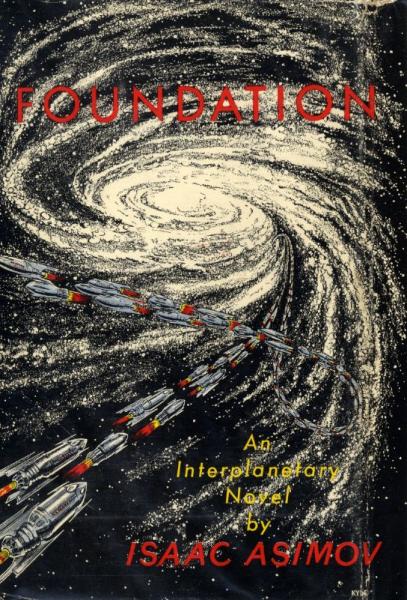
There is a science that reads the future of quadrillions the way an astronomer reads the orbits of stars. It is called psychohistory, and its equations foresee something the ruling Galactic Empire cannot admit: the throne is rotting, and thirty thousand years of barbarism are coming. One man, Hari Seldon, cannot stop the fall. He can only shorten it — by seeding a Foundation of scholars at the rim of the galaxy, a fragile institution built to carry knowledge across the dark and cut the interregnum to a single millennium. This is a universe told in the register of history itself: the long view, the calm of deep time, empires measured in centuries and men measured against them. The spine is Asimov's original trilogy — Foundation, Foundation and Empire, Second Foundation — followed decades later by the sequels Foundation's Edge and Foundation and Earth and the prequels Prelude to Foundation and Forward the Foundation. Late in life Asimov braided this in with his other future histories: the Robot novels of detective Elijah Baley and his humaniform partner R. Daneel Olivaw (The Caves of Steel, The Naked Sun, The Robots of Dawn, Robots and Empire) and the early Galactic Empire novels (Pebble in the Sky and its kin), until one continuous chronicle ran from the first thinking robots to the Second Empire. Other hands extend it — the Second Foundation Trilogy by Gregory Benford, Greg Bear, and David Brin, and shared-world spinoffs such as Robot City — so the corpus sprawls beyond a single author's tidy shelf. What distinguishes it is that the drama is intellectual: crises resolved by insight, nerve, and dialogue rather than fleets and blades, each turn hinging on the hidden logic of the Seldon Plan. Begin where readers have always begun — with Foundation, and the original trilogy in publication order. The rest opens outward from there.
- The City and the Stars
Arthur C. Clarkestandalone novel1956
similar byfar future+1 more
The City and the Stars is a science fiction novel by British writer Arthur C. Clarke, published in 1956. This novel is a complete rewrite of Clarke's earlier Against the Fall of Night, his first novel, which had been published in Startling Stories magazine in 1948 after being rejected by the editor of Astounding Science-Fiction, according to the author.
- Nova
Samuel R. Delanystandalone novel1968
similar byfar future+1 more
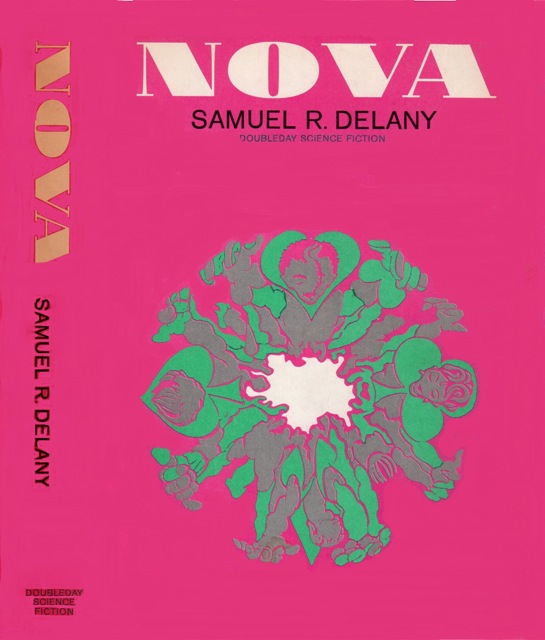
Nоva is a science fiction novel by American writer Samuel R. Delany published in 1968. The plot concerns the spaceship captain Lorq Von Ray's search for a nova, which will produce the essential power source Illyrion, and his vendetta with the Red family, who seek to kill him. Nominally space opera, it explores the politics and culture of a future where cyborg technology is universal, yet making major decisions can involve using tarot cards. It has strong mythological overtones, relating to both the Grail Quest and Jason's quest for the Golden Fleece.
- City
series19 books1944
completed
similar byfar future+1 more
City is Clifford D. Simak's fix-up novel, assembling eight linked stories originally published in Astounding Science Fiction during the 1940s and framed as legends dogs tell about a half-mythical creature called Man. It follows humanity's gradual abandonment of its cities and eventual departure from Earth, while the dogs left behind are surgically uplifted into a peaceable, speaking civilization of their own. The book won the International Fantasy Award in 1952.
- The Eyes of Heisenberg
Frank Herbertstandalone novel1966
similar byfar future+1 more
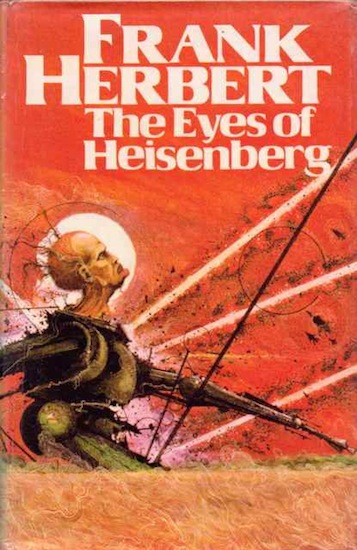
Tens of thousands of years in the future, Earth is ruled by the Optimen, a genetically engineered aristocracy that has made itself functionally immortal, while ordinary people, the Folk, live under strict reproductive control. When Harvey and Lizbeth Durant arrive to have their embryo genetically screened, the examining doctor finds something in the child no one has seen in a very long time: real potential for both fertility and life span, traits the Optimen have arrogated to themselves. Rather than destroy the embryo as policy demands, the doctor hesitates, setting off a chain of surveillance, suspicion and resistance. A tightly wound Frank Herbert thriller about genetic caste and rebellion.
- Forge of God
series2 books1987
completed
similar by+2 more
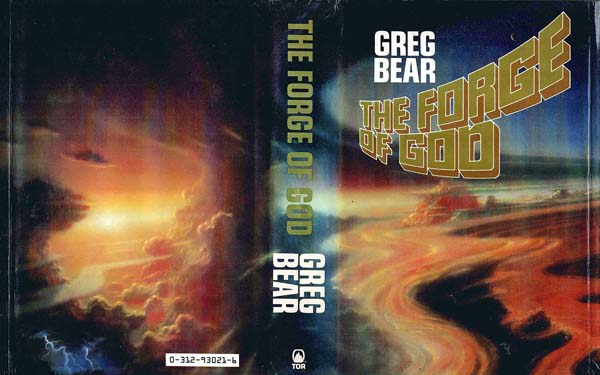
The Forge of God (1987) is Greg Bear's science fiction novel about Earth's discovery that it is the target of an incomprehensible, overwhelming alien attack, following scientists and ordinary people as they try to understand what is destroying the planet. Its 1992 sequel, Anvil of Stars, follows a group of young survivors sent on a mission of interstellar retaliation, continuing directly from the first book's ending.
- 2312
Kim Stanley Robinsonstandalone novel2012
similar byfar future+1 more
In the eponymous year, when Earth's ecology is degraded and humanity has settled throughout the solar system by terraforming and genetic engineering, mysterious disasters strike some human communities and an assortment of human types from throughout the system seek to find and eliminate the cause.
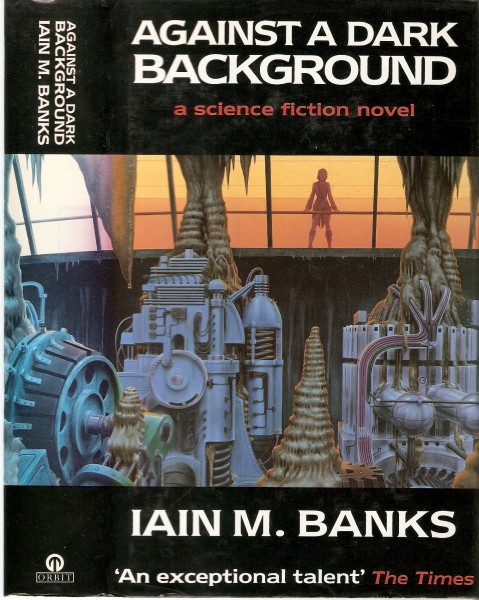
- Against a Dark Background
Iain M. Banksstandalone novel1993
similar byfar future+1 more
The daughter of an impoverished noble house and her squad of soldiers become thieves of antiquities; long after their retirement and separation she must assemble them again in order to find and steal the most powerful weapon ever created, or pay with her life.
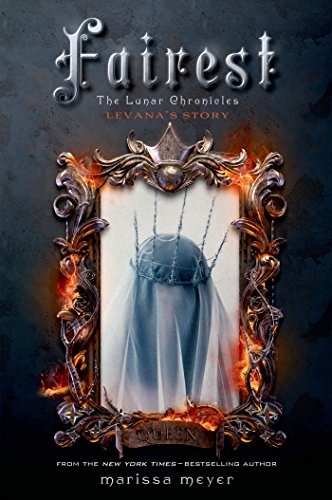
- Lunar Chronicles
series15 books2011
similar byfar future+1 more
The Lunar Chronicles is a series of four young adult science fiction novels, a novella, and a short story collection written by American author Marissa Meyer and published by Feiwel & Friends. Each book entails a science fictional twist on a classic fairy tale, including "Cinderella", "Little Red Riding Hood", "Rapunzel", and "Snow White". Set in a futuristic world inhabited by various species and creatures, tensions are rising between Earth and its former colony Luna, while both attempt to manage an ongoing pandemic.
- Berserker (Fred Saberhagen)
series59 books1963
similar byrobotsfar future
The Berserker series is a series of space opera science fiction short stories and novels by Fred Saberhagen, in which robotic self-replicating machines strive to destroy all life.
- Solar Lottery
Philip K. Dickstandalone novel1955
similar byfar future+1 more
Solar Lottery is a 1955 science fiction novel by American writer Philip K. Dick. It was his first published novel and contains many of the themes present in his later work. It was also published in altered form in the UK as World of Chance. The main story is about a man named Ted Benteley who lives in a strange world, dominated by percentages and the lottery. Lotteries are used to choose the next leader as well as a new assassin, whose job is to try to kill the leader or "Quizmaster". Everybody in society has the opportunity to be selected as a leader or an assassin. Benteley unexpectedly gets chosen to be a member of the committee trying to assassinate the new Quizmaster and he must decide what he is going to do.
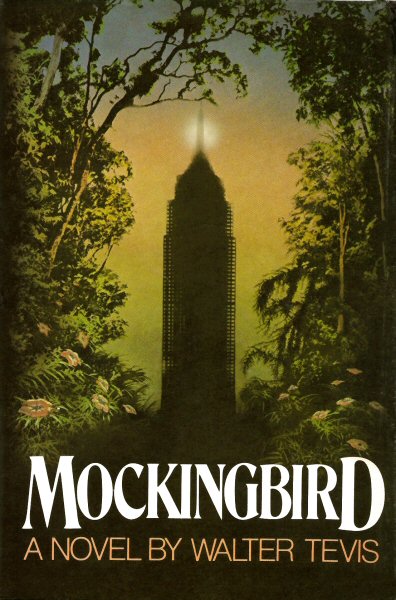
- Mockingbird
Walter Tevisstandalone novel1980
similar byrobotsfar future
WorldCat: In a future world where mankind is dying, humans wander through life in a drugged electronic bliss. Quick sex is the norm, and some people would rather commit suicide than live in hopelessness. Humanity's salvation rests with an android who has no desire to live, and a man and a woman who must discover love, hope, and dreams of a world reborn.
- Tower of Glass
Robert Silverbergstandalone novel1970
similar byrobotsfar future
Tower of Glass is a science fiction novel by American writer Robert Silverberg, published in 1970. It was nominated for the Nebula Award in 1970, and for both the Hugo and Locus Awards in 1971.
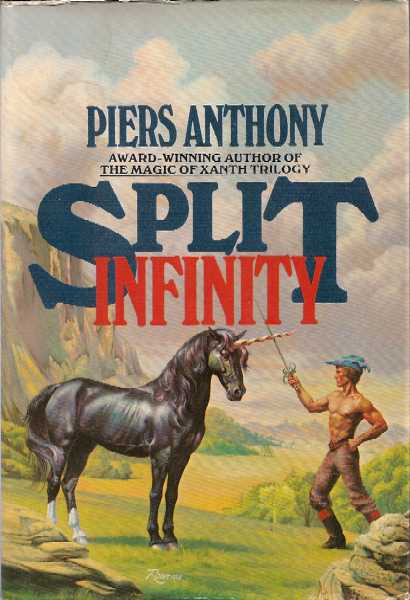
- Apprentice Adept
series7 books1980
similar byfar future+1 more
Apprentice Adept is a heptalogy of fantasy and science fiction novels written by English American author Piers Anthony. The series takes place on Phaze and Proton, two worlds occupying the same space in two different dimensional planes. Phaze is a lush planet of magic, where Proton is a barren mining planet of science. As the series opens, each person born on Phaze and Proton has an alternate self living on the other world. But if a person on either world lacks a duplicate, he can cross to the other through an energy "curtain" that circumscribes each frame.
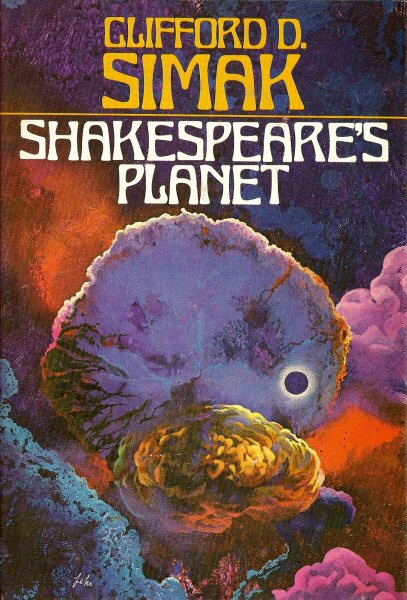
- Shakespeare's Planet
Clifford D. Simakstandalone novel1976
similar byrobotsfar future
Woken after a thousand-year voyage meant to find humanity a new home, Carter Horton finds his ship stranded for good, tended by the disembodied minds of three volunteers who gave up their bodies to fly it. Outside waits a world already crowded with strangers: a robot named Nicodemus, and an alien called the Carnivore who claims to have known a human, once, called Shakespeare, and to have arrived here through a tunnel across time. As more travelers arrive through that same tunnel, Horton has to work out what kind of planet he has actually landed on. A standalone novel from Clifford D. Simak.
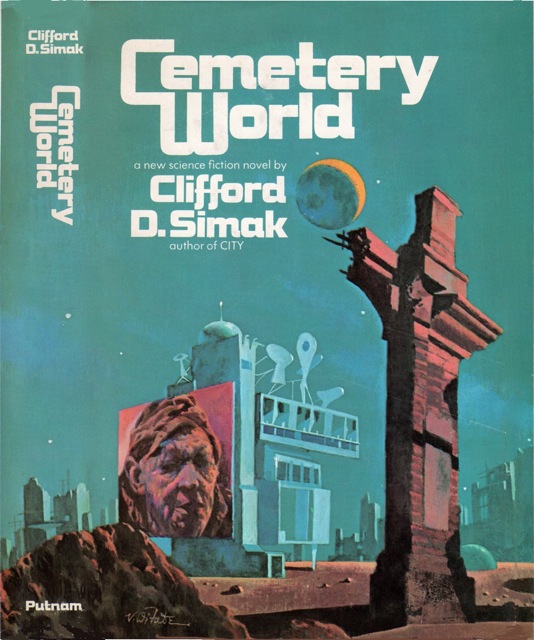
- Cemetery World
Clifford D. Simakstandalone novel1973
similar byfar future+1 more
Earth: expensive, elite graveyard to the galaxy. Ravaged 10,000 years earlier by war, Earth was reclaimed by its space-dwelling offspring as a planet of landscaping and tombstones. None of them fully human, Fletcher, Cynthia, and Elmer journey through this dead world, discovering human traits and undertaking a quest to rebuild a human world on Earth.
- Bill, the Galactic Hero
series10 books1964
similar byfar future+1 more
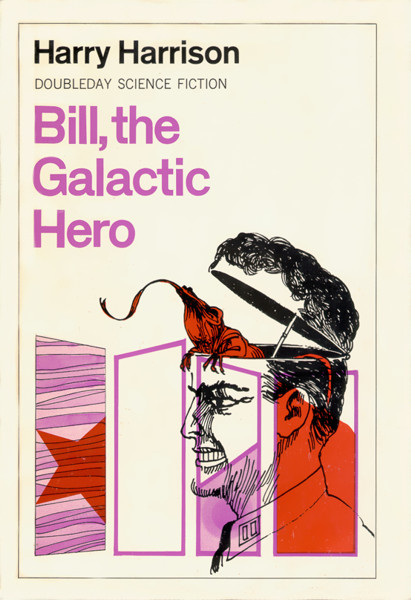
Harry Harrison's Bill, the Galactic Hero is a satire of militaristic science fiction, following a hapless draftee named Bill through a galactic war run by an absurd, dehumanizing military bureaucracy. Harrison expanded a 1965 novella into the novel and later co-wrote several tongue-in-cheek sequels with other writers in the 1980s-90s, sending Bill through increasingly ridiculous planetary settings. It's broad science-fiction comedy rather than the harder-edged satire of Harrison's other work.
- Saturn's Children
series3 books2008
similar byrobotsfar future
Charles Stross's Saturn's Children (2008) is a space-opera tribute to late-period Robert A. Heinlein, set millennia after humanity has quietly gone extinct, in a solar system still run by the sentient robots humans left behind - including Freya, an android originally built for companionship who is pulled into interstellar intrigue. Neptune's Brood (2013) returns to the same posthuman-robot universe thousands of years later with an entirely new cast, shifting focus to the mechanics of slower-than-light interstellar finance and banking fraud. The two books share continuity rather than characters.
- Bolo
series46 books1960
similar byfar future+1 more
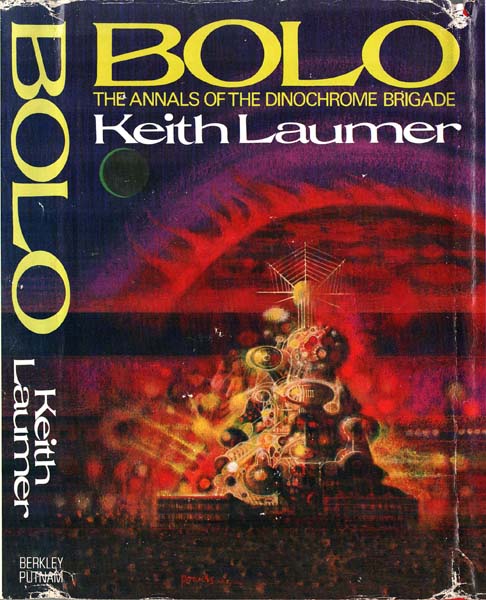
The Bolo books, created by Keith Laumer and continued by a rotating roster of collaborators including David Weber and S. M. Stirling, are set in a shared military science-fiction universe built around sentient, increasingly self-aware tank-like war machines called Bolos. Individual volumes range from Laumer's original story collections to later novels and anthologies exploring Bolos across different wars and eras, unified by the premise rather than a single continuous plot.
- A Meeting with Medusa
series2 books1971
similar byfar future+1 more
Arthur C. Clarke's A Meeting with Medusa follows an astronaut, badly injured in an earlier disaster, on a solo balloon expedition into Jupiter's atmosphere, where he encounters vast floating lifeforms unlike anything previously catalogued. Decades later, Stephen Baxter and Alastair Reynolds continued the story in The Medusa Chronicles, following the same protagonist across a much longer span of future history. The original novella won the 1972 Nebula Award.
- Destiny Doll
Clifford D. Simakstandalone novel1971
similar byrobotsfar future
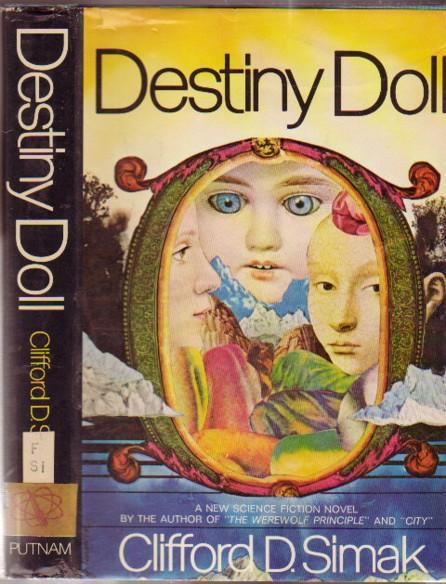
A group of space travelers is trapped on a planet that lured them to land. The story involves their adventures on the planet and the discovery of friendly aliens, robots, and not-so-friendly life forms. There is the alternate reality possibility toward the end of the story.
- Code of the Lifemaker
series2 books1983
completed
similar byrobots+1 more
Code of the Lifemaker follows first contact between human explorers and the Taloids, self-replicating robotic beings who have built their own civilization on Saturn's moon Titan after their original programming drifted over generations. James P. Hogan drew direct inspiration from a real NASA feasibility study on self-replicating space automation for the premise. A sequel, The Immortality Option, followed in 1995.