More like Cavalcade
anchored on:science fiction
but
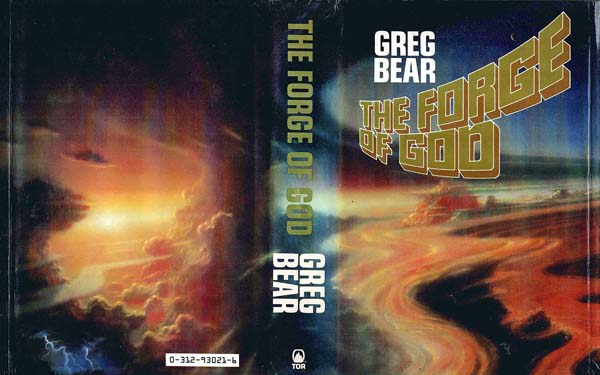
- Forge of God
series2 books1987
completed
similar byscience fictiontense+2 more
The Forge of God (1987) is Greg Bear's science fiction novel about Earth's discovery that it is the target of an incomprehensible, overwhelming alien attack, following scientists and ordinary people as they try to understand what is destroying the planet. Its 1992 sequel, Anvil of Stars, follows a group of young survivors sent on a mission of interstellar retaliation, continuing directly from the first book's ending.
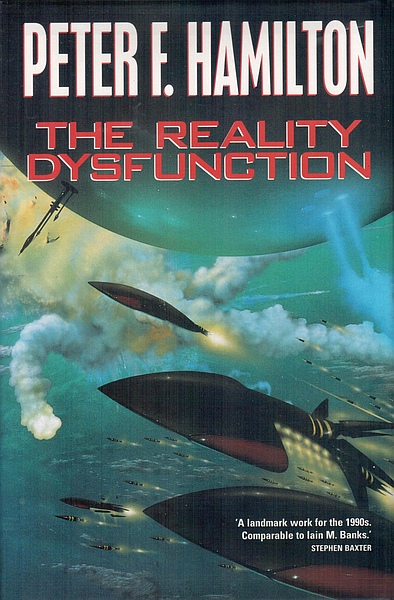
- Night's Dawn Trilogy
series9 books1996
part of Confederation Universe
similar byscience fictionfar future+2 more
British author Peter F. Hamilton's The Night's Dawn Trilogy consists of three science fiction novels: The Reality Dysfunction (1996), The Neutronium Alchemist (1997), and The Naked God (1999). A collection of short stories, A Second Chance at Eden, shares the same universe, and The Confederation Handbook documents that universe in non-fiction style.
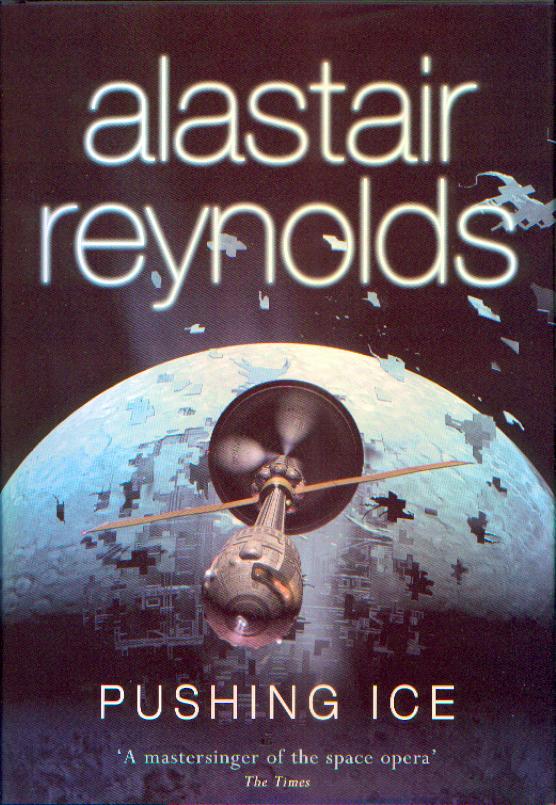
- Pushing Ice
Alastair Reynoldsstandalone novel2005
similar byscience fictiontensefar future+1 more
When Saturn's moon Janus suddenly takes off into interstellar space, an ice mining spaceship sent to investigate finds itself swept along into distant space until it ends up trapped in a gigantic alien structure, wherein the crew must prepare to reside for the foreseeable future.
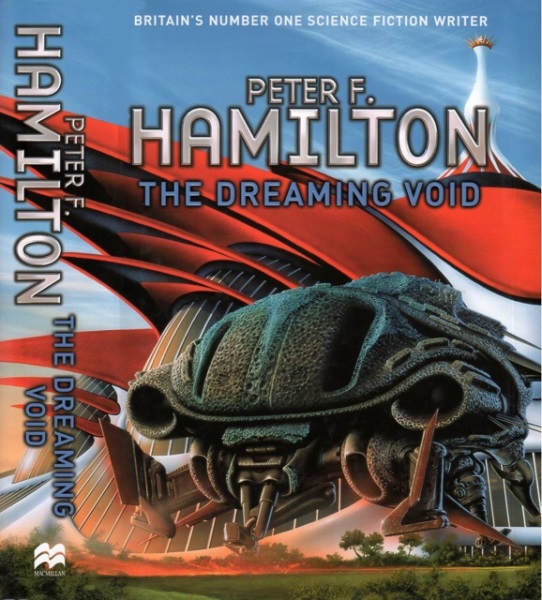
- Void Trilogy
series4 books2007
part of Commonwealth Universe
similar byscience fictionfar future+2 more
The Void Trilogy is a space opera series by British author Peter F. Hamilton. The series is set in the same universe as The Commonwealth Saga, 1,200 years after the end of Judas Unchained.
- Commonwealth Saga
series2 books2004
part of Commonwealth Universe
similar byscience fictiontensefar future+1 more
The Commonwealth Saga is a series of science fiction novels by British science fiction writer Peter F. Hamilton. This saga consists of the novels Pandora's Star (2004) and Judas Unchained (2005). Hamilton has also written several books set in the same literary universe. Misspent Youth (2002) takes place 340 years before the events of Pandora's Star. The Void Trilogy, consisting of The Dreaming Void (2008), The Temporal Void (2009), and The Evolutionary Void (2010), takes place 1,200 years after the events of Judas Unchained; several of the main characters from Judas Unchained and Pandora's Star also appear in the Void trilogy.
- Ian Cormac
series6 books2001
part of Polity
similar byscience fictiontensefar future+1 more
Neal Asher's Ian Cormac novels (Gridlinked, The Line of Polity, Brass Man, Polity Agent, Line War, plus the earlier-set prequel Shadow of the Scorpion) follow Ian Cormac, an agent of Earth Central Security in Asher's Polity universe. Gridlinked opens with Cormac investigating a destroyed matter-transmitter on a remote colony while wrestling with the personality erosion caused by long-term neural linkage to the Polity's AI network; the following novels escalate into interstellar conflict with the alien Prador. Together they form the core action sequence of Asher's wider Polity series.
- Singularity Sky
series2 books2003
similar byscience fictiontensefar future+1 more
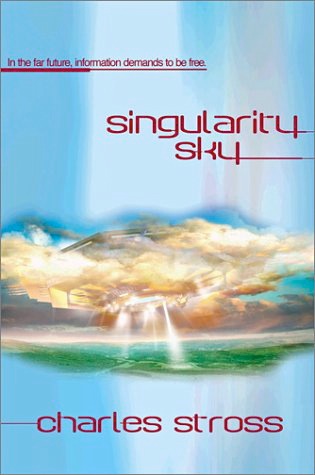
Singularity Sky and its sequel Iron Sunrise are collectively known as the Eschaton novels, after the godlike posthuman intelligence that seeded human colonies across space on the condition they never attempt time travel or threaten causality - rules tested when a low-tech colony world is destabilized by a group calling itself the Festival. Charles Stross uses the setup for a mix of space opera, economics, and diplomatic intrigue.
- Culture
series15 books1987
completed
part of The Culture
similar byscience fictionfar future
The Culture series is a science fiction series written by Scottish author Iain M. Banks and released from 1987 until 2012. The stories centre on The Culture, a utopian, post-scarcity space society of humanoid aliens and advanced superintelligent artificial intelligences living in artificial habitats spread across the Milky Way galaxy. The main themes of the series are the dilemmas that an idealistic, more-advanced civilization faces in dealing with smaller, less-advanced civilizations that do not share its ideals, and whose behaviour it sometimes finds barbaric. In some of the stories, action takes place mainly in non-Culture environments, and the leading characters are often on the fringes of the Culture, sometimes acting as agents of the Culture in its plans to civilize the galaxy. Each novel is a self-contained story with new characters, although reference is occasionally made to the events of previous novels.
- Feersum Endjinn
Iain M. Banksstandalone novel1994
similar byscience fictiontensefar future+1 more
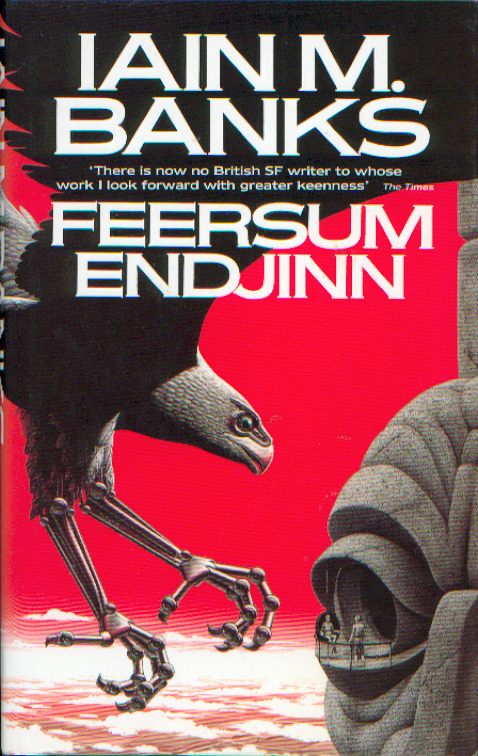
From the back cover of the 1996 Bantam Spectra mmpb printing: "Count Alandre Sessine VII has already died seven times. He has only one life left - and one last chance to catch his killer. His only clues point to a conspiracy beyond his own murder. For a catastrophe is fast approaching Earth. And a chosen few will do anything to keep it a secret. Sessine has three days before his funeral to live the way men used to live: restricted to one life where any mistake could be his last. Suddenly he finds himself a fugitive whose only hope of survival is finding others like himself. Others who hold the pieces to the puzzle of a weapon of salvation and chaos..."
- Starstream
series2 books1989
completed
similar byscience fictiontensefar future+1 more
Starstream groups Jeffrey A. Carver's two linked science-fiction novels, From a Changeling Star (1989) and its direct sequel Down the Stream of Stars (1990). The two were published within a year of each other under the same author.
- The Fall Revolution
series4 books1995
similar byscience fiction+3 more
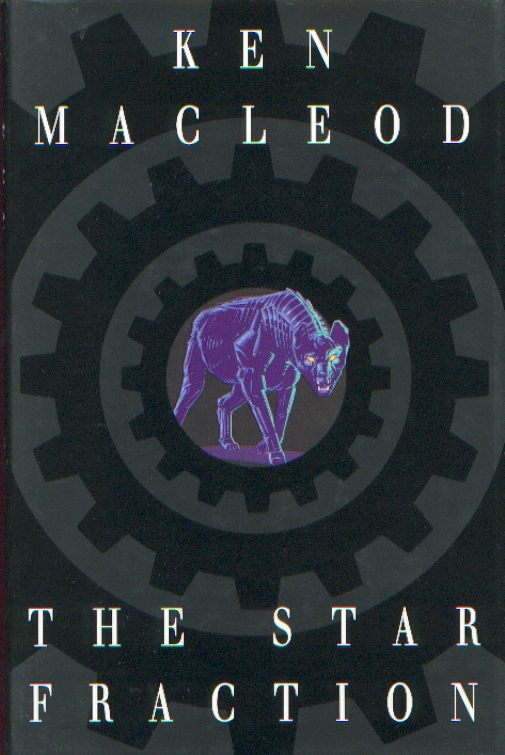
Ken MacLeod's Fall Revolution sequence opens with The Star Fraction (1995), his Arthur C. Clarke Award-nominated debut set in a fractured near-future Britain where a functioning anarchist microstate and rival revolutionary factions vie for power. The four connected novels — continuing through The Stone Canal, The Cassini Division, and The Sky Road — each stand largely alone while tracing overlapping characters and politics across a shared future history, later collected in the omnibus volumes Fractions and Divisions.
- Queendom of Sol
series4 books2000
similar bynanotechnologyscience fictionfar future+1 more
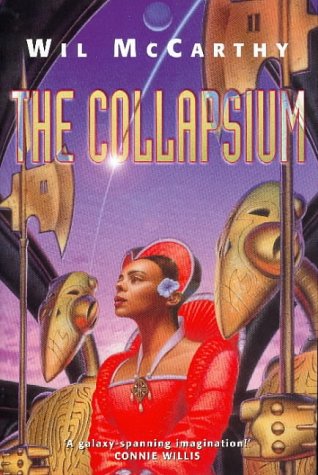
The Queendom of Sol is a science fiction book series by American author Wil McCarthy. It includes The Collapsium (2000), The Wellstone (2003), Lost in Transmission (2004), and To Crush the Moon (2005). The first two novels of the series were also printed together as The Monarchs of Sol by Science Fiction Book Club (ISBN 0739433881).
- Snow Crash
Neal Stephensonstandalone novel1992
similar byscience fictiontense+1 more
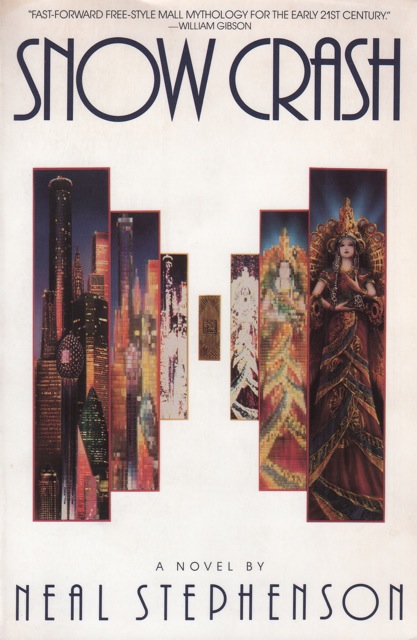
Snow Crash is a 1992 science fiction novel by Neal Stephenson. Like many of Stephenson's novels, its themes include history, linguistics, anthropology, archaeology, religion, computer science, politics, cryptography, memetics, and philosophy.
- Bloom
Wil McCarthystandalone novel1998
similar bynanotechnologyscience fictiontensefar future
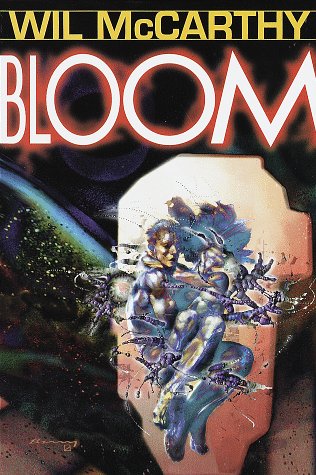
Bloom, written in 1998, is the fifth science fiction novel written by Wil McCarthy. It was first released as a hardcover in September 1998. Almost a year later, in August 1999, its first mass market edition was published. An ebook reprint was published in 2011.
- Forever War
series10 books1972
similar byscience fictionfar future+1 more
Joe Haldeman's The Forever War (1974) follows a soldier conscripted into a centuries-long interstellar war against the alien Taurans, using relativistic space travel so that months spent in transit correspond to years or decades passing back on Earth. Haldeman later returned to the same conflict in Forever Peace (1997), a thematically connected but separate story, and Forever Free (1999), a direct sequel set years after the original war's end. The first novel won the Hugo, Nebula, and Locus awards and is considered a foundational work of military science fiction.
- Earth
David Brinstandalone novel1990
similar byscience fictiontense+1 more
Earth is a 1990 science fiction novel by American writer David Brin. The book was nominated for the Hugo and Locus Awards in 1991.
- Dune Universe
universe78 books1963
Start hereDune · Start here
similar byscience fictionfar future+1 more
Arrakis. Dune. The desert planet, where empire runs on a single substance: the spice melange, which folds space, prolongs life, and unlocks prescience, and which exists nowhere else in the known universe. Frank Herbert's saga is a meditation dressed as an adventure — feudal houses and a secret sisterhood, engineered messiahs and the patient ecology of a world without water, all turning on the terrible gravity of who commands the spice. It reads like scripture and schemes like a war room, ten thousand years hence, among people who have outlawed the thinking machine and made instruments of themselves instead. At its heart stand Herbert's original six — Dune, Dune Messiah, Children of Dune, God Emperor of Dune, Heretics of Dune, Chapterhouse: Dune — a single deepening arc across millennia, arguing the whole way between prophecy and free will. Around that spine his son Brian Herbert and Kevin J. Anderson have raised a vast prequel architecture: Prelude to Dune, tracing the great houses a generation before Paul; Legends of Dune, reaching back to the crusade that broke the machines; the Schools of Dune cycle on the founding of Bene Gesserit, Mentat, and Navigator; the Caladan Trilogy and Heroes of Dune filling years the originals left in shadow. Many hands, dozens of volumes, one desert. What sets Dune apart is its refusal of the simple: religion is manufactured, heroes are hazards, and the sand itself — worm, water, ecology — acts as a political power. Begin where the universe did, with Frank Herbert's Dune (1965), and read the original six in order; you need nothing else to feel the full weight. The prequels are a country to explore afterward, taken by era. Beginnings are delicate times.
- Dune
series20 books1963
part of Dune Universe
similar byscience fictionfar future+1 more
Frank Herbert's Dune Chronicles opens with 1965's Dune, set on the desert planet Arrakis where House Atreides takes control of the only source of the vital spice melange and young Paul Atreides is pulled into a struggle over its politics and religion. Herbert carried the story forward across five further novels — Dune Messiah, Children of Dune, God Emperor of Dune, Heretics of Dune, and Chapterhouse: Dune — following Paul's line over the following millennia, before Brian Herbert and Kevin J. Anderson later extended the saga. Many other editions of these six novels are omnibus and box-set repackagings rather than separate stories.
- The Light of Other Days
Arthur C. Clarke & Stephen Baxterstandalone novel2000
similar byscience fictiontense+1 more
An industrialist devises a technique to use tiny wormholes as light pipes to enable viewing of any event anywhere; and subsequently it becomes possible to use them to view any event in the past as well. The effects on society are enormous.
- Old Man's War
series16 books2005
similar byscience fictionfar future+1 more
The Old Man's War series is a series of science fiction novels by John Scalzi. The first book in the series, Old Man's War, was first published in 2005 by Tor Books, and was nominated for the Hugo Award for Best Novel in 2006. In 2026 it was a finalist for the Hugo Award for Best Series.
- Ocean / Galactic Center
series12 books1972
similar byscience fictionfar future+1 more
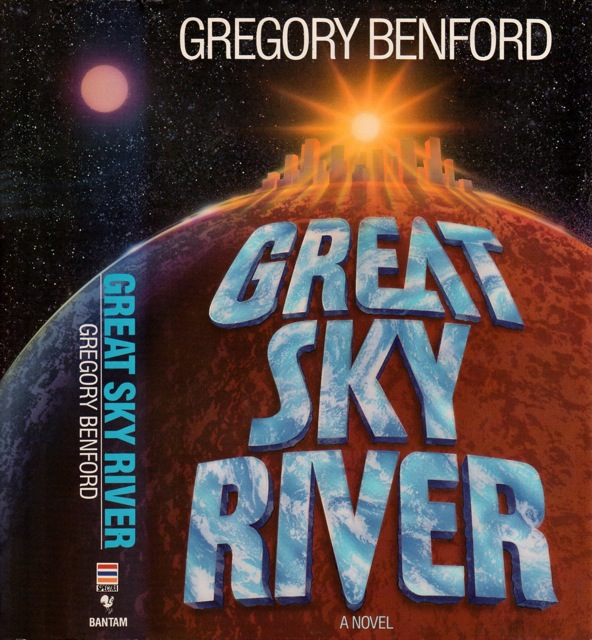
The Galactic Center Saga is a series of books by author Gregory Benford detailing a galactic war between mechanical and biological life.In the Ocean of Night (1977) — 1977 Nebula Award nominee, 1978 Locus Award nominee Across the Sea of Suns (1984) Great Sky River (1987) — 1988 Nebula Nominee Tides of Light (1989) — 1990 Locus Award nominee Furious Gulf (1994) Sailing Bright Eternity (1996) "A Hunger for the Infinite" a novella published in the anthology Far Horizons