Loreful
HomeDiscover
Search series, authors…⌘K
Loreful

Reading orders for SF/F series and shared universes — with your place kept in every one.

Explore

UniversesSeriesWorksAuthorsAtlas

Help

FAQAboutSite map

Account & legal

Sign inCreate accountPrivacyTerms

Data

Built on ISFDB, Wikipedia, Wikidata and Open Library. Curated reading orders carry their reasoning on the page; the rest follow publication order. Data sources & licenses

© Loreful · data: ISFDB · CC BY

More like Chilling Effect

anchored on:science fictionfar futurespace operaspacespaceship

but

Mood

The mood the book leaves you in.

  • The reading experience is propelled by journeys, exploration, and physical risk; excitement and forward momentum dominate over dread or introspection.
  • Joy and loss are deliberately mixed; the resolution grants characters something real while taking something else away, leaving warmth and sorrow together.
  • The book demands work from the reader — dense prose, difficult structure, unfamiliar ideas, or morally uncomfortable material — as part of its intended effect.
  • Grim events, cruelty, or despair dominate the atmosphere, and the book does not soften them with comfort or comic relief.
  • The atmosphere is quietly unsettling — wrongness, unease, and the uncanny pervade the book without necessarily escalating into overt horror.
  • The book is built to move the reader; character feeling is foregrounded and major scenes aim at a strong emotional response.
  • Humor is a primary aim and the prose plays for laughs — comic situations, wit, or dialogue produce sustained comedy, not occasional levity.
  • The book insists that things can improve; effort and decency are shown to matter, and the arc bends toward better outcomes even through hardship.
  • The book teaches as it goes — real facts, history, science, or craft are conveyed in enough depth that learning is part of the reading experience.
  • The book is designed to uplift and motivate, presenting perseverance or achievement in a way that invites the reader to aspire or act.
  • The overall register is cheerful and easygoing; stakes are kept gentle and the book avoids dwelling on pain or dread.
  • Withheld information drives the experience; the book sustains enigmas and secrets the reader wants resolved, whatever its genre.
  • The book is contemplative and inward-looking, giving more weight to thought, memory, and meaning than to external events.
  • The book works as comfort reading — low tension, a soothing pace, and an atmosphere the reader can unwind in.
  • Grief, loss, or melancholy set the dominant register, and the book lets sorrow stand rather than resolving it into comfort.
  • Sustained suspense is the point; the book keeps the reader braced for what happens next through danger, pressure, or impending revelation.
  • Playful invention and charm define the register — fanciful conceits, light absurdity, and a narration that delights in its own oddity.

About

What the story runs on.

  • Stories in which extraterrestrial beings are central — as characters, cultures, or the object of the plot.
  • Stories about venturing into space to explore — survey missions, astronauts, and the frontier of the unknown beyond Earth.
  • Stories about minds with paranormal abilities — telepathy, telekinesis, precognition, empathy — and how societies handle those who have them.
  • Stories structured as a quest — a journey undertaken to find, deliver, or destroy something of great import.
  • Stories in which staying alive against nature, catastrophe, or scarcity is the central problem.
  • Stories in which a friendship — its making, testing, or loss — is the emotional center.
  • Stories of growing up — a young protagonist crossing from childhood into adult knowledge and responsibility.
  • Stories about who a character truly is — self-discovery, doubled lives, and the search for a self.
  • Stories driven by maneuvering for power — factions, conspiracies, and statecraft conducted in shadow.
  • Stories about rising against rulers — uprisings, resistance movements, and revolutions and their aftermaths.
  • Stories in which war itself is the subject — combat, occupation, and what warfare does to soldiers and civilians.
  • Stories organized around investigating a killing — the case, the clues, and the pursuit of the killer, in any genre's clothing.

Shelf

Where it sits in the library.

    • Fiction built on magic or other supernatural elements that have no scientific explanation.
    • Secondary-world fantasy at large scale, where the fate of nations or the world turns on the protagonists' struggle.
    • Fantasy set in a recognizably modern city or contemporary world where the supernatural intrudes on everyday life.
    • Fantasy that blends in horror's atmosphere and imagery, keeping a fantastical frame around grim or frightening material.
    • Action-driven fantasy following warriors or rogues with personal stakes against sorcerous threats, rather than world-spanning conflicts.
    • Fantasy set in a real historical period or a close analogue of one, with magic woven into the era.
    • Fantasy in which protagonists cross from the ordinary world into another world through a portal or similar passage.
    • Fiction that retells or reworks a traditional fairy tale in a new form or setting.
    • Fantasy drawing directly on myths, legends, and folklore, retelling them or building on their figures and logic.
    • Fantasy of ghosts, vampires, shapeshifters, psychics, and similar phenomena, usually set in an otherwise ordinary world.
    • Fiction mixing science-fictional trappings with overtly magical or impossible elements in one setting.
    • Low-stakes fantasy emphasizing comfort, community, and everyday pleasures over conflict and peril.
    • Speculative fiction of pervasive moral ambiguity, violence, and cynicism that rejects heroic conventions — fantasy and SF alike.
      • Fiction that extrapolates from science and technology — future societies, space travel, or speculative inventions — within at least nominally natural laws.
      • Science fiction of interstellar scope — starships, galactic polities, and adventure across star systems.
      • Science fiction committed to scientific rigor, where technical plausibility constrains the story.
      • Science fiction centered on armed forces and warfare, told largely from a military point of view.
      • Science fiction of networked, corporate-dominated near futures, pairing high technology with social decay.
      • Science fiction styled on nineteenth-century steam-powered technology, often in a Victorian or pseudo-Victorian setting.
      • Fiction depicting an oppressive or catastrophic society, presented as a warning.
      • Fiction set after civilization's collapse, following survivors in the ruins of the old world.
      • Fiction in which characters move between past and future, and the mechanics or consequences of that travel drive the plot.
      • Fiction exploring a world where a historical event went differently and history diverged from ours.
      • Science fiction about humanity's first encounter and communication with an alien intelligence.
      • Science fiction in which extraterrestrial forces attack or occupy Earth and humanity resists.
      • Fiction whose primary aim is to frighten or unsettle the reader through dread, menace, or the monstrous.
      • Horror of vast, indifferent, incomprehensible entities before which humanity is insignificant, in the Lovecraft tradition.
      • Horror of decaying houses, buried family secrets, and oppressive atmosphere in the Gothic literary tradition.
      • Horror centered on hauntings and the returning dead.
      • Horror located in the mind — paranoia, obsession, and unreliable perception rather than external monsters.
      • Horror built around the reanimated dead and survival amid their outbreaks.
      • Horror defined by explicit, transgressive gore that refuses to cut away from violence.
      • Speculative fiction of the strange and uncanny that resists both natural explanation and standard genre categories.
      • Fiction organized around solving a crime or puzzle, typically following an investigator toward the identification of a culprit.
      • A puzzle-first mystery that lays out clues so the culprit's identity can be deduced before the reveal.
      • Crime fiction of moral ambiguity, fatalism, and hard-edged style, set among the corrupt and the doomed.
      • A mystery following the realistic routines of police work — forensics, interviews, and case-building.
      • A gentle mystery with an amateur sleuth, a small community, and violence kept off the page.
      • A mystery set in a past era, where the investigation works within that period's methods and society.
      • Fast-paced fiction driven by imminent danger, pursuit, or high-stakes conspiracy, built to sustain tension.
      • A thriller of espionage — agents, tradecraft, and intelligence services in conflict.
      • A thriller centered on lawyers and the courtroom, where litigation carries the suspense.
      • A thriller driven by detailed contemporary or near-future technology, often military or scientific.
      • A thriller whose tension comes from mental states and manipulation between characters rather than external action.
      • Fiction whose central plot is a romantic relationship and its development toward an emotionally satisfying resolution.
      • Romance in which one or both partners are supernatural beings, blending fantasy elements into the love story.
      • A fantasy-romance hybrid in which the romantic arc and the fantasy plot carry equal weight.
      • Romance set in a past era, with courtship shaped by the period's society and manners.
      • Romance set in the present day, without supernatural or historical elements.
      • Fiction set in a real past period, where the historical setting materially shapes characters and events.
        • General and literary fiction emphasizing prose style, character interiority, or formal ambition over genre plot conventions.
        • Fiction in a realistic world where magical events occur and are treated as ordinary, in the tradition of Latin American literature.
        • Fiction that ridicules people, institutions, or society in order to criticize them.
        • Fiction of dreamlike, irrational imagery and logic that breaks from realistic representation.
        • Fiction that plays with narrative convention through metafiction, fragmentation, and self-reference.
        • Fiction propelled by journeys, exploration, and physical peril, where action and survival carry the plot.
        • Adventure fiction of ships and seafaring — naval engagements, voyages, and life at sea.
        • Fiction of the American frontier West — gunmen, ranchers, and lawmen, typically in the late nineteenth century.
        • Fiction centered on soldiers, campaigns, and the experience of warfare, historical or imagined.
          • Fiction written primarily to amuse, using comedic situations, wit, or parody as its organizing principle.
            • Multi-generational fiction following a family or dynasty across decades, with inheritance and kinship as the through-line.
              • Fiction whose world runs on explicit game mechanics — levels, stats, and skills that characters can see and exploit.
                • Fiction about costumed or superpowered heroes and their conflicts with comparable villains.

                Practical

                How long a commitment, whether it stands alone, and whether it has finished.

                Tap a chip to ask for it · tap again to rule it out · once more to clear. Numbers show what would be left.

                • Cover of Hitchhiker's Guide to the Galaxy
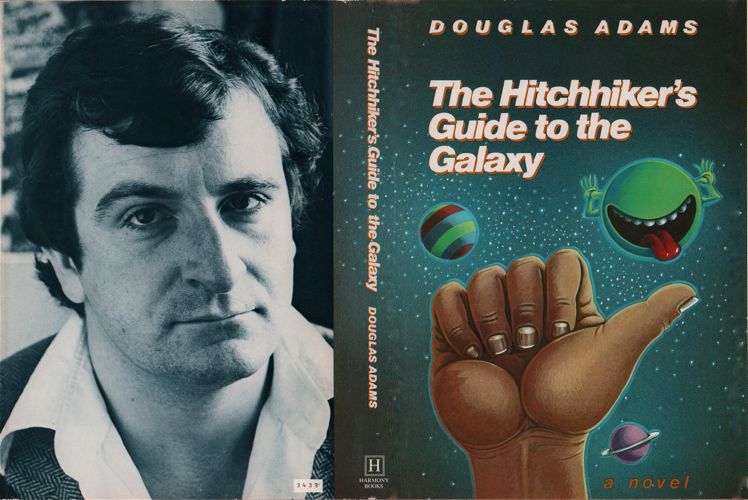
                  Hitchhiker's Guide to the Galaxy

                  series · 16 books · 1979

                  part of The Hitchhiker's Guide to the Galaxy Universe

                  similar byfunnyscience fictionfar futurespace+3 more

                  The Hitchhiker's Guide to the Galaxy is a comedy science fiction franchise created by Douglas Adams. Originally a radio sitcom broadcast over two series on BBC Radio 4 between 1978 and 1980, it was soon adapted to other formats, including both novels and comic books, a 1981 BBC television series, a 1984 text adventure game, stage shows and a 2005 feature film.

                • Cover of The Sirens of Titan
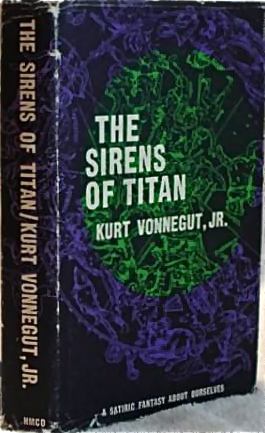
                  The Sirens of Titan

                  Kurt Vonnegut & Jr. · standalone novel · 1959

                  similar byfunnyfar futurealiensscience fictionspace operaspace

                  The Sirens of Titan is a comic science fiction novel by Kurt Vonnegut Jr., first published in 1959. His second novel, it involves issues of free will, omniscience, and the overall purpose of human history, with much of the story revolving around a Martian invasion of Earth.

                • Cover of The Stainless Steel Rat
                  The Stainless Steel Rat

                  series · 21 books · 1957

                  completed

                  similar byfunnyfar futurescience fictionspace operaspaceadventurous+1 more

                  James Bolivar diGriz, alias "Slippery Jim" and "The Stainless Steel Rat", is a fictional character and a series of comic science fiction novels written by Harry Harrison.

                • Cover of Space Opera (Catherynne M. Valente)
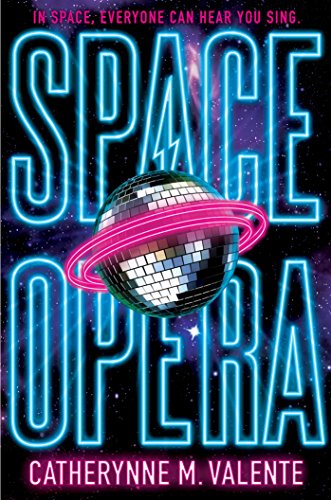
                  Space Opera (Catherynne M. Valente)

                  series · 2 books · 2018

                  similar byfunnyfar futurealiensscience fictionspace operaspace

                  Catherynne M. Valente's Space Opera imagines a galaxy where a century-old war was ended by replacing armed conflict with Galactivision, an interstellar singing contest that doubles as first contact: any newly discovered species has to compete or be judged too dangerous to exist. When aliens finally notice humanity, the fate of Earth ends up resting on a fading rock band drafted to represent the whole species on stage. It's Eurovision transplanted into space opera, played for absurdist comedy with real stakes underneath.

                • Cover of Chilling Effect
                  Chilling Effect

                  series · 3 books · 2019

                  similar byfar futurescience fictionspace operaspace+2 more

                • Cover of Starship Nameless
                  Starship Nameless

                  series · 3 books · 2021

                  similar byfar futurescience fictionspace operaspacespaceshipadventurous+3 more

                • Cover of Starman Jones
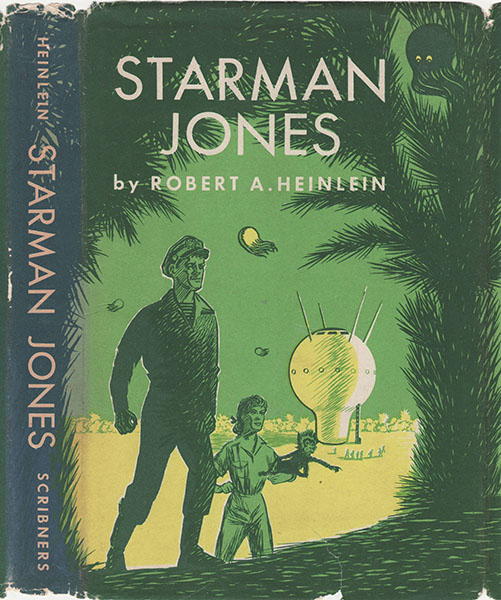
                  Starman Jones

                  Robert A. Heinlein · standalone novel · 1953

                  similar byfar futurescience fictionspace operaspacespaceshipadventurousother star systems+1 more

                  Starman Jones, a 1953 science fiction novel by Robert A. Heinlein, features a farm boy who wants to go to the stars. Charles Scribner's Sons published the book as part of the Heinlein juveniles series.

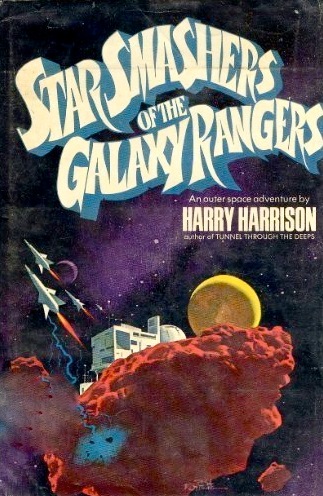
                • Cover of Star Smashers of the Galaxy Rangers
                  Star Smashers of the Galaxy Rangers

                  Harry Harrison · standalone novel · 1973

                  similar byfunnyfar futurescience fictionspace operaspaceother star systems+2 more

                  Star Smashers of the Galaxy Rangers is a 1973 comic science fiction novel by American writer Harry Harrison. It is a parody of the space opera genre and in particular, the Lensman and Skylark series of E. E. "Doc" Smith. The main characters are homages to Tom Swift Jr. and his buddy, Bud Barclay. It also includes a homage to Larry Niven's Ringworld (1970).

                • Cover of Aurora Cycle
                  Aurora Cycle

                  series · 3 books · 2019

                  similar byfar futurescience fictionspace operaspaceother star systems+4 more

                • Cover of Phule's Company
                  Phule's Company

                  series · 6 books · 1990

                  similar byfunnyfar futurescience fictionspace+2 more

                  Phule's Company is a series of comic military science fiction novels by Robert Asprin, beginning with Phule's Company and ending with Phule's Errand.

                • Cover of The Final Architecture
                  The Final Architecture

                  series · 6 books · 2021

                  similar byfar futurealiensscience fictionspace operaspaceadventurousother star systems

                  The Final Architecture is a series of science fiction novels by British writer Adrian Tchaikovsky. It contains the books Shards of Earth, Eyes of the Void, and Lords of Uncreation. The series focuses on a group of humans fighting against the mysterious Architects, who destroy inhabited planets. The series has been well-received critically, with Shards of Earth winning the 2021 BSFA Award for Best Novel. The entire series was a finalist for the 2024 Hugo Award for Best Series.

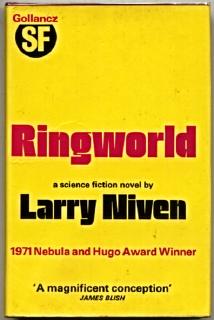
                • Cover of Ringworld
                  Ringworld

                  series · 5 books · 1970

                  part of Known Space

                  similar byaliensfar futurescience fictionspace operaspaceadventurousother star systems

                  The Ringworld series is a series of science fiction novels written by American author Larry Niven. It is part of his Known Space series of stories. Its backdrop is the Ringworld, a giant artifact 3 million times the surface area of Earth circling a star. The series is composed of four standalone science fiction novels, the original award-winning book and its three sequels:1970: Ringworld 1979: The Ringworld Engineers 1996: The Ringworld Throne 2004: Ringworld's Children

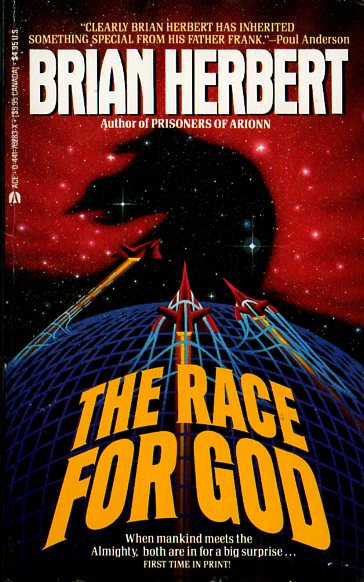
                • Cover of The Race for God
                  The Race for God

                  Brian Herbert · standalone novel · 1990

                  similar byfunnyfar futurealiensscience fictionspace operaspacespaceshipadventurous+1 more

                  God, it turns out, lives on the planet Tananius-Ofo in the distant galaxy 722C12009. And now, after countless millennia, He's invited us to come visit Him. Not everybody, mind you. Just an odd assortment of heathens, heriticts, pantheists, perverts and true believers of every sect and creed - all crammed into a single white spaceship piloted by a slightly crazed bio-computer. Each pilgrim is determined to be the first to reach God and learn His secrets... if they don't all kill each other on the way there.First time in trade paperback, from the international best-selling author of the Dune books!

                • Cover of Moties
                  Moties

                  series · 4 books · 1974

                  part of CoDominium

                  similar byfar futurealiensscience fictionspace operaspaceother star systems+1 more

                  Larry Niven and Jerry Pournelle's The Mote in God's Eye (1974) depicts humanity's first contact with an alien species, the Moties, set within the far-future interstellar setting of Pournelle's codominium future history. The Gripping Hand continues that first-contact crisis years later, and Outies, written by J. R. Pournelle, carries the story forward into a new generation. Together the three books trace an escalating encounter between human and Motie civilizations within the codominium universe.

                • Cover of Retief
                  Retief

                  series · 61 books · 1960

                  similar byfar futurescience fictionspace operaspace+4 more

                  Retief follows Jame Retief, a wry, capable diplomat in the Terran Corps Diplomatique who solves interstellar crises through unorthodox action while his blustering, status-obsessed superiors busy themselves with protocol. Keith Laumer's satirical space-opera stories, mostly standalone adventures unified by the character and his bureaucratic universe, ran from the 1960s into the 1980s; later entries continuing under Laumer's name were completed by William H. Keith Jr. after his death. The books favor comic diplomatic farce over a continuous plot arc, so they read well in almost any order.

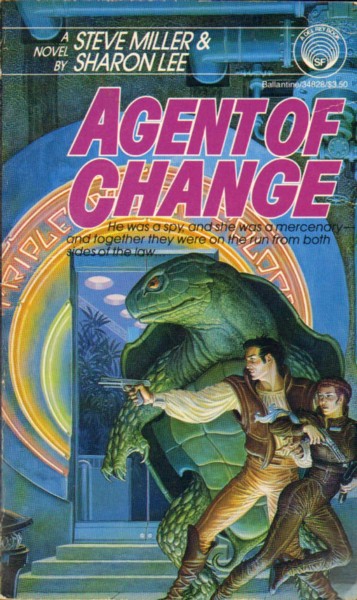
                • Cover of Agent of Change
                  Agent of Change

                  series · 10 books · 1988

                  part of Liaden

                  similar byfar futurescience fictionspace operaspaceother star systems+1 more

                  Agent of Change opens Sharon Lee and Steve Miller's long-running Liaden Universe sequence with Val Con yos'Phelium, a covert agent of the Liaden clans, and Miri Robertson, a mercenary soldier, forced into an uneasy alliance while fleeing assassins across space. It's the foundational quartet of a much larger set of novels blending space opera, clan intrigue, and a slow-burn partnership between its two leads. The series belongs to the wider Liaden universe, a shared future history of trade clans, mercenary companies, and human/alien contact spanning dozens of books.

                • Cover of Janitors of the Post-Apocalypse
                  Janitors of the Post-Apocalypse

                  series · 3 books · 2017

                  similar byfar futurescience fiction+6 more

                • Cover of Space Beagle
                  Space Beagle

                  series · 5 books · 1939

                  completed

                  similar byfar futurealiensscience fictionspace operaspacespaceshipadventurous

                  The Voyage of the Space Beagle is a 1950 fix-up novel by A. E. van Vogt, stitched together from four previously published pulp stories into a single continuous account of the exploration ship Space Beagle's encounters with a series of dangerous alien life forms. Its episodic, crew-versus-monster structure reads as a loose sequence of adventures rather than one continuous plot.

                • Cover of Mindswap
                  Mindswap

                  Robert Sheckley · standalone novel · 1966

                  similar byfunnyfar futurealiensscience fictionspaceadventurousother star systems

                  "In the future, interstellar travel to alien worlds will be too expensive for most ordinary people. It certainly is for Marvin, a college student who wants to take a really good vacation. And so he signs up for what he can afford, a mindswap, in which a persons consciousness is swapped into the body of an alien lifeform. But Marvin is unlucky, and finds himself in the body of an interstellar criminal, a body that he has to vacate fast. But that criminal consciousness has stolen Marvins earthly body, and Marvin has to find a body on the black market. Travel from world to world with Marvin, each one crazier than the last, as he keeps finding far-from-ideal bodies in awful situations, just to stay alive"--Cover p. [4].

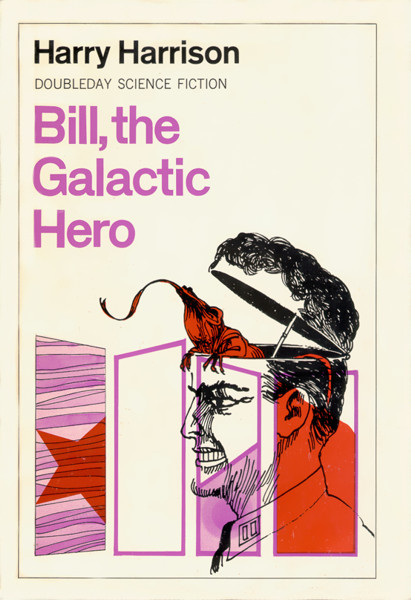
                • Cover of Bill, the Galactic Hero
                  Bill, the Galactic Hero

                  series · 10 books · 1964

                  similar byfar futurescience fictionspace operaspace+2 more

                  Harry Harrison's Bill, the Galactic Hero is a satire of militaristic science fiction, following a hapless draftee named Bill through a galactic war run by an absurd, dehumanizing military bureaucracy. Harrison expanded a 1965 novella into the novel and later co-wrote several tongue-in-cheek sequels with other writers in the 1980s-90s, sending Bill through increasingly ridiculous planetary settings. It's broad science-fiction comedy rather than the harder-edged satire of Harrison's other work.

                • Cover of Chanur
                  Chanur

                  series · 7 books · 1982

                  part of Alliance-Union Universe

                  similar byfar futurealiensscience fictionspace operaspacespaceshipadventurousother star systems

                  The Chanur novels are a series of five science fiction novels, forming three separate stories, written by American author C. J. Cherryh and published by DAW Books between 1982 and 1992. The first novel in the series is The Pride of Chanur (1982), which was nominated for both the Hugo and Locus Awards in 1983. The Pride of Chanur, originally a stand-alone story, was followed by the Chanur's Venture trilogy, Chanur's Venture (1984), which was shortlisted for a Locus Award in 1985; The Kif Strike Back (1985) and Chanur's Homecoming (1986). These were followed by a later sequel, Chanur's Legacy (1992). The five novels were also published in two omnibus editions: the first three in The Chanur Saga in 2000 and the next two in Chanur's Endgame in 2007.

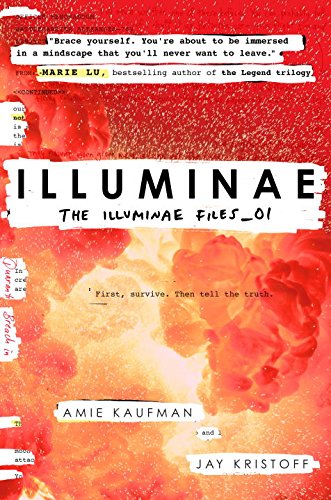
                • Cover of The Illuminae Files
                  The Illuminae Files

                  series · 4 books · 2015

                  similar byfar futurescience fictionspace operaspace+2 more

                • Cover of Old Man's War
                  Old Man's War

                  series · 16 books · 2005

                  similar byfar futurescience fictionspace operaspaceadventurousother star systems+1 more

                  The Old Man's War series is a series of science fiction novels by John Scalzi. The first book in the series, Old Man's War, was first published in 2005 by Tor Books, and was nominated for the Hugo Award for Best Novel in 2006. In 2026 it was a finalist for the Hugo Award for Best Series.

                • Cover of The Disasters
                  The Disasters

                  M. K. England · standalone novel · 2018

                  similar byfunnyfar futurefound familyscience fictionspace operaspacespaceshipadventurous

                  The Breakfast Club meets Guardians of the Galaxy in this YA sci-fi adventure by debut author M. K. England. Hotshot pilot Nax Hall has a history of making poor life choices. So it's not exactly a surprise when he's kicked out of the elite Ellis Station Academy in less than twenty-four hours. But Nax's one-way trip back to Earth is cut short when a terrorist group attacks the Academy. Nax and three other washouts escape--barely--but they're also the sole witnesses to the biggest crime in the history of space colonization. And the perfect scapegoats. On the run, Nax and his fellow failures plan to pull off a dangerous heist to spread the truth. Because they may not be "Academy material," and they may not even get along, but they're the only ones left to step up and fight. Full of high-stakes action, subversive humor, and underdogs becoming heroes, this YA sci-fi adventure is perfect for fans of Illuminae, Heart of Iron, or the cult classic TV show Firefly and is also a page-turning thrill ride that anyone--not just space nerds--can enjoy.