More like Copstate
anchored on:science fiction
but
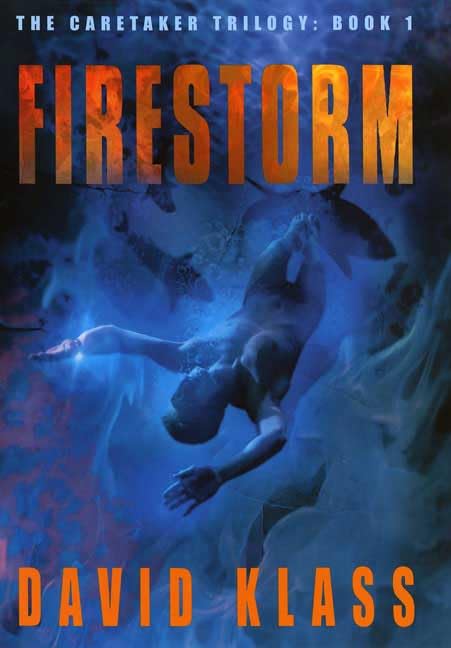
- The Caretaker Trilogy
series3 books2006
similar byscience fictionour worldnear future+2 more
The Caretaker Trilogy is a series of science fiction thrillers with an ecological theme, written for young adults by David Klass. The first book in the series, Firestorm (2006), was the first book ever endorsed by Greenpeace and was praised by critics for its combination of entertainment value and environmental message, garnering an American Library Association (ALA) Best Book citation, a starred review from Publishers Weekly, and a favorable review by the New York Times Book Review. The story focuses on Jack Danielson, a teenager sent back from the future to save the world's oceans. Whirlwind, the second book in the Caretaker Trilogy, tells the story of Jack's efforts to save the Amazon rainforest; published in March 2008 by Farrar, Straus and Giroux. The third book in the trilogy is Timelock, published in 2009.
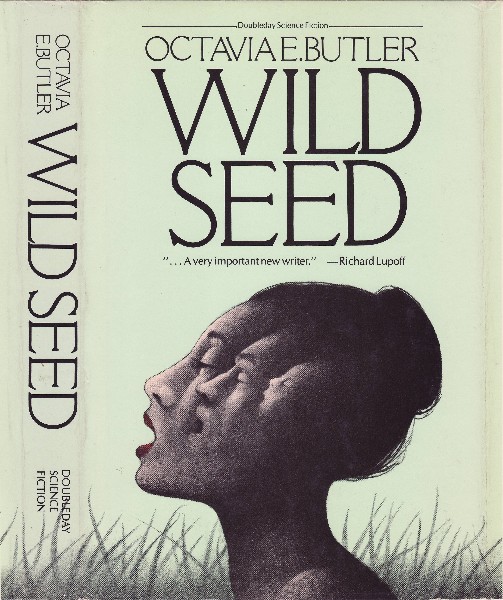
- Patternist
series6 books1976
completed
similar byscience fiction+1 more
The Patternist series is a group of science fiction novels by Octavia E. Butler that detail a secret history continuing from the Ancient Egyptian period to the far future that involves telepathic mind control and an extraterrestrial plague. A profile of Butler in Black Women in America notes that the themes of the series include "racial and gender-based animosity, the ethical implications of biological engineering, the question of what it means to be human, ethical and unethical uses of power, and how the assumption of power changes people."
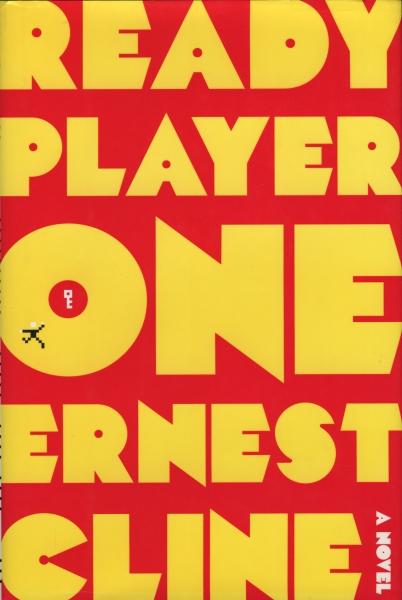
- Ready Player One
series3 books2011
similar byscience fictionadventurousnear future+1 more
Ernest Cline's Ready Player One (2011) is set in a near-future dystopia where much of humanity escapes into the OASIS, a vast virtual-reality universe, and follows teenager Wade Watts as he chases an Easter egg hidden by the OASIS's late creator in a puzzle-based hunt worth a fortune. The 2020 sequel, Ready Player Two, picks up after Wade has gained control of the OASIS and follows him and his friends into a new quest built around a brain-computer interface the creator left behind.
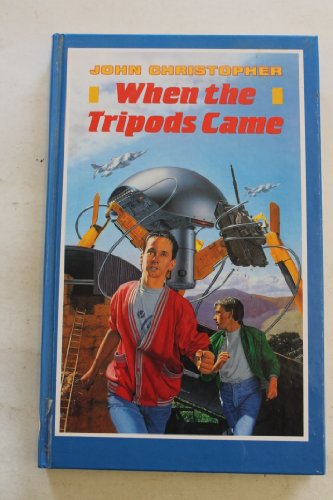
- Tripods
series4 books1967
completed
similar byscience fictionour worldnear future+1 more
The Tripods is a series of young adult science fiction novels by John Christopher. The series takes place in a post-apocalyptic world where humanity is enslaved by "Tripods"—gigantic three-legged walking machines piloted by an alien race later identified as the "Masters". The first two books were the basis of a science fiction TV series, produced in the United Kingdom in the 1980s.
- Future History
series42 books1939
completed
similar byscience fiction+2 more
The Future History is a series of science fiction stories written by American author Robert A. Heinlein (1907–1988). It describes a projected future of the human race from the middle of the 20th century through the early 23rd century. The term Future History was coined by John W. Campbell Jr. in the February 1941 issue of Astounding Science Fiction. Campbell published an early draft of Heinlein's chart of the series in the May 1941 issue.
- H. G. Wells' War of the Worlds
universe65 books1898
Start hereThe War of the Worlds · Start here
similar byscience fiction+1 more
No one would have believed, in the closing years of the nineteenth century, that human affairs were being watched keenly and closely from the timeless worlds of space. And then the cylinders fell. H. G. Wells' War of the Worlds opens in the quiet of the Surrey commons, where a falling star proves to be the first Martian craft — and from the pit rise the towering tripods, the Heat-Ray, the choking Black Smoke and the creeping red weed, wielded by minds that regard mankind much as we regard the creatures we boil for supper. This is invasion rendered as natural disaster: cold, methodical, and vast beyond argument. Wells' 1898 novel is the seed; everything else grows from that Martian soil. The catalogue gathers direct sequels and continuations alongside a wide field of other hands. In War of the Worlds: Global Dispatches the invasion is retold across the whole planet through the eyes of Twain, Verne, Tolstoy, Lowell and Kipling; in the Manly Wade and Wade Wellman crossover, Sherlock Holmes, Watson and Professor Challenger take the field against the machines; and Scott Washburn's Great Martian War stretches the fighting into a decades-long alternate history of steam, artillery and grinding attrition. It is a loose shared world — no single decreed sequence, many voices answering one calamity. What sets this world apart is its refusal of heroics: the invaders fall not to generals but to the smallest things of Earth, humbling and indifferent. Begin, always, with Wells' original novel — it is short, and it is the ground every later book stands upon. From there follow your appetite: Global Dispatches for the panorama, the Holmes campaign for adventure, Washburn for the long war.
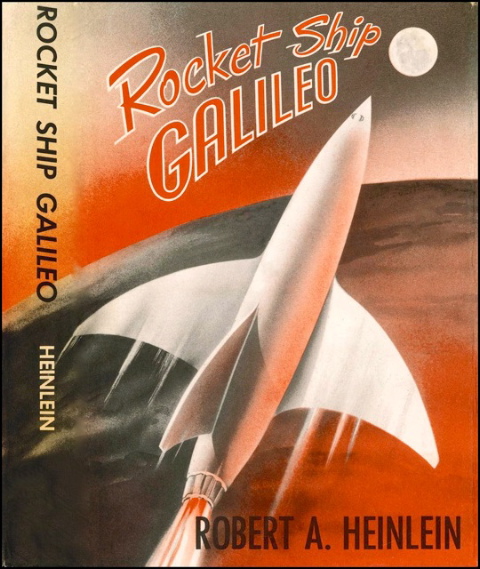
- Rocket Ship Galileo
Robert A. Heinleinstandalone novel1947
similar byscience fictionadventurousnear future+1 more
Three teenage boys do backyard experiments on powerful model rockets. An uncle who is an atomic engineer enlists them to make and fly the first rocket to the moon.
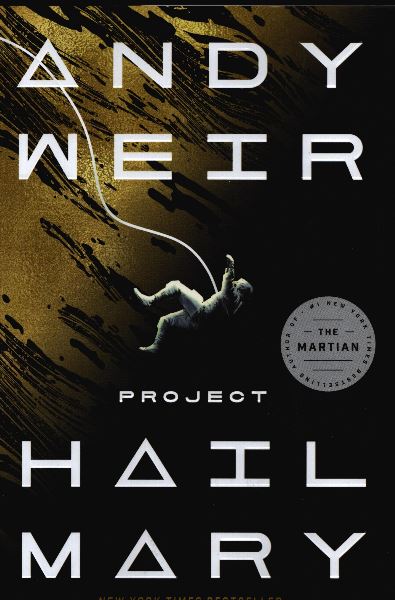
- Project Hail Mary
Andy Weirstandalone novel2021
similar byscience fictionadventurousour worldnear future
Project Hail Mary is a 2021 hard science fiction novel by American writer Andy Weir. It centers on science teacher and former biologist Ryland Grace, who wakes up aboard a spacecraft, afflicted with amnesia.
- The Rolling Stones
Robert A. Heinleinstandalone novel1952
similar byscience fictionadventurousnear future+1 more
The Stone family, lunar-born, technically minded, and perpetually restless, buy a secondhand spaceship and set off from the Moon on a family tour of the solar system. Teenage twins Castor and Pollux have their own side hustle in mind, planning to buy up used bicycles on Mars and resell them at a markup, but a small furry souvenir picked up along the way, a Martian 'flat cat' bought for their little brother, turns out to have habits that could sink the whole trip's finances. Robert A. Heinlein's family adventure blends hard-edged space travel with comic domestic chaos.
- The Star Beast
Robert A. Heinleinstandalone novel1954
similar byscience fictionadventurousour worldnear future
A talking alien pet has grown to the size of a small dinosaur. She repeatedly gets her teenage owner in trouble whenever she leaves the backyard, but he continues to care for her, as did his father and grandfather before him. When an alien delegation lands on Earth and demands custody, he fights to protect her.
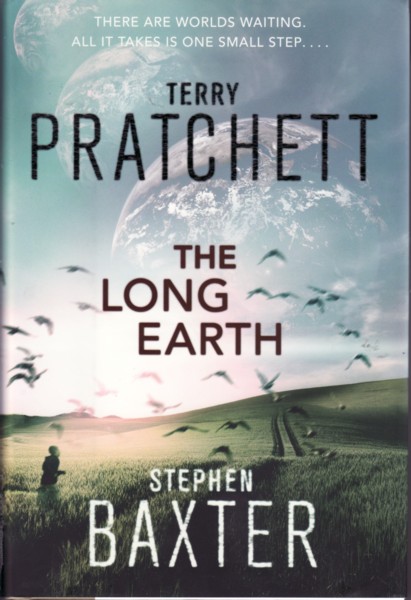
- The Long Earth
series7 books2012
similar byscience fictionadventurousnear future+1 more
Terry Pratchett and Stephen Baxter's Long Earth series (five novels, 2012-2016) begins when a cheap, simple device called a Stepper lets people step sideways into a vast, possibly infinite chain of parallel Earths, none of which developed human civilization. The books follow a natural stepper and an AI that believes itself the reincarnation of a Tibetan repairman as they travel millions of steps out along the chain, encountering other hominid species and the dangers, ecological and social, of an endless open frontier.
- Talents (Anne McCaffrey)
series9 books1969
completed
part of The Talents
similar byscience fiction+2 more
The Talent series opens with To Ride Pegasus (1973), a linked collection of stories introducing people born with parapsychic gifts such as telepathy, telekinesis, and precognition, as society first learns to organize and rely on them. Pegasus in Flight (1990) and Pegasus in Space (2000) complete the trilogy, following the training and growing use of these Talents through near-Earth crises. Anne McCaffrey set the series earlier in the same Talents universe that her later Tower and Hive novels continue.
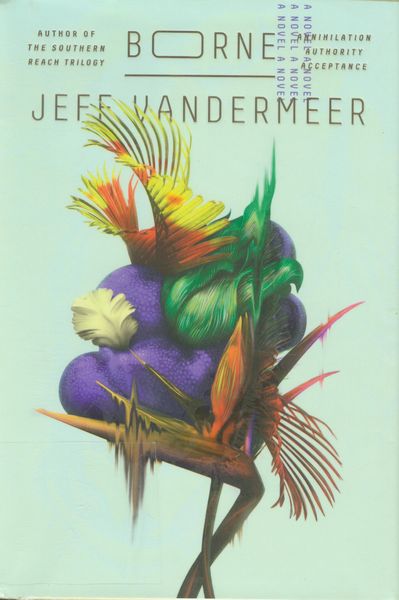
- Borne
series3 books2017
similar byscience fictionnear future+2 more
Borne is set in a ruined, biotech-poisoned city dominated by a giant flying bear named Mord, where a scavenger finds a strange organism she names Borne and raises it, only to discover it may be more dangerous - and more alive - than she expected. Jeff VanderMeer's series continues with the related novels The Strange Bird and Dead Astronauts, set in the same devastated world.
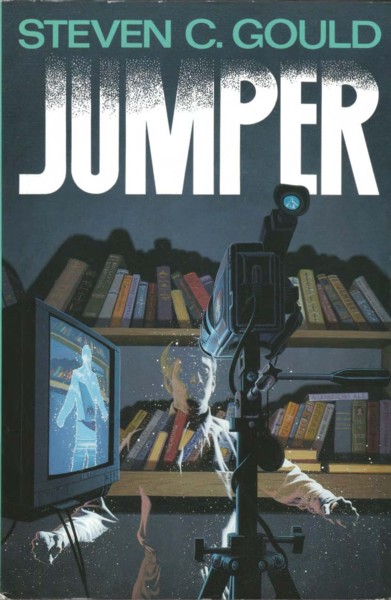
- Jumper
series6 books1992
similar byscience fictionadventurous+1 more
Jumper follows David Rice, a teenager who discovers he can teleport anywhere he's been and uses the power to escape an abusive home, only to find that ability alone doesn't solve the harder problems of finding his absent mother, building an honest relationship, or staying off the radar of people who'd exploit him. Steven Gould's series continues across Reflex, Impulse, and Exo, later following his and his wife's daughter as a second-generation jumper. A 2008 film loosely adapted the first novel.
- Galactic Milieu
series10 books1981
completed
similar byscience fiction+2 more
Galactic Milieu is a series of science fiction novels by Julian May. It is linked to her previously published series, the Saga of Pliocene Exile; and through the fantastical device of time-travel, acts as both a prequel and a sequel to this earlier series. The "Galactic Milieu" of the title is an interplanetary federation, and Earth's membership of it is a central plot concern.
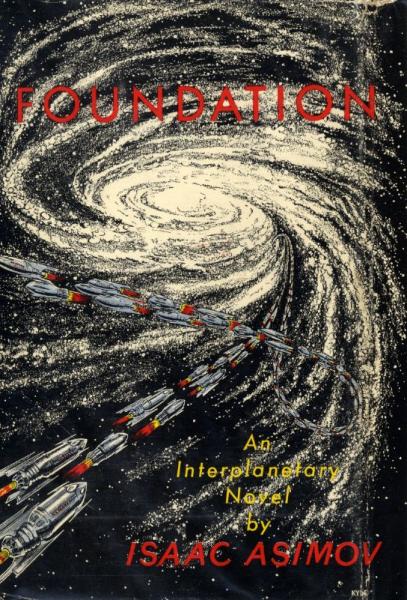
- Foundation Universe
universe123 books1940
Start hereFoundation · Start here
similar byscience fiction+1 more
There is a science that reads the future of quadrillions the way an astronomer reads the orbits of stars. It is called psychohistory, and its equations foresee something the ruling Galactic Empire cannot admit: the throne is rotting, and thirty thousand years of barbarism are coming. One man, Hari Seldon, cannot stop the fall. He can only shorten it — by seeding a Foundation of scholars at the rim of the galaxy, a fragile institution built to carry knowledge across the dark and cut the interregnum to a single millennium. This is a universe told in the register of history itself: the long view, the calm of deep time, empires measured in centuries and men measured against them. The spine is Asimov's original trilogy — Foundation, Foundation and Empire, Second Foundation — followed decades later by the sequels Foundation's Edge and Foundation and Earth and the prequels Prelude to Foundation and Forward the Foundation. Late in life Asimov braided this in with his other future histories: the Robot novels of detective Elijah Baley and his humaniform partner R. Daneel Olivaw (The Caves of Steel, The Naked Sun, The Robots of Dawn, Robots and Empire) and the early Galactic Empire novels (Pebble in the Sky and its kin), until one continuous chronicle ran from the first thinking robots to the Second Empire. Other hands extend it — the Second Foundation Trilogy by Gregory Benford, Greg Bear, and David Brin, and shared-world spinoffs such as Robot City — so the corpus sprawls beyond a single author's tidy shelf. What distinguishes it is that the drama is intellectual: crises resolved by insight, nerve, and dialogue rather than fleets and blades, each turn hinging on the hidden logic of the Seldon Plan. Begin where readers have always begun — with Foundation, and the original trilogy in publication order. The rest opens outward from there.
- Cavor
series2 books1901
similar byscience fictionadventurous
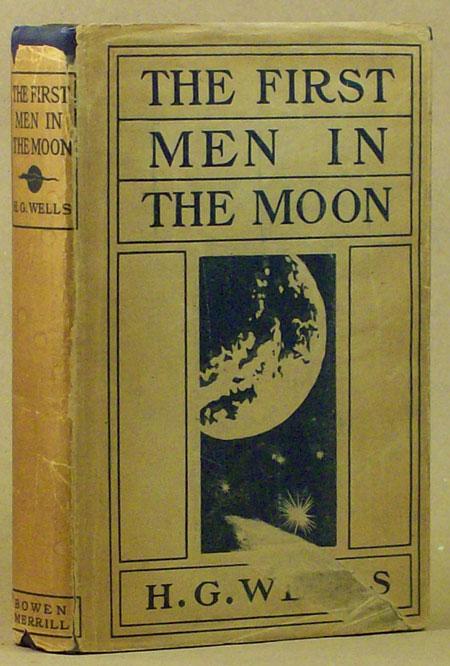
H. G. Wells's 1901 novel The First Men in the Moon is narrated by the businessman Bedford, who joins the reclusive scientist Cavor after Cavor invents cavorite, a gravity-blocking substance that carries the two men to the Moon. There they discover a vast underground civilization of insect-like Selenites, and the expedition that began as a hunt for lunar minerals turns into an encounter with an alien society. It is a standalone novel; later editions crediting Stephen Baxter add an introduction or afterword rather than a continuing story.
- Richard Forthrast
series2 books2011
similar byscience fictionour world+2 more
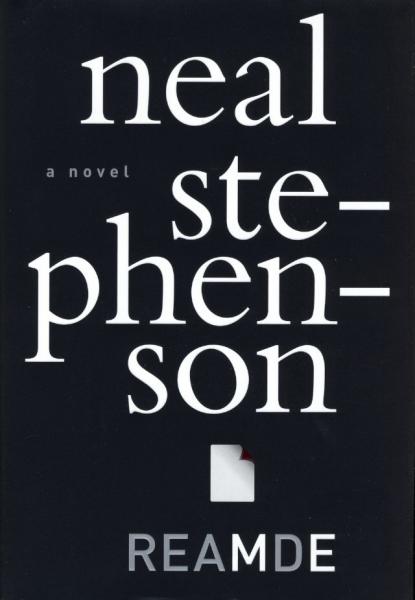
Neal Stephenson's Richard 'Dodge' Forthrast novels open with Reamde, a globe-spanning thriller that starts when ransomware inside an MMORPG economy pulls Richard's extended family into a real-world hostage crisis involving hackers, jihadists and Russian mobsters. The sequel Fall; or, Dodge in Hell shifts registers entirely, following Richard's digitally preserved mind after death into an afterlife simulation built from his scanned brain. The two books share a protagonist and family but differ sharply in genre and scale.
- Chronicle of the Fallers
series2 books2014
part of Commonwealth Universe
similar byscience fiction+1 more
Peter F. Hamilton's Chronicle of the Fallers duology is set within his Commonwealth Saga universe, following physicist Nigel Sheldon as prophetic dreams of a lost civilization lead him into the mysterious Void and onto Bienvenido, a world settled by descendants of Commonwealth colonists under centuries-long siege by the shapeshifting, world-conquering Fallers. It comprises The Abyss Beyond Dreams and Night Without Stars.
- Childe Cycle
series19 books1957
similar byscience fiction+1 more
The Childe Cycle is an unfinished series of science fiction novels by American writer Gordon R. Dickson. The name Childe Cycle is an allusion to "Childe Roland to the Dark Tower Came", a poem by Robert Browning, which provided inspiration for elements in the work. The series is sometimes referred to as the Dorsai series, after the Dorsai people who are central to it. The related short stories and novellas all center on the Dorsai, primarily members of the Graeme and Morgan families.
- Armada
Ernest Clinestandalone novel2015
similar byscience fictionadventurousour worldnear future
Armada is a science fiction novel by Ernest Cline, published on July 14, 2015 by Crown Publishing Group. The story follows a teenager who plays an online video game about defending against an alien invasion, only to find out that the game is a simulator to prepare him and people around the world for defending against an actual alien invasion.
- Time Storm
Gordon R. Dicksonstandalone novel1977
similar byscience fictionadventurousour worldnear future
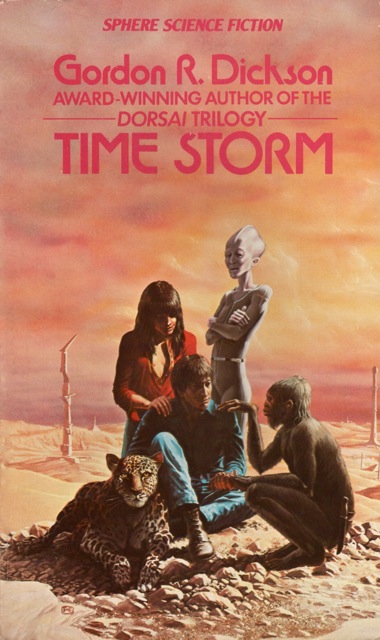
A time storm has devastated the Earth, and only a small fraction of humankind remains. From the rubble, three survivors form an unlikely alliance: a young man, a young woman, and a leopard. "A masterful science fiction story told by a masterful science fiction writer". -- Milwaukee Journal. A time storm strikes the Earth. The Earth remains, but different parts of the Earth are in different eras. Travel between the different zones is thought to be impossible. The main character, Marc Despard, resolves to fight the time storm. After some struggles, he assembles a small band of people, including one alien, to help him try to understand what has happened and to stop the time storm. He has 2 extraordinary relationships with a older teenaged girl who is speechless for the first part of the book (she was "struck dumb" by the time storm) and with, believe it or not, a leopard. Dickson's writing makes the extraordinary seem quite normal. Ultimately, after being harried by a Mad Max-like group of survivors, he uses a machine found in a different era of time to bring his small band of followers into the future so that he can find those who are trying to fight the time storm. He convinces those future beings that he is capable of fighting the time storm, and ultimately stops it, and gets the girl in the end.
- Chronicles of the One
series3 books2017
similar bynear future+2 more
Nora Roberts's trilogy opens after a pandemic has devastated the world and the survivors find that magic - "the uncanny" - has risen among the population, splitting society between those gifted with it and those who fear and hunt them down. Year One, Of Blood and Bone, and The Rise of Magicks follow a chosen young woman, Fallon Swift, as she is trained toward a confrontation with the story's dark power in a reordered, post-collapse world. It is a departure for Roberts into full post-apocalyptic fantasy rather than her usual contemporary settings.