Loreful
HomeDiscover
Search series, authors…⌘K
Loreful

Reading orders for SF/F series and shared universes — with your place kept in every one.

Explore

UniversesSeriesWorksAuthorsAtlas

Help

FAQAboutSite map

Account & legal

Sign inCreate accountPrivacyTerms

Data

Built on ISFDB, Wikipedia, Wikidata and Open Library. Curated reading orders carry their reasoning on the page; the rest follow publication order. Data sources & licenses

© Loreful · data: ISFDB · CC BY

More like Corpse

but

Mood

The mood the book leaves you in.

  • The reading experience is propelled by journeys, exploration, and physical risk; excitement and forward momentum dominate over dread or introspection.
  • Joy and loss are deliberately mixed; the resolution grants characters something real while taking something else away, leaving warmth and sorrow together.
  • The book demands work from the reader — dense prose, difficult structure, unfamiliar ideas, or morally uncomfortable material — as part of its intended effect.
  • Grim events, cruelty, or despair dominate the atmosphere, and the book does not soften them with comfort or comic relief.
  • The atmosphere is quietly unsettling — wrongness, unease, and the uncanny pervade the book without necessarily escalating into overt horror.
  • The book is built to move the reader; character feeling is foregrounded and major scenes aim at a strong emotional response.
  • Humor is a primary aim and the prose plays for laughs — comic situations, wit, or dialogue produce sustained comedy, not occasional levity.
  • The book insists that things can improve; effort and decency are shown to matter, and the arc bends toward better outcomes even through hardship.
  • The book teaches as it goes — real facts, history, science, or craft are conveyed in enough depth that learning is part of the reading experience.
  • The book is designed to uplift and motivate, presenting perseverance or achievement in a way that invites the reader to aspire or act.
  • The overall register is cheerful and easygoing; stakes are kept gentle and the book avoids dwelling on pain or dread.
  • Withheld information drives the experience; the book sustains enigmas and secrets the reader wants resolved, whatever its genre.
  • The book is contemplative and inward-looking, giving more weight to thought, memory, and meaning than to external events.
  • The book works as comfort reading — low tension, a soothing pace, and an atmosphere the reader can unwind in.
  • Grief, loss, or melancholy set the dominant register, and the book lets sorrow stand rather than resolving it into comfort.
  • Sustained suspense is the point; the book keeps the reader braced for what happens next through danger, pressure, or impending revelation.
  • Playful invention and charm define the register — fanciful conceits, light absurdity, and a narration that delights in its own oddity.

About

What the story runs on.

  • Stories structured as a quest — a journey undertaken to find, deliver, or destroy something of great import.
  • Stories in which staying alive against nature, catastrophe, or scarcity is the central problem.
  • Stories of lovers kept apart by law, family, faith, or station, where the obstacle to love is the plot.
  • Stories in which a friendship — its making, testing, or loss — is the emotional center.
  • Stories of growing up — a young protagonist crossing from childhood into adult knowledge and responsibility.
  • Stories about who a character truly is — self-discovery, doubled lives, and the search for a self.
  • Stories about mental unraveling — descent into madness, delusion, and minds at war with themselves.
  • Stories about mourning — living through the death of a loved one and what loss does to the survivors.
  • Stories in which a buried family truth — hidden parentage, crimes, or shames — surfaces and reorders the present.
  • Stories driven by maneuvering for power — factions, conspiracies, and statecraft conducted in shadow.
  • Stories in which war itself is the subject — combat, occupation, and what warfare does to soldiers and civilians.
  • Stories organized around investigating a killing — the case, the clues, and the pursuit of the killer, in any genre's clothing.

Shelf

Where it sits in the library.

    • Fiction built on magic or other supernatural elements that have no scientific explanation.
    • Secondary-world fantasy at large scale, where the fate of nations or the world turns on the protagonists' struggle.
    • Fantasy set in a recognizably modern city or contemporary world where the supernatural intrudes on everyday life.
    • Fantasy that blends in horror's atmosphere and imagery, keeping a fantastical frame around grim or frightening material.
    • Action-driven fantasy following warriors or rogues with personal stakes against sorcerous threats, rather than world-spanning conflicts.
    • Fantasy set in a real historical period or a close analogue of one, with magic woven into the era.
    • Fantasy in which protagonists cross from the ordinary world into another world through a portal or similar passage.
    • Fiction that retells or reworks a traditional fairy tale in a new form or setting.
    • Fantasy drawing directly on myths, legends, and folklore, retelling them or building on their figures and logic.
    • Fantasy of ghosts, vampires, shapeshifters, psychics, and similar phenomena, usually set in an otherwise ordinary world.
    • Fiction mixing science-fictional trappings with overtly magical or impossible elements in one setting.
    • Low-stakes fantasy emphasizing comfort, community, and everyday pleasures over conflict and peril.
    • Speculative fiction of pervasive moral ambiguity, violence, and cynicism that rejects heroic conventions — fantasy and SF alike.
      • Fiction that extrapolates from science and technology — future societies, space travel, or speculative inventions — within at least nominally natural laws.
      • Science fiction of interstellar scope — starships, galactic polities, and adventure across star systems.
      • Science fiction committed to scientific rigor, where technical plausibility constrains the story.
      • Science fiction centered on armed forces and warfare, told largely from a military point of view.
      • Science fiction of networked, corporate-dominated near futures, pairing high technology with social decay.
      • Science fiction styled on nineteenth-century steam-powered technology, often in a Victorian or pseudo-Victorian setting.
      • Fiction depicting an oppressive or catastrophic society, presented as a warning.
      • Fiction set after civilization's collapse, following survivors in the ruins of the old world.
      • Fiction in which characters move between past and future, and the mechanics or consequences of that travel drive the plot.
      • Fiction exploring a world where a historical event went differently and history diverged from ours.
      • Science fiction about humanity's first encounter and communication with an alien intelligence.
      • Science fiction in which extraterrestrial forces attack or occupy Earth and humanity resists.
      • Fiction whose primary aim is to frighten or unsettle the reader through dread, menace, or the monstrous.
      • Horror of vast, indifferent, incomprehensible entities before which humanity is insignificant, in the Lovecraft tradition.
      • Horror of decaying houses, buried family secrets, and oppressive atmosphere in the Gothic literary tradition.
      • Horror centered on hauntings and the returning dead.
      • Horror located in the mind — paranoia, obsession, and unreliable perception rather than external monsters.
      • Horror built around the reanimated dead and survival amid their outbreaks.
      • Horror defined by explicit, transgressive gore that refuses to cut away from violence.
      • Speculative fiction of the strange and uncanny that resists both natural explanation and standard genre categories.
      • Fiction organized around solving a crime or puzzle, typically following an investigator toward the identification of a culprit.
      • A puzzle-first mystery that lays out clues so the culprit's identity can be deduced before the reveal.
      • Crime fiction of moral ambiguity, fatalism, and hard-edged style, set among the corrupt and the doomed.
      • A mystery following the realistic routines of police work — forensics, interviews, and case-building.
      • A gentle mystery with an amateur sleuth, a small community, and violence kept off the page.
      • A mystery set in a past era, where the investigation works within that period's methods and society.
      • Fast-paced fiction driven by imminent danger, pursuit, or high-stakes conspiracy, built to sustain tension.
      • A thriller of espionage — agents, tradecraft, and intelligence services in conflict.
      • A thriller centered on lawyers and the courtroom, where litigation carries the suspense.
      • A thriller driven by detailed contemporary or near-future technology, often military or scientific.
      • A thriller whose tension comes from mental states and manipulation between characters rather than external action.
      • Fiction whose central plot is a romantic relationship and its development toward an emotionally satisfying resolution.
      • Romance in which one or both partners are supernatural beings, blending fantasy elements into the love story.
      • A fantasy-romance hybrid in which the romantic arc and the fantasy plot carry equal weight.
      • Romance set in a past era, with courtship shaped by the period's society and manners.
      • Romance set in the present day, without supernatural or historical elements.
      • Fiction set in a real past period, where the historical setting materially shapes characters and events.
        • General and literary fiction emphasizing prose style, character interiority, or formal ambition over genre plot conventions.
        • Fiction in a realistic world where magical events occur and are treated as ordinary, in the tradition of Latin American literature.
        • Fiction that ridicules people, institutions, or society in order to criticize them.
        • Fiction of dreamlike, irrational imagery and logic that breaks from realistic representation.
        • Fiction that plays with narrative convention through metafiction, fragmentation, and self-reference.
        • Fiction propelled by journeys, exploration, and physical peril, where action and survival carry the plot.
        • Adventure fiction of ships and seafaring — naval engagements, voyages, and life at sea.
        • Fiction of the American frontier West — gunmen, ranchers, and lawmen, typically in the late nineteenth century.
        • Fiction centered on soldiers, campaigns, and the experience of warfare, historical or imagined.
          • Fiction written primarily to amuse, using comedic situations, wit, or parody as its organizing principle.
            • Multi-generational fiction following a family or dynasty across decades, with inheritance and kinship as the through-line.
              • Fiction whose world runs on explicit game mechanics — levels, stats, and skills that characters can see and exploit.
                • Fiction about costumed or superpowered heroes and their conflicts with comparable villains.

                Practical

                How long a commitment, whether it stands alone, and whether it has finished.

                Tap a chip to ask for it · tap again to rule it out · once more to clear. Numbers show what would be left.

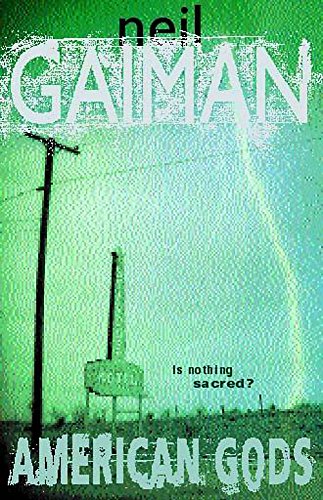
                • Cover of American Gods
                  American Gods

                  series · 10 books · 1999

                  similar bycontemporaryfantasy+2 more

                  Neil Gaiman's American Gods (2001) follows Shadow Moon, an ex-convict who takes a job as bodyguard to a mysterious drifter who is secretly the Norse god Odin, and is drawn into a brewing conflict between the old immigrant gods of myth and the new gods of media, technology, and modern American life. Gaiman's 2005 novel Anansi Boys is set in the same mythological world and shares the trickster god Mr. Nancy, but follows a different protagonist and story, making it a loose companion rather than a direct sequel.

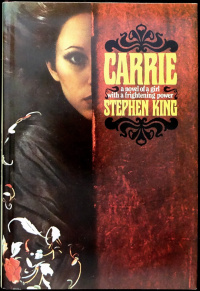
                • Cover of Carrie
                  Carrie

                  Stephen King · standalone novel · 1974

                  similar byfaith and religioncontemporaryhorror

                  In one way or another, everybody abused Carrie. This sixteen-year-old misfit was forbidden everything that was young and fun by her fanatical mother. She was teased and taunted by her classmates, misunderstood by her teachers, and given up as hopeless by almost everyone. But Carrie had a secret: She possessed terrifying telekinetic powers that could make inanimate objects move, a lighted candle fall, or a door lock. Carrie could make all kinds of startling bizarre, and malevolent things happen. (WorldCat)

                • Cover of Song of Kali
                  Song of Kali

                  Dan Simmons · standalone novel · 1985

                  similar byfaith and religioncontemporaryhorror+1 more

                  Song of Kali is a horror novel by American writer Dan Simmons, published in 1985. The story deals with an American intellectual who travels to Calcutta, India, where he becomes embroiled in mysterious and horrific events at the centre of which lies a cult of Kapalikas that worships Kali.

                • Cover of His Dark Materials
                  His Dark Materials

                  series · 8 books · 1995

                  part of His Dark Materials Universe

                  similar byfantasy+2 more

                  His Dark Materials is a trilogy of fantasy novels by Philip Pullman consisting of Northern Lights, The Subtle Knife (1997), and The Amber Spyglass (2000). It follows the coming of age of two children, Lyra Belacqua and Will Parry, as they wander through a series of parallel universes. The novels have won a number of awards, including the Carnegie Medal in 1995 for Northern Lights and the 2001 Whitbread Book of the Year for The Amber Spyglass. In 2003, the trilogy was ranked third on the BBC's The Big Read poll.

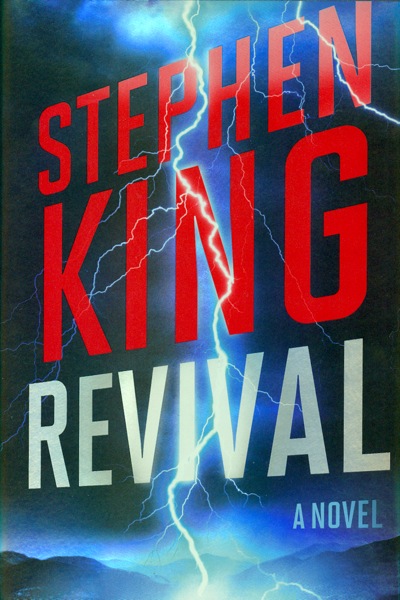
                • Cover of Revival
                  Revival

                  Stephen King · standalone novel · 2014

                  similar byfaith and religioncontemporaryhorror+1 more

                  The protagonist details how his life keeps intersecting with that of the man he first met as the pastor of his church in childhood, whose experiments with electricity lead to mastery of a cosmic power which he uses to help people, until his obsession leads to physical and spiritual disaster for all.

                • Cover of His Dark Materials Universe
                  His Dark Materials Universe

                  universe · 13 books · 1995

                  Start hereHis Dark Materials · Start here

                  similar byfantasy+2 more

                  In a world like ours and unlike it, every human soul walks outside the body in the shape of an animal — a daemon, who speaks, who cannot be lied to, and who settles into one fixed form only when childhood ends. This is the country of His Dark Materials: a company of parallel worlds across which an invisible dust of consciousness drifts down upon the waking mind; where a Church that calls itself the Magisterium would sooner sever a child's soul than let that Dust be understood; and where a golden instrument, the alethiometer, answers true questions for anyone with the patience to read it. Philip Pullman's design stands in two trilogies and a scatter of shorter tales. His Dark Materials — Northern Lights (published in America as The Golden Compass), The Subtle Knife, and The Amber Spyglass — carries Lyra Belacqua from the rooftops of a shadow Oxford across the borders between worlds. The Book of Dust returns to that same territory: La Belle Sauvage looks back to Lyra as an infant carried through a great flood, while The Secret Commonwealth follows her grown and less certain into adulthood, with a concluding volume closing the arc. Around them sit slim companion books — Lyra's Oxford, Once Upon a Time in the North, Serpentine — and Nicholas Wright's stage adaptation, made with Pullman's blessing. The register is grave and luminous at once, its title lifted from Milton and its quarrel drawn from Blake: a story that takes the side of curiosity, love, and the physical world against any authority that would forbid them. It reads as adventure — armoured bears, aeronauts, knife-cut windows between skies — yet reasons like philosophy. Begin with Northern Lights / The Golden Compass and read the first trilogy through before turning to The Book of Dust, which deepens everything the first has already made you feel.

                • Cover of Exorcist
                  Exorcist

                  series · 6 books · 1971

                  similar bycontemporaryhorror+1 more

                  William Peter Blatty's The Exorcist (1971) follows two Catholic priests trying to save a twelve-year-old girl from a violent demonic possession, and became the basis of the acclaimed 1973 film. Blatty returned to the story in 1983 with Legion, in which police detective Bill Kinderman's investigation of a string of ritual murders leads him back to the aftermath of that exorcism and the fate of Father Karras; Legion was later filmed as The Exorcist III. Other Exorcist books are tie-in and franchise material rather than further novels by Blatty himself.

                • Cover of After Such Knowledge
                  After Such Knowledge

                  series · 7 books · 1953

                  completed

                  similar by+3 more

                  After Such Knowledge is James Blish's loosely linked trilogy on the costs of forbidden or dangerous knowledge. It opens with A Case of Conscience, in which a Jesuit scientist studying a seemingly sinless alien race is forced to weigh what he finds against his own faith, continues with the historical novel Doctor Mirabilis about the medieval friar and scientist Roger Bacon, and closes with the two-part Black Easter, in which a magician is hired to loose Hell's demons upon the world for a single day. The three books share a theme rather than a continuous plot or cast.

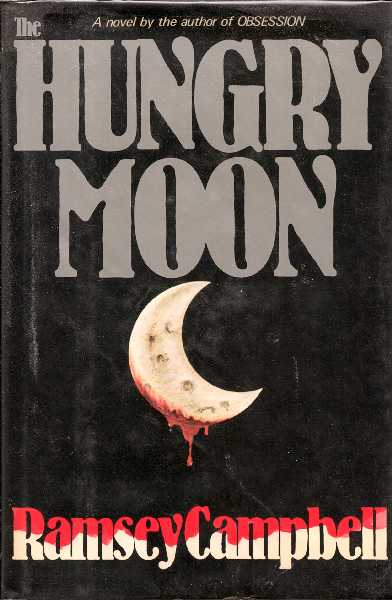
                • Cover of The Hungry Moon
                  The Hungry Moon

                  Ramsey Campbell · standalone novel · 1986

                  similar byfaith and religioncontemporaryhorror+1 more

                  The Hungry Moon is a novel by Ramsey Campbell published in 1986.

                • Cover of Earthseed
                  Earthseed

                  series · 7 books · 1993

                  similar byfaith and religion+2 more

                  Octavia E. Butler's Earthseed novels, Parable of the Sower and Parable of the Talents, follow Lauren Olamina as she survives the collapse of a climate-ravaged, near-future United States and founds a belief system built on the idea that "God is Change." The two-book series was left unfinished at Butler's death; a planned third novel, Parable of the Trickster, was never completed. Later graphic-novel adaptations retell the same two stories rather than continuing the narrative.

                • Cover of The Green Mile
                  The Green Mile

                  Stephen King · standalone novel · 1996

                  similar by+4 more

                  The Green Mile is a 1996 serial novel by American writer Stephen King. It tells the story of death row supervisor Paul Edgecombe's encounter with John Coffey, an unusual inmate who displays inexplicable healing and empathetic abilities. The serial novel was released in six volumes before being republished as a single-volume work. The book is an example of magical realism. The subsequent film adaptation was a critical and commercial success. The Green Mile won the Bram Stoker Award for Best Novel in 1996. In 1997, The Green Mile was nominated as Best Novel for the British Fantasy Award and the Locus Award. In 2003 the book was listed on the BBC's The Big Read poll of the UK's "best-loved novel".

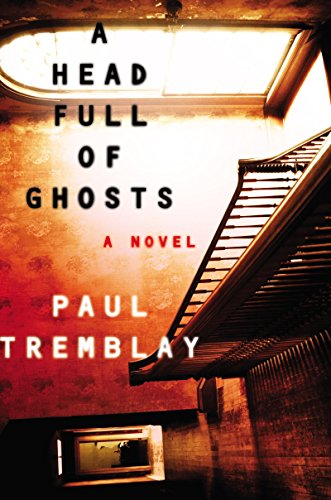
                • Cover of A Head Full of Ghosts
                  A Head Full of Ghosts

                  Paul Tremblay · standalone novel · 2015

                  similar byfaith and religioncontemporaryfirst personhorror

                  A Head Full of Ghosts is a 2015 horror novel by American writer Paul Tremblay. The plot involves a Massachusetts family under financial and emotional strain while their fourteen-year-old daughter, Marjorie Barrett, exhibits signs of severe mental illness. The Barretts come to believe she is possessed by a demon, and her behavior is publicized when the family stars in a reality TV show. Marjorie's younger sister, Merry Barrett, relays the experiences of her childhood fifteen years later. Themes include elements of Catholic exorcism and reality television exploitation.

                • Cover of Supernatural Minnesota
                  Supernatural Minnesota

                  series · 4 books · 1984

                  completed

                  similar bycontemporaryhorror+1 more

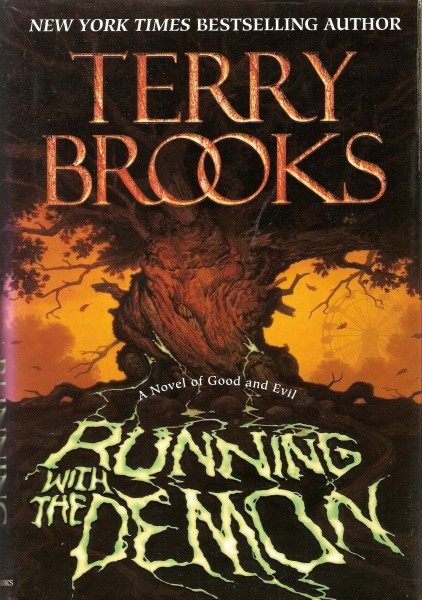
                • Cover of Word and the Void
                  Word and the Void

                  series · 5 books · 1991

                  part of Shannara

                  similar byurban fantasyfantasy+1 more

                  Shannara is a series of high fantasy novels written by Terry Brooks, beginning with The Sword of Shannara in 1977 and concluding with The Last Druid which was released in October 2020; there is also a prequel, First King of Shannara. The series blends magic and primitive technology and is set in the Four Lands, which are identified as Earth long after civilization was destroyed in a chemical and nuclear holocaust called the Great Wars. By the time of the prequel First King of Shannara, the world had reverted to a pre-industrial state and magic had re-emerged to supplement science.

                • Cover of Skellig
                  Skellig

                  David Almond · standalone novel · 1998

                  similar bycontemporaryfantasy+1 more

                  Skellig is a children's novel by the British author David Almond, published by Hodder in 1998. It was the Whitbread Children's Book of the Year and it won the Carnegie Medal from the Library Association, recognising the year's outstanding children's book by a British author. In 2007, it placed third in the "Carnegie of Carnegies", after Northern Lights and Tom's Midnight Garden. In the U.S., it was a runner up for the Michael L. Printz Award, which recognises one work of young adult fiction annually. Since publication, it has also been adapted into a play, an opera, and a film. In December of 2011, a prequel, My Name is Mina was published. William Blake's poems feature in the book, the play and the film.

                • Cover of Screwtape
                  Screwtape

                  series · 2 books · 1942

                  completed

                  similar byfaith and religioncontemporaryfantasy

                  C.S. Lewis's Screwtape Letters (1942) is a Christian satirical novel told as 31 letters from a senior devil, Screwtape, coaching his inexperienced nephew Wormwood on how to corrupt the soul of an ordinary British man known only as 'the Patient.' Lewis added a slim sequel, Screwtape Proposes a Toast (1959), an after-dinner speech in which Screwtape skewers trends in modern education and society; the two are usually published together.

                • Cover of Life of Pi
                  Life of Pi

                  Yann Martel · standalone novel · 2001

                  similar byfaith and religioncontemporary+1 more

                  Life of Pi is a Canadian philosophical novel by Yann Martel published in 2001. The protagonist is Piscine Molitor "Pi" Patel, an Indian boy from Pondicherry, who explores issues of spirituality and metaphysics from an early age. After a shipwreck, he survives 227 days while stranded on a lifeboat in the Pacific Ocean with a Bengal tiger named Richard Parker, raising questions about the nature of reality and how it is perceived and told.

                • Cover of Knight Life
                  Knight Life

                  series · 3 books · 1987

                  completed

                  similar bycontemporaryurban fantasy+2 more

                • Cover of VALIS
                  VALIS

                  series · 4 books · 1981

                  completed

                  similar byfaith and religion+1 more

                  The VALIS trilogy is a set of science fiction/philosophical novels by author Philip K. Dick which include VALIS (1981), The Divine Invasion (1981), and The Transmigration of Timothy Archer (1982). Dick's first novel about the VALIS concept originally titled "VALISystem A", was published as Radio Free Albemuth after Dick's death in 1985.

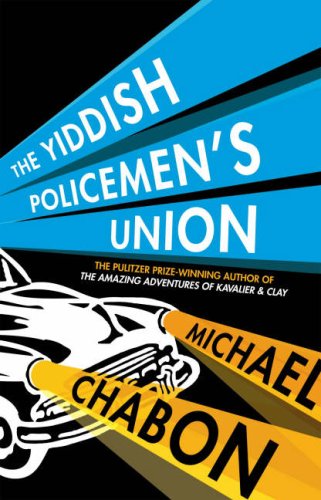
                • Cover of The Yiddish Policemen's Union
                  The Yiddish Policemen's Union

                  Michael Chabon · standalone novel · 2007

                  similar byfaith and religioncontemporary+1 more

                  In an alternate present where Jewish refugees settled Alaska during World War II rather than Israel, homicide detective Meyer Landsman -- divorced, drinking, living in a run-down hotel -- catches a case in his own building: a former chess prodigy, shot dead beside an unfinished game. Landsman and his half-Tlingit partner Berko Shemets learn the dead man was more than he seemed, connected to a messianic movement within Sitka's Orthodox community, just as the settlement faces a countdown of its own -- its status as a federal district about to expire, everyone's future up for grabs. Michael Chabon's Hugo- and Nebula-winning noir, told as hardboiled alternate history.

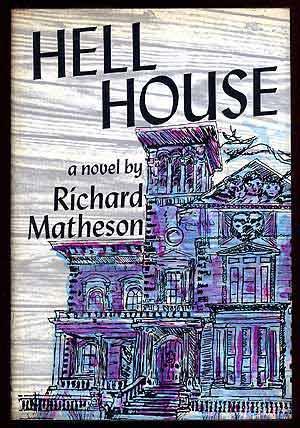
                • Cover of Hell House
                  Hell House

                  Richard Matheson · standalone novel · 1971

                  similar bycontemporaryhorror+1 more

                  A dying millionaire wants proof, once and for all, of what happens after death, and hires physicist-turned-parapsychologist Dr. Lionel Barrett to spend a week investigating the Belasco House in Maine -- a mansion so thoroughly associated with atrocity that it's known simply as Hell House, where every previous investigation has ended in death or madness. Barrett brings his wife Edith along with two mediums, the spiritualist Florence Tanner and Benjamin Franklin Fischer, survivor of an earlier disastrous visit, whose scientific skepticism and spiritualist convictions clash from the first night inside. Richard Matheson's haunted-house novel, later filmed as The Legend of Hell House.

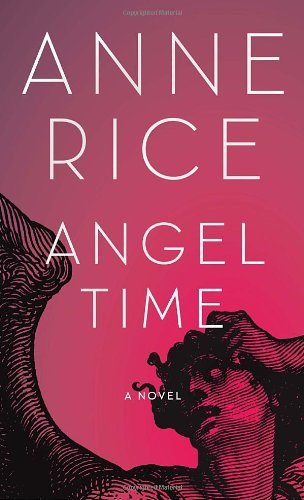
                • Cover of Songs of the Seraphim
                  Songs of the Seraphim

                  series · 2 books · 2009

                  completed

                  similar byfaith and religioncontemporaryfantasy

                  Angel Time introduces Toby O'Dare, a contract killer given a chance at redemption when an angel recruits him to intervene in a medieval crisis, sending him back through history rather than forward. Anne Rice's Songs of the Seraphim continues with a second book, Of Love and Evil, following the same reluctant assassin-turned-angelic-agent into another past errand; the series stayed short, with no further volumes.

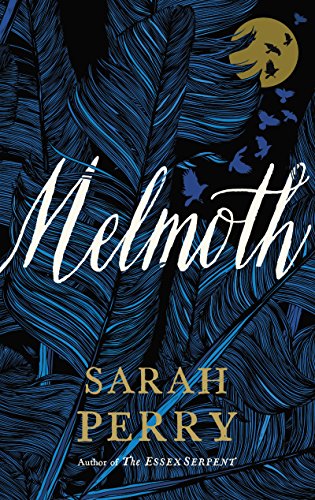
                • Cover of Melmoth
                  Melmoth

                  Sarah Perry · standalone novel · 2018

                  similar bycontemporary+2 more

                • Cover of What Dreams May Come
                  What Dreams May Come

                  Richard Matheson · standalone novel · 1978

                  similar byfaith and religionfantasy+1 more

                  A man who dies and finds himself in the afterlife is concerned about the state of mind of his widow, who doesn't believe in life after death.