More like Cross Fire
anchored on:superherocontemporary
but
- Renegades (Marissa Meyer)
series3 books2017
similar bysuperheroour worldtensescience fictionyoung adult+3 more
Renegades is set in Gatlon City after a civil war between the superheroic Renegades and the villainous Anarchists, and follows Nova, a young woman with the power to put people to sleep by touch, as she infiltrates the Renegades as a spy for her uncle's Anarchists and falls for Adrian, the adopted son of the Renegades' leaders. Marissa Meyer's trilogy, continuing through Archenemies and Supernova, plays the two factions' history against the leads' divided loyalties; Meyer has said she doesn't plan to extend the series further.
- Little Brother
series7 books2008
similar bytensecontemporaryscience fiction+3 more
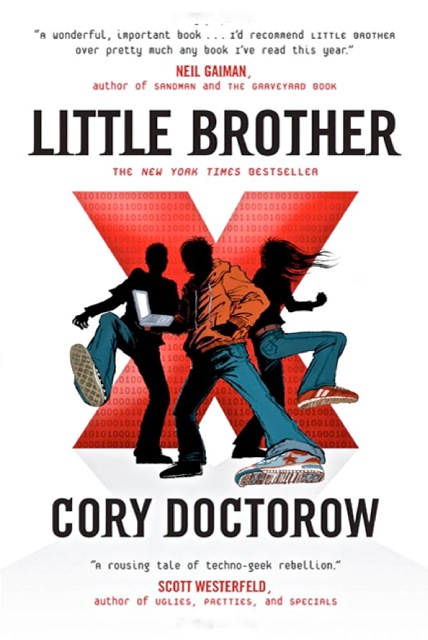
Cory Doctorow's Little Brother follows Marcus, a San Francisco teenager who builds a covert mesh network, the Xnet, to organize resistance after the Department of Homeland Security uses a terrorist attack as pretext for mass surveillance and civil-rights violations. Homeland continues Marcus's fight years later, and Attack Surface completes the trilogy; a companion story, 'Lawful Interception,' and other short pieces extend the same near-future world. Throughout, the series doubles as a working explanation of the surveillance and cryptography tools its characters use.
- The Merchant Princes
series14 books2004
similar bypolitical intrigueour worldcontemporarytensescience fiction
The Merchant Princes is a science fantasy and alternate history series of nine novels by British writer Charles Stross. In the series, there exist a number of parallel worlds, all of which are on the same geographical Earth but with different societies at different points of development. Members of a certain bloodline can travel between these worlds along with their immediate possessions. The series largely follows Miriam Beckstein, a technology journalist raised in a familiar "normal" Earth, who discovers she was born in a parallel world and is a member of this bloodline. She quickly becomes entangled in political maneuvering and assassination plots with her estranged family. Miriam uses modern technology and investigative journalism to attempt to stay a step ahead.
- The Themis Files
series3 books2015
similar byour worldtensecontemporaryscience fiction+2 more
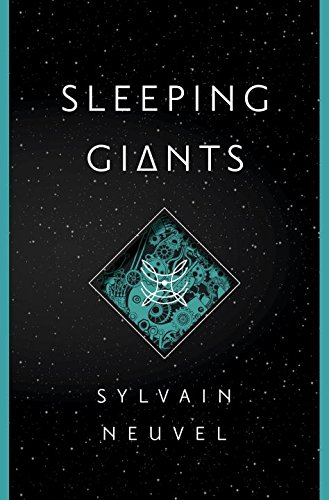
Sylvain Neuvel's Themis Files opens when a girl falls into a hole in South Dakota and lands on the palm of a giant metal hand buried underground; the trilogy picks up years later as she leads the team trying to determine what the hand is part of and why it's there. Sleeping Giants and its sequels are told almost entirely through interview transcripts conducted by an unnamed, evasive interrogator, giving the series a documentary, oral-history feel unusual for first-contact SF. The mystery escalates from an archaeological puzzle into a question of who else is looking for the same answer.
- Ender's Shadow
series5 books1999
part of Ender's Game Universe
similar bypolitical intriguetensescience fictionwar
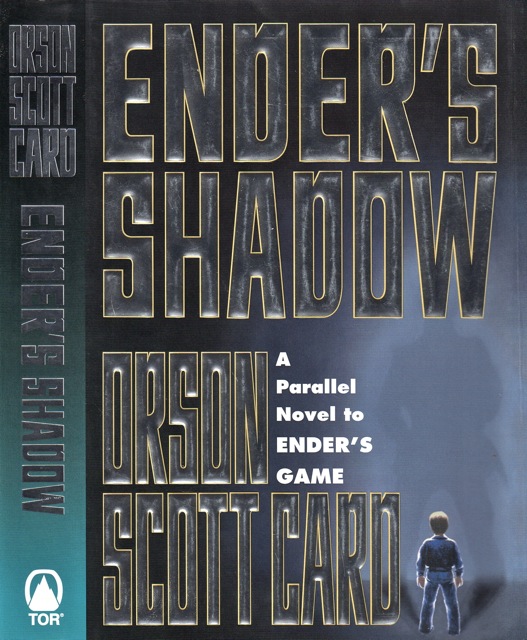
Orson Scott Card's Ender's Shadow retells the events of Ender's Game from the perspective of Bean, a physically stunted but ferociously intelligent street child recruited into the same Battle School program as Ender Wiggin. It launches the Shadow series, which follows Bean and other secondary Battle School characters into the political aftermath of the Formic Wars back on Earth, running parallel to and eventually past the timeline of Card's main Ender Quintet.
- Galactic Milieu
series10 books1981
completed
similar bytensescience fiction+3 more
Galactic Milieu is a series of science fiction novels by Julian May. It is linked to her previously published series, the Saga of Pliocene Exile; and through the fantastical device of time-travel, acts as both a prequel and a sequel to this earlier series. The "Galactic Milieu" of the title is an interplanetary federation, and Earth's membership of it is a central plot concern.
- Foundation Universe
universe123 books1940
Start hereFoundation · Start here
similar byscience fiction+2 more
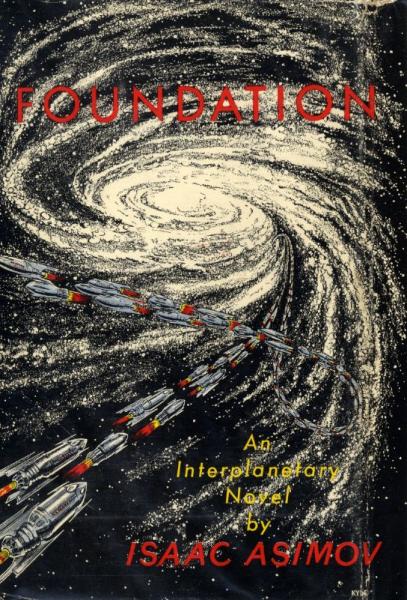
There is a science that reads the future of quadrillions the way an astronomer reads the orbits of stars. It is called psychohistory, and its equations foresee something the ruling Galactic Empire cannot admit: the throne is rotting, and thirty thousand years of barbarism are coming. One man, Hari Seldon, cannot stop the fall. He can only shorten it — by seeding a Foundation of scholars at the rim of the galaxy, a fragile institution built to carry knowledge across the dark and cut the interregnum to a single millennium. This is a universe told in the register of history itself: the long view, the calm of deep time, empires measured in centuries and men measured against them. The spine is Asimov's original trilogy — Foundation, Foundation and Empire, Second Foundation — followed decades later by the sequels Foundation's Edge and Foundation and Earth and the prequels Prelude to Foundation and Forward the Foundation. Late in life Asimov braided this in with his other future histories: the Robot novels of detective Elijah Baley and his humaniform partner R. Daneel Olivaw (The Caves of Steel, The Naked Sun, The Robots of Dawn, Robots and Empire) and the early Galactic Empire novels (Pebble in the Sky and its kin), until one continuous chronicle ran from the first thinking robots to the Second Empire. Other hands extend it — the Second Foundation Trilogy by Gregory Benford, Greg Bear, and David Brin, and shared-world spinoffs such as Robot City — so the corpus sprawls beyond a single author's tidy shelf. What distinguishes it is that the drama is intellectual: crises resolved by insight, nerve, and dialogue rather than fleets and blades, each turn hinging on the hidden logic of the Seldon Plan. Begin where readers have always begun — with Foundation, and the original trilogy in publication order. The rest opens outward from there.
- Dune
series20 books1963
part of Dune Universe
similar bypolitical intriguescience fiction+1 more
Frank Herbert's Dune Chronicles opens with 1965's Dune, set on the desert planet Arrakis where House Atreides takes control of the only source of the vital spice melange and young Paul Atreides is pulled into a struggle over its politics and religion. Herbert carried the story forward across five further novels — Dune Messiah, Children of Dune, God Emperor of Dune, Heretics of Dune, and Chapterhouse: Dune — following Paul's line over the following millennia, before Brian Herbert and Kevin J. Anderson later extended the saga. Many other editions of these six novels are omnibus and box-set repackagings rather than separate stories.
- Clane
series7 books1946
completed
similar bypolitical intriguescience fiction+3 more
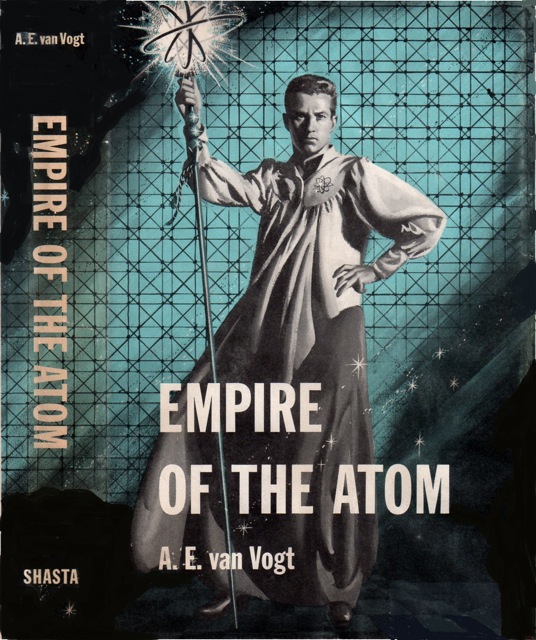
A. E. van Vogt's Clane duology reimagines the political intrigue behind ancient Rome (the same history that inspired Robert Graves's I, Claudius) roughly ten thousand years in the future, following the disfigured but brilliant Clane Linn as he navigates a dynasty ruled in the name of living 'Atom Gods.' Empire of the Atom, a fix-up of five 1946-47 Astounding novelettes, follows Clane's rise from despised outcast to power broker; The Wizard of Linn completes the story as he confronts a mysterious alien threat.
- Lord of the Flies
William Goldingstandalone novel1954
similar byour worldtenseyoung adult+3 more
Lord of the Flies is the 1954 debut novel of British author William Golding. The plot concerns a group of prepubescent British boys who are stranded on an uninhabited island and their disastrous attempts to govern themselves that lead to a descent into savagery. The novel's themes include morality, leadership, and the tension between civility and chaos.
- Faerie Wars
series5 books2003
completed
similar byadventurousyoung adult+3 more
The Faerie Wars Chronicles is a fantasy action young adult novel series written by James Herbert Brennan. The first book in the series, Faerie Wars was published in the United Kingdom in February 2003 by Bloomsbury Publishing. As of 2011, there are five books in the ongoing series.
- Childe Cycle
series19 books1957
similar byscience fictionwar+3 more
The Childe Cycle is an unfinished series of science fiction novels by American writer Gordon R. Dickson. The name Childe Cycle is an allusion to "Childe Roland to the Dark Tower Came", a poem by Robert Browning, which provided inspiration for elements in the work. The series is sometimes referred to as the Dorsai series, after the Dorsai people who are central to it. The related short stories and novellas all center on the Dorsai, primarily members of the Graeme and Morgan families.
- Culture
series15 books1987
completed
part of The Culture
similar byscience fiction+3 more
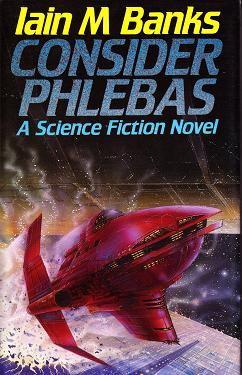
The Culture series is a science fiction series written by Scottish author Iain M. Banks and released from 1987 until 2012. The stories centre on The Culture, a utopian, post-scarcity space society of humanoid aliens and advanced superintelligent artificial intelligences living in artificial habitats spread across the Milky Way galaxy. The main themes of the series are the dilemmas that an idealistic, more-advanced civilization faces in dealing with smaller, less-advanced civilizations that do not share its ideals, and whose behaviour it sometimes finds barbaric. In some of the stories, action takes place mainly in non-Culture environments, and the leading characters are often on the fringes of the Culture, sometimes acting as agents of the Culture in its plans to civilize the galaxy. Each novel is a self-contained story with new characters, although reference is occasionally made to the events of previous novels.
- Maurai
series6 books1959
completed
similar bypolitical intrigueour worldscience fiction+2 more
The Maurai series is a series of short stories and a novel by Poul Anderson set in a resource depleted, post-apocalyptic earth several centuries in the future. The series is named after its most frequent protagonists, citizens of the Maurai Federation. The Maurai dominate the Pacific and Indian Oceans. Fearful of the social and ecological implications of a return to large-scale industrial society, they use their considerable might and covert resources to prevent other nations from developing nuclear power.
- Company Wars
series7 books1981
part of Alliance-Union Universe
similar bypolitical intriguetensescience fiction
Company Wars gathers the novels C. J. Cherryh set during the breakaway conflict between Earth's colonial Company and the newly independent Union, within her wider Alliance-Union future history. Anchored by the Hugo Award-winning Downbelow Station, the books follow different ships, stations, and crews caught on either side, from merchanter traders to military spacers, rather than a single continuing cast. Read in any order, they build up a picture of the political and economic pressure that reshapes Cherryh's larger Alliance-Union universe.
- His Dark Materials Universe
universe13 books1995
Start hereHis Dark Materials · Start here
similar byadventurousyoung adult+2 more
In a world like ours and unlike it, every human soul walks outside the body in the shape of an animal — a daemon, who speaks, who cannot be lied to, and who settles into one fixed form only when childhood ends. This is the country of His Dark Materials: a company of parallel worlds across which an invisible dust of consciousness drifts down upon the waking mind; where a Church that calls itself the Magisterium would sooner sever a child's soul than let that Dust be understood; and where a golden instrument, the alethiometer, answers true questions for anyone with the patience to read it. Philip Pullman's design stands in two trilogies and a scatter of shorter tales. His Dark Materials — Northern Lights (published in America as The Golden Compass), The Subtle Knife, and The Amber Spyglass — carries Lyra Belacqua from the rooftops of a shadow Oxford across the borders between worlds. The Book of Dust returns to that same territory: La Belle Sauvage looks back to Lyra as an infant carried through a great flood, while The Secret Commonwealth follows her grown and less certain into adulthood, with a concluding volume closing the arc. Around them sit slim companion books — Lyra's Oxford, Once Upon a Time in the North, Serpentine — and Nicholas Wright's stage adaptation, made with Pullman's blessing. The register is grave and luminous at once, its title lifted from Milton and its quarrel drawn from Blake: a story that takes the side of curiosity, love, and the physical world against any authority that would forbid them. It reads as adventure — armoured bears, aeronauts, knife-cut windows between skies — yet reasons like philosophy. Begin with Northern Lights / The Golden Compass and read the first trilogy through before turning to The Book of Dust, which deepens everything the first has already made you feel.
- H. G. Wells' War of the Worlds
universe65 books1898
Start hereThe War of the Worlds · Start here
similar byscience fiction+2 more
No one would have believed, in the closing years of the nineteenth century, that human affairs were being watched keenly and closely from the timeless worlds of space. And then the cylinders fell. H. G. Wells' War of the Worlds opens in the quiet of the Surrey commons, where a falling star proves to be the first Martian craft — and from the pit rise the towering tripods, the Heat-Ray, the choking Black Smoke and the creeping red weed, wielded by minds that regard mankind much as we regard the creatures we boil for supper. This is invasion rendered as natural disaster: cold, methodical, and vast beyond argument. Wells' 1898 novel is the seed; everything else grows from that Martian soil. The catalogue gathers direct sequels and continuations alongside a wide field of other hands. In War of the Worlds: Global Dispatches the invasion is retold across the whole planet through the eyes of Twain, Verne, Tolstoy, Lowell and Kipling; in the Manly Wade and Wade Wellman crossover, Sherlock Holmes, Watson and Professor Challenger take the field against the machines; and Scott Washburn's Great Martian War stretches the fighting into a decades-long alternate history of steam, artillery and grinding attrition. It is a loose shared world — no single decreed sequence, many voices answering one calamity. What sets this world apart is its refusal of heroics: the invaders fall not to generals but to the smallest things of Earth, humbling and indifferent. Begin, always, with Wells' original novel — it is short, and it is the ground every later book stands upon. From there follow your appetite: Global Dispatches for the panorama, the Holmes campaign for adventure, Washburn for the long war.
- Deception Point
Dan Brownstandalone novel2001
similar bypolitical intrigueour worldcontemporarytense+1 more
Deception Point is a 2001 mystery-thriller novel by American author Dan Brown. It is Brown's third novel. It was published by Simon & Schuster.
- Divergent
series10 books2011
similar bytensescience fictionyoung adult
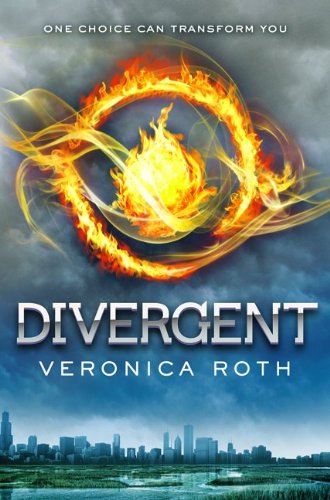
Divergent, also known as The Divergent Series, is a series of young adult dystopian novels by American novelist Veronica Roth set in a post-apocalyptic dystopian Chicago. The trilogy consists of Divergent (2011), Insurgent (2012), and Allegiant (2013). A related book, Four (2014), presents a series of short stories told from the perspective of one of the trilogy's characters, the male love interest Tobias. A later short story, We Can Be Mended (2018), serves as an epilogue five years after the events of the trilogy, again from Tobias/Four's perspective.
- Marvel Universe
universe492 books1967
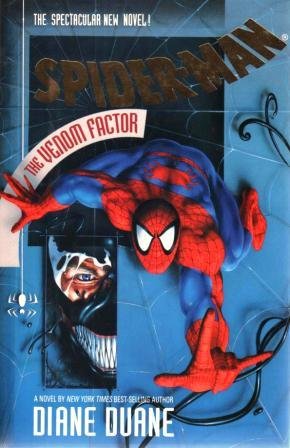
Start hereThe Venom Factor · Start here
similar bysuperherocontemporary+1 more
Look up. Somewhere over the rooftops a kid in red-and-blue is swinging late to a job he can't afford to lose, an old soldier is arguing with a billionaire in a flying suit, and a team of the hunted are teaching frightened children how not to hate. This is the world outside your window with the volume turned up — the Marvel Universe, the four-color continuity of the comics rendered in prose, where the fantastic wears a human face and the rent still comes due at the end of the month. The shelf runs wide and it runs deep. These are tie-in novels, decades of them across several publishing eras, sorted by the hero on the spine: Spider-Man and the X-Men carry the heaviest shelves, with Iron Man, Captain America, the Avengers, the Hulk, Doctor Strange, Black Panther, and the Guardians of the Galaxy holding their own ground. Prose hands who know the material — Peter David, Greg Cox, Keith R. A. DeCandido, Christopher Golden, Alex Irvine, among many others — trade off across single-character adventures, shared crossovers, and thick original anthologies that hand a dozen writers a single hero for an afternoon. Continuity is generous rather than strict: threads connect, the city is always the same city, but each book largely stands on its own two feet. What sets this world apart is the person under the mask — the power is the easy part; the marriage, the grief, the guilt, the bad day at work are the story. Newcomers shouldn't hunt for a first volume, because there isn't one. Start with the hero you already love: a Spider-Man or X-Men novel is the natural front door, and the multi-author anthologies are a fast way to sample many voices at once. Pull a thread that speaks to you and follow it in; the rest of the world is always right next door.
- Dune Universe
universe78 books1963
Start hereDune · Start here
similar bypolitical intriguescience fiction+1 more
Arrakis. Dune. The desert planet, where empire runs on a single substance: the spice melange, which folds space, prolongs life, and unlocks prescience, and which exists nowhere else in the known universe. Frank Herbert's saga is a meditation dressed as an adventure — feudal houses and a secret sisterhood, engineered messiahs and the patient ecology of a world without water, all turning on the terrible gravity of who commands the spice. It reads like scripture and schemes like a war room, ten thousand years hence, among people who have outlawed the thinking machine and made instruments of themselves instead. At its heart stand Herbert's original six — Dune, Dune Messiah, Children of Dune, God Emperor of Dune, Heretics of Dune, Chapterhouse: Dune — a single deepening arc across millennia, arguing the whole way between prophecy and free will. Around that spine his son Brian Herbert and Kevin J. Anderson have raised a vast prequel architecture: Prelude to Dune, tracing the great houses a generation before Paul; Legends of Dune, reaching back to the crusade that broke the machines; the Schools of Dune cycle on the founding of Bene Gesserit, Mentat, and Navigator; the Caladan Trilogy and Heroes of Dune filling years the originals left in shadow. Many hands, dozens of volumes, one desert. What sets Dune apart is its refusal of the simple: religion is manufactured, heroes are hazards, and the sand itself — worm, water, ecology — acts as a political power. Begin where the universe did, with Frank Herbert's Dune (1965), and read the original six in order; you need nothing else to feel the full weight. The prequels are a country to explore afterward, taken by era. Beginnings are delicate times.