More like Danger-Human
anchored on:science fictionfar futurefirst contactaliensspaceother star systems
but
- Ender Wiggin
series14 books1977
part of Ender's Game Universe
similar byaliensfar futurescience fictionother star systems+3 more
Orson Scott Card's Ender's Game (1985, expanded from his 1977 novella) follows child prodigy Andrew "Ender" Wiggin as he is recruited into a military training program built to prepare Earth's defenses for an anticipated third war against an insectoid alien species known as the Formics. The saga continues years later through Speaker for the Dead and Xenocide, following an older Ender as he confronts the moral weight of his role in that earlier conflict, and concludes the core arc in Children of the Mind, with Ender in Exile filling in the years between the first two books. Set within the wider Ender's Game universe, the series shifts from military coming-of-age story to slower, more philosophical science fiction as it progresses.
- Moties
series4 books1974
part of CoDominium
similar byaliensfar futurescience fictionfirst contactspaceother star systems
Larry Niven and Jerry Pournelle's The Mote in God's Eye (1974) depicts humanity's first contact with an alien species, the Moties, set within the far-future interstellar setting of Pournelle's codominium future history. The Gripping Hand continues that first-contact crisis years later, and Outies, written by J. R. Pournelle, carries the story forward into a new generation. Together the three books trace an escalating encounter between human and Motie civilizations within the codominium universe.
- Stranger in a Strange Land
Robert A. Heinleinstandalone novel1961
similar byaliensscience fictionreflectiveidentityfirst contact
Stranger in a Strange Land is a 1961 science fiction novel by the American author Robert A. Heinlein. It tells the story of Valentine Michael Smith, a human who comes to Earth in early adulthood after being born on the planet Mars and raised by Martians, and explores his interaction with and eventual transformation of Terran culture.
- Childhood's End
Arthur C. Clarkestandalone novel1953
similar byaliensscience fictionreflectiveidentityfirst contact
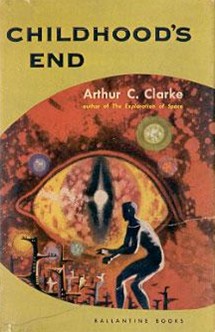
Childhood's End is a 1953 science fiction novel by the British author Arthur C. Clarke. The story follows a peaceful alien invasion of Earth by mysterious Overlords, whose arrival begins decades of apparent utopia under indirect alien rule, at the cost of human identity and culture.
- Hainish
series33 books1964
completed
similar byfar futurescience fictionreflectiveother star systems+1 more
The Hainish Cycle consists of a number of science fiction novels and stories by Ursula K. Le Guin. The cycle is set in a future history that features civilizations of human beings on planets orbiting a number of nearby stars, including Terra ("Earth"); these humans are contacting each other for the first time and establishing diplomatic relations, as well as setting up a confederacy under the guidance of the oldest of the human worlds, the peaceful planet Hain. In this history, human beings did not evolve on Earth, but they were instead the result of interstellar colonies planted by Hain in the distant past, after which interstellar travel ceased for an extended period. Some of the human races have new genetic traits, a result of ancient Hainish experiments in genetic engineering; this includes people who can dream while awake, and a world of hermaphroditic people who only enter active sexuality once per month, not knowing which sex will manifest in them. In keeping with Le Guin's narrative approach, she uses varied social and environmental settings to explore the anthropological and sociological outcomes of human evolution in those environments. The author often discounted the characterization of a so-called "Hainish Cycle".
- Embassytown
China Miévillestandalone novel2011
similar byaliensfar futurescience fictionidentityfirst contactspaceother star systems
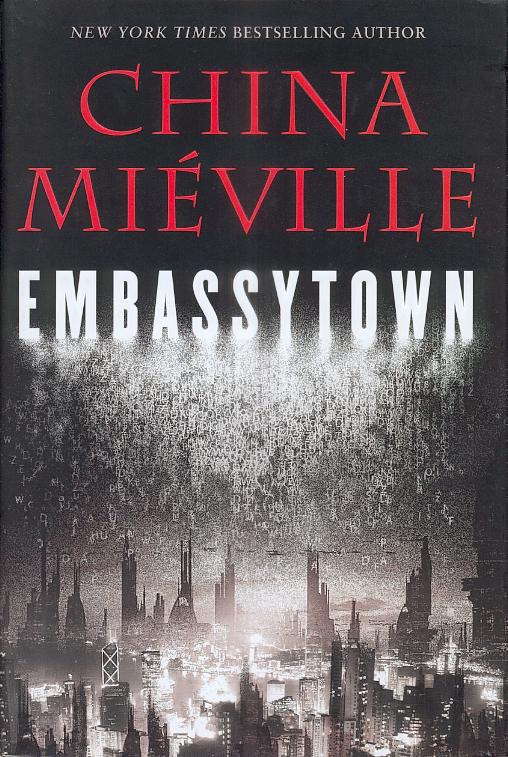
In the far future, humans have colonized a distant planet, home to the enigmatic Ariekei, sentient beings famed for a language unique in the universe, one that only a few altered human ambassadors can speak. Avice Benner Cho, a human colonist, has returned to Embassytown after years of deep-space adventure. She cannot speak the Ariekei tongue, but she is an indelible part of it, having long ago been made a figure of speech, a living simile in their language. When distant political machinations deliver a new ambassador to Arieka, the fragile equilibrium between humans and aliens is violently upset. Catastrophe looms, and Avice is torn between competing loyalties—to a husband she no longer loves, to a system she no longer trusts, and to her place in a language she cannot speak yet speaks through her.
- Learning the World
Ken MacLeodstandalone novel2005
similar byaliensfar futurescience fictionreflectivefirst contactspaceother star systems
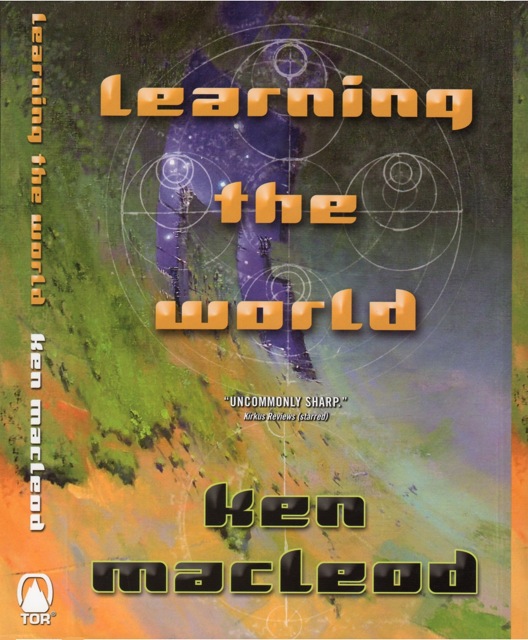
From the front flap of the Tor first printing: "Humanity has spread to every star within 500 light-years of its half-forgotten origin, coloring the sky with a haze of habitats. Societies rise and fall. Incautious experiments burn fast and fade. On the fringes, less modified humans get on with the job of settling a universe that has, so far, been empty of intelligent life. The ancient starship But the Sky, My Lady! The Sky! is entering orbit around a promising new system after a four hundred year journey. For its long-lived inhabitants, the centuries have been busy. Now a younger generation is eager to settle the system. The ship is a seed-pod ready to burst. Then they detect curious electromagnetic emissions from the system's Earth-like world. As the nature of the signals becomes clear, the choices facing the humans become stark. On Ground, second world from the sun, a young astronomer searches for his system's outermost planet. A moving point of light thrills, then disappoints him. It's only a comet. His physicist colleague Orro takes time off from trying to invent a flying-machine to calculate the comet's trajectory. Something is very odd about that comet's path. They are not the only ones for whom the world has changed. "We are not living in the universe we thought we lived in yesterday. We have to start learning the world all over again.""
- Sirius Five
series2 books1969
completed
similar byaliensfar futurescience fictionother star systems+2 more
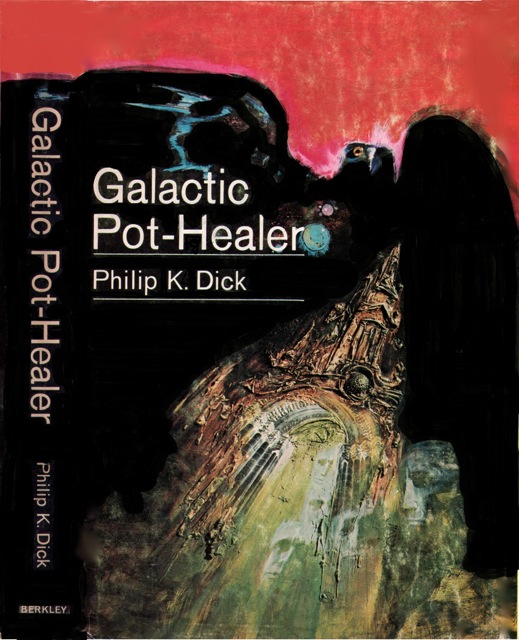
Philip K. Dick's Galactic Pot-Healer (1969) follows Joe Fernwright, an unemployed pot-mender on a future Earth, recruited by the alien Glimmung to help raise a sunken cathedral on the planet Sirius 5, mixing surreal comic adventure with questions about fate and the value of effort when success is never guaranteed. Dick's earlier young-adult manuscript Nick and the Glimmung, unpublished until 1988, shares the Glimmung character and other elements with it, suggesting he reworked the same creature across two very different books.
- Shakespeare's Planet
Clifford D. Simakstandalone novel1976
similar byaliensfar futurescience fictionreflectivefirst contactother star systems
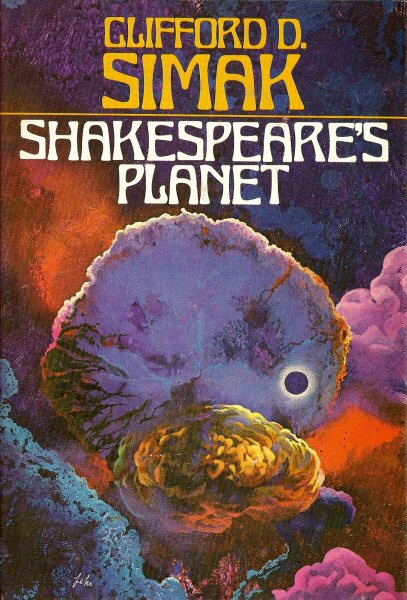
Woken after a thousand-year voyage meant to find humanity a new home, Carter Horton finds his ship stranded for good, tended by the disembodied minds of three volunteers who gave up their bodies to fly it. Outside waits a world already crowded with strangers: a robot named Nicodemus, and an alien called the Carnivore who claims to have known a human, once, called Shakespeare, and to have arrived here through a tunnel across time. As more travelers arrive through that same tunnel, Horton has to work out what kind of planet he has actually landed on. A standalone novel from Clifford D. Simak.
- The Best of All Possible Worlds Universe
series3 books2013
similar byaliensscience fictionreflectivefar futureother star systems+4 more
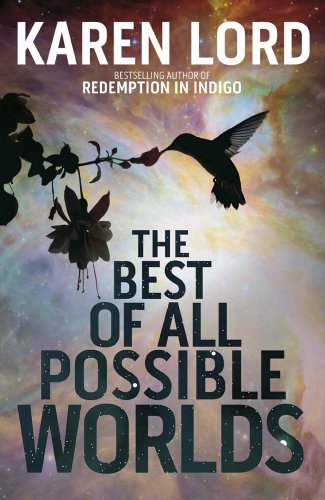
The Best of All Possible Worlds, the opener of this loose sequence by Karen Lord, follows survivors of a destroyed alien civilization as they search other worlds for compatible communities to join, told with more interest in culture and relationships than action. The Galaxy Game and The Blue, Beautiful World continue Lord's character-driven exploration of the same universe's societies, power politics, and cross-cultural understanding, without following a single continuous plot.
- Up the Walls of the World
James Tiptree & Jr.standalone novel1978
similar byaliensfar futurescience fictionfirst contactspaceother star systems+1 more
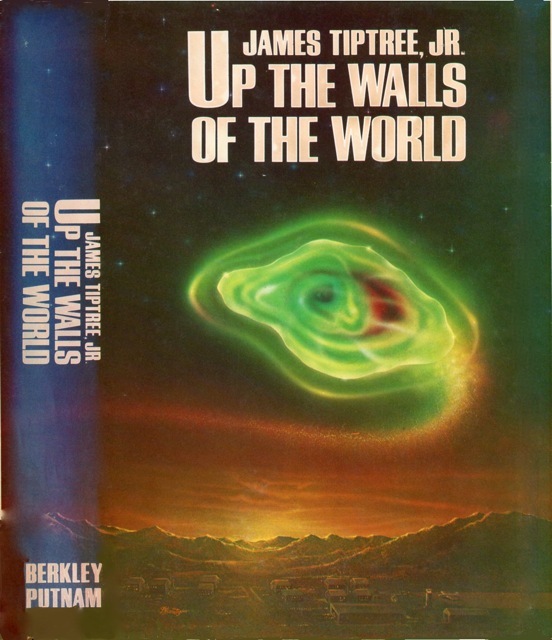
Up the Walls of the World is a 1978 science fiction novel by American author Alice Sheldon, who wrote under the pen name of James Tiptree, Jr. It was the first novel she published, having until then worked and built a reputation only in the field of short stories.
- Pushing Ice
Alastair Reynoldsstandalone novel2005
similar byaliensfar futurescience fictionfirst contactspaceother star systems
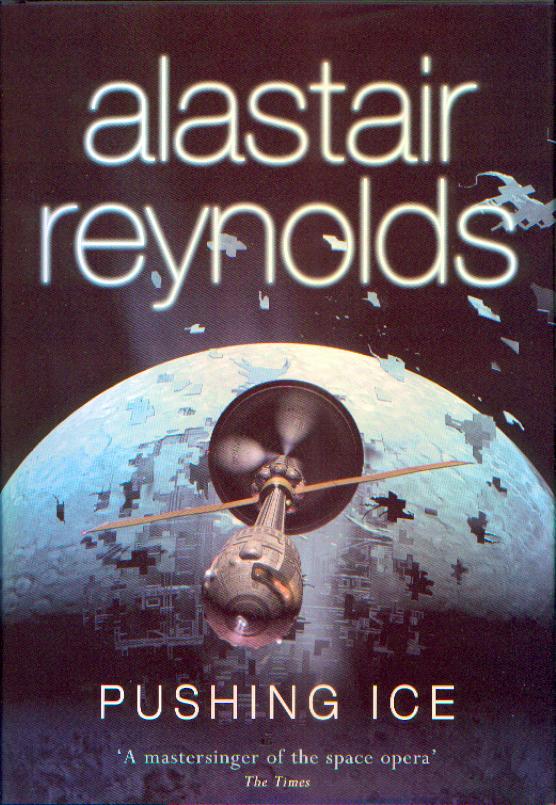
When Saturn's moon Janus suddenly takes off into interstellar space, an ice mining spaceship sent to investigate finds itself swept along into distant space until it ends up trapped in a gigantic alien structure, wherein the crew must prepare to reside for the foreseeable future.
- The Sirens of Titan
Kurt Vonnegut & Jr.standalone novel1959
similar byaliensfar futurescience fictionspace+1 more
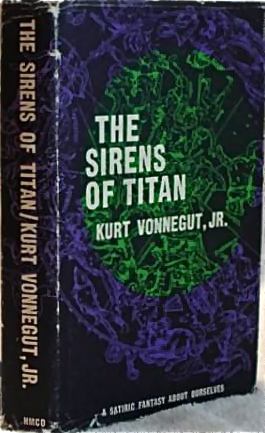
The Sirens of Titan is a comic science fiction novel by Kurt Vonnegut Jr., first published in 1959. His second novel, it involves issues of free will, omniscience, and the overall purpose of human history, with much of the story revolving around a Martian invasion of Earth.
- Remnant Population
Elizabeth Moonstandalone novel1996
similar byaliensfar futurescience fictionreflectivefirst contactother star systems
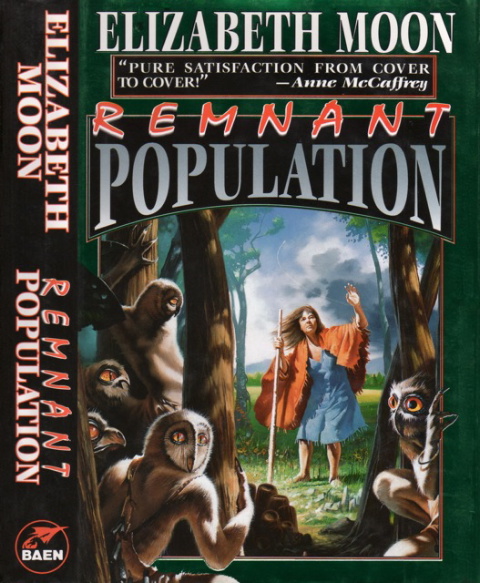
From the dust jacket front flap of the Baen first edition: Alone at last... People had always told Ofelia what to do; for once she was going to do what she wanted. She refused to get on the cryo ships, refused to leave the only world she could call home. And when they finally came for her, she hid, not that the authorities looked all that hard for one crazy old woman. Now Ofelia is alone, content to live with no more demands on her self or her time, the only remaining settler on an abandoned planet. The new settlers arrive. At first she fears that they have come to reoccupy the settlement she has come to think of as hers - but they land far away. And as Ofelia secretly listens, they are slaughtered to the last child by stone-age aliens no one knew were there. Now it will be up to Ofelia to save the aliens from Earth's wrath...
- Mindswap
Robert Sheckleystandalone novel1966
similar byaliensfar futurescience fictionspaceother star systems+1 more
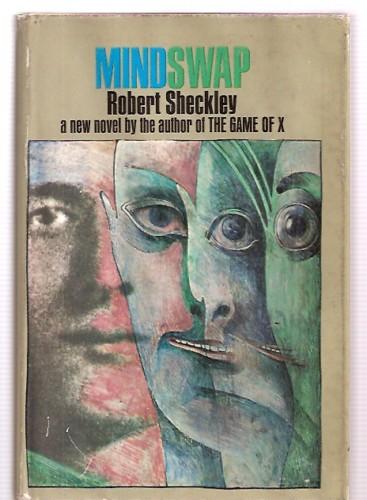
"In the future, interstellar travel to alien worlds will be too expensive for most ordinary people. It certainly is for Marvin, a college student who wants to take a really good vacation. And so he signs up for what he can afford, a mindswap, in which a persons consciousness is swapped into the body of an alien lifeform. But Marvin is unlucky, and finds himself in the body of an interstellar criminal, a body that he has to vacate fast. But that criminal consciousness has stolen Marvins earthly body, and Marvin has to find a body on the black market. Travel from world to world with Marvin, each one crazier than the last, as he keeps finding far-from-ideal bodies in awful situations, just to stay alive"--Cover p. [4].
- Babel-17
Samuel R. Delanystandalone novel1966
similar byaliensfar futurescience fictionidentityspace+1 more
Babel-17 is a 1966 science fiction novel by American writer Samuel R. Delany. Published by Ace Books in May 1966, it follows Rydra Wong, a poet and linguist recruited during an interstellar war to decipher a language connected to enemy sabotage. Her investigation reveals a language that shapes thought and can make its speakers unwitting saboteurs. Through Rydra's effort to understand and revise it, the novel explores communication, perception, identity, and translation.
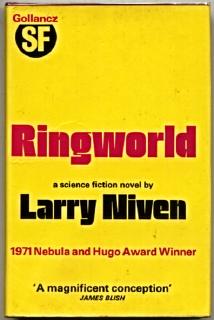
- Ringworld
series5 books1970
part of Known Space
similar byaliensfar futurescience fictionspaceother star systems
The Ringworld series is a series of science fiction novels written by American author Larry Niven. It is part of his Known Space series of stories. Its backdrop is the Ringworld, a giant artifact 3 million times the surface area of Earth circling a star. The series is composed of four standalone science fiction novels, the original award-winning book and its three sequels:1970: Ringworld 1979: The Ringworld Engineers 1996: The Ringworld Throne 2004: Ringworld's Children
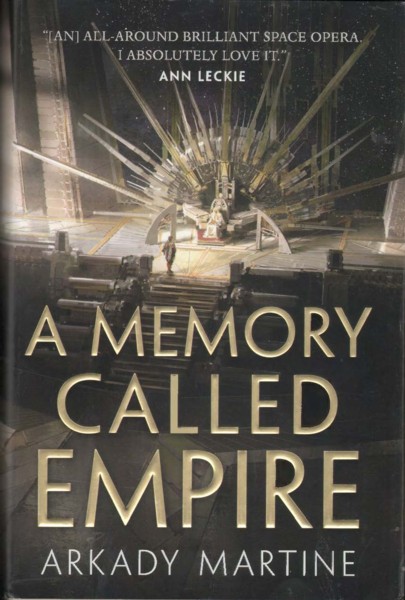
- Teixcalaan
series2 books2019
similar byfar futurescience fictionreflectiveidentityother star systems+2 more
Arkady Martine's space opera duology follows Mahit Dzmare, ambassador from the small, independent Lsel Station, as she arrives in the vast Teixcalaanli Empire to investigate her predecessor's death and finds herself caught up in the empire's own succession crisis. A Memory Called Empire and A Desolation Called Peace pair court intrigue with Mahit's conflicted, outsider fascination with an empire she can't help admiring.
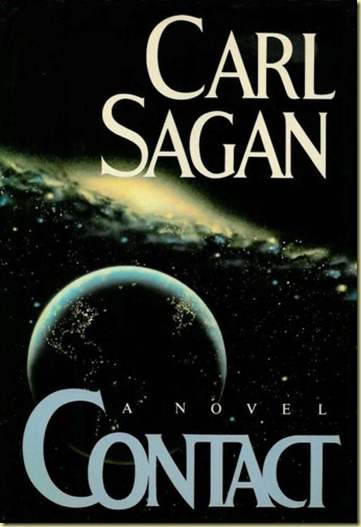
- Contact
Carl Saganstandalone novel1985
similar byaliensscience fictionreflectivefirst contact+2 more
From the front flap of the Simon and Schuster first edition: For centuries humanity has dreamed of life and intelligence beyond the Earth; for decades scientists have searched for it in every corner of the sky; for years Project Argus, a vast, sophisticated complex of radio telescopes, has listened for a signal indicating the existence, somewhere in the universe, of extraterrestrial intelligence. Then, one afternoon, the course of human history is changed, abruptly and forever. The Message, awaited for so long, its very possibility doubted by so many, arrives. Contact has been made. Life, intelligence, someone, something beyond Earth, 26 light-years away, in the vicinity of the star Vega, is calling, beaming across space a wholly unexpected message to say that we are not - have never been - alone. In Contact, Carl Sagan, whose Cosmos enthralled millions of readers and television viewers, has brilliantly employed the freedom of fiction to imagine the greatest adventure of all - humanity's first encounter with other intelligent beings. But the novel is not only about contact between humans and extraterrestrials; it is also about contact, down here on Earth, with each other and ourselves. At its center is a brilliant scientist, Eleanor Arroway, director of Project Argos, who is the first to realize that chapter one of human history is over. It is she who is instrumental in decoding the Message - and in persuading world leaders not to treat it as a threat - she who finds her own life changed by the immense challenge of responding to the Message; she who finally journeys out to experience, in circumstances at once profoundly religious and scientific, the most fateful encounter in human history.
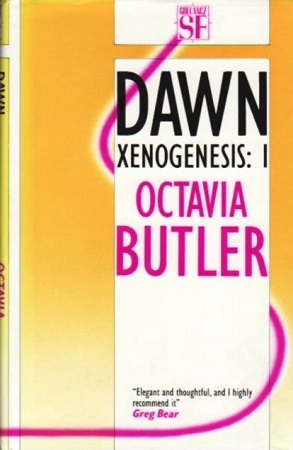
- Xenogenesis / Lilith's Brood
series4 books1987
completed
similar byaliensscience fictionfar futurefirst contact+2 more
Lilith's Brood, previously known as the Xenogenesis Trilogy, is a collection of three science fiction works by Octavia E. Butler: Dawn, Adulthood Rites, and Imago.
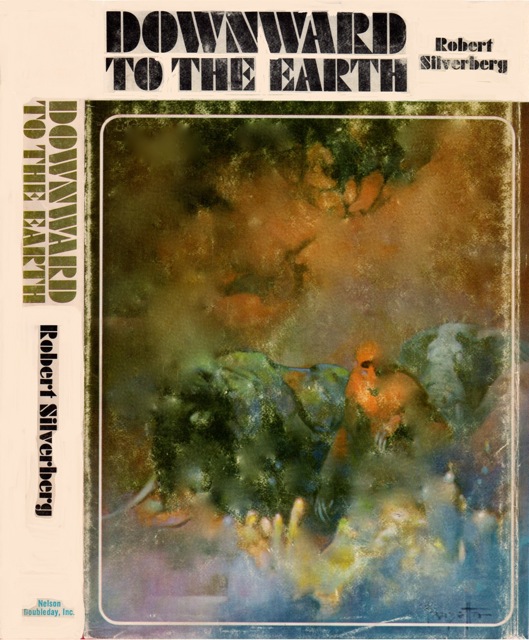
- Downward to the Earth
Robert Silverbergstandalone novel1969
similar byaliensfar futurescience fictionreflectiveother star systems
Edmund Gunderson was the Terran administrator of the colony world of Belzagor, and he returns to it after it has gained independence, feeling a sense of guilt for the way he has treated its dominant species, the elephant-like nildoror, whose animalistic appearance had kept Gunderson from taking them seriously as sentient beings. On his return, he feels a new sense of kinship with the natives, perhaps more than for the Terran tourists. The nildoror undergo a process of rebirth, and Gunderson's greatest guilt comes from having denied rebirth to seven nildoror to make them help him repair flood damage.(From Wikipedia)
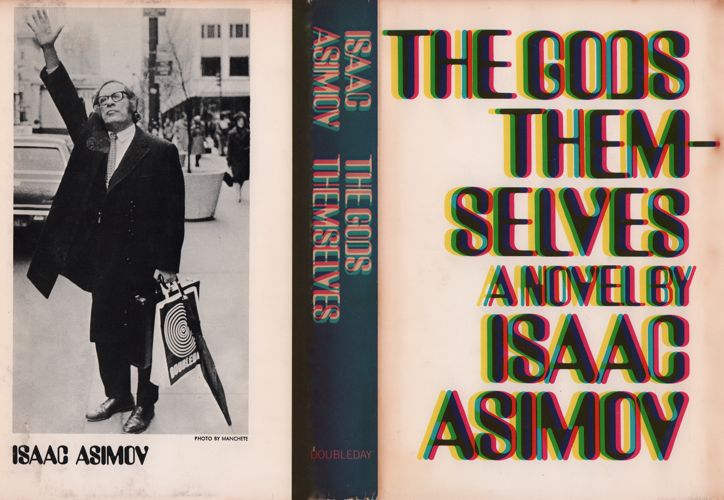
- The Gods Themselves
Isaac Asimovstandalone novel1972
similar byaliensfar futurescience fictionother star systems+2 more
The Gods Themselves is a 1972 science fiction novel written by Isaac Asimov, and his first original novel in fifteen years. It won the Nebula Award for Best Novel in 1972, and the Hugo Award for Best Novel in 1973.
- Heechee
series19 books1972
completed
similar byaliensfar futurescience fictionspaceother star systems
The Heechee Saga, also known as the Gateway series, is a series of science fiction novels and short stories by Frederik Pohl. The Heechee are an advanced alien race that visited the Solar System hundreds of millennia ago and then mysteriously disappeared. They left behind bases containing artifacts, including working starships, which are discovered and exploited by humanity.