More like Deception's Princess
but
- Peter Pan Universe
universe112 books1902
Start herePeter Pan · Start here
similar byfantasy
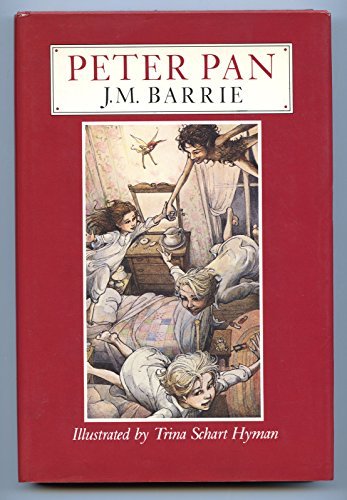
Second star to the right, and straight on till morning — and there it is, the island that every child dreams once and then, growing up, contrives to forget. Neverland: mermaids in the lagoon, a ticking crocodile with a clock in its belly, a pirate nursing his severed hand, and above it all the boy who will not grow up, forever flying, forever heartless in the lovely careless way that only children are. It begins with J. M. Barrie — the 1904 stage play, the chapters of Kensington Gardens, and the novel Peter and Wendy that fixed Peter, Wendy, Tinker Bell, Hook and the Lost Boys in place. From that small window a wide world has flown. Dave Barry and Ridley Pearson supply the how-it-all-began in their Starcatchers books, chasing falling starstuff aboard a doomed ship to explain why one orphan came to fly and never age. A whole bright shelf tends Tinker Bell's Pixie Hollow — the Disney Fairies and Fairy Haven tales, Kiki Thorpe's Never Girls — while Heidi Schulz hands the wheel to Hook's own daughter, and stranger, dimmer corners carry the island into far darker weather. Many hands, one archipelago; no single map governs them all. What sets it apart is the sweetness with a blade in it — wonder shadowed always by the ache of leaving, of mothers who keep the window open and children who fly home too late. Newcomers should begin where it began, with Barrie's Peter and Wendy, then, for the origin, take the Starcatchers books in their own order. The rest of Neverland waits, as it always does, for whoever still remembers how to reach it.
- The Hobbit
series2 books1937
completed
part of Tolkien's legendarium
similar byadventurousfantasy+1 more
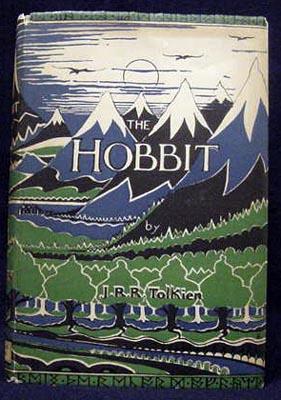
The Hobbit (1937) is J. R. R. Tolkien's children's fantasy novel following the reluctant burglar Bilbo Baggins, who joins a company of dwarves and the wizard Gandalf on a journey to reclaim treasure guarded by the dragon Smaug. It stands as a complete adventure on its own, but shares its setting with the rest of Tolkien's legendarium and leads into the events of The Lord of the Rings.
- Narnia
series26 books1950
part of Narnia Universe
similar byadventurousfantasy
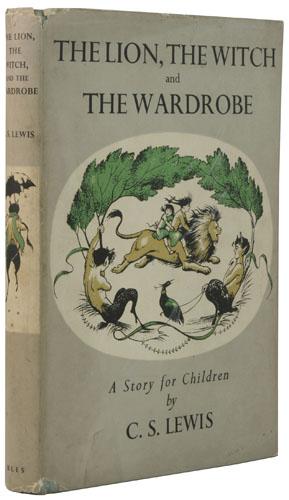
The Chronicles of Narnia is a series of seven portal fantasy novels by British author C. S. Lewis. Illustrated by Pauline Baynes and originally published between 1950 and 1956, the series is set in the fictional realm of Narnia, a fantasy world of magic, mythical beasts, and talking animals. It narrates the adventures of various children who play central roles in the unfolding history of the Narnian world. Except in The Horse and His Boy, the protagonists are all children from the real world who are magically transported to Narnia, where they are sometimes called upon by the lion Aslan to protect Narnia from evil. The books span the entire history of Narnia, from its creation in The Magician's Nephew to its eventual destruction in The Last Battle.
- The Lord of the Rings
series13 books1954
part of Tolkien's legendarium
similar by+2 more
The Lord of the Rings is an epic high fantasy novel written by the English author and scholar J. R. R. Tolkien. Set in Middle-earth, the story began as a sequel to Tolkien's 1937 children's book The Hobbit but eventually developed into a much larger work. Written in stages between 1937 and 1949, The Lord of the Rings is one of the best-selling books ever written, with over 150 million copies sold.
- Earthsea Cycle
series18 books1964
completed
part of Earthsea
similar byfantasy+1 more
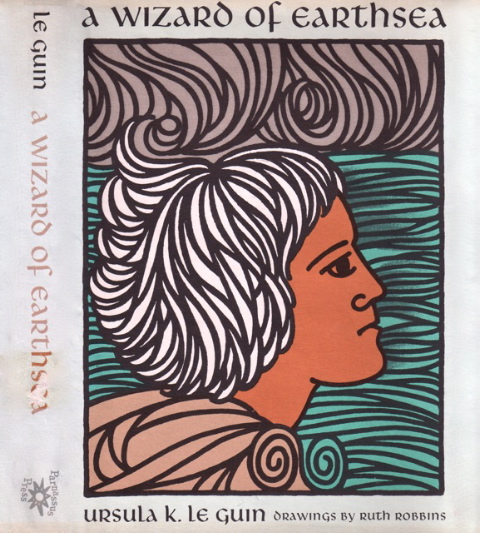
The Earthsea Cycle, also known as Earthsea, is a series of high fantasy books written by American author Ursula K. Le Guin. Beginning with A Wizard of Earthsea (1968), The Tombs of Atuan (1970), and The Farthest Shore (1972), the series was continued in Tehanu (1990), and Tales from Earthsea and The Other Wind. In 2018, all the novels and short stories were published in a single volume, The Books of Earthsea: The Complete Illustrated Edition, with artwork by Charles Vess.
- Kairos
series11 books1962
completed
similar byyoung adult+2 more
The Time Quintet is a science fantasy series of five young adult novels written by American author Madeleine L'Engle and made up of A Wrinkle in Time (1962), A Wind in the Door (1973), A Swiftly Tilting Planet (1978), Many Waters (1986), and An Acceptable Time (1989).
- Chronicles of the Deryni
series4 books1970
part of Deryni
similar byhistorical fantasyfantasy
Katherine Kurtz's Chronicles of the Deryni trilogy (Deryni Rising, Deryni Checkmate, High Deryni, 1970-1973) follows the young King Kelson Haldane defending his throne in Gwynedd, a kingdom modeled on 10th-to-12th-century Britain, against ecclesiastical opposition and foreign invasion. Central to the conflict is the Deryni, a persecuted human-like people with inherited psychic and magical powers, whose presence in and around the crown makes Kelson's reign a lightning rod for religious and political tension.
- Little Thieves
series3 books2021
similar byadventurousyoung adultfantasy+1 more
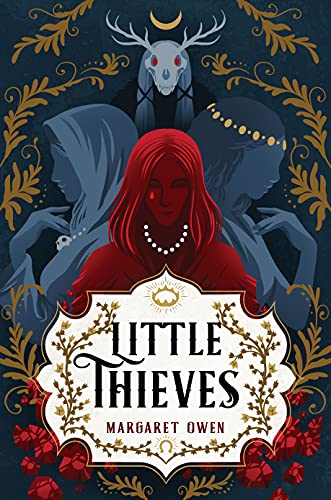
Vanja Schmidt, goddaughter to Death and Fortune, has stolen a princess's identity and jewels to fund her escape from a life of debt -- only to find herself cursed to slowly turn into jewels herself as punishment for her greed. Margaret Owen's Little Thieves trilogy follows Vanja's race to break the curse and outrun the guardian, fiance, and detective all closing in on her, continuing through Painted Devils and Holy Terrors.
- Ile-Rien
series12 books1993
similar byfantasy+2 more
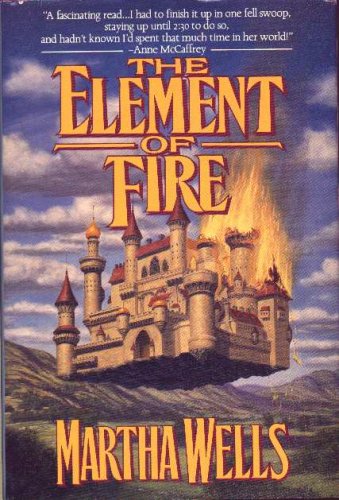
The Ile-Rien books are a series of fantasy novels by Martha Wells set in the fictional country of Ile-Rien. It is a centralized monarchy governed by the Fontainon dynasty, governing from their ornate capital of Vienne. It is also the home of the university-city of Lodun, a great center of learning, producing world-renowned scholars in medicine, law and sorcery. Its neighbors are the nations of Adera, Umberwald and Parscia, as well as Bisra, its long-standing enemy. Ile-Rien shares a coastline along the Western Ocean with Parscia.
- The Brotherhood of the Conch
series3 books2003
similar byadventurousfantasy+1 more
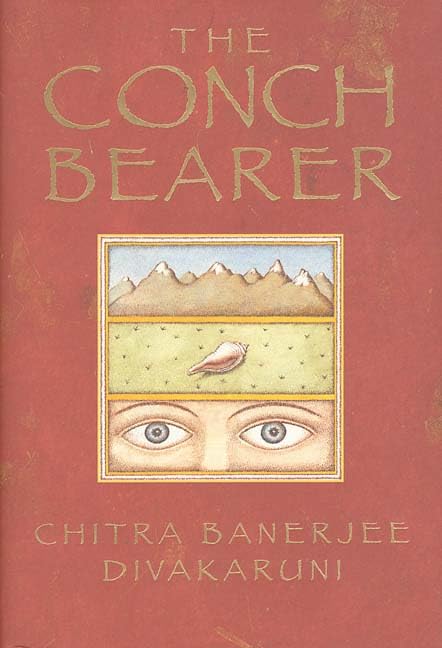
The Brotherhood of the Conch is Chitra Banerjee Divakaruni's middle-grade fantasy trilogy: The Conch Bearer (2003), The Mirror of Fire and Dreaming and Shadowland. It follows a boy in Kolkata entrusted with a magical conch shell and drawn into a hidden brotherhood of healers and mystics guarding it from those who would misuse its power. The trilogy follows one continuous quest across its three books, drawing on Indian myth and setting.
- The World of Riverside
series72 books1982
similar byfantasy+1 more
Ellen Kushner's Riverside sequence begins with Swordspoint (1987), a genre-defining 'fantasy of manners' novel about hired swordsmen and aristocratic intrigue in a nameless city, and continues through The Privilege of the Sword and The Fall of the Kings (co-written with Delia Sherman). The wider World of Riverside has since expanded into shared-world short fiction and anthologies, such as Swords of Riverside, contributed to by numerous other writers.
- His Dark Materials Universe
universe13 books1995
Start hereHis Dark Materials · Start here
similar byadventurousyoung adultfantasy
In a world like ours and unlike it, every human soul walks outside the body in the shape of an animal — a daemon, who speaks, who cannot be lied to, and who settles into one fixed form only when childhood ends. This is the country of His Dark Materials: a company of parallel worlds across which an invisible dust of consciousness drifts down upon the waking mind; where a Church that calls itself the Magisterium would sooner sever a child's soul than let that Dust be understood; and where a golden instrument, the alethiometer, answers true questions for anyone with the patience to read it. Philip Pullman's design stands in two trilogies and a scatter of shorter tales. His Dark Materials — Northern Lights (published in America as The Golden Compass), The Subtle Knife, and The Amber Spyglass — carries Lyra Belacqua from the rooftops of a shadow Oxford across the borders between worlds. The Book of Dust returns to that same territory: La Belle Sauvage looks back to Lyra as an infant carried through a great flood, while The Secret Commonwealth follows her grown and less certain into adulthood, with a concluding volume closing the arc. Around them sit slim companion books — Lyra's Oxford, Once Upon a Time in the North, Serpentine — and Nicholas Wright's stage adaptation, made with Pullman's blessing. The register is grave and luminous at once, its title lifted from Milton and its quarrel drawn from Blake: a story that takes the side of curiosity, love, and the physical world against any authority that would forbid them. It reads as adventure — armoured bears, aeronauts, knife-cut windows between skies — yet reasons like philosophy. Begin with Northern Lights / The Golden Compass and read the first trilogy through before turning to The Book of Dust, which deepens everything the first has already made you feel.
- His Dark Materials
series8 books1995
part of His Dark Materials Universe
similar byadventurousyoung adultfantasy
His Dark Materials is a trilogy of fantasy novels by Philip Pullman consisting of Northern Lights, The Subtle Knife (1997), and The Amber Spyglass (2000). It follows the coming of age of two children, Lyra Belacqua and Will Parry, as they wander through a series of parallel universes. The novels have won a number of awards, including the Carnegie Medal in 1995 for Northern Lights and the 2001 Whitbread Book of the Year for The Amber Spyglass. In 2003, the trilogy was ranked third on the BBC's The Big Read poll.
- Von Bek
series4 books1965
similar by+3 more
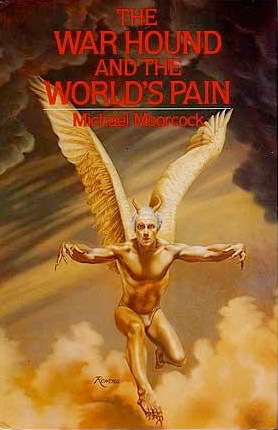
Michael Moorcock's Von Bek novels follow the Von Bek family across different historical periods, part of his wider Eternal Champion multiverse. The sequence opens with The War Hound and the World's Pain (1981) and continues through The Brothel in Rosenstrasse and The City in the Autumn Stars.
- Five Children Universe
series27 books1902
completed
similar byfantasy+2 more
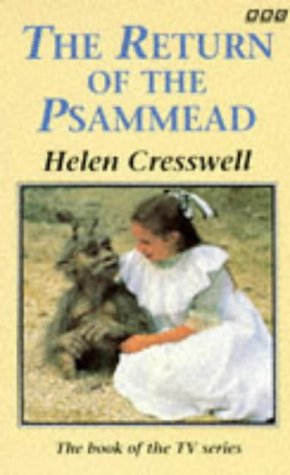
Two separate modern continuations of E. Nesbit's Psammead stories were written decades apart by different authors: Helen Cresswell's The Return of the Psammead (1992) brings the wish-granting sand fairy back for a new set of children, while Kate Saunders's Five Children on the Western Front (2014) follows the now-grown Lamb and his siblings as the First World War arrives, in a more somber sequel to Nesbit's original trilogy. Neither book is by Nesbit herself, and the two have no direct connection to each other beyond both drawing on her creation. Later writers have kept returning to Nesbit's premise long after her own trilogy ended.