More like Deep Indigo
anchored on:science fictionpsychic powersfar futurespace operaromanceparanormal romance+3 more
but
- Tower and the Hive
series7 books1959
completed
part of The Talents
similar bypsychic powersfar futurescience fictionspacespace opera+1 more
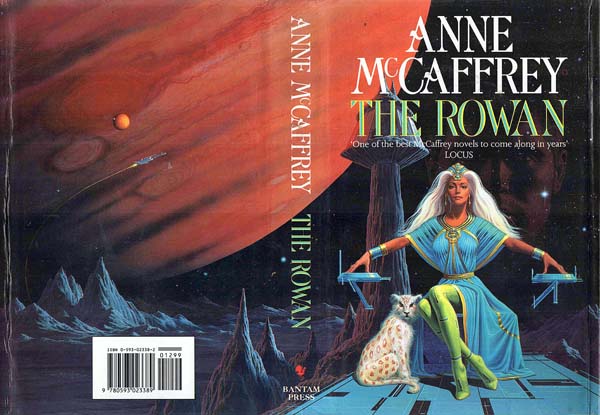
The Tower and the Hive series opens with The Rowan (1990), following an isolated but powerful telepath who is drawn out of her loneliness by a psychic call for help from a distant Talent facing an alien threat. Anne McCaffrey continued the story across four more novels, Damia, Damia's Children, Lyon's Pride, and the concluding The Tower and the Hive (1999), following later generations of a telepathic family staffing the Prime Towers that give a starfaring human civilization instant communication. The series is set later in the same Talents universe as McCaffrey's earlier Pegasus books.
- The Demolished Man
Alfred Besterstandalone novel1953
similar bypsychic powersfar futuretensescience fiction
In the year 2301, guns are only museum pieces and benign telepaths sweep the minds of the populace to detect crimes before they happen. In 2301 murder is virtually impossible, but one man is about to change that..
- Dune
series20 books1963
part of Dune Universe
similar byfar futurescience fictionspace opera+2 more
Frank Herbert's Dune Chronicles opens with 1965's Dune, set on the desert planet Arrakis where House Atreides takes control of the only source of the vital spice melange and young Paul Atreides is pulled into a struggle over its politics and religion. Herbert carried the story forward across five further novels — Dune Messiah, Children of Dune, God Emperor of Dune, Heretics of Dune, and Chapterhouse: Dune — following Paul's line over the following millennia, before Brian Herbert and Kevin J. Anderson later extended the saga. Many other editions of these six novels are omnibus and box-set repackagings rather than separate stories.
- War Minstrels
series3 books1995
similar bypsychic powersfar futuretensescience fictionspacespace opera+1 more
- The Programmed Man
Jeff Sutton & Jean Suttonstandalone novel1968
similar bypsychic powersfar futuretensescience fictionspacespaceshipspace opera
The reported power of the N-bomb aboard a destroyer spaceship preserves peace for years in the federated solar systems until enemy teleports - agents with the mental power to transport themselves - discover the bomb does not exist.
- Forge of the Titans
Steve Whitestandalone novel2003
similar bypsychic powersfar futuretensescience fictionspace
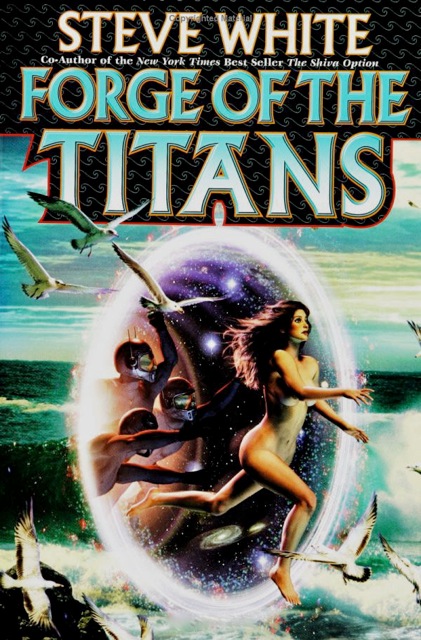
Aspiring naval aviator Derek Secrest is drafted into this war because he is a telepath (it's a family trait), and human telepaths may be indispensable to the victory of the Olympians and the salvation of not only Earth but other planets too. With other human telepaths, one human traitor, and the advice and counsel of the goddess Secrest battles the Titans and their human allies.
- Authorized Lensmen Trilogy
series3 books1980
completed
part of Lensman
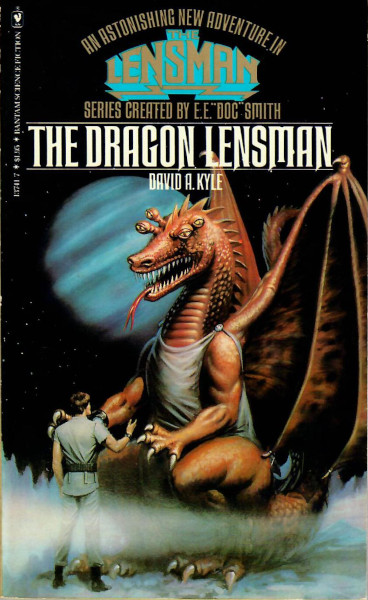
similar bypsychic powersfar futurescience fictionspace opera+2 more
- Web of Angels
John M. Fordstandalone novel1980
similar bypsychic powersfar futuretensescience fictionspace
Amazon: Condemned to death at the age of nine for his ability to manipulate the Web, which links the many worlds of humanity, Grailer must go underground, hiding his skills and testing his powers
- The Witling
Vernor Vingestandalone novel1976
similar bypsychic powersfar futurescience fiction+1 more
The Witling is a 1976 science fiction novel by American writer Vernor Vinge, about the planet Giri, whose humanoid inhabitants, the Azhiri, are able to teleport. This ability varies from person to person: those without the talent at all are called witlings and are the lowest class of person in Azhiri society.
- The Obernewtyn Chronicles
series9 books1987
similar bypsychic powersfar futurescience fiction+1 more
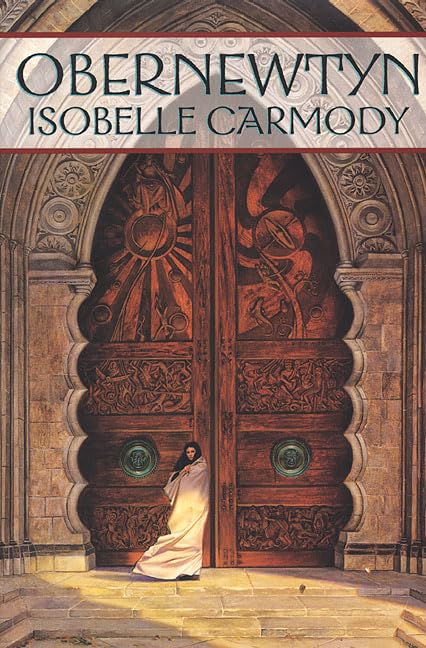
The Obernewtyn Chronicles is a series of science fiction and fantasy novels by Australian author Isobelle Carmody. The series has a post apocalyptic setting and depicts a world long after its destruction by a global nuclear holocaust.
- Xeno Relations
series5 books2014
similar bypsychic powersfar futurescience fictionspacespace opera+2 more
- The Chrysalids
John Wyndhamstandalone novel1955
similar bypsychic powersfar futuretensescience fiction
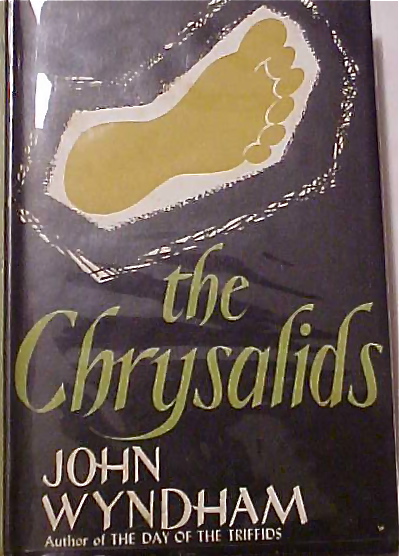
The Chrysalids is a science fiction novel by British writer John Wyndham, first published in 1955 by Michael Joseph. It is the least typical of Wyndham's major novels, but regarded by some as his best. An early manuscript version was entitled Time for a Change.
- The Man in the Maze
Robert Silverbergstandalone novel1969
similar bypsychic powersfar futurescience fiction
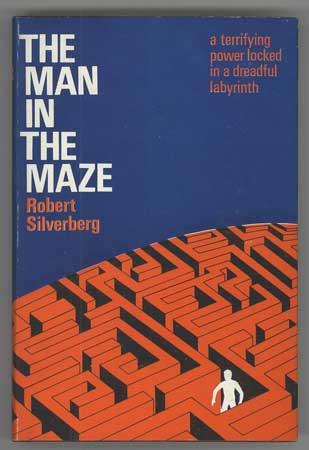
The Man in the Maze is a science fiction novel by American writer Robert Silverberg, originally serialized in the magazine Worlds of If in April and May 1968, and published in bookstores the following year. It tells the tale of a man rendered incapable of interacting normally with other human beings by his uncontrollable psychic abilities. The novel is inspired by Sophocles' play Philoctetes, with the roles of Odysseus, Neoptolemus and Philoctetes played by Boardman, Rawlins, and Muller, respectively.
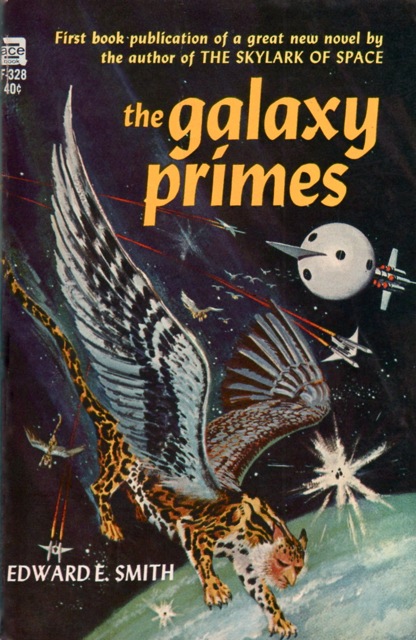
- The Galaxy Primes
Edward E. Smithstandalone novel1965
similar bypsychic powersfar futurescience fictionspacespace opera+1 more
From the back cover of the Ace first edition: "The ship was called the Pleiades, and it was Earth's first starship. It could travel instantaneously to literally anywhere in the universe - but that was the trouble with it. For the was absolutely no way of predicting where in the infinities of space it would reappear when it winked out of the Solar System, and no way of knowing how to return. Its crew was two men and two women, each a Psionic Prime with mind-powers unparalleled in Earth's history. The tale of how they pitted their powers against an entire universe is one of daring adventure on the galactic scale such as could only have been written by science fiction's all-time great, Edward E. Smith."
- Space Beagle
series5 books1939
completed
similar byfar futuretensescience fictionspacespaceshipspace opera
The Voyage of the Space Beagle is a 1950 fix-up novel by A. E. van Vogt, stitched together from four previously published pulp stories into a single continuous account of the exploration ship Space Beagle's encounters with a series of dangerous alien life forms. Its episodic, crew-versus-monster structure reads as a loose sequence of adventures rather than one continuous plot.
- Alien Embassy
Ian Watsonstandalone novel1977
similar bypsychic powersfar futurescience fictionspace
From the back cover of the Ace first printing: ""I am a womb-man, and my womb is space!" Lila was one of those who could, by diving deep, deep within herself, emerge in outer space. The few who could make that journey were honored above all other mortals; already the secrets brought back by the mind-travelers hand transformed Earth from the pig-sty of the 21st century to the paradise of the 22nd. But Lila was to learn something besides which the secrets brought back by previous psychic astronauts would pale to insignifance - she was to learn the Truth... and it would not make men free."
- Star Minds Interregnum
series10 books2015
part of Star Minds
similar bypsychic powersfar futurescience fictionspacespace opera+1 more
- Dune Universe
universe78 books1963
Start hereDune · Start here
similar byfar futurescience fictionspace opera+1 more
Arrakis. Dune. The desert planet, where empire runs on a single substance: the spice melange, which folds space, prolongs life, and unlocks prescience, and which exists nowhere else in the known universe. Frank Herbert's saga is a meditation dressed as an adventure — feudal houses and a secret sisterhood, engineered messiahs and the patient ecology of a world without water, all turning on the terrible gravity of who commands the spice. It reads like scripture and schemes like a war room, ten thousand years hence, among people who have outlawed the thinking machine and made instruments of themselves instead. At its heart stand Herbert's original six — Dune, Dune Messiah, Children of Dune, God Emperor of Dune, Heretics of Dune, Chapterhouse: Dune — a single deepening arc across millennia, arguing the whole way between prophecy and free will. Around that spine his son Brian Herbert and Kevin J. Anderson have raised a vast prequel architecture: Prelude to Dune, tracing the great houses a generation before Paul; Legends of Dune, reaching back to the crusade that broke the machines; the Schools of Dune cycle on the founding of Bene Gesserit, Mentat, and Navigator; the Caladan Trilogy and Heroes of Dune filling years the originals left in shadow. Many hands, dozens of volumes, one desert. What sets Dune apart is its refusal of the simple: religion is manufactured, heroes are hazards, and the sand itself — worm, water, ecology — acts as a political power. Begin where the universe did, with Frank Herbert's Dune (1965), and read the original six in order; you need nothing else to feel the full weight. The prequels are a country to explore afterward, taken by era. Beginnings are delicate times.
- Chanur
series7 books1982
part of Alliance-Union Universe
similar byfar futuretensescience fictionspacespaceshipspace opera
The Chanur novels are a series of five science fiction novels, forming three separate stories, written by American author C. J. Cherryh and published by DAW Books between 1982 and 1992. The first novel in the series is The Pride of Chanur (1982), which was nominated for both the Hugo and Locus Awards in 1983. The Pride of Chanur, originally a stand-alone story, was followed by the Chanur's Venture trilogy, Chanur's Venture (1984), which was shortlisted for a Locus Award in 1985; The Kif Strike Back (1985) and Chanur's Homecoming (1986). These were followed by a later sequel, Chanur's Legacy (1992). The five novels were also published in two omnibus editions: the first three in The Chanur Saga in 2000 and the next two in Chanur's Endgame in 2007.
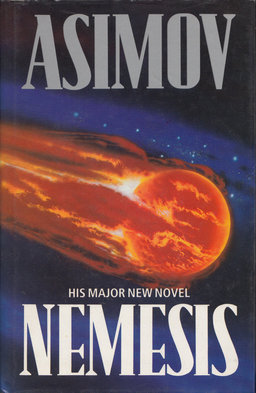
- Nemesis
Isaac Asimovstandalone novel1989
similar byfar futurescience fictionspacespace opera+2 more
The expanding population and ensuing ecological degradation of Earth leads to the establishment of orbital habitats which continue to compete with each other as well as with Earth, leading one of them to abandon the Solar System entirely, to establish itself around a neighboring star.
- Moties
series4 books1974
part of CoDominium
similar byfar futurescience fictionspacespace opera+1 more
Larry Niven and Jerry Pournelle's The Mote in God's Eye (1974) depicts humanity's first contact with an alien species, the Moties, set within the far-future interstellar setting of Pournelle's codominium future history. The Gripping Hand continues that first-contact crisis years later, and Outies, written by J. R. Pournelle, carries the story forward into a new generation. Together the three books trace an escalating encounter between human and Motie civilizations within the codominium universe.
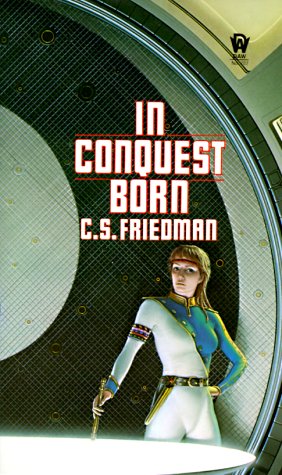
- Azean Empire
series2 books1987
similar byfar futuretensescience fictionspace opera+2 more
C. S. Friedman's Azean Empire novels are set in a distant-future conflict between two competing human societies, the Azeans and the Braxins, contesting interstellar dominance. In Conquest Born, her debut, works as space opera and military SF with an anthropological bent, using the two societies' opposed cultures and reproductive philosophies as the real engine of the conflict rather than just the battles themselves. The Wilding continues the same interstellar rivalry.