More like Delphi Challenge
anchored on:science fictionspace operaspaceother star systems
but
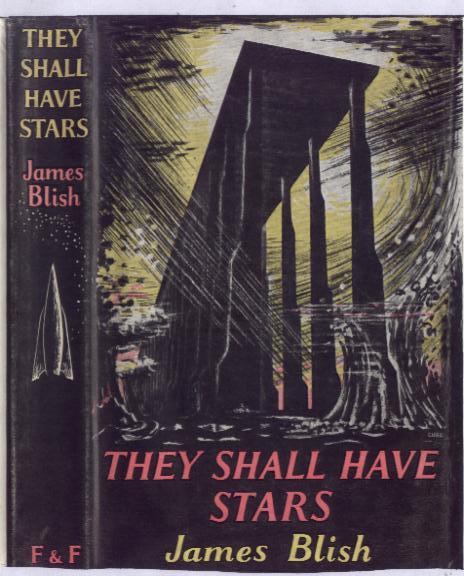
- Cities in Flight
series10 books1950
completed
similar byspace colonizationfar futurescience fictionspace operaspace+3 more
Cities in Flight is a four-volume series of science fiction novels and short stories by American writer James Blish, originally published between 1950 and 1962, which were first known collectively as the "Okie" novels. The series features entire cities that are able to fly through space using an anti-gravity device, the spindizzy. The stories cover roughly two thousand years, from the very near future to the end of the universe. One story, "Earthman, Come Home", won a Retro Hugo Award in 2004 for Best Novelette. Since 1970, the primary edition has been the omnibus volume first published in paperback by Avon Books. Over the years James Blish made many changes to these stories in response to points raised in letters from readers.
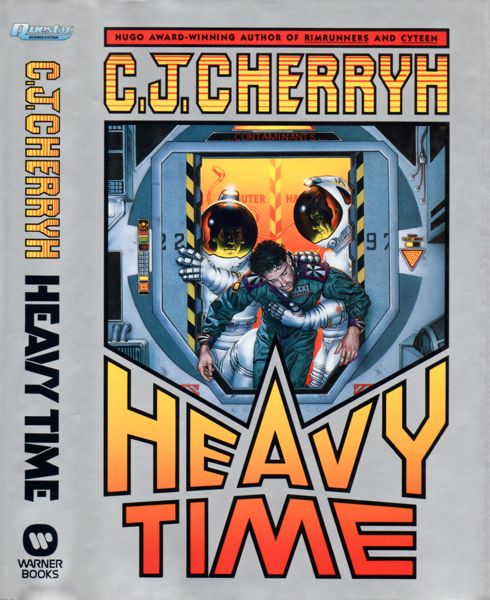
- Company Wars
series7 books1981
part of Alliance-Union Universe
similar byfar futurescience fictionspace operaspace+1 more
Company Wars gathers the novels C. J. Cherryh set during the breakaway conflict between Earth's colonial Company and the newly independent Union, within her wider Alliance-Union future history. Anchored by the Hugo Award-winning Downbelow Station, the books follow different ships, stations, and crews caught on either side, from merchanter traders to military spacers, rather than a single continuing cast. Read in any order, they build up a picture of the political and economic pressure that reshapes Cherryh's larger Alliance-Union universe.
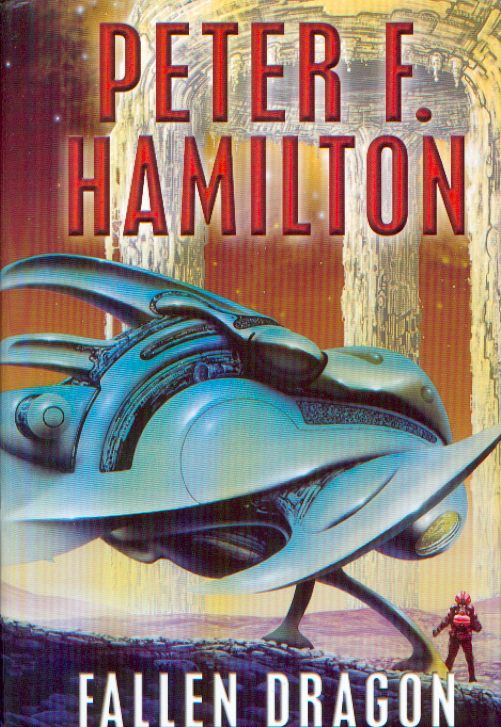
- Fallen Dragon
Peter F. Hamiltonstandalone novel2001
similar byadventurousspace colonizationfar futurescience fictionspace operaspaceother star systems
Fallen Dragon is a science fiction novel by British writer Peter F. Hamilton. It was first published in 2001 by Macmillan. It follows the adventures of the mercenary Lawrence Newton as he attempts to capture what he believes is a fabulous treasure, only to find something of much greater importance.
- Uplift Universe
universe13 books1980
Start hereUplift · Start here
similar byadventurousfar futurescience fictionspace operaspaceother star systems+1 more
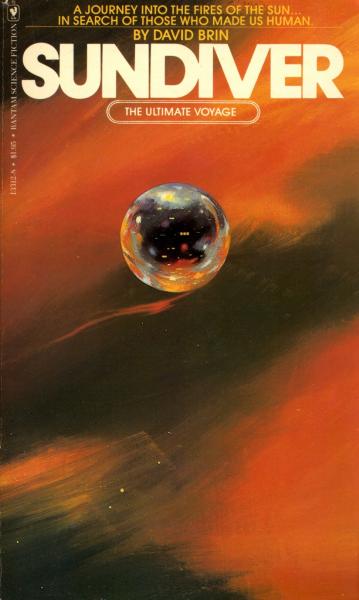
No species, the Galactics insist, ever climbs to sapience alone. For a billion years the elder races have "uplifted" their chosen clients — reshaping some promising animal, gene by patient gene, into a thinking being, then binding it through long ages of indenture. Patron lifts client; client one day becomes patron; and every lineage traces back through the vast Galactic Library to the vanished Progenitors who began it all. Then a ragged band of primates arrives at the stars with no patron to claim them — wolflings, self-made, an affront to a hundred thousand years of law — and worse, these humans have already started uplifting neighbors of their own: the neo-dolphins and neo-chimpanzees of Earthclan. David Brin builds this galaxy across two trilogies. The first — Sundiver, the Hugo- and Nebula-winning Startide Rising, and the Hugo-winning The Uplift War — sends an expedition into the Sun, then follows the dolphin-crewed survey ship Streaker as it flees a discovery that sets fanatical star-clans at war, and a chimp-led resistance on an invaded colony world. The second sequence, Uplift Storm — Brightness Reef, Infinity's Shore, Heaven's Reach — descends to Jijo, a forbidden world where six fallen races hide as illegal settlers, and draws every loose thread toward a reckoning. Short fiction fills the margins. This is space opera with an ecologist's conscience: teeming with invented biologies, wry cross-species banter, and real unease about what we owe the minds we make. Begin with Startide Rising — the saga's beating heart, and readable on its own — or take Sundiver first and read straight through in publication order.
- Ringworld
series5 books1970
part of Known Space
similar byadventurousfar futurescience fictionspace operaspaceother star systemsspace exploration
The Ringworld series is a series of science fiction novels written by American author Larry Niven. It is part of his Known Space series of stories. Its backdrop is the Ringworld, a giant artifact 3 million times the surface area of Earth circling a star. The series is composed of four standalone science fiction novels, the original award-winning book and its three sequels:1970: Ringworld 1979: The Ringworld Engineers 1996: The Ringworld Throne 2004: Ringworld's Children
- Old Man's War
series16 books2005
similar byadventurousfar futurescience fictionspace operaspaceother star systems+1 more
The Old Man's War series is a series of science fiction novels by John Scalzi. The first book in the series, Old Man's War, was first published in 2005 by Tor Books, and was nominated for the Hugo Award for Best Novel in 2006. In 2026 it was a finalist for the Hugo Award for Best Series.
- Catteni Sequence
series5 books1970
completed
similar byadventurousfar futurescience fictionspace operaother star systems+2 more
The Catteni series is a tetralogy of science fiction novels by American writer Anne McCaffrey. In this universe, humans are slaves of aliens, the humanoid Catteni. Woven through all four of the books are details of the relationship between Kristin Bjornsen, a former slave, and Zainal, a renegade Catteni.
- Poseidon's Children
series3 books2012
similar byspace colonizationfar futurescience fictionspace operaspaceother star systems+2 more
Alastair Reynolds' Poseidon's Children trilogy follows humanity — and its transhuman descendants — expanding into the galaxy over the course of centuries, beginning with Blue Remembered Earth (2012) and continuing through On the Steel Breeze and the concluding Poseidon's Wake (2015).
- 2312
Kim Stanley Robinsonstandalone novel2012
similar byspace colonizationfar futurescience fictionspaceother star systems+2 more
In the eponymous year, when Earth's ecology is degraded and humanity has settled throughout the solar system by terraforming and genetic engineering, mysterious disasters strike some human communities and an assortment of human types from throughout the system seek to find and eliminate the cause.
- Pattern for Conquest
George O. Smithstandalone novel1949
similar byadventurousspace colonizationfar futurescience fictionspace operaspaceother star systems
Pattern for Conquest is a science fiction novel by American writer George O. Smith. It was published in 1949 by Gnome Press Reprinted circa 1952 in paper wrappers for distribution to US military personnel. Although a later printing, the first edition statement is retained on the copyright page. [Currey] isfdb Currey
- Pax / Astra
series2 books1954
completed
similar byadventurousfar futurescience fiction+4 more
Andre Norton's The Stars Are Ours! (1954) and its sequel Star Born (1957) follow a group of scientists and their families who flee a repressive future Earth to colonize a distant world they name Astra, and then the next generation, who must contend with that world's original inhabitants. Star Flight appears to be a later omnibus or reissue rather than a third original novel.
- Moties
series4 books1974
part of CoDominium
similar byfar futurescience fictionspace operaspaceother star systems+2 more
Larry Niven and Jerry Pournelle's The Mote in God's Eye (1974) depicts humanity's first contact with an alien species, the Moties, set within the far-future interstellar setting of Pournelle's codominium future history. The Gripping Hand continues that first-contact crisis years later, and Outies, written by J. R. Pournelle, carries the story forward into a new generation. Together the three books trace an escalating encounter between human and Motie civilizations within the codominium universe.
- Starstream
series2 books1989
completed
similar byfar futurescience fictionspace operaspaceother star systems+2 more
Starstream groups Jeffrey A. Carver's two linked science-fiction novels, From a Changeling Star (1989) and its direct sequel Down the Stream of Stars (1990). The two were published within a year of each other under the same author.
- Deathworld
series4 books1960
completed
similar byadventurousspace colonizationfar futurescience fictionother star systems+1 more
Deathworld is the name of a series of science fiction novels by American writer Harry Harrison, including the books Deathworld, Deathworld 2 and Deathworld 3, plus the short story "The Mothballed Spaceship". The central hero is a gambler who becomes involved with colonists of an extremely hostile planet.
- Starman Jones
Robert A. Heinleinstandalone novel1953
similar byadventurousfar futurescience fictionspace operaspaceother star systemsspace exploration
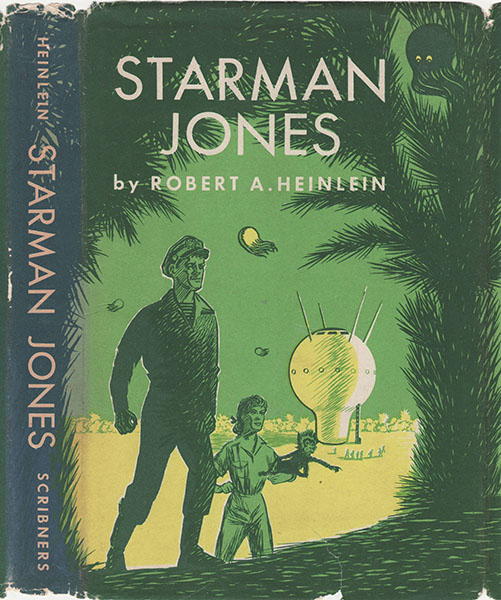
Starman Jones, a 1953 science fiction novel by Robert A. Heinlein, features a farm boy who wants to go to the stars. Charles Scribner's Sons published the book as part of the Heinlein juveniles series.
- Citizen of the Galaxy
Robert A. Heinleinstandalone novel1957
similar byadventurousfar futurescience fictionspace operaspaceother star systems+1 more
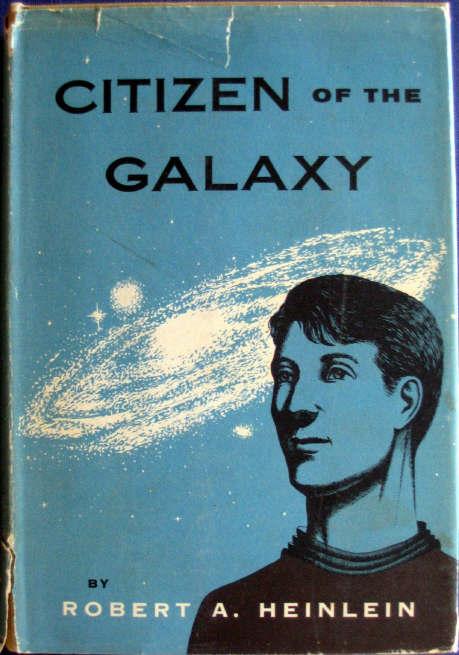
On a planet far distant from Earth, a lame beggar buys a young boy slave who has forgotten his origins. The beggar is more than he seems, and gives the boy an extensive education while employing him as an observer of activity in their city. Years later, the beggar is captured by the government, and the youth must escape the planet.
- Bronson Beta
series5 books1933
similar byscience fictionother star systems+4 more
When Worlds Collide (1933) and its sequel After Worlds Collide (1934), written together by Edwin Balmer and Philip Wylie, follow a small group of survivors who escape a doomed Earth as the rogue planet Bronson Alpha destroys it, landing on its companion world Bronson Beta to begin again. The two novels form a self-contained disaster-and-survival duology.
- Saturn's Children
series3 books2008
similar byfar futurescience fictionspace operaspace+3 more
Charles Stross's Saturn's Children (2008) is a space-opera tribute to late-period Robert A. Heinlein, set millennia after humanity has quietly gone extinct, in a solar system still run by the sentient robots humans left behind - including Freya, an android originally built for companionship who is pulled into interstellar intrigue. Neptune's Brood (2013) returns to the same posthuman-robot universe thousands of years later with an entirely new cast, shifting focus to the mechanics of slower-than-light interstellar finance and banking fraud. The two books share continuity rather than characters.
- Tower and the Hive
series7 books1959
completed
part of The Talents
similar byfar futurescience fictionspace operaspaceother star systems+1 more
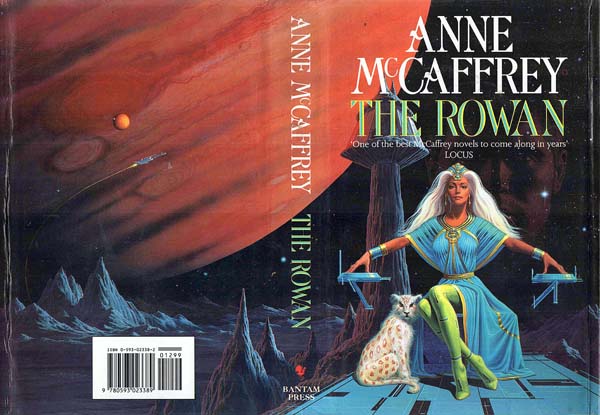
The Tower and the Hive series opens with The Rowan (1990), following an isolated but powerful telepath who is drawn out of her loneliness by a psychic call for help from a distant Talent facing an alien threat. Anne McCaffrey continued the story across four more novels, Damia, Damia's Children, Lyon's Pride, and the concluding The Tower and the Hive (1999), following later generations of a telepathic family staffing the Prime Towers that give a starfaring human civilization instant communication. The series is set later in the same Talents universe as McCaffrey's earlier Pegasus books.
- Noumenon Universe
series4 books2014
similar byspace colonizationfar futurescience fictionspace operaother star systemsspace exploration+2 more
- Starship Troupers
series3 books1991
completed
similar byadventurousspace colonizationfar futurescience fictionspace operaspaceother star systems+1 more
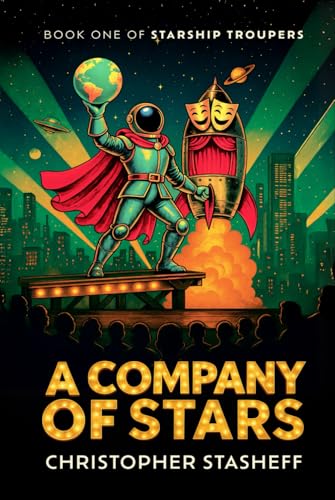
Starship Troupers is a series of science fiction novels by American author Christopher Stasheff. It includes three books: A Company Of Stars, We Open On Venus, and A Slight Detour. It also occupies the same continuity as Stasheff's Warlock of Gramarye and Rogue Wizard series. Set in the 26th century, after the human race has established colonies on distant planets and interstellar commerce supports Terra and the Terran Sphere of worlds, the novels follow the establishment and subsequent journeys of the Star Theater Company, the first-ever interstellar theatre troupe. The series title, Starship Troupers, was intended as a play on Robert Heinlein's Starship Troopers novel.
- Homecoming (Orson Scott Card)
series5 books1992
similar byfar futurescience fictionother star systems+4 more
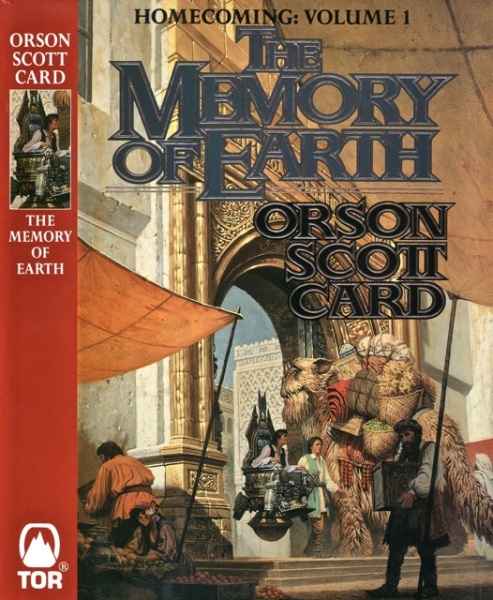
The Homecoming Saga is a science fiction series by Orson Scott Card. The series is patterned on the Book of Mormon. Some of the names also come from the Book of Mormon.
- Engines of Light
series3 books2000
similar byfar futurescience fictionspace operaspaceother star systems+3 more
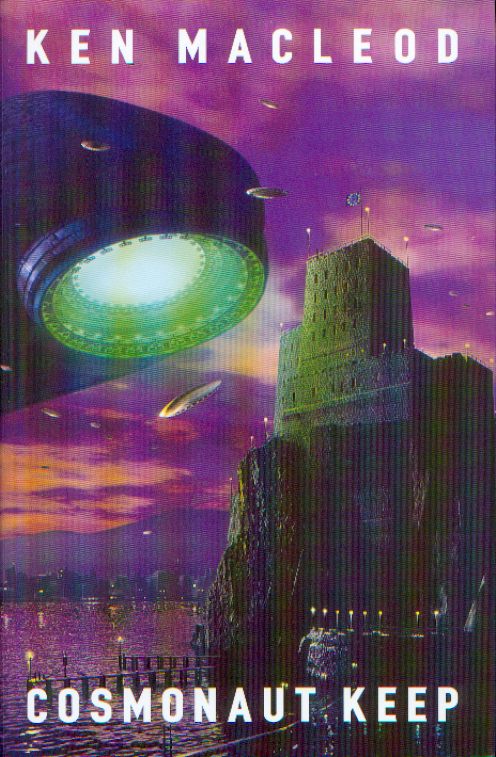
Ken MacLeod's Engines of Light trilogy opens with Cosmonaut Keep, alternating between a present-day scientist drawn into a hidden Soviet-era space program and an interstellar exploration effort in the far future, carried out with the help of long-lived, faster-than-light-capable alien traders. The two timelines gradually converge across Dark Light and Engine City. MacLeod uses the setup to work through his recurring interests in Cold War history and left-wing politics inside a space-opera frame.
- Nova
Samuel R. Delanystandalone novel1968
similar byadventurousfar futurescience fictionspace operaspaceother star systems+1 more
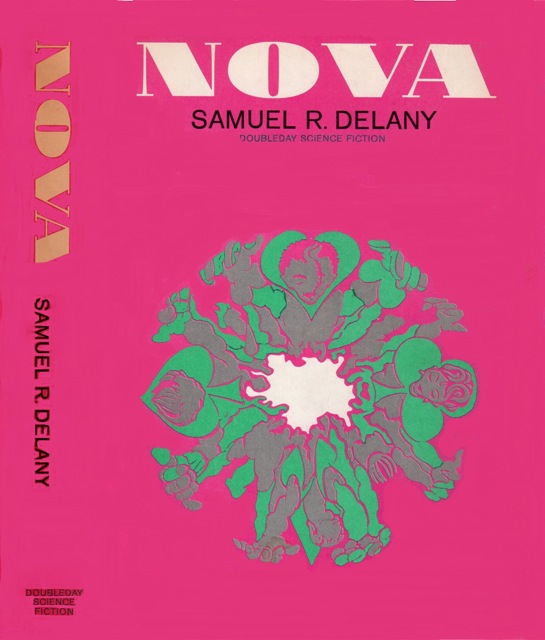
Nоva is a science fiction novel by American writer Samuel R. Delany published in 1968. The plot concerns the spaceship captain Lorq Von Ray's search for a nova, which will produce the essential power source Illyrion, and his vendetta with the Red family, who seek to kill him. Nominally space opera, it explores the politics and culture of a future where cyborg technology is universal, yet making major decisions can involve using tarot cards. It has strong mythological overtones, relating to both the Grail Quest and Jason's quest for the Golden Fleece.