More like Desert Runner
but
- Stephen King multiverse
universe46 books1967
Start hereThe Gunslinger · Start here
similar by+1 more
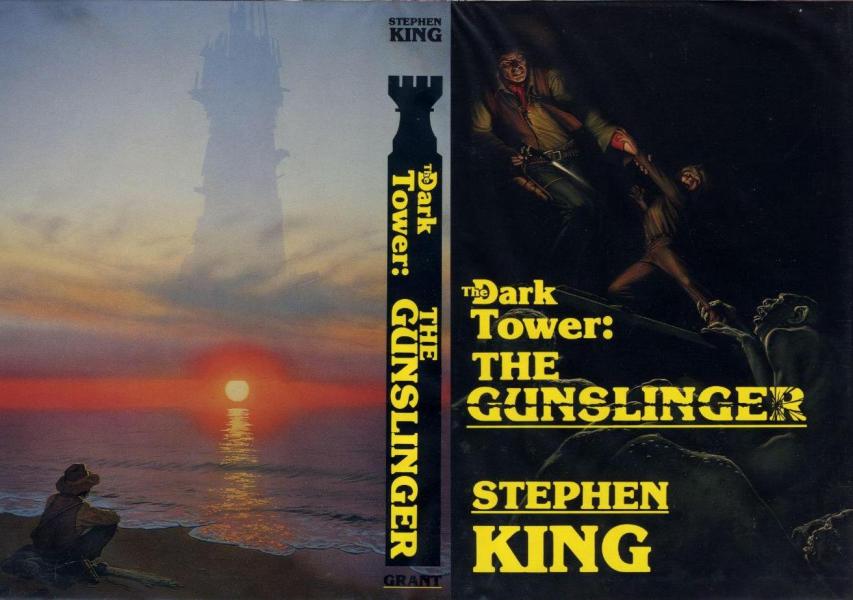
The man in black fled across the desert, and the gunslinger followed. So begins the long walk of Roland Deschain, last of an order of knight-errant pistoleers, across a land that has "moved on" — where the compass points drift, dead machines rot toward sentience, and the weave of what's real wears thin. His quest is the Dark Tower itself: a spire standing at the hub of every world that exists, the linchpin that holds all of them back from ruin. Roland's road runs eight volumes, from The Gunslinger through the closing Dark Tower, with the later, interleaved tale The Wind Through the Keyhole folding a story-within-a-story back into his youth. Along the way he draws a ka-tet — a fellowship bound by fate, not choosing — through doorways between worlds: a heroin-shackled New Yorker, a woman of two minds, a boy who dies twice. The Tower is also the secret axle around which the wider shelf of King's work turns; threads from The Stand, 'Salem's Lot and beyond wind quietly toward it. Expect a mongrel of Western, high fantasy, horror and decayed science fiction, told in a dusty, incantatory dialect all its own — ka, thankee-sai, the world that has moved on. This is King at his most mythic and most personal, a decades-spanning circle that rewards a patient reader. Begin at the beginning: The Gunslinger, then walk forward in publication order. There are other worlds than these — but this door opens first.
- Barsoom
series53 books1917
similar byadventurous
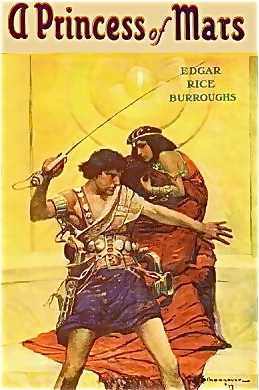
Barsoom is a fictional representation of the planet Mars created by American pulp fiction author Edgar Rice Burroughs. The first Barsoom tale was serialized as Under the Moons of Mars in pulp magazine The All-Story from February to July 1912 and published compiled as a novel as A Princess of Mars in 1917. It features John Carter, a late-19th-century American Confederate veteran who is mysteriously transported from Earth to the dying world of Mars where he meets and romances the beautiful Martian princess Dejah Thoris. Ten sequels followed over the next three decades, further extending his vision of Barsoom and adding other characters.
- Song of the Lioness
series5 books1983
part of Tortall
similar byadventurousfantasy
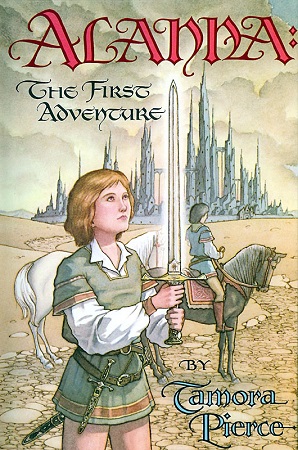
The Song of the Lioness is a young adult series of fantasy novels published in the 1980s by Tamora Pierce. The series consists of four books: Alanna: The First Adventure (1983), In the Hand of the Goddess (1984), The Woman Who Rides Like a Man (1986) and Lioness Rampant (1988).
- Damar
series6 books1982
similar byadventurousfantasy
Robin McKinley's Damar novels are set in a desert kingdom threatened by invasion from the north. The Blue Sword follows Harry Crewe, an orphaned outsider drawn into the Hillfolk's magic and their war; The Hero and the Crown, a Newbery Medal-winning prequel, tells how the earlier book's legendary dragon-slayer Aerin earned her place in Damar's history. The two novels can be read in either order and were written eight years apart.
- Dragon Trilogies
series6 books1988
similar byfantasy+1 more
The Dragon Prince and Dragon Star trilogies comprise six connected fantasy novels written by Melanie Rawn. The Dragon Prince trilogy focuses on Prince Rohan of the Desert and his Sunrunner wife, Sioned, while the Dragon Star trilogy focuses on their son, Pol. The Dragon Prince trilogy consists of novels Dragon Prince, The Star Scroll, and Sunrunner's Fire. The books in the Dragon Star trilogy are Stronghold, The Dragon Token, and Skybowl.
- The Lord of the Rings
series13 books1954
part of Tolkien's legendarium
similar by+2 more
The Lord of the Rings is an epic high fantasy novel written by the English author and scholar J. R. R. Tolkien. Set in Middle-earth, the story began as a sequel to Tolkien's 1937 children's book The Hobbit but eventually developed into a much larger work. Written in stages between 1937 and 1949, The Lord of the Rings is one of the best-selling books ever written, with over 150 million copies sold.
- The Hobbit
series2 books1937
completed
part of Tolkien's legendarium
similar byadventurousfantasy
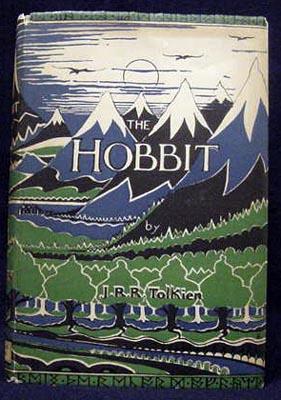
The Hobbit (1937) is J. R. R. Tolkien's children's fantasy novel following the reluctant burglar Bilbo Baggins, who joins a company of dwarves and the wizard Gandalf on a journey to reclaim treasure guarded by the dragon Smaug. It stands as a complete adventure on its own, but shares its setting with the rest of Tolkien's legendarium and leads into the events of The Lord of the Rings.
- Peter Pan Universe
universe112 books1902
Start herePeter Pan · Start here
similar byfantasy
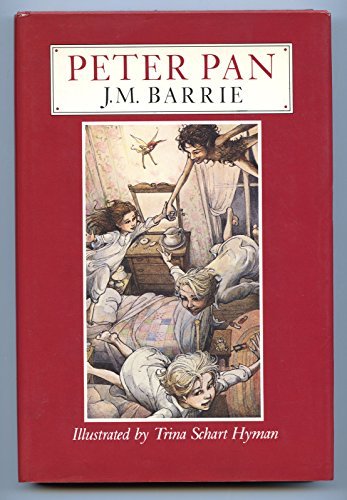
Second star to the right, and straight on till morning — and there it is, the island that every child dreams once and then, growing up, contrives to forget. Neverland: mermaids in the lagoon, a ticking crocodile with a clock in its belly, a pirate nursing his severed hand, and above it all the boy who will not grow up, forever flying, forever heartless in the lovely careless way that only children are. It begins with J. M. Barrie — the 1904 stage play, the chapters of Kensington Gardens, and the novel Peter and Wendy that fixed Peter, Wendy, Tinker Bell, Hook and the Lost Boys in place. From that small window a wide world has flown. Dave Barry and Ridley Pearson supply the how-it-all-began in their Starcatchers books, chasing falling starstuff aboard a doomed ship to explain why one orphan came to fly and never age. A whole bright shelf tends Tinker Bell's Pixie Hollow — the Disney Fairies and Fairy Haven tales, Kiki Thorpe's Never Girls — while Heidi Schulz hands the wheel to Hook's own daughter, and stranger, dimmer corners carry the island into far darker weather. Many hands, one archipelago; no single map governs them all. What sets it apart is the sweetness with a blade in it — wonder shadowed always by the ache of leaving, of mothers who keep the window open and children who fly home too late. Newcomers should begin where it began, with Barrie's Peter and Wendy, then, for the origin, take the Starcatchers books in their own order. The rest of Neverland waits, as it always does, for whoever still remembers how to reach it.
- The Daevabad Trilogy
series5 books2017
similar byfantasy+1 more
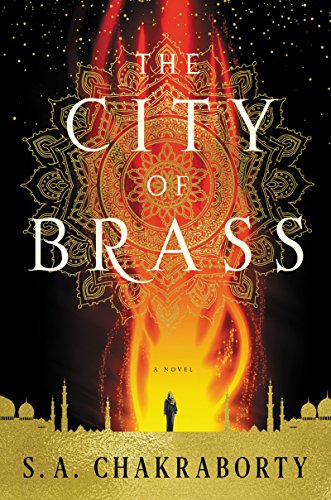
Nahri is a con artist and unlicensed healer working the streets of 18th-century Cairo who accidentally summons Dara, a formidable djinn warrior, during a fake exorcism gone wrong. He recognizes her as a lost heir of the Nahids, once-rulers of the djinn, and brings her to Daevabad, the hidden city her ancestors built, where old tribal and political conflicts are waiting to reignite. S. A. Chakraborty's Daevabad Trilogy follows Nahri through The City of Brass, The Kingdom of Copper, and The Empire of Gold as she's pulled into a fight over the city's throne and its buried history.
- The Demon Cycle
universe18 books2008
Start hereDemon Cycle · Start here
similar by+2 more
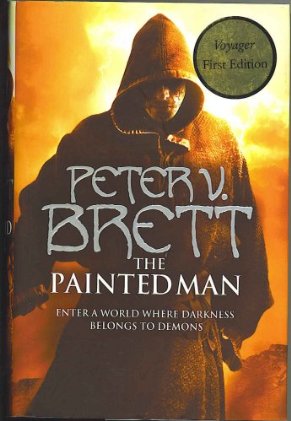
When the sun goes down, the ground breathes out murder. Mist seeps up from the Core, hardens into flame and rock and wind given teeth, and the only thing between a sleeping family and the corelings is a ring of wards — glyphs scratched in the dust that hold as long as the lines stay unbroken. Miss one stroke and you are meat by morning. This is Peter V. Brett's world: a humanity three centuries into a losing siege, huddled in the dark, waiting on a Deliverer half of them no longer believe will come. The Demon Cycle runs five volumes — The Warded Man (published in Britain as The Painted Man), The Desert Spear, The Daylight War, The Skull Throne, and The Core — following a messenger who tattoos the lost combat-wards into his own skin, a healer, a fiddler whose music turns demons aside, and a desert warlord who claims the prophecy for himself. Around them sit shorter works (Brayan's Gold, Messenger's Legacy, Barren), and beyond them the ongoing Nightfall Saga — The Desert Prince, The Hidden Queen — carrying the next generation into a war their parents did not finish. At its heart is a quarrel over faith and fire: the mannered Free Cities against fanatic, sand-hard Krasia, two would-be saviors who cannot both be right, and a lost art of war-magic that could turn prey into hunters. Begin with The Warded Man and read straight through in publication order; the novellas keep, for later, once the dark is under your skin.
- Narnia
series26 books1950
part of Narnia Universe
similar byadventurousfantasy
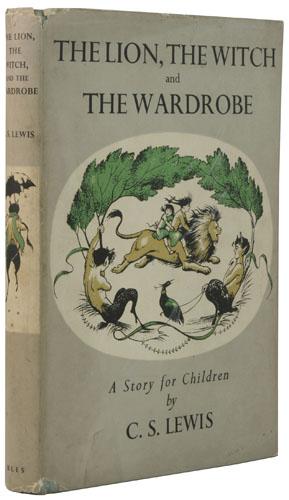
The Chronicles of Narnia is a series of seven portal fantasy novels by British author C. S. Lewis. Illustrated by Pauline Baynes and originally published between 1950 and 1956, the series is set in the fictional realm of Narnia, a fantasy world of magic, mythical beasts, and talking animals. It narrates the adventures of various children who play central roles in the unfolding history of the Narnian world. Except in The Horse and His Boy, the protagonists are all children from the real world who are magically transported to Narnia, where they are sometimes called upon by the lion Aslan to protect Narnia from evil. The books span the entire history of Narnia, from its creation in The Magician's Nephew to its eventual destruction in The Last Battle.
- Brak the Barbarian
series16 books1963
completed
similar byadventurousfantasy
John Jakes's Brak the Barbarian follows his own wandering barbarian swordsman, Brak, through sword-and-sorcery adventures modeled on the pulp tradition of the 1930s and '40s but original to Jakes rather than adapted from an earlier author. The character's stories were published across several collections and short novels from the 1960s into 1980.
- City of Bones
Martha Wellsstandalone novel1995
similar byadventurousdesertfantasy
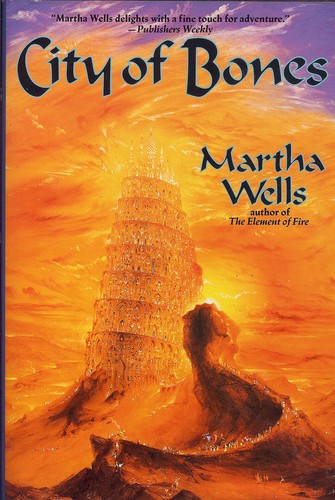
From the dust jacket laps of the Tor first edition: "....With City of Bones, Wells shapes a fabled and mysterious Arabian Nights wonderland in which science and magic meet in a head-on clash. it is a place that has been devastated by an ancient holocaust, and where not of the world's water has evaporated. But out of the ashes, a bizarre and wonderful civilization arises. Sand ship now traverse the routes once used by the great war galleons, and a glittering chain of city-states dot the Great Waste. And the greatest of them all is Charisat. Charisat, Imperial seat and wonder of wonders, a great monolithic structure towering over the desert. Charisat, a phantasmagorical place where silken courtesans and beggars weave lies side by side, where any man's dreams can be fulfilled at the whisper of a genie, and where the tier that you live on determines how high up the food (or more importantly, water) chain you are. Charisat, the goal of every schemer, treasure hunter, and madman intent on finding his hearts content. For if it can't be had in Charisat, it's not worth having. A beautiful woman and a handsome thief try to unravel the mysteries of an age-old technology to stop a fanatical cult before its members unleash an evil that will topple Charisat. And destroy all the water in the world."
- Demon Cycle
series10 books2008
part of The Demon Cycle
similar byfantasy+1 more
Peter V. Brett's Demon Cycle is set in a world where nightly demon attacks have driven humanity behind protective magical wards, following several point-of-view characters, including Arlen Bales and Leesha Paper, who each search for ways to fight back after centuries of retreat. The core story runs across five novels plus companion novellas.
- Tiger and Del
series10 books1985
similar byadventurousfantasy+1 more
Jennifer Roberson's fantasy series pairs Tiger, a desert-born sword-dancer from the south, with Del, a Northern swordswoman trained in her own tradition of blade-magic, as reluctant partners across a hostile borderland. Beginning with Sword-Dancer and continuing across six numbered novels, the series follows their partnership, and eventual romance, through decades of adventures and shifting political stakes.
- Who Fears Death
series5 books2010
similar byfantasy
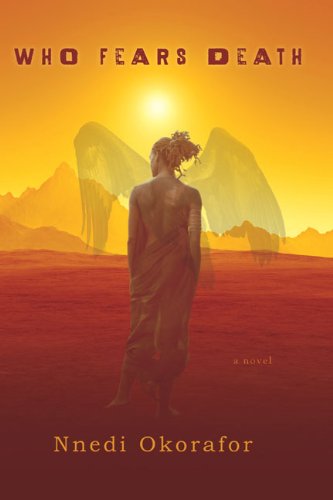
Nnedi Okorafor's award-winning novel is a work of science fantasy set in a post-apocalyptic Africa, engaging directly with themes of race and ethnicity through a speculative lens; it won the World Fantasy Award for Best Novel and the Carl Brandon Kindred Award. The Book of Phoenix, published five years later, serves as a prequel exploring the earlier origins of that same world.
- The Song of Shattered Sands
series14 books2015
similar bydesert+2 more
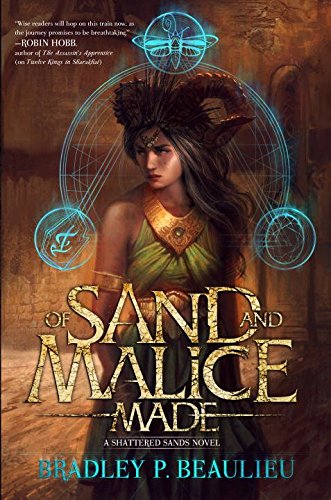
The Song of the Shattered Sands is a series of epic fantasy novels written by American author Bradley P. Beaulieu. Starting in 2015 with Twelve Kings in Sharakhai, the series was concluded in 2021 with A Desert Torn Asunder.
- Minecraft
universe207 books2014
Start hereThe Island · Start here
similar by+2 more
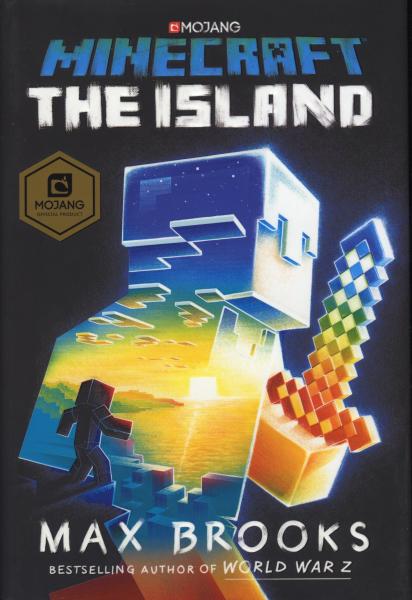
The sun is going down, and you have no walls. Somewhere in the dark a green thing is walking toward you on four stubby legs, and it does not stop and it does not speak, and when it reaches you it will hiss. So you dig. You punch wood from a tree, shape it into planks, stack the planks into a box just big enough to outlast the night — and in the morning the world is yours again, cubic and endless and waiting to be reshaped one block at a time. This is the Overworld: squared-off oceans, blocky hills, deep glittering mines, and beyond them the burning Nether and the floating void of the End, where everything can be broken down and built back into something else. The books that grow from it come in two very different sizes. On one shelf sits Mojang's own line — standalone novels like Max Brooks' tale of a castaway learning the island's rules the hard way, the monster-hunting Mob Squad, the illustrated Woodsword Chronicles, and rack on rack of official handbooks. Against it surges a whole cottage industry of unofficial "Minecrafter" fiction for young readers: the diary-comic misadventures of Diary of a Minecraft Zombie and The Creeper Diaries, Winter Morgan's brisk quest tales, and Mark Cheverton's Gameknight999 saga of a boy trapped inside the game. No single timeline binds them; each series keeps its own. What holds it together is not a plot but a place, and a feeling — the small triumph of surviving one more night, the itch to see past the next ridge, the freedom to build the thing you pictured. Newcomers wanting a story with a spine should start with Max Brooks' The Island, self-contained and quietly clever; younger readers chasing laughs can drop into Diary of a Minecraft Zombie or Woodsword Chronicles at book one. Beyond that, pick a mine and start digging.
- The Crescent Moon Kingdoms
series1 book2012
similar byadventurousdesertfantasy
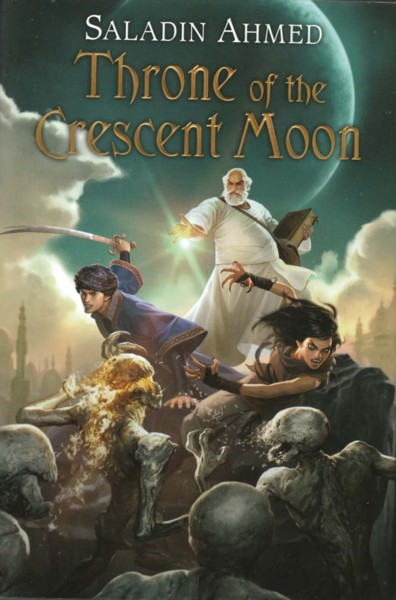
Saladin Ahmed's The Crescent Moon Kingdoms opens with Throne of the Crescent Moon, set in a realm of djenn and ghuls where a power struggle between an iron-fisted Khalif and a mysterious master thief called the Falcon Prince erupts alongside a series of brutal, supernatural murders. A handful of reluctant heroes must uncover the truth behind the killings before the kingdom tears itself apart.