More like Diabologic
but
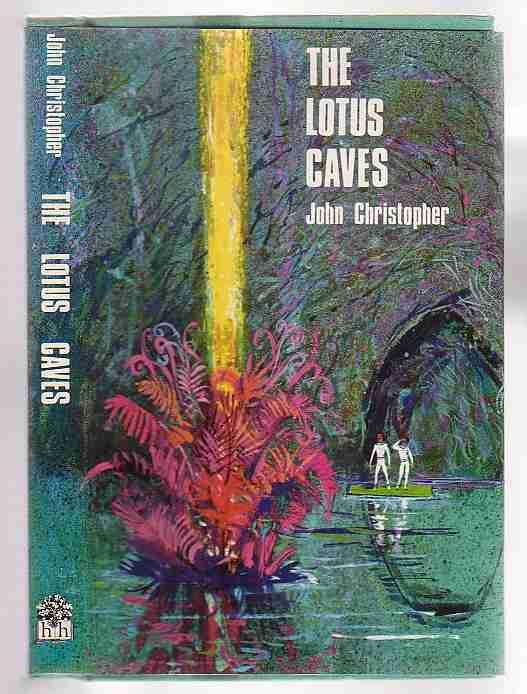
- The Lotus Caves
John Christopherstandalone novel1969
similar byaliensexpeditions+1 more
Two boys living in a moon colony find an unrestricted buggy, allowing them to travel beyond their usual boundary. The find the journal of a missing early colonist, and it leads them to discover a hidden cave system containing a powerful, intelligent and apparently friendly alien.
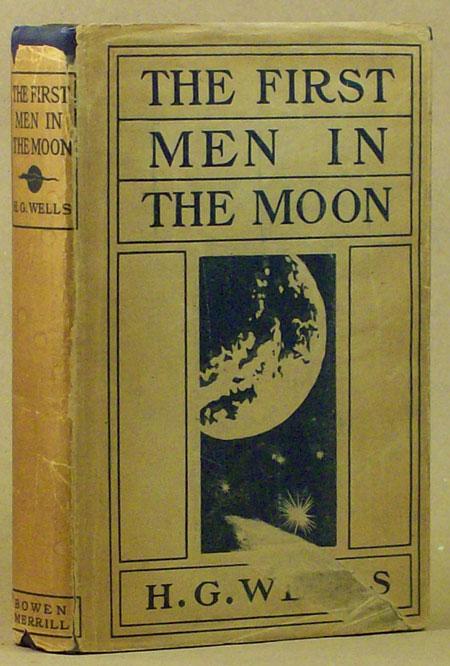
- Cavor
series2 books1901
similar byaliens+1 more
H. G. Wells's 1901 novel The First Men in the Moon is narrated by the businessman Bedford, who joins the reclusive scientist Cavor after Cavor invents cavorite, a gravity-blocking substance that carries the two men to the Moon. There they discover a vast underground civilization of insect-like Selenites, and the expedition that began as a hunt for lunar minerals turns into an encounter with an alien society. It is a standalone novel; later editions crediting Stephen Baxter add an introduction or afterword rather than a continuing story.
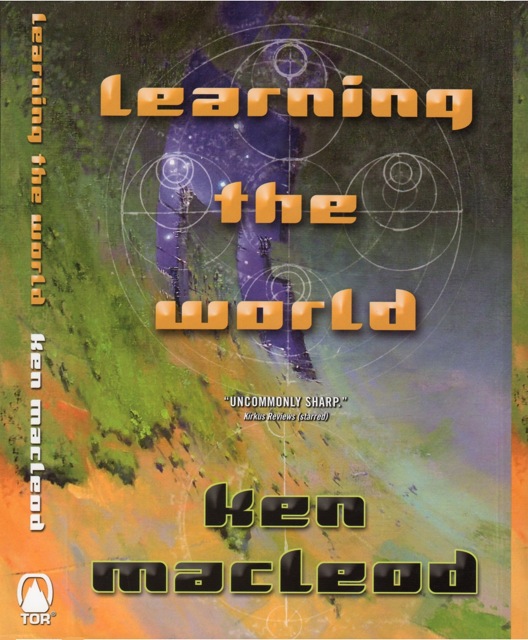
- Learning the World
Ken MacLeodstandalone novel2005
similar byaliensfirst contact+1 more
From the front flap of the Tor first printing: "Humanity has spread to every star within 500 light-years of its half-forgotten origin, coloring the sky with a haze of habitats. Societies rise and fall. Incautious experiments burn fast and fade. On the fringes, less modified humans get on with the job of settling a universe that has, so far, been empty of intelligent life. The ancient starship But the Sky, My Lady! The Sky! is entering orbit around a promising new system after a four hundred year journey. For its long-lived inhabitants, the centuries have been busy. Now a younger generation is eager to settle the system. The ship is a seed-pod ready to burst. Then they detect curious electromagnetic emissions from the system's Earth-like world. As the nature of the signals becomes clear, the choices facing the humans become stark. On Ground, second world from the sun, a young astronomer searches for his system's outermost planet. A moving point of light thrills, then disappoints him. It's only a comet. His physicist colleague Orro takes time off from trying to invent a flying-machine to calculate the comet's trajectory. Something is very odd about that comet's path. They are not the only ones for whom the world has changed. "We are not living in the universe we thought we lived in yesterday. We have to start learning the world all over again.""
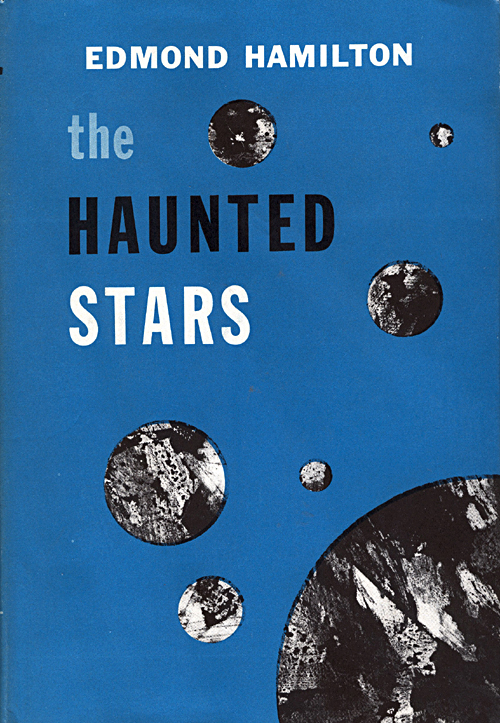
- The Haunted Stars
Edmond Hamiltonstandalone novel1960
similar byaliensexpeditionsfirst contact
The Haunted Stars is a science fiction novel by American writer Edmond Hamilton. It tells the story of an expedition from Earth to a planet of the star Altair — a planet called Ryn, inhabited by humans like those on Earth. Against the wishes of Ryn's inhabitants, the team from Earth seek information about weapons technology used in an ancient space war. Their unsuccessful search ends in dramatic contact with another species, the ancient enemy of Ryn.
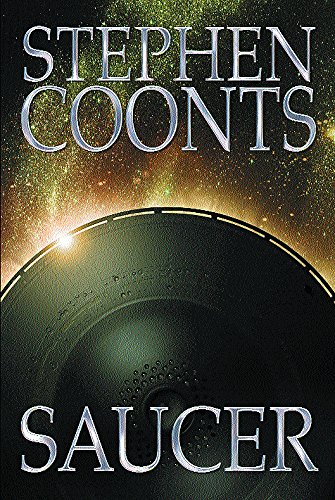
- Saucer
series3 books2002
similar byaliens+2 more
Saucer is Stephen Coonts's techno-thriller trilogy beginning with Saucer (2002), continued in Saucer: The Conquest and Saucer: Savage Planet. It follows the discovery of a functioning craft buried for millennia in the Sahara desert and the test pilots and adventurers who end up flying, and fighting over, it, escalating from a buried desert secret toward wider stakes involving hostile outside interests.
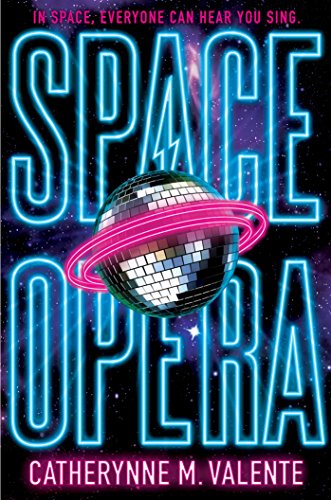
- Space Opera (Catherynne M. Valente)
series2 books2018
similar byaliens+2 more
Catherynne M. Valente's Space Opera imagines a galaxy where a century-old war was ended by replacing armed conflict with Galactivision, an interstellar singing contest that doubles as first contact: any newly discovered species has to compete or be judged too dangerous to exist. When aliens finally notice humanity, the fate of Earth ends up resting on a fading rock band drafted to represent the whole species on stage. It's Eurovision transplanted into space opera, played for absurdist comedy with real stakes underneath.
- Stranger in a Strange Land
Robert A. Heinleinstandalone novel1961
similar byaliensfirst contact
Stranger in a Strange Land is a 1961 science fiction novel by the American author Robert A. Heinlein. It tells the story of Valentine Michael Smith, a human who comes to Earth in early adulthood after being born on the planet Mars and raised by Martians, and explores his interaction with and eventual transformation of Terran culture.
- Time for the Stars
Robert A. Heinleinstandalone novel1956
similar by+2 more
Explorer spaceships need a way to communicate back to earth in a timely manner when they are light years away. When telepathy is found to have no delay, pairs of twins are hired. One twin stays on Earth to receive reports, and the other twin goes into space.
- Childhood's End
Arthur C. Clarkestandalone novel1953
similar byaliensfirst contact
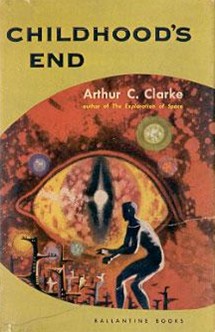
Childhood's End is a 1953 science fiction novel by the British author Arthur C. Clarke. The story follows a peaceful alien invasion of Earth by mysterious Overlords, whose arrival begins decades of apparent utopia under indirect alien rule, at the cost of human identity and culture.
- Flies from the Amber
Wil McCarthystandalone novel1995
similar byaliensfirst contact+1 more
From the back cover: FORTY LIGHT YEARS FROM EARTH -- the colonists on the world of Unua have somehow managed to keep civilization struggling on, despite twice daily earthquakes and technology lagging far behind that of the mother planet. But now an Unuan mining expedition has discovered an alien mineral they name centrokist -- a stone of incomparable beauty. Yet when the Earth scientists at last arrive to investigate, they find a phenomenon eclipsing the centrokist crystals. For this double-sunned solar system is nestled right next to a black hole. And waiting for them on the verge of the black hole's event horizon is an alien artifact that can't possibly exist!
- Hitchhiker's Guide to the Galaxy
series16 books1979
part of The Hitchhiker's Guide to the Galaxy Universe
similar byhumor+1 more
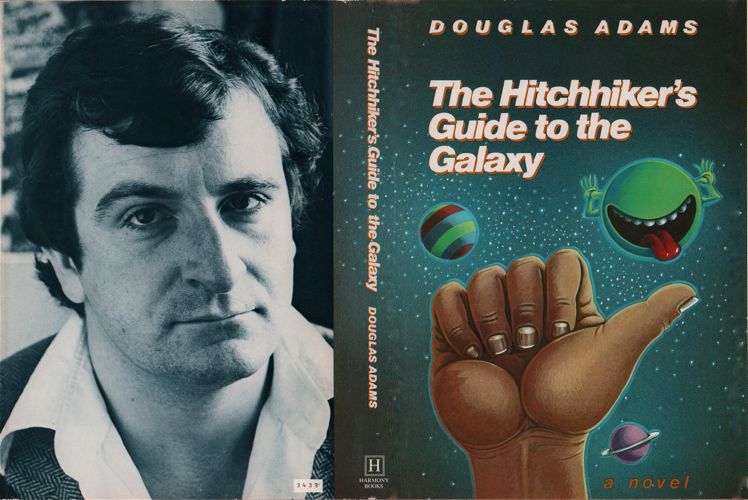
The Hitchhiker's Guide to the Galaxy is a comedy science fiction franchise created by Douglas Adams. Originally a radio sitcom broadcast over two series on BBC Radio 4 between 1978 and 1980, it was soon adapted to other formats, including both novels and comic books, a 1981 BBC television series, a 1984 text adventure game, stage shows and a 2005 feature film.
- Academy / Priscilla (Hutch) Hutchins
series16 books1983
similar byaliens+1 more
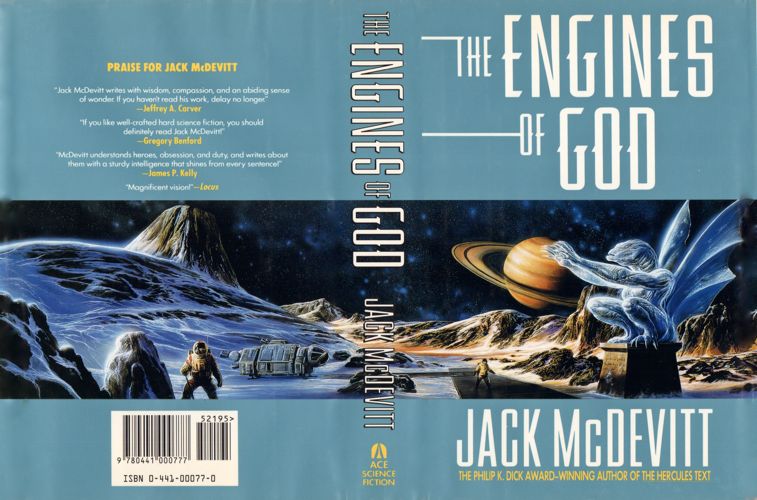
Jack McDevitt's Academy novels follow Priscilla 'Hutch' Hutchins, a starship pilot turned administrator, across a series of archaeological mysteries involving vanished alien civilizations and inexplicable ancient artifacts scattered through human space. Beginning with The Engines of God, the series treats deep time and the near-total absence of intelligent alien life as its central mystery, favoring slow-burn discovery over action. McDevitt returned to Hutch across three decades of publication.
- Year Zero
Rob Reidstandalone novel2012
similar byaliensfirst contacthumor
Low-level entertainment lawyer Nick Carter thinks it's a prank, not an alien encounter, when a redheaded mullah and a curvaceous nun show up at his office. But Frampton and Carly are highly advanced (if bumbling) extraterrestrials. The entire cosmos, they tell him, has been hopelessly hooked on American pop songs ever since "Year Zero" (1977 to us), resulting in the biggest copyright violation since the Big Bang and bankrupting the whole universe. Nick has just been tapped to clean up this mess before things get ugly. Thankfully, this unlikely galaxy-hopping hero does know a thing or two about copyright law. Now, with Carly and Frampton as his guides, Nick has forty-eight hours to save humanity—while hoping to wow the hot girl who lives down the hall from him. (Source: publisher's website)
- Moties
series4 books1974
part of CoDominium
similar byaliensfirst contact
Larry Niven and Jerry Pournelle's The Mote in God's Eye (1974) depicts humanity's first contact with an alien species, the Moties, set within the far-future interstellar setting of Pournelle's codominium future history. The Gripping Hand continues that first-contact crisis years later, and Outies, written by J. R. Pournelle, carries the story forward into a new generation. Together the three books trace an escalating encounter between human and Motie civilizations within the codominium universe.
- Salvation
series3 books2018
similar by+2 more
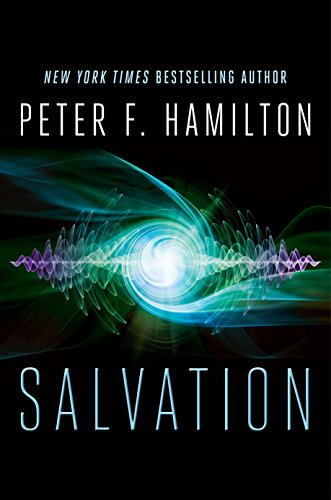
By 2204, instantaneous jump-gate travel has made distance nearly meaningless, connecting Earth to its scattered colonies in a single step -- until a crashed alien ship of unknown origin turns up on a world eighty-nine light years away, carrying something far more dangerous than wreckage. Peter F. Hamilton's Salvation follows the investigation team sent to assess the find, one of whom may not be who they claim, while a second timeline set generations later shows the far-future fallout of what they discover. The trilogy continues through Salvation Lost and The Saints of Salvation.
- Ringworld
series5 books1970
part of Known Space
similar byaliens
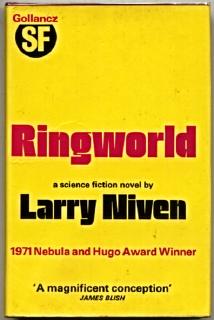
The Ringworld series is a series of science fiction novels written by American author Larry Niven. It is part of his Known Space series of stories. Its backdrop is the Ringworld, a giant artifact 3 million times the surface area of Earth circling a star. The series is composed of four standalone science fiction novels, the original award-winning book and its three sequels:1970: Ringworld 1979: The Ringworld Engineers 1996: The Ringworld Throne 2004: Ringworld's Children
- Mesklin
series6 books1954
completed
similar byaliens
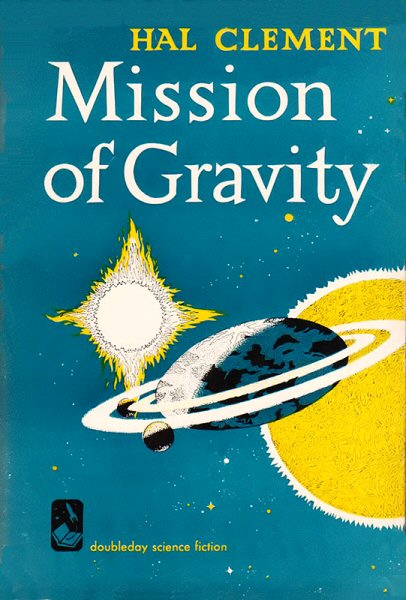
Mesklin is a fictional planet created by Hal Clement and used in a number of his hard science fiction stories, starting with Mission of Gravity (1954). Alongside the novel's original 1953 serialization in Astounding Science Fiction, Clement published an essay titled "Whirligig World" on how he designed the planet to have the properties he wanted. The idea came from an object that was at the time believed to exist in the 61 Cygni system, and which might represent an extrasolar planet.
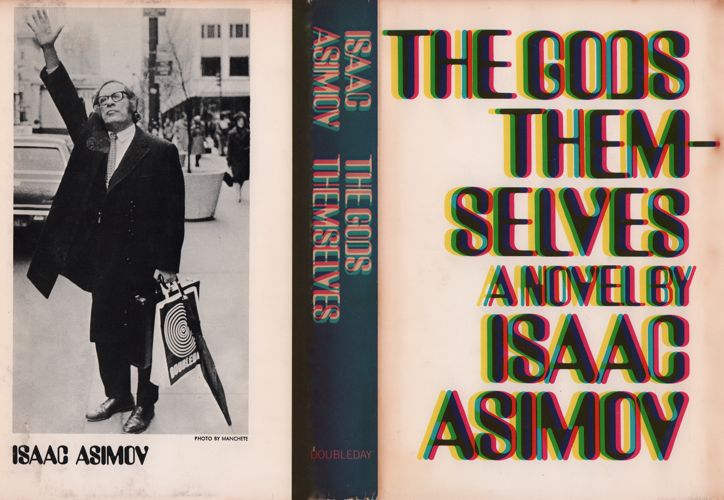
- The Gods Themselves
Isaac Asimovstandalone novel1972
similar byaliens+1 more
The Gods Themselves is a 1972 science fiction novel written by Isaac Asimov, and his first original novel in fifteen years. It won the Nebula Award for Best Novel in 1972, and the Hugo Award for Best Novel in 1973.