More like Diamond
anchored on:science fictionfar futurespace operaspaceship
but
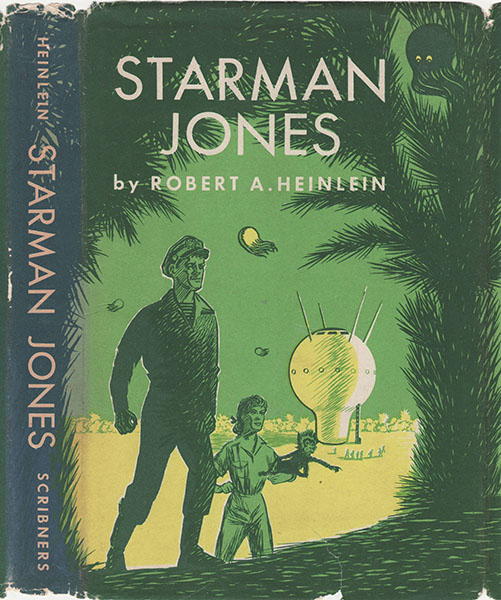
- Starman Jones
Robert A. Heinleinstandalone novel1953
similar byfar futurescience fictionspaceshipspace operaspace+1 more
Starman Jones, a 1953 science fiction novel by Robert A. Heinlein, features a farm boy who wants to go to the stars. Charles Scribner's Sons published the book as part of the Heinlein juveniles series.
- Kefahuchi Tract Trilogy
series3 books2002
similar byfar futurescience fictionspace operaspace+2 more
M. John Harrison's Kefahuchi Tract trilogy circles a strange, physics-breaking anomaly in deep space that draws scientists, smugglers, and drifters into its pull across different eras. Light moves between a near-future timeline and a far-future one drawn to the Tract itself; its sequel Nova Swing stays within one future period, where a fragment of the anomaly's altered space bleeds into the run-down port city of Saudade, giving the book a noir, Roadside-Picnic-like atmosphere; Empty Space concludes the sequence. The three novels share a setting and mood more than a continuous plot or cast.
- Ship of Fools
Richard Paul Russostandalone novel2001
similar byalienseeriefar futurescience fictionspaceshipspace opera
A generation ship searching for inhabited planets is drawn by a beacon to a planet where all human residents have died violently; upon leaving, it encounters a mysterious giant ship of alien origin.
- Space Beagle
series5 books1939
completed
similar byaliensfar futurescience fictionspaceshipspace operaspace
The Voyage of the Space Beagle is a 1950 fix-up novel by A. E. van Vogt, stitched together from four previously published pulp stories into a single continuous account of the exploration ship Space Beagle's encounters with a series of dangerous alien life forms. Its episodic, crew-versus-monster structure reads as a loose sequence of adventures rather than one continuous plot.
- The Einstein Intersection
Samuel R. Delanystandalone novel1967
similar byeeriefar futurescience fiction+1 more
The Einstein Intersection is a 1967 science fiction novel by Samuel R. Delany. The title is a reference to Einstein's Theory of Relativity connecting to Kurt Gödel's Constructible universe, which is an analogy to science meeting philosophy. The original publisher, Ace Books, changed Delany's originally intended title from A Fabulous, Formless Darkness for commercial reasons.
- Chanur
series7 books1982
part of Alliance-Union Universe
similar byaliensfar futurescience fictionspaceshipspace operaspace
The Chanur novels are a series of five science fiction novels, forming three separate stories, written by American author C. J. Cherryh and published by DAW Books between 1982 and 1992. The first novel in the series is The Pride of Chanur (1982), which was nominated for both the Hugo and Locus Awards in 1983. The Pride of Chanur, originally a stand-alone story, was followed by the Chanur's Venture trilogy, Chanur's Venture (1984), which was shortlisted for a Locus Award in 1985; The Kif Strike Back (1985) and Chanur's Homecoming (1986). These were followed by a later sequel, Chanur's Legacy (1992). The five novels were also published in two omnibus editions: the first three in The Chanur Saga in 2000 and the next two in Chanur's Endgame in 2007.
- Moties
series4 books1974
part of CoDominium
similar byaliensfar futurescience fictionspace operaspace
Larry Niven and Jerry Pournelle's The Mote in God's Eye (1974) depicts humanity's first contact with an alien species, the Moties, set within the far-future interstellar setting of Pournelle's codominium future history. The Gripping Hand continues that first-contact crisis years later, and Outies, written by J. R. Pournelle, carries the story forward into a new generation. Together the three books trace an escalating encounter between human and Motie civilizations within the codominium universe.
- Ringworld
series5 books1970
part of Known Space
similar byaliensfar futurescience fictionspace operaspace
The Ringworld series is a series of science fiction novels written by American author Larry Niven. It is part of his Known Space series of stories. Its backdrop is the Ringworld, a giant artifact 3 million times the surface area of Earth circling a star. The series is composed of four standalone science fiction novels, the original award-winning book and its three sequels:1970: Ringworld 1979: The Ringworld Engineers 1996: The Ringworld Throne 2004: Ringworld's Children
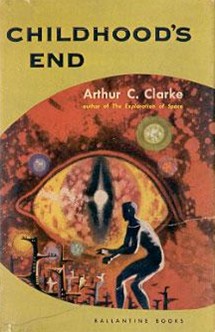
- Childhood's End
Arthur C. Clarkestandalone novel1953
similar byaliensscience fiction+1 more
Childhood's End is a 1953 science fiction novel by the British author Arthur C. Clarke. The story follows a peaceful alien invasion of Earth by mysterious Overlords, whose arrival begins decades of apparent utopia under indirect alien rule, at the cost of human identity and culture.
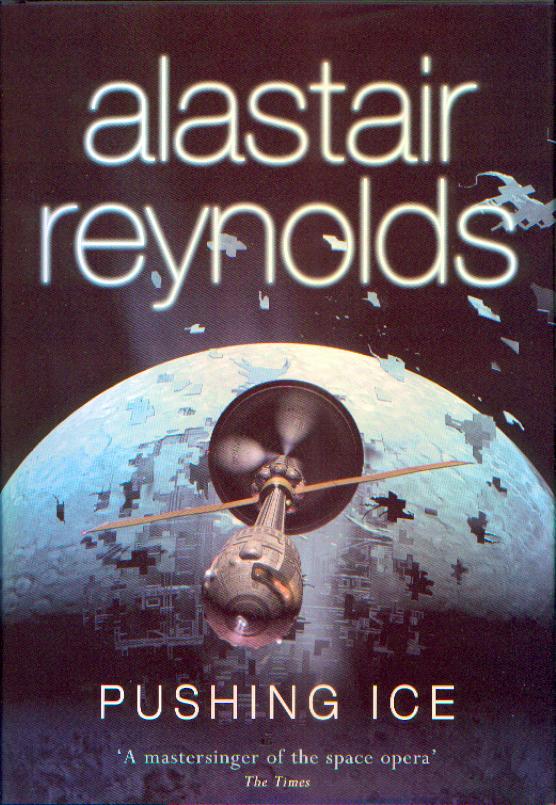
- Pushing Ice
Alastair Reynoldsstandalone novel2005
similar byaliensfar futurescience fictionspaceshipspace+1 more
When Saturn's moon Janus suddenly takes off into interstellar space, an ice mining spaceship sent to investigate finds itself swept along into distant space until it ends up trapped in a gigantic alien structure, wherein the crew must prepare to reside for the foreseeable future.
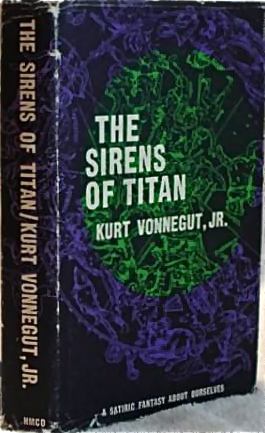
- The Sirens of Titan
Kurt Vonnegut & Jr.standalone novel1959
similar byaliensfar futurescience fictionspace operaspace
The Sirens of Titan is a comic science fiction novel by Kurt Vonnegut Jr., first published in 1959. His second novel, it involves issues of free will, omniscience, and the overall purpose of human history, with much of the story revolving around a Martian invasion of Earth.
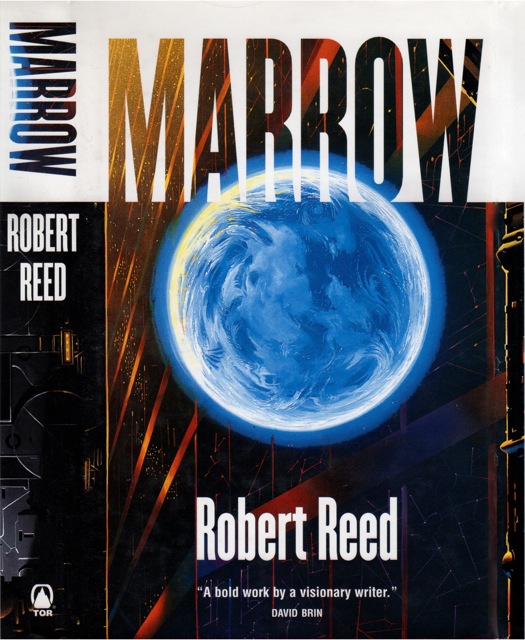
- The Great Ship Universe
series43 books1994
similar byfar futurescience fictionspaceshipspace opera+1 more
The Great Ship sequence is set aboard an ancient, planet-sized vessel discovered orbiting the sun, already ancient when humanity found it, and refitted to carry billions of passengers - human and alien - on an open-ended voyage around the galaxy. Robert Reed's novels and stories, beginning with Marrow, follow the ship's near-immortal inhabitants as they navigate its hidden dangers and its own unexplained origins across a very long span of time.
- Ender Wiggin
series14 books1977
part of Ender's Game Universe
similar byaliensfar futurescience fiction+2 more
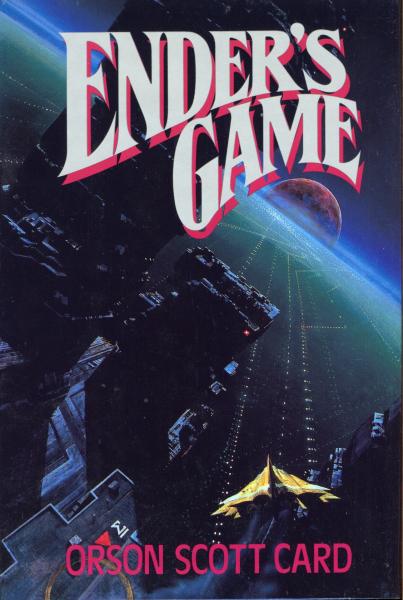
Orson Scott Card's Ender's Game (1985, expanded from his 1977 novella) follows child prodigy Andrew "Ender" Wiggin as he is recruited into a military training program built to prepare Earth's defenses for an anticipated third war against an insectoid alien species known as the Formics. The saga continues years later through Speaker for the Dead and Xenocide, following an older Ender as he confronts the moral weight of his role in that earlier conflict, and concludes the core arc in Children of the Mind, with Ender in Exile filling in the years between the first two books. Set within the wider Ender's Game universe, the series shifts from military coming-of-age story to slower, more philosophical science fiction as it progresses.
- The Midwich Cuckoos
John Wyndhamstandalone novel1957
similar byalienseeriescience fiction
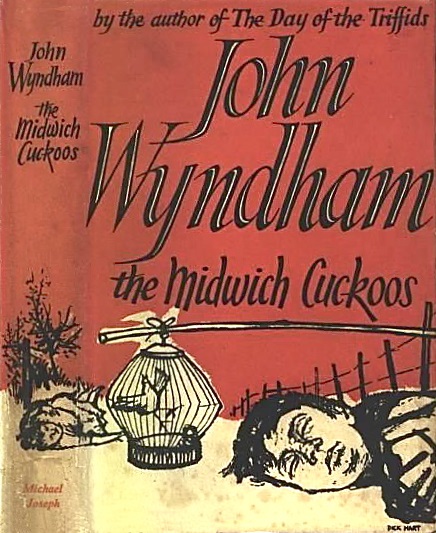
The Midwich Cuckoos is a 1957 science fiction novel written by the English author John Wyndham. It tells the tale of an English village in which the women become pregnant by brood parasitic aliens. The book has been praised by many critics, including the dramatist Dan Rebellato, who called it "a searching novel of moral ambiguities", and the novelist Margaret Atwood, who called the book Wyndham's "chef d'œuvre". The book has been adapted for film, radio, and television.
- City at the End of Time
Greg Bearstandalone novel2008
similar byeeriefar futurescience fiction+1 more
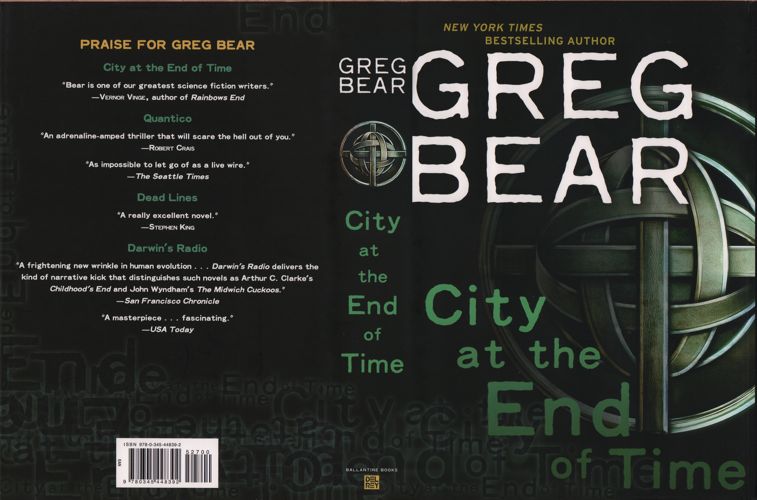
City at the End of Time is a 2008 science fiction novel by American writer Greg Bear. It was published in August 2008 by Del Rey in the United States, and Gollancz in the United Kingdom. The story follows three drifters in present-day Seattle who are tormented by strange dreams of the Kalpa, a city one hundred trillion years in the future. The Kalpa is attempting to ward off the Typhon, an inexplicable entity that has consumed the rest of the ancient universe and broken down the laws of physics.
- Solaris
Stanisław Lemstandalone novel1961
similar byalienseeriefar futurescience fictionspaceship
Solaris is a 1961 science fiction novel by Polish writer Stanisław Lem. It follows a crew of scientists on a hovering near-surface research facility as they attempt to understand an extraterrestrial intelligence, which takes the form of a vast ocean on the titular alien planet. The novel is one of Lem's best-known works.
- The Gap
series5 books1990
similar byaliensfar futurescience fictionspaceshipspace operaspace
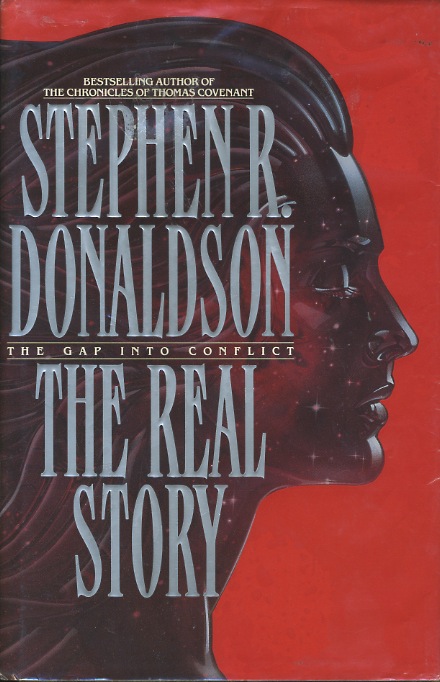
The Gap Cycle is a series of science fiction novels by Stephen R. Donaldson, more usually known for his works of epic fantasy. The series was originally published between 1991 and 1996 by Bantam Books and was reprinted by Gollancz in 2008 in the UK. Here, Donaldson gave a loose retelling of Wagner's Ring cycle.
- Heechee
series19 books1972
completed
similar byaliensfar futurescience fictionspace operaspace
The Heechee Saga, also known as the Gateway series, is a series of science fiction novels and short stories by Frederik Pohl. The Heechee are an advanced alien race that visited the Solar System hundreds of millennia ago and then mysteriously disappeared. They left behind bases containing artifacts, including working starships, which are discovered and exploited by humanity.
- Hitchhiker's Guide to the Galaxy
series16 books1979
part of The Hitchhiker's Guide to the Galaxy Universe
similar byscience fictionfar futurespace+2 more
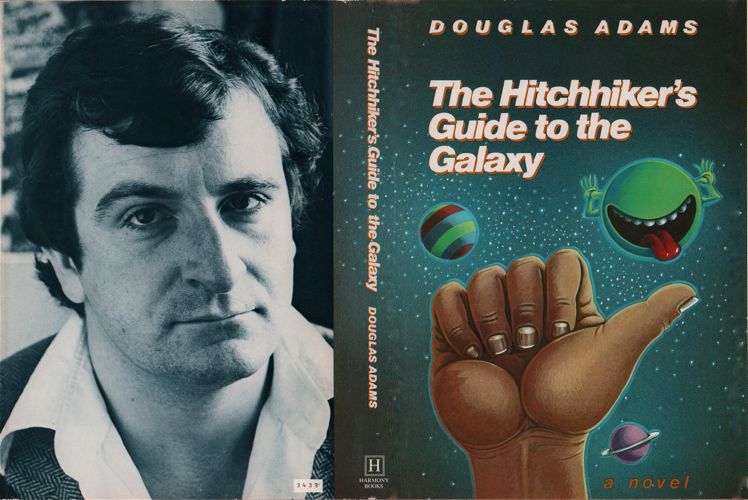
The Hitchhiker's Guide to the Galaxy is a comedy science fiction franchise created by Douglas Adams. Originally a radio sitcom broadcast over two series on BBC Radio 4 between 1978 and 1980, it was soon adapted to other formats, including both novels and comic books, a 1981 BBC television series, a 1984 text adventure game, stage shows and a 2005 feature film.
- Up the Walls of the World
James Tiptree & Jr.standalone novel1978
similar byaliensfar futurescience fictionspace+1 more
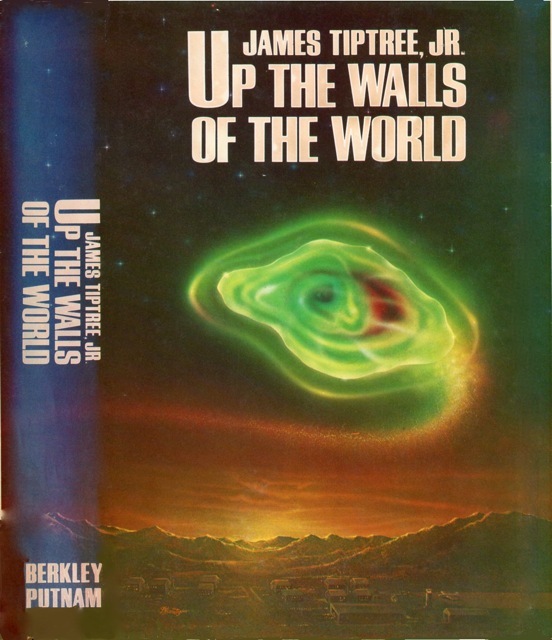
Up the Walls of the World is a 1978 science fiction novel by American author Alice Sheldon, who wrote under the pen name of James Tiptree, Jr. It was the first novel she published, having until then worked and built a reputation only in the field of short stories.
- Cities in Flight
series10 books1950
completed
similar byscience fictionfar futurespace operaspace
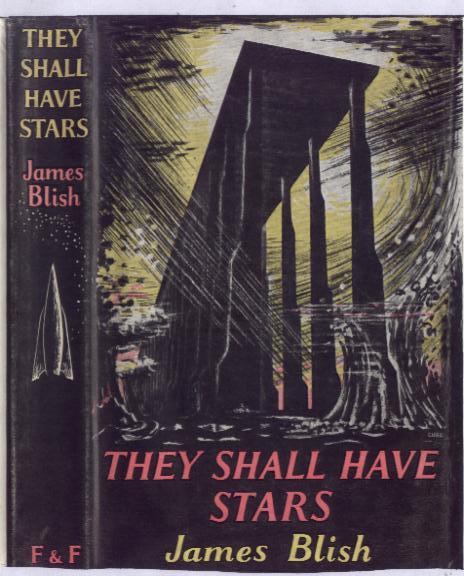
Cities in Flight is a four-volume series of science fiction novels and short stories by American writer James Blish, originally published between 1950 and 1962, which were first known collectively as the "Okie" novels. The series features entire cities that are able to fly through space using an anti-gravity device, the spindizzy. The stories cover roughly two thousand years, from the very near future to the end of the universe. One story, "Earthman, Come Home", won a Retro Hugo Award in 2004 for Best Novelette. Since 1970, the primary edition has been the omnibus volume first published in paperback by Avon Books. Over the years James Blish made many changes to these stories in response to points raised in letters from readers.
- Learning the World
Ken MacLeodstandalone novel2005
similar byaliensfar futurescience fictionspaceshipspace operaspace
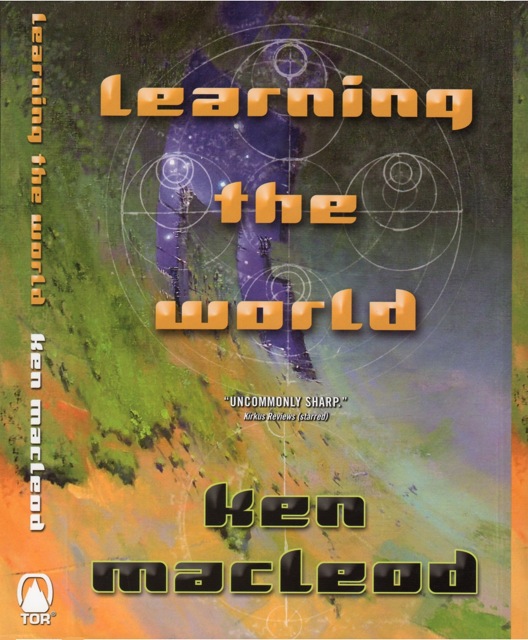
From the front flap of the Tor first printing: "Humanity has spread to every star within 500 light-years of its half-forgotten origin, coloring the sky with a haze of habitats. Societies rise and fall. Incautious experiments burn fast and fade. On the fringes, less modified humans get on with the job of settling a universe that has, so far, been empty of intelligent life. The ancient starship But the Sky, My Lady! The Sky! is entering orbit around a promising new system after a four hundred year journey. For its long-lived inhabitants, the centuries have been busy. Now a younger generation is eager to settle the system. The ship is a seed-pod ready to burst. Then they detect curious electromagnetic emissions from the system's Earth-like world. As the nature of the signals becomes clear, the choices facing the humans become stark. On Ground, second world from the sun, a young astronomer searches for his system's outermost planet. A moving point of light thrills, then disappoints him. It's only a comet. His physicist colleague Orro takes time off from trying to invent a flying-machine to calculate the comet's trajectory. Something is very odd about that comet's path. They are not the only ones for whom the world has changed. "We are not living in the universe we thought we lived in yesterday. We have to start learning the world all over again.""
- Uplift Universe
universe13 books1980
Start hereUplift · Start here
similar byaliensfar futurescience fictionspace operaspace
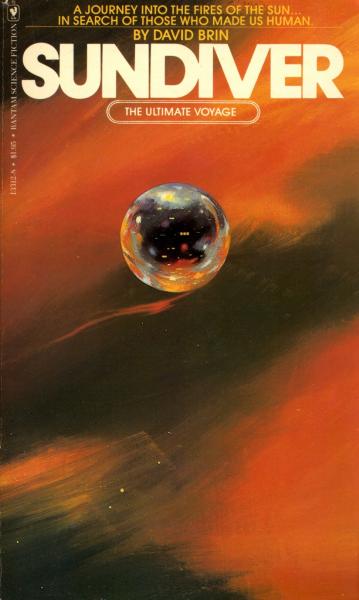
No species, the Galactics insist, ever climbs to sapience alone. For a billion years the elder races have "uplifted" their chosen clients — reshaping some promising animal, gene by patient gene, into a thinking being, then binding it through long ages of indenture. Patron lifts client; client one day becomes patron; and every lineage traces back through the vast Galactic Library to the vanished Progenitors who began it all. Then a ragged band of primates arrives at the stars with no patron to claim them — wolflings, self-made, an affront to a hundred thousand years of law — and worse, these humans have already started uplifting neighbors of their own: the neo-dolphins and neo-chimpanzees of Earthclan. David Brin builds this galaxy across two trilogies. The first — Sundiver, the Hugo- and Nebula-winning Startide Rising, and the Hugo-winning The Uplift War — sends an expedition into the Sun, then follows the dolphin-crewed survey ship Streaker as it flees a discovery that sets fanatical star-clans at war, and a chimp-led resistance on an invaded colony world. The second sequence, Uplift Storm — Brightness Reef, Infinity's Shore, Heaven's Reach — descends to Jijo, a forbidden world where six fallen races hide as illegal settlers, and draws every loose thread toward a reckoning. Short fiction fills the margins. This is space opera with an ecologist's conscience: teeming with invented biologies, wry cross-species banter, and real unease about what we owe the minds we make. Begin with Startide Rising — the saga's beating heart, and readable on its own — or take Sundiver first and read straight through in publication order.
- Heaven Chronicles / Zones of Thought
series8 books1976
similar byfar futurescience fictionspace operaspace+1 more