More like Do Comets Dream?
anchored on:science fictionother star systemsfar futurespace operaaliensprophecy+2 more
but
- Dune
series20 books1963
part of Dune Universe
similar byfar futureother star systemsscience fictionspace operafaith and religion+2 more
Frank Herbert's Dune Chronicles opens with 1965's Dune, set on the desert planet Arrakis where House Atreides takes control of the only source of the vital spice melange and young Paul Atreides is pulled into a struggle over its politics and religion. Herbert carried the story forward across five further novels — Dune Messiah, Children of Dune, God Emperor of Dune, Heretics of Dune, and Chapterhouse: Dune — following Paul's line over the following millennia, before Brian Herbert and Kevin J. Anderson later extended the saga. Many other editions of these six novels are omnibus and box-set repackagings rather than separate stories.
- Ringworld
series5 books1970
part of Known Space
similar byother star systemsfar futurescience fictionspace operaaliens+1 more
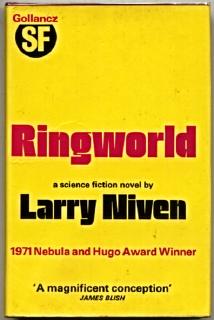
The Ringworld series is a series of science fiction novels written by American author Larry Niven. It is part of his Known Space series of stories. Its backdrop is the Ringworld, a giant artifact 3 million times the surface area of Earth circling a star. The series is composed of four standalone science fiction novels, the original award-winning book and its three sequels:1970: Ringworld 1979: The Ringworld Engineers 1996: The Ringworld Throne 2004: Ringworld's Children
- Teixcalaan
series2 books2019
similar byreflectiveother star systemsfar futurescience fictionspace opera+2 more
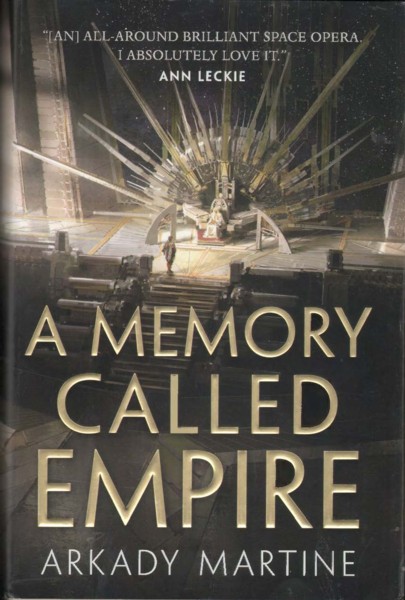
Arkady Martine's space opera duology follows Mahit Dzmare, ambassador from the small, independent Lsel Station, as she arrives in the vast Teixcalaanli Empire to investigate her predecessor's death and finds herself caught up in the empire's own succession crisis. A Memory Called Empire and A Desolation Called Peace pair court intrigue with Mahit's conflicted, outsider fascination with an empire she can't help admiring.
- Ender Wiggin
series14 books1977
part of Ender's Game Universe
similar byfar futurescience fictionother star systemsaliens+2 more
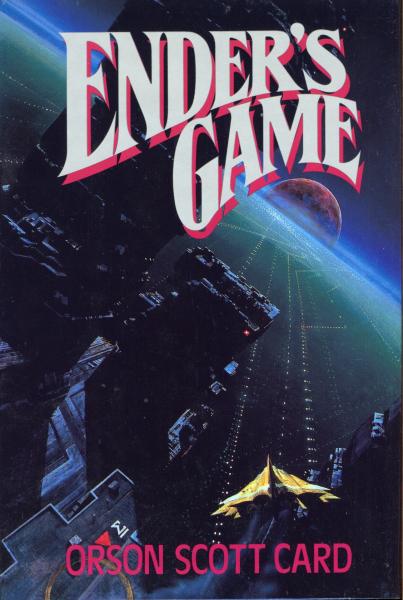
Orson Scott Card's Ender's Game (1985, expanded from his 1977 novella) follows child prodigy Andrew "Ender" Wiggin as he is recruited into a military training program built to prepare Earth's defenses for an anticipated third war against an insectoid alien species known as the Formics. The saga continues years later through Speaker for the Dead and Xenocide, following an older Ender as he confronts the moral weight of his role in that earlier conflict, and concludes the core arc in Children of the Mind, with Ender in Exile filling in the years between the first two books. Set within the wider Ender's Game universe, the series shifts from military coming-of-age story to slower, more philosophical science fiction as it progresses.
- Shakespeare's Planet
Clifford D. Simakstandalone novel1976
similar byreflectiveother star systemsfar futurescience fictionaliensmysterious
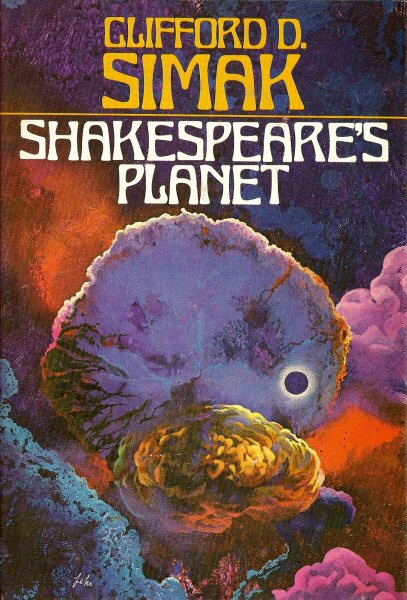
Woken after a thousand-year voyage meant to find humanity a new home, Carter Horton finds his ship stranded for good, tended by the disembodied minds of three volunteers who gave up their bodies to fly it. Outside waits a world already crowded with strangers: a robot named Nicodemus, and an alien called the Carnivore who claims to have known a human, once, called Shakespeare, and to have arrived here through a tunnel across time. As more travelers arrive through that same tunnel, Horton has to work out what kind of planet he has actually landed on. A standalone novel from Clifford D. Simak.
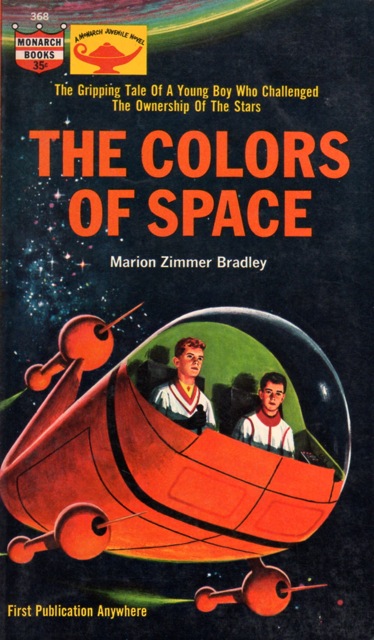
- The Colors of Space
Marion Zimmer Bradleystandalone novel1963
similar byother star systemsfar futurescience fictionspace operaaliensmysterious
The Lhari seem peaceful and friendly, but they go to some lengths to protect their monopoly on faster-than-light travel. One young man is sent to discover their secrets.
- Moties
series4 books1974
part of CoDominium
similar byfar futurescience fictionother star systemsspace operaaliens
Larry Niven and Jerry Pournelle's The Mote in God's Eye (1974) depicts humanity's first contact with an alien species, the Moties, set within the far-future interstellar setting of Pournelle's codominium future history. The Gripping Hand continues that first-contact crisis years later, and Outies, written by J. R. Pournelle, carries the story forward into a new generation. Together the three books trace an escalating encounter between human and Motie civilizations within the codominium universe.
- Heechee
series19 books1972
completed
similar byfar futurescience fictionother star systemsaliensspace opera+1 more
The Heechee Saga, also known as the Gateway series, is a series of science fiction novels and short stories by Frederik Pohl. The Heechee are an advanced alien race that visited the Solar System hundreds of millennia ago and then mysteriously disappeared. They left behind bases containing artifacts, including working starships, which are discovered and exploited by humanity.
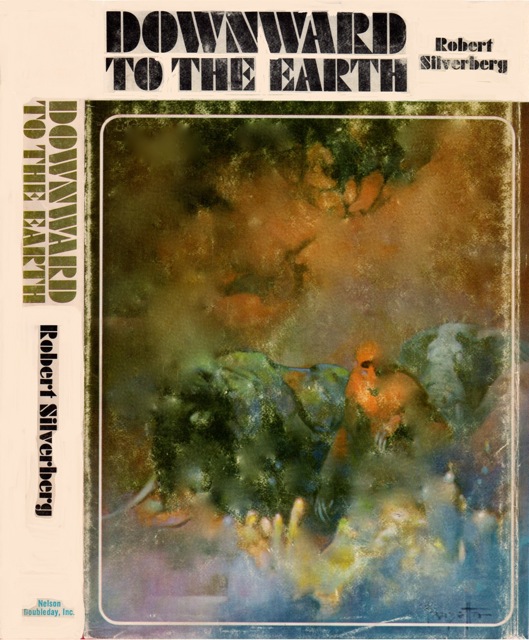
- Downward to the Earth
Robert Silverbergstandalone novel1969
similar byreflectiveother star systemsfar futurescience fictionaliens
Edmund Gunderson was the Terran administrator of the colony world of Belzagor, and he returns to it after it has gained independence, feeling a sense of guilt for the way he has treated its dominant species, the elephant-like nildoror, whose animalistic appearance had kept Gunderson from taking them seriously as sentient beings. On his return, he feels a new sense of kinship with the natives, perhaps more than for the Terran tourists. The nildoror undergo a process of rebirth, and Gunderson's greatest guilt comes from having denied rebirth to seven nildoror to make them help him repair flood damage.(From Wikipedia)
- Hainish
series33 books1964
completed
similar byfar futurescience fictionother star systemsreflective+1 more
The Hainish Cycle consists of a number of science fiction novels and stories by Ursula K. Le Guin. The cycle is set in a future history that features civilizations of human beings on planets orbiting a number of nearby stars, including Terra ("Earth"); these humans are contacting each other for the first time and establishing diplomatic relations, as well as setting up a confederacy under the guidance of the oldest of the human worlds, the peaceful planet Hain. In this history, human beings did not evolve on Earth, but they were instead the result of interstellar colonies planted by Hain in the distant past, after which interstellar travel ceased for an extended period. Some of the human races have new genetic traits, a result of ancient Hainish experiments in genetic engineering; this includes people who can dream while awake, and a world of hermaphroditic people who only enter active sexuality once per month, not knowing which sex will manifest in them. In keeping with Le Guin's narrative approach, she uses varied social and environmental settings to explore the anthropological and sociological outcomes of human evolution in those environments. The author often discounted the characterization of a so-called "Hainish Cycle".
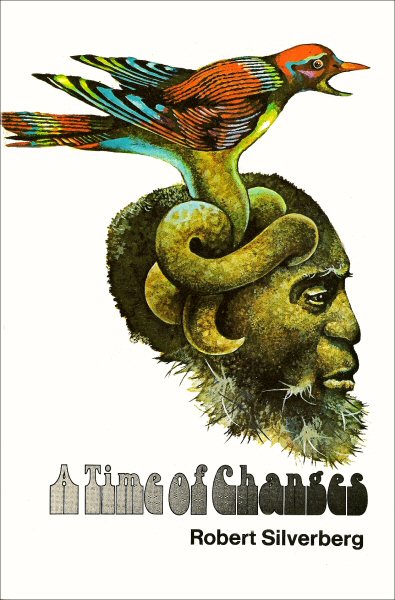
- A Time of Changes
Robert Silverbergstandalone novel1971
similar byreflectiveother star systemsfar futurescience fictionfaith and religion
A Time of Changes is a 1971 science fiction novel by American writer Robert Silverberg. It won the Nebula Award for that year, and was also nominated for the 1972 Hugo and Locus Awards.
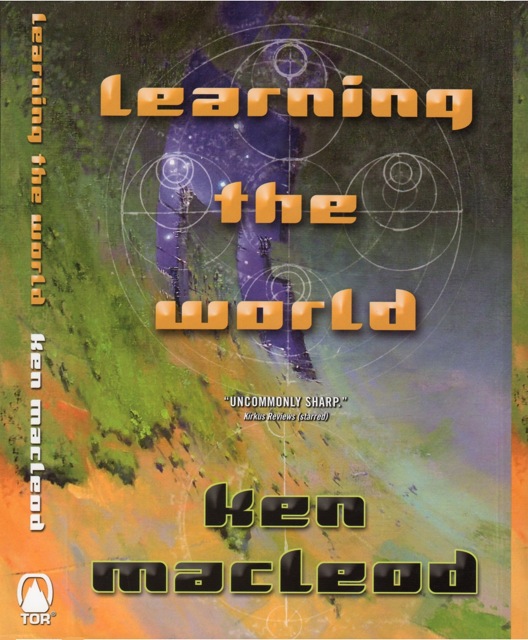
- Learning the World
Ken MacLeodstandalone novel2005
similar byreflectiveother star systemsfar futurescience fictionspace operaaliens
From the front flap of the Tor first printing: "Humanity has spread to every star within 500 light-years of its half-forgotten origin, coloring the sky with a haze of habitats. Societies rise and fall. Incautious experiments burn fast and fade. On the fringes, less modified humans get on with the job of settling a universe that has, so far, been empty of intelligent life. The ancient starship But the Sky, My Lady! The Sky! is entering orbit around a promising new system after a four hundred year journey. For its long-lived inhabitants, the centuries have been busy. Now a younger generation is eager to settle the system. The ship is a seed-pod ready to burst. Then they detect curious electromagnetic emissions from the system's Earth-like world. As the nature of the signals becomes clear, the choices facing the humans become stark. On Ground, second world from the sun, a young astronomer searches for his system's outermost planet. A moving point of light thrills, then disappoints him. It's only a comet. His physicist colleague Orro takes time off from trying to invent a flying-machine to calculate the comet's trajectory. Something is very odd about that comet's path. They are not the only ones for whom the world has changed. "We are not living in the universe we thought we lived in yesterday. We have to start learning the world all over again.""
- Against the Fall of Night
series2 books1953
similar byother star systemsfar futurescience fictionreflective+1 more
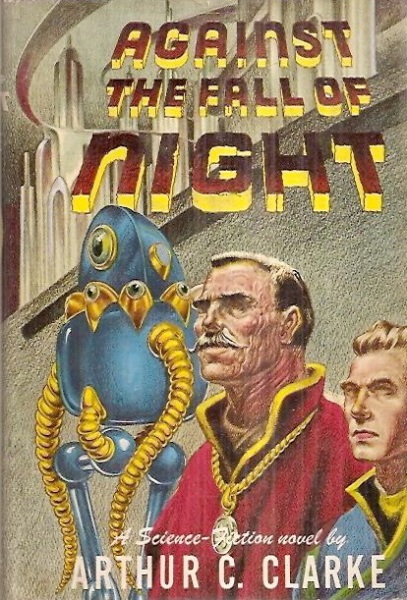
Against the Fall of Night is Arthur C. Clarke's 1953 novel of a stagnant, climate-controlled city called Diaspar a billion years in Earth's future, where a young man named Alvin becomes the first in living memory to want to leave it. Clarke later rewrote the book more expansively as The City and the Stars, and in 1990 Gregory Benford wrote Beyond the Fall of Night, an authorized sequel continuing on from this original, shorter version's ending.
- Dune Universe
universe78 books1963
Start hereDune · Start here
similar byfar futurescience fictionother star systemsspace opera
Arrakis. Dune. The desert planet, where empire runs on a single substance: the spice melange, which folds space, prolongs life, and unlocks prescience, and which exists nowhere else in the known universe. Frank Herbert's saga is a meditation dressed as an adventure — feudal houses and a secret sisterhood, engineered messiahs and the patient ecology of a world without water, all turning on the terrible gravity of who commands the spice. It reads like scripture and schemes like a war room, ten thousand years hence, among people who have outlawed the thinking machine and made instruments of themselves instead. At its heart stand Herbert's original six — Dune, Dune Messiah, Children of Dune, God Emperor of Dune, Heretics of Dune, Chapterhouse: Dune — a single deepening arc across millennia, arguing the whole way between prophecy and free will. Around that spine his son Brian Herbert and Kevin J. Anderson have raised a vast prequel architecture: Prelude to Dune, tracing the great houses a generation before Paul; Legends of Dune, reaching back to the crusade that broke the machines; the Schools of Dune cycle on the founding of Bene Gesserit, Mentat, and Navigator; the Caladan Trilogy and Heroes of Dune filling years the originals left in shadow. Many hands, dozens of volumes, one desert. What sets Dune apart is its refusal of the simple: religion is manufactured, heroes are hazards, and the sand itself — worm, water, ecology — acts as a political power. Begin where the universe did, with Frank Herbert's Dune (1965), and read the original six in order; you need nothing else to feel the full weight. The prequels are a country to explore afterward, taken by era. Beginnings are delicate times.
- Remnant Population
Elizabeth Moonstandalone novel1996
similar byreflectiveother star systemsfar futurescience fictionaliens+1 more
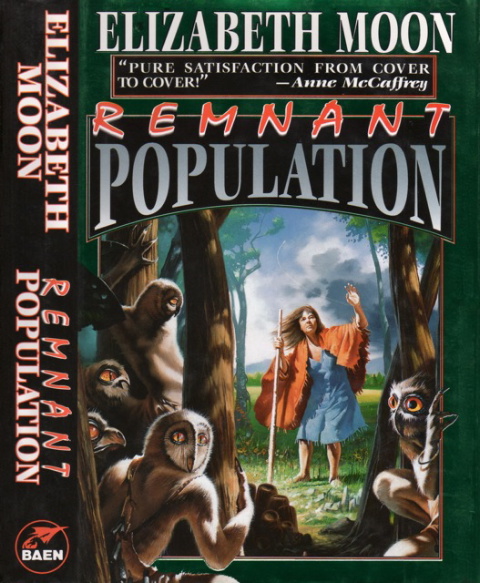
From the dust jacket front flap of the Baen first edition: Alone at last... People had always told Ofelia what to do; for once she was going to do what she wanted. She refused to get on the cryo ships, refused to leave the only world she could call home. And when they finally came for her, she hid, not that the authorities looked all that hard for one crazy old woman. Now Ofelia is alone, content to live with no more demands on her self or her time, the only remaining settler on an abandoned planet. The new settlers arrive. At first she fears that they have come to reoccupy the settlement she has come to think of as hers - but they land far away. And as Ofelia secretly listens, they are slaughtered to the last child by stone-age aliens no one knew were there. Now it will be up to Ofelia to save the aliens from Earth's wrath...
- Kingdoms of the Wall
Robert Silverbergstandalone novel1992
similar byreflectiveother star systemsfar futurescience fictionaliens+1 more
Kingdoms of the Wall is a 1992 science fiction novel by American writer Robert Silverberg. It is set on a faraway planet inhabited by an alien race and in an undefined future. Its subject is the perpetual communal quest for knowledge in the face of hardship and wonders, which through the revelation of an unexpected and devastating truth results in the deconstruction and slaying of gods.
- Riverworld
series37 books1965
similar byscience fictionfar futureother star systemsfaith and religion+1 more
The Riverworld series consists of five science fiction novels (1971–1983) by American author Philip José Farmer (1918–2009). The Riverworld is an artificial, or heavily terraformed, planet where all humans who ever lived throughout history have been resurrected. The novels explore interactions of resurrected individuals from many different cultures and time periods. The underlying theme is quasi-religious. The motivations and ethics of the unknown intelligences that created the Riverworld and its inhabitants are explored.
- Singer from the Sea
Sheri S. Tepperstandalone novel1999
similar byreflectiveother star systemsfar futurescience fictionfaith and religion+1 more
An accomplished student and heiress to a great title, Genevieve has been carefully instructed in the Covenants, the inflexible laws governing women of her class. But as her fate approaches, she begins to question the ties that bind her.
- The City and the Stars
Arthur C. Clarkestandalone novel1956
similar byreflectiveother star systemsfar futurescience fiction
The City and the Stars is a science fiction novel by British writer Arthur C. Clarke, published in 1956. This novel is a complete rewrite of Clarke's earlier Against the Fall of Night, his first novel, which had been published in Startling Stories magazine in 1948 after being rejected by the editor of Astounding Science-Fiction, according to the author.
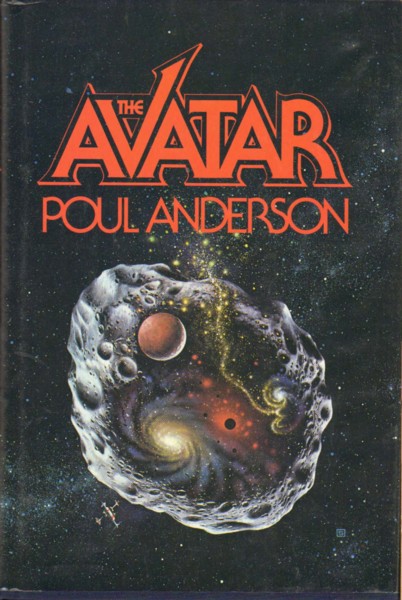
- The Avatar
Poul Andersonstandalone novel1978
similar byfar futurescience fictionother star systemsspace operaaliensmysterious
After humanity discovers portals that transport a space vessel through time and space, a crew which has visited the planet of another species returns to Earth, only to find a political faction in power which seeks to conceal this knowledge in the name of social stability. With the aid of the political opposition, they escape and journey through the portal in search of knowledge, and perhaps even to meet those who created the portal system.
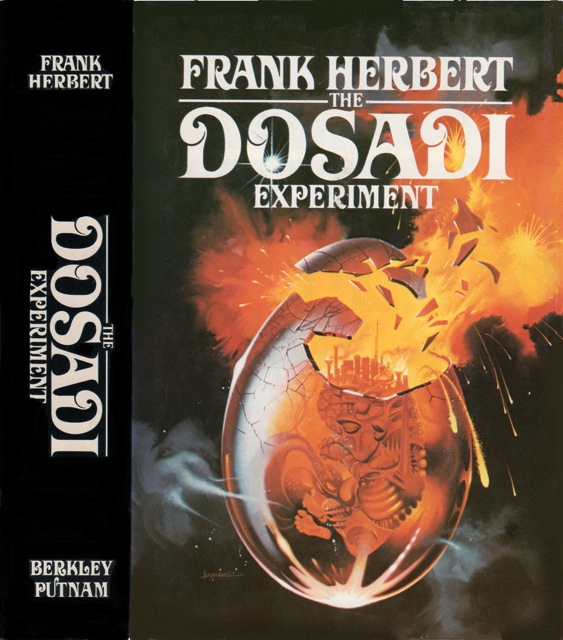
- The Dosadi Experiment
Frank Herbertstandalone novel1977
similar byother star systemsfar futurescience fictionspace operaaliens
From the flaps of the Berkley Putnam first edition: "In his first new work of science fiction since the best-selling Children of Dune, Frank Herbert returns to his world of Whipping Star, and involves Jorj X. McKie, Saboteur Extraordinary, in a new intrigue. In Whipping Star, McKie discovered that some of the stars in the universe are actually intelligent, super-powerful beings, and was able to befriend one of them, the star Alcyone - affectionately known as Fannie Mae. As The Dosadi Experiment opens, McKie is assigned to investigate the planet Dosadi, which is isolated from the rest of the galaxy by a "god-wall," a barrier set up by one of the intelligent stars. Dosadi is rumored to be an experimental planet, and the experimenters are the froglike Gowachin, whose culture is founded upon a strange legal system in which McKie is the only human ever trained. He learns that humans and Gowachin have been placed on Dosadi, without their consent, for an experiment that could last centuries: an experiment in extreme overcrowding. But this monstrous plot is apparently out of control, and it seems the Gowachin may be prepared to destroy Dosadi rather than expose its secret, thus breaking the peace among the races, and starting the first interstellar war. But this is just the beginning. When McKie finally reaches Dosadi he discovers that the Dosadis have taken control of their own evolution and produced a competitive, highly evolved elite, of both humans and Gowachin, who have been able to extrapolate the existence of a universe beyond the god-wall and hate whoever has imprisoned them like this. They plan to break out and avenge themselves on the galaxy."
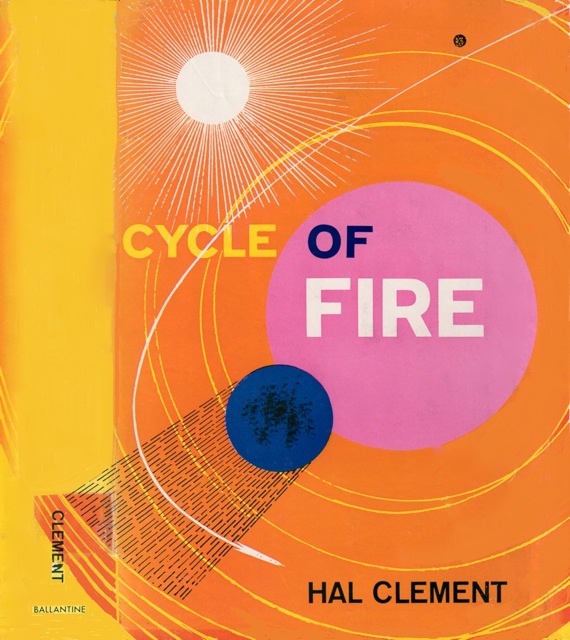
- Cycle of Fire
Hal Clementstandalone novel1957
similar byreflectiveother star systemsfar futurescience fictionaliens
After his ship crashed on the inhospitable planet Abyorman, Nils Kruger had spent weeks wandering across the face of the planet.suffering from blistering heat, the searing cold of an alien climate. Now he had found a fellow wanderer, Dar, an alien castaway. They may both die. The human opts to do something about it. Dar, who knows the time of his death in advance, opts to do nothing. Which of them is right? Perhaps both
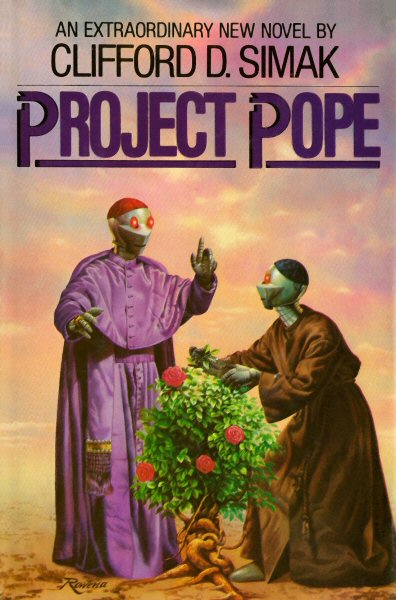
- Project Pope
Clifford D. Simakstandalone novel1981
similar byreflectiveother star systemsfar futurescience fictionfaith and religion+1 more
Project Pope is a science fiction novel by the American author Clifford Simak, published in 1981 by Ballantine Books. The novel is about a group of robots and humans living on a planet called the End of Nothing. Their mission is to search the universe and other dimensions to seek out true religion and knowledge. They add the information they gather to their Pope, a robotic supercomputer, in order to make an infallible authority of all knowledge and religion. The novel was nominated for both a Hugo Award for Best Novel and a Locus Award for Best SF novel in 1982.
- Academy / Priscilla (Hutch) Hutchins
series16 books1983
similar byscience fictionfar futureother star systemsaliens+2 more
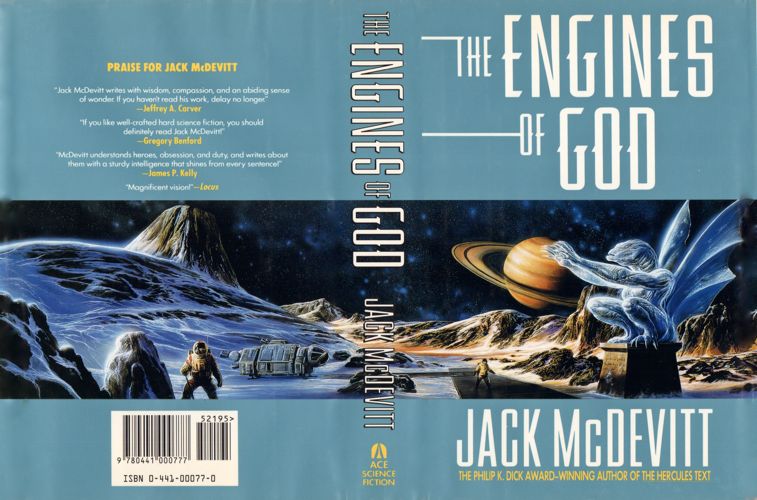
Jack McDevitt's Academy novels follow Priscilla 'Hutch' Hutchins, a starship pilot turned administrator, across a series of archaeological mysteries involving vanished alien civilizations and inexplicable ancient artifacts scattered through human space. Beginning with The Engines of God, the series treats deep time and the near-total absence of intelligent alien life as its central mystery, favoring slow-burn discovery over action. McDevitt returned to Hutch across three decades of publication.