More like Doomed
anchored on:our worldcontemporary
but
- WWW Trilogy
series3 books2009
similar byscience fictionour worldcontemporary+2 more
The WWW Trilogy is a trilogy of science-fiction novels by Canadian science fiction author Robert J. Sawyer. The first book, Wake, was originally serialized in four parts in Analog Science Fiction and Fact from November 2008 to March 2009, published in book form through Ace on April 7, 2009, and was followed by the second book, Watch, on April 6, 2010. Wonder was published in 2011.
- Feed
M. T. Andersonstandalone novel2002
similar bydarkscience fictioncoming of ageyoung adult+2 more
Feed (2002) is a cyberpunk, satirical, dystopian, young-adult novel by M. T. Anderson, focusing on issues such as American hegemony, corporate power, consumerism, information technology, data mining, and environmental decline, with a sometimes sardonic, sometimes somber tone. From the first-person perspective of a teenaged boy, the book takes place in a near-futuristic American culture completely dominated by advertising and corporate exploitation, corresponding to the enormous popularity of internetworking brain implants called feeds.
- Space Demons
series4 books1986
similar byvirtual realityscience fictionour worldcontemporaryyoung adult+1 more
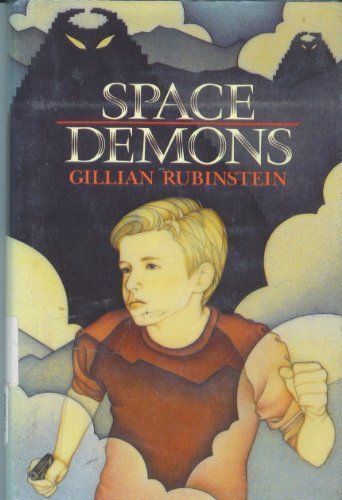
Gillian Rubinstein's Space Demons follows a group of Australian schoolkids drawn into a mysterious video game that starts pulling them physically into its world, with consequences that follow them home. The story continues across two more novels, Skymaze and Shinkei, following the same characters into further games.
- The Bone Clocks
David Mitchellstandalone novel2014
similar byour worldcontemporary+3 more
The Bone Clocks is a 2014 novel by British writer David Mitchell. It was long-listed for the Man Booker Prize, and described as one of the best novels of the year by Stephen King. The novel won the 2015 World Fantasy Award.
- Johnny Maxwell
series4 books1992
similar byour world+4 more
The Johnny Maxwell trilogy follows an ordinary British teenager who keeps ending up at the center of small-scale, largely unglamorous brushes with the fantastic: an old arcade game that turns out to house a real alien fleet, a haunted cemetery, and a WWII bomb that displaces him in time. Terry Pratchett wrote it as a departure from Discworld, aiming his humor and social observation at a contemporary setting and a young teenage cast. Only You Can Save Mankind, Johnny and the Dead, and Johnny and the Bomb make up the sequence.
- Mother of Storms
John Barnesstandalone novel1994
similar byscience fictionour world+2 more
From the flaps of the Tor first edition: "It is 2028. A strike to destroy an illegal Arctic weapons cache has a catastrophic side effect. Massive amounts of energy are liberated from the polar ice, suddenly warming the Earth's climate. In the middle of the Pacific, a gigantic hurricane thousands of miles across is forming, larger than any in human history. A storm with winds of supersonic speed. A storm that changes direction at whim. A storm that refuses to die. A storm so vast it spawns dozens more in its wake... Blinded by intrigue, expedience, and greed, the world's politicians and power brokers have ignored the killer storms threat until it is too late. Already the death toll is in the tens of millions, as it savages the Pacific coast, while its devil's brood of smaller storms are wreaking havoc across the face of the planet. While the survivors scramble for advantage, a handful of courageous men and women undertake a daring, desperate plan to save humanity from total destruction - a plan so visionary it may alter forever the future of the human race."
- Lord of the Flies
William Goldingstandalone novel1954
similar bydarkour worldcoming of ageyoung adult+1 more
Lord of the Flies is the 1954 debut novel of British author William Golding. The plot concerns a group of prepubescent British boys who are stranded on an uninhabited island and their disastrous attempts to govern themselves that lead to a descent into savagery. The novel's themes include morality, leadership, and the tension between civility and chaos.
- Cell
Stephen Kingstandalone novel2006
similar bydarkscience fictionour worldcontemporary
In Cell, King taps into readers fears of technological warfare and terrorism. Mobile phones deliver the apocalypse to millions of unsuspecting humans by wiping their brains of any humanity, leaving only aggressive and destructive impulses behind. Those without cell phones, like illustrator Clayton Riddell and his small band of "normies," must fight for survival, and their journey to find Clayton's estranged wife and young son rockets the book toward resolution.
- Bridge Trilogy
series4 books1990
similar byscience fiction+2 more
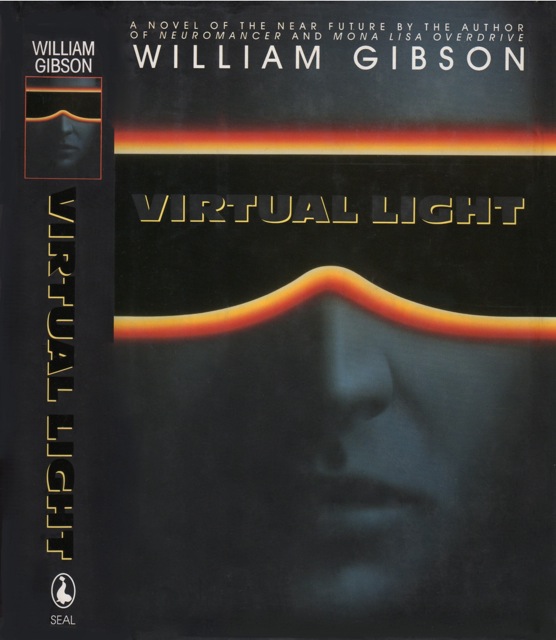
The Bridge trilogy is a series of novels by William Gibson, his second after the successful Sprawl trilogy. The trilogy comprises the novels Virtual Light (1993), Idoru (1996) and All Tomorrow's Parties (1999). A short story, "Skinner's Room", was originally composed for Visionary San Francisco, a 1990 museum exhibition exploring the future of San Francisco.
- Fledgling
Octavia E. Butlerstandalone novel2005
similar bydarkscience fictioncontemporaryour worldparanormal
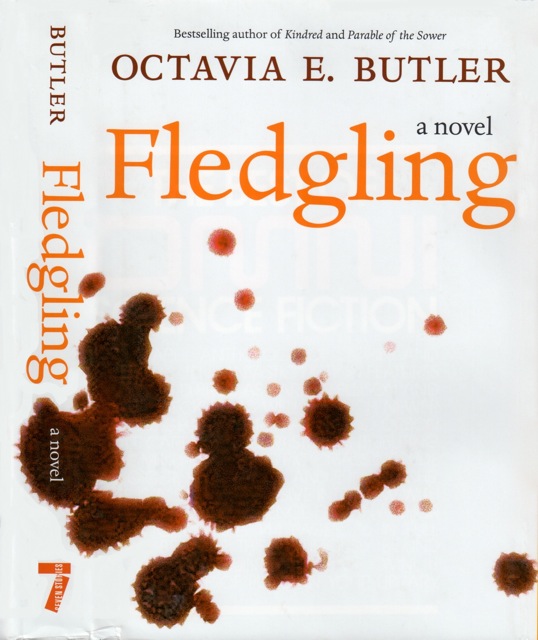
Fledgling is a science fiction vampire novel by American writer Octavia E. Butler, published in 2005. It was the author's final book published before her death in 2006.
- Sprawl Trilogy
series10 books1981
similar byvirtual realitydarkscience fiction
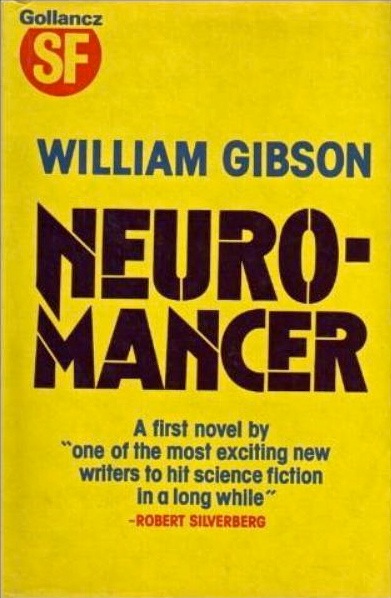
The Sprawl Trilogy is William Gibson's foundational cyberpunk sequence: Neuromancer (1984), in which hacker Case is drawn into a high-stakes heist alongside an artificial intelligence and a damaged ex-soldier, followed by Count Zero (1986) and Mona Lisa Overdrive (1988), which widen the same near-future world of corporate power and networked cyberspace to new characters. Johnny Mnemonic, an early short story set in the same fictional milieu, predates the novels and introduces the courier Molly Millions before her role in the trilogy. Together these works established much of cyberpunk's visual and thematic vocabulary.
- Calculating God
Robert J. Sawyerstandalone novel2000
similar byscience fictionour worldcontemporary+1 more
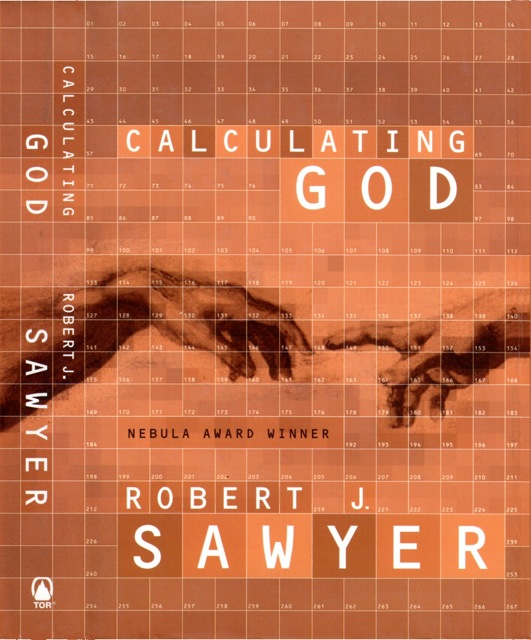
Calculating God is a 2000 science fiction novel by Canadian writer Robert J. Sawyer. It takes place in the present day and describes the arrival of sentient aliens on Earth. The bulk of the novel covers the many discussions and arguments on this topic, as well as the nature of belief, religion, and science. Several planetary civilizations illustrate the logical conclusion of the Fermi paradox.
- A Clockwork Orange
series4 books1962
completed
similar bydarkscience fictionour world+1 more
Anthony Burgess's 1962 novel is narrated by Alex, a teenage gang leader in a near-future Britain gripped by a youth subculture of extreme violence, recounting his crimes in Nadsat, an invented slang blending English with Russian-derived words. After his crimes catch up with him, Alex is made the subject of a controversial state program meant to forcibly reform his behavior, and the novel uses his ordeal to question whether imposed goodness is worth the loss of free will. It is a standalone novel.
- The Art of Starving
Sam J. Millerstandalone novel2017
similar bydarkscience fictionour worldcontemporarycoming of ageyoung adultemotional
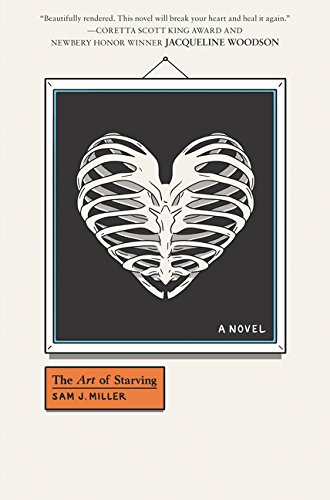
The Art of Starving is a 2017 young adult science fiction novel by Sam J. Miller. It was published by HarperCollins.
- Ready Player One
series3 books2011
similar byvirtual realityscience fiction+3 more
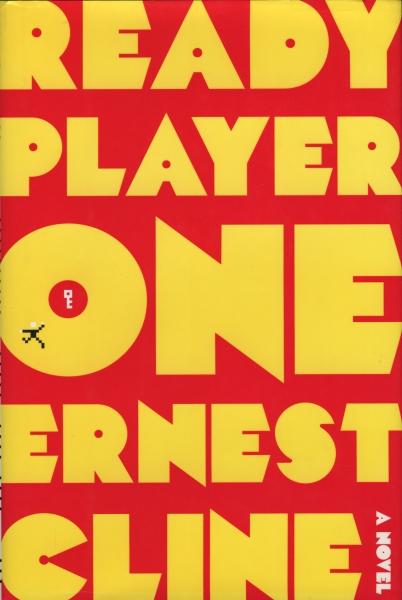
Ernest Cline's Ready Player One (2011) is set in a near-future dystopia where much of humanity escapes into the OASIS, a vast virtual-reality universe, and follows teenager Wade Watts as he chases an Easter egg hidden by the OASIS's late creator in a puzzle-based hunt worth a fortune. The 2020 sequel, Ready Player Two, picks up after Wade has gained control of the OASIS and follows him and his friends into a new quest built around a brain-computer interface the creator left behind.
- New World
Gillian Crossstandalone novel1994
similar byvirtual realityscience fictionour worldcontemporarycoming of ageyoung adult
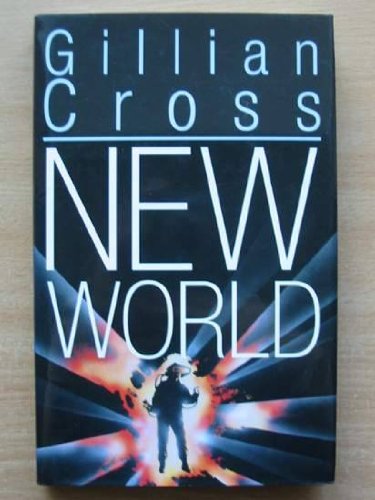
Fourteen-year-old Miriam agrees to test a new computer game in utmost secrecy but finds that it is more than she bargained for.
- Synners
Pat Cadiganstandalone novel1991
similar byvirtual realitydarkscience fictionour world
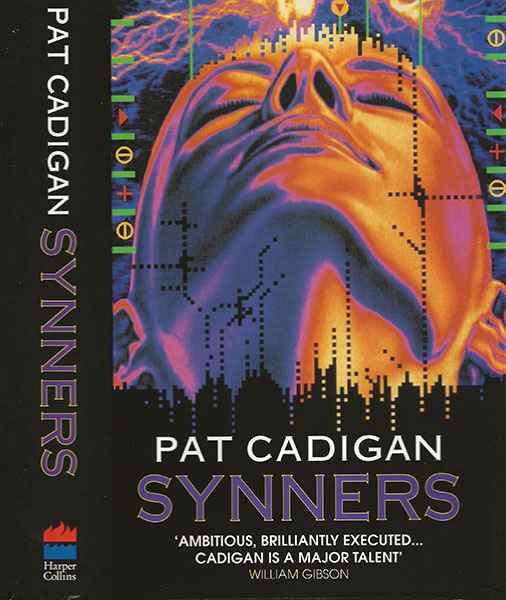
In Synners, the line between technology and humanity is hopelessly slim. A constant stream of new technology spawns crime before it hits the streets; the human mind and the external landscape have fused to the point where any encounter with "reality" is incidental.
- Armada
Ernest Clinestandalone novel2015
similar byvirtual realityscience fictionour worldcoming of ageyoung adult
Armada is a science fiction novel by Ernest Cline, published on July 14, 2015 by Crown Publishing Group. The story follows a teenager who plays an online video game about defending against an alien invasion, only to find out that the game is a simulator to prepare him and people around the world for defending against an actual alien invasion.
- The Fog
James Herbertstandalone novel1975
similar bydarkour worldcontemporary+1 more
The Fog is a horror novel by English writer James Herbert, published in 1975. It is about a deadly fog that drives its victims insane when they come into contact with it.
- Trance Mission
Martin Noblestandalone novel1996
similar byvirtual realitydarkscience fictionour worldcontemporaryyoung adult
Author's description: "Horror novel for teenagers involving astral travel, virtual reality, trance techno music and the transmogrification of souls."
- The Andromeda Strain
series2 books1969
similar byscience fictioncontemporary+2 more
Michael Crichton's 1969 novel The Andromeda Strain follows a team of scientists racing to contain a lethal extraterrestrial microorganism that crash-lands in Arizona, told in the clinical, document-driven style that helped establish the techno-thriller genre. Daniel H. Wilson's authorized 2019 sequel The Andromeda Evolution revisits the same threat five decades later. Together the two books form a two-part outbreak story separated by a fifty-year gap in publication.