Loreful
HomeDiscover
Search series, authors…⌘K
Loreful

Reading orders for SF/F series and shared universes — with your place kept in every one.

Explore

UniversesSeriesWorksAuthorsAtlas

Help

FAQAboutSite map

Account & legal

Sign inCreate accountPrivacyTerms

Data

Built on ISFDB, Wikipedia, Wikidata and Open Library. Curated reading orders carry their reasoning on the page; the rest follow publication order. Data sources & licenses

© Loreful · data: ISFDB · CC BY

More like DoOon Mode

anchored on:science fictionparallel universecontemporaryscience fantasyvirtual realityvirtual world+1 more

but

Mood

The mood the book leaves you in.

  • The reading experience is propelled by journeys, exploration, and physical risk; excitement and forward momentum dominate over dread or introspection.
  • Joy and loss are deliberately mixed; the resolution grants characters something real while taking something else away, leaving warmth and sorrow together.
  • The book demands work from the reader — dense prose, difficult structure, unfamiliar ideas, or morally uncomfortable material — as part of its intended effect.
  • Grim events, cruelty, or despair dominate the atmosphere, and the book does not soften them with comfort or comic relief.
  • The atmosphere is quietly unsettling — wrongness, unease, and the uncanny pervade the book without necessarily escalating into overt horror.
  • The book is built to move the reader; character feeling is foregrounded and major scenes aim at a strong emotional response.
  • Humor is a primary aim and the prose plays for laughs — comic situations, wit, or dialogue produce sustained comedy, not occasional levity.
  • The book insists that things can improve; effort and decency are shown to matter, and the arc bends toward better outcomes even through hardship.
  • The book teaches as it goes — real facts, history, science, or craft are conveyed in enough depth that learning is part of the reading experience.
  • The book is designed to uplift and motivate, presenting perseverance or achievement in a way that invites the reader to aspire or act.
  • The overall register is cheerful and easygoing; stakes are kept gentle and the book avoids dwelling on pain or dread.
  • Withheld information drives the experience; the book sustains enigmas and secrets the reader wants resolved, whatever its genre.
  • The book is contemplative and inward-looking, giving more weight to thought, memory, and meaning than to external events.
  • The book works as comfort reading — low tension, a soothing pace, and an atmosphere the reader can unwind in.
  • Grief, loss, or melancholy set the dominant register, and the book lets sorrow stand rather than resolving it into comfort.
  • Sustained suspense is the point; the book keeps the reader braced for what happens next through danger, pressure, or impending revelation.
  • Playful invention and charm define the register — fanciful conceits, light absurdity, and a narration that delights in its own oddity.

About

What the story runs on.

  • Stories in which extraterrestrial beings are central — as characters, cultures, or the object of the plot.
  • Stories structured as a quest — a journey undertaken to find, deliver, or destroy something of great import.
  • Stories in which staying alive against nature, catastrophe, or scarcity is the central problem.
  • Stories of lovers kept apart by law, family, faith, or station, where the obstacle to love is the plot.
  • Stories in which a friendship — its making, testing, or loss — is the emotional center.
  • Stories of growing up — a young protagonist crossing from childhood into adult knowledge and responsibility.
  • Stories about who a character truly is — self-discovery, doubled lives, and the search for a self.
  • Stories about mourning — living through the death of a loved one and what loss does to the survivors.
  • Stories in which a buried family truth — hidden parentage, crimes, or shames — surfaces and reorders the present.
  • Stories driven by maneuvering for power — factions, conspiracies, and statecraft conducted in shadow.
  • Stories in which war itself is the subject — combat, occupation, and what warfare does to soldiers and civilians.
  • Stories organized around investigating a killing — the case, the clues, and the pursuit of the killer, in any genre's clothing.

Shelf

Where it sits in the library.

    • Fiction built on magic or other supernatural elements that have no scientific explanation.
    • Secondary-world fantasy at large scale, where the fate of nations or the world turns on the protagonists' struggle.
    • Fantasy set in a recognizably modern city or contemporary world where the supernatural intrudes on everyday life.
    • Fantasy that blends in horror's atmosphere and imagery, keeping a fantastical frame around grim or frightening material.
    • Action-driven fantasy following warriors or rogues with personal stakes against sorcerous threats, rather than world-spanning conflicts.
    • Fantasy set in a real historical period or a close analogue of one, with magic woven into the era.
    • Fantasy in which protagonists cross from the ordinary world into another world through a portal or similar passage.
    • Fiction that retells or reworks a traditional fairy tale in a new form or setting.
    • Fantasy drawing directly on myths, legends, and folklore, retelling them or building on their figures and logic.
    • Fantasy of ghosts, vampires, shapeshifters, psychics, and similar phenomena, usually set in an otherwise ordinary world.
    • Fiction mixing science-fictional trappings with overtly magical or impossible elements in one setting.
    • Low-stakes fantasy emphasizing comfort, community, and everyday pleasures over conflict and peril.
    • Speculative fiction of pervasive moral ambiguity, violence, and cynicism that rejects heroic conventions — fantasy and SF alike.
      • Fiction that extrapolates from science and technology — future societies, space travel, or speculative inventions — within at least nominally natural laws.
      • Science fiction of interstellar scope — starships, galactic polities, and adventure across star systems.
      • Science fiction committed to scientific rigor, where technical plausibility constrains the story.
      • Science fiction centered on armed forces and warfare, told largely from a military point of view.
      • Science fiction of networked, corporate-dominated near futures, pairing high technology with social decay.
      • Science fiction styled on nineteenth-century steam-powered technology, often in a Victorian or pseudo-Victorian setting.
      • Fiction depicting an oppressive or catastrophic society, presented as a warning.
      • Fiction set after civilization's collapse, following survivors in the ruins of the old world.
      • Fiction in which characters move between past and future, and the mechanics or consequences of that travel drive the plot.
      • Fiction exploring a world where a historical event went differently and history diverged from ours.
      • Science fiction about humanity's first encounter and communication with an alien intelligence.
      • Science fiction in which extraterrestrial forces attack or occupy Earth and humanity resists.
      • Fiction whose primary aim is to frighten or unsettle the reader through dread, menace, or the monstrous.
      • Horror of vast, indifferent, incomprehensible entities before which humanity is insignificant, in the Lovecraft tradition.
      • Horror of decaying houses, buried family secrets, and oppressive atmosphere in the Gothic literary tradition.
      • Horror centered on hauntings and the returning dead.
      • Horror located in the mind — paranoia, obsession, and unreliable perception rather than external monsters.
      • Horror built around the reanimated dead and survival amid their outbreaks.
      • Horror defined by explicit, transgressive gore that refuses to cut away from violence.
      • Speculative fiction of the strange and uncanny that resists both natural explanation and standard genre categories.
      • Fiction organized around solving a crime or puzzle, typically following an investigator toward the identification of a culprit.
      • A puzzle-first mystery that lays out clues so the culprit's identity can be deduced before the reveal.
      • Crime fiction of moral ambiguity, fatalism, and hard-edged style, set among the corrupt and the doomed.
      • A mystery following the realistic routines of police work — forensics, interviews, and case-building.
      • A gentle mystery with an amateur sleuth, a small community, and violence kept off the page.
      • A mystery set in a past era, where the investigation works within that period's methods and society.
      • Fast-paced fiction driven by imminent danger, pursuit, or high-stakes conspiracy, built to sustain tension.
      • A thriller of espionage — agents, tradecraft, and intelligence services in conflict.
      • A thriller centered on lawyers and the courtroom, where litigation carries the suspense.
      • A thriller driven by detailed contemporary or near-future technology, often military or scientific.
      • A thriller whose tension comes from mental states and manipulation between characters rather than external action.
      • Fiction whose central plot is a romantic relationship and its development toward an emotionally satisfying resolution.
      • Romance in which one or both partners are supernatural beings, blending fantasy elements into the love story.
      • A fantasy-romance hybrid in which the romantic arc and the fantasy plot carry equal weight.
      • Romance set in a past era, with courtship shaped by the period's society and manners.
      • Romance set in the present day, without supernatural or historical elements.
      • Fiction set in a real past period, where the historical setting materially shapes characters and events.
        • General and literary fiction emphasizing prose style, character interiority, or formal ambition over genre plot conventions.
        • Fiction in a realistic world where magical events occur and are treated as ordinary, in the tradition of Latin American literature.
        • Fiction that ridicules people, institutions, or society in order to criticize them.
        • Fiction of dreamlike, irrational imagery and logic that breaks from realistic representation.
        • Fiction that plays with narrative convention through metafiction, fragmentation, and self-reference.
        • Fiction propelled by journeys, exploration, and physical peril, where action and survival carry the plot.
        • Adventure fiction of ships and seafaring — naval engagements, voyages, and life at sea.
        • Fiction of the American frontier West — gunmen, ranchers, and lawmen, typically in the late nineteenth century.
        • Fiction centered on soldiers, campaigns, and the experience of warfare, historical or imagined.
          • Fiction written primarily to amuse, using comedic situations, wit, or parody as its organizing principle.
            • Multi-generational fiction following a family or dynasty across decades, with inheritance and kinship as the through-line.
              • Fiction whose world runs on explicit game mechanics — levels, stats, and skills that characters can see and exploit.
                • Fiction about costumed or superpowered heroes and their conflicts with comparable villains.

                Practical

                How long a commitment, whether it stands alone, and whether it has finished.

                Tap a chip to ask for it · tap again to rule it out · once more to clear. Numbers show what would be left.

                • Cover of Mode
                  Mode

                  series · 4 books · 1991

                  similar bycontemporaryscience fictionparallel universe+3 more

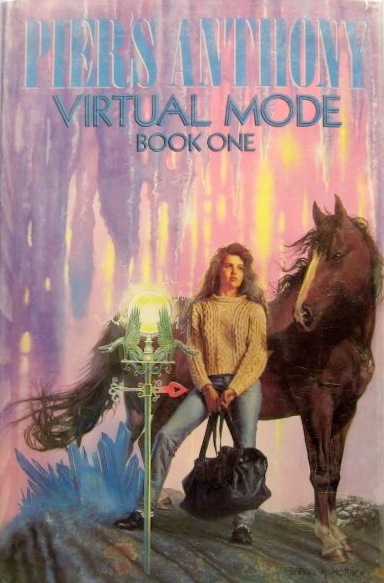
                  The Mode series is a quartet of novels by Piers Anthony. Like many of Anthony's other fictional works, it explores many themes and ideas. This series has themes of violence, the abuse of power, sexism and male dominance, gender roles, the environment, integrity and personal honor, sapient animal life, parallel and alternative evolution, space travel, alternate dimensions, paradox, obscure concepts in physics and mathematics, sexual assault and abuse, child and adolescent sexuality, and suicide.

                • Cover of Ready Player One
                  Ready Player One

                  series · 3 books · 2011

                  similar byadventurousvirtual realityscience fictionvirtual world

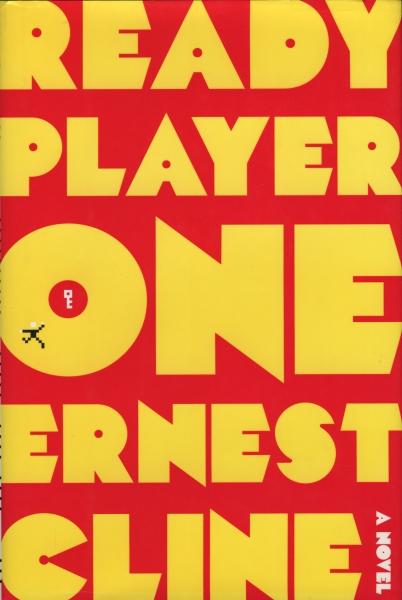
                  Ernest Cline's Ready Player One (2011) is set in a near-future dystopia where much of humanity escapes into the OASIS, a vast virtual-reality universe, and follows teenager Wade Watts as he chases an Easter egg hidden by the OASIS's late creator in a puzzle-based hunt worth a fortune. The 2020 sequel, Ready Player Two, picks up after Wade has gained control of the OASIS and follows him and his friends into a new quest built around a brain-computer interface the creator left behind.

                • Cover of Richard Forthrast
                  Richard Forthrast

                  series · 2 books · 2011

                  similar byvirtual realityscience fictionmultiple povvirtual world+2 more

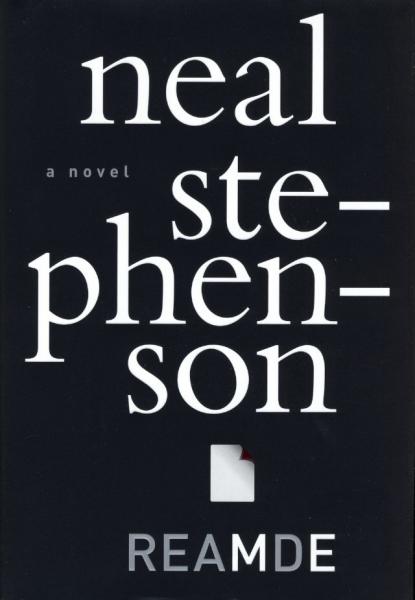
                  Neal Stephenson's Richard 'Dodge' Forthrast novels open with Reamde, a globe-spanning thriller that starts when ransomware inside an MMORPG economy pulls Richard's extended family into a real-world hostage crisis involving hackers, jihadists and Russian mobsters. The sequel Fall; or, Dodge in Hell shifts registers entirely, following Richard's digitally preserved mind after death into an afterlife simulation built from his scanned brain. The two books share a protagonist and family but differ sharply in genre and scale.

                • Cover of Snow Crash
                  Snow Crash

                  Neal Stephenson · standalone novel · 1992

                  similar byadventurousvirtual realityscience fiction+1 more

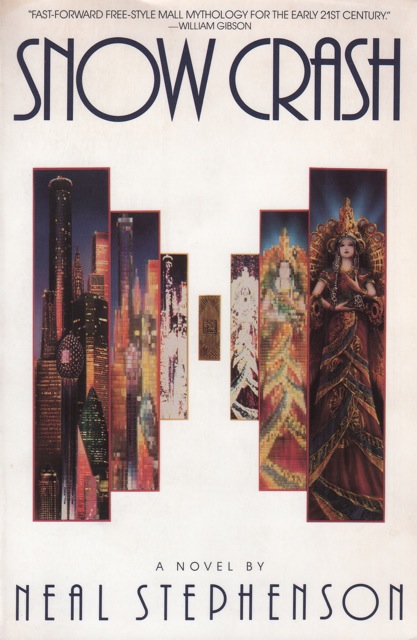
                  Snow Crash is a 1992 science fiction novel by Neal Stephenson. Like many of Stephenson's novels, its themes include history, linguistics, anthropology, archaeology, religion, computer science, politics, cryptography, memetics, and philosophy.

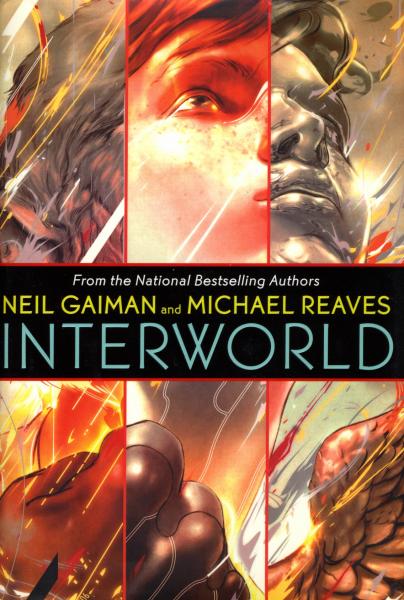
                • Cover of InterWorld
                  InterWorld

                  series · 3 books · 2007

                  similar byadventurouscontemporaryscience fantasyscience fictionparallel universe

                  InterWorld follows Joey Harker, an ordinary teenager who discovers he can walk between parallel Earths and is recruited into a band of alternate versions of himself defending the multiverse from two rival forces, one of magic and one of science, that want to conquer every reality. Michael Reaves developed the story with Neil Gaiman, and Reaves's daughter Mallory Reaves co-wrote the two sequels. It's a fast-moving, portal-hopping adventure aimed at younger readers rather than a slow-burn epic.

                • Cover of Cat•A•Lyst
                  Cat•A•Lyst

                  Alan Dean Foster · standalone novel · 1991

                  similar byadventurouscontemporaryscience fictionscience fantasyparallel universe

                  A Hollywood star and a wardrobe mistress search for a lost treasure in the Peruvian jungle; but their search is complicated by the Incas who hid the treasure and were transported to a parallel world by ancient aliens, as well as a pair of galactic monitors and the miscreant they pursue, who take the form of cats, as well as assorted normal humans.

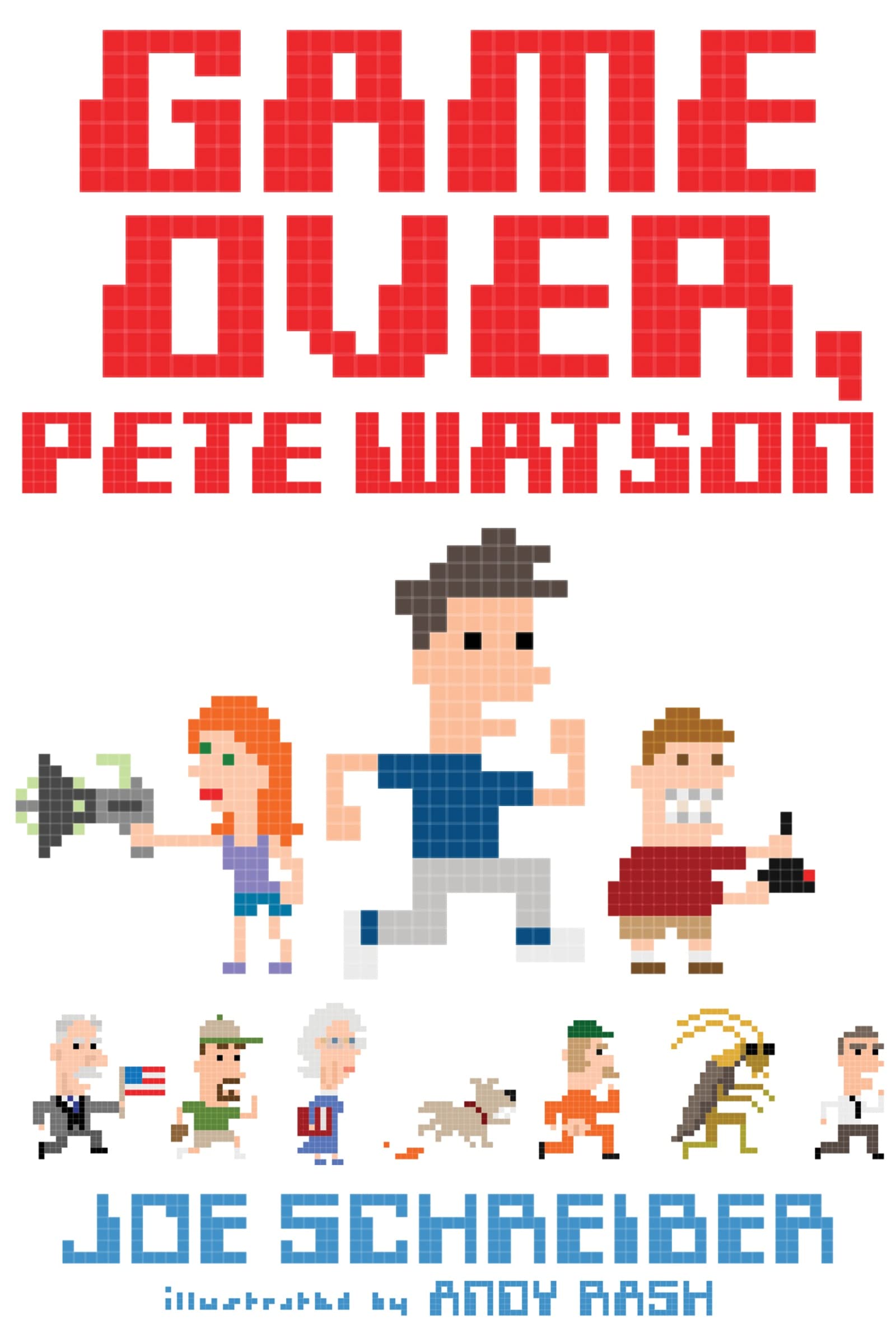
                • Cover of Game Over, Pete Watson
                  Game Over, Pete Watson

                  Joe Schreiber · standalone novel · 2014

                  similar byadventurousvirtual realitycontemporaryscience fictionvirtual world

                  "When videogame obsessed Pete Watson discovers his dad is not only a super-spy but has been kidnapped and is now trapped inside a video game, he has to use his super gaming skills and enter the game to rescue him. And if he succeeds, who will save Pete from his massive crush on Callie Midwood?"--

                • Cover of Gemini Game
                  Gemini Game

                  Michael Scott · standalone novel · 1993

                  similar byadventurousvirtual realitycontemporaryscience fiction

                  When players of their virtual reality computer game fall into a coma, Liz and BJ O'Connor, teenage owners of a computer games company, flee from the police in an attempt to locate a copy of their game and correct the programming.

                • Cover of Hyperlinkz
                  Hyperlinkz

                  series · 6 books · 2004

                  similar byadventurousvirtual realitycontemporaryscience fictionvirtual world

                • Cover of Void Trilogy
                  Void Trilogy

                  series · 4 books · 2007

                  part of Commonwealth Universe

                  similar byadventurousscience fiction+2 more

                  The Void Trilogy is a space opera series by British author Peter F. Hamilton. The series is set in the same universe as The Commonwealth Saga, 1,200 years after the end of Judas Unchained.

                • Cover of To the Vanishing Point
                  To the Vanishing Point

                  Alan Dean Foster · standalone novel · 1988

                  similar byadventurouscontemporaryscience fantasyparallel universe

                  A family from Los Angeles on the way to a Las Vegas vacation in a rented RV pick up a hitchhiking woman who claims to be on her way to heal the Spinner who creates the threads of the various realities, who is falling under the influence of Chaos.

                • Cover of The Kaiju Preservation Society
                  The Kaiju Preservation Society

                  John Scalzi · standalone novel · 2022

                  similar byadventurouscontemporaryscience fictionparallel universe

                  Covid lands Jamie with no job, no money and a lot of obligations. She'll take pretty much any job. After a detour through pizza deliveries, she says yes to a job handling large animals, that need protection. But when it comes to further details, everybody's very secretive. First stop: Greenland.

                • Cover of REM World
                  REM World

                  Rodman Philbrick · standalone novel · 2000

                  similar byadventurousvirtual realitycontemporaryscience fantasy

                  REM World is a fantasy/science fiction novel by American writer Rodman Philbrick about a boy who orders a device that will help him lose weight, and when using it he enters a world where he will not only lose weight, but go on the biggest adventure of his life. The title comes from the 4th stage of sleep.

                • Cover of Parallelities
                  Parallelities

                  Alan Dean Foster · standalone novel · 1998

                  similar byadventurouscontemporaryscience fictionparallel universe

                  "It seems you have acquired about you a field that affects the links between multiple parallel worlds, causing objects and individuals from these worlds to slip into yours . . . or you to slip into theirs . . ." It was just an average day for tabloid reporter Max Parker when he arrived in Malibu for a demonstration of a brand new parallel-universe machine. But everything changed in an instant when inventor Barrington Boles succeeded in making Max the human gate to numerous parallelities.Now Max was lost in a virtual sea of collateral worlds, confronting man-eating aliens, dinosaurs, talking frogs, dead Maxes, girl Maxes, old Maxes, even ghost Maxes. His only chance to escape the space-time continuum was to find Boles and hope the loony genius could rescue him. But how could he be sure which world was real, which Max was Max, and which Boles was the Boles who could stop the madness--or trap Max in the wrong world forever. . . ?From the Paperback edition.

                • Cover of Armada
                  Armada

                  Ernest Cline · standalone novel · 2015

                  similar byadventurousvirtual realityscience fiction

                  Armada is a science fiction novel by Ernest Cline, published on July 14, 2015 by Crown Publishing Group. The story follows a teenager who plays an online video game about defending against an alien invasion, only to find out that the game is a simulator to prepare him and people around the world for defending against an actual alien invasion.

                • Cover of Wine of the Dreamers
                  Wine of the Dreamers

                  John D. MacDonald · standalone novel · 1951

                  similar byadventurousvirtual realityscience fiction

                  Wine of the Dreamers is a 1951 science fiction novel by American writer John D. MacDonald. Wine of the Dreamers was his first science fiction novel and one of his earliest published novels altogether. Though he later also wrote the science fiction novels Ballroom of the Skies and The Girl, the Gold Watch & Everything, MacDonald was primarily a writer of mysteries. A later version was published under the name Planet of the Dreamers before reverting to the original title upon further printings.

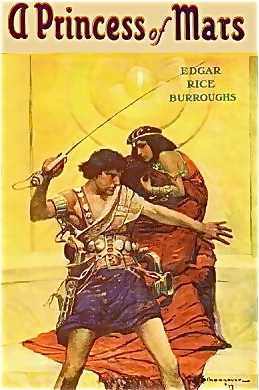
                • Cover of Barsoom
                  Barsoom

                  series · 53 books · 1917

                  similar byadventurousscience fictionscience fantasy

                  Barsoom is a fictional representation of the planet Mars created by American pulp fiction author Edgar Rice Burroughs. The first Barsoom tale was serialized as Under the Moons of Mars in pulp magazine The All-Story from February to July 1912 and published compiled as a novel as A Princess of Mars in 1917. It features John Carter, a late-19th-century American Confederate veteran who is mysteriously transported from Earth to the dying world of Mars where he meets and romances the beautiful Martian princess Dejah Thoris. Ten sequels followed over the next three decades, further extending his vision of Barsoom and adding other characters.

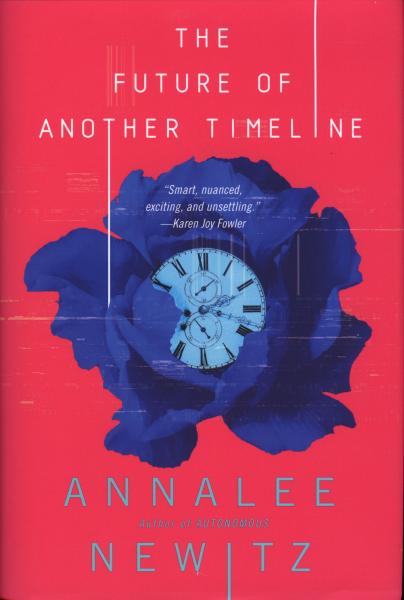
                • Cover of The Future of Another Timeline
                  The Future of Another Timeline

                  Annalee Newitz · standalone novel · 2019

                  similar byadventurouscontemporaryscience fictiongender and society

                  The Future of Another Timeline is a 2019 science fiction novel by Annalee Newitz. The feminist time-travel adventure follows Tess, a professional time traveler, geoscientist, and secretly a member of the Daughters of Harriet (Tubman), who are working to make the future better for women.

                • Cover of The CyberSkunk Files
                  The CyberSkunk Files

                  series · 2 books · 2011

                  similar byadventurouscontemporaryscience fiction+2 more

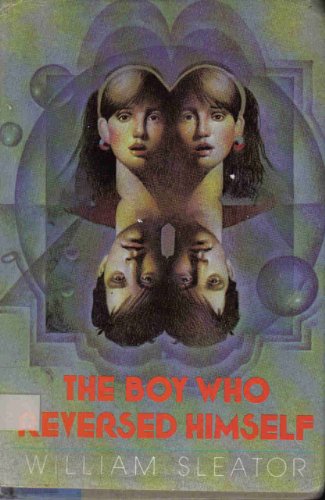
                • Cover of The Boy Who Reversed Himself
                  The Boy Who Reversed Himself

                  William Sleator · standalone novel · 1986

                  similar byadventurouscontemporaryscience fictionparallel universe

                  The Boy Who Reversed Himself (1986) is a science fiction novel by William Sleator. The novel deals with an exploration into other dimensions, and provides a journey into the world beyond our own.

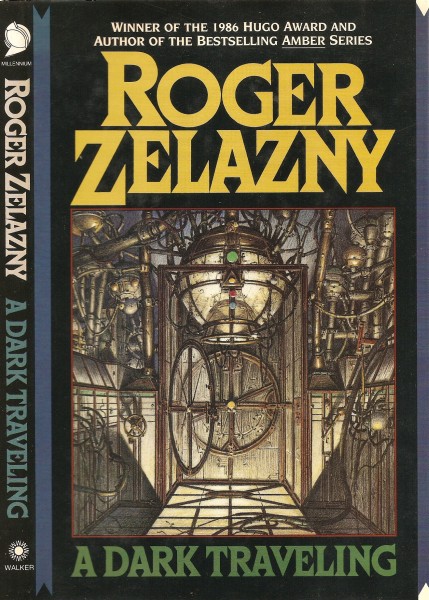
                • Cover of A Dark Traveling
                  A Dark Traveling

                  Roger Zelazny · standalone novel · 1987

                  similar byadventurouscontemporaryscience fantasyparallel universe+1 more

                  A Dark Traveling is a science fantasy novel by American writer Roger Zelazny. The story uses teleportation as both fantasy and science fiction elements. It is the only novel that he wrote for young adults and one of only three books without a heroic protagonist.

                • Cover of His Dark Materials
                  His Dark Materials

                  series · 8 books · 1995

                  part of His Dark Materials Universe

                  similar byadventurousparallel universe+3 more

                  His Dark Materials is a trilogy of fantasy novels by Philip Pullman consisting of Northern Lights, The Subtle Knife (1997), and The Amber Spyglass (2000). It follows the coming of age of two children, Lyra Belacqua and Will Parry, as they wander through a series of parallel universes. The novels have won a number of awards, including the Carnegie Medal in 1995 for Northern Lights and the 2001 Whitbread Book of the Year for The Amber Spyglass. In 2003, the trilogy was ranked third on the BBC's The Big Read poll.

                • Cover of Gamer Squad
                  Gamer Squad

                  series · 3 books · 2017

                  similar byadventurousvirtual realitycontemporaryscience fiction

                • Cover of Rasmussem Corporation Games
                  Rasmussem Corporation Games

                  series · 3 books · 1991

                  similar byvirtual realityscience fictionvirtual world+1 more

                  Vivian Vande Velde's Rasmussem Corporation Games books each drop a different protagonist into a malfunctioning virtual-reality game built by the fictional Rasmussem company, where the usual escape routes stop working and the stakes turn unexpectedly real. User Unfriendly, Heir Apparent, and Deadly Pink share the same premise and company rather than a continuing cast or plot. Vande Velde, an American children's and YA author, wrote the three books more than two decades apart.