More like Double Solitaire
anchored on:science fictionsuperheromid 20th centuryalternate historygenetic engineeringnorth america+2 more
but
- Friday
Robert A. Heinleinstandalone novel1982
similar bygenetic engineeringnorth americaadventuroustensescience fiction+1 more
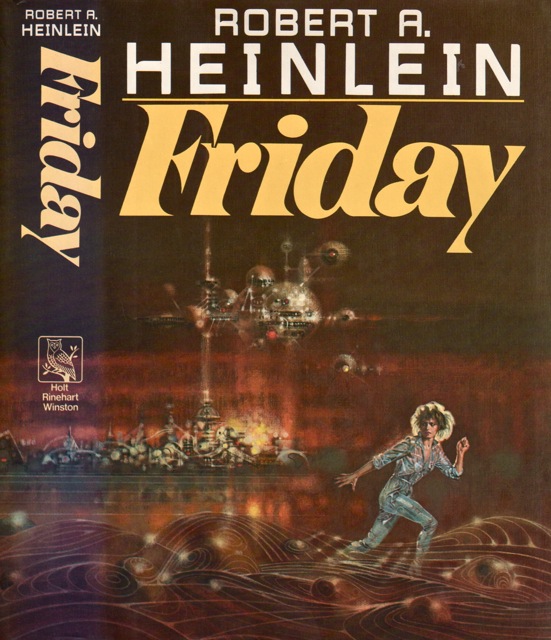
Friday is a 1982 science fiction novel by American writer Robert A. Heinlein. It is the story of a female "artificial person", the eponymous Friday, genetically engineered to be stronger, faster, smarter, and generally better than normal humans. Artificial humans are widely resented, and much of the story deals with Friday's struggle both against prejudice and to conceal her enhanced attributes from other humans. The story is set in a Balkanized 21st century, in which the nations of the North American continent have been split up into a number of smaller states.
- The Puppet Masters
Robert A. Heinleinstandalone novel1951
similar bymid 20th centurynorth americatensescience fiction+2 more
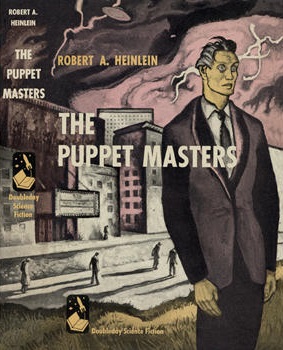
Parasitical aliens attach themselves to human hosts and take over their bodies. Two spies are sent to find out what's happening, but the extent is much farther than they knew. With access to the humans' memories, the aliens quietly invade the government and start taking over.
- Beyond This Horizon
Robert A. Heinleinstandalone novel1948
similar bygenetic engineeringnorth americascience fiction+2 more
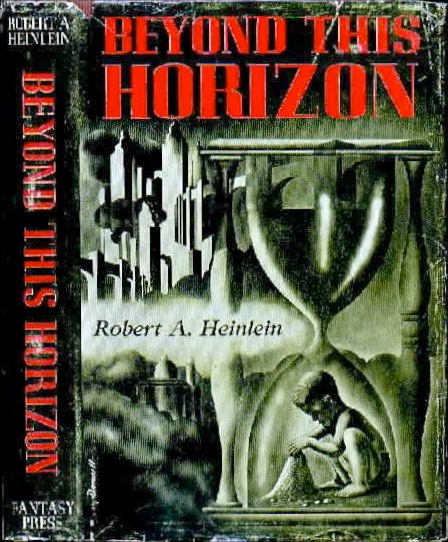
From the front flap of a 2001 Baen reprint: "Utopia has been achieved. For centuries, disease, hunger, poverty, and war have been things found only in the history tapes. And applied genetics has given men and women the bodies of athletes and a lifespan of over a century. They should all have been very happy... But Hamilton Felix is bored. And he is the culmination of a star line, each of his last thirty ancestors chosen for superior genes. Hamilton is, as far as genetics can produce one, the ultimate man. And this ultimate man can see no reason why the human race should survive, and has no intention of continuing the pointless comedy. However, Hamilton's life is about to become less boring. A secret cabal of revolutionaries who find utopia not just boring, but desperately in need of leaders who know just What Needs to be Done, are planning to revolt and put themselves in charge. Knowing of Hamilton's disenchantment with the modern world, they have recruited him to join their Glorious Revolution. Big mistake! The revolutionaries are about to find out that recruiting a superman was definitely not a good idea..."
- A Report from Group 17
Robert C. O'Brienstandalone novel1972
similar bygenetic engineeringmid 20th centurynorth americatensepolitical intriguescience fiction
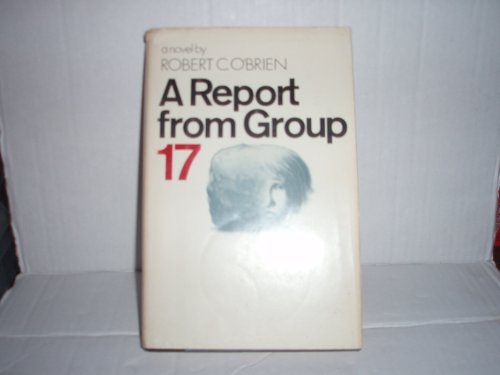
A Report from Group 17, published in 1972, is a science-fiction thriller written by Robert Leslie Conly under his pen name Robert C. O'Brien. Set in Washington, D.C., during the Cold War, the story deals particularly with the danger of developing bioweapons. The potential cause of conflict is a resurgence of Nazism in Europe. A 12-year-old girl who lives near a Soviet estate in Maryland becomes a victim of intrigue when she is kidnapped for use as an experimental subject. Themes include the threat of modern war to human survival, the moral responsibility of scientists, and the importance of both individual freedom and sympathetic instincts. Following two novels for children, A Report from Group 17 was the first of two dystopian novels that O'Brien wrote for adults. His last novel, Z for Zachariah (1974), depicts a conflict between two survivors of a nuclear war and deals with similar themes.
- Watchers
Dean R. Koontzstandalone novel1987
similar bygenetic engineeringnorth americaadventuroustensescience fiction
This probably qualifies as a science-based adventure rather than a science fiction novel. The premise, and only speculative fiction element, is that a U.S. government funded laboratory creates a golden retriever that's as intelligent as a human for use in intelligence gathering and also creates a monkey hybrid that's intended for a military police dog role and as a killing machine on battlefields. The animals escape and the story plays out as a straight adventure novel with a good chunk of romance thrown in.
- Alas, Babylon
Pat Frankstandalone novel1959
similar bymid 20th centurynorth americatensescience fiction+1 more
Classic novel of nuclear war and aftermath in rural Florida. From the back cover of a Bantam Pathfinder edition: "The day that the bomb dropped the thousands of years of "progress" that had covered the treacheries and weaknesses of ordinary man with a thin veneer of civilization were dissolved and melted like snow on the desert's dusty face. Then - the law of the jungle reigned but in the wreckage a few courageous survivors, men and women with the guts to have hope, were determined to build a new and better world on the ruins of the old. This is their story."
- The Leviathan Trilogy
series3 books2009
similar bygenetic engineeringadventurousscience fictionalternate history+2 more
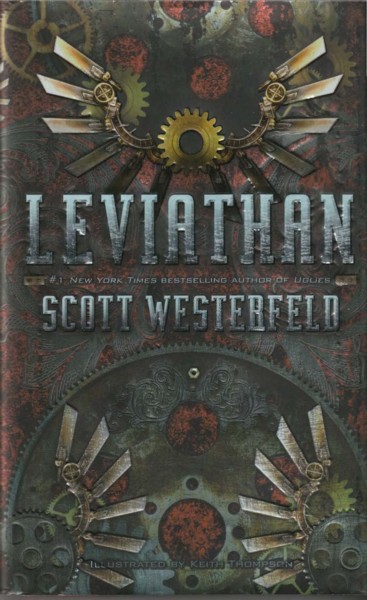
Set in an alternate First World War, Leviathan splits the belligerents into Clankers, who fight with mechanical walkers, and Darwinists, who fight with fabricated living creatures built from spliced DNA. Scott Westerfeld follows a British girl disguised as a boy to serve on a living airship and the exiled heir to the Austro-Hungarian throne as their paths collide, continuing across Behemoth and Goliath. Keith Thompson's illustrations are integral to all three books, alternating text chapters with illustrated sequences.
- Darwin
series2 books1999
completed
similar bygenetic engineeringnorth americatensescience fiction
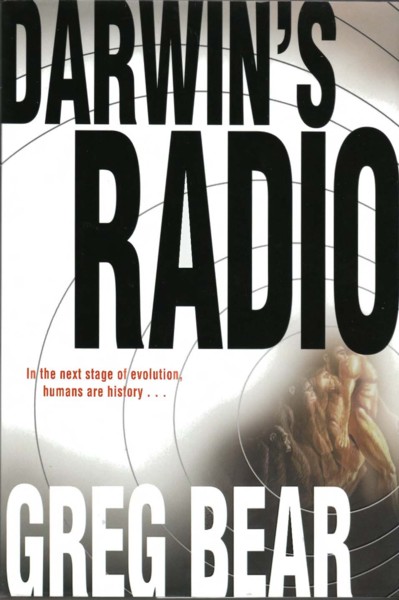
Greg Bear's Darwin's Radio imagines a dormant retrovirus in human DNA activating worldwide, triggering an accelerated leap in human evolution that governments respond to as a plague. The 1999 novel won the Nebula Award; its sequel Darwin's Children follows the first generation of changed children as society decides what to do with them. Together they're speculative near-future science fiction grounded in genetics rather than space opera.
- Conquistador
S. M. Stirlingstandalone novel2003
similar bymid 20th centurynorth americaadventuroustensescience fictionalternate history
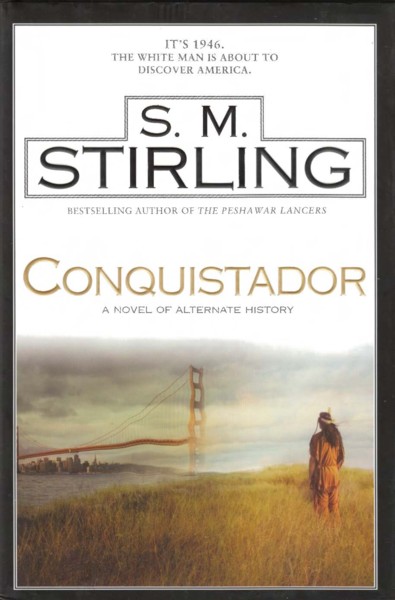
From the dust jacket flaps of the first edition: Oakland, California, 1946. Ex-soldier John Rolfe, newly back from the Pacific, is about to make a fabulous discovery. It happens with a flip of his shortwave radio switch, a thunder crack of sound, and a blinding light. He blinks his eyes to discover a portal to an alternate world where Europeans have never set foot on the land he knows as America. Able to return a will to the modern world, Rolfe summons the only people with whom he is willing to share his discovery: his war buddies. And tells them to bring their families... What mistakes would you repeat? Los Angeles, twenty-first century. Fish and Game warden Tom Christiansen is involved in the bust of a smuggling operation. What he turns up is something he never anticipated: a photo of authentic Aztec priests decked out in Grateful Dead T-shirts, and a live condor from a gene pool that doesn't correspond to any know in captivity or the wild. These finds soon lead to a woman named Adrienne Rolfe - and a secret that's been hidden for sixty years. As danger brews on both sides, two realities are threatened, and so to are the lives of everyone who crosses the boundary between them...
- Brothers
Ben Bovastandalone novel1995
similar bygenetic engineeringnorth americatensescience fiction+1 more
From the flaps of the Bantam first edition: "Some see it as the greatest scientific breakthrough in the history of medical research. Others as a blasphemous attempt to play God. At a corporate lab in Connecticut, researchers have pioneered an amazing genetic technique that can regenerate functioning organs inside the human body. The medical implications are staggering: Could humankind become immortal? Now, in a worldwide media spotlight, an unprecedented "science court" has been convened in Washington, D.C. Its mandate is to hear the evidence and decide whether or not the experiments should be allowed to continue. On opposite sides of the courtroom stand two brothers. Dr. Arthur Marshak is the brilliant director of Grenford Laboratory who sees his work in organ regeneration as the crowning achievement of his career, s chance at the Nobel Prize, and momentous gift to humanity. His younger brother, Dr. Jesse Marshak, is a physician, humanitarian, and idealist who see the imperfect technique as unethical at best, elitist by implication, and dangerous at worst. And standing between them is Julia who broke one brother's heart and married the other. As angry factions clash in the D.C. streets and science finds itself on trial in a media frenzy of greed, ambition, and lust, Arthur and Jessie must somehow bridge the gap that divides them... on an issue that could mean nothing less than life or death for millions."
- The Hunger Games Universe
universe5 books2008
Start hereThe Hunger Games · Start here
similar bynorth americatensescience fiction+1 more
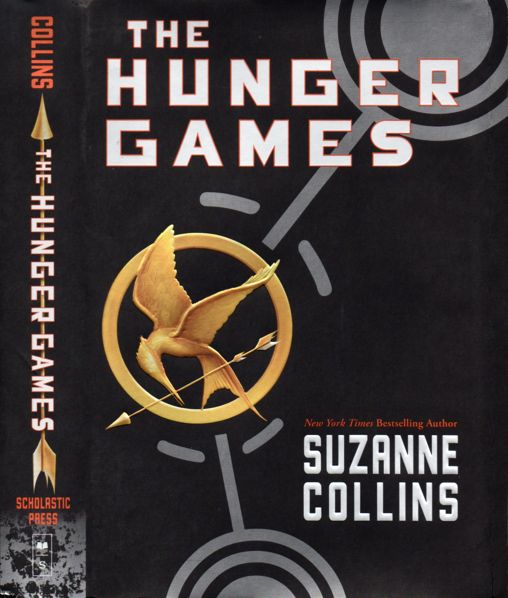
Panem, they call it now — a nation raised on the drowned bones of North America, a glittering Capitol ringed by twelve districts it once starved into obedience. Every year the Capitol collects its debt in children: two tributes from each district, drawn by lottery, dropped into an engineered arena, and made to kill one another on live television while the whole country is required to watch. This is the Hunger Games — entertainment, punishment, and government at once. Suzanne Collins tells it in a compact, unified body of work. The founding trilogy — The Hunger Games, Catching Fire, and Mockingjay — follows Katniss Everdeen, a girl from the coal-mining District 12 who volunteers in her sister's place and becomes something the Capitol never scripted. Two prequels reach back into the same machinery: The Ballad of Songbirds and Snakes traces a young Coriolanus Snow long before he is President, and Sunrise on the Reaping returns to District 12 a generation ahead of Katniss. Begin with the trilogy, in order — it is Katniss's voice, close and present-tense, that makes Panem breathe, and the prequels land hardest once you know how her story ends. Beneath the spectacle sits one steady, uncomfortable question: who profits when we agree to look away.
- Fail-Safe
Harvey Wheeler & Eugene Burdickstandalone novel1962
similar bymid 20th centurynorth americatense+1 more
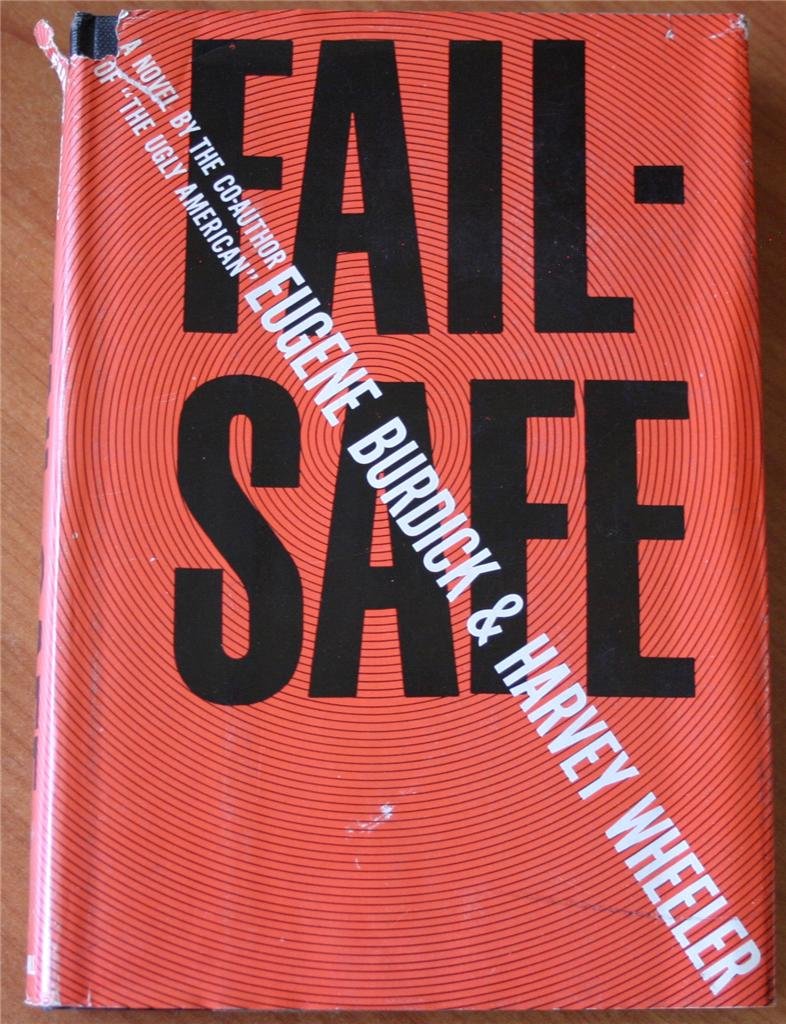
Fail-Safe is a bestselling American novel by Eugene Burdick and Harvey Wheeler. Expanded from Wheeler's short story "Abraham '59", it was initially serialized in three installments in the Saturday Evening Post on October 13, 20, and 27, 1962, during the Cuban Missile Crisis.
- I Am Legend
Richard Mathesonstandalone novel1954
similar bymid 20th centurynorth americatensescience fiction
The last human survivor of the vampire epidemic has to maintain his defences against their onslaught, while attempting to research the cause and possibly solution to the plague. Robert Neville is the last living man on Earth... but he is not alone. Every other man, woman and child on the planet has become a vampire, and they are hungry for Neville's blood. By day he is the hunter, stalking the undead through the ruins of civilization. By night, he barricades himself in his home and prays for the dawn. How long can a man survive like this?
- The World Jones Made
Philip K. Dickstandalone novel1956
similar bynorth americatensepolitical intriguescience fiction+1 more
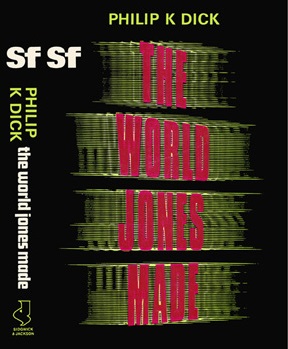
The World Jones Made is a 1956 science fiction novel by American writer Philip K. Dick, examining notions of precognition, humanity, and politics. It was first published by Ace Books as one half of Ace Double D-150, bound dos-à-dos with Agent of the Unknown by Margaret St. Clair.The story takes place after a nuclear war in which society is dominated by relativism, which rejects absolute truths and preaches tolerance as the highest principle. The mutant Floyd Jones, who can see into the future, plans to overthrow the system and colonise space. The story ends with the defeat of Jones, whose plans fail despite his ability to see the future due to the immutability of fate.
- Unwind Dystology
series5 books2007
similar bygenetic engineeringnorth americatensescience fiction
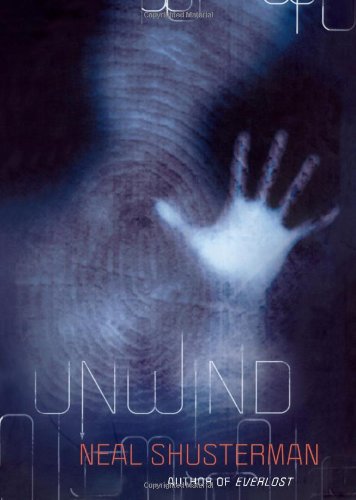
Neal Shusterman's Unwind Dystology opens in a United States reshaped by the resolution to a war over reproductive rights: parents can retroactively have a teenager "unwound," their body disassembled for transplant on the premise that nothing technically dies since every part lives on in someone else. The first novel follows three teens fleeing that fate, and the sequels widen the same dystopia's cast and consequences across a four-book arc plus companion material. It is grim speculative fiction built to ask hard bioethical questions rather than offer comfort.
- 11/22/63
Stephen Kingstandalone novel2011
similar bymid 20th centurynorth americatensescience fictionalternate history
11/22/63 is a novel by American author Stephen King about a time traveler who attempts to prevent the assassination of United States President John F. Kennedy, which occurred on November 22, 1963. It is the 60th book published by Stephen King, his 49th novel, and the 42nd under his own name. The novel required considerable research to accurately portray the late 1950s and early 1960s. King commented on the amount of research it required, saying, "I've never tried to write anything like this before. It was really strange at first, like breaking in a new pair of shoes."
- The Chrysalids
John Wyndhamstandalone novel1955
similar bygenetic engineeringtensescience fiction+1 more
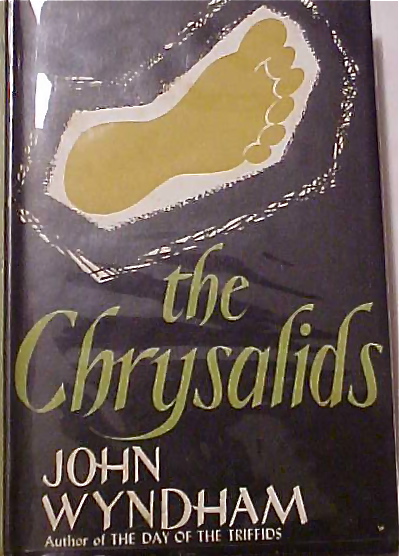
The Chrysalids is a science fiction novel by British writer John Wyndham, first published in 1955 by Michael Joseph. It is the least typical of Wyndham's major novels, but regarded by some as his best. An early manuscript version was entitled Time for a Change.
- Vitals
Greg Bearstandalone novel2002
similar bygenetic engineeringnorth americatensescience fiction
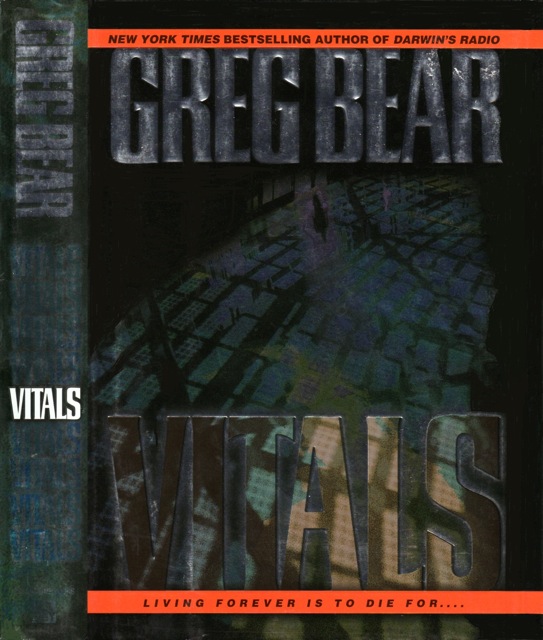
From the flaps of the Del Rey first edition: "Hal Cousins is one of a handful of scientists nearing the most sought after discovery in human history: the key to short-circuiting the aging process. Fueled by a wealth of research, an overdose of self-confidence, and the money of influential patrons to whom he makes outrageous promises, Hal experiments with organisms living in the hot thermal plumes in the ocean depths. But as he journeys beneath the sea, his other world is falling apart. Across the country, scientists are being inexplicably murdered - including Hal's identical twin brother, who is also working to unlock the key to immortality. Hal himself barely eludes a cold-blooded attack at sea, and when he returns home to Seattle, he finds himself walking into an eerie realm where voices speak to him from the dead ... where a once-brilliant historian turned crackpot is leading him on a deadly game of hide-and-seek ... and where the beautiful, rich widow of his twin is more than willing to pick up the pieces of Hal's life-and take him places he's never been before. Suddenly Hal is trapped inside an ever-twisting maze of shocking revelations. For he is not the first person to come close to ending aging forever - and those who came before him will stop at nothing to keep the secret to themselves. Now every person on earth is at risk of being made an unsuspecting player in one man's spectacular and horrifying master plan. From the bottom of Russia's Lake Baikal to a billionaire's bionic house built into the cliffs of the Washington seashore, from the darkest days of World War II and the reign of Josef Stalin to the capitalist free-for-all that is the United States, Vitals tells an astounding tale of the most unimaginable scientific secret of all - exposed by the quest for immortality itself..."
- Nerves
Lester del Reystandalone novel1956
similar bymid 20th centurynorth americatensescience fiction+1 more
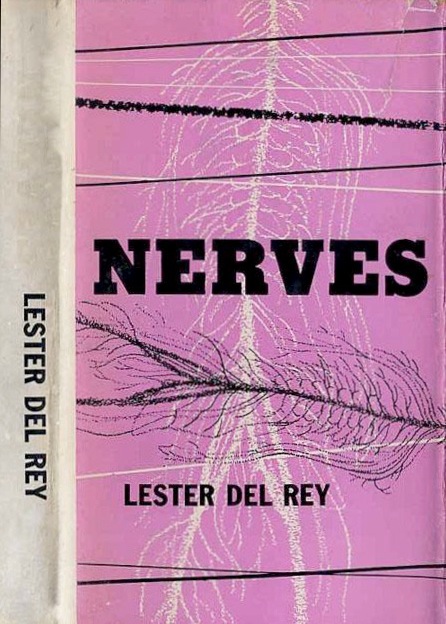
At the great atomic plant in Kimberly, a congressional committee makes a surprise inspection raising the level of the men's tension even higher than it has been. By midday there have already been minor accidents but in the giant nuclear converters which are at the heart of the project work goes on at desperate speed. Until converter Number four fails disastrously. Jorgenson, the supervisor of the technical team and his crew had been running through a new and unstable isotope when the walls of the reactor gave way. The process of fusion is suddenly out of control...and half a continent may be destroyed in a "peace-time" disaster which will not only sacrifice millions of lives but will destroy the possibility of controlled nuclear power forever.Jorgenson, the crew chief has survived the accident and is the only man who knows how to stop the runaway reactor. But Jorgenson is trapped inside that reactor, unable to communicate. He must be found and saved quickly in a desperate race...or risk the globe itself.
- The Lincoln Hunters
Wilson Tuckerstandalone novel1958
similar bymid 20th centurynorth americaadventurousscience fiction+1 more
The Lincoln Hunters is a 1958 science fiction novel by American writer Wilson Tucker.
- The Child Buyer
John Herseystandalone novel1960
similar bygenetic engineeringmid 20th centurynorth americascience fiction
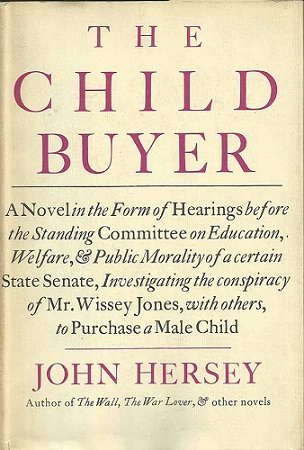
The Child Buyer is John Hersey's 1960 novel about a project to engineer super-intelligent persons for a project whose aim is never definitely stated. Told entirely in the form of minutes from a State Senate Standing Committee, it relates the story of the appearance and efforts of a mysterious stranger in the small town of Pequot, and the repercussions of his attempt to buy a boy, Barry Rudd.
- The Spook Who Sat by the Door
Sam Greenleestandalone novel1969
similar bymid 20th centurynorth americatensepolitical intrigue
The Spook Who Sat by the Door (1969), by Sam Greenlee, is the fictional story of Dan Freeman, the first black CIA officer, and of the CIA's history of training persons and political groups who later used their specialised training in gathering intelligence, political subversion, and guerrilla warfare against the CIA. The novel has been characterised as "part thriller, part satire and part social commentary". As described by The New Yorker, the title "alludes to the conspicuous deployment of the agency's one black officer to display its phony integration".
- 1920: America's Great War
Robert Conroystandalone novel2013
similar bynorth americaadventuroustensepolitical intriguescience fictionalternate history
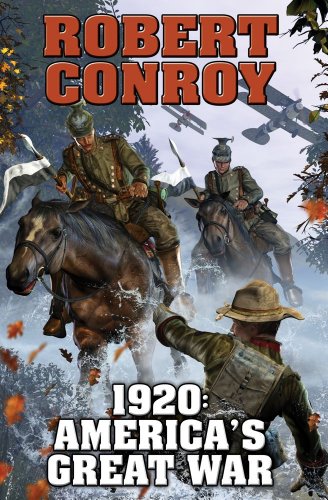
1920: America's Great War is an alternate history novel by the Michigan economics professor Robert Conroy. It was first published as an ebook by Baen Books in November 2013. A hardcover edition followed in December of the same year and then a paperback edition in March 2015. The novel depicts a fictional world in which Imperial Germany had emerged victorious early in World War I and launches a surprise invasion of the United States in 1920 from Mexico. The book's premise is based on an actual plan that Germany had proposed to Mexico during the war.