More like Dragon Teeth
anchored on:historical fictionexpeditionsnorth america19th centuryadventurousadventure+3 more
but
- Allan Quatermain
series25 books1885
similar by19th centuryadventurousexpeditionsadventure+2 more
Allan Quatermain is the protagonist of H. Rider Haggard's 1885 novel King Solomon's Mines, its one sequel Allan Quatermain (1887), twelve prequel novels and four prequel short stories, totalling eighteen works. An English professional big game hunter and adventurer, in film and television he has been portrayed by Richard Chamberlain, Sean Connery, Cedric Hardwicke, Patrick Swayze and Stewart Granger among others.
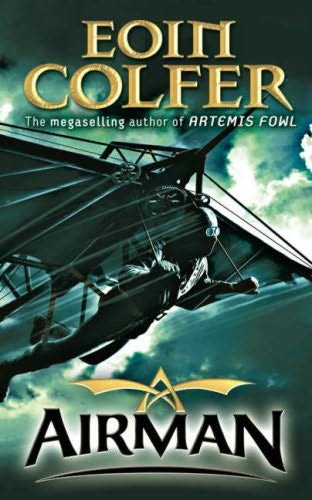
- Airman
Eoin Colferstandalone novel2008
similar by19th centuryadventuroussurvivalhistorical fictiontenseadventure
Airman, by Eoin Colfer, is a best-selling historical adventure novel set in the 19th century. It was released in the UK, Ireland and US in January 2008. The novel was shortlisted for the 2009 Carnegie Medal.
- The Boundless
Kenneth Oppelstandalone novel2014
similar by19th centuryadventuroussurvivaltensenorth americahistorical fictionadventure
Aboard "The Boundless," the greatest train ever built, on its maiden voyage across Canada, teenaged Will enlists the aid of a traveling circus to save the train from villains.
- The People of the Mist
H. Rider Haggardstandalone novel1894
similar by19th centuryadventuroussurvivalexpeditionsadventure
The People of the Mist is a classic lost world fantasy novel written by H. Rider Haggard. It was first published serially in the weekly magazine Tit-Bits, between December 1893 and August 1894; the first edition in book form was published in London by Longman in October, 1894. It was reprinted in December, 1973 by Ballantine Books as the sixty-third paperback volume of the Ballantine Adult Fantasy series.
- The Terror
Dan Simmonsstandalone novel2007
similar by19th centurysurvivalexpeditionshistorical fictiontense+1 more
The Terror is a 2007 novel by American author Dan Simmons. It is a fictionalized account of Captain Sir John Franklin's lost expedition, on HMS Erebus and HMS Terror, to the Arctic, in 1845–1848, to locate the Northwest Passage. In the novel, while Franklin and his crew are plagued by starvation and illness, and forced to contend with mutiny and cannibalism, they are stalked across the bleak Arctic landscape by a monster.
- Congo
Michael Crichtonstandalone novel1980
similar byexpeditionssurvivaladventuroustenseadventure+1 more
WorldCat: On an expedition to return Amy, his talking gorilla, to her home in the Congo, Professor Peter Elliot is joined by others who hope to find a legendary diamond mine guarded by mutant gorillas.
- Kindred
Octavia E. Butlerstandalone novel1979
similar by19th centurysurvivaltensenorth americahistorical fictionscience fiction
Kindred (1979) is a novel by American writer Octavia E. Butler that incorporates time travel and is modeled on slave narratives. Widely popular, it has frequently been chosen as a text by community-wide reading programs and book organizations, and for high school and college courses.
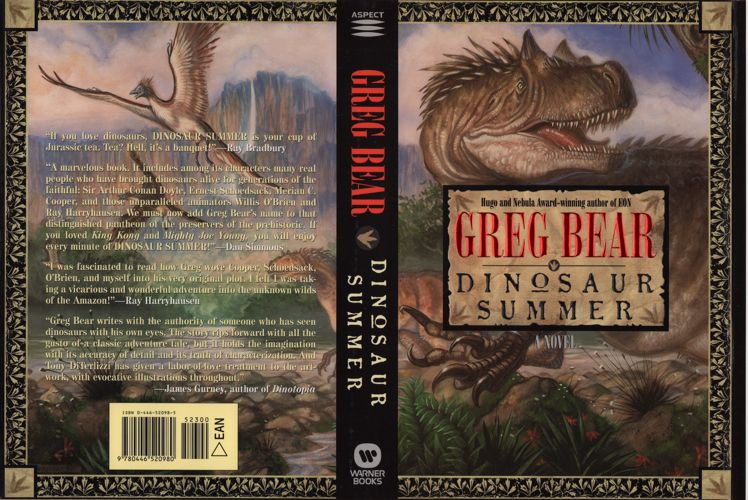
- Dinosaur Summer
Greg Bearstandalone novel1998
similar byexpeditionsadventuroussurvivaltenseadventurescience fiction
From the flaps of the Warner first edition: "It's the year 1947, and nobody's interested in dinosaurs anymore. Less than fifty years after Professor Challenger's famed journey to the Lost World, America's last dinosaur circus is closing down... but the adventure of a lifetime is about to begin. In a dramatic change of pace, multiple Hugo and Nebula award-winning science fiction master Greg Bear, ... presents a lavishly illustrated thriller that is certain to become a new classic adventure beyond time... Peter Belzoni is dreading summer in Manhattan. Then his father, photojournalist Anthony Belzoni, offers the youth a job, a byline in National Geographic... and a trip to South America. For the Lothar Gluck Circus, once the world's foremost dinosaur attraction, had gone bankrupt. Left behind is a menagerie of avisaurs, centrosaurs, and ankylosaurs, as well as one large predatory raptor named Dagger. And now two filmmakers and the circus trainer plan to return the giants to the wild - with Peter and his dad chronicling the odyssey for Geographic. The task seems impossible. Many have died trying to bring beasts our of the Lost World, the plateau of El Grande in Venezuela, but nobody has ever attempted to transport nearly a dozen full-grown, multiton prehistoric creatures across continents, down rivers, through jungles, and up mountains that has been isolated for 70,000,000 years... The trek will strain the technologies of trains, cargo ships, barges, trucks... en route lurk robbers and hostile, trigger-happy soldiers... and each mile toward freedom excites Dagger toward an unstoppable primal killing frenzy. When the unthinkable threatens to strand Peter and the rest of the crew in an uncharted realm, four modern Americans will face all the unknown dangers, mysteries, and terrors of El Grande..."
- A Strange Discovery
Charles Romyn Dakestandalone novel1899
similar byexpeditions19th centuryadventuroussurvivaladventure
A "completion" of Edgar Allan Poe's Narrative of Arthur Gordon Pym (1838). Pym and his companion Dirk Peters are swept into a strange uncharted region in the Antarctic Sea where they find an island utopia inhabited by descendants of fourth-century Romans. The story "combines the further adventures of. Pym with a love story in the manner of Rider Haggard."- Anatomy of Wonder (1981) 1-54. "After Pym and Peters penetrate the veil, they find the city of Hili-li, inhabited by citizens of the Roman empire who fled the barbarian invasions of the fourth century. One ship reached the Antarctic. They represent the height of Greco-Roman culture; though mentally advanced, they have made no practical application of their knowledge. Pym falls in love with Lilama; so great is their devotion that 'the episode of Romeo and Juliet sinks into insignificance' when compared to it. After parental objection, kidnapping by a rival suitor, Ahpilus, and an attack by barbarians, they marry. Within months occurs 'the strange thermal phenomenon' which occasionally devastates the city: the winds shift so that a combination of a hurricane and a blizzard strikes Hili-li. The city is unprepared. Pym goes in search of food and fuel, while Lilama is among those who freeze to death. After her death the Hili-lites permit Pym, highly depressed, and Peters, a troublemaker in Utopia, to depart in a small boat; they are picked up by a ship which takes them to Montevideo, where they separate and never see one another again.
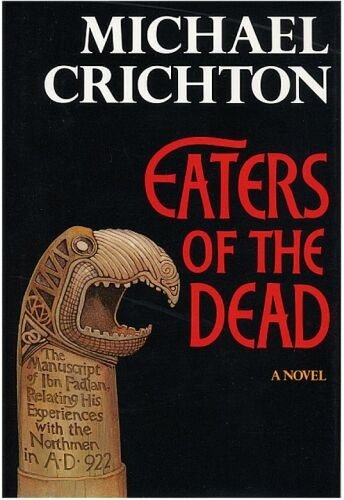
- Eaters of the Dead
Michael Crichtonstandalone novel1976
similar bysurvivalexpeditionshistorical fictiontenseadventure+1 more
Eaters of the Dead: The Manuscript of Ibn Fadlan Relating His Experiences with the Northmen in AD 922 is a 1976 novel by Michael Crichton, the fourth novel under his own name and his 14th overall. The story is about a 10th-century Muslim Arab who travels with a group of Vikings to their settlement.
- Dian of the Lost Land
Edison Marshallstandalone novel1935
similar byexpeditionsadventuroussurvivaladventurescience fiction+1 more
Adam knew that the creatures who surrounded him had vanished from the earth five million years ago. Their beautiful art, their terrible weaponry, their religion, customs and language, even the animals they hunted and the alien dark tribe against whom they waged eternal war, all belonged to a time before the great glaciers had retreated and man had assumed control of the globe. But Adam was in no position to deny their reality. For now he and his companion, the renowned Professor Karl Belgrade, were being led to their ruler-the young and beautiful Queen who would decide whether the intruders would live or die. The last ravings of a man dying from a mysterious fever and the haunting hypothesis of a brilliant and obsessed scientist were all that the two explorers had to go on as their tiny plane winged high over the menacing Antarctic ice. They find a secret valley that only one human being had ever visited and lived to tell about it, a lost world ruled by creatures from the darkest depths of time, who even now might be playing out a gigantic contest between good and evil to its strange and terrible conclusion. (adapted from the texts published with the 1972 edition)
- Timeline
Michael Crichtonstandalone novel1999
similar byadventuroussurvivalexpeditionstensescience fiction
Timeline is a science fiction novel by American writer Michael Crichton, his twelfth under his own name and twenty-second overall, published in November 1999. It tells the story of a group of history students who travel to 14th-century France to rescue their professor. The book follows in Crichton's long history of combining science, technical details, and action in his books, this time addressing quantum and multiverse theory.
- Wilderness
Roger Zelazny & Gerald Hausmanstandalone novel1994
similar by19th centuryadventuroussurvivalhistorical fictionnorth americaadventure
A novel about John Colter and Hugh Glass, early American hunters and trappers.
- Watchers
Dean R. Koontzstandalone novel1987
similar byadventuroussurvivaltensenorth americaadventurescience fiction
This probably qualifies as a science-based adventure rather than a science fiction novel. The premise, and only speculative fiction element, is that a U.S. government funded laboratory creates a golden retriever that's as intelligent as a human for use in intelligence gathering and also creates a monkey hybrid that's intended for a military police dog role and as a killing machine on battlefields. The animals escape and the story plays out as a straight adventure novel with a good chunk of romance thrown in.
- Queen Sheba's Ring
H. Rider Haggardstandalone novel1910
similar byexpeditions19th centuryadventurousadventure
Queen Sheba's Ring is a 1910 adventure novel by H. Rider Haggard set in central Africa. It resembles the author's earlier works King Solomon's Mines and She, featuring plotting priests, beautiful women, and daring British adventurers.
- Hello America
J. G. Ballardstandalone novel1981
similar bysurvivalexpeditionsadventurousnorth americadesertscience fiction
Hello America is a science fiction novel by British writer J. G. Ballard, published in 1981. First edition cover designed by Bill Botten. The plot follows an expedition to a North America rendered uninhabitable by an ecological disaster following an energy crisis.
- Kalahari
Jessica Khourystandalone novel2015
similar byadventuroussurvivalexpeditionstenseadventuredesertscience fiction
Sarah and her father have lived in the Kalahari as researchers for years, and have created a home there. Ever since Sarah's mother had died, her part in the family has grown. In need of money for research, Sarah and her father agree to take 5 chosen students to take on a week trip in the Kalahari Desert. Poachers invade the area, chasing after a lion that seems to be the colour of finest mercury, a virus created called metallcium, the living metal. This animal hasn't been seen before and makes everyone question. Sarah's father heads out for a little bit to stop the hunters, but doesn't return. The colour of that lion though makes Sarah question everything she has ever known.
- Fortune's Journey
Bruce Covillestandalone novel1995
similar by19th centurysurvivalhistorical fictionadventurousnorth americaadventure
Seventeen-year-old Fortune faces many challenges on an overland journey to California in 1853 with the acting company that she inherited from her father.
- The Lost Ark
J. R. Rainstandalone novel2010
similar byexpeditionsadventuroussurvivaltenseadventure
In a lonely bar in eastern Turkey, ex-National Geographic photojournalist Sam Ward is hired to find an eccentric professor who disappeared high atop Mount Ararat, fabled resting spot of Noah's Ark. Accompanied by the professor's beautiful daughter, archaeologist Faye Roberts, Sam soon stumbles upon a secret stronghold—a base of operation for unleashing hell on earth. Now running for their lives, Sam and company are about to come face-to-face with the greatest archaeological discovery of all tiime...
- Pym
series5 books1838
similar byexpeditionssurvival19th centuryadventure+2 more
Edgar Allan Poe's The Narrative of Arthur Gordon Pym of Nantucket (1838), his only complete novel, sends a young stowaway through shipwreck, mutiny, and cannibalism toward an increasingly strange voyage to the South Pole that breaks off on a mysterious, unexplained image. Jules Verne wrote an unauthorized 1897 sequel, An Antarctic Mystery, resolving Poe's cliffhanger in more rationalist terms, while Mat Johnson's 2011 novel Pym uses Poe's original as the springboard for a satirical modern story about race.
- The Smoke Hunter
Jacquelyn Bensonstandalone novel2016
similar byexpeditions19th centuryadventuroustensehistorical fictionadventure
Frustrated suffragette and would-be archaeologist Ellie Mallory stumbles across a map to a city that shouldn't exist, a jungle metropolis alive and flourishing centuries after the Mayan civilization mysteriously collapsed. Discovering it would make her career, but Ellie isn't the only one after the prize. A disgraced professor and his ruthless handler are hot on her heels, willing to go any extreme to acquire the map for themselves. To race them through the uncharted jungle, Ellie needs a guide. The only one with the expertise is maverick surveyor Adam Bates. But with his determination to nose his way into Ellie's many secrets, Bates is a dangerous partner. As Ellie gets closer to her goal, she realizes it's not just her ambitions at stake. A powerful secret lies hidden in the heart of the city - and if it falls into the wrong hands, it could shake the very fate of the world.
- Have Space Suit - Will Travel
Robert A. Heinleinstandalone novel1958
similar byadventuroussurvivaltensenorth americascience fiction
From the back cover of the Del Rey 9th printing: "Skyjacked - Everything happened at once. One minute Kip Russell was walking about in his own backyard, testing out an old space suit and dreaming about going to the moon - and the next he was out cold and the captive of an insidious space pirate. The whole thing seemed like a very bad dream until he discovered he wasn't the only prisoner on board. Then the reality of the situation became inescapable. He - along with the daughter of a world-renowned scientist and a beautiful creature from an alien planet - had been skyjacked by a monstrous extraterrestrial and they were on their way to the Moon... a journey toward a fate worse than death!"
- The Slave Stealer
John Boydstandalone novel1968
similar by19th centurysurvivalhistorical fictionadventuroustensenorth americaadventure
From the flaps of the Weybright first edition: "It took courage and it took cunning. To be a slave stealer during the years before the Civil War was to court the quick kiss of a Southern bullet or the tight embrace of a Southern noose. But for Solomon Villaricca it promised, suddenly and unexpectedly, the means by which he might achieve his greatest dream. In 1858, Cincinnati was a young city in which a man rightly situated could prosper. Solomon Villaricca saw clearly where a certain purchase of land would lead to wealth and substance, but he lacked the cash. And then, one day, a rich and outspoken Irishman approached him and made him a offer: two thousand dollars, free and clear, if Solomon would bring back a young slave girl from Georgia. For Dixon Kelly had fallen in love with the girl called Melinda, and he was determined to save her from the horrors of the 'breeding pens.' Solomon was used to traveling the Southern Appalachian highlands each year in his mule-drawn wagon, dealing in fabrics, hardware, household utensils - and sometimes runaway slaves. He had helped transport slaves North through the Quakers' Underground Railway. Now, with Kelly's extraordinary offer, he could count on making his last trip South. It would be the most perilous journey of them all, but he accepted with alacrity... Here is a completely absorbing novel by a new and talented young author. Filled with the sights and sounds of a place and a time, it tells of an unconventional liaison between and intelligent and resourceful peddlar and a young slave girl as they flee North from the savage hatred of white Southerners. Compellingly told, packed with incident and adventure, The Slave Stealer is an unforgettable tale set against the turbulent background of the pre-Civil War South."