More like Dragonflight
anchored on:dragonsother star systemsscience fantasysecondary worldepic fantasychosen one+5 more
but
- Restoree
Anne McCaffreystandalone novel1967
similar bytenseadventurousother star systemssurvivalscience fantasyscience fiction+1 more
Torn from Earth by a bizarre and nameless black force, Sara has no idea where she is or why she inhabits a beautiful new body. Controlled by brutal guards and tamed by terror, she can not comprehend her role as a nurse for a man who appears to be an idiot. She discovers that the planet she had been brought to was Lothar and that the man she was caring for was its Regent, Sara knows the restorees had to escape. When they do, they become fugitives on a world of multiple evils. (adapted from the back cover of the Baen edition)
- The Hobbit
series2 books1937
completed
part of Tolkien's legendarium
similar byadventurousdragonssecondary worldepic fantasyfantasy+1 more
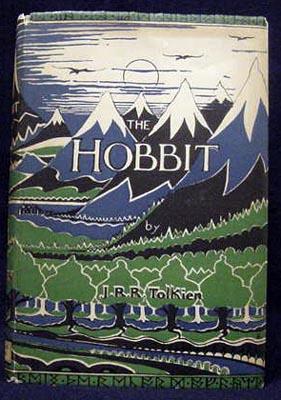
The Hobbit (1937) is J. R. R. Tolkien's children's fantasy novel following the reluctant burglar Bilbo Baggins, who joins a company of dwarves and the wizard Gandalf on a journey to reclaim treasure guarded by the dragon Smaug. It stands as a complete adventure on its own, but shares its setting with the rest of Tolkien's legendarium and leads into the events of The Lord of the Rings.
- Dragon Trilogies
series6 books1988
similar bytensesecondary worlddragonsepic fantasyfantasy+1 more
The Dragon Prince and Dragon Star trilogies comprise six connected fantasy novels written by Melanie Rawn. The Dragon Prince trilogy focuses on Prince Rohan of the Desert and his Sunrunner wife, Sioned, while the Dragon Star trilogy focuses on their son, Pol. The Dragon Prince trilogy consists of novels Dragon Prince, The Star Scroll, and Sunrunner's Fire. The books in the Dragon Star trilogy are Stronghold, The Dragon Token, and Skybowl.
- The Codex Alera
series6 books2004
similar bytenseadventuroussecondary worldepic fantasyfantasy+1 more
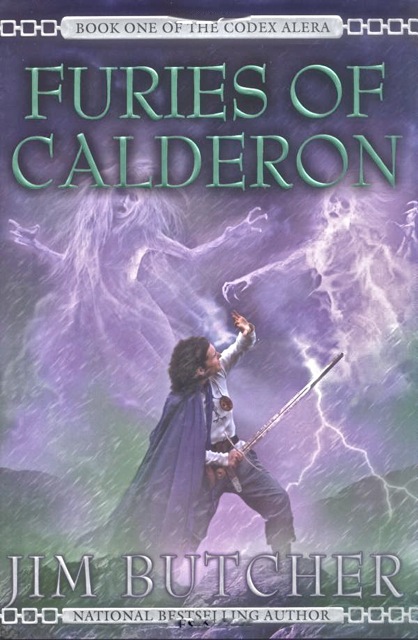
Furies of Calderon opens The Codex Alera in a Rome-flavored fantasy world where nearly everyone commands elemental spirits called furies, except Tavi, a teenager with none, whose resourcefulness becomes the series' recurring answer to raw magical power. Jim Butcher's six-book series, continuing through Academ's Fury, Cursor's Fury, Captain's Fury, Princeps' Fury, and First Lord's Fury, builds from small-scale political maneuvering into full-scale war.
- The White Mists of Power
Kristine Kathryn Ruschstandalone novel1991
similar bytenseadventuroussecondary worldepic fantasyfantasy+2 more
Synopsis -An innocent excited boy, a prince and heir, takes his first journey to the city. It is like nothing he imagined. Hands pound against his carriage: voices call for a coin, Sir just one, spare me some money, sir, I haven’t eaten in days. The streets teem with merchants in velvet robes, magicians, half mad preachers, with life and colour and noise. He doesn’t want to miss any of it. But it is the last journey of his life as a prince. Soon he will be abandoned and declared dead. Soon with survival and what will be the driving force of his life: the quest to recover his stolen inheritance, his usurped throne. His home. A story of cities and palaces, of power hungry lords and ladies scheming inside a magically threatened land...Intricate, compelling.
- A Song of Ice and Fire
series14 books1996
part of World of Ice and Fire
similar bysecondary worldepic fantasyfantasy+2 more
A Song of Ice and Fire is a series of high fantasy novels by the American author George R. R. Martin. Martin began writing the first volume, A Game of Thrones, in 1991, and published it in 1996. Martin, who originally envisioned the series as a trilogy, has released five out of seven planned volumes. The most recent entry in the series, A Dance with Dragons, was published in 2011. Since then, Martin has been working on the sixth novel, titled The Winds of Winter. A seventh novel, A Dream of Spring, is planned to follow.
- The Tribe (Ambelin Kwaymullina)
series3 books2012
similar bytensesecondary worldpsychic powersscience fiction+3 more
- The Lord of the Rings
series13 books1954
part of Tolkien's legendarium
similar bysecondary worldepic fantasy+2 more
The Lord of the Rings is an epic high fantasy novel written by the English author and scholar J. R. R. Tolkien. Set in Middle-earth, the story began as a sequel to Tolkien's 1937 children's book The Hobbit but eventually developed into a much larger work. Written in stages between 1937 and 1949, The Lord of the Rings is one of the best-selling books ever written, with over 150 million copies sold.
- Shannara
universe50 books1977
Start hereWord and the Void · The very beginning of the timeline
similar bysecondary worldepic fantasyfantasy+2 more
Long after the world we know has burned itself to slag in the Great Wars, the Four Lands rise green over the bones of the old age. Science is a forbidden memory; magic has come back into the world, and with it the old divisions — Men, Elves, Dwarves, Trolls, and Gnomes, each Race a splinter of what humanity became. This is the far-future Earth of Shannara, where the ruins buried beneath the soil are ours, and the only keepers of the vanished knowledge are the Druids of Paranor, who wake once a generation to meet the darkness rising again. Terry Brooks opened the Four Lands in 1977 with The Sword of Shannara and has charted its history for four decades since — a legendarium ordered not by throne but by a single bloodline, the Ohmsfords, each generation inheriting an Elfstone, a blade, or a wishsong when the age demands a hero. The original trilogy gives way to the Heritage of Shannara, the Voyage of the Jerle Shannara, the High Druid, Dark Legacy, Defenders, and the concluding Fall of Shannara; the Genesis of Shannara books reach back to the apocalypse itself, and the Word and the Void trilogy back further still, into a demon-haunted version of our own present that is the root of everything after. In 2025 Brooks passed the histories to Delilah S. Dawson to carry forward. What sets these books apart is their long memory: a world where every triumph is provisional, where the same evil returns wearing a fresh shape each age, and magic always exacts its price. The reading is warm and headlong — questing companies, old talismans, journeys across a mapped and named wilderness — shadowed by the knowledge that all of it stands on the wreckage of a former world. Enter as readers first did: with The Sword of Shannara, then onward in publication order. The chronological path, beginning with Word and the Void, rewards a second journey, once the Four Lands already feel like home.
- Narnia
series26 books1950
part of Narnia Universe
similar byadventuroussecondary worldfantasy+2 more
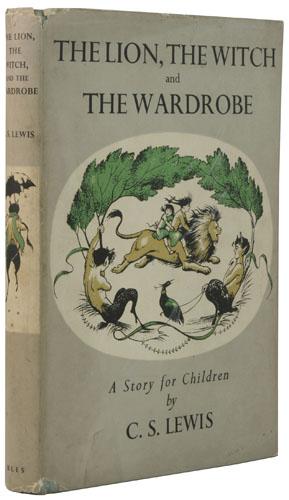
The Chronicles of Narnia is a series of seven portal fantasy novels by British author C. S. Lewis. Illustrated by Pauline Baynes and originally published between 1950 and 1956, the series is set in the fictional realm of Narnia, a fantasy world of magic, mythical beasts, and talking animals. It narrates the adventures of various children who play central roles in the unfolding history of the Narnian world. Except in The Horse and His Boy, the protagonists are all children from the real world who are magically transported to Narnia, where they are sometimes called upon by the lion Aslan to protect Narnia from evil. The books span the entire history of Narnia, from its creation in The Magician's Nephew to its eventual destruction in The Last Battle.
- Transit
Edmund Cooperstandalone novel1964
similar bytenseadventuroussurvivalsecondary worldscience fiction
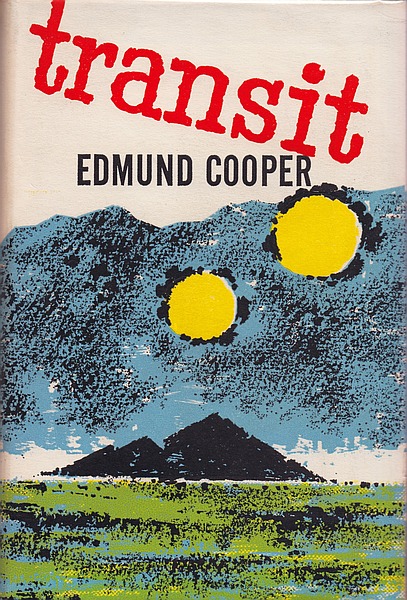
Transit... to another world. As a human being - an Earthman - Richard Avery was not particularly successful. He was mediocre as a teacher, and a failure as an artist. The rewards of Earth had passed him by. Still... Earth was home. It was where he belonged, where he could at least go his way unnoticed. Until that afternoon in Kensington Gardens, and that gleaming, hypnotic crystal that transported him - instantaneously - to a new and alien world. He was not alone, at least. There were three other Earth people marooned with him, all without a hint of the location or reason. And four more oddly assorted individuals would have been hard to imagine... Together, they faced sudden, savage onslaughts from an unknown foe. Together, they faced a fantastic implacable environment. And alone, they faced themselves - for to win, or even to survive, they had to re-discover what it meant to be human... (from the back cover of the Lancer first American edition)
- The Powder Mage
universe19 books2013
Start hereThe Powder Mage Trilogy · Start here
similar bytensesecondary worldepic fantasyfantasy+1 more
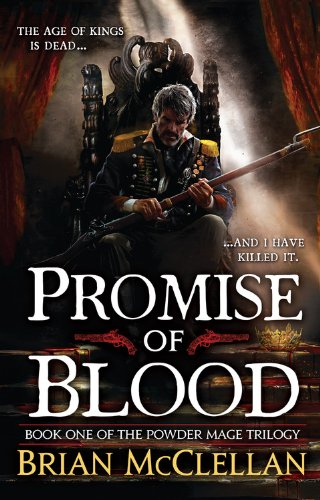
Load your powder, and pray your sorcery outruns their cannon. Here the age of kings is ending at musket-point: a world where black powder is not merely fired but eaten, and the men and women called powder mages snort a pinch of it to burn a trance across the battlefield — igniting an enemy's cartridges from a mile off, bending a bullet mid-flight, reading a room by the taste of the air. Against them stand the Privileged, glove-fingered sorcerers of the old order who summon fire and frost, and above both, gods who have not finished walking the earth. Brian McClellan builds this flintlock world across two linked trilogies. The Powder Mage Trilogy — Promise of Blood, The Crimson Campaign, The Autumn Republic — opens with a field marshal's coup against a rotten monarchy and the invasion, revolution, and divine reckoning that follow. Gods of Blood and Powder — Sins of Empire, Wrath of Empire, Blood of Empire — crosses the ocean a decade on to the colonial frontier of Fatrasta, where old soldiers, spies, and a heretic goddess collide. A run of novellas and short stories fills the corners between. Expect grapeshot and gunsmoke, siege lines and back-alley intrigue, generals and con men given equal weight. Begin at Promise of Blood and read in publication order — the trilogies run in sequence, and the short work is seasoning, not prerequisite.
- The Riftwar Universe
universe44 books1982
Start hereRiftwar Saga · Start here
similar bysecondary worldepic fantasyfantasy+2 more
On the world of Midkemia a tear opens in the air itself, a rift hung between stars, and through it march the armies of an empire from another world entirely. So begins the chronicle Raymond E. Feist has kept for three decades: the tale of Pug, a castle kitchen boy apprenticed to a magician on the very day the invasion lands, and of Tomas, his friend, who inherits the armor and the ancient fury of a dead dragon-lord. Around these two the Riftwar Cycle turns, widening book by book from one besieged frontier keep into the whole history of a world of kingdoms, guilds, thieves' dens and mage-towers. The cycle runs to roughly thirty novels, gathered into arcs a newcomer can enter and finish on their own. The founding Riftwar Saga (Magician, Silverthorn, A Darkness at Sethanon) sets the board; the Serpentwar Saga, Krondor's Sons and the Conclave of Shadows carry the story down the generations; the Darkwar, Demonwar and Chaoswar sagas bring it toward its close. Crossing the rift to the rival world of Kelewan, Feist and Janny Wurts wrote the Empire trilogy, opening with Daughter of the Empire, a court intrigue told wholly from the invaders' side and for many the finest thing here. Shorter Legends of the Riftwar and the game-born Riftwar Legacy fill the corners; later still, Feist opens an altogether new world in the Firemane books. Feist writes fantasy in its most companionable key: apprentices who grow into archmages, tavern boys who become spies and dukes, a world you return to the way you return to an old inn. The mood is adventure before dread, friendship and rank and hard-won craft, wars that cost something, all of it rendered plainly and at a gallop. Begin where it began, with Magician, then follow the arcs in the order they were written, and the rift will carry you the rest of the way.
- The Tainted Blood Duology
series2 books2023
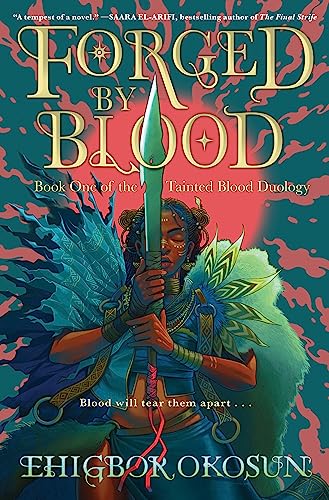
similar bytenseadventuroussecondary worldepic fantasyfantasy
- Elenium
series3 books1989
completed
part of Sparhawk
similar byadventuroussecondary worldepic fantasyfantasy+1 more
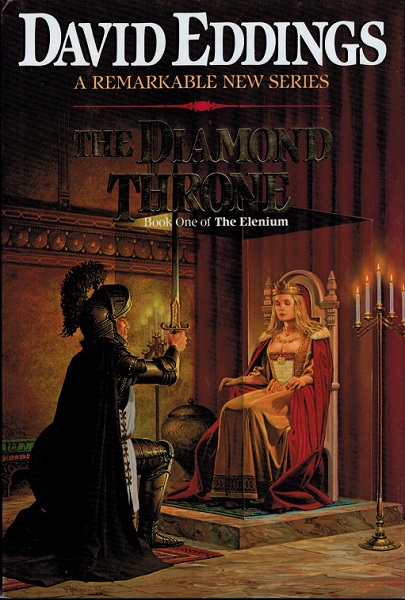
The Elenium is a series of fantasy novels by American writer David Eddings. The series consists of three volumes: The Diamond Throne, The Ruby Knight, and The Sapphire Rose. The series is followed by The Tamuli. The Elenium is Eddings' third fantasy series.
- The Dragon Chronicles
series4 books1989
similar byadventurousdragonssecondary worldfantasy+2 more
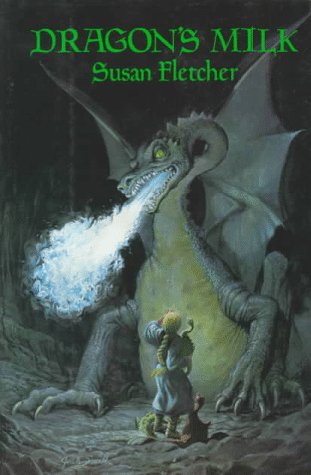
The Dragon Chronicles opens with Dragon's Milk, Susan Fletcher's 1989 debut and the first book in this fantasy quartet. Three further books, Flight of the Dragon Kyn, Sign of the Dove, and Ancient, Strange, and Lovely, followed over the next two decades, continuing the same dragon-themed fantasy world.
- Wings of Fire
series24 books2012
similar byadventurousdragonssecondary worldfantasyepic fantasy
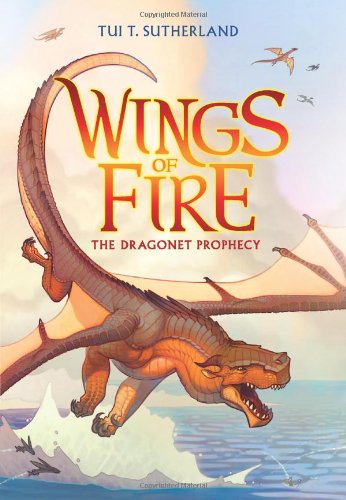
Wings of Fire is a children's adventure fantasy novel series about dragons, written by Tui T. Sutherland and published by Scholastic Inc. The series has been translated into over ten languages, with some versions having their own cover art, has sold over 30 million copies worldwide making it one of the most successful fantasy series for young readers, and has been on the New York Times Best Seller list for over 300 weeks. Wings of Fire is rated for ages 7–12 according to Scholastic, Inc. The series has also proven popular with young adults and older audiences.
- The Traitor Spy Trilogy
series3 books2010
part of Kyralia series
similar byadventuroussecondary worldepic fantasyfantasy+1 more
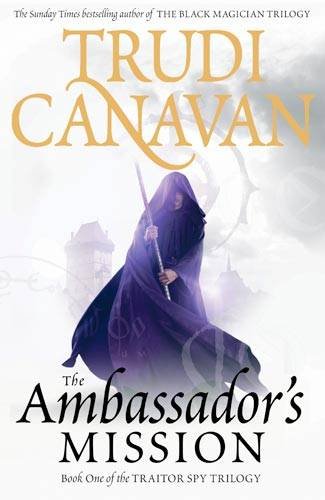
Trudi Canavan is an Australian writer of fantasy novels, best known for her best-selling fantasy trilogies The Black Magician and Age of the Five. While establishing her writing career she worked as a graphic designer. She completed her third trilogy, The Traitor Spy trilogy, in August 2012 with The Traitor Queen. Subsequently, Canavan has written a series called Millennium's Rule, with a completely new setting consisting of multiple worlds which characters can cross between. Though originally planned as a trilogy, a fourth and final book in the Millennium's Rule series was published.
- The Lost Regiment
series9 books1990
similar bytenseadventuroussurvivalscience fictionsecondary world
William R. Forstchen's Lost Regiment series begins with Rally Cry, in which a Civil War Union regiment is swept onto a distant world where humans transplanted from many eras and cultures are farmed as food by an alien race. Arriving with nineteenth-century gunpowder weapons and organized tactics, the regiment's survivors fight to build a defensible nation and turn the war back on their captors, a conflict that escalates across nine novels of technology, politics, and generations.
- The Broken Earth
series5 books2014
similar bysecondary worldscience fantasysurvivalfantasy+3 more
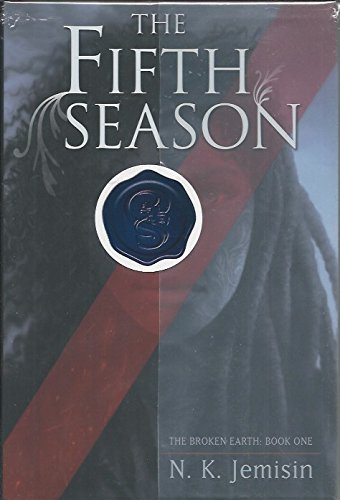
N. K. Jemisin's Broken Earth trilogy is set on the Stillness, a single supercontinent wracked every few centuries by civilization-ending climate catastrophes called Fifth Seasons. It follows orogenes, people born with the power to move earth and quell earthquakes, who are trained and controlled by the state even as they are feared and despised. The Fifth Season, the opening volume, traces three women revealed to be the same person at different stages of her life, setting up the two sequels that follow her search for her daughter after an orogene shatters the continent.
- The Powder Mage Trilogy
series15 books2013
part of The Powder Mage
similar bytensesecondary worldepic fantasy+2 more
The Powder Mage trilogy is a series of epic fantasy novels written by American author Brian McClellan. It consists of the novels Promise of Blood (2013), The Crimson Campaign (2014) and The Autumn Republic (2015). In 2014, Promise of Blood received the Morningstar Award for Best Fantasy Newcomer. Several short stories and novellas set in the world of The Powder Mage trilogy have been published, as well as an additional trilogy called Gods of Blood and Powder.
- The Banned and the Banished
series5 books1998
similar byadventuroussecondary worldepic fantasychosen one+2 more
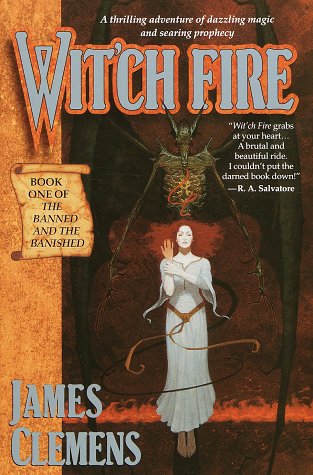
James Paul Czajkowski, better known by his pen name of James Rollins, is an American veterinarian and writer of action-adventure/thriller, mystery, and techno-thriller novels who gave up his veterinary practice in Sacramento, California to be a full-time author. Rollins' experiences and expertise as an amateur spelunker and a certified scuba diver have provided content for some of his novels, which are often set in underground or underwater locations. Under the pen name James Clemens, he has also published fantasy novels, such as Wit'ch Fire, Wit'ch Storm, Wit'ch War, Wit'ch Gate, Wit'ch Star, Shadowfall (2005), and Hinterland (2006).
- Sparhawk
universe6 books1989
Start hereElenium · Start here
similar byadventuroussecondary worldepic fantasyfantasy+1 more
Sir Sparhawk is not a young man, and he has little patience for the pageantry his order pretends to. A Pandion Knight of the militant Elene Church, he rides home from a long exile to find his kingdom rotten with intrigue and his young queen, Ehlana, poisoned — kept alive only inside a shell of living crystal. To wake her he must find Bhelliom, a jewel with the power to remake the world or unmake it. So begins a long ride across the continent of Eosia. This is warm, character-first epic fantasy from David Eddings, told across two trilogies. The Elenium — The Diamond Throne, The Ruby Knight, The Sapphire Rose — pits Sparhawk against a corrupt church and a hungry elder god. The Tamuli — Domes of Fire, The Shining Ones, The Hidden City — carries him east into the vast Tamul Empire, where older enemies stir. Around him gathers a quarrelsome company: the Styric sorceress Sephrenia, the thief-boy Talen, the plain-spoken squire Kurik, and a small, imperious goddess who plays a set of pipes and always, somehow, gets her way. The pleasure here is the talk — grizzled knights trading dry insults between miracles and murders, a hero who solves as many problems with patience as with a sword. It never reaches for grimness or grand obscurity; it wants your good company for a long journey. Newcomers begin with The Diamond Throne and read the six in order: the Elenium stands whole on its own before the Tamuli widens the map.