Loreful
HomeDiscover
Search series, authors…⌘K
Loreful

Reading orders for SF/F series and shared universes — with your place kept in every one.

Explore

UniversesSeriesWorksAuthorsAtlas

Help

FAQAboutSite map

Account & legal

Sign inCreate accountPrivacyTerms

Data

Built on ISFDB, Wikipedia, Wikidata and Open Library. Curated reading orders carry their reasoning on the page; the rest follow publication order. Data sources & licenses

© Loreful · data: ISFDB · CC BY

More like Elfshadow

anchored on:fantasysecondary worldepic fantasyelvesadventurous

but

Mood

The mood the book leaves you in.

  • The reading experience is propelled by journeys, exploration, and physical risk; excitement and forward momentum dominate over dread or introspection.
  • Joy and loss are deliberately mixed; the resolution grants characters something real while taking something else away, leaving warmth and sorrow together.
  • The book demands work from the reader — dense prose, difficult structure, unfamiliar ideas, or morally uncomfortable material — as part of its intended effect.
  • Grim events, cruelty, or despair dominate the atmosphere, and the book does not soften them with comfort or comic relief.
  • The atmosphere is quietly unsettling — wrongness, unease, and the uncanny pervade the book without necessarily escalating into overt horror.
  • The book is built to move the reader; character feeling is foregrounded and major scenes aim at a strong emotional response.
  • Humor is a primary aim and the prose plays for laughs — comic situations, wit, or dialogue produce sustained comedy, not occasional levity.
  • The book insists that things can improve; effort and decency are shown to matter, and the arc bends toward better outcomes even through hardship.
  • The book teaches as it goes — real facts, history, science, or craft are conveyed in enough depth that learning is part of the reading experience.
  • The book is designed to uplift and motivate, presenting perseverance or achievement in a way that invites the reader to aspire or act.
  • The overall register is cheerful and easygoing; stakes are kept gentle and the book avoids dwelling on pain or dread.
  • Withheld information drives the experience; the book sustains enigmas and secrets the reader wants resolved, whatever its genre.
  • The book is contemplative and inward-looking, giving more weight to thought, memory, and meaning than to external events.
  • The book works as comfort reading — low tension, a soothing pace, and an atmosphere the reader can unwind in.
  • Grief, loss, or melancholy set the dominant register, and the book lets sorrow stand rather than resolving it into comfort.
  • Sustained suspense is the point; the book keeps the reader braced for what happens next through danger, pressure, or impending revelation.
  • Playful invention and charm define the register — fanciful conceits, light absurdity, and a narration that delights in its own oddity.

About

What the story runs on.

  • Stories in which extraterrestrial beings are central — as characters, cultures, or the object of the plot.
  • Stories about venturing into space to explore — survey missions, astronauts, and the frontier of the unknown beyond Earth.
  • Stories structured as a quest — a journey undertaken to find, deliver, or destroy something of great import.
  • Stories in which staying alive against nature, catastrophe, or scarcity is the central problem.
  • Stories of lovers kept apart by law, family, faith, or station, where the obstacle to love is the plot.
  • Stories in which a friendship — its making, testing, or loss — is the emotional center.
  • Stories of growing up — a young protagonist crossing from childhood into adult knowledge and responsibility.
  • Stories about who a character truly is — self-discovery, doubled lives, and the search for a self.
  • Stories in which a buried family truth — hidden parentage, crimes, or shames — surfaces and reorders the present.
  • Stories driven by maneuvering for power — factions, conspiracies, and statecraft conducted in shadow.
  • Stories in which war itself is the subject — combat, occupation, and what warfare does to soldiers and civilians.
  • Stories organized around investigating a killing — the case, the clues, and the pursuit of the killer, in any genre's clothing.

Shelf

Where it sits in the library.

    • Fiction built on magic or other supernatural elements that have no scientific explanation.
    • Secondary-world fantasy at large scale, where the fate of nations or the world turns on the protagonists' struggle.
    • Fantasy set in a recognizably modern city or contemporary world where the supernatural intrudes on everyday life.
    • Fantasy that blends in horror's atmosphere and imagery, keeping a fantastical frame around grim or frightening material.
    • Action-driven fantasy following warriors or rogues with personal stakes against sorcerous threats, rather than world-spanning conflicts.
    • Fantasy set in a real historical period or a close analogue of one, with magic woven into the era.
    • Fantasy in which protagonists cross from the ordinary world into another world through a portal or similar passage.
    • Fiction that retells or reworks a traditional fairy tale in a new form or setting.
    • Fantasy drawing directly on myths, legends, and folklore, retelling them or building on their figures and logic.
    • Fantasy of ghosts, vampires, shapeshifters, psychics, and similar phenomena, usually set in an otherwise ordinary world.
    • Fiction mixing science-fictional trappings with overtly magical or impossible elements in one setting.
    • Low-stakes fantasy emphasizing comfort, community, and everyday pleasures over conflict and peril.
    • Speculative fiction of pervasive moral ambiguity, violence, and cynicism that rejects heroic conventions — fantasy and SF alike.
      • Fiction that extrapolates from science and technology — future societies, space travel, or speculative inventions — within at least nominally natural laws.
      • Science fiction of interstellar scope — starships, galactic polities, and adventure across star systems.
      • Science fiction committed to scientific rigor, where technical plausibility constrains the story.
      • Science fiction centered on armed forces and warfare, told largely from a military point of view.
      • Science fiction of networked, corporate-dominated near futures, pairing high technology with social decay.
      • Science fiction styled on nineteenth-century steam-powered technology, often in a Victorian or pseudo-Victorian setting.
      • Fiction depicting an oppressive or catastrophic society, presented as a warning.
      • Fiction set after civilization's collapse, following survivors in the ruins of the old world.
      • Fiction in which characters move between past and future, and the mechanics or consequences of that travel drive the plot.
      • Fiction exploring a world where a historical event went differently and history diverged from ours.
      • Science fiction about humanity's first encounter and communication with an alien intelligence.
      • Science fiction in which extraterrestrial forces attack or occupy Earth and humanity resists.
      • Fiction whose primary aim is to frighten or unsettle the reader through dread, menace, or the monstrous.
      • Horror of vast, indifferent, incomprehensible entities before which humanity is insignificant, in the Lovecraft tradition.
      • Horror of decaying houses, buried family secrets, and oppressive atmosphere in the Gothic literary tradition.
      • Horror centered on hauntings and the returning dead.
      • Horror located in the mind — paranoia, obsession, and unreliable perception rather than external monsters.
      • Horror built around the reanimated dead and survival amid their outbreaks.
      • Horror defined by explicit, transgressive gore that refuses to cut away from violence.
      • Speculative fiction of the strange and uncanny that resists both natural explanation and standard genre categories.
      • Fiction organized around solving a crime or puzzle, typically following an investigator toward the identification of a culprit.
      • A puzzle-first mystery that lays out clues so the culprit's identity can be deduced before the reveal.
      • Crime fiction of moral ambiguity, fatalism, and hard-edged style, set among the corrupt and the doomed.
      • A mystery following the realistic routines of police work — forensics, interviews, and case-building.
      • A gentle mystery with an amateur sleuth, a small community, and violence kept off the page.
      • A mystery set in a past era, where the investigation works within that period's methods and society.
      • Fast-paced fiction driven by imminent danger, pursuit, or high-stakes conspiracy, built to sustain tension.
      • A thriller of espionage — agents, tradecraft, and intelligence services in conflict.
      • A thriller centered on lawyers and the courtroom, where litigation carries the suspense.
      • A thriller driven by detailed contemporary or near-future technology, often military or scientific.
      • A thriller whose tension comes from mental states and manipulation between characters rather than external action.
      • Fiction whose central plot is a romantic relationship and its development toward an emotionally satisfying resolution.
      • Romance in which one or both partners are supernatural beings, blending fantasy elements into the love story.
      • A fantasy-romance hybrid in which the romantic arc and the fantasy plot carry equal weight.
      • Romance set in a past era, with courtship shaped by the period's society and manners.
      • Romance set in the present day, without supernatural or historical elements.
      • Fiction set in a real past period, where the historical setting materially shapes characters and events.
        • General and literary fiction emphasizing prose style, character interiority, or formal ambition over genre plot conventions.
        • Fiction in a realistic world where magical events occur and are treated as ordinary, in the tradition of Latin American literature.
        • Fiction that ridicules people, institutions, or society in order to criticize them.
        • Fiction of dreamlike, irrational imagery and logic that breaks from realistic representation.
        • Fiction that plays with narrative convention through metafiction, fragmentation, and self-reference.
        • Fiction propelled by journeys, exploration, and physical peril, where action and survival carry the plot.
        • Adventure fiction of ships and seafaring — naval engagements, voyages, and life at sea.
        • Fiction of the American frontier West — gunmen, ranchers, and lawmen, typically in the late nineteenth century.
        • Fiction centered on soldiers, campaigns, and the experience of warfare, historical or imagined.
          • Fiction written primarily to amuse, using comedic situations, wit, or parody as its organizing principle.
            • Multi-generational fiction following a family or dynasty across decades, with inheritance and kinship as the through-line.
              • Fiction whose world runs on explicit game mechanics — levels, stats, and skills that characters can see and exploit.
                • Fiction about costumed or superpowered heroes and their conflicts with comparable villains.

                Practical

                How long a commitment, whether it stands alone, and whether it has finished.

                Tap a chip to ask for it · tap again to rule it out · once more to clear. Numbers show what would be left.

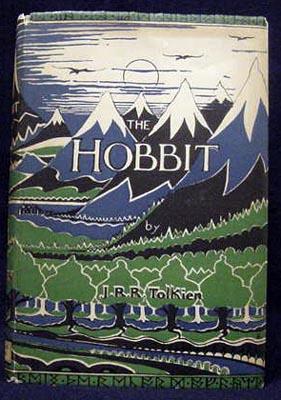
                • Cover of The Hobbit
                  The Hobbit

                  series · 2 books · 1937

                  completed

                  part of Tolkien's legendarium

                  similar byadventuroussecondary worldfantasyelvesepic fantasy

                  The Hobbit (1937) is J. R. R. Tolkien's children's fantasy novel following the reluctant burglar Bilbo Baggins, who joins a company of dwarves and the wizard Gandalf on a journey to reclaim treasure guarded by the dragon Smaug. It stands as a complete adventure on its own, but shares its setting with the rest of Tolkien's legendarium and leads into the events of The Lord of the Rings.

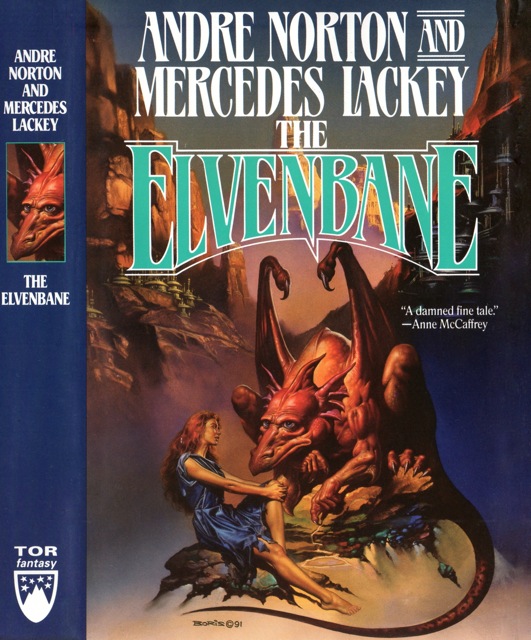
                • Cover of Halfblood Chronicles
                  Halfblood Chronicles

                  series · 3 books · 1991

                  similar byadventurouselvessecondary worldfantasyepic fantasy

                  The Halfblood Chronicles is a series of fantasy books originally written by Andre Norton and Mercedes Lackey. The series is set in a mystical world of elves, wizards and dragons. The series was originally released by Tor Books, and comprised three books: Elvenbane (1991), Elvenblood (1995), Elvenborn (2002). Elvenbred, the fourth book in the series, remained unfinished due to the death of Andre Norton.

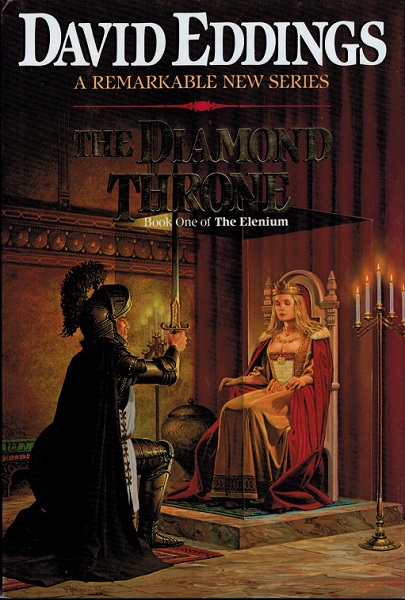
                • Cover of Sparhawk
                  Sparhawk

                  universe · 6 books · 1989

                  Start hereElenium · Start here

                  similar byadventuroussecondary worldepic fantasyfantasy+1 more

                  Sir Sparhawk is not a young man, and he has little patience for the pageantry his order pretends to. A Pandion Knight of the militant Elene Church, he rides home from a long exile to find his kingdom rotten with intrigue and his young queen, Ehlana, poisoned — kept alive only inside a shell of living crystal. To wake her he must find Bhelliom, a jewel with the power to remake the world or unmake it. So begins a long ride across the continent of Eosia. This is warm, character-first epic fantasy from David Eddings, told across two trilogies. The Elenium — The Diamond Throne, The Ruby Knight, The Sapphire Rose — pits Sparhawk against a corrupt church and a hungry elder god. The Tamuli — Domes of Fire, The Shining Ones, The Hidden City — carries him east into the vast Tamul Empire, where older enemies stir. Around him gathers a quarrelsome company: the Styric sorceress Sephrenia, the thief-boy Talen, the plain-spoken squire Kurik, and a small, imperious goddess who plays a set of pipes and always, somehow, gets her way. The pleasure here is the talk — grizzled knights trading dry insults between miracles and murders, a hero who solves as many problems with patience as with a sword. It never reaches for grimness or grand obscurity; it wants your good company for a long journey. Newcomers begin with The Diamond Throne and read the six in order: the Elenium stands whole on its own before the Tamuli widens the map.

                • Cover of The Lord of the Rings
                  The Lord of the Rings

                  series · 13 books · 1954

                  part of Tolkien's legendarium

                  similar bysecondary worldepic fantasy+3 more

                  The Lord of the Rings is an epic high fantasy novel written by the English author and scholar J. R. R. Tolkien. Set in Middle-earth, the story began as a sequel to Tolkien's 1937 children's book The Hobbit but eventually developed into a much larger work. Written in stages between 1937 and 1949, The Lord of the Rings is one of the best-selling books ever written, with over 150 million copies sold.

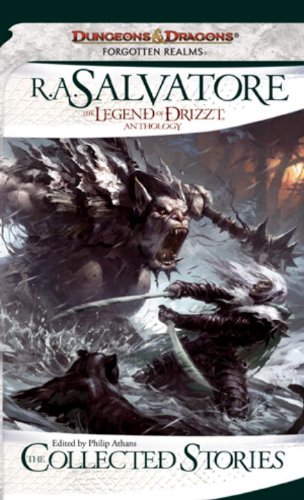
                • Cover of Forgotten Realms: The Legend of Drizzt
                  Forgotten Realms: The Legend of Drizzt

                  series · 39 books · 1988

                  part of Forgotten Realms

                  similar byadventuroussecondary worldfantasyepic fantasy+1 more

                  The Legend of Drizzt is a series of fantasy novels by R. A. Salvatore that began in 1988, and consists of 39 books as of August 15, 2023. They are based in the Forgotten Realms setting in the dimension of Abeir-Toril on the continent Faerûn in the Dungeons & Dragons universe currently published and owned by Wizards of the Coast. It combines the series The Dark Elf Trilogy, The Icewind Dale Trilogy, Legacy of the Drow, Paths of Darkness, The Hunter's Blades Trilogy, and other sets into an abridged compilation. Drizzt Do'Urden is the main character of most of the books.

                • Cover of The Traitor Spy Trilogy
                  The Traitor Spy Trilogy

                  series · 3 books · 2010

                  part of Kyralia series

                  similar byadventuroussecondary worldfantasyepic fantasypolitical intrigue

                  Trudi Canavan is an Australian writer of fantasy novels, best known for her best-selling fantasy trilogies The Black Magician and Age of the Five. While establishing her writing career she worked as a graphic designer. She completed her third trilogy, The Traitor Spy trilogy, in August 2012 with The Traitor Queen. Subsequently, Canavan has written a series called Millennium's Rule, with a completely new setting consisting of multiple worlds which characters can cross between. Though originally planned as a trilogy, a fourth and final book in the Millennium's Rule series was published.

                • Cover of The Riyria Chronicles
                  The Riyria Chronicles

                  series · 6 books · 2013

                  part of Riyria

                  similar byadventuroussecondary worldfantasyepic fantasy+1 more

                  The Riyria Chronicles is a series of high fantasy novels by Michael J. Sullivan, published since 2013 by Orbit Books. The series consists of five books, in order of publication: The Crown Tower, The Rose and the Thorn, The Death of Dulgath, The Disappearance of Winter's Daughter and Drumindor. They are prequels to Sullivan's Riyria Revelations series.

                • Cover of Narnia
                  Narnia

                  series · 26 books · 1950

                  part of Narnia Universe

                  similar byadventuroussecondary worldfantasy+1 more

                  The Chronicles of Narnia is a series of seven portal fantasy novels by British author C. S. Lewis. Illustrated by Pauline Baynes and originally published between 1950 and 1956, the series is set in the fictional realm of Narnia, a fantasy world of magic, mythical beasts, and talking animals. It narrates the adventures of various children who play central roles in the unfolding history of the Narnian world. Except in The Horse and His Boy, the protagonists are all children from the real world who are magically transported to Narnia, where they are sometimes called upon by the lion Aslan to protect Narnia from evil. The books span the entire history of Narnia, from its creation in The Magician's Nephew to its eventual destruction in The Last Battle.

                • Cover of The Grisha
                  The Grisha

                  series · 9 books · 2012

                  part of Grishaverse

                  similar byadventuroussecondary worldfantasyepic fantasy+1 more

                  Leigh Bardugo is an American fantasy author. She is best known for her young adult Grishaverse novels, which include the Shadow and Bone trilogy and the Six of Crows and King of Scars duologies. She also received acclaim for her paranormal fantasy adult debut, Ninth House. The Shadow and Bone and Six of Crows series have been adapted into Shadow and Bone by Netflix, and Ninth House will be adapted by Amazon Studios; Bardugo is an executive producer on both works.

                • Cover of The Riftwar Universe
                  The Riftwar Universe

                  universe · 44 books · 1982

                  Start hereRiftwar Saga · Start here

                  similar bysecondary worldepic fantasyfantasy+2 more

                  On the world of Midkemia a tear opens in the air itself, a rift hung between stars, and through it march the armies of an empire from another world entirely. So begins the chronicle Raymond E. Feist has kept for three decades: the tale of Pug, a castle kitchen boy apprenticed to a magician on the very day the invasion lands, and of Tomas, his friend, who inherits the armor and the ancient fury of a dead dragon-lord. Around these two the Riftwar Cycle turns, widening book by book from one besieged frontier keep into the whole history of a world of kingdoms, guilds, thieves' dens and mage-towers. The cycle runs to roughly thirty novels, gathered into arcs a newcomer can enter and finish on their own. The founding Riftwar Saga (Magician, Silverthorn, A Darkness at Sethanon) sets the board; the Serpentwar Saga, Krondor's Sons and the Conclave of Shadows carry the story down the generations; the Darkwar, Demonwar and Chaoswar sagas bring it toward its close. Crossing the rift to the rival world of Kelewan, Feist and Janny Wurts wrote the Empire trilogy, opening with Daughter of the Empire, a court intrigue told wholly from the invaders' side and for many the finest thing here. Shorter Legends of the Riftwar and the game-born Riftwar Legacy fill the corners; later still, Feist opens an altogether new world in the Firemane books. Feist writes fantasy in its most companionable key: apprentices who grow into archmages, tavern boys who become spies and dukes, a world you return to the way you return to an old inn. The mood is adventure before dread, friendship and rank and hard-won craft, wars that cost something, all of it rendered plainly and at a gallop. Begin where it began, with Magician, then follow the arcs in the order they were written, and the rift will carry you the rest of the way.

                • Cover of The Ivory Key
                  The Ivory Key

                  series · 2 books · 2022

                  similar byadventuroussecondary worldfantasyepic fantasy+1 more

                • Cover of Elenium
                  Elenium

                  series · 3 books · 1989

                  completed

                  part of Sparhawk

                  similar byadventuroussecondary worldepic fantasyfantasy

                  The Elenium is a series of fantasy novels by American writer David Eddings. The series consists of three volumes: The Diamond Throne, The Ruby Knight, and The Sapphire Rose. The series is followed by The Tamuli. The Elenium is Eddings' third fantasy series.

                • Cover of The Codex Alera
                  The Codex Alera

                  series · 6 books · 2004

                  similar byadventuroussecondary worldepic fantasyfantasypolitical intrigue

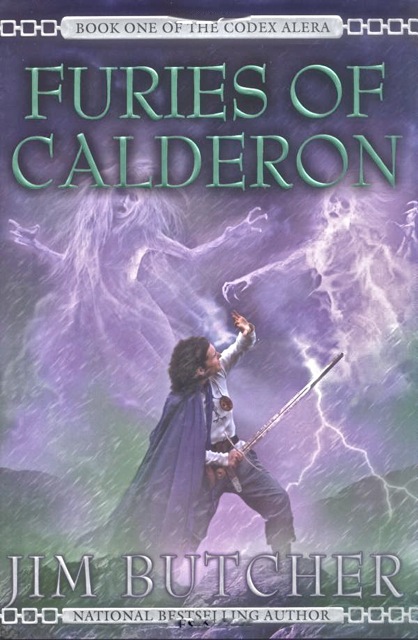
                  Furies of Calderon opens The Codex Alera in a Rome-flavored fantasy world where nearly everyone commands elemental spirits called furies, except Tavi, a teenager with none, whose resourcefulness becomes the series' recurring answer to raw magical power. Jim Butcher's six-book series, continuing through Academ's Fury, Cursor's Fury, Captain's Fury, Princeps' Fury, and First Lord's Fury, builds from small-scale political maneuvering into full-scale war.

                • Cover of The White Mists of Power
                  The White Mists of Power

                  Kristine Kathryn Rusch · standalone novel · 1991

                  similar byadventuroussecondary worldfantasyepic fantasypolitical intrigue

                  Synopsis -An innocent excited boy, a prince and heir, takes his first journey to the city. It is like nothing he imagined. Hands pound against his carriage: voices call for a coin, Sir just one, spare me some money, sir, I haven’t eaten in days. The streets teem with merchants in velvet robes, magicians, half mad preachers, with life and colour and noise. He doesn’t want to miss any of it. But it is the last journey of his life as a prince. Soon he will be abandoned and declared dead. Soon with survival and what will be the driving force of his life: the quest to recover his stolen inheritance, his usurped throne. His home. A story of cities and palaces, of power hungry lords and ladies scheming inside a magically threatened land...Intricate, compelling.

                • Cover of The Immortals
                  The Immortals

                  series · 6 books · 1992

                  part of Tortall

                  similar byadventuroussecondary worldfantasy+1 more

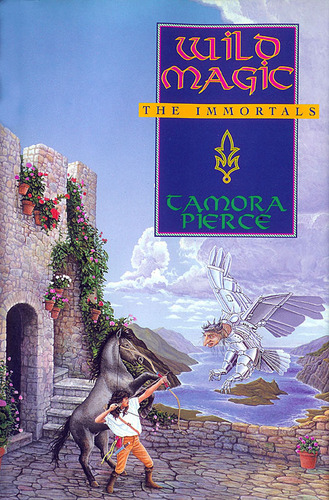
                  Tamora Pierce's Immortals quartet follows Daine, a young woman whose 'wild magic' lets her communicate with and shapeshift among animals, as she's drawn into the kingdom of Tortall's defense against immortal creatures -- griffins, dragons and darker things -- released back into the world after centuries sealed away. Beginning with Wild Magic, the four books pair Daine's personal coming-of-age with an escalating magical threat, and connect to Pierce's earlier Song of the Lioness quartet through several shared characters.

                • Cover of The Tainted Blood Duology
                  The Tainted Blood Duology

                  series · 2 books · 2023

                  similar byadventuroussecondary worldfantasyepic fantasypolitical intrigue

                • Cover of The Stormlight Archive
                  The Stormlight Archive

                  series · 15 books · 2010

                  part of Cosmere

                  similar byadventuroussecondary worldepic fantasyfantasy+1 more

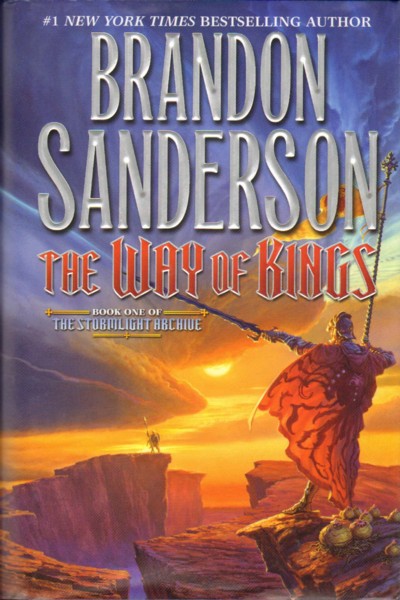
                  The Stormlight Archive is a high fantasy novel series written by American author Brandon Sanderson, planned to consist of ten novels. As of 2024, the series comprises five published novels and two novellas, set within Sanderson's broader Cosmere universe. The first novel, The Way of Kings, was published on August 31, 2010. The second novel, Words of Radiance, was published on March 4, 2014 and debuted at number one on The New York Times Best Seller List. This was repeated by Oathbringer and Rhythm of War. The fifth novel, Wind and Truth, was released December 6, 2024. Sanderson has indicated that he will start drafting the latter half of the series after he finishes writing the upcoming Era Three Mistborn trilogy and the two Elantris sequels. The series has been adapted as a VR Experience and a tabletop roleplaying game.

                • Cover of The Princess and the Goblin
                  The Princess and the Goblin

                  series · 2 books · 1871

                  completed

                  similar byadventuroussecondary worldfantasy

                • Cover of The Quest of the Riddle-Master
                  The Quest of the Riddle-Master

                  series · 3 books · 1976

                  completed

                  similar byadventuroussecondary worldfantasyepic fantasy

                  Patricia A. McKillip's Riddle-Master trilogy follows Morgon, prince of the small island of Hed, whose discovery of three star-shaped birthmarks on his forehead draws him into a search for his own hidden identity and a confrontation with ancient, shape-shifting powers. Drawing on Celtic myth, the three books are prized for their lyrical prose and riddle-based magic, and are often cited among the best high fantasy of the 1970s.

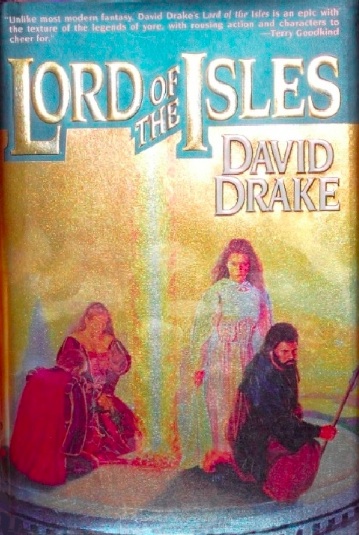
                • Cover of Lord of the Isles
                  Lord of the Isles

                  series · 10 books · 1997

                  completed

                  similar byadventuroussecondary worldepic fantasy+2 more

                  Lord of the Isles is a series of books by author David Drake. In 1997, Drake began his largest fantasy series, Lord of the Isles, using elements of Sumerian religion and medieval-era technology. The series consists of nine books broken into two distinct parts, the Lord of the Isles consisting of the first six books, and a final trilogy dubbed the Crown of the Isles.

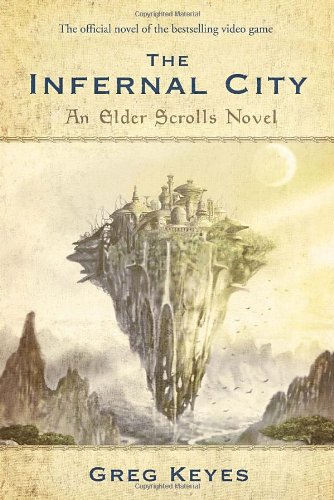
                • Cover of The Elder Scrolls
                  The Elder Scrolls

                  series · 2 books · 2009

                  similar byadventuroussecondary worldfantasyepic fantasypolitical intrigue

                  The Elder Scrolls is a series of action role-playing video games primarily developed by Bethesda Game Studios and published by Bethesda Softworks. The series focuses on free-form gameplay in an open world. Most games in the series have been critically and commercially successful, with The Elder Scrolls III: Morrowind (2002), The Elder Scrolls IV: Oblivion (2006) and The Elder Scrolls V: Skyrim (2011) all winning Game of the Year awards from multiple outlets. The series has sold more than 90 million copies worldwide.

                • Cover of Riftwar Saga
                  Riftwar Saga

                  series · 7 books · 1982

                  part of The Riftwar Universe

                  similar byadventuroussecondary worldepic fantasyfantasy

                  The Riftwar Saga is Raymond E. Feist's debut fantasy trilogy, opening with Magician, in which an orphaned apprentice named Pug is swept up when otherworldly invaders emerge through a dimensional rift into the frontier kingdom of Midkemia. Silverthorn and A Darkness at Sethanon carry the resulting war to its close, and the trilogy became the founding entry of Feist's much larger Riftwar Cycle.

                • Cover of The Saga of Recluce
                  The Saga of Recluce

                  series · 48 books · 1991

                  similar bysecondary worldepic fantasyfantasypolitical intrigue+1 more

                  The Saga of Recluce is a series of fantasy novels written by L. E. Modesitt Jr. The initial novel in the series, The Magic of Recluce, was published in 1991. The series is still in publication with the latest novel published in June 2026. In 2015 Modesitt stated that the (then) 20 novels in the Recluce series had sold nearly three million copies.

                • Cover of The Well at the World's End
                  The Well at the World's End

                  William Morris · standalone novel · 1896

                  similar byadventuroussecondary worldepic fantasyfantasy

                  The Well at the World's End is a high fantasy novel by the British textile designer, poet, and author William Morris. It was first published in 1896 and has been reprinted repeatedly since, most notably in two parts as the 20th and 21st volumes of the Ballantine Adult Fantasy series, in August and September 1970.