Loreful
HomeDiscover
Search series, authors…⌘K
Loreful

Reading orders for SF/F series and shared universes — with your place kept in every one.

Explore

UniversesSeriesWorksAuthorsAtlas

Help

FAQAboutSite map

Account & legal

Sign inCreate accountPrivacyTerms

Data

Built on ISFDB, Wikipedia, Wikidata and Open Library. Curated reading orders carry their reasoning on the page; the rest follow publication order. Data sources & licenses

© Loreful · data: ISFDB · CC BY

More like Emberclaw

anchored on:secondary world

but

Mood

The mood the book leaves you in.

  • The reading experience is propelled by journeys, exploration, and physical risk; excitement and forward momentum dominate over dread or introspection.
  • Joy and loss are deliberately mixed; the resolution grants characters something real while taking something else away, leaving warmth and sorrow together.
  • The book demands work from the reader — dense prose, difficult structure, unfamiliar ideas, or morally uncomfortable material — as part of its intended effect.
  • Grim events, cruelty, or despair dominate the atmosphere, and the book does not soften them with comfort or comic relief.
  • The atmosphere is quietly unsettling — wrongness, unease, and the uncanny pervade the book without necessarily escalating into overt horror.
  • The book is built to move the reader; character feeling is foregrounded and major scenes aim at a strong emotional response.
  • Humor is a primary aim and the prose plays for laughs — comic situations, wit, or dialogue produce sustained comedy, not occasional levity.
  • The book insists that things can improve; effort and decency are shown to matter, and the arc bends toward better outcomes even through hardship.
  • The book teaches as it goes — real facts, history, science, or craft are conveyed in enough depth that learning is part of the reading experience.
  • The book is designed to uplift and motivate, presenting perseverance or achievement in a way that invites the reader to aspire or act.
  • The overall register is cheerful and easygoing; stakes are kept gentle and the book avoids dwelling on pain or dread.
  • Withheld information drives the experience; the book sustains enigmas and secrets the reader wants resolved, whatever its genre.
  • The book is contemplative and inward-looking, giving more weight to thought, memory, and meaning than to external events.
  • The book works as comfort reading — low tension, a soothing pace, and an atmosphere the reader can unwind in.
  • Grief, loss, or melancholy set the dominant register, and the book lets sorrow stand rather than resolving it into comfort.
  • Sustained suspense is the point; the book keeps the reader braced for what happens next through danger, pressure, or impending revelation.
  • Playful invention and charm define the register — fanciful conceits, light absurdity, and a narration that delights in its own oddity.

About

What the story runs on.

  • Stories in which extraterrestrial beings are central — as characters, cultures, or the object of the plot.
  • Stories about venturing into space to explore — survey missions, astronauts, and the frontier of the unknown beyond Earth.
  • Stories structured as a quest — a journey undertaken to find, deliver, or destroy something of great import.
  • Stories in which staying alive against nature, catastrophe, or scarcity is the central problem.
  • Stories of lovers kept apart by law, family, faith, or station, where the obstacle to love is the plot.
  • Stories in which a friendship — its making, testing, or loss — is the emotional center.
  • Stories of growing up — a young protagonist crossing from childhood into adult knowledge and responsibility.
  • Stories about who a character truly is — self-discovery, doubled lives, and the search for a self.
  • Stories driven by maneuvering for power — factions, conspiracies, and statecraft conducted in shadow.
  • Stories about rising against rulers — uprisings, resistance movements, and revolutions and their aftermaths.
  • Stories in which war itself is the subject — combat, occupation, and what warfare does to soldiers and civilians.
  • Stories organized around investigating a killing — the case, the clues, and the pursuit of the killer, in any genre's clothing.

Shelf

Where it sits in the library.

    • Fiction built on magic or other supernatural elements that have no scientific explanation.
    • Secondary-world fantasy at large scale, where the fate of nations or the world turns on the protagonists' struggle.
    • Fantasy set in a recognizably modern city or contemporary world where the supernatural intrudes on everyday life.
    • Fantasy that blends in horror's atmosphere and imagery, keeping a fantastical frame around grim or frightening material.
    • Action-driven fantasy following warriors or rogues with personal stakes against sorcerous threats, rather than world-spanning conflicts.
    • Fantasy set in a real historical period or a close analogue of one, with magic woven into the era.
    • Fantasy in which protagonists cross from the ordinary world into another world through a portal or similar passage.
    • Fiction that retells or reworks a traditional fairy tale in a new form or setting.
    • Fantasy drawing directly on myths, legends, and folklore, retelling them or building on their figures and logic.
    • Fantasy of ghosts, vampires, shapeshifters, psychics, and similar phenomena, usually set in an otherwise ordinary world.
    • Fiction mixing science-fictional trappings with overtly magical or impossible elements in one setting.
    • Low-stakes fantasy emphasizing comfort, community, and everyday pleasures over conflict and peril.
    • Speculative fiction of pervasive moral ambiguity, violence, and cynicism that rejects heroic conventions — fantasy and SF alike.
      • Fiction that extrapolates from science and technology — future societies, space travel, or speculative inventions — within at least nominally natural laws.
      • Science fiction of interstellar scope — starships, galactic polities, and adventure across star systems.
      • Science fiction committed to scientific rigor, where technical plausibility constrains the story.
      • Science fiction centered on armed forces and warfare, told largely from a military point of view.
      • Science fiction of networked, corporate-dominated near futures, pairing high technology with social decay.
      • Science fiction styled on nineteenth-century steam-powered technology, often in a Victorian or pseudo-Victorian setting.
      • Fiction depicting an oppressive or catastrophic society, presented as a warning.
      • Fiction set after civilization's collapse, following survivors in the ruins of the old world.
      • Fiction in which characters move between past and future, and the mechanics or consequences of that travel drive the plot.
      • Fiction exploring a world where a historical event went differently and history diverged from ours.
      • Science fiction about humanity's first encounter and communication with an alien intelligence.
      • Science fiction in which extraterrestrial forces attack or occupy Earth and humanity resists.
      • Fiction whose primary aim is to frighten or unsettle the reader through dread, menace, or the monstrous.
      • Horror of vast, indifferent, incomprehensible entities before which humanity is insignificant, in the Lovecraft tradition.
      • Horror of decaying houses, buried family secrets, and oppressive atmosphere in the Gothic literary tradition.
      • Horror centered on hauntings and the returning dead.
      • Horror located in the mind — paranoia, obsession, and unreliable perception rather than external monsters.
      • Horror built around the reanimated dead and survival amid their outbreaks.
      • Horror defined by explicit, transgressive gore that refuses to cut away from violence.
      • Speculative fiction of the strange and uncanny that resists both natural explanation and standard genre categories.
      • Fiction organized around solving a crime or puzzle, typically following an investigator toward the identification of a culprit.
      • A puzzle-first mystery that lays out clues so the culprit's identity can be deduced before the reveal.
      • Crime fiction of moral ambiguity, fatalism, and hard-edged style, set among the corrupt and the doomed.
      • A mystery following the realistic routines of police work — forensics, interviews, and case-building.
      • A gentle mystery with an amateur sleuth, a small community, and violence kept off the page.
      • A mystery set in a past era, where the investigation works within that period's methods and society.
      • Fast-paced fiction driven by imminent danger, pursuit, or high-stakes conspiracy, built to sustain tension.
      • A thriller of espionage — agents, tradecraft, and intelligence services in conflict.
      • A thriller centered on lawyers and the courtroom, where litigation carries the suspense.
      • A thriller driven by detailed contemporary or near-future technology, often military or scientific.
      • A thriller whose tension comes from mental states and manipulation between characters rather than external action.
      • Fiction whose central plot is a romantic relationship and its development toward an emotionally satisfying resolution.
      • Romance in which one or both partners are supernatural beings, blending fantasy elements into the love story.
      • A fantasy-romance hybrid in which the romantic arc and the fantasy plot carry equal weight.
      • Romance set in a past era, with courtship shaped by the period's society and manners.
      • Romance set in the present day, without supernatural or historical elements.
      • Fiction set in a real past period, where the historical setting materially shapes characters and events.
        • General and literary fiction emphasizing prose style, character interiority, or formal ambition over genre plot conventions.
        • Fiction in a realistic world where magical events occur and are treated as ordinary, in the tradition of Latin American literature.
        • Fiction that ridicules people, institutions, or society in order to criticize them.
        • Fiction of dreamlike, irrational imagery and logic that breaks from realistic representation.
        • Fiction that plays with narrative convention through metafiction, fragmentation, and self-reference.
        • Fiction propelled by journeys, exploration, and physical peril, where action and survival carry the plot.
        • Adventure fiction of ships and seafaring — naval engagements, voyages, and life at sea.
        • Fiction of the American frontier West — gunmen, ranchers, and lawmen, typically in the late nineteenth century.
        • Fiction centered on soldiers, campaigns, and the experience of warfare, historical or imagined.
          • Fiction written primarily to amuse, using comedic situations, wit, or parody as its organizing principle.
            • Multi-generational fiction following a family or dynasty across decades, with inheritance and kinship as the through-line.
              • Fiction whose world runs on explicit game mechanics — levels, stats, and skills that characters can see and exploit.
                • Fiction about costumed or superpowered heroes and their conflicts with comparable villains.

                Practical

                How long a commitment, whether it stands alone, and whether it has finished.

                Tap a chip to ask for it · tap again to rule it out · once more to clear. Numbers show what would be left.

                • Cover of A Song of Ice and Fire
                  A Song of Ice and Fire

                  series · 14 books · 1996

                  part of World of Ice and Fire

                  similar bysecondary worldepic fantasypolitical intrigue+1 more

                  A Song of Ice and Fire is a series of high fantasy novels by the American author George R. R. Martin. Martin began writing the first volume, A Game of Thrones, in 1991, and published it in 1996. Martin, who originally envisioned the series as a trilogy, has released five out of seven planned volumes. The most recent entry in the series, A Dance with Dragons, was published in 2011. Since then, Martin has been working on the sixth novel, titled The Winds of Winter. A seventh novel, A Dream of Spring, is planned to follow.

                • Cover of Iskari
                  Iskari

                  series · 3 books · 2017

                  similar bysecondary world+6 more

                • Cover of The Hobbit
                  The Hobbit

                  series · 2 books · 1937

                  completed

                  part of Tolkien's legendarium

                  similar byadventuroussecondary worldepic fantasydragons

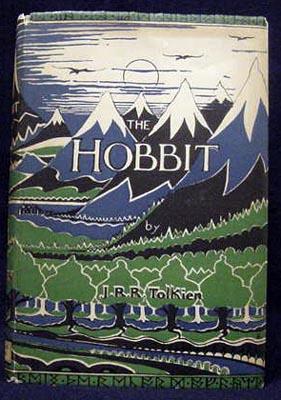
                  The Hobbit (1937) is J. R. R. Tolkien's children's fantasy novel following the reluctant burglar Bilbo Baggins, who joins a company of dwarves and the wizard Gandalf on a journey to reclaim treasure guarded by the dragon Smaug. It stands as a complete adventure on its own, but shares its setting with the rest of Tolkien's legendarium and leads into the events of The Lord of the Rings.

                • Cover of A Court of Thorns and Roses
                  A Court of Thorns and Roses

                  series · 6 books · 2015

                  similar bysecondary worldromantasy+3 more

                  A Court of Thorns and Roses is a fantasy romance series by American author Sarah J. Maas, which follows the journey of 19-year-old Feyre Archeron after she is brought into the faerie lands of Prythian. The first book of the series, A Court of Thorns and Roses, was published in May 2015. The series centers on Feyre's adventures across Prythian and the faerie courts, following the epic love story and fierce struggle that ensues after she enters the fae lands. The series has sold over 13 million copies. There are currently five novels in the series, with the sixth scheduled to release on October 27, 2026, and the seventh on January 12, 2027. An eighth installment is set to conclude the continuous story told across books six, seven and eight.

                • Cover of Celestial Kingdom
                  Celestial Kingdom

                  series · 4 books · 2022

                  similar bysecondary world+5 more

                  Sue Lynn Tan's Celestial Kingdom duology reimagines the Chinese legend of the moon goddess Chang'e, following her daughter Xingyin as she seeks to free her mother from an enchantment binding her to the moon. It opens with Daughter of the Moon Goddess (2022) and concludes with Heart of the Sun Warrior, with the companion collection Tales of the Celestial Kingdom and the further novel Immortal extending the same mythic world.

                • Cover of The Empyrean
                  The Empyrean

                  series · 4 books · 2023

                  similar bysecondary worldepic fantasyromantasydragonsenemies to lovers+1 more

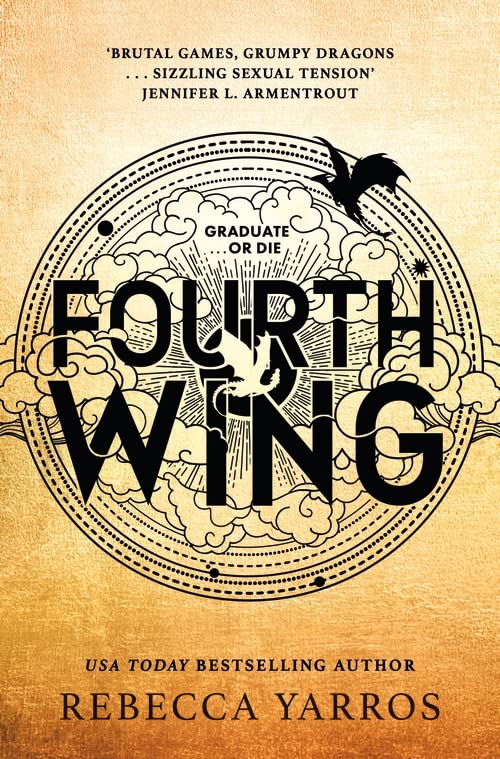
                  Rebecca Yarros's The Empyrean opens with Fourth Wing, following Violet Sorrengail as she's pushed into a brutal dragon-rider war college despite having trained for a different, less physically demanding path. Iron Flame and Onyx Storm continue her survival among rival riders and a wider political conflict facing the kingdom of Navarre. The series pairs a competitive military-academy structure with a central romance thread running alongside the war narrative.

                • Cover of Lightlark
                  Lightlark

                  series · 6 books · 2022

                  similar bysecondary world+2 more

                  Alex Aster's Lightlark saga is set on an island where six realms, each bound by an old curse, converge only once a century for a deadly game that could break their curses for good. It centers on Isla Crowe, ruler of a realm cursed with a monstrous secret, as she navigates rival rulers and a dangerous bond with the Wildling ruler Grim. The main sequence continues across further novels alongside companion novellas set in the same world.

                • Cover of Tairen Soul
                  Tairen Soul

                  series · 6 books · 2007

                  similar bysecondary worldepic fantasyromantasy+1 more

                  C. L. Wilson's Tairen Soul opens with Lord of the Fading Lands, a fairy-tale-inflected romantic fantasy in which a woodcarver's daughter is claimed as the truemate of a powerful fey lord and discovers that passion and magic can be dangerous together. The series continues across five novels, including King of Sword and Sky and Queen of Song and Souls.

                • BA
                  Blood and Ash Universe

                  series · 10 books · 2020

                  similar bysecondary worldromantasy+3 more

                • Cover of Earthsea Cycle
                  Earthsea Cycle

                  series · 18 books · 1964

                  completed

                  part of Earthsea

                  similar bysecondary worldepic fantasy+1 more

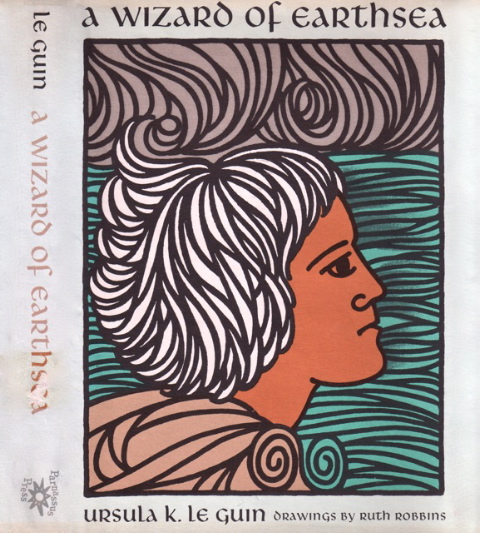
                  The Earthsea Cycle, also known as Earthsea, is a series of high fantasy books written by American author Ursula K. Le Guin. Beginning with A Wizard of Earthsea (1968), The Tombs of Atuan (1970), and The Farthest Shore (1972), the series was continued in Tehanu (1990), and Tales from Earthsea and The Other Wind. In 2018, all the novels and short stories were published in a single volume, The Books of Earthsea: The Complete Illustrated Edition, with artwork by Charles Vess.

                • Cover of Throne of Glass
                  Throne of Glass

                  series · 15 books · 2012

                  similar bysecondary worldepic fantasy+2 more

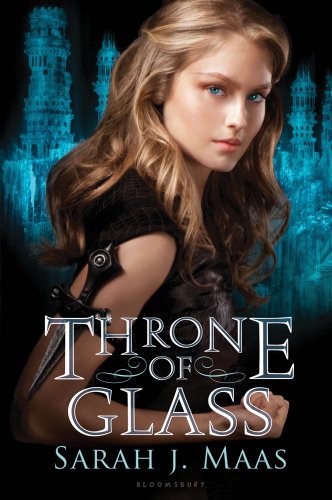
                  Throne of Glass is a epic fantasy novel series by American author Sarah J. Maas, beginning with the entry of the same name, released on August 2, 2012. The story follows the journey of Celaena Sardothien, a teenage assassin in a corrupt kingdom with a tyrannical ruler, the King of Adarlan. As the story progresses, Celaena forms unexpected bonds and uncovers a conspiracy amidst her adventures. The series concluded with the eighth book in October 2018.

                • Cover of Earthsinger Chronicles
                  Earthsinger Chronicles

                  series · 8 books · 2015

                  similar bysecondary worldepic fantasy+2 more

                • Cover of Dragonlance
                  Dragonlance

                  universe · 436 books · 1984

                  Start hereDragons of Autumn Twilight · Start here

                  similar bysecondary worldepic fantasy+2 more

                  The gods have kept their silence over Krynn for three hundred years, and the world has learned to make do without them: the dragons are a nursery tale, the old clerics gone, faith worn down to superstition. Then strangers bearing a blue crystal staff cross an autumn road, and shadows with wings blot out the three moons. This is a world where magic answers to those moons—white, red, and black—where a lance is the only weapon a dragon fears, and where the fate of nations turns on a handful of friends who meet again at a tavern table and find the age of legend has come for them. At its heart stand Margaret Weis and Tracy Hickman's twin trilogies. Chronicles—Dragons of Autumn Twilight, Winter Night, and Spring Dawning—follows the Heroes of the Lance through the War of the Lance; Legends turns inward to the twins, the frail mage Raistlin and his warrior brother Caramon, and the bargain a man will strike for power. Around this core Krynn sprawls across five ages and hundreds of volumes by many hands: The Raistlin Chronicles, The War of Souls, the Preludes and Meetings cycles, the Tales anthologies, with Richard A. Knaak, Douglas Niles, Jean Rabe, and Chris Pierson each adding elf-kingdoms, dragon-overlords, and long-buried history. It is a shared world—vast, uneven, honestly enormous. What sets Dragonlance apart is its warmth. This is heroic fantasy of fellowship and hard choices rather than grimness—the companionship of the road, courage measured against temptation, gods who watch to see whether mortals deserve them back. Begin with Chronicles, then read Legends; that pairing is the doorway every reader and both creators point newcomers through.

                • DT
                  Dragon Trilogies

                  series · 6 books · 1988

                  similar bysecondary worldepic fantasydragonspolitical intrigue+1 more

                  The Dragon Prince and Dragon Star trilogies comprise six connected fantasy novels written by Melanie Rawn. The Dragon Prince trilogy focuses on Prince Rohan of the Desert and his Sunrunner wife, Sioned, while the Dragon Star trilogy focuses on their son, Pol. The Dragon Prince trilogy consists of novels Dragon Prince, The Star Scroll, and Sunrunner's Fire. The books in the Dragon Star trilogy are Stronghold, The Dragon Token, and Skybowl.

                • TR
                  The Remnant Chronicles Universe

                  series · 6 books · 2014

                  similar bysecondary worldpolitical intrigue+4 more

                • Cover of The Lord of the Rings
                  The Lord of the Rings

                  series · 13 books · 1954

                  part of Tolkien's legendarium

                  similar bysecondary worldepic fantasy+1 more

                  The Lord of the Rings is an epic high fantasy novel written by the English author and scholar J. R. R. Tolkien. Set in Middle-earth, the story began as a sequel to Tolkien's 1937 children's book The Hobbit but eventually developed into a much larger work. Written in stages between 1937 and 1949, The Lord of the Rings is one of the best-selling books ever written, with over 150 million copies sold.

                • Cover of Kingmaker Chronicles
                  Kingmaker Chronicles

                  series · 5 books · 2016

                  similar bysecondary worldepic fantasyromantasy+3 more

                • Cover of Zimiamvian Trilogy
                  Zimiamvian Trilogy

                  series · 4 books · 1922

                  completed

                  similar bysecondary worldepic fantasypolitical intrigue

                  The Zimiamvian Trilogy is a series of fantasy novels by English author E. R. Eddison.Mistress of Mistresses (1935) A Fish Dinner in Memison (1941) The Mezentian Gate (1958)

                • WU
                  Warlands Universe

                  series · 10 books · 2005

                  similar bysecondary world+4 more

                • Cover of Queen's Thief
                  Queen's Thief

                  series · 41 books · 1996

                  similar bysecondary worldpolitical intrigue+2 more

                  Queen's Thief begins with The Thief, in which a boastful, underestimated young thief is pulled from prison to steal a legendary stone for the king's scholar, only for the story to reveal by its end that its narrator has been playing a much longer game than the reader realized. Megan Whalen Turner's series expands from that single heist into court intrigue and small-scale warfare among a set of Mediterranean-flavored kingdoms, with later books often shifting whose perspective the reader trusts. It's known for close, deliberately withheld narration as much as its plotting.

                • KL
                  Kushiel's Legacy Universe

                  series · 13 books · 2001

                  similar bysecondary worldpolitical intrigue+1 more

                • Cover of Age of Legends
                  Age of Legends

                  series · 4 books · 2014

                  similar byadventuroussecondary worldepic fantasy+2 more

                  Age of Legends is a fantasy trilogy by Kelley Armstrong, comprising Sea of Shadows, Empire of Night, and Forest of Ruin (2014–2016), distinct from her contemporary paranormal Darkest Powers books.

                • Cover of The Last Gift
                  The Last Gift

                  series · 5 books · 2020

                  similar bysecondary worldepic fantasypolitical intrigue+1 more

                • Cover of Crown of Shards
                  Crown of Shards

                  series · 3 books · 2018

                  similar bysecondary worldepic fantasy+4 more