More like Emerald Hell
anchored on:fantasycursesnorth americacontemporarydarkdark fantasy+5 more
but
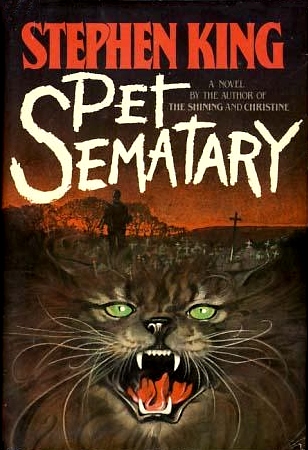
- Pet Sematary
Stephen Kingstandalone novel1983
similar bycontemporarydarkeeriecursesnorth americasmall townhorror
Pet Sematary is a 1983 horror novel by American writer Stephen King. It tells the story of a family moving to Maine and settling closer to a pet cemetery in the woods, which is home to a terrifying force that brings death and sorrow. The novel was nominated for a World Fantasy Award for Best Novel in 1984, and adapted into two films: one in 1989 and another in 2019 as well as several spinoffs.
- Horns
Joe Hillstandalone novel2010
similar bycontemporarydarkdemonsnorth americasmall towndark fantasyhorror
WorldCat: After his childhood sweetheart is brutally killed and suspicion falls on him, Ig Parrish goes on a drinking binge and wakes up with horns on his head, hate in his heart, and an incredible new power which he uses in the name of vengeance.
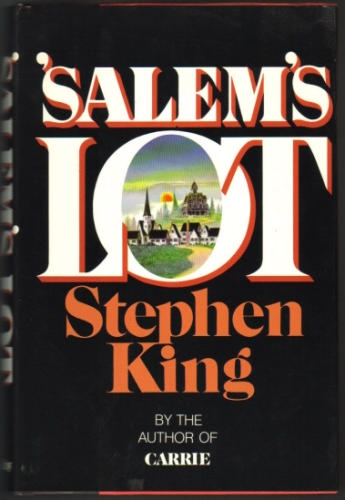
- Jerusalem's Lot
series3 books1975
similar bycontemporarydarkeerienorth americasmall townhorror
Stephen King's 1975 novel 'Salem's Lot follows writer Ben Mears as he returns to his childhood town of Jerusalem's Lot, Maine, only to discover that its residents are being turned into vampires by a newly arrived stranger. It transplants Gothic vampire horror into a small New England community, tracking that community's collapse under a supernatural siege. It is a single, self-contained novel.
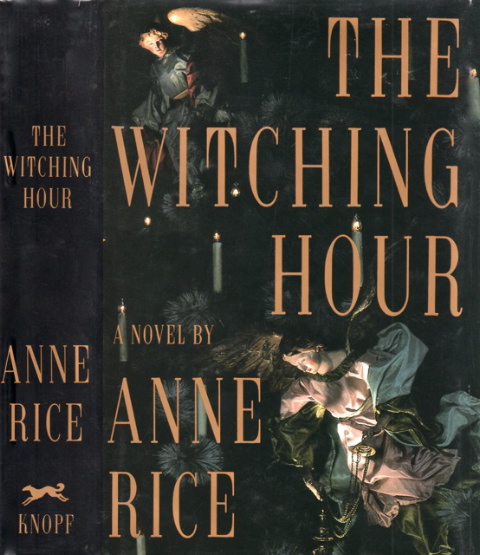
- The Mayfair Witches Saga
series3 books1990
completed
similar bycontemporarydarkeerienorth americahorrorfantasydark fantasy+1 more
Lives of the Mayfair Witches is a trilogy of Gothic supernatural horror fantasy novels by American author Anne Rice. It centers on a family of witches whose fortunes have been guided for generations by a spirit named Lasher. The series began in 1990 with The Witching Hour, which was followed by the sequels Lasher (1993) and Taltos (1994). All three novels debuted at No. 2 on The New York Times Best Seller list.
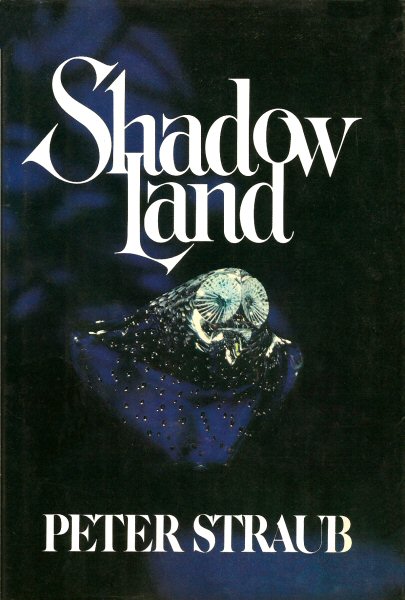
- Shadowland
Peter Straubstandalone novel1980
similar bycontemporarydarkeerienorth americadark fantasyhorror+1 more
WorldCat: Two apprentices studying under a master magician spend a season residing in a dark house located in the deep recesses of the Vermont forest. Learning secrets best left unlearned, they enter a world of incalculable evil and terror. Only one of them will survive the ordeal.
- Floating Dragon
Peter Straubstandalone novel1983
similar bycontemporarydarkeerienorth americasmall townhorror+1 more
Floating Dragon is a horror novel by American writer Peter Straub, originally published by Underwood-Miller in November 1982 and G.P. Putnam's Sons in February 1983. The novel won the August Derleth Award in 1984.
- The Tommyknockers
Stephen Kingstandalone novel1987
similar bycontemporarydarkeerienorth americasmall townhorror
The Tommyknockers is a 1987 science fiction horror novel by Stephen King. The novel is an excursion into the realm of science fiction for King, as the residents of the Maine town of Haven gradually fall under the influence of a mysterious object buried in the woods. King has since soured on The Tommyknockers, describing it as "an awful book", due to his drug addiction while writing the novel, though acknowledges the story's potential: "There's really a good book in here, underneath all the sort of spurious energy that cocaine provides, and I ought to go back." A miniseries adaptation was released in 1993.
- Darkness
John Saulstandalone novel1991
similar bycontemporarydarkeeriecursesnorth americasmall townhorror
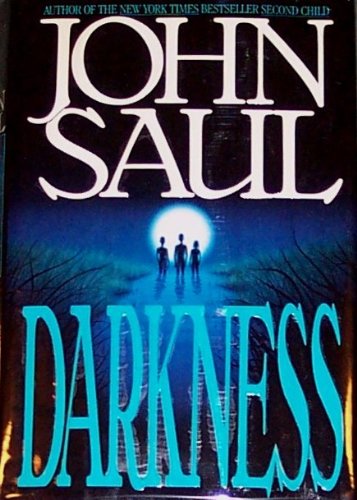
Darkness is a horror novel by John Saul published in 1991. Set in the fictional hamlet of Villejeune, Florida, a town shrouded by a dark, evil force. On the edge of an eerie swamp, the townsfolk act out gruesome rituals to appease the dark spirit that lies within the watery fortress enveloping the village. The Andersons return to the town, and soon realize they must confront this evil head on.
- Comes the Blind Fury
John Saulstandalone novel1980
similar bycontemporaryeeriecursesnorth americasmall townhorrorghost stories+1 more
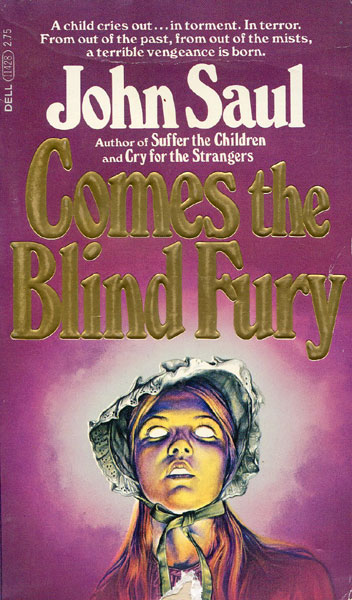
WorldCat: When Michelle comes to visit on Paradise Point, she sees the hand of a blind girl who died a century ago, reaching out to her from the swirling mists.
- Harvest Home
Thomas Tryonstandalone novel1973
similar bycontemporarydarkeerienorth americasmall townhorror
What is the dark secret the people (especially the women!) of Harvest Home are hiding? A family tries to get out of the City and finds the perfect home for their young daughter complete with folk remedies for her allergies and sensitivities in the local wisewoman. But is there something sinister under the surface of the charming little town?
- Mirror
Graham Mastertonstandalone novel1988
similar bycontemporarydarkeeriedemonsnorth americadark fantasyhorror
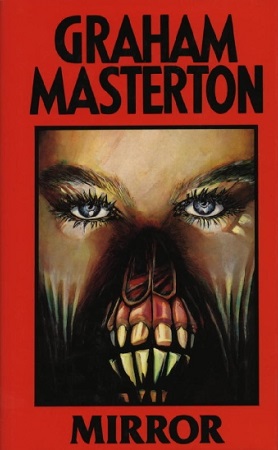
The antique mirror witnesses the gruesome murder of an eight-year-old child-star on the cusp of fame. Now the mirror hangs in the home of Martin Williams, washed-up Hollywood screenwriter and the dead child's biggest fan. But blood never forgets, and the mirror has been transformed into a doorway between the land of the living and a realm of demonic horror.
- The Amulet
Michael McDowellstandalone novel1979
similar bycontemporarydarkcurseseerienorth americasmall townhorror
The Amulet is a Southern Gothic horror novel, originally published in 1979 by Michael McDowell. The book was first published in paperback by Avon Books.
- Black River Orchard
Chuck Wendigstandalone novel2023
similar bycontemporarydarkeerienorth americasmall towndark fantasyhorror
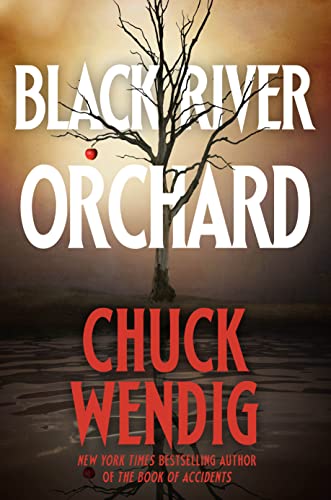
It’s autumn in the town of Harrow, but something besides the season is changing there. Because in that town there is an orchard, and in that orchard, seven most unusual trees. And from those trees grows a new sort of apple: strange, beautiful, with skin so red it’s nearly black. Take a bite of one of these apples, and you will desire only to devour another. And another. You will become stronger. More vital. More yourself, you will believe. But then your appetite for the apples and their peculiar gifts will keep growing—and become darker. This is what happens when the townsfolk discover the secret of the orchard. Soon it seems that everyone is consumed by an obsession with the magic of the apples... and what’s the harm, if it is making them all happier, more confident, more powerful? Even if something else is buried in the orchard besides the seeds of these extraordinary trees: a bloody history whose roots reach back to the very origins of the town. But now the leaves are falling. The days grow darker. It’s harvest time, and the town will soon reap what it has sown.
- The Boy Who Killed Demons
Dave Zeltsermanstandalone novel2014
similar bycontemporarydarkeeriedemonscursesnorth americahorror+1 more
"My name's Henry Dudlow. I'm fifteen and a half. And I'm cursed. Or damned. Take your pick. The reason? I see demons." So begins the latest novel by horror master Dave Zeltserman. The setting is quiet Newton, Massachussetts, where nothing ever happens. Nothing, that is, until two months after Henry Dudlow's 13th birthday, when his neighbor, Mr. Hanley, suddenly starts to look . . . different. While everyone else sees a balding man with a beer belly, Henry suddenly sees a nasty, bilious, rage-filled demon.
- Desperation/Regulators
series2 books1996
similar bycontemporarydarknorth americasmall townhorror+2 more
Stephen King published Desperation and The Regulators simultaneously in 1996, the first under his own name and the second under his Richard Bachman pseudonym. The two novels are mirror-universe companions: largely the same cast of characters appears in both, recast into different roles and circumstances, with each book's story driven by the same malevolent supernatural entity, Tak.
- The Ghost Tree
Christina Henrystandalone novel2020
similar bycontemporarydarkeerienorth americasmall towndark fantasyhorror
When the bodies of two girls are found torn apart in the town of Smiths Hollow, Lauren is surprised, but she also expects that the police won't find the killer. After all, the year before her father's body was found with his heart missing, and since then everyone has moved on. Even her best friend, Miranda, has become more interested in boys than in spending time at the old ghost tree, the way they used to when they were kids. So when Lauren has a vision of a monster dragging the remains of the girls through the woods, she knows she can't just do nothing. Not like the rest of her town. But as she draws closer to answers, she realizes that the foundation of her seemingly normal town might be rotten at the center. And that if nobody else stands for the missing, she will.
- A Head Full of Ghosts
Paul Tremblaystandalone novel2015
similar bycontemporarydarkeeriedemonsnorth americahorror+1 more
A Head Full of Ghosts is a 2015 horror novel by American writer Paul Tremblay. The plot involves a Massachusetts family under financial and emotional strain while their fourteen-year-old daughter, Marjorie Barrett, exhibits signs of severe mental illness. The Barretts come to believe she is possessed by a demon, and her behavior is publicized when the family stars in a reality TV show. Marjorie's younger sister, Merry Barrett, relays the experiences of her childhood fifteen years later. Themes include elements of Catholic exorcism and reality television exploitation.
- Hell House
Richard Mathesonstandalone novel1971
similar bycontemporarydarkeerienorth americahorrorghost stories
A dying millionaire wants proof, once and for all, of what happens after death, and hires physicist-turned-parapsychologist Dr. Lionel Barrett to spend a week investigating the Belasco House in Maine -- a mansion so thoroughly associated with atrocity that it's known simply as Hell House, where every previous investigation has ended in death or madness. Barrett brings his wife Edith along with two mediums, the spiritualist Florence Tanner and Benjamin Franklin Fischer, survivor of an earlier disastrous visit, whose scientific skepticism and spiritualist convictions clash from the first night inside. Richard Matheson's haunted-house novel, later filmed as The Legend of Hell House.
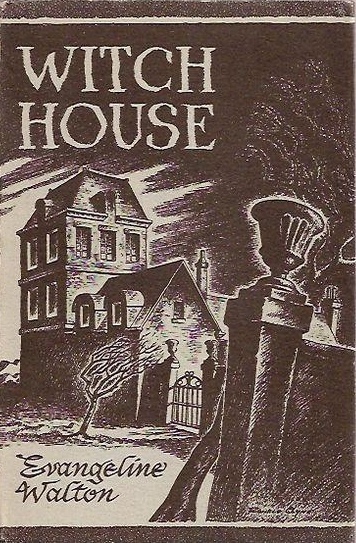
- Witch House
Evangeline Waltonstandalone novel1945
similar bycontemporarydarkeeriecursesfantasyhorror+1 more
Witch House is a fantasy novel by American writer Evangeline Walton. It was published in 1945 by Arkham House in an edition of 3,000 copies. It was the first full-length novel to be published by Arkham House and was listed as the initial book in the Library of Arkham House Novels of Fantasy and Terror. An expanded version, with a newly written 20,000-word prologue, was published in England in 1950. In 2013, Centipede Press issued the first American edition of this revised version, also including previously unpublished writings by Walton and several of her short stories.
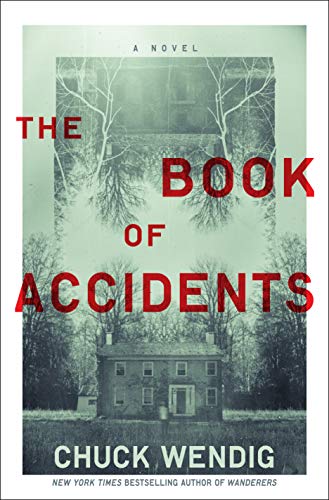
- The Book of Accidents
Chuck Wendigstandalone novel2021
similar bycontemporarydarkeerienorth americasmall towndark fantasyhorror
Long ago, Nathan lived in a house in the country with his abusive father—and has never told his family what happened there. Long ago, Maddie was a little girl making dolls in her bedroom when she saw something she shouldn’t have—and is trying to remember that lost trauma by making haunting sculptures. Long ago, something sinister, something hungry, walked in the tunnels and the mountains and the coal mines of their hometown in rural Pennsylvania. Now, Nate and Maddie Graves are married, and they have moved back to their hometown with their son, Oliver. And now what happened long ago is happening again . . . and it is happening to Oliver. He meets a strange boy who becomes his best friend, a boy with secrets of his own and a taste for dark magic. This dark magic puts them at the heart of a battle of good versus evil and a fight for the soul of the family—and perhaps for all of the world. But the Graves family has a secret weapon in this battle: their love for one another.
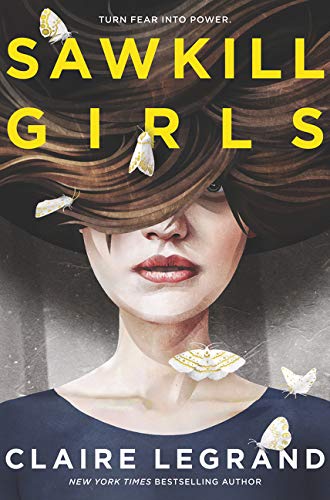
- Sawkill Girls
Claire Legrandstandalone novel2018
similar bycontemporarydarkeeriemonster huntingnorth americadark fantasyhorror
Beware of the woods and the dark, dank deep. He’ll follow you home, and he won’t let you sleep. Who are the Sawkill Girls? Marion: the new girl. Awkward and plain, steady and dependable. Weighed down by tragedy and hungry for love she’s sure she’ll never find. Zoey: the pariah. Luckless and lonely, hurting but hiding it. Aching with grief and dreaming of vanished girls. Maybe she’s broken—or maybe everyone else is. Val: the queen bee. Gorgeous and privileged, ruthless and regal. Words like silk and eyes like knives, a heart made of secrets and a mouth full of lies. Their stories come together on the island of Sawkill Rock, where gleaming horses graze in rolling pastures and cold waves crash against black cliffs. Where kids whisper the legend of an insidious monster at parties and around campfires. Where girls have been disappearing for decades, stolen away by a ravenous evil no one has dared to fight… until now.
- Talisman
series4 books1984
similar bycontemporaryfantasynorth america+6 more
Stephen King and Peter Straub's The Talisman follows twelve-year-old Jack Sawyer as he crosses between our world and the Territories, a parallel realm, on a cross-country quest to save his dying mother. The 2001 sequel Black House catches up with Jack decades later as a retired detective drawn into a serial-murder case in small-town Wisconsin that pulls the Territories back into his life. A third book, Other Worlds Than These, was announced in 2025 to complete the trilogy.
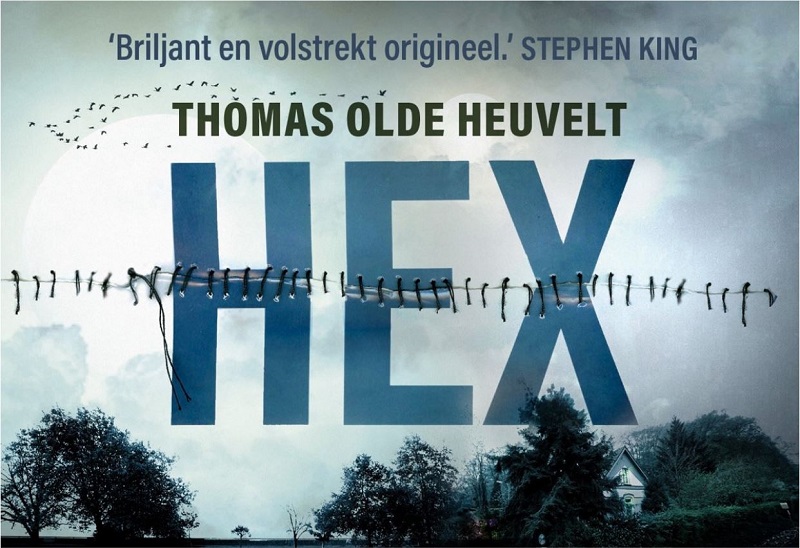
- Hex
Thomas Olde Heuveltstandalone novel2013
similar bycontemporarycursesdarkeerienorth americasmall townhorror
HEX is a horror novel by Dutch author Thomas Olde Heuvelt. It was first published in Dutch in 2013 through Luitingh-Sijthoff and was published in English in 2016 through Tor Books, marking the first time one of Olde Heuvelt's novels have been published in English. The English version was translated by Nancy Forest-Flier and the decision was made to localize the work by shifting the story's setting from the Netherlands to the Hudson Valley in New York.
- Black Light
Elizabeth Handstandalone novel1999
similar bycontemporarydarkeerienorth americasmall towndark fantasyhorror
Two factions of magicians vie for control of the world in this horror fantasy in Maine. The events are seen through the eyes of a high-school girl and they play out during a film director's party.