More like Emergent
anchored on:science fictionnear future
but
- Blade Runner Universe
series6 books1968
similar byscience fictionnear futurerobots+2 more
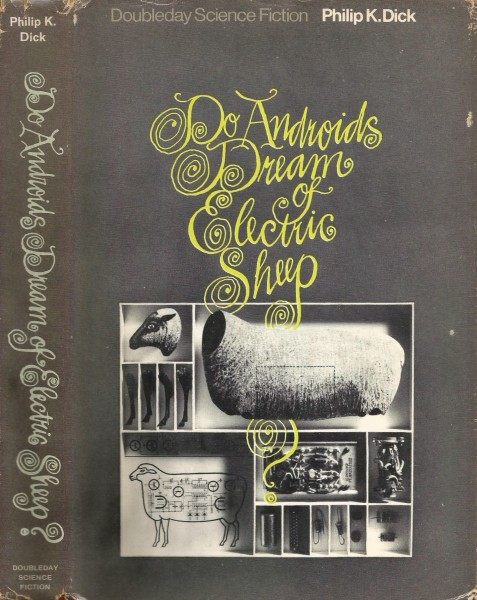
Philip K. Dick's 1968 novel Do Androids Dream of Electric Sheep? follows bounty hunter Rick Deckard as he tracks escaped androids through an irradiated, near-abandoned San Francisco, using the hunt to probe questions of empathy and what separates human from machine. The novel became the basis for Ridley Scott's 1982 film Blade Runner, and Marvel Comics later published an illustrated adaptation of that film. Together the two trace the story's path from prose original to screen and comic-page adaptation.
- Foundation Universe
universe123 books1940
Start hereFoundation · Start here
similar byscience fictionrobots+2 more
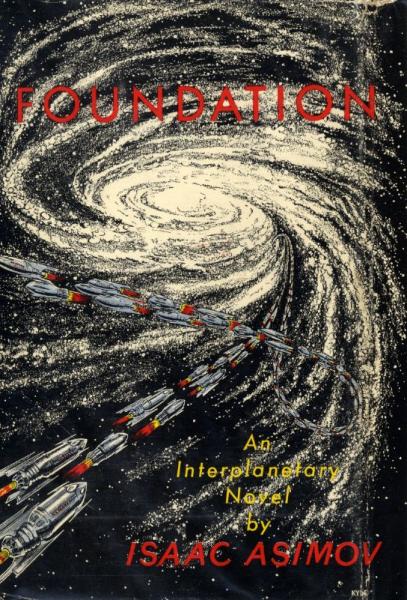
There is a science that reads the future of quadrillions the way an astronomer reads the orbits of stars. It is called psychohistory, and its equations foresee something the ruling Galactic Empire cannot admit: the throne is rotting, and thirty thousand years of barbarism are coming. One man, Hari Seldon, cannot stop the fall. He can only shorten it — by seeding a Foundation of scholars at the rim of the galaxy, a fragile institution built to carry knowledge across the dark and cut the interregnum to a single millennium. This is a universe told in the register of history itself: the long view, the calm of deep time, empires measured in centuries and men measured against them. The spine is Asimov's original trilogy — Foundation, Foundation and Empire, Second Foundation — followed decades later by the sequels Foundation's Edge and Foundation and Earth and the prequels Prelude to Foundation and Forward the Foundation. Late in life Asimov braided this in with his other future histories: the Robot novels of detective Elijah Baley and his humaniform partner R. Daneel Olivaw (The Caves of Steel, The Naked Sun, The Robots of Dawn, Robots and Empire) and the early Galactic Empire novels (Pebble in the Sky and its kin), until one continuous chronicle ran from the first thinking robots to the Second Empire. Other hands extend it — the Second Foundation Trilogy by Gregory Benford, Greg Bear, and David Brin, and shared-world spinoffs such as Robot City — so the corpus sprawls beyond a single author's tidy shelf. What distinguishes it is that the drama is intellectual: crises resolved by insight, nerve, and dialogue rather than fleets and blades, each turn hinging on the hidden logic of the Seldon Plan. Begin where readers have always begun — with Foundation, and the original trilogy in publication order. The rest opens outward from there.
- Forge of God
series2 books1987
completed
similar byscience fiction+3 more
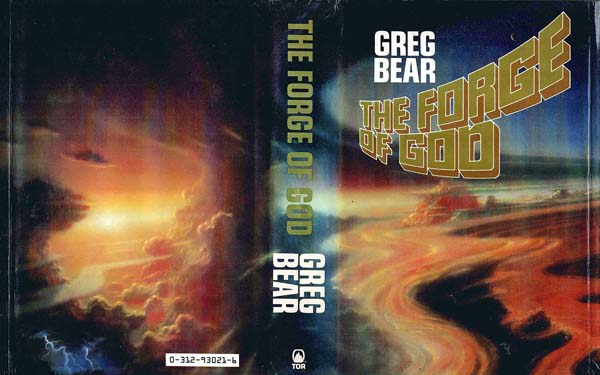
The Forge of God (1987) is Greg Bear's science fiction novel about Earth's discovery that it is the target of an incomprehensible, overwhelming alien attack, following scientists and ordinary people as they try to understand what is destroying the planet. Its 1992 sequel, Anvil of Stars, follows a group of young survivors sent on a mission of interstellar retaliation, continuing directly from the first book's ending.
- Hardwired
series3 books1986
similar byscience fictionnear futureour world+1 more
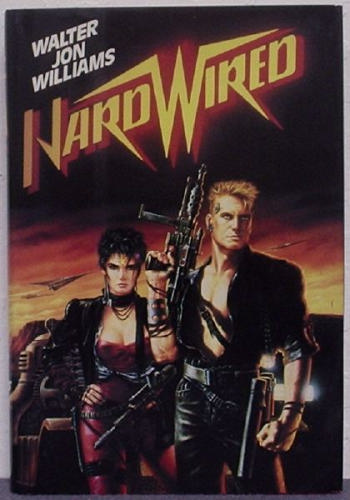
Walter Jon Williams' Hardwired (1986) is an early and influential cyberpunk novel. Voice of the Whirlwind, published three years later, is a loosely connected follow-up set in the same future, sharing its technological and political backdrop with a different cast of characters.
- Silver Metal Lover
series2 books1981
completed
similar byscience fictionnear futurerobotsour world+1 more
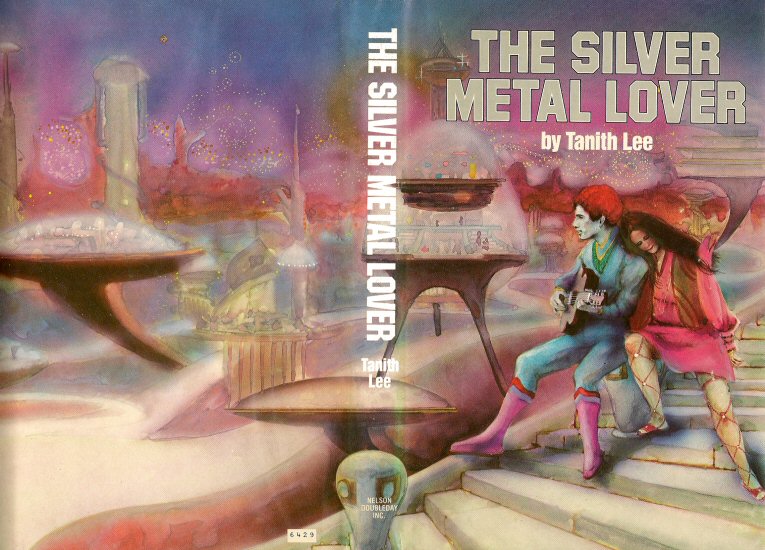
The S.I.L.V.E.R. series is a fantasy novel series by Tanith Lee. The Silver Metal Lover, published in 1981, is the first in the series. Metallic Love, published in 2005, is the second novel.
- Robopocalypse
series3 books2011
similar byscience fictionnear futureartificial intelligencerobotsour world
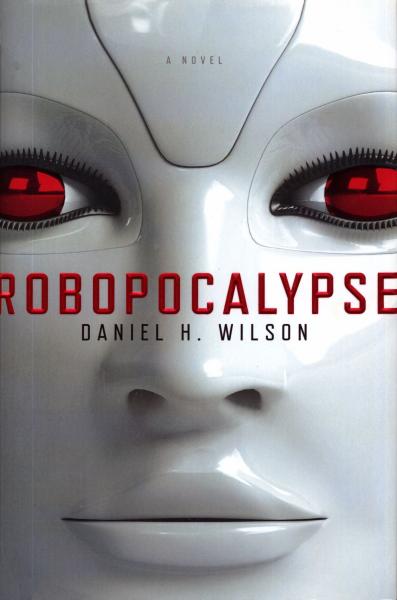
Daniel H. Wilson's Robopocalypse (2011) depicts an artificial intelligence, born from a robotics researcher's experiments, that turns against humanity and seizes control of interconnected machines worldwide. Told in a present-tense, techno-thriller style compared to Michael Crichton's work, the New York Times bestseller continues in the sequel Robogenesis, which follows the aftermath of the robot uprising.
- Sunrise Alley
series2 books2004
similar byscience fictionnear futureartificial intelligencerobots+1 more
- Dogs of War (Adrian Tchaikovsky)
series3 books2017
similar byscience fictionour worldnear future+2 more
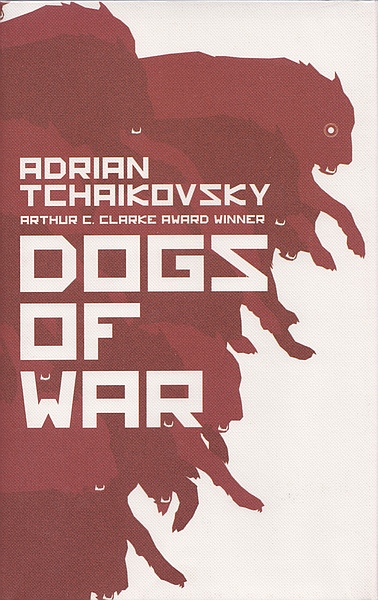
Adrian Tchaikovsky's Dogs of War follows Rex, a genetically engineered "Good Boy" - a hulking bioform supersoldier built for a private military contractor - as he begins to question the nature of his own obedience and personhood after his handler disappears. Dogs of War, Bear Head, and Bee Speaker widen from that first book's battlefield into questions of AI rights, corporate power, and non-human consciousness across a near-future Earth. The trilogy uses its engineered-animal soldiers to interrogate free will and loyalty rather than play them as straightforward action heroes.
- Service Model
series3 books2024
similar byscience fictionnear futureartificial intelligencerobotsour world
- The City and the Stars
Arthur C. Clarkestandalone novel1956
similar byscience fiction+3 more
The City and the Stars is a science fiction novel by British writer Arthur C. Clarke, published in 1956. This novel is a complete rewrite of Clarke's earlier Against the Fall of Night, his first novel, which had been published in Startling Stories magazine in 1948 after being rejected by the editor of Astounding Science-Fiction, according to the author.
- Ware
series5 books1982
similar byscience fictionnear futureartificial intelligencerobotsour world
The Ware Tetralogy is a series of four science fiction novels by author Rudy Rucker: Software (1982), Wetware (1988), Freeware (1997) and Realware (2000).
- Autonomous
Annalee Newitzstandalone novel2017
similar byscience fictionnear futureartificial intelligencerobotsour world
Autonomous is a 2017 science fiction novel by Annalee Newitz. It is Newitz's debut novel and was published by Tor Books on September 19, 2017. Set in a near future Earth, the book describes a world where both humans and intelligent robots can be owned as property. The events of the novel follow Jack, a "drug pirate" who manufactures illegal versions of patented drugs, and Paladin, a combat robot who is owned by the law enforcement agency searching for Jack after one of the drugs she reverse-engineered turns out to have dangerous side effects.
- Humanoids
series5 books1947
completed
similar byscience fiction+4 more
Jack Williamson's Humanoids series warns of a future where flawless service robots, built to serve and protect humanity under an unbreakable directive, end up smothering human freedom and purpose by eliminating every source of risk. The 1947 novella 'With Folded Hands...' introduces the humanoids' spread; the 1949 novel The Humanoids follows physicist Clay Forrester's resistance decades later as the machines take over world after world; The Humanoid Touch, written three decades on, offers Williamson's own alternate take on how such a takeover might end.
- Blood Music
Greg Bearstandalone novel1985
similar byscience fictionnear futureour world+1 more
Blood Music is a 1985 science fiction novel by American writer Greg Bear. It is an expanded version of a short story of the same title, originally published in the June 1983 issue of Analog and the winner of both the 1983 Nebula and 1984 Hugo awards for Best Novelette. The novel won the 1986 Prix Apollo Award, given to the best science fiction novel published in France during the preceding year, under the title La Musique du sang.
- The Collected Stories of Philip K. Dick
series11 books1987
completed
similar byscience fictionour world+3 more
The Collected Stories of Philip K. Dick is a collection of 118 science fiction stories by American writer Philip K. Dick. It was first published by Underwood-Miller in 1987 as a five volume set. See Philip K. Dick bibliography for information about the mass market reprints.
- India 2047
series9 books2004
similar byscience fictionnear future+2 more
Set in an India a century after independence, this sequence follows the political and personal fallout of banned, illegally evolved artificial intelligences amid an India-Pakistan water war. River of Gods (2004) is the core novel; The Little Goddess and the linked stories collected in Cyberabad Days (2009) revisit the same Cyberabad setting from smaller, more intimate angles. Ian McDonald built it around near-future biotech, nanotech, and AI rather than a continuing cast of characters.
- Man Plus
series2 books1976
similar byscience fictionnear futurerobots
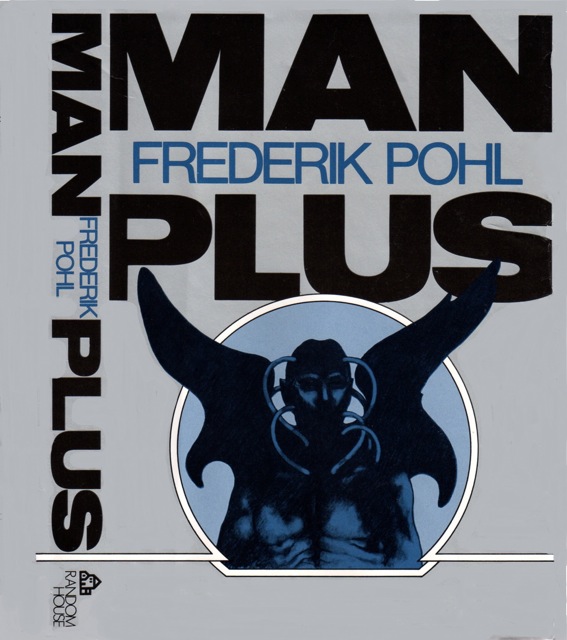
Frederik Pohl's Man Plus follows Roger Torraway, who is surgically and cybernetically rebuilt into a post-human organism able to survive unprotected on the Martian surface, as part of a crash program to colonize Mars ahead of a predicted global crisis. The 1976 novel, which won the Nebula Award, is a clinical, unsentimental look at what such a transformation costs a person's sense of self. Thomas T. Thomas wrote the sequel Mars Plus, continuing the story of the Martian colony years later.
- The Mad Scientist's Daughter
Cassandra Rose Clarkestandalone novel2013
similar byscience fictionnear futureour world
- The Light of Other Days
Arthur C. Clarke & Stephen Baxterstandalone novel2000
similar byscience fictionnear futureour world+1 more
An industrialist devises a technique to use tiny wormholes as light pipes to enable viewing of any event anywhere; and subsequently it becomes possible to use them to view any event in the past as well. The effects on society are enormous.
- We Can Build You
Philip K. Dickstandalone novel1972
similar byscience fictionnear futurerobotsour world
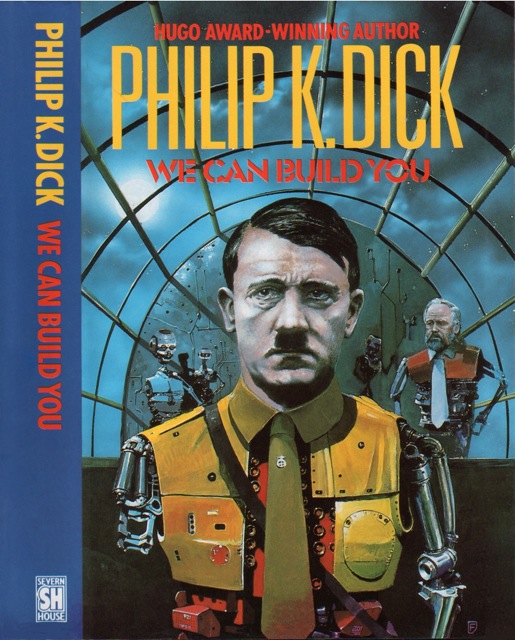
We Can Build You is a 1972 science fiction novel by American writer Philip K. Dick. Written in 1962 as The First in Our Family, it remained unpublished until appearing in serial form as A. Lincoln, Simulacrum in the November 1969 and January 1970 issues of Amazing Stories magazine, re-titled by editor Ted White. The novel was issued as a mass market paperback original by DAW Books in 1972, its final title provided by publisher Donald A. Wollheim. Its first hardcover edition was published in Italy in 1976, and Vintage issued a trade paperback in 1994.
- Dangerous Reality
Malorie Blackmanstandalone novel1999
similar byscience fictionnear futureartificial intelligencerobotsour world
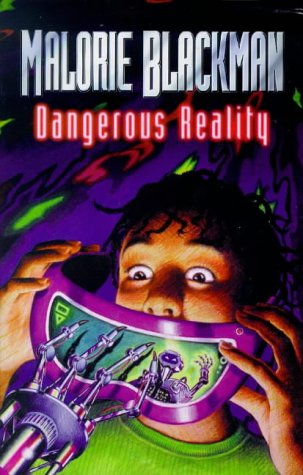
Dominic is really proud of his Mum, she invented VIMS. She's also about to marry Jack which will give Dominic the best stepdad he could wish for. VIMS can do anything, disarm a landmine, hold a baby. But when VIMS attacks violently without warning, Dominic realizes it is no longer a fantastic game. Suggested level: intermediate, junior secondary.
- Machinehood
S. B. Divyastandalone novel2021
similar byscience fictionnear futureartificial intelligencerobotsour world
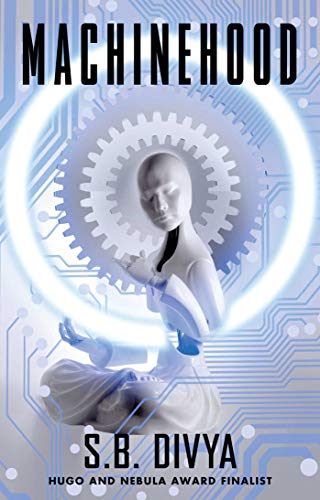
Machinehood, a near-future science fiction thriller published in 2021, is the debut novel of S.B. Divya. It was a nominee for the Nebula Award for Best Novel in 2022.