More like Enforcer
anchored on:science fictionnear futurespace colonizationpolitical intrigueother star systemstense
but
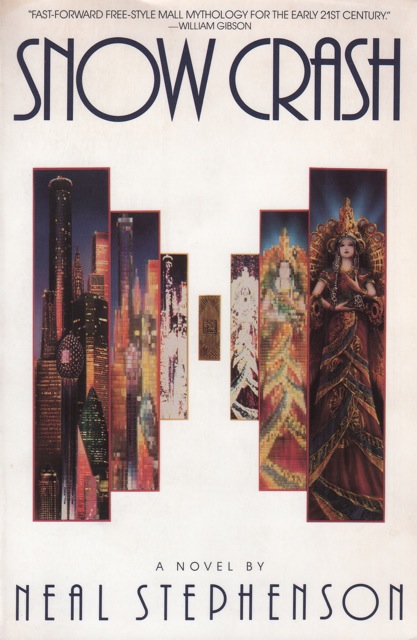
- Snow Crash
Neal Stephensonstandalone novel1992
similar byscience fictiontensenear futurepolitical intrigueadventurous
Snow Crash is a 1992 science fiction novel by Neal Stephenson. Like many of Stephenson's novels, its themes include history, linguistics, anthropology, archaeology, religion, computer science, politics, cryptography, memetics, and philosophy.
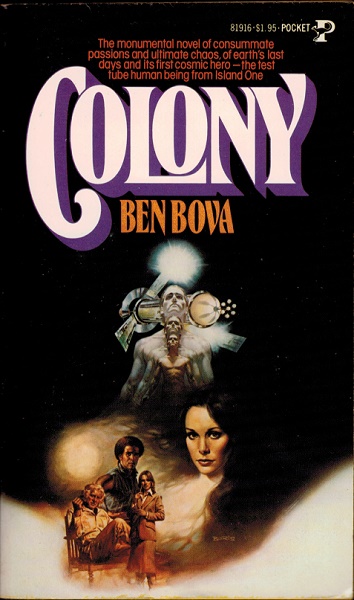
- Colony
Ben Bovastandalone novel1978
similar byscience fictiontensenear futurespace colonizationpolitical intrigue
Colony continues the story Ben Bova began in Millennium, following astronaut-turned-administrator Chet Kinsman years later as the head of an orbiting space habitat that has become Earth's only real refuge from a planet buckling under overpopulation, food shortages and unrest. Getting a place in the habitat is a matter of life and death for millions who will never be chosen, and as Earth's governments grow more desperate to control or dismantle the colony outright, Kinsman has to decide how far he'll go to protect the world he's built off-world. Bova later folded both novels together into the omnibus The Kinsman Saga. Part of Ben Bova's Chet Kinsman series.
- Laurie Jo Hansen
series10 books1971
completed
part of CoDominium
similar byscience fictiontensenear futurespace colonizationspace+2 more
Laurie Jo Hansen groups Jerry Pournelle's early CoDominium-universe stories and the novel Exiles to Glory (1978), part of the same future history that produced his Falkenberg's Legion novels.
- The Moon Is a Harsh Mistress
Robert A. Heinleinstandalone novel1966
similar byscience fictionspace colonizationpolitical intrigueadventurous+1 more
A technician discovers that the massive computer that operates everything on Luna (a prison colony) has become self-aware. He befriends it, but when he accompanied a beautiful girl to a dissident meeting, he encounters people who want to throw off the yoke of their Earth rulers.
- Dune
series20 books1963
part of Dune Universe
similar byscience fictionpolitical intrigueother star systems+1 more
Frank Herbert's Dune Chronicles opens with 1965's Dune, set on the desert planet Arrakis where House Atreides takes control of the only source of the vital spice melange and young Paul Atreides is pulled into a struggle over its politics and religion. Herbert carried the story forward across five further novels — Dune Messiah, Children of Dune, God Emperor of Dune, Heretics of Dune, and Chapterhouse: Dune — following Paul's line over the following millennia, before Brian Herbert and Kevin J. Anderson later extended the saga. Many other editions of these six novels are omnibus and box-set repackagings rather than separate stories.
- Dune Universe
universe78 books1963
Start hereDune · Start here
similar byscience fictionpolitical intrigueother star systems+1 more
Arrakis. Dune. The desert planet, where empire runs on a single substance: the spice melange, which folds space, prolongs life, and unlocks prescience, and which exists nowhere else in the known universe. Frank Herbert's saga is a meditation dressed as an adventure — feudal houses and a secret sisterhood, engineered messiahs and the patient ecology of a world without water, all turning on the terrible gravity of who commands the spice. It reads like scripture and schemes like a war room, ten thousand years hence, among people who have outlawed the thinking machine and made instruments of themselves instead. At its heart stand Herbert's original six — Dune, Dune Messiah, Children of Dune, God Emperor of Dune, Heretics of Dune, Chapterhouse: Dune — a single deepening arc across millennia, arguing the whole way between prophecy and free will. Around that spine his son Brian Herbert and Kevin J. Anderson have raised a vast prequel architecture: Prelude to Dune, tracing the great houses a generation before Paul; Legends of Dune, reaching back to the crusade that broke the machines; the Schools of Dune cycle on the founding of Bene Gesserit, Mentat, and Navigator; the Caladan Trilogy and Heroes of Dune filling years the originals left in shadow. Many hands, dozens of volumes, one desert. What sets Dune apart is its refusal of the simple: religion is manufactured, heroes are hazards, and the sand itself — worm, water, ecology — acts as a political power. Begin where the universe did, with Frank Herbert's Dune (1965), and read the original six in order; you need nothing else to feel the full weight. The prequels are a country to explore afterward, taken by era. Beginnings are delicate times.
- Moties
series4 books1974
part of CoDominium
similar byscience fictionpolitical intrigueother star systemsspace+2 more
Larry Niven and Jerry Pournelle's The Mote in God's Eye (1974) depicts humanity's first contact with an alien species, the Moties, set within the far-future interstellar setting of Pournelle's codominium future history. The Gripping Hand continues that first-contact crisis years later, and Outies, written by J. R. Pournelle, carries the story forward into a new generation. Together the three books trace an escalating encounter between human and Motie civilizations within the codominium universe.
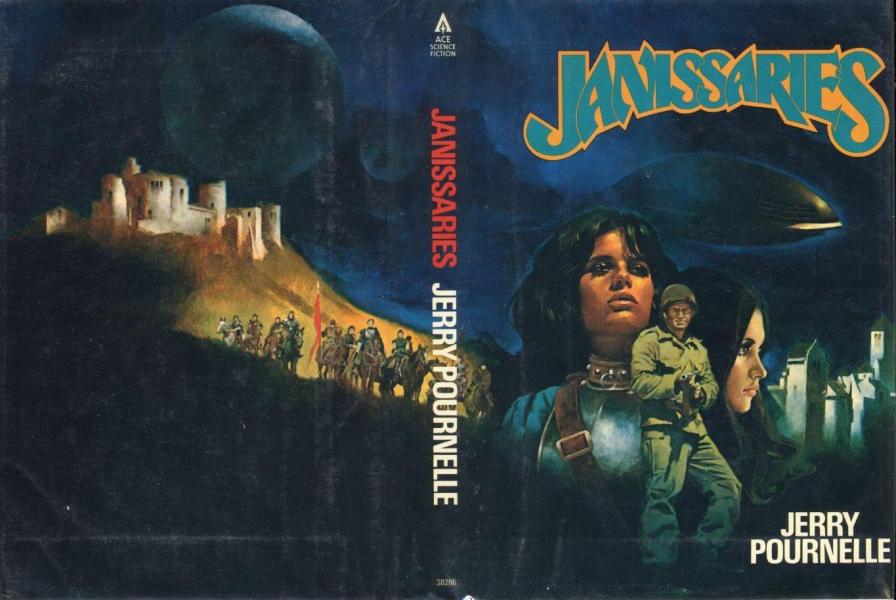
- Janissaries
series4 books1979
similar byscience fictiontensepolitical intrigueother star systemsadventurous+1 more
Janissaries are an American series of military and political-based science fiction novels are set in an interstellar confederation of races, in which humans are a slave race entrusted with military affairs and law enforcement. They were written by Jerry Pournelle, with Roland J. Green co-authoring the second two books.
- Red Moon
Kim Stanley Robinsonstandalone novel2018
similar byscience fictiontensenear futurespace colonizationpolitical intrigue
Red Moon is a 2018 science fiction novel by American novelist Kim Stanley Robinson. The novel is set in China and on the Moon. It was reviewed in several US media outlets with mixed reception.
- Chanur
series7 books1982
part of Alliance-Union Universe
similar byscience fictiontensepolitical intrigueother star systemsadventurousspace
The Chanur novels are a series of five science fiction novels, forming three separate stories, written by American author C. J. Cherryh and published by DAW Books between 1982 and 1992. The first novel in the series is The Pride of Chanur (1982), which was nominated for both the Hugo and Locus Awards in 1983. The Pride of Chanur, originally a stand-alone story, was followed by the Chanur's Venture trilogy, Chanur's Venture (1984), which was shortlisted for a Locus Award in 1985; The Kif Strike Back (1985) and Chanur's Homecoming (1986). These were followed by a later sequel, Chanur's Legacy (1992). The five novels were also published in two omnibus editions: the first three in The Chanur Saga in 2000 and the next two in Chanur's Endgame in 2007.
- Company Wars
series7 books1981
part of Alliance-Union Universe
similar byscience fictiontensepolitical intriguespace+1 more
Company Wars gathers the novels C. J. Cherryh set during the breakaway conflict between Earth's colonial Company and the newly independent Union, within her wider Alliance-Union future history. Anchored by the Hugo Award-winning Downbelow Station, the books follow different ships, stations, and crews caught on either side, from merchanter traders to military spacers, rather than a single continuing cast. Read in any order, they build up a picture of the political and economic pressure that reshapes Cherryh's larger Alliance-Union universe.
- Honor Harrington
series14 books1993
part of Honorverse
similar byscience fictiontensepolitical intrigueother star systemsspace+1 more
David Weber's Honor Harrington novels follow the title character's rise through the Manticoran navy in the 'Honorverse,' a space-opera setting built around Age-of-Sail-style naval combat, interstellar politics and a decades-long war between rival star nations. Beginning with On Basilisk Station, the core series runs to fourteen books, alongside spin-off subseries, prequels and shared-world anthologies also set in the Honorverse. It's one of the longest-running modern military science fiction series, published by Baen.
- Have Space Suit - Will Travel
Robert A. Heinleinstandalone novel1958
similar byscience fictiontensenear futureadventurousspace+1 more
From the back cover of the Del Rey 9th printing: "Skyjacked - Everything happened at once. One minute Kip Russell was walking about in his own backyard, testing out an old space suit and dreaming about going to the moon - and the next he was out cold and the captive of an insidious space pirate. The whole thing seemed like a very bad dream until he discovered he wasn't the only prisoner on board. Then the reality of the situation became inescapable. He - along with the daughter of a world-renowned scientist and a beautiful creature from an alien planet - had been skyjacked by a monstrous extraterrestrial and they were on their way to the Moon... a journey toward a fate worse than death!"
- Man Plus
series2 books1976
similar byscience fictiontensenear futurespace colonization
Frederik Pohl's Man Plus follows Roger Torraway, who is surgically and cybernetically rebuilt into a post-human organism able to survive unprotected on the Martian surface, as part of a crash program to colonize Mars ahead of a predicted global crisis. The 1976 novel, which won the Nebula Award, is a clinical, unsentimental look at what such a transformation costs a person's sense of self. Thomas T. Thomas wrote the sequel Mars Plus, continuing the story of the Martian colony years later.
- Vatta's War
series6 books2003
part of Vatta
similar byscience fictiontensepolitical intrigueother star systemsadventurousspace
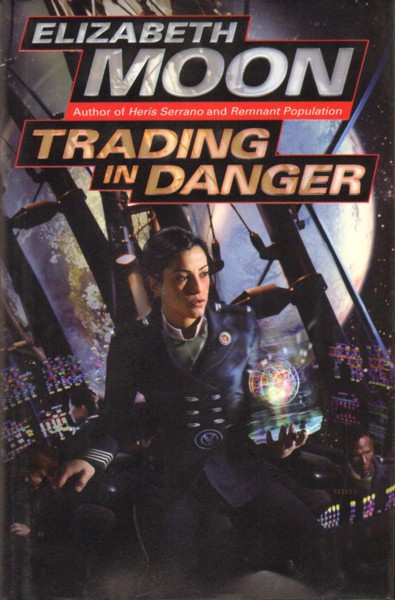
Vatta's War is a science fiction series by American writer Elizabeth Moon, comprising five books: Trading in Danger (2003), Marque and Reprisal, Engaging the Enemy (2006), Command Decision (2007), and Victory Conditions (2008). They have been characterized as military science fiction similar in style to the works of Lois McMaster Bujold, David Weber and Walter Jon Williams.
- Artemis
Andy Weirstandalone novel2017
similar byscience fictiontensenear futurespace colonizationadventurous
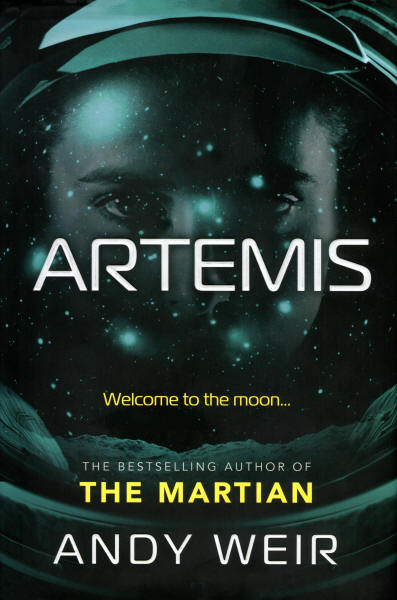
Artemis is a 2017 science fiction novel by American writer Andy Weir. It takes place in the late 2080s in Artemis, the first and only city on the Moon. It follows the life of porter and smuggler Jasmine "Jazz" Bashara as she gets caught up in a conspiracy for control of the city. The book received mixed reviews from critics.
- The World Jones Made
Philip K. Dickstandalone novel1956
similar byscience fictiontensenear futurepolitical intrigue+1 more
The World Jones Made is a 1956 science fiction novel by American writer Philip K. Dick, examining notions of precognition, humanity, and politics. It was first published by Ace Books as one half of Ace Double D-150, bound dos-à-dos with Agent of the Unknown by Margaret St. Clair.The story takes place after a nuclear war in which society is dominated by relativism, which rejects absolute truths and preaches tolerance as the highest principle. The mutant Floyd Jones, who can see into the future, plans to overthrow the system and colonise space. The story ends with the defeat of Jones, whose plans fail despite his ability to see the future due to the immutability of fate.
- The Winds of Altair
Ben Bovastandalone novel1973
similar byscience fictiontensenear futurespace colonizationother star systems
From back cover Tor trade paperback May 1983: MORALITY VS. SURVIVAL... Even before the human scientists arrived at the sixth planet of Altair they knew they had their work cut out for them. Star probes had long before informed them that Altair VI had flourishing ecology with one very tough beast at the top of the food chain, a beast that would have to be dealt with before the human colony ships arrived. What they didn't know was that the beast was not only tough, it was as smart as a man -- and that the only human capable of real communication with the wolfcats of Altair would want to become one...
- Friday
Robert A. Heinleinstandalone novel1982
similar byscience fictiontensenear futureadventurous+1 more
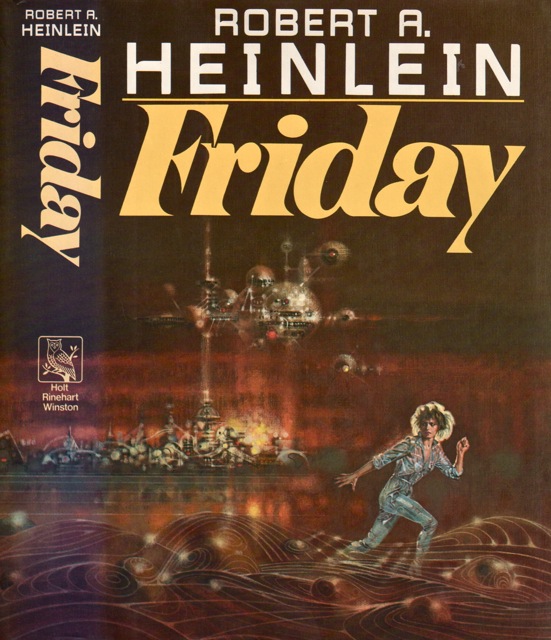
Friday is a 1982 science fiction novel by American writer Robert A. Heinlein. It is the story of a female "artificial person", the eponymous Friday, genetically engineered to be stronger, faster, smarter, and generally better than normal humans. Artificial humans are widely resented, and much of the story deals with Friday's struggle both against prejudice and to conceal her enhanced attributes from other humans. The story is set in a Balkanized 21st century, in which the nations of the North American continent have been split up into a number of smaller states.
- Podkayne of Mars
Robert A. Heinleinstandalone novel1963
similar byscience fictionnear futurepolitical intrigueadventurousspace
From the back cover of the Baen 1995 edition: "Meet Podkayne Fries, a thoroughly modern Martian Ms. who thinks that Earth is not really fit for habitation and that humanity evolved in the now-exploded Fifth Planet. Poddy has one goal in life, to be the first female starship captain. She has her strategy all scoped out, and with her determination, looks and I.Q. she'll get there, never you doubt! But all work and no play would make Poddy a Dull Girl, so when a chance comes her way to travel to distant Earth via Venus with her elderly uncle, Poddy jumps at it, even if it does mean having her loathsome little brother along for the trip: Travel, Adventure, the chance to cuddle up (in a nice way) with real spaceship officers and ruthlessly pump their brains - she'll have it all. What Poddy doesn't know is that "Unca Tom" is more than her warmly supportive relative: he is also the Ambassador Plenipotentiary from Mars to the Three Planets Conference (travelling not quite incognito enough) and that certain people will stop at nothing to gain control of his vote - including kidnapping and doing terrible things to sweetly innocent Poddy Fries..."
- Hellhole
series3 books2011
similar byscience fictionpolitical intriguetenseother star systemsadventurousspace+1 more
Brian Herbert and Kevin J. Anderson's Hellhole trilogy follows the settlers of a harsh penal-colony planet who discover it hides a far stranger secret beneath its surface, even as a former general turned governor plots rebellion against the ruling Constellation. Hellhole: Awakening and Hellhole: Inferno escalate both the political revolt and the planet's own hidden nature. It's an original setting for the two authors, separate from their Dune continuation work.
- The Android's Dream
series2 books2006
similar byscience fictionnear futurepolitical intrigueother star systemsadventurousspace
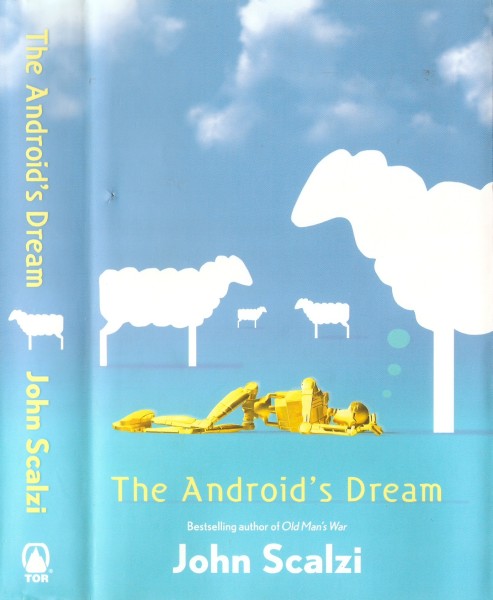
A minor diplomatic insult with a genetically engineered sheep breed spirals into a full interstellar crisis when the last surviving specimen of the 'Android's Dream' breed, needed for a critical ceremony with the alien Nidu, turns out to have been hunted to extinction by a Nidu faction bent on provoking war. John Scalzi's The Android's Dream follows ex-soldier Harry Creek as the hunt for a replacement leads him to Robin Baker, an ordinary woman carrying hidden sheep DNA that makes her the key to avoiding a war. It's a standalone comic space opera rather than an ongoing series.
- Wolfling
Gordon R. Dicksonstandalone novel1969
similar byscience fictiontensepolitical intrigueother star systemsadventurousspace
From the flaps of the Baen/SFBC edition: "Is Earth merely the lost colony of a superior race? - She was well over six feet tall, and beautiful in a sculpted, abstract way. She had skin the color of white onyx, and her eyes... her eyes were large and feline - a startling lemon yellow in color. She was the Princess Afuan, one of the High-born, and she had chosen the Earthman Kim Keil to return to the Throne World with her - for she had decided that his performance in the bull-ring might amuse the Emperor. She didn't know that Jim was a bull-fighter only by virtue of six months' intensive training, nor that the bull was programmed - his behavior following and impressively fierce but unswerving pattern. Jim was just another wolfling to Afuan - a lesser being from a backward colony world. Jim, however, was keenly aware that he was playing a role, one which might prove to be extremely dangerous. Up until 10 years earlier, when their first ship had reached Alpha Centauri, the people of Earth hadn't even known that the vast Empire of human-occupied worlds existed. The discovery had been a profound shock. Had we evolved independently? Or were we merely descendants of the Empire's first space pioneers - a lost colony found at last, perhaps with devastating consequences? That's what Jim Keil had to find out. Chosen from among numerous highly qualified candidates - an anthropologist trained, mentally and physically, beyond the limits of his profession - it was his mission to observe the Throne World and the High-born... to determine whether or not they posed a threat to Earth. One thing was apparent from the start. The High-born were superior beings - physically taller and stronger than other humans, endowed with faster reflexes, superior mental capacity... and extraordinary technological resources. Their contempt for the new wolfling in their midst was open, their intrigues complex. An enormous gulf separated the people of the Throne World from Earthlings. But that gulf was not so wide that Jim couldn't recognize an enemy when he met one. Clearly, if he remained merely a passive observer of the High-born, he'd never survive among them."
- Pattern for Conquest
George O. Smithstandalone novel1949
similar byscience fictionspace colonizationpolitical intrigueother star systemsadventurousspace
Pattern for Conquest is a science fiction novel by American writer George O. Smith. It was published in 1949 by Gnome Press Reprinted circa 1952 in paper wrappers for distribution to US military personnel. Although a later printing, the first edition statement is retained on the copyright page. [Currey] isfdb Currey