More like Everfair
anchored on:19th centurysteampunkalternate historyafrica
but
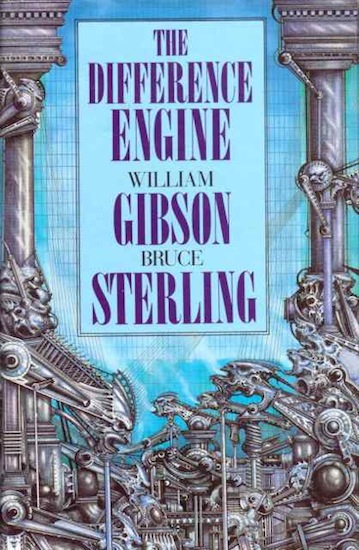
- The Difference Engine
William Gibson & Bruce Sterlingstandalone novel1990
similar bypolitical intrigue19th centurysteampunkalternate history
The computer age arrives a century early with Babbage's perfection of his 'analytical engine'. The industrial revolution is accelerated by the development of steam-driven cybernetic 'Engines'. An advanced Great Britain prepares to better the world's lot. An example of the 'steampunk' sub-genre of the cyberpunk movement.
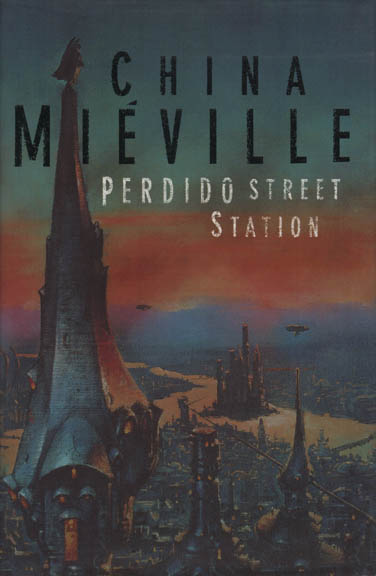
- New Crobuzon
series4 books2000
similar bychallenging+3 more
The New Crobuzon books are three standalone novels by China Miéville set in and around New Crobuzon, a vast, corrupt industrial city in his invented world of Bas-Lag where magic, biopunk technology, and several sentient species coexist. Perdido Street Station follows a renegade scientist and his lover after an experiment unleashes something monstrous on the city, while The Scar and Iron Council return to the same setting with different casts and only loose continuity between books.
- Dune Universe
universe78 books1963
Start hereDune · Start here
similar bypolitical intrigue
Arrakis. Dune. The desert planet, where empire runs on a single substance: the spice melange, which folds space, prolongs life, and unlocks prescience, and which exists nowhere else in the known universe. Frank Herbert's saga is a meditation dressed as an adventure — feudal houses and a secret sisterhood, engineered messiahs and the patient ecology of a world without water, all turning on the terrible gravity of who commands the spice. It reads like scripture and schemes like a war room, ten thousand years hence, among people who have outlawed the thinking machine and made instruments of themselves instead. At its heart stand Herbert's original six — Dune, Dune Messiah, Children of Dune, God Emperor of Dune, Heretics of Dune, Chapterhouse: Dune — a single deepening arc across millennia, arguing the whole way between prophecy and free will. Around that spine his son Brian Herbert and Kevin J. Anderson have raised a vast prequel architecture: Prelude to Dune, tracing the great houses a generation before Paul; Legends of Dune, reaching back to the crusade that broke the machines; the Schools of Dune cycle on the founding of Bene Gesserit, Mentat, and Navigator; the Caladan Trilogy and Heroes of Dune filling years the originals left in shadow. Many hands, dozens of volumes, one desert. What sets Dune apart is its refusal of the simple: religion is manufactured, heroes are hazards, and the sand itself — worm, water, ecology — acts as a political power. Begin where the universe did, with Frank Herbert's Dune (1965), and read the original six in order; you need nothing else to feel the full weight. The prequels are a country to explore afterward, taken by era. Beginnings are delicate times.
- Dune
series20 books1963
part of Dune Universe
similar bypolitical intrigue+1 more
Frank Herbert's Dune Chronicles opens with 1965's Dune, set on the desert planet Arrakis where House Atreides takes control of the only source of the vital spice melange and young Paul Atreides is pulled into a struggle over its politics and religion. Herbert carried the story forward across five further novels — Dune Messiah, Children of Dune, God Emperor of Dune, Heretics of Dune, and Chapterhouse: Dune — following Paul's line over the following millennia, before Brian Herbert and Kevin J. Anderson later extended the saga. Many other editions of these six novels are omnibus and box-set repackagings rather than separate stories.
- Culture
series15 books1987
completed
part of The Culture
similar by+2 more
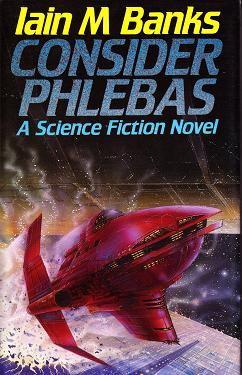
The Culture series is a science fiction series written by Scottish author Iain M. Banks and released from 1987 until 2012. The stories centre on The Culture, a utopian, post-scarcity space society of humanoid aliens and advanced superintelligent artificial intelligences living in artificial habitats spread across the Milky Way galaxy. The main themes of the series are the dilemmas that an idealistic, more-advanced civilization faces in dealing with smaller, less-advanced civilizations that do not share its ideals, and whose behaviour it sometimes finds barbaric. In some of the stories, action takes place mainly in non-Culture environments, and the leading characters are often on the fringes of the Culture, sometimes acting as agents of the Culture in its plans to civilize the galaxy. Each novel is a self-contained story with new characters, although reference is occasionally made to the events of previous novels.
- Malazan
universe36 books1999
Start hereMalazan Book of the Fallen · Start here
similar by+2 more
Pity the historian who tries to map this world; pity more the god who thinks he rules it. The Malazan Empire marches across continents on the boots of its common soldiers, and above them move Ascendants — mortals grown into something like gods, and gods worn thin as old coin. Magic is drawn from Warrens, roads of power threaded through reality; the dead keep their grudges; and every empire, however vast, is a wager against time. This is epic fantasy told from the mud, where a sapper cracking a joke weighs as much as an immortal settling a feud older than the human race. The world began as a tabletop campaign two friends built in the 1980s, and it still moves by two hands. Steven Erikson's ten-volume Malazan Book of the Fallen is the spine — Gardens of the Moon, Deadhouse Gates, Memories of Ice, on through The Crippled God — each book a near-standalone campaign that only later reveals how it locks together. Ian C. Esslemont walks the same years from a different vantage in his Novels of the Malazan Empire (Night of Knives, Return of the Crimson Guard onward). Around them stand the prequels: Erikson's Kharkanas Trilogy, archaic and elegiac, chronicling a doomed elder people, and Esslemont's brisker Path to Ascendancy, following two adventurers before they became legends. Erikson's Witness sequence carries the tale forward, and novellas of the genial necromancers Bauchelain and Korbal Broach supply the gallows comedy. Nothing is explained to you; comprehension is earned, and that is the pleasure. The themes run deep — compassion set against cruelty, the toll empires charge, civilizations that fall and are mourned. Begin where the saga does, with Erikson's Gardens of the Moon, and read the ten in publication order; the prequels are for the already-initiated. Trust that confusion is the price of entry.
- Malazan Book of the Fallen
series20 books1999
part of Malazan
similar by+3 more
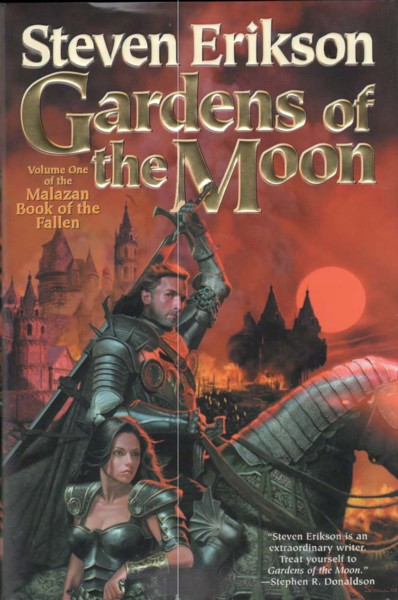
The Malazan Book of the Fallen is a series of epic fantasy novels written by the Canadian author Steven Erikson. The series, published by Bantam Books in the U.K. and Tor Books in the U.S., consists of ten volumes, beginning with Gardens of the Moon (1999) and concluding with The Crippled God (2011). Erikson's series presents the narratives of a large cast of characters spanning thousands of years across multiple continents.
- The Alteration
Kingsley Amisstandalone novel1976
similar bypolitical intriguealternate history+1 more
The Reformation does not take place, Martin Luther becomes pope, Italy never unites…
- The Crystal Empire
L. Neil Smithstandalone novel1986
similar bypolitical intriguealternate historycolonialism+1 more
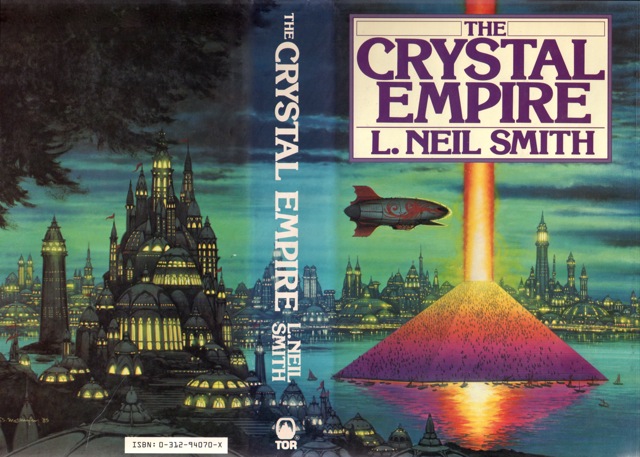
The Crystal Empire is a 1986 novel by American science fiction and alternate history writer L. Neil Smith. It is set in an alternate universe that shares with Kim Stanley Robinson's The Years of Rice and Salt, Robert Silverberg's The Gate of Worlds and Harry Turtledove's In High Places a point of divergence where the Black Death kills much more of Europe's population than it did in reality, opening the way for a Muslim conquest of Europe. The plague also decimates the Mongol Empire, allowing a Mughal power to arise in the Far East in its place.
- Imperial Radch
series7 books2012
part of Radchaai Universe
similar by+2 more
Ann Leckie's Imperial Radch trilogy (Ancillary Justice, Ancillary Sword, Ancillary Mercy, 2013-2015) follows Breq, the sole surviving fragment of an AI that once inhabited both a troop-transport starship and dozens of soldier bodies, now alone and hunting for revenge inside the vast, expansionist Radch empire. Breq's quest widens across the trilogy into a conflict with the empire's own fractured ruler, and the books use her alien difficulty perceiving gender to unsettle the space-opera conventions around her.
- Children of Violence
series5 books1952
completed
similar byafrica+2 more
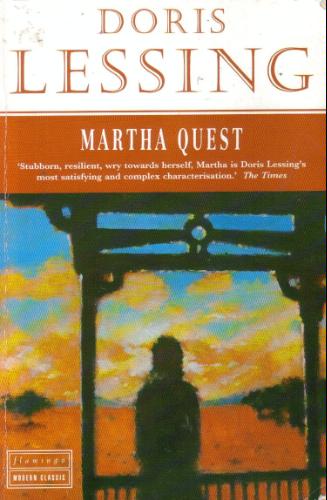
Children of Violence is a sequence of five semi-autobiographical novels by British Nobel Prize in Literature-winner Doris Lessing: Martha Quest (1952), A Proper Marriage (1954), A Ripple from the Storm (1958), Landlocked (1965), and The Four-Gated City (1969). The novels "are strongly influenced by Lessing's rejection of a domestic family role and her involvement with communism." Lessing identified the series as a bildungsroman.
- Hainish
series33 books1964
completed
similar by+1 more
The Hainish Cycle consists of a number of science fiction novels and stories by Ursula K. Le Guin. The cycle is set in a future history that features civilizations of human beings on planets orbiting a number of nearby stars, including Terra ("Earth"); these humans are contacting each other for the first time and establishing diplomatic relations, as well as setting up a confederacy under the guidance of the oldest of the human worlds, the peaceful planet Hain. In this history, human beings did not evolve on Earth, but they were instead the result of interstellar colonies planted by Hain in the distant past, after which interstellar travel ceased for an extended period. Some of the human races have new genetic traits, a result of ancient Hainish experiments in genetic engineering; this includes people who can dream while awake, and a world of hermaphroditic people who only enter active sexuality once per month, not knowing which sex will manifest in them. In keeping with Le Guin's narrative approach, she uses varied social and environmental settings to explore the anthropological and sociological outcomes of human evolution in those environments. The author often discounted the characterization of a so-called "Hainish Cycle".
- Making History
Stephen Frystandalone novel1996
similar bychallengingpolitical intriguealternate history
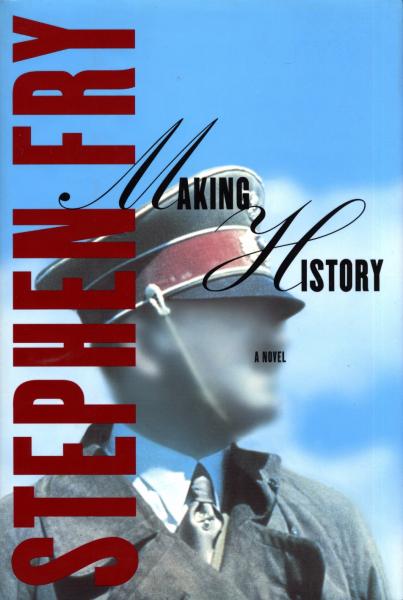
Making History (1996) is the third novel by Stephen Fry. Its plot involves the creation of an alternative historical timeline in which Adolf Hitler never existed. While most of the book is written in standard prose, a couple of chapters are written in the format of a screenplay. The book won the Sidewise Award for Alternate History.
- Zimiamvian Trilogy
series4 books1922
completed
similar bypolitical intrigue+1 more
The Zimiamvian Trilogy is a series of fantasy novels by English author E. R. Eddison.Mistress of Mistresses (1935) A Fish Dinner in Memison (1941) The Mezentian Gate (1958)
- Mars (Kim Stanley Robinson)
series36 books1982
similar by+1 more
The Mars trilogy is a series of science fiction novels by Kim Stanley Robinson that chronicles the settlement and terraforming of the planet Mars through the personal and detailed viewpoints of a wide variety of characters spanning 187 years, from 2026 to 2212. Ultimately more utopian than dystopian, the story focuses on egalitarian, sociological, and scientific advances made on Mars, while Earth suffers from overpopulation and ecological disaster.
- Imperium in Imperio: A Study of the Negro Race Problem
Sutton E. Griggsstandalone novel1899
similar bychallengingpolitical intrigue19th century
"Self-published in 1899 and sold door-to-door by the author, this classic African-American novel -- a gripping exploration of oppression, miscegenation, exploitation, and black empowerment -- was a major bestseller in its day. The dramatic story of a conciliatory black man and a mulatto nationalist who grow up in a racist America and are driven to join a radical movement dedicated to the creation of an all-black nation in Texas, Imperium in Imperio had a profound influence on the development of black nationalism." description.
- Queen Sheba's Ring
H. Rider Haggardstandalone novel1910
similar by19th centuryafrica+1 more
Queen Sheba's Ring is a 1910 adventure novel by H. Rider Haggard set in central Africa. It resembles the author's earlier works King Solomon's Mines and She, featuring plotting priests, beautiful women, and daring British adventurers.
- Universe of Gulliver
universe34 books1726
Start hereGulliver's Travels · Start here
similar by+1 more
A ship's surgeon with appalling luck keeps washing up in countries that have solved the problem of being human in some appalling new way. Lilliput, where the great question of the age is which end of an egg to break. Brobdingnag, where a king hears out a description of Europe and concludes that its inhabitants are the most pernicious race of little odious vermin. Laputa, floating and abstracted above the island it taxes. And the land of the Houyhnhnms, where the horses are rational and the humans are not. Jonathan Swift published it in 1726 as a genuine traveller's account, and the trick worked. What is collected here is that book and its long afterlife: the eighteenth-century continuations printed as further Travels into Several Remote Nations, the Victorian retellings that trimmed it down to a story about a giant tied up by tiny people, and the picture-book Lilliputs that followed. It is satire with a smile on and a knife behind it — precise, patient, and colder the further in you read. The first two voyages are the ones everybody knows; the fourth is the one that changes what the first two meant. Read Gulliver's Travels whole and in order if you can, and treat the abridgements gathered here as what they are: souvenirs from the shallow end.
- Space Merchants
series2 books1953
completed
similar by+1 more
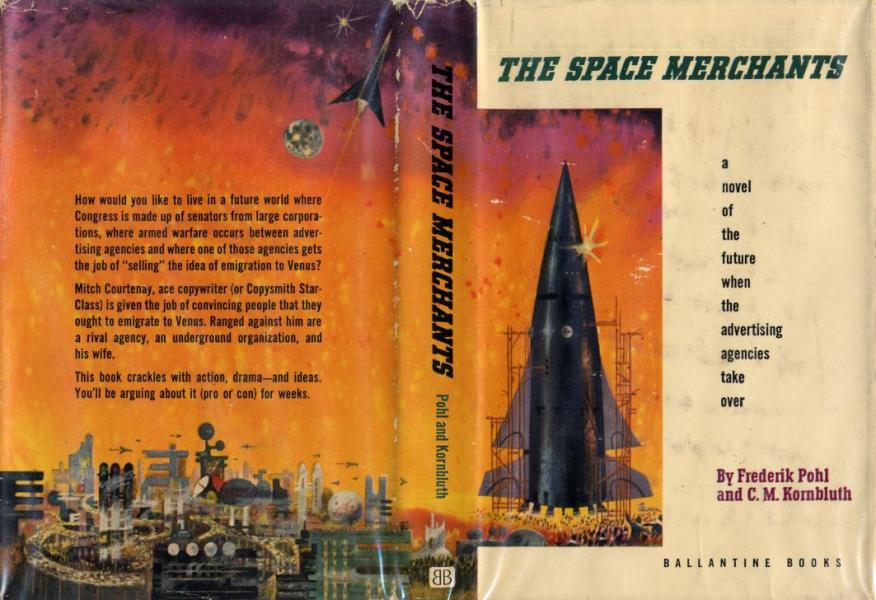
The Space Merchants (1953) is a satirical science fiction novel by Frederik Pohl and C. M. Kornbluth that follows an advertising executive navigating a future where aggressive consumer capitalism has swallowed politics and daily life. The authors reunited three decades later for a direct sequel, The Merchants' War (1984), returning to the same satirical world. Together the two books form a compact bookend pair rather than an ongoing series.
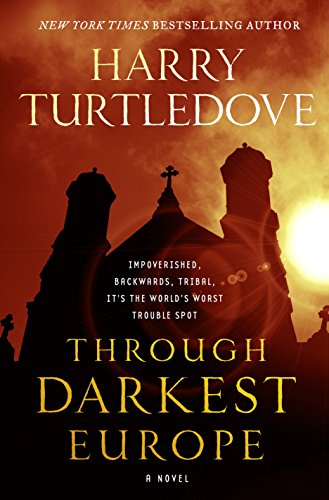
- Through Darkest Europe
Harry Turtledovestandalone novel2018
similar bychallengingpolitical intriguealternate history+1 more
Through Darkest Europe is an alternate history novel by Harry Turtledove. The book is set in an alternate present in which Islamic countries form a prosperous, democratic and progressive First World, while underdeveloped Christian countries suffer from religious fanaticism.