More like Facade
anchored on:horrornorth americacontemporarypsychological horrormystery & detectiveidentity+4 more
but
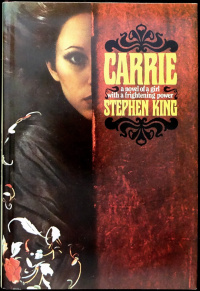
- Carrie
Stephen Kingstandalone novel1974
similar bycontemporarytensehorrornorth americapsychological horrorsmall town+1 more
In one way or another, everybody abused Carrie. This sixteen-year-old misfit was forbidden everything that was young and fun by her fanatical mother. She was teased and taunted by her classmates, misunderstood by her teachers, and given up as hopeless by almost everyone. But Carrie had a secret: She possessed terrifying telekinetic powers that could make inanimate objects move, a lighted candle fall, or a door lock. Carrie could make all kinds of startling bizarre, and malevolent things happen. (WorldCat)
- Insomnia
Stephen Kingstandalone novel1994
similar bycontemporaryeerietensehorrornorth americasmall townmadness
When an elderly widower in Maine finds himself with sleep maintenance insomnia, awakening early every morning, this state of exhaustion allows him to perceive a higher state of reality, where he learns of an impending disaster which will shake not just the Earthly reality. but all the higher realities, and which he has been recruited to prevent.
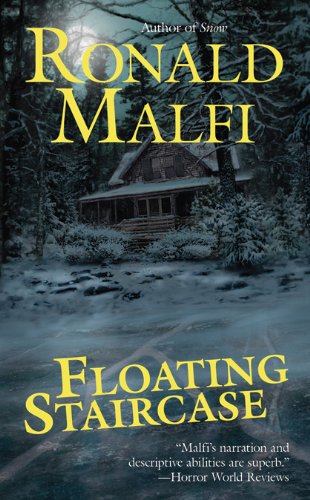
- Floating Staircase
Ronald Malfistandalone novel2010
similar bycontemporaryeerietensehorrormurder investigationnorth americamystery & detectivesmall town
Floating Staircase is a ghost story/mystery novel by American writer Ronald Malfi. It was published in 2011 by Medallion Press, with a limited edition hardcover collectors edition from Thunderstorm Books, which contained an original author's "Afterward" not in the paperback novel. The novel was nominated by the Horror Writers Association for a Bram Stoker Award for Best Novel, and it won a Gold IPPY Award for best horror novel of 2011.
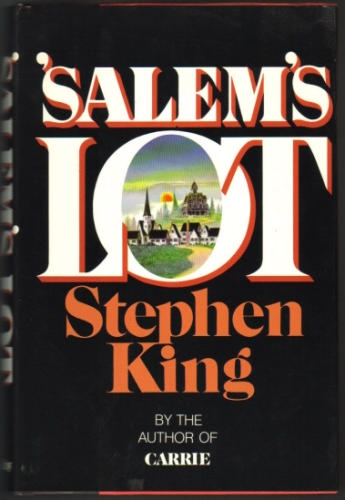
- Jerusalem's Lot
series3 books1975
similar bycontemporarytensehorroreerienorth americasmall town
Stephen King's 1975 novel 'Salem's Lot follows writer Ben Mears as he returns to his childhood town of Jerusalem's Lot, Maine, only to discover that its residents are being turned into vampires by a newly arrived stranger. It transplants Gothic vampire horror into a small New England community, tracking that community's collapse under a supernatural siege. It is a single, self-contained novel.
- The Ghost Tree
Christina Henrystandalone novel2020
similar bycontemporaryeerietensehorrormurder investigationnorth americamystery & detectivesmall town
When the bodies of two girls are found torn apart in the town of Smiths Hollow, Lauren is surprised, but she also expects that the police won't find the killer. After all, the year before her father's body was found with his heart missing, and since then everyone has moved on. Even her best friend, Miranda, has become more interested in boys than in spending time at the old ghost tree, the way they used to when they were kids. So when Lauren has a vision of a monster dragging the remains of the girls through the woods, she knows she can't just do nothing. Not like the rest of her town. But as she draws closer to answers, she realizes that the foundation of her seemingly normal town might be rotten at the center. And that if nobody else stands for the missing, she will.
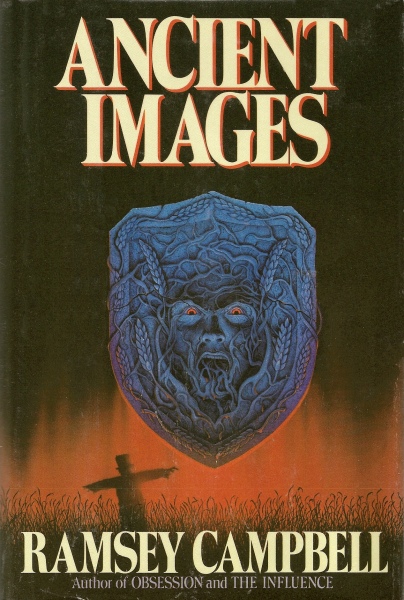
- Ancient Images
Ramsey Campbellstandalone novel1989
similar bycontemporaryeerietensehorrormystery & detectivenorth america+2 more
A lost horror film holds the key to terrifying secrets. The legends have persisted for decades of a lost horror film starring Boris Karloff and Bela Lugosi that was never released. Rumor has it that, for reasons long forgotten, powerful forces suppressed the film and burned all known prints. Nobody now living has seen the finished film. But that might no longer be true… Film researcher Sandy Allan is invited to a screening of a newly-discovered sole-surviving print, but then the film disappears and the real horror begins. Sandy’s search for the film leads her to Redfield, a rural community known its rich soil, fertilized by blood from an ancient massacre. But Redfield guards its secrets closely, with good reason. During every step of her search, Sandy is watched, shadowed by strange figures. Is it paranoia, or is someone—or something—determined to keep the lost film and the secrets it reveals buried forever?
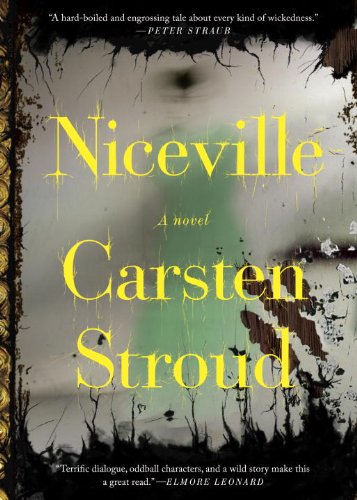
- Niceville
series3 books2012
similar bycontemporaryeeriemurder investigationtensenorth americahorrormystery & detectivesmall town+1 more
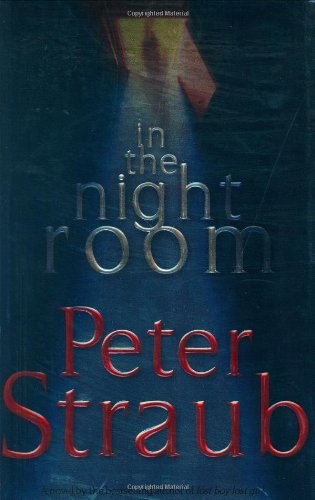
- In the Night Room
Peter Straubstandalone novel2004
similar bycontemporarytensehorroridentitypsychological horrornorth americamadness+1 more
In the Night Room is a 2004 horror-thriller novel by American author Peter Straub, a sequel to his 2003 book Lost Boy, Lost Girl. The work was first published in hardback on October 26, 2004, through Random House and it won the 2004 Bram Stoker Award for Novel. Straub encountered some difficulties while writing In the Night Room and had written several different passages for the work before growing bored with each version before writing it using the same technique he used for its predecessor in which he "reached down inside the book and turned it inside out."
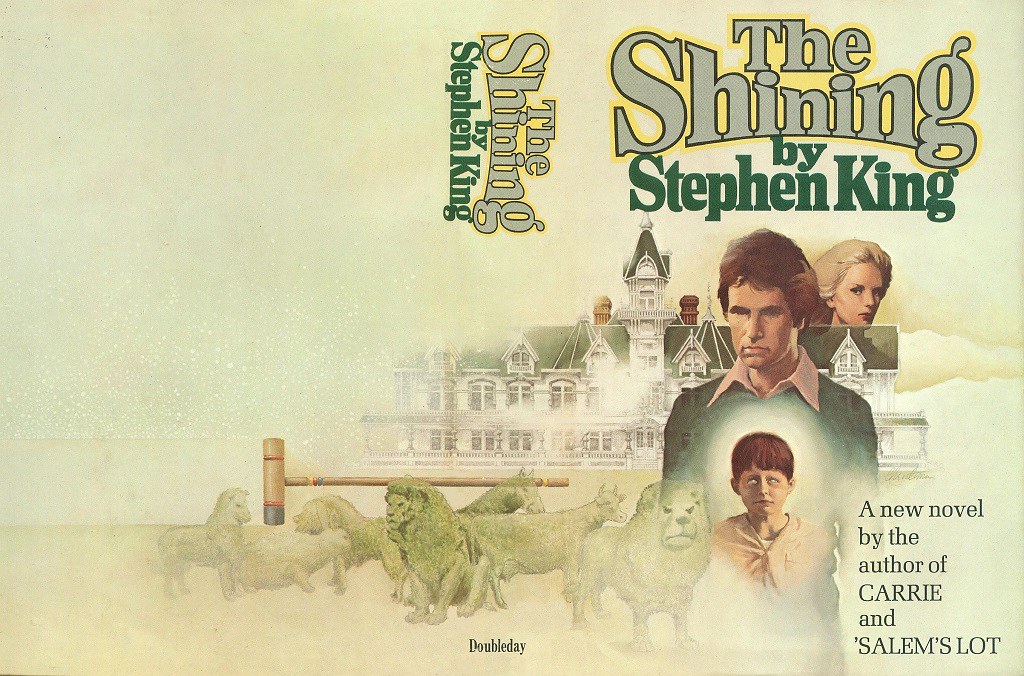
- The Shining
series5 books1977
similar bycontemporarytensehorrornorth america+3 more
Stephen King's 1977 novel The Shining follows the Torrance family as winter caretakers of the isolated, malevolent Overlook Hotel, where father Jack is gradually consumed by the hotel's influence while his young son Danny's psychic "shining" draws its attention. Doctor Sleep (2013) picks up the story decades later, following Danny as an adult still marked by that childhood ordeal. Together the two form a horror duology spanning nearly forty years of real-world publication.
- Billy Summers
Stephen Kingstandalone novel2021
similar bycontemporarytenseidentitymurder investigationnorth americamystery & detectivesmall town+1 more
Billy Summers is a crime novel written by American author Stephen King, published by Scribner on August 3, 2021.
- Dead Ringers
Christopher Goldenstandalone novel2015
similar bycontemporaryeerietensehorroridentitypsychological horrornorth america+1 more
"When Tess Devlin runs into her ex-husband Nick on a Boston sidewalk, she's furious at him for pretending he doesn't know her. She calls his cell to have it out with him, only to discover that he's in New Hampshire with his current girlfriend. But if Nick's in New Hampshire...who did she encounter on the street? Frank Lindbergh's dreams have fallen apart. He wanted to get out of the grim neighborhood where he'd grown up and out of the shadow of his alcoholic father. Now both his parents are dead and he's back in his childhood home, drinking too much himself. As he sets in motion his plans for the future, he's assaulted by an intruder in his living room...an intruder who could be his twin. In an elegant hotel, Tess will find mystery and terror in her own reflection. Outside a famed mansion on Beacon Hill, people are infected with a diabolical malice...while on the streets, an eyeless man, dressed in rags, searches for a woman who wears Tess's face"--
- The Burning Girls
C. J. Tudorstandalone novel2021
similar bycontemporaryeerietensehorrormurder investigationmystery & detectivesmall town
The Burning Girls is a 2021 horror novel by British author C. J. Tudor. It was published in 2021 by Michael Joseph. The novel follows Jack Brooks, a reverend who moves into a new parish with her teenage daughter Flo to face a series of disturbing events, and a gruesome local legend that seems linked with the murder of two teenage girls 30 years previously.
- Finders Keepers (Stephen King)
series7 books2014
similar bycontemporarytensemurder investigationnorth americamystery & detective+2 more
The books gathered here follow Holly Gibney, who first appeared as a supporting character in Stephen King's Bill Hodges trilogy (Mr. Mercedes, Finders Keepers, End of Watch) before graduating into her own strand of stories: a major role in The Outsider, then top billing in the novella If It Bleeds and the novels Holly and Never Flinch, where she works as a private investigator taking on cases with a supernatural edge. The mix of true-crime procedural instincts and creeping horror is a hallmark of King's later work with the character.
- Harvest Home
Thomas Tryonstandalone novel1973
similar bycontemporaryeerietensehorrornorth americasmall town
What is the dark secret the people (especially the women!) of Harvest Home are hiding? A family tries to get out of the City and finds the perfect home for their young daughter complete with folk remedies for her allergies and sensitivities in the local wisewoman. But is there something sinister under the surface of the charming little town?
- The Harrowing
Alexandra Sokoloffstandalone novel2006
similar bycontemporaryeerietensehorrornorth americapsychological horrormadness
The Harrowing is a horror novel by American writer Alexandra Sokoloff. It was first published in 2006 by St. Martin's Press, and is the author's debut book, following a screenwriting career. According to Sokoloff's website, she was inspired to write the novel because of her experiences teaching to troubled teenagers in the Los Angeles County prison system. The Harrowing was nominated for the Bram Stoker Award for Best First Novel.
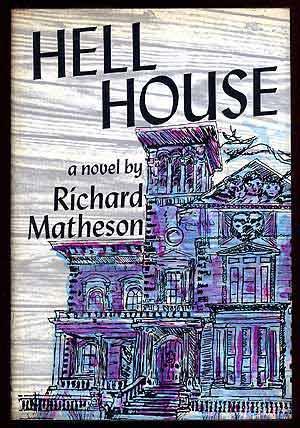
- Hell House
Richard Mathesonstandalone novel1971
similar bycontemporaryeerietensehorrornorth americamadness
A dying millionaire wants proof, once and for all, of what happens after death, and hires physicist-turned-parapsychologist Dr. Lionel Barrett to spend a week investigating the Belasco House in Maine -- a mansion so thoroughly associated with atrocity that it's known simply as Hell House, where every previous investigation has ended in death or madness. Barrett brings his wife Edith along with two mediums, the spiritualist Florence Tanner and Benjamin Franklin Fischer, survivor of an earlier disastrous visit, whose scientific skepticism and spiritualist convictions clash from the first night inside. Richard Matheson's haunted-house novel, later filmed as The Legend of Hell House.
- White Smoke
Tiffany D. Jacksonstandalone novel2021
similar bycontemporaryeerietensehorrornorth americasmall town+1 more
Marigold is running from ghosts. The phantoms of her old life keep haunting her, but a move with her newly blended family from their small California beach town to the embattled Midwestern city of Cedarville might be the fresh start she needs. Her mom has accepted a new job with the Sterling Foundation that comes with a free house, one that Mari now has to share with her bratty ten-year-old stepsister, Piper. The renovated picture-perfect home on Maple Street, sitting between dilapidated houses, surrounded by wary neighbors has its... secrets. That’s only half the problem: household items vanish, doors open on their own, lights turn off, shadows walk past rooms, voices can be heard in the walls, and there’s a foul smell seeping through the vents only Mari seems to notice. Worse: Piper keeps talking about a friend who wants Mari gone. But "running from ghosts" is just a metaphor, right? As the house closes in, Mari learns that the danger isn’t limited to Maple Street. Cedarville has its secrets, too. And secrets always find their way through the cracks.
- Under the Lake
Stuart Woodsstandalone novel1987
similar bycontemporaryeerietensenorth americahorrormystery & detectivesmall town
"What lies submerged under the lake at Sutherland, Georgia? What sins? What horrors? Those rumors of corruption, incest and hideous savagery long ago—could they possibly be true? And the lights under the lake ... that strange little girl ... those strains of haunting music ... are they hallucinations? Or warnings of terrible danger?" — quoted from the back cover of the third Avon mass market printing.
- The Boys Are Back in Town
Christopher Goldenstandalone novel2004
similar bycontemporaryeerietenseidentitynorth americahorror+2 more
From a master of horror, dark fantasy, and suspense comes a compelling and uniquely original work of paranormal suspense in which one man finds himself trapped in a web of ever-shifting reality which threatens to remake the whole of the world--unless he can find a way to stop it.For Will James, facing his tenth high school reunion is far from his finest hour--especially since his life has not gone exactly as he planned. Dumped at the altar by his high school sweetheart and with his dreams of being a prize-winning reporter dashed by his job at a Boston tabloid, he is not sure he is ready to face his former peers.But what he does find at the reunion is far more than he bargained for. He soon learns that one of his buddies had died several years back--even though Will had received an e-mail from him only a few days before. It is not long before other people Will was convinced were alive are turning out to be dead as well--or married to other people, or childless where they used to have children. And new memories are swarming in to replace what Will is convinced was his old life, until he no longer knows what is real and what is not. The only thing he does know for certain is that he has to figure out why he alone remembers snatches of another life before everything dissolves into this new, darker reality.From the Trade Paperback edition.
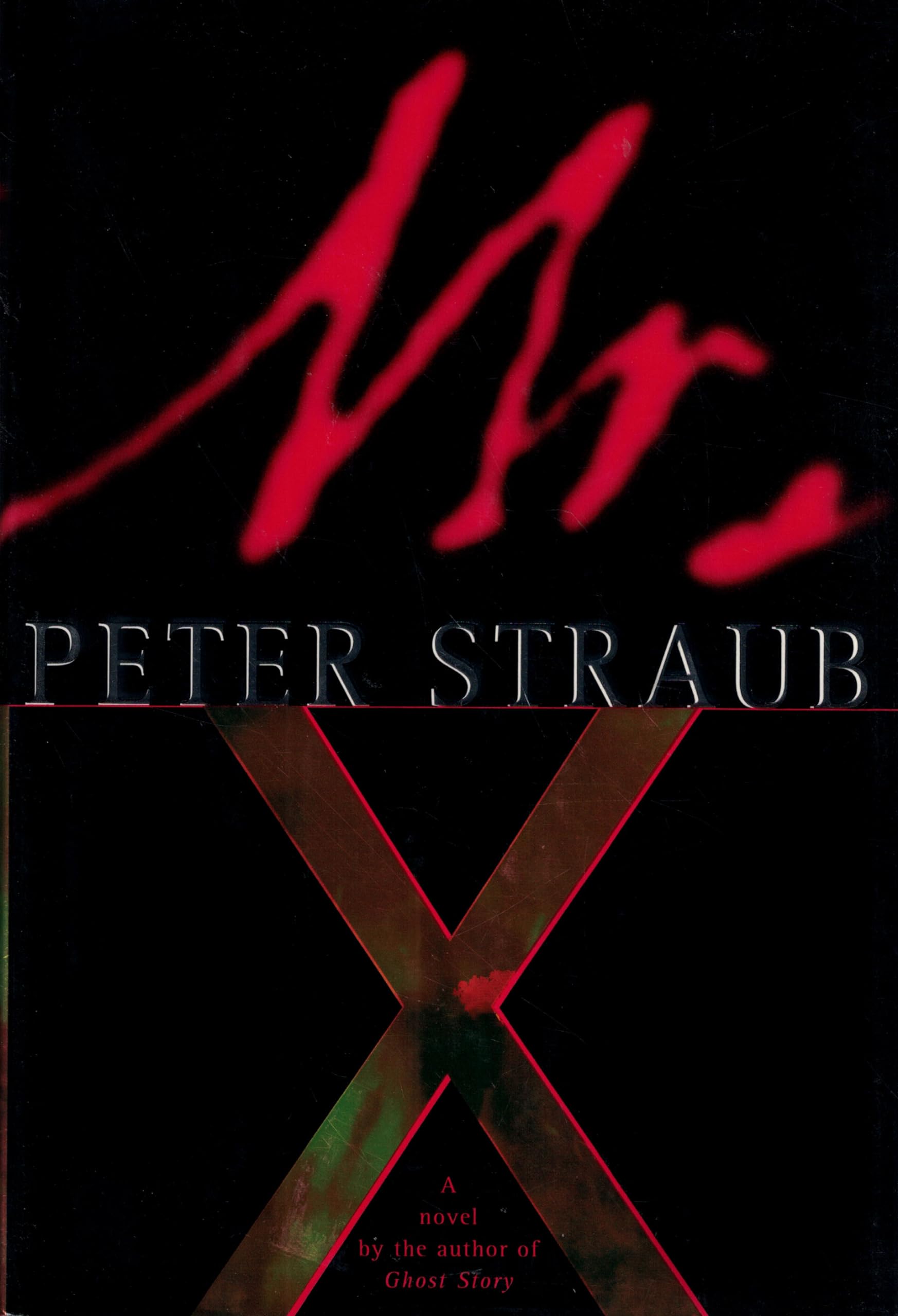
- Mr. X
Peter Straubstandalone novel1999
similar bycontemporaryeeriehorroridentitynorth americamystery & detectivemadness
Mr. X is a 1999 horror mystery novel by American writer Peter Straub. The book won the 1999 Bram Stoker Award for Best Novel and was shortlisted for the 2001 British Fantasy Award for Best Novel.
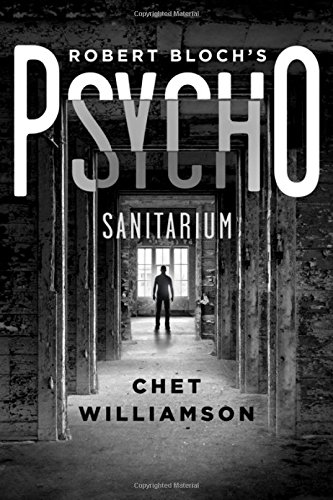
- Robert Bloch's Psycho Universe
series5 books1959
similar bytensehorrorpsychological horrornorth americamadness+3 more
- November Mourns
Tom Piccirillistandalone novel2005
similar bycontemporaryeeriehorrormurder investigationnorth americapsychological horrormystery & detectivesmall town+1 more
Two years ago Shad Jenkins went to prison for assaulting his sister's attacker. Now he has returned to the southern mountain town of Moon Run Hollow, only to find that Megan is dead. No one knows how she died--or why she was found on Gospel Trail Road, a dirt path leading up to the gorge high above the Chatalaha River, where victims of yellow fever were once brought to die. Navigating a world filled with abnormal children and clandestine snake handlers, one that is slowly being poisoned by illegal moonshine, Shad must pierce the townsfolk's superstitions and terrible secrets to find out the truth about his sister's death. But the Blood Dreams he's suffered from since childhood have taken on an eerie urgency, revealing to Shad the nightmarish form of an unseen adversary. Plagued by the wraiths that haunt the hollow, Shad finds himself increasingly unsure of his own sanity as he begins to piece together what may have happened to his sister--and who exactly his enemy is....From the Paperback edition.
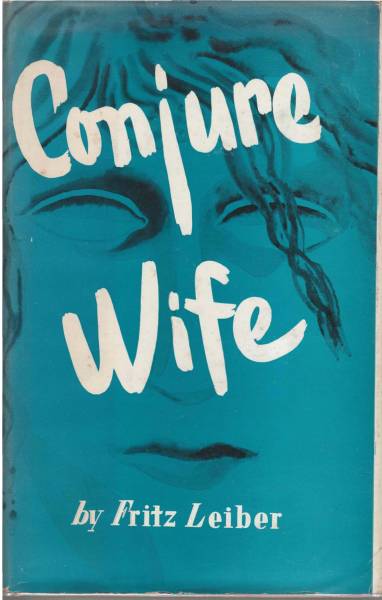
- Conjure Wife
Fritz Leiberstandalone novel1943
similar byeerietensehorrorpsychological horrornorth america+2 more
From the front cover of the Lion first paperback: "Potions in the house... evil in the air... and a witch in his bed." From the back cover of the Lion first paperback: ""Conjure Wife... is easily the most frightening (and necessarily) the most thoroughly convincing of all modern horror stories. Its premise is that witchcraft still flourishes, or at any rate survives, an open secret among women, a closed book to men. Under the rational overlay of 20th-century civilization this sickly growth, uncultivated, unsuspected, still manages to propagate itself. Leiber develops this theme with the utmost dexterity, piling up alternate layers of the mundane and outre, until at the story's real climax, the shocker at the end of chapter 14, I am not ashamed to say that I jumped an inch out of my seat. From that point onward the story anticlimax so skillfully managed that I am not really certain I touched the slipcover again until after the last page. Leiber has never written anything better... which perhaps is all that needed to be said." Damon Knight, Science Fiction Adventures"
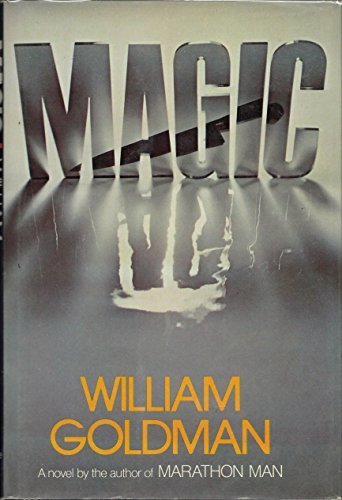
- Magic
William Goldmanstandalone novel1976
similar bycontemporaryeerietensehorroridentitypsychological horrornorth americamadness
Magic is a psychological horror novel written by William Goldman. It was published in the United States in August 1976 by Delacorte Press. In 1978 Richard Attenborough directed a feature film adaptation of the story that starred Anthony Hopkins and Ann-Margret.