More like Fallow
anchored on:science fiction
but
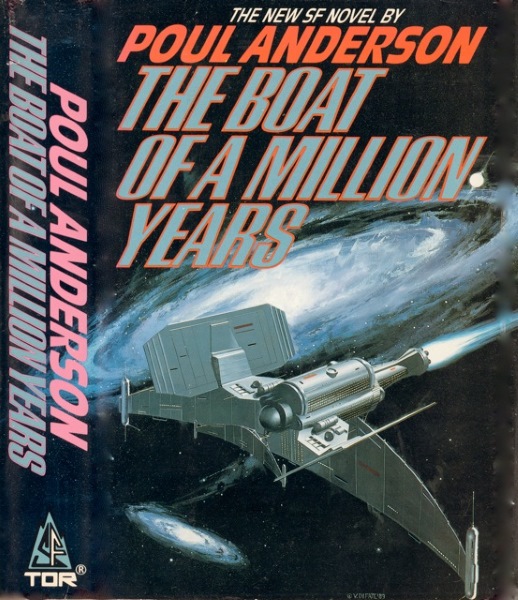
- The Boat of a Million Years
Poul Andersonstandalone novel1989
similar byreflectivelonelinessscience fictionour worldidentity+1 more
The Boat of a Million Years is a science fiction novel by American writer Poul Anderson, first published in 1989 and nominated for the Nebula Award for Best Novel that same year. It was also nominated for the Hugo Award for Best Novel and the Prometheus Award in 1990.
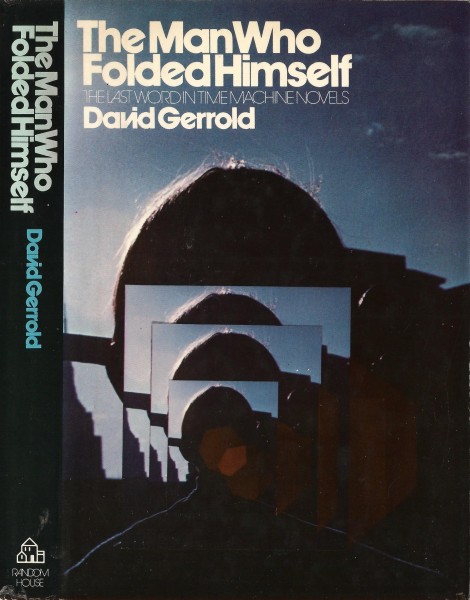
- The Man Who Folded Himself
David Gerroldstandalone novel1973
similar byreflectivelonelinessscience fictionour worldcontemporaryidentity
The Man Who Folded Himself is a 1973 science fiction novel by American writer David Gerrold. It was nominated for the Nebula Award for Best Novel in 1974 and the Hugo Award for Best Novel in 1974. The book explores the psychological, physical, and personal challenges that manifest when time travel is possible for a single individual at the touch of a button.
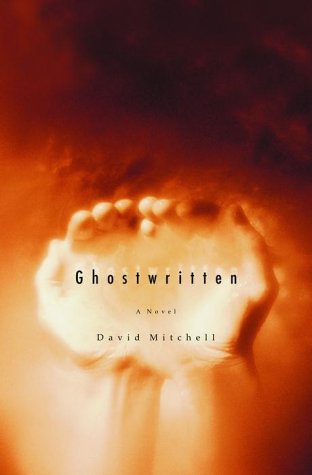
- Ghostwritten
David Mitchellstandalone novel1999
similar byreflectivescience fictionour worldcontemporaryliterary & general+2 more
Various individuals around the globe cross paths, while the complexities of modern societies lead to human civilization's inevitable end.
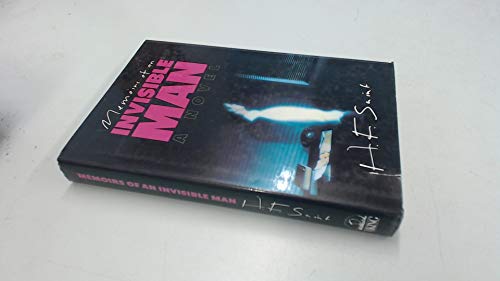
- Memoirs of an Invisible Man
H. F. Saintstandalone novel1987
similar byscience fictionour worldcontemporaryidentity+2 more
Memoirs of an Invisible Man is a 1987 science fiction novel by H. F. Saint.
- Dying Inside
Robert Silverbergstandalone novel1972
similar byreflectivelonelinessscience fictioncontemporaryidentity
Dying Inside is a 1972 science fiction novel by American writer Robert Silverberg. It was first serialized in Galaxy in 1972 and published in book form by Charles Scribner's Sons later that year. The novel follows David Selig, a middle-aged telepath in contemporary New York City, as the mind-reading ability that has shaped his life begins to disappear.
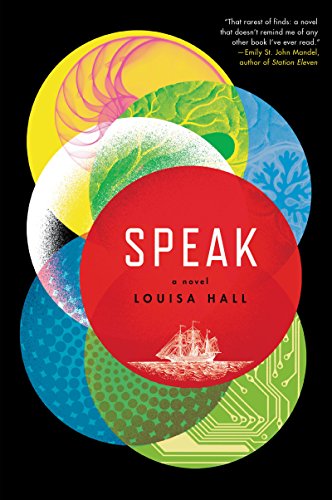
- Speak
Louisa Hallstandalone novel2015
similar byreflectivelonelinessscience fictionour worldcontemporaryidentityliterary & general
Speak is a 2015 novel by Louisa Hall. It is her second novel, after The Carriage House. The novel was well received. The novel was inspired by a story in the New York Times.
- The Man Who Fell to Earth
Walter Tevisstandalone novel1963
similar byreflectivelonelinessscience fictionour world
The Man Who Fell to Earth is a 1963 science-fiction novel by American writer Walter Tevis. Published by Gold Medal Books as a paperback original, it was Tevis's second novel, following The Hustler. The novel follows Thomas Jerome Newton, an extraterrestrial from the drought-stricken planet Anthea, who comes to Earth hoping to build a spacecraft that can save the surviving members of his species.
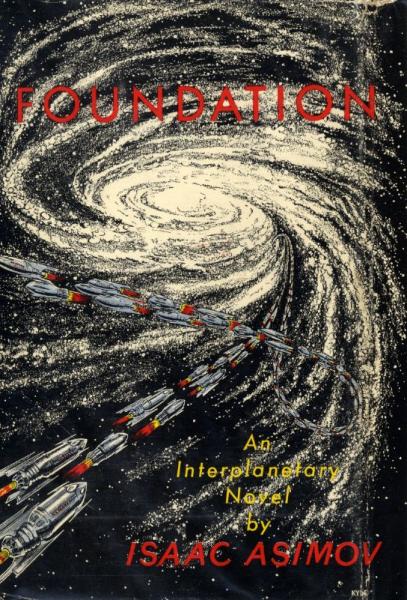
- Foundation Universe
universe123 books1940
Start hereFoundation · Start here
similar byscience fiction+1 more
There is a science that reads the future of quadrillions the way an astronomer reads the orbits of stars. It is called psychohistory, and its equations foresee something the ruling Galactic Empire cannot admit: the throne is rotting, and thirty thousand years of barbarism are coming. One man, Hari Seldon, cannot stop the fall. He can only shorten it — by seeding a Foundation of scholars at the rim of the galaxy, a fragile institution built to carry knowledge across the dark and cut the interregnum to a single millennium. This is a universe told in the register of history itself: the long view, the calm of deep time, empires measured in centuries and men measured against them. The spine is Asimov's original trilogy — Foundation, Foundation and Empire, Second Foundation — followed decades later by the sequels Foundation's Edge and Foundation and Earth and the prequels Prelude to Foundation and Forward the Foundation. Late in life Asimov braided this in with his other future histories: the Robot novels of detective Elijah Baley and his humaniform partner R. Daneel Olivaw (The Caves of Steel, The Naked Sun, The Robots of Dawn, Robots and Empire) and the early Galactic Empire novels (Pebble in the Sky and its kin), until one continuous chronicle ran from the first thinking robots to the Second Empire. Other hands extend it — the Second Foundation Trilogy by Gregory Benford, Greg Bear, and David Brin, and shared-world spinoffs such as Robot City — so the corpus sprawls beyond a single author's tidy shelf. What distinguishes it is that the drama is intellectual: crises resolved by insight, nerve, and dialogue rather than fleets and blades, each turn hinging on the hidden logic of the Seldon Plan. Begin where readers have always begun — with Foundation, and the original trilogy in publication order. The rest opens outward from there.
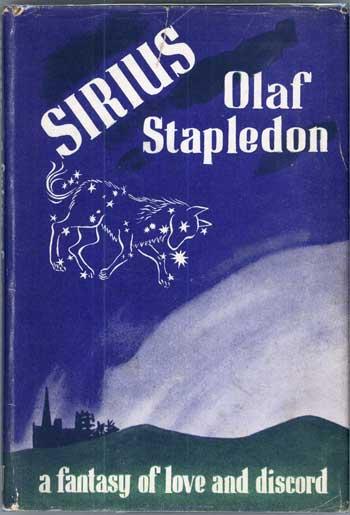
- Sirius: A Fantasy of Love and Discord
Olaf Stapledonstandalone novel1944
similar byreflectivelonelinessscience fictionour worldidentity
Sirius is a 1944 science fiction novel by the British philosopher and author Olaf Stapledon, whose title character is a dog named Sirius with humanlike intelligence. A sense of existential questioning suffuses the book, as the author delves into aspects of Sirius's psyche. The novel deals with many human issues through Sirius and his experiences, his unusual nature, his ideas and his relationships with humans. The characters go to great lengths to prevent Sirius from becoming a circus-type wonderdog, and instead, they seek to develop Sirius's character much like a family would create and foster that of a human child.
- VALIS
series4 books1981
completed
similar byreflectivescience fictionidentity+3 more
The VALIS trilogy is a set of science fiction/philosophical novels by author Philip K. Dick which include VALIS (1981), The Divine Invasion (1981), and The Transmigration of Timothy Archer (1982). Dick's first novel about the VALIS concept originally titled "VALISystem A", was published as Radio Free Albemuth after Dick's death in 1985.
- Kairos
series11 books1962
completed
similar byscience fiction+2 more
The Time Quintet is a science fantasy series of five young adult novels written by American author Madeleine L'Engle and made up of A Wrinkle in Time (1962), A Wind in the Door (1973), A Swiftly Tilting Planet (1978), Many Waters (1986), and An Acceptable Time (1989).
- Concrete Island
J. G. Ballardstandalone novel1974
similar byreflectivelonelinessour worldcontemporaryidentityliterary & general
Architect Robert Maitland crashes his car onto a stretch of wasteland trapped between three converging motorways -- visible from thousands of cars, reachable by none of them. Injured and unable to climb back to the road, Maitland adapts to life on what he starts calling the Island, scavenging food thrown from car windows, and discovers he isn't alone: a runaway sex worker hiding in a bunker, and a brain-damaged former circus acrobat, both long past expecting rescue. What begins as a survival story turns into a question of whether Maitland even wants to leave. A J. G. Ballard novel of urban isolation, grouped with Crash and High-Rise.
- Whileaway
series4 books1972
completed
similar byreflectivescience fictioncontemporary+3 more
Joanna Russ's The Female Man (1975) is a single feminist science fiction novel, not a multi-book series, built around four women from parallel timelines with very different gender arrangements. One of them, Janet, comes from Whileaway, an all-female utopian Earth ten centuries in the future where men died out in a plague; the other three come from realities closer to Russ's own, and their collisions are used to interrogate what womanhood and equality could mean under different social rules.
- Klara and the Sun
Kazuo Ishigurostandalone novel2021
similar byreflectivelonelinessscience fictionour worldliterary & general
Klara and the Sun is the eighth novel by the Japanese-British writer Kazuo Ishiguro, published on 2 March 2021. It is a dystopian science fiction story.
- The Dreaming Jewels
Theodore Sturgeonstandalone novel1950
similar byscience fictionour worldcontemporaryidentity+1 more
The Dreaming Jewels (1950), also known as The Synthetic Man, is a science fiction novel by American writer Theodore Sturgeon. It was his first published novel.
- Contact
Carl Saganstandalone novel1985
similar byreflectivescience fictionour worldcontemporary+1 more
From the front flap of the Simon and Schuster first edition: For centuries humanity has dreamed of life and intelligence beyond the Earth; for decades scientists have searched for it in every corner of the sky; for years Project Argus, a vast, sophisticated complex of radio telescopes, has listened for a signal indicating the existence, somewhere in the universe, of extraterrestrial intelligence. Then, one afternoon, the course of human history is changed, abruptly and forever. The Message, awaited for so long, its very possibility doubted by so many, arrives. Contact has been made. Life, intelligence, someone, something beyond Earth, 26 light-years away, in the vicinity of the star Vega, is calling, beaming across space a wholly unexpected message to say that we are not - have never been - alone. In Contact, Carl Sagan, whose Cosmos enthralled millions of readers and television viewers, has brilliantly employed the freedom of fiction to imagine the greatest adventure of all - humanity's first encounter with other intelligent beings. But the novel is not only about contact between humans and extraterrestrials; it is also about contact, down here on Earth, with each other and ourselves. At its center is a brilliant scientist, Eleanor Arroway, director of Project Argos, who is the first to realize that chapter one of human history is over. It is she who is instrumental in decoding the Message - and in persuading world leaders not to treat it as a threat - she who finds her own life changed by the immense challenge of responding to the Message; she who finally journeys out to experience, in circumstances at once profoundly religious and scientific, the most fateful encounter in human history.
- Richard Forthrast
series2 books2011
similar byscience fictionour world+2 more
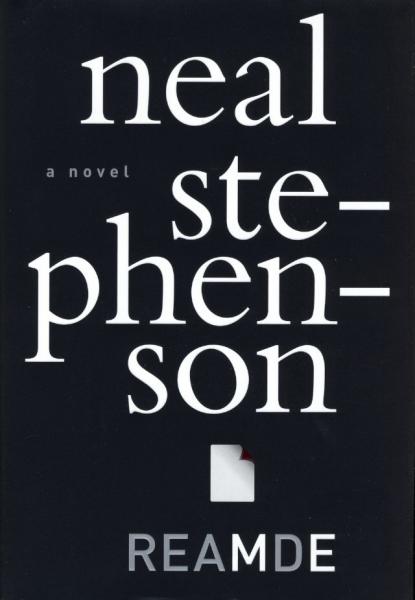
Neal Stephenson's Richard 'Dodge' Forthrast novels open with Reamde, a globe-spanning thriller that starts when ransomware inside an MMORPG economy pulls Richard's extended family into a real-world hostage crisis involving hackers, jihadists and Russian mobsters. The sequel Fall; or, Dodge in Hell shifts registers entirely, following Richard's digitally preserved mind after death into an afterlife simulation built from his scanned brain. The two books share a protagonist and family but differ sharply in genre and scale.
- Odd John
Olaf Stapledonstandalone novel1935
similar byreflectivescience fictionour world+1 more
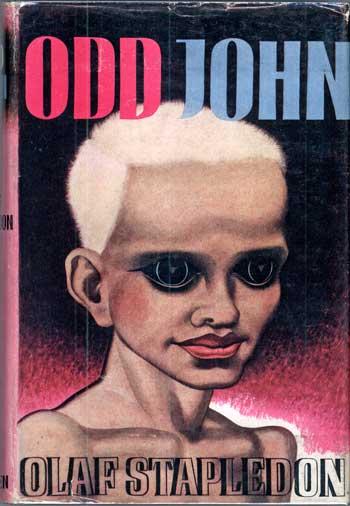
Odd John: A Story Between Jest and Earnest is a 1935 science fiction novel by the British author Olaf Stapledon. The novel explores the theme of the Übermensch (superman) in the character of John Wainwright, whose supernormal human mentality inevitably leads to conflict with normal human society and to the destruction of the utopian colony founded by John and other superhumans.
- Stranger in a Strange Land
Robert A. Heinleinstandalone novel1961
similar byreflectivescience fictionour worldidentity
Stranger in a Strange Land is a 1961 science fiction novel by the American author Robert A. Heinlein. It tells the story of Valentine Michael Smith, a human who comes to Earth in early adulthood after being born on the planet Mars and raised by Martians, and explores his interaction with and eventual transformation of Terran culture.
- Mockingbird
Walter Tevisstandalone novel1980
similar byreflectivelonelinessscience fictionour world
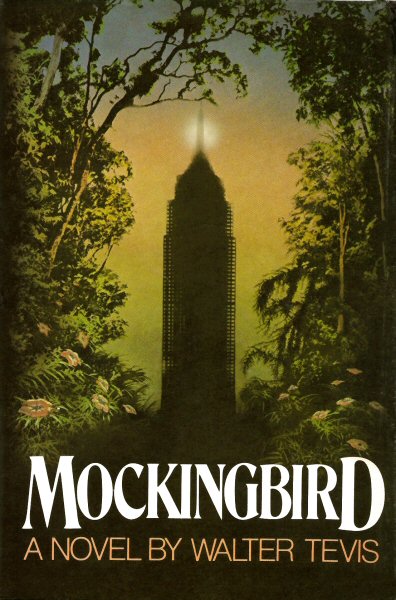
WorldCat: In a future world where mankind is dying, humans wander through life in a drugged electronic bliss. Quick sex is the norm, and some people would rather commit suicide than live in hopelessness. Humanity's salvation rests with an android who has no desire to live, and a man and a woman who must discover love, hope, and dreams of a world reborn.
- The Blue Ant Trilogy
series3 books2003
similar byscience fictioncontemporary+2 more
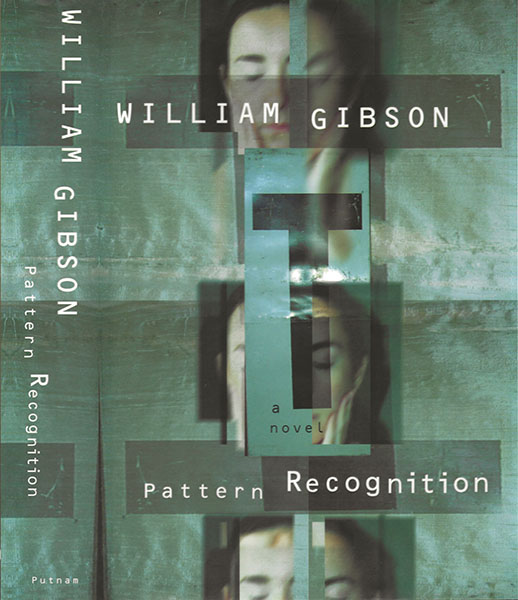
Hubertus Bigend is a fictional character appearing in the third trilogy of novels of science fiction and literary author William Gibson. Bigend is the antihero of Gibson's Pattern Recognition (2003), Spook Country (2007) and Zero History (2010). In an interview Gibson says "I've always had a sense of Bigend as someone who presents himself as though he knows what's going on, but who in fact doesn't. It's just my sense of the subtext of the character: he's bullshitting himself, at the same time as he's bullshitting all of us."
- Chocky
series2 books1968
similar byscience fictioncontemporary+2 more
Chocky (1968) is John Wyndham's science fiction novel about an eleven-year-old boy, Matthew, whose parents grow alarmed by his conversations with an unseen presence that feeds him unsettling insights into mathematics and human progress, building toward the reveal of what, or who, Chocky really is. Mark Daniel's Chocky's Challenge (1986), published after Wyndham's death, is an authorized continuation that carries the story forward.
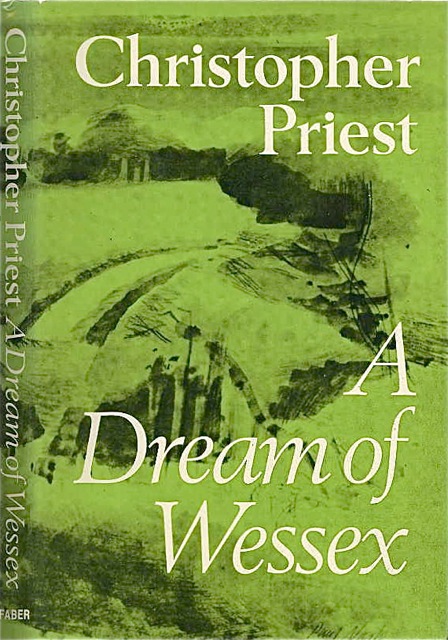
- A Dream of Wessex
Christopher Prieststandalone novel1977
similar byreflectivescience fictionour worldidentity+1 more
A Dream of Wessex is a 1977 science fiction novel by British writer Christopher Priest. In the United States it was released under the title The Perfect Lover.
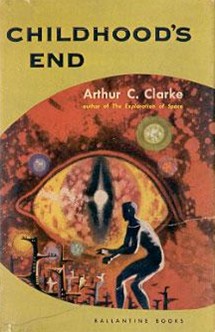
- Childhood's End
Arthur C. Clarkestandalone novel1953
similar byreflectivescience fictionour worldidentity
Childhood's End is a 1953 science fiction novel by the British author Arthur C. Clarke. The story follows a peaceful alien invasion of Earth by mysterious Overlords, whose arrival begins decades of apparent utopia under indirect alien rule, at the cost of human identity and culture.