More like Final Core
but
- Foundation Universe
universe123 books1940
Start hereFoundation · Start here
similar byscience fiction+1 more
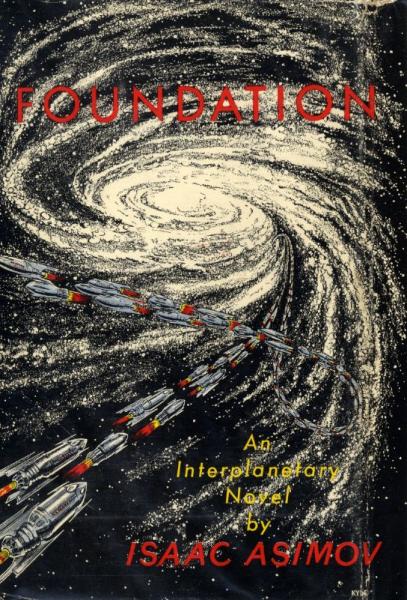
There is a science that reads the future of quadrillions the way an astronomer reads the orbits of stars. It is called psychohistory, and its equations foresee something the ruling Galactic Empire cannot admit: the throne is rotting, and thirty thousand years of barbarism are coming. One man, Hari Seldon, cannot stop the fall. He can only shorten it — by seeding a Foundation of scholars at the rim of the galaxy, a fragile institution built to carry knowledge across the dark and cut the interregnum to a single millennium. This is a universe told in the register of history itself: the long view, the calm of deep time, empires measured in centuries and men measured against them. The spine is Asimov's original trilogy — Foundation, Foundation and Empire, Second Foundation — followed decades later by the sequels Foundation's Edge and Foundation and Earth and the prequels Prelude to Foundation and Forward the Foundation. Late in life Asimov braided this in with his other future histories: the Robot novels of detective Elijah Baley and his humaniform partner R. Daneel Olivaw (The Caves of Steel, The Naked Sun, The Robots of Dawn, Robots and Empire) and the early Galactic Empire novels (Pebble in the Sky and its kin), until one continuous chronicle ran from the first thinking robots to the Second Empire. Other hands extend it — the Second Foundation Trilogy by Gregory Benford, Greg Bear, and David Brin, and shared-world spinoffs such as Robot City — so the corpus sprawls beyond a single author's tidy shelf. What distinguishes it is that the drama is intellectual: crises resolved by insight, nerve, and dialogue rather than fleets and blades, each turn hinging on the hidden logic of the Seldon Plan. Begin where readers have always begun — with Foundation, and the original trilogy in publication order. The rest opens outward from there.
- Man Plus
series2 books1976
similar bynear futurescience fictiontense
Frederik Pohl's Man Plus follows Roger Torraway, who is surgically and cybernetically rebuilt into a post-human organism able to survive unprotected on the Martian surface, as part of a crash program to colonize Mars ahead of a predicted global crisis. The 1976 novel, which won the Nebula Award, is a clinical, unsentimental look at what such a transformation costs a person's sense of self. Thomas T. Thomas wrote the sequel Mars Plus, continuing the story of the Martian colony years later.
- Richard Forthrast
series2 books2011
similar byscience fiction+4 more
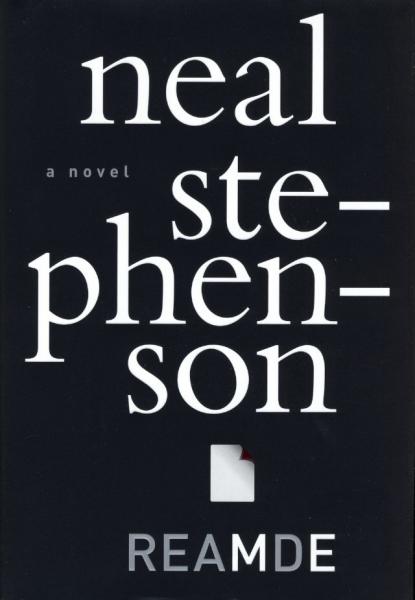
Neal Stephenson's Richard 'Dodge' Forthrast novels open with Reamde, a globe-spanning thriller that starts when ransomware inside an MMORPG economy pulls Richard's extended family into a real-world hostage crisis involving hackers, jihadists and Russian mobsters. The sequel Fall; or, Dodge in Hell shifts registers entirely, following Richard's digitally preserved mind after death into an afterlife simulation built from his scanned brain. The two books share a protagonist and family but differ sharply in genre and scale.
- Ender's Shadow
series5 books1999
part of Ender's Game Universe
similar byscience fictiontense
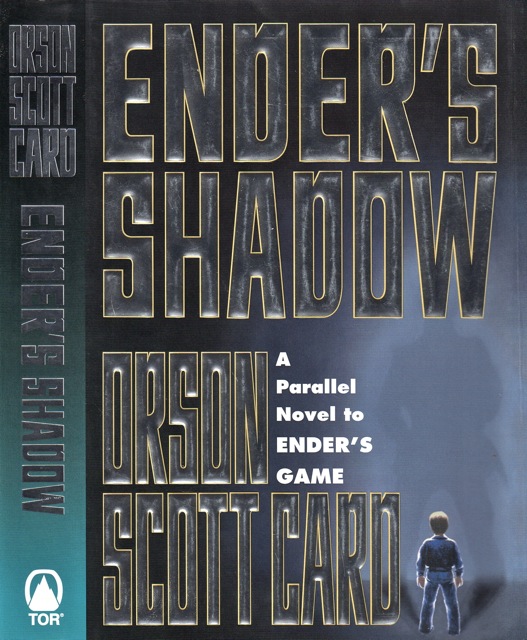
Orson Scott Card's Ender's Shadow retells the events of Ender's Game from the perspective of Bean, a physically stunted but ferociously intelligent street child recruited into the same Battle School program as Ender Wiggin. It launches the Shadow series, which follows Bean and other secondary Battle School characters into the political aftermath of the Formic Wars back on Earth, running parallel to and eventually past the timeline of Card's main Ender Quintet.
- Sprawl Trilogy
series10 books1981
similar byartificial intelligencenear futurescience fictiontense
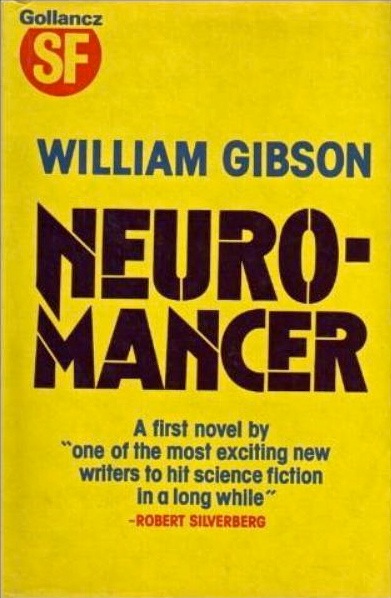
The Sprawl Trilogy is William Gibson's foundational cyberpunk sequence: Neuromancer (1984), in which hacker Case is drawn into a high-stakes heist alongside an artificial intelligence and a damaged ex-soldier, followed by Count Zero (1986) and Mona Lisa Overdrive (1988), which widen the same near-future world of corporate power and networked cyberspace to new characters. Johnny Mnemonic, an early short story set in the same fictional milieu, predates the novels and introduces the courier Molly Millions before her role in the trilogy. Together these works established much of cyberpunk's visual and thematic vocabulary.
- Blade Runner Universe
series6 books1968
similar bynear futurescience fiction+2 more
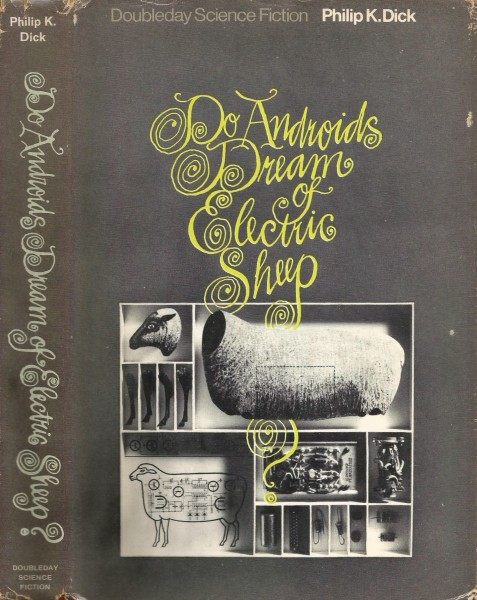
Philip K. Dick's 1968 novel Do Androids Dream of Electric Sheep? follows bounty hunter Rick Deckard as he tracks escaped androids through an irradiated, near-abandoned San Francisco, using the hunt to probe questions of empathy and what separates human from machine. The novel became the basis for Ridley Scott's 1982 film Blade Runner, and Marvel Comics later published an illustrated adaptation of that film. Together the two trace the story's path from prose original to screen and comic-page adaptation.
- Salvation
series3 books2018
similar byscience fiction+3 more
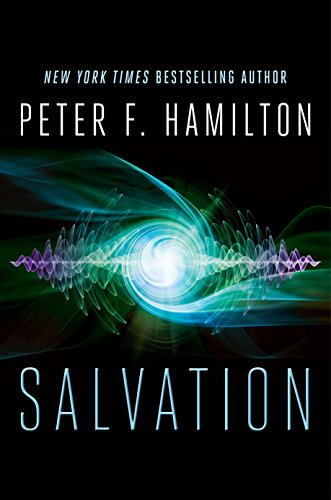
By 2204, instantaneous jump-gate travel has made distance nearly meaningless, connecting Earth to its scattered colonies in a single step -- until a crashed alien ship of unknown origin turns up on a world eighty-nine light years away, carrying something far more dangerous than wreckage. Peter F. Hamilton's Salvation follows the investigation team sent to assess the find, one of whom may not be who they claim, while a second timeline set generations later shows the far-future fallout of what they discover. The trilogy continues through Salvation Lost and The Saints of Salvation.
- Dune Universe
universe78 books1963
Start hereDune · Start here
similar byscience fiction+1 more
Arrakis. Dune. The desert planet, where empire runs on a single substance: the spice melange, which folds space, prolongs life, and unlocks prescience, and which exists nowhere else in the known universe. Frank Herbert's saga is a meditation dressed as an adventure — feudal houses and a secret sisterhood, engineered messiahs and the patient ecology of a world without water, all turning on the terrible gravity of who commands the spice. It reads like scripture and schemes like a war room, ten thousand years hence, among people who have outlawed the thinking machine and made instruments of themselves instead. At its heart stand Herbert's original six — Dune, Dune Messiah, Children of Dune, God Emperor of Dune, Heretics of Dune, Chapterhouse: Dune — a single deepening arc across millennia, arguing the whole way between prophecy and free will. Around that spine his son Brian Herbert and Kevin J. Anderson have raised a vast prequel architecture: Prelude to Dune, tracing the great houses a generation before Paul; Legends of Dune, reaching back to the crusade that broke the machines; the Schools of Dune cycle on the founding of Bene Gesserit, Mentat, and Navigator; the Caladan Trilogy and Heroes of Dune filling years the originals left in shadow. Many hands, dozens of volumes, one desert. What sets Dune apart is its refusal of the simple: religion is manufactured, heroes are hazards, and the sand itself — worm, water, ecology — acts as a political power. Begin where the universe did, with Frank Herbert's Dune (1965), and read the original six in order; you need nothing else to feel the full weight. The prequels are a country to explore afterward, taken by era. Beginnings are delicate times.
- The Long Earth
series7 books2012
similar bynear futurescience fictionadventurous+1 more
Terry Pratchett and Stephen Baxter's Long Earth series (five novels, 2012-2016) begins when a cheap, simple device called a Stepper lets people step sideways into a vast, possibly infinite chain of parallel Earths, none of which developed human civilization. The books follow a natural stepper and an AI that believes itself the reincarnation of a Tibetan repairman as they travel millions of steps out along the chain, encountering other hominid species and the dangers, ecological and social, of an endless open frontier.
- The Postman
series3 books1982
similar bynear futurescience fiction+1 more
The Postman (1985) is David Brin's post-apocalyptic novel about a wandering survivor who, after taking a dead mail carrier's uniform for warmth, is mistaken for a representative of a restored United States government and is drawn into rebuilding trust and order among scattered, wary settlements. It stands as a self-contained story, later adapted into a 1997 film.
- H. I. V. E.
series10 books2006
similar bynear futurescience fictiontense+2 more
Mark Walden's series is set at H.I.V.E. (the Higher Institute of Villainous Education), a hidden academy training the next generation of criminal masterminds, following orphan genius Otto and fellow students Wing, Laura, and Shelby as they navigate the school's twisted curriculum while plotting to escape it. The premise plays school-story conventions against a supervillain backdrop across more than a dozen books.
- The Moon Is a Harsh Mistress
Robert A. Heinleinstandalone novel1966
similar byartificial intelligencescience fictionadventurous+1 more
A technician discovers that the massive computer that operates everything on Luna (a prison colony) has become self-aware. He befriends it, but when he accompanied a beautiful girl to a dissident meeting, he encounters people who want to throw off the yoke of their Earth rulers.
- The Lightspeed Trilogy
series4 books2016
similar byscience fiction+2 more
Ken MacLeod's recent trilogy imagines the accidental discovery of faster-than-light travel by a present-day physicist and the political fallout once humanity gets access to a wider galaxy that turns out not to be empty. Beyond the Hallowed Sky opens on an Earth still riven by bloc politics as the discovery becomes a new front in great-power rivalry, with the sequels carrying the consequences off-world. It treats first contact as a geopolitical problem as much as a scientific one.
- The Mortality Doctrine
series4 books2013
similar byartificial intelligencenear futurescience fictiontense+1 more
The Eye of Minds opens James Dashner's Mortality Doctrine trilogy in a near-future where a teenage gamer is recruited to help stop a rogue hacker named Kaine who threatens mass destruction from inside the virtual world he haunts. Dashner has said he didn't intend the series as dystopian in the way of his Maze Runner books, though he saw it sharing their tone and spirit. The trilogy continues with The Rule of Thoughts and The Game of Lives.
- Quantum Gravity
series6 books2006
similar bynear future+3 more
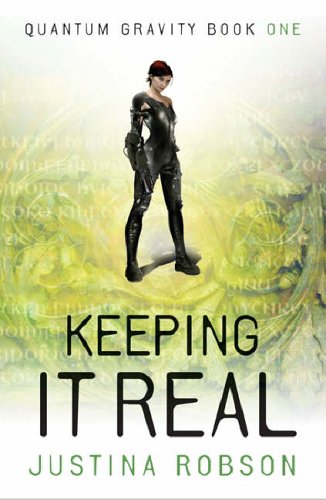
Justina Robson's Quantum Gravity series opens with Keeping It Real, set six years after a catastrophic 'Quantum Bomb' tore open the boundaries between Earth and other dimensions, leaving humans in uneasy contact with elves, elementals, and demons. The series follows cyborg special agent Lila Black across five novels as magic and technology collide.
- Jenny Casey
series4 books2004
similar bynear futurescience fictiontense+2 more
Elizabeth Bear's Jenny Casey trilogy opens with Hammered (2004), her debut novel, which won the Locus Award for Best First Novel. It continues across Scardown and Worldwired, completing the story of its title character across three volumes published through 2006.
- The Diamond Age
Neal Stephensonstandalone novel1995
similar byartificial intelligencenear futurescience fiction+1 more
The Diamond Age: Or, A Young Lady's Illustrated Primer is a science fiction novel by Neal Stephenson. It is to some extent a Bildungsroman or coming-of-age story, focused on a young girl named Nell, set in a future world in which nanotechnology affects all aspects of life. The novel deals with themes of education, social class, ethnicity, and the nature of artificial intelligence. The Diamond Age was first published in 1995 by Bantam Books, as a Bantam Spectra hardcover edition. In 1996, it won both the Hugo and Locus Awards, and was shortlisted for the Nebula and other awards.
- Forge of God
series2 books1987
completed
similar byscience fictiontense+1 more
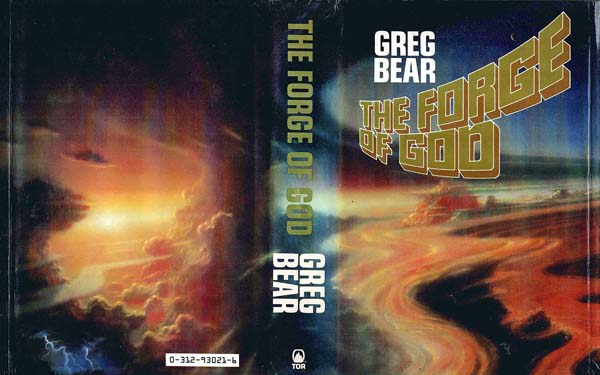
The Forge of God (1987) is Greg Bear's science fiction novel about Earth's discovery that it is the target of an incomprehensible, overwhelming alien attack, following scientists and ordinary people as they try to understand what is destroying the planet. Its 1992 sequel, Anvil of Stars, follows a group of young survivors sent on a mission of interstellar retaliation, continuing directly from the first book's ending.