Loreful
HomeDiscover
Search series, authors…⌘K
Loreful

Reading orders for SF/F series and shared universes — with your place kept in every one.

Explore

UniversesSeriesWorksAuthorsAtlas

Help

FAQAboutSite map

Account & legal

Sign inCreate accountPrivacyTerms

Data

Built on ISFDB, Wikipedia, Wikidata and Open Library. Curated reading orders carry their reasoning on the page; the rest follow publication order. Data sources & licenses

© Loreful · data: ISFDB · CC BY

More like Firebird

anchored on:fantasyhistorical fantasyeastern europemedievalmythic fantasywitches+2 more

but

Mood

The mood the book leaves you in.

  • The reading experience is propelled by journeys, exploration, and physical risk; excitement and forward momentum dominate over dread or introspection.
  • Joy and loss are deliberately mixed; the resolution grants characters something real while taking something else away, leaving warmth and sorrow together.
  • The book demands work from the reader — dense prose, difficult structure, unfamiliar ideas, or morally uncomfortable material — as part of its intended effect.
  • Grim events, cruelty, or despair dominate the atmosphere, and the book does not soften them with comfort or comic relief.
  • The atmosphere is quietly unsettling — wrongness, unease, and the uncanny pervade the book without necessarily escalating into overt horror.
  • The book is built to move the reader; character feeling is foregrounded and major scenes aim at a strong emotional response.
  • Humor is a primary aim and the prose plays for laughs — comic situations, wit, or dialogue produce sustained comedy, not occasional levity.
  • The book insists that things can improve; effort and decency are shown to matter, and the arc bends toward better outcomes even through hardship.
  • The book teaches as it goes — real facts, history, science, or craft are conveyed in enough depth that learning is part of the reading experience.
  • The book is designed to uplift and motivate, presenting perseverance or achievement in a way that invites the reader to aspire or act.
  • The overall register is cheerful and easygoing; stakes are kept gentle and the book avoids dwelling on pain or dread.
  • Withheld information drives the experience; the book sustains enigmas and secrets the reader wants resolved, whatever its genre.
  • The book is contemplative and inward-looking, giving more weight to thought, memory, and meaning than to external events.
  • The book works as comfort reading — low tension, a soothing pace, and an atmosphere the reader can unwind in.
  • Grief, loss, or melancholy set the dominant register, and the book lets sorrow stand rather than resolving it into comfort.
  • Sustained suspense is the point; the book keeps the reader braced for what happens next through danger, pressure, or impending revelation.
  • Playful invention and charm define the register — fanciful conceits, light absurdity, and a narration that delights in its own oddity.

About

What the story runs on.

  • Stories in which extraterrestrial beings are central — as characters, cultures, or the object of the plot.
  • Stories centered on witches and the practice of witchcraft — covens, hedge magic, familiars, and the witch's place in her community.
  • Stories structured as a quest — a journey undertaken to find, deliver, or destroy something of great import.
  • Stories in which staying alive against nature, catastrophe, or scarcity is the central problem.
  • Stories of lovers kept apart by law, family, faith, or station, where the obstacle to love is the plot.
  • Stories in which a friendship — its making, testing, or loss — is the emotional center.
  • Stories of growing up — a young protagonist crossing from childhood into adult knowledge and responsibility.
  • Stories about who a character truly is — self-discovery, doubled lives, and the search for a self.
  • Stories in which a buried family truth — hidden parentage, crimes, or shames — surfaces and reorders the present.
  • Stories driven by maneuvering for power — factions, conspiracies, and statecraft conducted in shadow.
  • Stories in which war itself is the subject — combat, occupation, and what warfare does to soldiers and civilians.
  • Stories organized around investigating a killing — the case, the clues, and the pursuit of the killer, in any genre's clothing.

Shelf

Where it sits in the library.

    • Fiction built on magic or other supernatural elements that have no scientific explanation.
    • Secondary-world fantasy at large scale, where the fate of nations or the world turns on the protagonists' struggle.
    • Fantasy set in a recognizably modern city or contemporary world where the supernatural intrudes on everyday life.
    • Fantasy that blends in horror's atmosphere and imagery, keeping a fantastical frame around grim or frightening material.
    • Action-driven fantasy following warriors or rogues with personal stakes against sorcerous threats, rather than world-spanning conflicts.
    • Fantasy set in a real historical period or a close analogue of one, with magic woven into the era.
    • Fantasy in which protagonists cross from the ordinary world into another world through a portal or similar passage.
    • Fiction that retells or reworks a traditional fairy tale in a new form or setting.
    • Fantasy drawing directly on myths, legends, and folklore, retelling them or building on their figures and logic.
    • Fantasy of ghosts, vampires, shapeshifters, psychics, and similar phenomena, usually set in an otherwise ordinary world.
    • Fiction mixing science-fictional trappings with overtly magical or impossible elements in one setting.
    • Low-stakes fantasy emphasizing comfort, community, and everyday pleasures over conflict and peril.
    • Speculative fiction of pervasive moral ambiguity, violence, and cynicism that rejects heroic conventions — fantasy and SF alike.
      • Fiction that extrapolates from science and technology — future societies, space travel, or speculative inventions — within at least nominally natural laws.
      • Science fiction of interstellar scope — starships, galactic polities, and adventure across star systems.
      • Science fiction committed to scientific rigor, where technical plausibility constrains the story.
      • Science fiction centered on armed forces and warfare, told largely from a military point of view.
      • Science fiction of networked, corporate-dominated near futures, pairing high technology with social decay.
      • Science fiction styled on nineteenth-century steam-powered technology, often in a Victorian or pseudo-Victorian setting.
      • Fiction depicting an oppressive or catastrophic society, presented as a warning.
      • Fiction set after civilization's collapse, following survivors in the ruins of the old world.
      • Fiction in which characters move between past and future, and the mechanics or consequences of that travel drive the plot.
      • Fiction exploring a world where a historical event went differently and history diverged from ours.
      • Science fiction about humanity's first encounter and communication with an alien intelligence.
      • Science fiction in which extraterrestrial forces attack or occupy Earth and humanity resists.
      • Fiction whose primary aim is to frighten or unsettle the reader through dread, menace, or the monstrous.
      • Horror of vast, indifferent, incomprehensible entities before which humanity is insignificant, in the Lovecraft tradition.
      • Horror of decaying houses, buried family secrets, and oppressive atmosphere in the Gothic literary tradition.
      • Horror centered on hauntings and the returning dead.
      • Horror located in the mind — paranoia, obsession, and unreliable perception rather than external monsters.
      • Horror built around the reanimated dead and survival amid their outbreaks.
      • Horror defined by explicit, transgressive gore that refuses to cut away from violence.
      • Speculative fiction of the strange and uncanny that resists both natural explanation and standard genre categories.
      • Fiction organized around solving a crime or puzzle, typically following an investigator toward the identification of a culprit.
      • A puzzle-first mystery that lays out clues so the culprit's identity can be deduced before the reveal.
      • Crime fiction of moral ambiguity, fatalism, and hard-edged style, set among the corrupt and the doomed.
      • A mystery following the realistic routines of police work — forensics, interviews, and case-building.
      • A gentle mystery with an amateur sleuth, a small community, and violence kept off the page.
      • A mystery set in a past era, where the investigation works within that period's methods and society.
      • Fast-paced fiction driven by imminent danger, pursuit, or high-stakes conspiracy, built to sustain tension.
      • A thriller of espionage — agents, tradecraft, and intelligence services in conflict.
      • A thriller centered on lawyers and the courtroom, where litigation carries the suspense.
      • A thriller driven by detailed contemporary or near-future technology, often military or scientific.
      • A thriller whose tension comes from mental states and manipulation between characters rather than external action.
      • Fiction whose central plot is a romantic relationship and its development toward an emotionally satisfying resolution.
      • Romance in which one or both partners are supernatural beings, blending fantasy elements into the love story.
      • A fantasy-romance hybrid in which the romantic arc and the fantasy plot carry equal weight.
      • Romance set in a past era, with courtship shaped by the period's society and manners.
      • Romance set in the present day, without supernatural or historical elements.
      • Fiction set in a real past period, where the historical setting materially shapes characters and events.
        • General and literary fiction emphasizing prose style, character interiority, or formal ambition over genre plot conventions.
        • Fiction in a realistic world where magical events occur and are treated as ordinary, in the tradition of Latin American literature.
        • Fiction that ridicules people, institutions, or society in order to criticize them.
        • Fiction of dreamlike, irrational imagery and logic that breaks from realistic representation.
        • Fiction that plays with narrative convention through metafiction, fragmentation, and self-reference.
        • Fiction propelled by journeys, exploration, and physical peril, where action and survival carry the plot.
        • Adventure fiction of ships and seafaring — naval engagements, voyages, and life at sea.
        • Fiction of the American frontier West — gunmen, ranchers, and lawmen, typically in the late nineteenth century.
        • Fiction centered on soldiers, campaigns, and the experience of warfare, historical or imagined.
          • Fiction written primarily to amuse, using comedic situations, wit, or parody as its organizing principle.
            • Multi-generational fiction following a family or dynasty across decades, with inheritance and kinship as the through-line.
              • Fiction whose world runs on explicit game mechanics — levels, stats, and skills that characters can see and exploit.
                • Fiction about costumed or superpowered heroes and their conflicts with comparable villains.

                Practical

                How long a commitment, whether it stands alone, and whether it has finished.

                Tap a chip to ask for it · tap again to rule it out · once more to clear. Numbers show what would be left.

                • Cover of Winternight
                  Winternight

                  series · 3 books · 2017

                  similar byeastern europemedievalwitcheshistorical fantasymythic fantasy+1 more

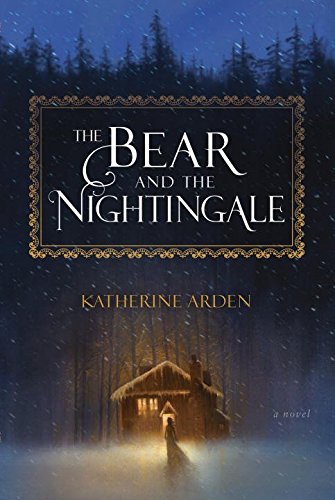
                  The Winternight trilogy is a series of adult historical fantasy novels written by American author Katherine Arden. The trilogy consists of The Bear and the Nightingale (2017), The Girl in the Tower (2017), and The Winter of the Witch (2019). At the beginning, the story takes place in a medieval Russian village. Vasilisa "Vasya" Petrovna has received a spiritual gift, using it to see the fantastical creatures that inhabit her village. This leads her to a conflict with the Orthodox Church who becomes convinced that she is a witch.

                • Cover of The Broken Sword
                  The Broken Sword

                  Poul Anderson · standalone novel · 1954

                  similar bydarkmedievalfantasymythic fantasy+1 more

                  The Broken Sword is a fantasy novel by American writer Poul Anderson, originally published on 5 November 1954. A revised edition was issued by Ballantine Books in January 1971 as the twenty-fourth volume of their Ballantine Adult Fantasy series. The original text was reissued by Gollancz in 2002. Set during the Viking Age, the novel features numerous references to Norse mythology.

                • Cover of Eric Brighteyes
                  Eric Brighteyes

                  series · 2 books · 1891

                  similar bymedievaladventurousfantasy+4 more

                  H. Rider Haggard's Eric Brighteyes is a Viking-age saga set in 10th-century Iceland, following the golden-eyed warrior Eric Thorgrimursson's doomed love for Gudruda against a backdrop of clan rivalry, sorcery, and blood feud after the sorceress Swanhild and the chieftain Ospakar both move against the match. Written in 1891 in the style of the Old Norse sagas Haggard admired, it stood alone for nearly a century until Mildred Downey Broxon, writing under a Norse pen name, continued the story in the 1979 sequel Eric Brighteyes #2: A Witch's Welcome.

                • Cover of Tales of Old Russia
                  Tales of Old Russia

                  series · 3 books · 1990

                  completed

                  similar byeastern europeadventurousfantasyhistorical fantasymythic fantasy+5 more

                • Cover of The Warlord Chronicles
                  The Warlord Chronicles

                  series · 3 books · 1995

                  similar bydarkmedievalwarfantasy+3 more

                  The Warlord Chronicles or The Warlord Trilogy is a series of three novels about Arthurian Britain written by Bernard Cornwell. The story is written as a mixture of historical fiction and Arthurian legend. The books were originally published between 1995 and 1997 by Penguin and Michael Joseph in the United Kingdom and by St. Martin's Press in the United States. It has been adapted for television as The Winter King.

                • Cover of The Radiant Emperor
                  The Radiant Emperor

                  series · 2 books · 2021

                  similar bydarkmedievalhistorical fantasywarfantasy

                  The Radiant Emperor reimagines the rise of the founder of a Chinese dynasty as a peasant girl who takes on her dead brother's identity and destiny to survive famine and war, rising through ambition and deception toward the throne. Shelley Parker-Chan's duology, beginning with She Who Became the Sun, follows her against a rival commander on the opposing side of a civil war, concluding in He Who Drowned the World.

                • Cover of Grendel
                  Grendel

                  John Gardner · standalone novel · 1971

                  similar bydarkmedievalfantasymythic fantasy

                  Between bouts of his war on the king of the Danish Norsemen, the monster philosophizes about life and fate.

                • Cover of Birthgrave
                  Birthgrave

                  series · 3 books · 1975

                  completed

                  similar bydarkrevengefantasy+2 more

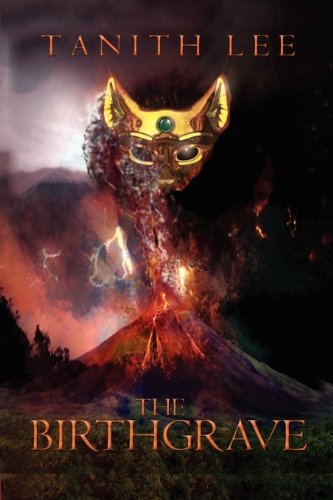
                  Tanith Lee's Birthgrave trilogy (The Birthgrave, Vazkor Son of Vazkor, Quest for the White Witch, 1975-1978) opens with an amnesiac woman waking inside a volcano with no memory of who she is, and follows her journey through a brutal, quasi-medieval world in search of her identity, wielding strange powers she doesn't understand along the way. She eventually learns she is one of the last of the Old Ones, an ancient, nearly extinct people, and must reckon with the harm her own vanished civilization once did.

                • Cover of Red Eve
                  Red Eve

                  H. Rider Haggard · standalone novel · 1911

                  similar bydarkmedievalhistorical fantasywar+1 more

                  Red Eve is a historical novel with fantasy elements, by British writer H. Rider Haggard, set in the reign of Edward III. Red Eve depicts the Battle of Crécy and the Black Death, and also features a supernatural personification of Death called Murgh.

                • Cover of Nightseer
                  Nightseer

                  series · 5 books · 1989

                  similar bydarkrevengefantasy+2 more

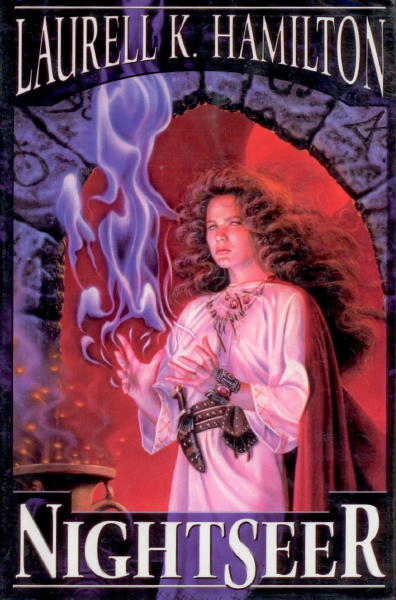
                  Laurell K. Hamilton's Nightseer (1992) follows Keleios, a half-elf seeking vengeance for her mother's murder, who is granted extraordinary powers along with a dangerous 'demonmark' that risks opening her to dark magic. A standalone fantasy adventure, it predates Hamilton's better-known Anita Blake and Merry Gentry series.

                • Cover of Mother of Kings
                  Mother of Kings

                  Poul Anderson · standalone novel · 2001

                  similar bydarkmedievalwitcheshistorical fantasy+1 more

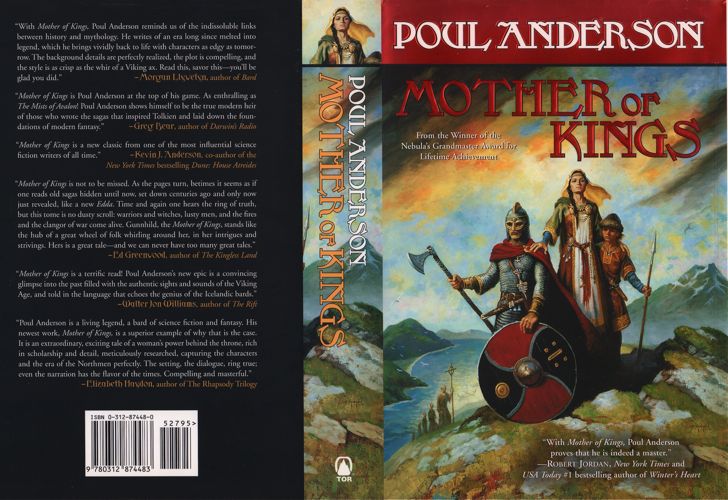
                  From the front flap of the Tor first edition: "With this new novel, science fiction and fantasy grandmaster Poul Anderson has crafted a powerful story of a mighty queen, magic, and the mastery of ancient nations. Blending characters both historical and mythological, Mother of Kings is the tale of Gunnhild, Queen of England and Norway, who loomed so large in the tenth century - at the end of the Age of the Vikings - that she became a figure of legend, even of myth. As a child of just seven summers, Gunnhild finds herself fascinated with the powers of a witchwoman who is concubine of her father's, a powerful Norse chieftain. She also finds another fascination in handsome and lordly Eirik, son of their king. When her mother dies, Gunnhild promises, "I will never yield," and that, "through me, our blood shall flow greatly." Gunnhild has learned from her chieftain father the way the powerful use the weak. But there are other lessons and other powers she seeks. Sent away to learn the magic of a pair of shamans, Gunnhild becomes a Spaewife - a knower of the Gods, a master in the ways of witchcraft and sorcery. Aided by her new abilities, Gunnhild marries Eirik. She is destined to become queen, and her magic is a fearsome complement to Eirik's strength. But Eirik's enemies are cunning, and Gunnhild is soon without his might. If Gunnhild can keep the promise she made as a child to never yield, her family's blood will flow greatly, and the sons she bore Eirik will each become a king. Her own struggles, though, are far from over..."

                • Cover of Anya
                  Anya

                  series · 2 books · 2019

                  similar bymedievaleastern europefantasyadventurous+1 more

                • Cover of The Warrior Who Carried Life
                  The Warrior Who Carried Life

                  Geoff Ryman · standalone novel · 1985

                  similar bydarkrevengefantasyadventurous+1 more

                  From the back cover of the Bantam paperback edition: "In a dawn land touched by a strange magic, a young woman burned with a dark vengeance. Barbaric invaders had slaughtered her mother, crippled her father and brother, and left her scarred and barren. To redeem her world from the grip of an ancient Evil, she transformed herself into a mighty warrior, and followed the Road of Heroes into the Land of Death..."

                • Cover of Twilight of the Celts
                  Twilight of the Celts

                  series · 3 books · 2014

                  similar bydarkmedievalhistorical fantasywar+1 more

                • Cover of Henry Sturges
                  Henry Sturges

                  series · 2 books · 2010

                  similar bydarkhistorical fantasyadventurousfantasy

                • Cover of Corvis Rebaine
                  Corvis Rebaine

                  series · 2 books · 2010

                  similar bydarkrevengefantasy+1 more

                • Cover of Legends of the Wolves
                  Legends of the Wolves

                  series · 3 books · 1998

                  completed

                  similar bymedievalhistorical fantasyfantasy+2 more

                • Cover of A Song of Ice and Fire
                  A Song of Ice and Fire

                  series · 14 books · 1996

                  part of World of Ice and Fire

                  similar bydarkwarfantasy

                  A Song of Ice and Fire is a series of high fantasy novels by the American author George R. R. Martin. Martin began writing the first volume, A Game of Thrones, in 1991, and published it in 1996. Martin, who originally envisioned the series as a trilogy, has released five out of seven planned volumes. The most recent entry in the series, A Dance with Dragons, was published in 2011. Since then, Martin has been working on the sixth novel, titled The Winds of Winter. A seventh novel, A Dream of Spring, is planned to follow.

                • Cover of The Black Douglas
                  The Black Douglas

                  S. R. Crockett · standalone novel · 1899

                  similar bydarkmedievalhistorical fantasyadventurous

                  The Black Douglas is a historical fantasy novel by the Scottish author Samuel Rutherford Crockett published in 1899. It features the historical figures William Douglas, 6th Earl of Douglas, and Gilles de Retz ("Bluebeard"), though in reality they never met. It is set in Scotland and France in the fifteenth century and blends history with supernatural elements. The novel is cited as an influence for J.R.R. Tolkien's The Hobbit and The Lord of the Rings.

                • Cover of Heirs of the Demon King
                  Heirs of the Demon King

                  series · 1 book · 2014

                  similar bydarkmedievalhistorical fantasyfantasywar

                • Cover of The Stars My Destination
                  The Stars My Destination

                  Alfred Bester · standalone novel · 1956

                  similar bydarkrevengeadventurous

                  When a passing spaceship refuses to rescue the lone survivor from the drifting wreck of another ship, he dedicates his life to discovering who made that decision and exacting his revenge, in the process altering human history and his own character.

                • Cover of Down the Long Wind
                  Down the Long Wind

                  series · 3 books · 1980

                  similar bymedievalfantasyhistorical fantasy+2 more

                  Gillian Bradshaw's Down the Long Wind trilogy retells the Arthurian legend from the perspective of Gwalchmai (Gawain), opening with Hawk of May and following him from a troubled, magic-touched childhood into Arthur's court and its wars. Kingdom of Summer and In Winter's Shadow carry the story through the reign's high point and into the betrayals that end it. Bradshaw favors a grounded, post-Roman Britain over the more overtly magical versions of the legend.

                • Cover of The Sorceress of Rome
                  The Sorceress of Rome

                  Nathan Gallizier · standalone novel · 1907

                  similar bydarkmedievalhistorical fantasy+1 more

                  "Following his death, the Roman people suggested that Stefania, the widow of Crescentius II, had made Otto III fall in love with her and then poisoned him." --Wikipedia, "Otto III, Holy Roman Emperor" (980–1002) (as of 2018-02-09) The Sorceress of Rome opens in the year 999 and concludes with the deaths of both Otto and Stephania.

                • Cover of Who Fears Death
                  Who Fears Death

                  series · 5 books · 2010

                  similar bydarkfantasy+3 more

                  Nnedi Okorafor's award-winning novel is a work of science fantasy set in a post-apocalyptic Africa, engaging directly with themes of race and ethnicity through a speculative lens; it won the World Fantasy Award for Best Novel and the Carl Brandon Kindred Award. The Book of Phoenix, published five years later, serves as a prequel exploring the earlier origins of that same world.