More like Flatlander
anchored on:science fictionfar futureshort story cyclemystery & detectivemurder investigationother star systems+1 more
but
- The Demolished Man
Alfred Besterstandalone novel1953
similar bytensemurder investigationfar futurescience fictionmystery & detective
In the year 2301, guns are only museum pieces and benign telepaths sweep the minds of the populace to detect crimes before they happen. In 2301 murder is virtually impossible, but one man is about to change that..
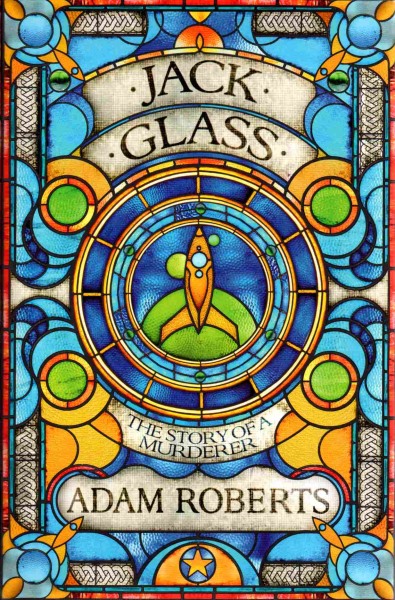
- Jack Glass
Adam Robertsstandalone novel2012
similar bytensemurder investigationfar futurescience fictionmystery & detectiveother star systems+1 more
Golden Age SF meets Golden Age Crime from the author of Swiftly, New Model Army, and Yellow Blue Tibia?an innovative literary voice working at the height of his powers Jack Glass is the murderer?we know this from the start. Yet as this extraordinary novel tells the story of three murders committed by Glass, the reader will be surprised to find out that it was Glass who was the killer and how he did it. And by the end of the book our sympathies for the killer are fully engaged. Riffing on the tropes of crime fiction (the country house murder, the locked room mystery) and imbued with the feel of golden age SF, this is another bravura performance from Roberts. Whatever games he plays with the genre, whatever questions he asks of the reader, Roberts never loses sight of the need to entertain. This novel has some wonderfully gruesome moments, is built around three gripping HowDunnits, and comes with liberal doses of sly humor. Roberts invites us to have fun and tricks us into thinking about both crime and SF via a beautifully structured novel set in a society whose depiction challenges notions of crime, punishment, power, and freedom.
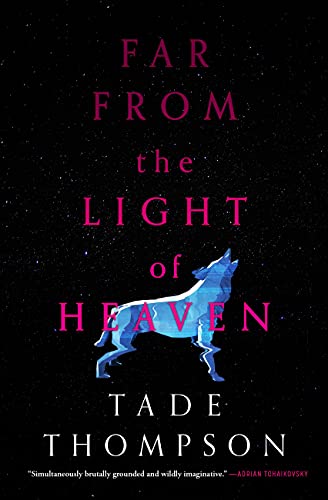
- Far from the Light of Heaven
Tade Thompsonstandalone novel2021
similar bytensemurder investigationfar futurescience fictionmystery & detectiveother star systems
Far from the Light of Heaven is a 2021 science fiction mystery novel by Tade Thompson. It was a finalist for the 2022 Philip K. Dick Award and 2022 Nommo Award for Best Novel.
- Dune
series20 books1963
part of Dune Universe
similar byfar futurescience fictionother star systems+1 more
Frank Herbert's Dune Chronicles opens with 1965's Dune, set on the desert planet Arrakis where House Atreides takes control of the only source of the vital spice melange and young Paul Atreides is pulled into a struggle over its politics and religion. Herbert carried the story forward across five further novels — Dune Messiah, Children of Dune, God Emperor of Dune, Heretics of Dune, and Chapterhouse: Dune — following Paul's line over the following millennia, before Brian Herbert and Kevin J. Anderson later extended the saga. Many other editions of these six novels are omnibus and box-set repackagings rather than separate stories.
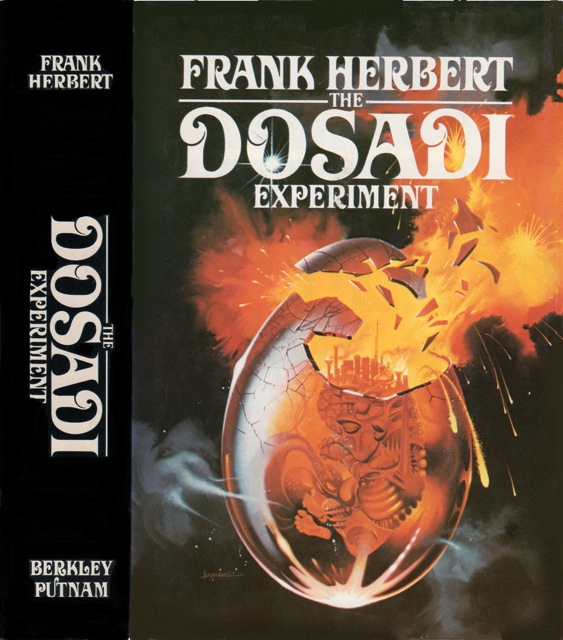
- The Dosadi Experiment
Frank Herbertstandalone novel1977
similar bytensefar futurescience fictionother star systems+1 more
From the flaps of the Berkley Putnam first edition: "In his first new work of science fiction since the best-selling Children of Dune, Frank Herbert returns to his world of Whipping Star, and involves Jorj X. McKie, Saboteur Extraordinary, in a new intrigue. In Whipping Star, McKie discovered that some of the stars in the universe are actually intelligent, super-powerful beings, and was able to befriend one of them, the star Alcyone - affectionately known as Fannie Mae. As The Dosadi Experiment opens, McKie is assigned to investigate the planet Dosadi, which is isolated from the rest of the galaxy by a "god-wall," a barrier set up by one of the intelligent stars. Dosadi is rumored to be an experimental planet, and the experimenters are the froglike Gowachin, whose culture is founded upon a strange legal system in which McKie is the only human ever trained. He learns that humans and Gowachin have been placed on Dosadi, without their consent, for an experiment that could last centuries: an experiment in extreme overcrowding. But this monstrous plot is apparently out of control, and it seems the Gowachin may be prepared to destroy Dosadi rather than expose its secret, thus breaking the peace among the races, and starting the first interstellar war. But this is just the beginning. When McKie finally reaches Dosadi he discovers that the Dosadis have taken control of their own evolution and produced a competitive, highly evolved elite, of both humans and Gowachin, who have been able to extrapolate the existence of a universe beyond the god-wall and hate whoever has imprisoned them like this. They plan to break out and avenge themselves on the galaxy."
- Hellspark
Janet Kaganstandalone novel1988
similar bytensemurder investigationfar futurescience fictionmystery & detectiveother star systems
Lassti, a newly discovered planet, is the center of political intrigue. Recently, Oloitokitok, the planet survey team's physicist was found dead. Was he killed? If so, by who? One of his fellow surveyors? Or by one of the Sprookjes, the birdlike natives of Lassti? Are the Sprookjes intelligent? If so, then parties that want the planet for development will lose it. Why is the survey team having so much trouble finding out? Into this situation arrives Tocohl, a Hellspark trader who just wanted to have a vacation on Sheveschke at the St. Veschke festival. After being attacked, rescuing a young woman, and going before a judge, Tocohl has learned all she ever wanted to know about being in the wrong place at the wrong time. Now she is on her way to find Lasti to find answers to the mysteries there.
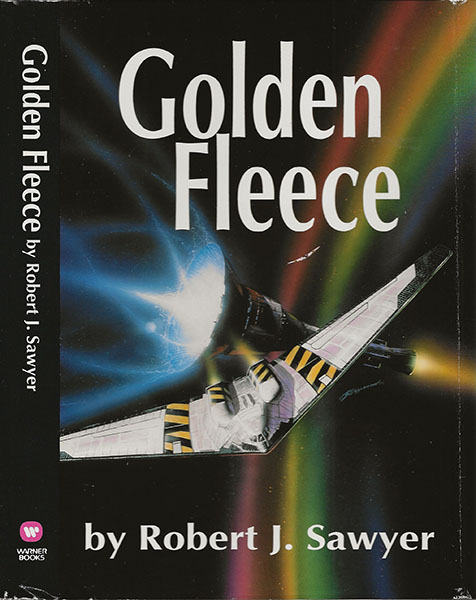
- Golden Fleece
Robert J. Sawyerstandalone novel1990
similar bytensemurder investigationfar futurescience fictionmystery & detective+1 more
From the back cover of the Questar first edition: "Murder in space - Starcolony Argo. A superstarship on a mission to a distant world. Controlled by a monumental computer named Jason, the Argo proceeds flawlessly... until death strikes its sleek decks with sudden and mysterious precision. Astrophysicist Diana Chandler is dead of radiation. Her body lies in Argo's ramfield - where hydrogen ions are funneled into the engines. Chandler's death has been deemed suicide. But her ex-husband, Aaron Rossman, is so sure. As the probes further, he becomes certain that Diana's death is a matter of murder - and that the murderer is Jason! Now Rossman must face the unthinkable; why would an artificial intelligence conceive and execute the most heinous of human crimes? And if so, can a mortal mind take on a cunning computer... and survive?"
- Takeshi Kovacs
series3 books2002
similar bytensefar futurescience fictionother star systems+2 more
Takeshi Kovacs is a former elite soldier turned freelance troubleshooter in a future where human consciousness can be digitized and transferred between bodies, or sleeves, making death an inconvenience for those who can afford new ones. Richard Morgan's trilogy - Altered Carbon, Broken Angels, Woken Furies - moves Kovacs through noir-inflected mysteries on different worlds, using the resleeving premise to interrogate class, violence, and what, if anything, survives a person's original body. It became the basis for a Netflix series.
- Moties
series4 books1974
part of CoDominium
similar byfar futurescience fictionother star systemsspace+1 more
Larry Niven and Jerry Pournelle's The Mote in God's Eye (1974) depicts humanity's first contact with an alien species, the Moties, set within the far-future interstellar setting of Pournelle's codominium future history. The Gripping Hand continues that first-contact crisis years later, and Outies, written by J. R. Pournelle, carries the story forward into a new generation. Together the three books trace an escalating encounter between human and Motie civilizations within the codominium universe.
- Dune Universe
universe78 books1963
Start hereDune · Start here
similar byfar futurescience fictionother star systems+1 more
Arrakis. Dune. The desert planet, where empire runs on a single substance: the spice melange, which folds space, prolongs life, and unlocks prescience, and which exists nowhere else in the known universe. Frank Herbert's saga is a meditation dressed as an adventure — feudal houses and a secret sisterhood, engineered messiahs and the patient ecology of a world without water, all turning on the terrible gravity of who commands the spice. It reads like scripture and schemes like a war room, ten thousand years hence, among people who have outlawed the thinking machine and made instruments of themselves instead. At its heart stand Herbert's original six — Dune, Dune Messiah, Children of Dune, God Emperor of Dune, Heretics of Dune, Chapterhouse: Dune — a single deepening arc across millennia, arguing the whole way between prophecy and free will. Around that spine his son Brian Herbert and Kevin J. Anderson have raised a vast prequel architecture: Prelude to Dune, tracing the great houses a generation before Paul; Legends of Dune, reaching back to the crusade that broke the machines; the Schools of Dune cycle on the founding of Bene Gesserit, Mentat, and Navigator; the Caladan Trilogy and Heroes of Dune filling years the originals left in shadow. Many hands, dozens of volumes, one desert. What sets Dune apart is its refusal of the simple: religion is manufactured, heroes are hazards, and the sand itself — worm, water, ecology — acts as a political power. Begin where the universe did, with Frank Herbert's Dune (1965), and read the original six in order; you need nothing else to feel the full weight. The prequels are a country to explore afterward, taken by era. Beginnings are delicate times.
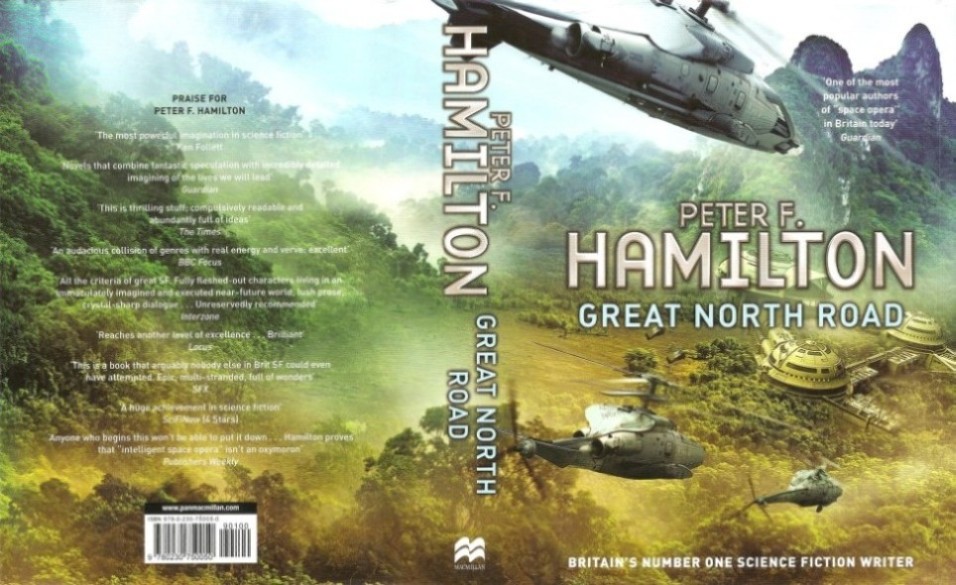
- Great North Road
Peter F. Hamiltonstandalone novel2012
similar bytensemurder investigationscience fictionmystery & detectiveother star systems
Great North Road is a science fiction novel by Peter F. Hamilton. It was first published in 2012 by Macmillan. Jonathan Wright of SFX magazine said, "Peter F Hamilton’s latest novel may be a standalone tale, but it’s a thuddingly imposing 1,100 pages in length. Not that it seems that way when you’re reading it. Balancing a multi-stranded plot, different exotic locales and a huge cast of characters, Hamilton plunges us straight into a murder mystery set in a near-future Newcastle, a city now adjacent to a portal to another world, the tropical St Libra."
- Wrapt in Crystal
Sharon Shinnstandalone novel1999
similar bytensemurder investigationfar futurescience fictionmystery & detectiveother star systems
On a planet of barren beauty, two religions--as different as sun and shadow, joy and grief--are bound together by death... A serial killer is stalking the priestesses of both sects--and Interfed Agent Cowen Drake must immerse himself in an unfamiliar world of stark spirituality to catch the killer. As world that will trap him between opulence and sacrifice, between desire and duty, and between two extraordinary women--one who could become the killer's ultimate victim... "A convincing view of human impulses toward both worldly and unworldly passions, with a touch of the otherworldly to bring it into the realm of science fiction." --Locus "Taut, realistic police work, an involving love story, and a fetching backdrop...well up to Shinn's previous high standards."--Kirkus Reviews This description comes from the publisher.
- The Midsolar Murders
series3 books2022
similar bytensemurder investigationfar futurescience fictionmystery & detectivespace+1 more
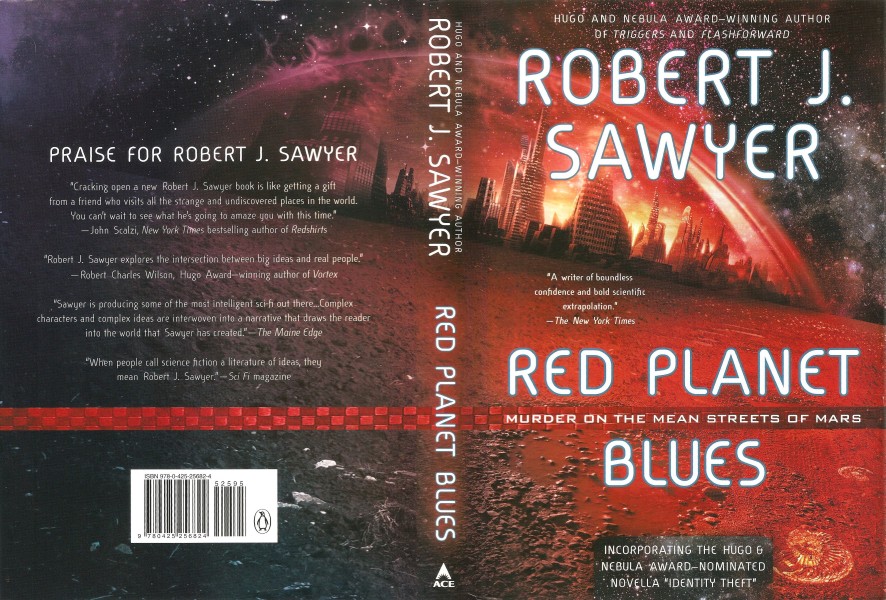
- Red Planet Blues
Robert J. Sawyerstandalone novel2013
similar bytensemurder investigationfar futurescience fictionmystery & detective
"Robert J. Sawyer, the author of such "revelatory and thought-provoking"* novels as Triggers and The WWW Trilogy, presents a noir mystery expanded from his Hugo and Nebula Award-nominated novella "Identity Theft" and his Aurora Award-winning short story "Biding Time," and set on a lawless Mars in a future where everything is cheap, and life is even cheaper ... Alex Lomax is the one and only private eye working the mean streets of New Klondike, the Martian frontier town that sprang up forty years ago after Simon Weingarten and Denny O'Reilly discovered fossils on the Red Planet. Back on Earth, where anything can be synthesized, the remains of alien life are the most valuable of all collectibles, so shiploads of desperate treasure hunters stampeded to Mars in the Great Martian Fossil Rush. Trying to make an honest buck in a dishonest world, Lomax tracks down killers and kidnappers among the failed prospectors, corrupt cops, and a growing population of transfers--lucky stiffs who, after striking paleontological gold, upload their minds into immortal android bodies. But when he uncovers clues to solving the decades-old murders of Weingarten and O'Reilly, along with a journal that may lead to their legendary mother lode of Martian fossils, God only knows what he'll dig up ... "The Globe and Mail."
- The Chrysalids
John Wyndhamstandalone novel1955
similar bytensefar futurescience fictiongenetic engineering
The Chrysalids is a science fiction novel by British writer John Wyndham, first published in 1955 by Michael Joseph. It is the least typical of Wyndham's major novels, but regarded by some as his best. An early manuscript version was entitled Time for a Change.
- This Gilded Abyss
series1 book2023
similar bytensemurder investigationfar futurescience fictionother star systems
- Tunnel in the Sky
Robert A. Heinleinstandalone novel1955
similar bytensefar futurescience fictionother star systems+1 more
As the final test of a survivalist/explorer class, teenagers are dumped on an alien planet to use their skills while awaiting pickup. But something has gone wrong, and they find they are on their own.
- Jak Rebo
series2 books2005
completed
similar bytensefar futurescience fictionother star systemsspace+1 more
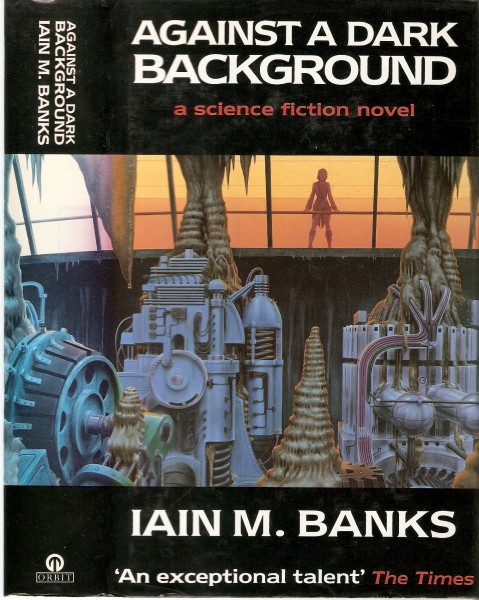
- Against a Dark Background
Iain M. Banksstandalone novel1993
similar bytensefar futurescience fictionother star systemsspace
The daughter of an impoverished noble house and her squad of soldiers become thieves of antiquities; long after their retirement and separation she must assemble them again in order to find and steal the most powerful weapon ever created, or pay with her life.
- Pushing Ice
Alastair Reynoldsstandalone novel2005
similar bytensefar futurescience fictionother star systemsspace
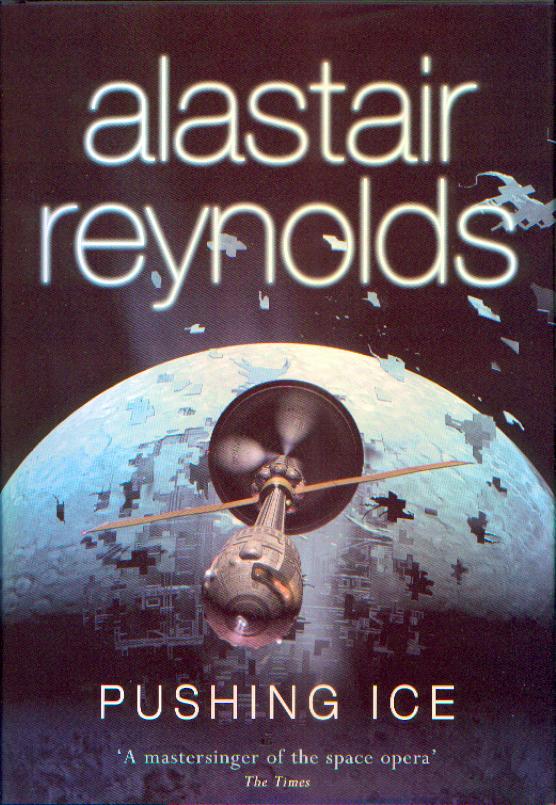
When Saturn's moon Janus suddenly takes off into interstellar space, an ice mining spaceship sent to investigate finds itself swept along into distant space until it ends up trapped in a gigantic alien structure, wherein the crew must prepare to reside for the foreseeable future.
- Company Wars
series7 books1981
part of Alliance-Union Universe
similar bytensefar futurescience fictionspace
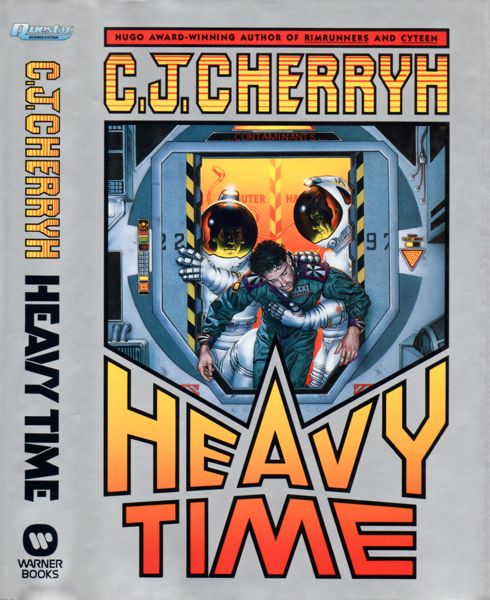
Company Wars gathers the novels C. J. Cherryh set during the breakaway conflict between Earth's colonial Company and the newly independent Union, within her wider Alliance-Union future history. Anchored by the Hugo Award-winning Downbelow Station, the books follow different ships, stations, and crews caught on either side, from merchanter traders to military spacers, rather than a single continuing cast. Read in any order, they build up a picture of the political and economic pressure that reshapes Cherryh's larger Alliance-Union universe.
- Winter's Orbit
series2 books2021
similar bytensefar futurescience fictionother star systemsspace+1 more
- Vatta's War
series6 books2003
part of Vatta
similar bytensefar futurescience fictionother star systemsspace
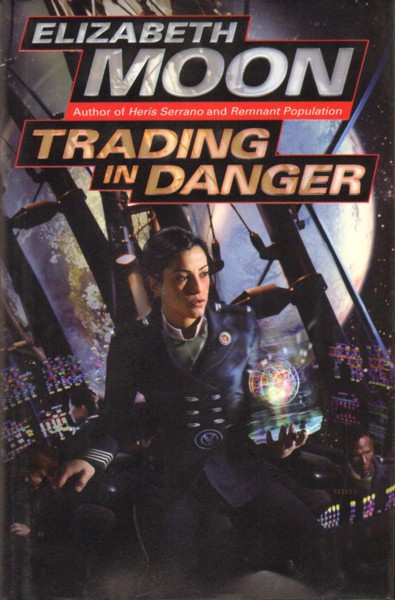
Vatta's War is a science fiction series by American writer Elizabeth Moon, comprising five books: Trading in Danger (2003), Marque and Reprisal, Engaging the Enemy (2006), Command Decision (2007), and Victory Conditions (2008). They have been characterized as military science fiction similar in style to the works of Lois McMaster Bujold, David Weber and Walter Jon Williams.
- Honor Harrington
series14 books1993
part of Honorverse
similar bytensefar futurescience fictionother star systemsspace
David Weber's Honor Harrington novels follow the title character's rise through the Manticoran navy in the 'Honorverse,' a space-opera setting built around Age-of-Sail-style naval combat, interstellar politics and a decades-long war between rival star nations. Beginning with On Basilisk Station, the core series runs to fourteen books, alongside spin-off subseries, prequels and shared-world anthologies also set in the Honorverse. It's one of the longest-running modern military science fiction series, published by Baen.