More like Forsworn
anchored on:secondary world
but
- Malazan
universe36 books1999
Start hereMalazan Book of the Fallen · Start here
similar bydarksecondary worldepic fantasy+2 more
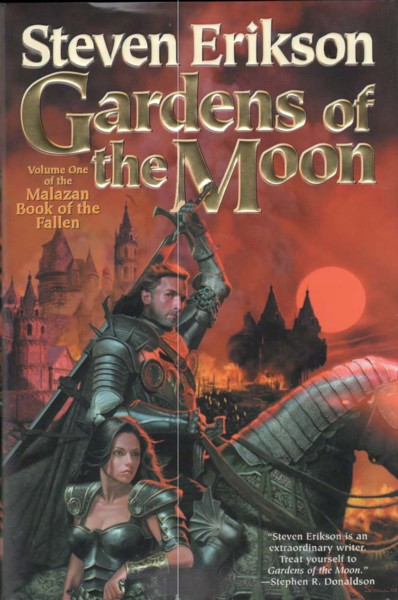
Pity the historian who tries to map this world; pity more the god who thinks he rules it. The Malazan Empire marches across continents on the boots of its common soldiers, and above them move Ascendants — mortals grown into something like gods, and gods worn thin as old coin. Magic is drawn from Warrens, roads of power threaded through reality; the dead keep their grudges; and every empire, however vast, is a wager against time. This is epic fantasy told from the mud, where a sapper cracking a joke weighs as much as an immortal settling a feud older than the human race. The world began as a tabletop campaign two friends built in the 1980s, and it still moves by two hands. Steven Erikson's ten-volume Malazan Book of the Fallen is the spine — Gardens of the Moon, Deadhouse Gates, Memories of Ice, on through The Crippled God — each book a near-standalone campaign that only later reveals how it locks together. Ian C. Esslemont walks the same years from a different vantage in his Novels of the Malazan Empire (Night of Knives, Return of the Crimson Guard onward). Around them stand the prequels: Erikson's Kharkanas Trilogy, archaic and elegiac, chronicling a doomed elder people, and Esslemont's brisker Path to Ascendancy, following two adventurers before they became legends. Erikson's Witness sequence carries the tale forward, and novellas of the genial necromancers Bauchelain and Korbal Broach supply the gallows comedy. Nothing is explained to you; comprehension is earned, and that is the pleasure. The themes run deep — compassion set against cruelty, the toll empires charge, civilizations that fall and are mourned. Begin where the saga does, with Erikson's Gardens of the Moon, and read the ten in publication order; the prequels are for the already-initiated. Trust that confusion is the price of entry.
- Malazan Book of the Fallen
series20 books1999
part of Malazan
similar bydarksecondary worldgodsfantasyepic fantasy
The Malazan Book of the Fallen is a series of epic fantasy novels written by the Canadian author Steven Erikson. The series, published by Bantam Books in the U.K. and Tor Books in the U.S., consists of ten volumes, beginning with Gardens of the Moon (1999) and concluding with The Crippled God (2011). Erikson's series presents the narratives of a large cast of characters spanning thousands of years across multiple continents.
- A Song of Ice and Fire
series14 books1996
part of World of Ice and Fire
similar bydarksecondary worldfantasyepic fantasy
A Song of Ice and Fire is a series of high fantasy novels by the American author George R. R. Martin. Martin began writing the first volume, A Game of Thrones, in 1991, and published it in 1996. Martin, who originally envisioned the series as a trilogy, has released five out of seven planned volumes. The most recent entry in the series, A Dance with Dragons, was published in 2011. Since then, Martin has been working on the sixth novel, titled The Winds of Winter. A seventh novel, A Dream of Spring, is planned to follow.
- Earthsea Cycle
series18 books1964
completed
part of Earthsea
similar bysecondary worldfantasyepic fantasy
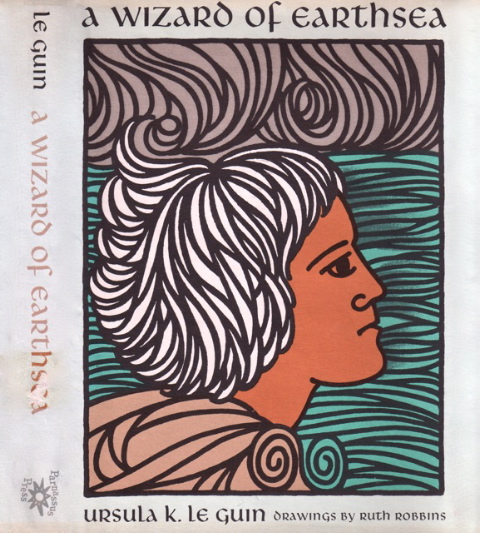
The Earthsea Cycle, also known as Earthsea, is a series of high fantasy books written by American author Ursula K. Le Guin. Beginning with A Wizard of Earthsea (1968), The Tombs of Atuan (1970), and The Farthest Shore (1972), the series was continued in Tehanu (1990), and Tales from Earthsea and The Other Wind. In 2018, all the novels and short stories were published in a single volume, The Books of Earthsea: The Complete Illustrated Edition, with artwork by Charles Vess.
- Corum
series6 books1971
part of Moorcock's Multiverse
similar bysecondary worldfantasyepic fantasy+2 more
- The Elric Saga
series72 books1961
part of Moorcock's Multiverse
similar bysecondary worldfantasy+1 more
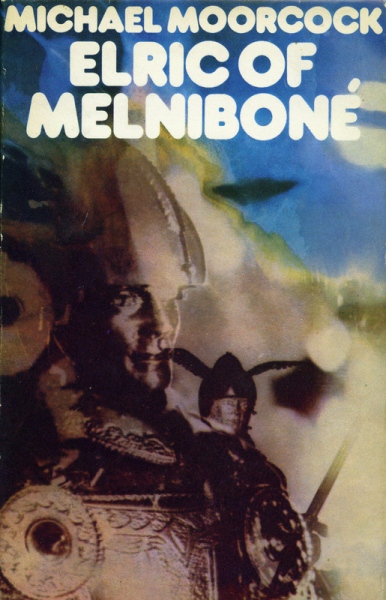
The Elric Saga is Michael Moorcock's sequence of sword-and-sorcery novels about Elric, the frail, sorcery-dependent last emperor of the ancient island empire of Melniboné, who abandons his throne to wander a violent, magic-soaked world carrying a sentient, soul-drinking black sword. Core entries such as Elric of Melniboné, The Sailor on the Seas of Fate, and Stormbringer trace his path toward a self-destructive destiny, and Elric was later folded into Moorcock's wider Eternal Champion multiverse, of which this saga is one strand.
- The Poppy War
series4 books2018
similar bydarksecondary worldfantasyepic fantasy+1 more
The Poppy War follows Rin, a war orphan who tests into an elite military academy and discovers a talent for shamanic power tied to a pantheon of vengeful gods. R. F. Kuang's trilogy reworks the Second Sino-Japanese War and its atrocities into an epic fantasy that grows darker and more morally compromised as it goes. It's told across The Poppy War, The Dragon Republic, and The Burning God.
- Dragonlance
universe436 books1984
Start hereDragons of Autumn Twilight · Start here
similar bysecondary worldfantasyepic fantasy
The gods have kept their silence over Krynn for three hundred years, and the world has learned to make do without them: the dragons are a nursery tale, the old clerics gone, faith worn down to superstition. Then strangers bearing a blue crystal staff cross an autumn road, and shadows with wings blot out the three moons. This is a world where magic answers to those moons—white, red, and black—where a lance is the only weapon a dragon fears, and where the fate of nations turns on a handful of friends who meet again at a tavern table and find the age of legend has come for them. At its heart stand Margaret Weis and Tracy Hickman's twin trilogies. Chronicles—Dragons of Autumn Twilight, Winter Night, and Spring Dawning—follows the Heroes of the Lance through the War of the Lance; Legends turns inward to the twins, the frail mage Raistlin and his warrior brother Caramon, and the bargain a man will strike for power. Around this core Krynn sprawls across five ages and hundreds of volumes by many hands: The Raistlin Chronicles, The War of Souls, the Preludes and Meetings cycles, the Tales anthologies, with Richard A. Knaak, Douglas Niles, Jean Rabe, and Chris Pierson each adding elf-kingdoms, dragon-overlords, and long-buried history. It is a shared world—vast, uneven, honestly enormous. What sets Dragonlance apart is its warmth. This is heroic fantasy of fellowship and hard choices rather than grimness—the companionship of the road, courage measured against temptation, gods who watch to see whether mortals deserve them back. Begin with Chronicles, then read Legends; that pairing is the doorway every reader and both creators point newcomers through.
- The Inheritance (Jemisin)
series9 books2010
similar bydarksecondary worldgodsfantasyepic fantasy
The Inheritance Trilogy is a fantasy trilogy written by American author N. K. Jemisin and published by Orbit Books. The trilogy consists of The Hundred Thousand Kingdoms that won the Locus Award for Best First Novel and was nominated for the World Fantasy Award; followed by The Broken Kingdoms and The Kingdom of Gods.
- The Powder Mage
universe19 books2013
Start hereThe Powder Mage Trilogy · Start here
similar bysecondary worldfantasyepic fantasy
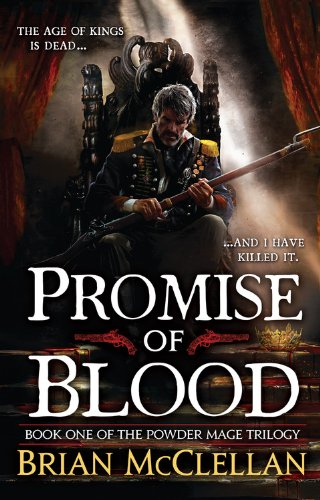
Load your powder, and pray your sorcery outruns their cannon. Here the age of kings is ending at musket-point: a world where black powder is not merely fired but eaten, and the men and women called powder mages snort a pinch of it to burn a trance across the battlefield — igniting an enemy's cartridges from a mile off, bending a bullet mid-flight, reading a room by the taste of the air. Against them stand the Privileged, glove-fingered sorcerers of the old order who summon fire and frost, and above both, gods who have not finished walking the earth. Brian McClellan builds this flintlock world across two linked trilogies. The Powder Mage Trilogy — Promise of Blood, The Crimson Campaign, The Autumn Republic — opens with a field marshal's coup against a rotten monarchy and the invasion, revolution, and divine reckoning that follow. Gods of Blood and Powder — Sins of Empire, Wrath of Empire, Blood of Empire — crosses the ocean a decade on to the colonial frontier of Fatrasta, where old soldiers, spies, and a heretic goddess collide. A run of novellas and short stories fills the corners between. Expect grapeshot and gunsmoke, siege lines and back-alley intrigue, generals and con men given equal weight. Begin at Promise of Blood and read in publication order — the trilogies run in sequence, and the short work is seasoning, not prerequisite.
- The History of Middle Earth
series14 books1983
completed
part of Tolkien's legendarium
similar bysecondary worldfantasy+2 more
The History of Middle-earth is a 12-volume series of books published between 1983 and 1996 by George Allen & Unwin in the UK and by Houghton Mifflin in the US. They collect and analyse much of J. R. R. Tolkien's legendarium, compiled and edited by his son Christopher Tolkien. The series shows the development over time of Tolkien's conception of Middle-earth as a fictional place with its own peoples, languages, and history, from his earliest notions of "a mythology for England" through to the development of the stories that make up The Silmarillion and The Lord of the Rings. It is not a "history of Middle-earth" in the sense of being a chronicle of events in Middle-earth written from an in-universe perspective; it is instead an out-of-universe history of Tolkien's creative process. In 2000, the twelve volumes were republished in three limited edition omnibus volumes.
- Forest Kingdom
series11 books1990
similar bysecondary worldfantasy+1 more
Simon R. Green's Forest Kingdom opens with Blue Moon Rising, in which Prince Rupert rides out into the Tanglewood on his unicorn to face down the good-and-evil, dragons-and-princesses trappings of a fairy-tale kingdom that turns out to hide darker complications underneath. The following books widen the cast around Rupert and the kingdom's court while keeping the same fantasy-adventure register. It's traditional-fantasy-with-a-twist rather than grimdark, built on familiar fairy-tale furniture used against type.
- The Bloodsworn Trilogy
series3 books2021
similar bysecondary worldepic fantasy+2 more
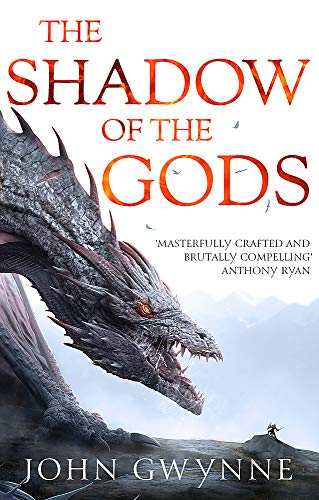
A century after the gods of Vigrior fought each other to extinction, their bones remain scattered across the land, promising immense power to anyone willing to hunt them down. John Gwynne's Bloodsworn Saga follows three very different warriors caught up in the resulting scramble: a huntress on a perilous quest, a noblewoman chasing battle-fame, and an escaped thrall seeking revenge among a mercenary company called the Bloodsworn. Their separate paths converge as old rivalries threaten to drag the world back under the shadow of its dead gods.
- Cosmere
universe54 books2005
Start hereThe Final Empire · Start here
similar bysecondary worldfantasyepic fantasy
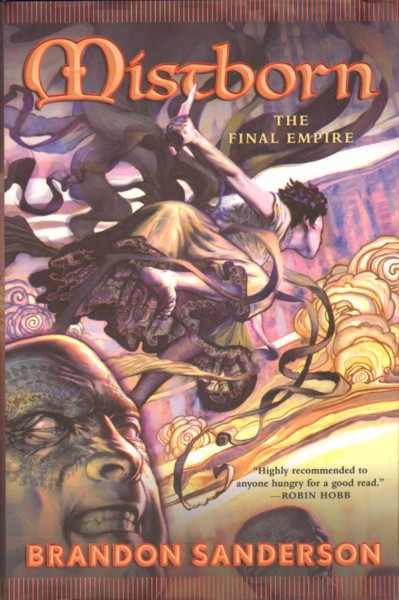
Before the worlds, there was Adonalsium, and then there was not. A god shattered into sixteen Shards of raw creative power, and those who seized them carried their fragments across the void to seed new planets, new peoples, new ways of working the impossible. The Cosmere is the one universe those Shards made: a scattering of worlds that seem, at first, to share nothing but a sky, until you notice the same law running quietly beneath each of them, and the same silent traveler passing through their margins. Every world keeps its own book and its own magic. On Scadrial, the Mistborn cycle burns metals into power: a self-contained trilogy of thieves and tyranny, followed by a second era that drags the same world into gunslinging early industry. On storm-battered Roshar, The Stormlight Archive raises its vast, ongoing epic around knights, spren, and oaths spoken aloud. Elsewhere stand the shorter keystones: Elantris, a city of fallen gods; Warbreaker, a tale of returned dead and living color; White Sand, told in graphic-novel form under the twin suns of Taldain. Threaded between them run the novellas, from Tress of the Emerald Sea and Yumi and the Nightmare Painter to The Sunlit Man and the pieces gathered in Arcanum Unbounded, where the hidden connections surface most plainly. All of it is the design of one hand, Brandon Sanderson, working a single pattern across two decades. What sets this universe apart is its faith in rules: magic here is a system, lawful and learnable, so discovery feels less like wonder handed down than like physics worked out. The cross-connections reward the patient reader, a symbol here, a name there, one immortal wanderer everywhere, but no book demands you have read another first. Newcomers do best entering through Mistborn: The Final Empire, the most self-contained doorway, or the standalone Elantris or Warbreaker; readers who prefer their epics vast can begin with The Way of Kings. The deeper links, and the novellas that expose them, wait for whenever you are ready to look.
- Dragonlance: Legends Trilogy
series3 books1986
part of Dragonlance
similar bysecondary worldfantasyepic fantasy+2 more
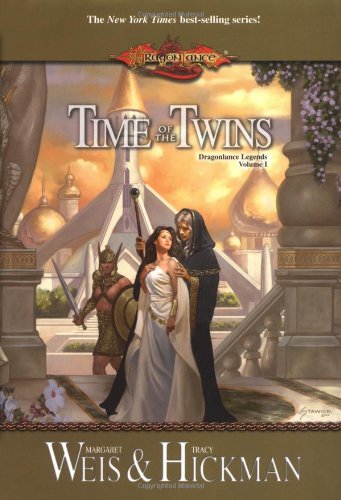
Dragonlance Legends is a trilogy of fantasy novels written by Margaret Weis and Tracy Hickman, which take place in the Dragonlance setting. This series is the sequel to the Dragonlance Chronicles, and focus on Raistlin and Caramon. The three books in the series are Time of the Twins, War of the Twins and Test of the Twins.
- Forgotten Realms
universe526 books1987
Start hereForgotten Realms: The Legend of Drizzt · Start here
similar bysecondary worldfantasyepic fantasy
Come in from the cold and mind the door — the wind off the Sword Coast has teeth. Faerûn is a lived-in world, the best-charted of the many lands that share the sky of Toril: a continent of walled cities and haunted wilds where the gods are near enough to answer, magic is a craft with rules and a cost, and every tavern hearth throws light on someone with a blade, a grudge, or a tale worth the telling. Beneath it all lies the Underdark, that black underland where the drow raise their spider-city of Menzoberranzan; above, the merchant towers of Waterdeep, the frost of Icewind Dale, the ruin-strewn North. This is the sword-and-sorcery world of Dungeons & Dragons rendered into prose — grand, generous, and endlessly walkable. It is a world of many hands, and the shelf shows it: some five hundred novels across eighty-odd cycles, uneven as any long telling but rich past counting. R. A. Salvatore's dark-elf ranger Drizzt Do'Urden anchors the whole — the Icewind Dale and Dark Elf trilogies and the long saga that follows. Ed Greenwood, who first dreamed the Realms, chronicles the Old Mage in the Elminster books. Around them turn the god-walking Avatar cycle and its Time of Troubles, the six-author War of the Spider Queen, Salvatore's Cleric Quintet, and Elaine Cunningham's elf-and-drow songs; Troy Denning and a company of others fill the marches between. What holds it together is warmth — the register of a bard who wants you fed and seated before the tale turns. Newcomers should follow Drizzt first: read Homeland and the Dark Elf trilogy for his beginning, or The Crystal Shard as first readers met him. Either door opens the Realms; the other eighty cycles wait past it.