More like Fremder
anchored on:science fictionour world
but
- Childhood's End
Arthur C. Clarkestandalone novel1953
similar byscience fictionreflectivealiensidentityour world
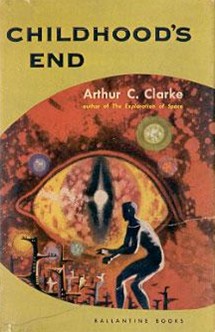
Childhood's End is a 1953 science fiction novel by the British author Arthur C. Clarke. The story follows a peaceful alien invasion of Earth by mysterious Overlords, whose arrival begins decades of apparent utopia under indirect alien rule, at the cost of human identity and culture.
- The Dreaming Jewels
Theodore Sturgeonstandalone novel1950
similar byscience fictionidentityour worldcontemporary+2 more
The Dreaming Jewels (1950), also known as The Synthetic Man, is a science fiction novel by American writer Theodore Sturgeon. It was his first published novel.
- Stranger in a Strange Land
Robert A. Heinleinstandalone novel1961
similar byscience fictionreflectivealiensidentityour world
Stranger in a Strange Land is a 1961 science fiction novel by the American author Robert A. Heinlein. It tells the story of Valentine Michael Smith, a human who comes to Earth in early adulthood after being born on the planet Mars and raised by Martians, and explores his interaction with and eventual transformation of Terran culture.
- Contact
Carl Saganstandalone novel1985
similar byscience fictionreflectivealiensour worldcontemporary+1 more
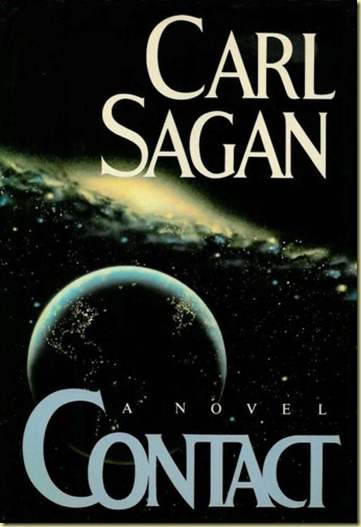
From the front flap of the Simon and Schuster first edition: For centuries humanity has dreamed of life and intelligence beyond the Earth; for decades scientists have searched for it in every corner of the sky; for years Project Argus, a vast, sophisticated complex of radio telescopes, has listened for a signal indicating the existence, somewhere in the universe, of extraterrestrial intelligence. Then, one afternoon, the course of human history is changed, abruptly and forever. The Message, awaited for so long, its very possibility doubted by so many, arrives. Contact has been made. Life, intelligence, someone, something beyond Earth, 26 light-years away, in the vicinity of the star Vega, is calling, beaming across space a wholly unexpected message to say that we are not - have never been - alone. In Contact, Carl Sagan, whose Cosmos enthralled millions of readers and television viewers, has brilliantly employed the freedom of fiction to imagine the greatest adventure of all - humanity's first encounter with other intelligent beings. But the novel is not only about contact between humans and extraterrestrials; it is also about contact, down here on Earth, with each other and ourselves. At its center is a brilliant scientist, Eleanor Arroway, director of Project Argos, who is the first to realize that chapter one of human history is over. It is she who is instrumental in decoding the Message - and in persuading world leaders not to treat it as a threat - she who finds her own life changed by the immense challenge of responding to the Message; she who finally journeys out to experience, in circumstances at once profoundly religious and scientific, the most fateful encounter in human history.
- Foundation Universe
universe123 books1940
Start hereFoundation · Start here
similar byscience fiction+1 more
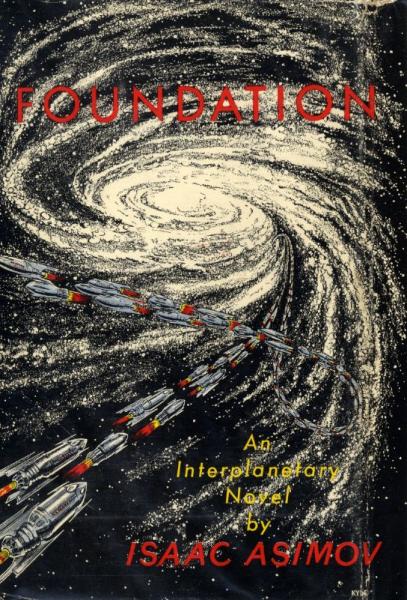
There is a science that reads the future of quadrillions the way an astronomer reads the orbits of stars. It is called psychohistory, and its equations foresee something the ruling Galactic Empire cannot admit: the throne is rotting, and thirty thousand years of barbarism are coming. One man, Hari Seldon, cannot stop the fall. He can only shorten it — by seeding a Foundation of scholars at the rim of the galaxy, a fragile institution built to carry knowledge across the dark and cut the interregnum to a single millennium. This is a universe told in the register of history itself: the long view, the calm of deep time, empires measured in centuries and men measured against them. The spine is Asimov's original trilogy — Foundation, Foundation and Empire, Second Foundation — followed decades later by the sequels Foundation's Edge and Foundation and Earth and the prequels Prelude to Foundation and Forward the Foundation. Late in life Asimov braided this in with his other future histories: the Robot novels of detective Elijah Baley and his humaniform partner R. Daneel Olivaw (The Caves of Steel, The Naked Sun, The Robots of Dawn, Robots and Empire) and the early Galactic Empire novels (Pebble in the Sky and its kin), until one continuous chronicle ran from the first thinking robots to the Second Empire. Other hands extend it — the Second Foundation Trilogy by Gregory Benford, Greg Bear, and David Brin, and shared-world spinoffs such as Robot City — so the corpus sprawls beyond a single author's tidy shelf. What distinguishes it is that the drama is intellectual: crises resolved by insight, nerve, and dialogue rather than fleets and blades, each turn hinging on the hidden logic of the Seldon Plan. Begin where readers have always begun — with Foundation, and the original trilogy in publication order. The rest opens outward from there.
- Camouflage
Joe Haldemanstandalone novel2004
similar byscience fictionreflectivealiensidentityour worldcontemporary
Camouflage is a 2004 science fiction novel by American writer Joe Haldeman. It won the James Tiptree, Jr. Award in 2004 and the Nebula Award for Best Novel in 2005.
- The Jonah Kit
Ian Watsonstandalone novel1975
similar byscience fictionreflectivealiensour worldcontemporary+1 more
The Jonah Kit is a 1975 science fiction novel by English writer Ian Watson. In 1977, The Jonah Kit won the BSFA Award for Best Novel.
- Hard Landing
Algis Budrysstandalone novel1993
similar byscience fictionreflectivealiensidentityour worldcontemporary
When an alien spacecraft crashes into a swamp on the US Atlantic coast, the fates of the humanoid surviving crew members are described as they separate and attempt to avoid discovery by blending into the American public.
- Chocky
series2 books1968
similar byscience fictionalienscontemporary+2 more
Chocky (1968) is John Wyndham's science fiction novel about an eleven-year-old boy, Matthew, whose parents grow alarmed by his conversations with an unseen presence that feeds him unsettling insights into mathematics and human progress, building toward the reveal of what, or who, Chocky really is. Mark Daniel's Chocky's Challenge (1986), published after Wyndham's death, is an authorized continuation that carries the story forward.
- The Boat of a Million Years
Poul Andersonstandalone novel1989
similar byscience fictionreflectiveidentityour world+1 more
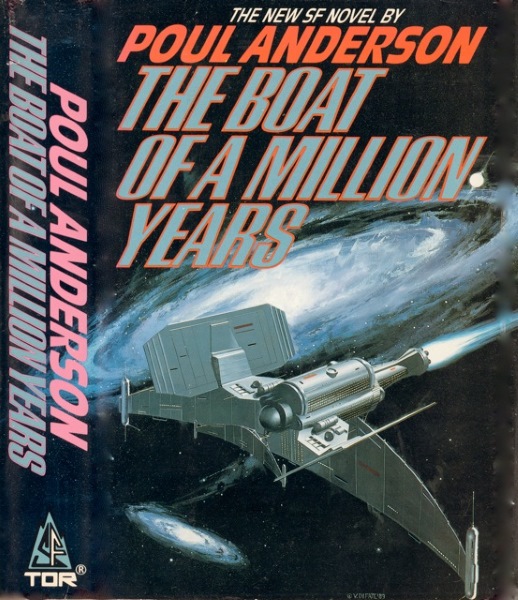
The Boat of a Million Years is a science fiction novel by American writer Poul Anderson, first published in 1989 and nominated for the Nebula Award for Best Novel that same year. It was also nominated for the Hugo Award for Best Novel and the Prometheus Award in 1990.
- Hainish
series33 books1964
completed
similar byscience fictionreflective+1 more
The Hainish Cycle consists of a number of science fiction novels and stories by Ursula K. Le Guin. The cycle is set in a future history that features civilizations of human beings on planets orbiting a number of nearby stars, including Terra ("Earth"); these humans are contacting each other for the first time and establishing diplomatic relations, as well as setting up a confederacy under the guidance of the oldest of the human worlds, the peaceful planet Hain. In this history, human beings did not evolve on Earth, but they were instead the result of interstellar colonies planted by Hain in the distant past, after which interstellar travel ceased for an extended period. Some of the human races have new genetic traits, a result of ancient Hainish experiments in genetic engineering; this includes people who can dream while awake, and a world of hermaphroditic people who only enter active sexuality once per month, not knowing which sex will manifest in them. In keeping with Le Guin's narrative approach, she uses varied social and environmental settings to explore the anthropological and sociological outcomes of human evolution in those environments. The author often discounted the characterization of a so-called "Hainish Cycle".
- Beyond the Labyrinth
Gillian Rubinsteinstandalone novel1988
similar byscience fictionreflectivealiensidentityour worldcontemporary
Fourteen-year-old Brenton questions the choices in his life when an alien anthropologist arrives to study an ancient Aboriginal tribe that once lived in the area around his home.
- Ormingat Trilogy
series3 books2000
completed
similar byscience fictionalienscontemporaryour world+1 more
- Richard Forthrast
series2 books2011
similar byscience fictionour world+2 more
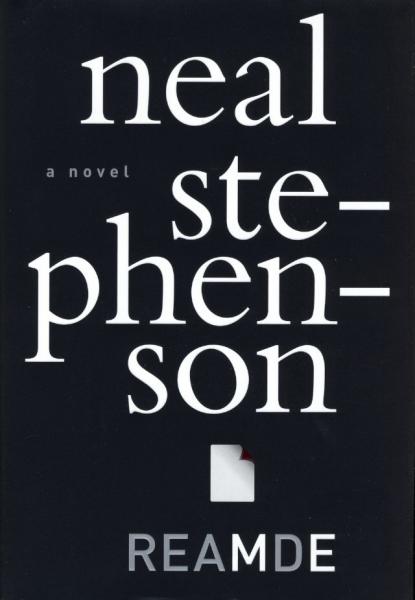
Neal Stephenson's Richard 'Dodge' Forthrast novels open with Reamde, a globe-spanning thriller that starts when ransomware inside an MMORPG economy pulls Richard's extended family into a real-world hostage crisis involving hackers, jihadists and Russian mobsters. The sequel Fall; or, Dodge in Hell shifts registers entirely, following Richard's digitally preserved mind after death into an afterlife simulation built from his scanned brain. The two books share a protagonist and family but differ sharply in genre and scale.
- Ender Wiggin
series14 books1977
part of Ender's Game Universe
similar byscience fictionaliens+1 more
Orson Scott Card's Ender's Game (1985, expanded from his 1977 novella) follows child prodigy Andrew "Ender" Wiggin as he is recruited into a military training program built to prepare Earth's defenses for an anticipated third war against an insectoid alien species known as the Formics. The saga continues years later through Speaker for the Dead and Xenocide, following an older Ender as he confronts the moral weight of his role in that earlier conflict, and concludes the core arc in Children of the Mind, with Ender in Exile filling in the years between the first two books. Set within the wider Ender's Game universe, the series shifts from military coming-of-age story to slower, more philosophical science fiction as it progresses.
- VALIS
series4 books1981
completed
similar byreflectivescience fictionidentity+2 more
The VALIS trilogy is a set of science fiction/philosophical novels by author Philip K. Dick which include VALIS (1981), The Divine Invasion (1981), and The Transmigration of Timothy Archer (1982). Dick's first novel about the VALIS concept originally titled "VALISystem A", was published as Radio Free Albemuth after Dick's death in 1985.
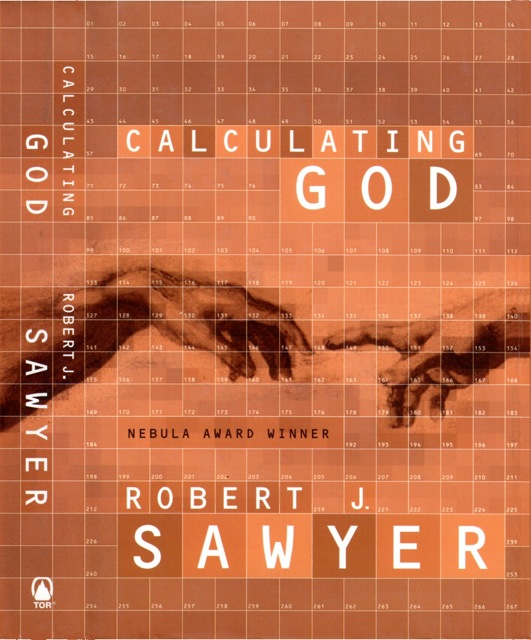
- Calculating God
Robert J. Sawyerstandalone novel2000
similar byscience fictionreflectivealiensour worldcontemporary
Calculating God is a 2000 science fiction novel by Canadian writer Robert J. Sawyer. It takes place in the present day and describes the arrival of sentient aliens on Earth. The bulk of the novel covers the many discussions and arguments on this topic, as well as the nature of belief, religion, and science. Several planetary civilizations illustrate the logical conclusion of the Fermi paradox.
- The Collected Stories of Robert Silverberg (Subterranean Press)
series20 books1971
similar byscience fiction+3 more
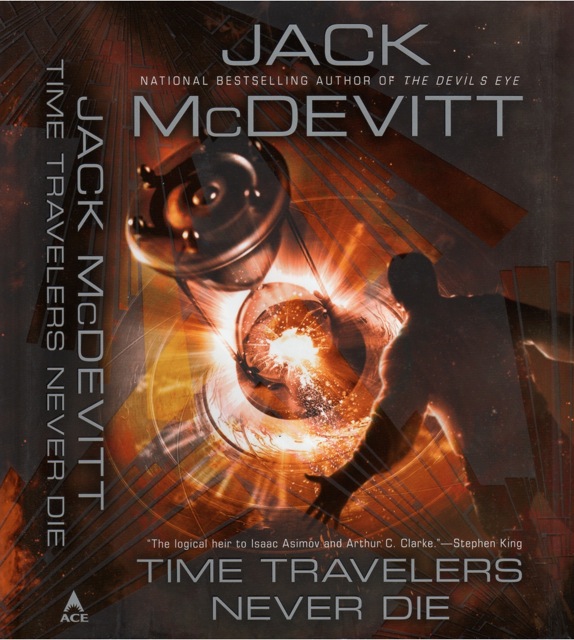
- Time Travelers Never Die
series2 books1996
similar byscience fictionour worldcontemporary+2 more
Time Travelers Never Die started life as a Jack McDevitt novella in the mid-1990s (Hugo- and Nebula-nominated) before he expanded it into a full novel over a decade later; the novella and novel are two forms of the same story rather than a sequel. It follows a small circle of people who gain access to working time travel and use it to step into the past, in McDevitt's characteristic register of curious, history-minded science fiction.
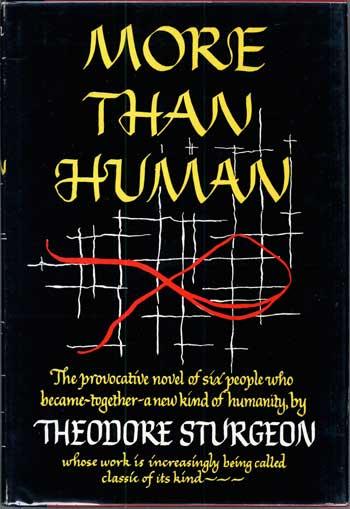
- More Than Human
Theodore Sturgeonstandalone novel1953
similar byscience fictionreflectiveidentityour world
More Than Human is a 1953 science fiction fix-up novel by American writer Theodore Sturgeon. It is a revision and expansion of his 1952 novella Baby Is Three, which is bracketed by two additional parts written for the novel, "The Fabulous Idiot" and "Morality". It won the 1954 International Fantasy Award, which was also given to works in science fiction. It was additionally nominated in 2004 for a "Retro Hugo" award for the year 1954. Science fiction critic and editor David Pringle included it in his book Science Fiction: The 100 Best Novels.
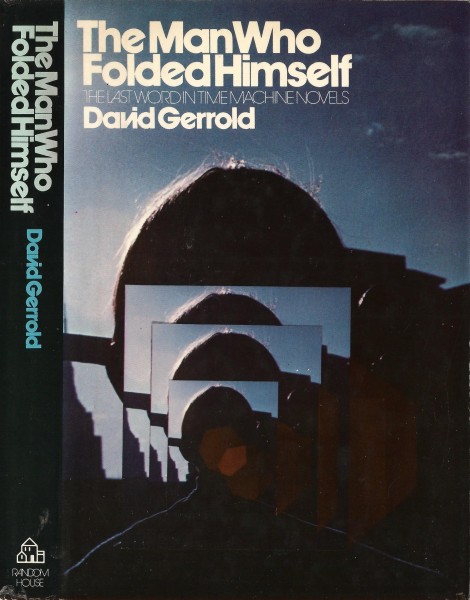
- The Man Who Folded Himself
David Gerroldstandalone novel1973
similar byscience fictionreflectiveidentityour worldcontemporary
The Man Who Folded Himself is a 1973 science fiction novel by American writer David Gerrold. It was nominated for the Nebula Award for Best Novel in 1974 and the Hugo Award for Best Novel in 1974. The book explores the psychological, physical, and personal challenges that manifest when time travel is possible for a single individual at the touch of a button.