More like Fugitive Six
anchored on:science fictionour worldyoung adult
but
- Daniel X
series6 books2008
similar byscience fictioncontemporaryour worldadventurousaliensyoung adult+2 more
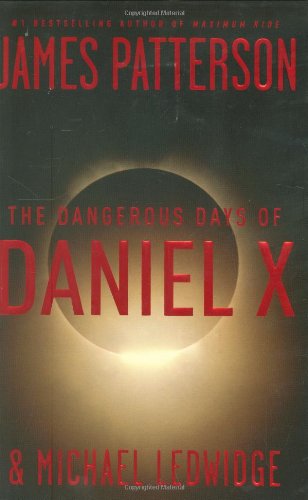
The Dangerous Days of Daniel X opens James Patterson's science-fiction series, co-written with Michael Ledwidge, marking Patterson's return to genre science fiction in a similar vein to his Maximum Ride series. Released in 2008, it became the first of six books following the same teenage protagonist. Patterson's later collaborators on the sequels include Chris Grabenstein, Ned Rust, and Adam Sadler.
- Footfall
Larry Niven & Jerry Pournellestandalone novel1985
similar byscience fictionour worldcontemporarytensealienssurvival+1 more
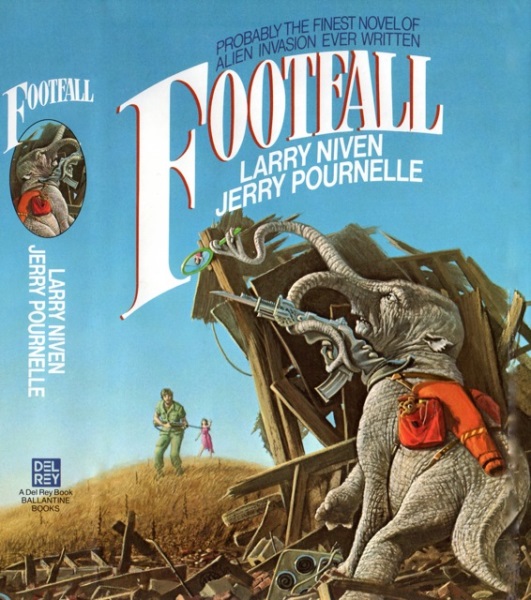
When aliens travel to Earth from Alpha Centauri, differences between alien and human psychology result in an unprovoked invasion, and the resulting resistance results in the aliens' use of a devastating weapon.
- Tripods
series4 books1967
completed
similar byscience fictiontenseour worldaliensyoung adult+3 more
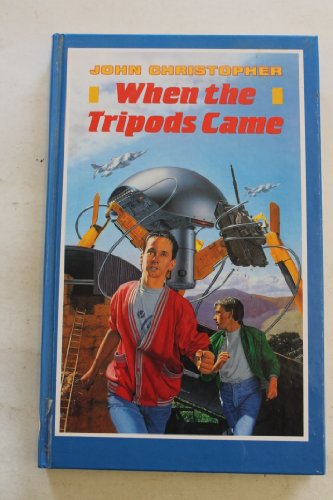
The Tripods is a series of young adult science fiction novels by John Christopher. The series takes place in a post-apocalyptic world where humanity is enslaved by "Tripods"—gigantic three-legged walking machines piloted by an alien race later identified as the "Masters". The first two books were the basis of a science fiction TV series, produced in the United Kingdom in the 1980s.
- Maximum Ride
series12 books2005
similar byscience fictionadventurousour worldfound familyyoung adultsurvival+2 more
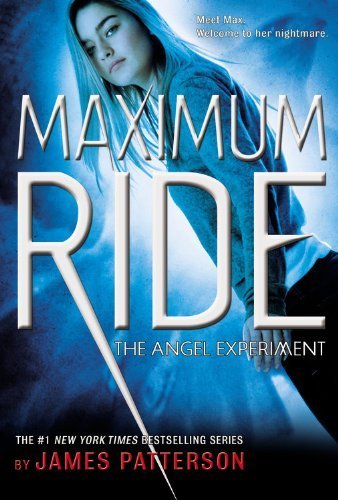
Maximum Ride is a series of young adult science fantasy novels by American author James Patterson. The series centers on the adventures of Maximum "Max" Ride and her family, called the Flock, who are winged human-avian hybrids created at a lab called The School. The series was inspired by Patterson's earlier novels When the Wind Blows and The Lake House, which were intended for older readers.
- Kairos
series11 books1962
completed
similar byscience fictionyoung adult+4 more
The Time Quintet is a science fantasy series of five young adult novels written by American author Madeleine L'Engle and made up of A Wrinkle in Time (1962), A Wind in the Door (1973), A Swiftly Tilting Planet (1978), Many Waters (1986), and An Acceptable Time (1989).
- Space Demons
series4 books1986
similar byscience fictioncontemporaryour worldyoung adult+3 more
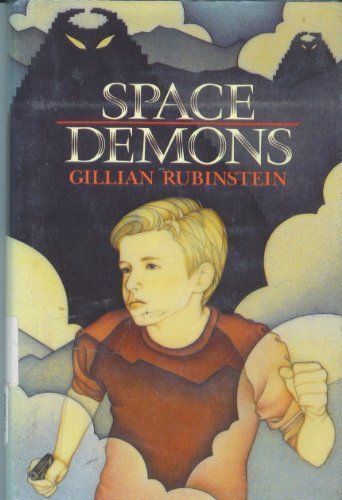
Gillian Rubinstein's Space Demons follows a group of Australian schoolkids drawn into a mysterious video game that starts pulling them physically into its world, with consequences that follow them home. The story continues across two more novels, Skymaze and Shinkei, following the same characters into further games.
- The Caretaker Trilogy
series3 books2006
similar byscience fictionour worldtensecoming of ageyoung adult+3 more
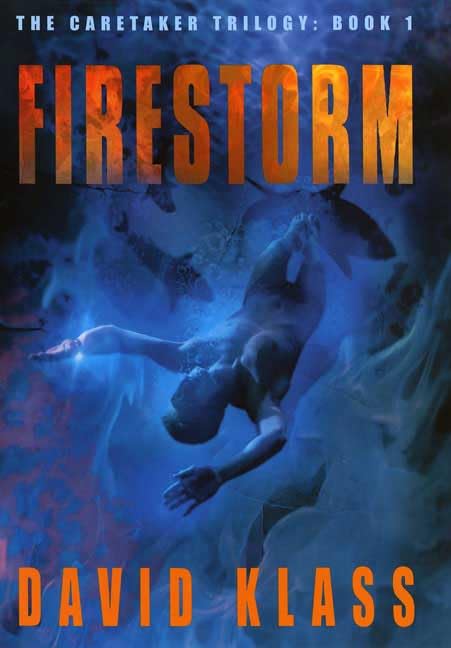
The Caretaker Trilogy is a series of science fiction thrillers with an ecological theme, written for young adults by David Klass. The first book in the series, Firestorm (2006), was the first book ever endorsed by Greenpeace and was praised by critics for its combination of entertainment value and environmental message, garnering an American Library Association (ALA) Best Book citation, a starred review from Publishers Weekly, and a favorable review by the New York Times Book Review. The story focuses on Jack Danielson, a teenager sent back from the future to save the world's oceans. Whirlwind, the second book in the Caretaker Trilogy, tells the story of Jack's efforts to save the Amazon rainforest; published in March 2008 by Farrar, Straus and Giroux. The third book in the trilogy is Timelock, published in 2009.
- Needle
series2 books1950
completed
similar byscience fictionadventurousour worldalienssurvival+2 more
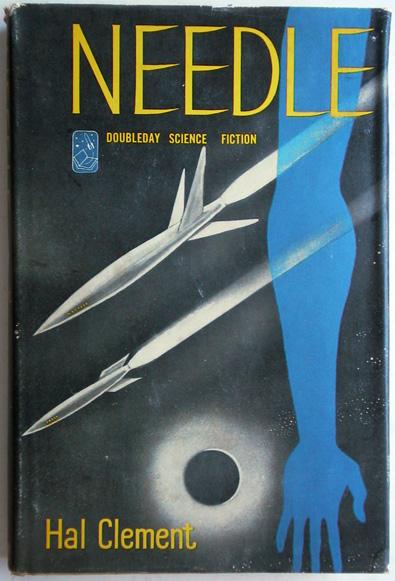
Hal Clement's Needle follows an alien detective nicknamed the Hunter, a shapeless symbiotic being that can live inside a host body, as it crash-lands on Earth pursuing a fugitive of its own kind and takes refuge inside an American teenager, Robert Kinnaird. Together the mismatched pair must learn to communicate and cooperate, first to survive and later to track down the second alien, which has hidden inside another human in the same Pacific island community. The sequel, Through the Eye of a Needle, published nearly three decades later, continues the Hunter's story.
- H. G. Wells' War of the Worlds
universe65 books1898
Start hereThe War of the Worlds · Start here
similar byscience fiction+3 more
No one would have believed, in the closing years of the nineteenth century, that human affairs were being watched keenly and closely from the timeless worlds of space. And then the cylinders fell. H. G. Wells' War of the Worlds opens in the quiet of the Surrey commons, where a falling star proves to be the first Martian craft — and from the pit rise the towering tripods, the Heat-Ray, the choking Black Smoke and the creeping red weed, wielded by minds that regard mankind much as we regard the creatures we boil for supper. This is invasion rendered as natural disaster: cold, methodical, and vast beyond argument. Wells' 1898 novel is the seed; everything else grows from that Martian soil. The catalogue gathers direct sequels and continuations alongside a wide field of other hands. In War of the Worlds: Global Dispatches the invasion is retold across the whole planet through the eyes of Twain, Verne, Tolstoy, Lowell and Kipling; in the Manly Wade and Wade Wellman crossover, Sherlock Holmes, Watson and Professor Challenger take the field against the machines; and Scott Washburn's Great Martian War stretches the fighting into a decades-long alternate history of steam, artillery and grinding attrition. It is a loose shared world — no single decreed sequence, many voices answering one calamity. What sets this world apart is its refusal of heroics: the invaders fall not to generals but to the smallest things of Earth, humbling and indifferent. Begin, always, with Wells' original novel — it is short, and it is the ground every later book stands upon. From there follow your appetite: Global Dispatches for the panorama, the Holmes campaign for adventure, Washburn for the long war.
- Foundation Universe
universe123 books1940
Start hereFoundation · Start here
similar byscience fiction+1 more
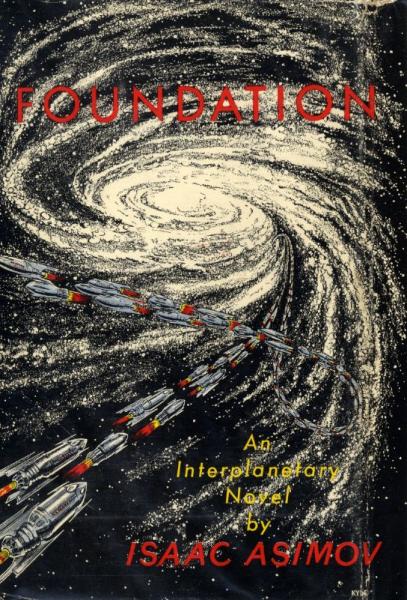
There is a science that reads the future of quadrillions the way an astronomer reads the orbits of stars. It is called psychohistory, and its equations foresee something the ruling Galactic Empire cannot admit: the throne is rotting, and thirty thousand years of barbarism are coming. One man, Hari Seldon, cannot stop the fall. He can only shorten it — by seeding a Foundation of scholars at the rim of the galaxy, a fragile institution built to carry knowledge across the dark and cut the interregnum to a single millennium. This is a universe told in the register of history itself: the long view, the calm of deep time, empires measured in centuries and men measured against them. The spine is Asimov's original trilogy — Foundation, Foundation and Empire, Second Foundation — followed decades later by the sequels Foundation's Edge and Foundation and Earth and the prequels Prelude to Foundation and Forward the Foundation. Late in life Asimov braided this in with his other future histories: the Robot novels of detective Elijah Baley and his humaniform partner R. Daneel Olivaw (The Caves of Steel, The Naked Sun, The Robots of Dawn, Robots and Empire) and the early Galactic Empire novels (Pebble in the Sky and its kin), until one continuous chronicle ran from the first thinking robots to the Second Empire. Other hands extend it — the Second Foundation Trilogy by Gregory Benford, Greg Bear, and David Brin, and shared-world spinoffs such as Robot City — so the corpus sprawls beyond a single author's tidy shelf. What distinguishes it is that the drama is intellectual: crises resolved by insight, nerve, and dialogue rather than fleets and blades, each turn hinging on the hidden logic of the Seldon Plan. Begin where readers have always begun — with Foundation, and the original trilogy in publication order. The rest opens outward from there.
- Tunnel in the Sky
Robert A. Heinleinstandalone novel1955
similar byscience fictionadventuroustensecoming of ageyoung adultsurvival+1 more
As the final test of a survivalist/explorer class, teenagers are dumped on an alien planet to use their skills while awaiting pickup. But something has gone wrong, and they find they are on their own.
- The 5th Wave
series4 books2013
similar byscience fictiontensealiensyoung adultsurvival+2 more
Rick Yancey's The 5th Wave opens after a series of escalating alien attacks has already devastated Earth's population and infrastructure, following sixteen-year-old survivor Cassie Sullivan as she searches for her younger brother while trying to work out who, among the remaining humans, can still be trusted. The trilogy is young-adult science fiction that treats its alien-invasion premise as a survival and paranoia story more than a war story.
- Jumper
series6 books1992
similar byscience fictioncontemporaryadventuroustense+4 more
Jumper follows David Rice, a teenager who discovers he can teleport anywhere he's been and uses the power to escape an abusive home, only to find that ability alone doesn't solve the harder problems of finding his absent mother, building an honest relationship, or staying off the radar of people who'd exploit him. Steven Gould's series continues across Reflex, Impulse, and Exo, later following his and his wife's daughter as a second-generation jumper. A 2008 film loosely adapted the first novel.
- Evil Genius (Catherine Jinks)
series3 books2005
similar byscience fictionour worldcontemporarytenseyoung adult+1 more
- The Missing
series10 books2008
similar byscience fictioncontemporarycoming of ageyoung adult+3 more
The Missing is a series of young adult novels written by Margaret Peterson Haddix. It tells the story of famous children from history stolen from their place in time by futuristic time travelers and accidentally sent to the 21st century as babies. Jonah Skidmore is one of the stolen children, and he, along with his non-adopted sister Katherine, must help return the missing kids to their rightful places in history and fix time before it is destroyed. The first book in the series, Found, was published on April 22, 2008. The series continued with book titles Sent, Sabotaged, Torn, Caught, Risked, and Revealed. The eighth and final book, Redeemed, was released on September 8, 2015. There are also two ebook short stories, Sought and Rescued . Haddix originally intended the series to consist of only seven books. However, she stated that she had trouble closing out the series in seven books; leading to her decision to write Redeemed.
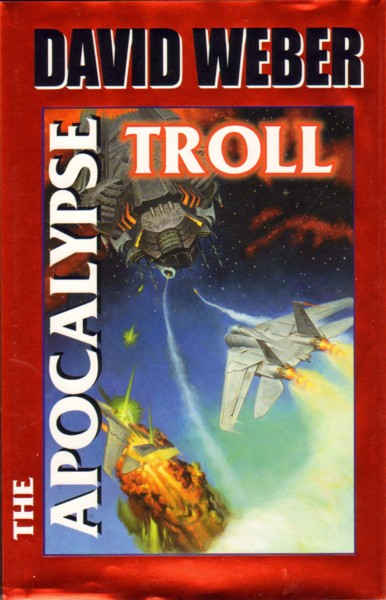
- The Apocalypse Troll
David Weberstandalone novel1999
similar byscience fictionour worldcontemporaryadventuroustensealiens+1 more
The Apocalypse Troll is a novel by American writer David Weber, first published by Baen Books in January 1999. It is a story about time travel and alien invasion.
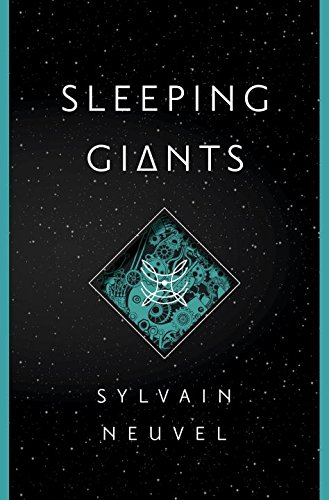
- The Themis Files
series3 books2015
similar byscience fictioncontemporaryour worldtensealiens+1 more
Sylvain Neuvel's Themis Files opens when a girl falls into a hole in South Dakota and lands on the palm of a giant metal hand buried underground; the trilogy picks up years later as she leads the team trying to determine what the hand is part of and why it's there. Sleeping Giants and its sequels are told almost entirely through interview transcripts conducted by an unnamed, evasive interrogator, giving the series a documentary, oral-history feel unusual for first-contact SF. The mystery escalates from an archaeological puzzle into a question of who else is looking for the same answer.
- Have Space Suit - Will Travel
Robert A. Heinleinstandalone novel1958
similar byscience fictionadventuroustensealiensyoung adultsurvival+1 more
From the back cover of the Del Rey 9th printing: "Skyjacked - Everything happened at once. One minute Kip Russell was walking about in his own backyard, testing out an old space suit and dreaming about going to the moon - and the next he was out cold and the captive of an insidious space pirate. The whole thing seemed like a very bad dream until he discovered he wasn't the only prisoner on board. Then the reality of the situation became inescapable. He - along with the daughter of a world-renowned scientist and a beautiful creature from an alien planet - had been skyjacked by a monstrous extraterrestrial and they were on their way to the Moon... a journey toward a fate worse than death!"
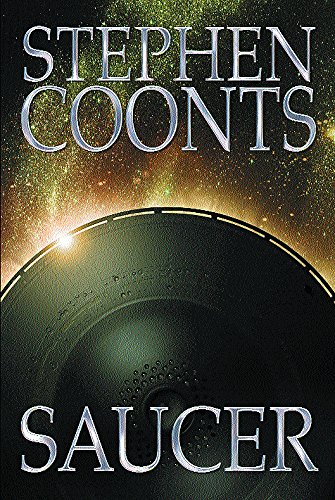
- Saucer
series3 books2002
similar byscience fictionour worldcontemporaryadventuroustensealiens
Saucer is Stephen Coonts's techno-thriller trilogy beginning with Saucer (2002), continued in Saucer: The Conquest and Saucer: Savage Planet. It follows the discovery of a functioning craft buried for millennia in the Sahara desert and the test pilots and adventurers who end up flying, and fighting over, it, escalating from a buried desert secret toward wider stakes involving hostile outside interests.
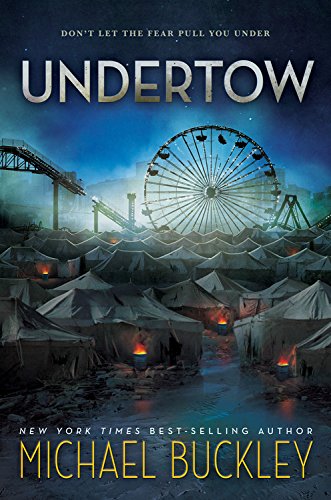
- The Undertow Trilogy
series3 books2015
similar byscience fictioncontemporarytenseour worldyoung adultsurvival+3 more
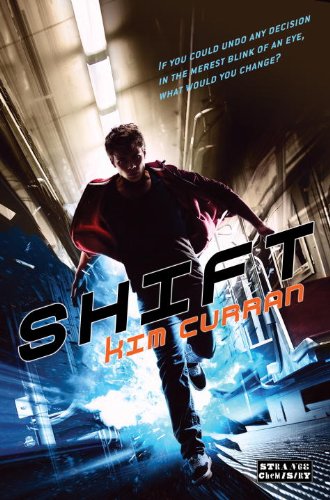
- Scott Tyler / Shifter
series3 books2012
similar byscience fictionour worldcontemporaryyoung adult+3 more
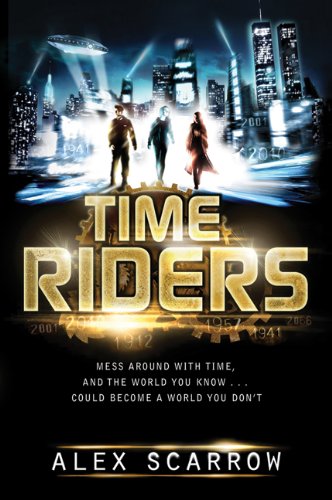
- TimeRiders
series9 books2010
similar byscience fictionour worldadventuroustenseyoung adultsurvival+1 more
TimeRiders is a series of teen science fiction novels written by Alex Scarrow. The series consists of nine books and is published by Puffin Books.
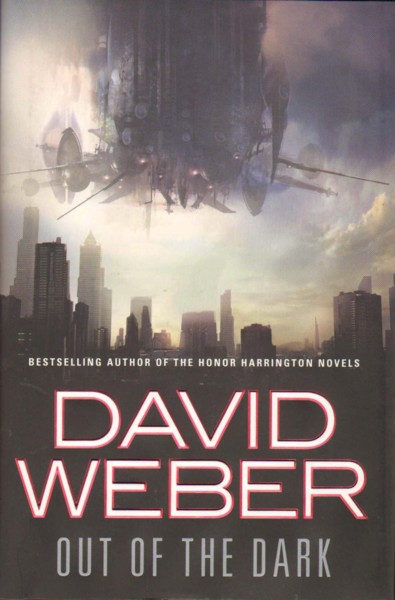
- Out of the Dark (David Weber)
series3 books2010
similar byscience fictiontenseour worldaliens+2 more
Out of the Dark begins when an overwhelming alien armada arrives to subjugate Earth, only for the invasion to run into unexpected resistance from an unlikely source within humanity itself. David Weber's trilogy, joined for its later volumes by Chris Kennedy, follows the human resistance and its strange allies as the war against the invaders escalates.