More like Ghost Spell
anchored on:fantasysecondary world
but
- Narnia
series26 books1950
part of Narnia Universe
similar byfantasycoming of agesecondary world+1 more
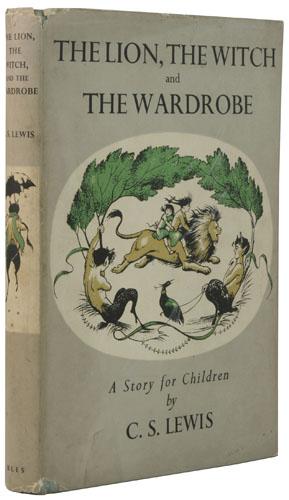
The Chronicles of Narnia is a series of seven portal fantasy novels by British author C. S. Lewis. Illustrated by Pauline Baynes and originally published between 1950 and 1956, the series is set in the fictional realm of Narnia, a fantasy world of magic, mythical beasts, and talking animals. It narrates the adventures of various children who play central roles in the unfolding history of the Narnian world. Except in The Horse and His Boy, the protagonists are all children from the real world who are magically transported to Narnia, where they are sometimes called upon by the lion Aslan to protect Narnia from evil. The books span the entire history of Narnia, from its creation in The Magician's Nephew to its eventual destruction in The Last Battle.
- Earthsea Cycle
series18 books1964
completed
part of Earthsea
similar byfantasysecondary world+3 more
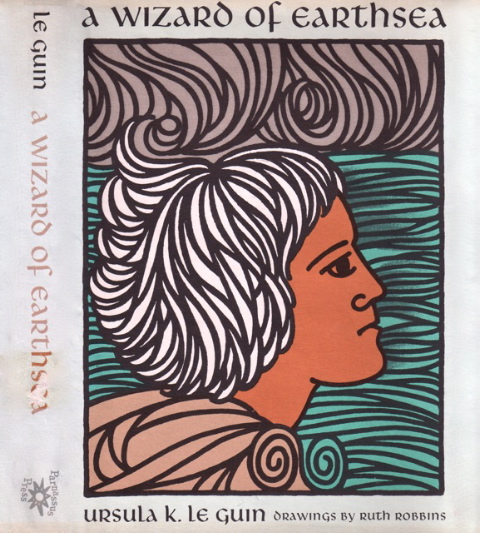
The Earthsea Cycle, also known as Earthsea, is a series of high fantasy books written by American author Ursula K. Le Guin. Beginning with A Wizard of Earthsea (1968), The Tombs of Atuan (1970), and The Farthest Shore (1972), the series was continued in Tehanu (1990), and Tales from Earthsea and The Other Wind. In 2018, all the novels and short stories were published in a single volume, The Books of Earthsea: The Complete Illustrated Edition, with artwork by Charles Vess.
- The Old Kingdom / Abhorsen milieu
series11 books1995
similar byfantasysecondary worldyoung adult+1 more
The Old Kingdom, or Abhorsen in North America and the UK, is a fantasy series written by Australian author Garth Nix. It originated in 1995 with the novel Sabriel and has continued in the novels Lirael (2001), Abhorsen (2003), Goldenhand (2016), and Terciel & Elinor (2021), as well as a prequel novel titled Clariel (2014). The Old Kingdom also consists of the novella The Creature in the Case (2005) and various other short fiction.
- Discworld
universe84 books1983
Start hereGuards! Guards! · Start here
similar byfantasysecondary world
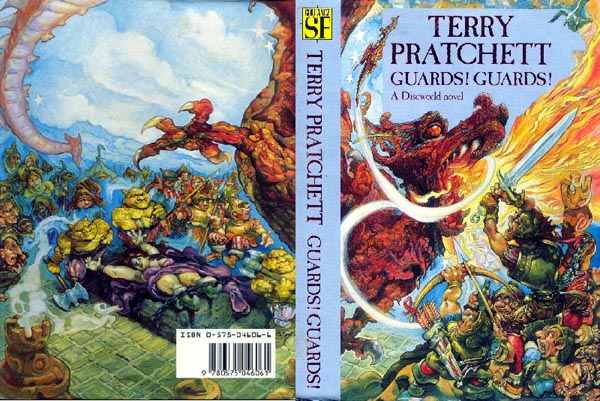
The Disc is flat. It rides on the backs of four elephants, who in turn stand on the shell of Great A'Tuin, a turtle ten thousand miles long, swimming through space toward nowhere in particular. Magic works here, usually badly. Death speaks IN SMALL CAPITALS and rides a horse called Binky. It looks like a fantasy world and behaves like ours with the safety catch off: a mirror held up to bureaucracy, belief, newspapers, money, war, and the ridiculous, stubborn business of being a person. One hand shaped all of it — Terry Pratchett — across forty-one novels and a shelf of companions, maps, and the Science of Discworld books. The world is braided from strands you can pick up on their own. Rincewind, the cowardly wizard, flees across the Disc (The Colour of Magic). The witches of Lancre, led by the formidable Granny Weatherwax, mind everyone's business (Equal Rites, Wyrd Sisters). Death takes on an apprentice (Mort). The City Watch polices grimy Ankh-Morpork under Commander Vimes (Guards! Guards!). A reformed swindler is given honest work at swordpoint (Going Postal), and young Tiffany Aching learns witching alongside the tiny, larcenous Nac Mac Feegle (The Wee Free Men). Standalones like Small Gods sit apart. The trick of it is that the farce turns, mid-joke, into something that catches in the throat, with footnotes that argue back at the page. Newcomers are gently steered away from the beginning: the early Rincewind books spoof a genre you needn't have read. Enter instead by whichever strand calls — Guards! Guards! for the Watch, Mort for Death, Wyrd Sisters for the witches, Small Gods entirely alone, or The Wee Free Men for the sharpest single thread. Open any door and the whole Disc opens with it.
- Gormenghast
series6 books1946
completed
similar byfantasysecondary world+2 more
Gormenghast is a fantasy series by British author Mervyn Peake, about the inhabitants of Castle Gormenghast, a sprawling, decaying, Gothic structure. Originally conceived as a single on-going novel, the series was ended by Peake's death and comprises three novels: Titus Groan (1946), Gormenghast (1950) and Titus Alone (1959); and a novella, Boy in Darkness (1956). Peake was writing a fourth novel, Titus Awakes, at the time of his death in 1968. The book was completed by Peake's widow Maeve Gilmore in the 1970s, but was not published until 2011 after it was discovered by their family.
- The Wild Magic
series3 books2018
similar byfantasysecondary world+1 more
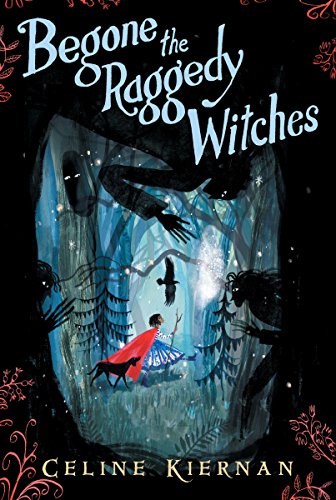
Celine Kiernan's The Wild Magic trilogy opens with Begone the Raggedy Witches, a children's fantasy novel about witches, and continues across The Little Grey Girl and The Promise Witch.
- Howl's Castle
series3 books1986
completed
similar byfantasysecondary world+3 more
Howl's Moving Castle (1986) follows Sophie Hatter, cursed by the Witch of the Waste into an old woman's body, who takes refuge in the wandering castle of the wizard Howl and strikes an uneasy bargain with his fire demon Calcifer while trying to break the spell. Diana Wynne Jones returned to the same magical kingdom in Castle in the Air (1990), following a new lead character, Abdullah, with Sophie and Howl appearing in supporting roles, and again in House of Many Ways (2008).
- The Hobbit
series2 books1937
completed
part of Tolkien's legendarium
similar byfantasysecondary world+2 more
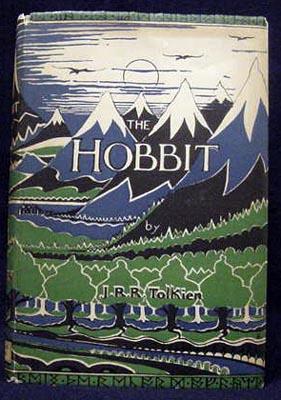
The Hobbit (1937) is J. R. R. Tolkien's children's fantasy novel following the reluctant burglar Bilbo Baggins, who joins a company of dwarves and the wizard Gandalf on a journey to reclaim treasure guarded by the dragon Smaug. It stands as a complete adventure on its own, but shares its setting with the rest of Tolkien's legendarium and leads into the events of The Lord of the Rings.
- Dalemark
series4 books1975
completed
similar byfantasycoming of agesecondary world
Diana Wynne Jones' Dalemark Quartet is set in a divided fantasy land where the harsher North and the aristocratic South carry deep-rooted enmity, spanning stories centuries apart within the same history. Cart and Cwidder follows young Moril, who inherits his murdered musician father's magical instrument, the cwidder, and must decide how to use its power as war between North and South threatens; the linked books move both earlier and later in Dalemark's history rather than following straight chronological order, with the concluding Crown of Dalemark drawing the strands together. Jones wrote the books out of their internal chronological sequence, so publication order and story order diverge across the quartet.
- His Dark Materials Universe
universe13 books1995
Start hereHis Dark Materials · Start here
similar byfantasycoming of ageyoung adult+1 more
In a world like ours and unlike it, every human soul walks outside the body in the shape of an animal — a daemon, who speaks, who cannot be lied to, and who settles into one fixed form only when childhood ends. This is the country of His Dark Materials: a company of parallel worlds across which an invisible dust of consciousness drifts down upon the waking mind; where a Church that calls itself the Magisterium would sooner sever a child's soul than let that Dust be understood; and where a golden instrument, the alethiometer, answers true questions for anyone with the patience to read it. Philip Pullman's design stands in two trilogies and a scatter of shorter tales. His Dark Materials — Northern Lights (published in America as The Golden Compass), The Subtle Knife, and The Amber Spyglass — carries Lyra Belacqua from the rooftops of a shadow Oxford across the borders between worlds. The Book of Dust returns to that same territory: La Belle Sauvage looks back to Lyra as an infant carried through a great flood, while The Secret Commonwealth follows her grown and less certain into adulthood, with a concluding volume closing the arc. Around them sit slim companion books — Lyra's Oxford, Once Upon a Time in the North, Serpentine — and Nicholas Wright's stage adaptation, made with Pullman's blessing. The register is grave and luminous at once, its title lifted from Milton and its quarrel drawn from Blake: a story that takes the side of curiosity, love, and the physical world against any authority that would forbid them. It reads as adventure — armoured bears, aeronauts, knife-cut windows between skies — yet reasons like philosophy. Begin with Northern Lights / The Golden Compass and read the first trilogy through before turning to The Book of Dust, which deepens everything the first has already made you feel.
- Bod Owens
series3 books2007
similar byeeriefantasycoming of age+1 more
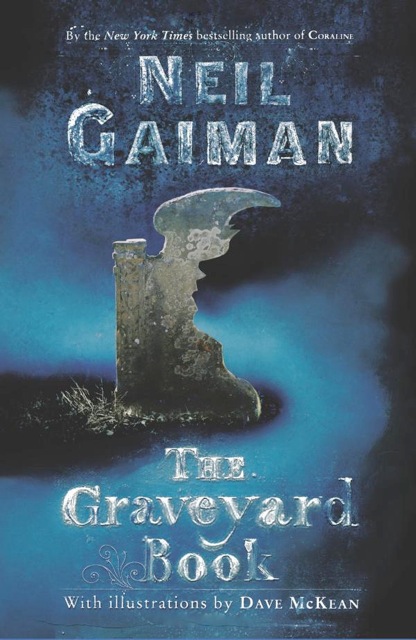
The Graveyard Book follows Nobody "Bod" Owens, a toddler who escapes the murder of his family and is raised among the ghosts of an old English graveyard, absorbing their otherworldly customs while a threat from his past waits beyond the gates. Neil Gaiman's 2008 novel won both the Newbery and Carnegie Medals, and illustrator P. Craig Russell later adapted it into a two-volume graphic novel. Bod's story spans the original novel and that graphic-novel retelling rather than continuing in a prose sequel.
- His Dark Materials
series8 books1995
part of His Dark Materials Universe
similar byfantasycoming of ageyoung adult+1 more
His Dark Materials is a trilogy of fantasy novels by Philip Pullman consisting of Northern Lights, The Subtle Knife (1997), and The Amber Spyglass (2000). It follows the coming of age of two children, Lyra Belacqua and Will Parry, as they wander through a series of parallel universes. The novels have won a number of awards, including the Carnegie Medal in 1995 for Northern Lights and the 2001 Whitbread Book of the Year for The Amber Spyglass. In 2003, the trilogy was ranked third on the BBC's The Big Read poll.
- The Princess and the Goblin
series2 books1871
completed
similar byfantasycoming of agesecondary world+1 more
- Enchanted Forest
series7 books1985
similar byfantasysecondary world+2 more
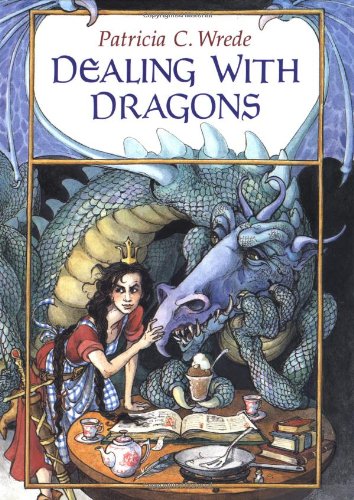
Patricia Collins Wrede is an American author of fantasy literature. She is known for her Enchanted Forest Chronicles series for young adults, which was voted number 84 in NPR's 100 Best-Ever Teen Novels list.
- The Last Unicorn
series8 books1968
similar byfantasysecondary world+1 more
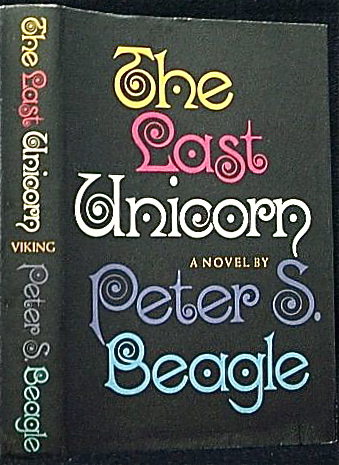
The Last Unicorn is Peter S. Beagle's 1968 fantasy novel about a unicorn who, believing herself the last of her kind, sets out to learn what became of the others. Beagle later returned to her world twice more: The Last Unicorn: The Lost Version prints an early draft of the original novel, and The Way Home (2023) collects two novellas continuing the story decades on. Together the books trace one novel's long afterlife rather than a conventional multi-book series.
- The Thief of Always
Clive Barkerstandalone novel1992
similar byeeriefantasycoming of age+1 more
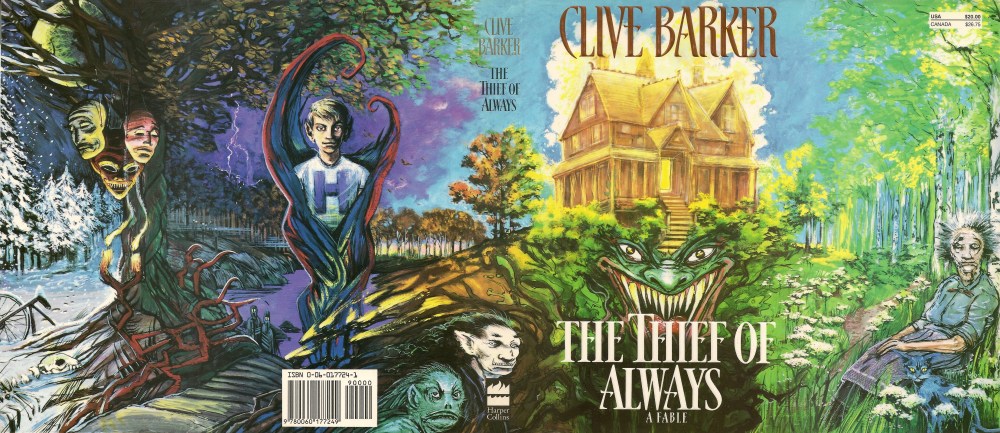
Ten-year-old Harvey Swick is bored out of his mind when a stranger named Rictus offers him a way out: Holiday House, a place where every season of the year -- Christmas, Halloween, summer -- arrives in a single glorious day, one after another. Once inside, Harvey meets fellow children Wendell and Lulu, the elderly caretaker Mrs. Griffin and her cats, and settles into a routine of enchantment that starts to feel too perfect. Their host, the mysterious Mr. Hood, never appears, rumors about a figure called Carna keep surfacing, and something in the nearby lake is very wrong. One of Clive Barker's best-known standalone books, written for younger readers.
- Tales from the Sinister City
series4 books2007
similar byfantasysecondary world+2 more
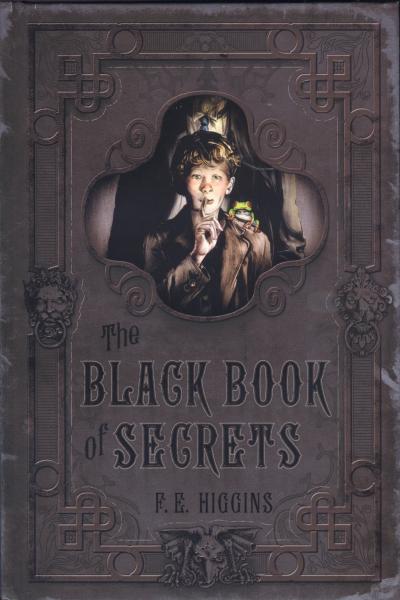
F. E. Higgins's four Sinister City novels, opening with the Bisto Honour-winning The Black Book of Secrets, follow a rotating cast of apprentices, runaways, and pawnbrokers through a fog-bound, Victorian-flavored world built on secrecy and betrayal. Each book stands as its own dark, fairy-tale-style mystery rather than continuing a single plot, unified by setting and tone more than by recurring characters. Higgins, an Irish children's author, writes in a tradition closer to gothic fable than epic fantasy.