Loreful
HomeDiscover
Search series, authors…⌘K
Loreful

Reading orders for SF/F series and shared universes — with your place kept in every one.

Explore

UniversesSeriesWorksAuthorsAtlas

Help

FAQAboutSite map

Account & legal

Sign inCreate accountPrivacyTerms

Data

Built on ISFDB, Wikipedia, Wikidata and Open Library. Curated reading orders carry their reasoning on the page; the rest follow publication order. Data sources & licenses

© Loreful · data: ISFDB · CC BY

More like Giants

anchored on:fantasyshort story cyclescience fictionadventurous

but

Mood

The mood the book leaves you in.

  • The reading experience is propelled by journeys, exploration, and physical risk; excitement and forward momentum dominate over dread or introspection.
  • Joy and loss are deliberately mixed; the resolution grants characters something real while taking something else away, leaving warmth and sorrow together.
  • The book demands work from the reader — dense prose, difficult structure, unfamiliar ideas, or morally uncomfortable material — as part of its intended effect.
  • Grim events, cruelty, or despair dominate the atmosphere, and the book does not soften them with comfort or comic relief.
  • The atmosphere is quietly unsettling — wrongness, unease, and the uncanny pervade the book without necessarily escalating into overt horror.
  • The book is built to move the reader; character feeling is foregrounded and major scenes aim at a strong emotional response.
  • Humor is a primary aim and the prose plays for laughs — comic situations, wit, or dialogue produce sustained comedy, not occasional levity.
  • The book insists that things can improve; effort and decency are shown to matter, and the arc bends toward better outcomes even through hardship.
  • The book teaches as it goes — real facts, history, science, or craft are conveyed in enough depth that learning is part of the reading experience.
  • The book is designed to uplift and motivate, presenting perseverance or achievement in a way that invites the reader to aspire or act.
  • The overall register is cheerful and easygoing; stakes are kept gentle and the book avoids dwelling on pain or dread.
  • Withheld information drives the experience; the book sustains enigmas and secrets the reader wants resolved, whatever its genre.
  • The book is contemplative and inward-looking, giving more weight to thought, memory, and meaning than to external events.
  • The book works as comfort reading — low tension, a soothing pace, and an atmosphere the reader can unwind in.
  • Grief, loss, or melancholy set the dominant register, and the book lets sorrow stand rather than resolving it into comfort.
  • Sustained suspense is the point; the book keeps the reader braced for what happens next through danger, pressure, or impending revelation.
  • Playful invention and charm define the register — fanciful conceits, light absurdity, and a narration that delights in its own oddity.

About

What the story runs on.

  • Stories in which extraterrestrial beings are central — as characters, cultures, or the object of the plot.
  • Stories about venturing into space to explore — survey missions, astronauts, and the frontier of the unknown beyond Earth.
  • Stories structured as a quest — a journey undertaken to find, deliver, or destroy something of great import.
  • Stories in which staying alive against nature, catastrophe, or scarcity is the central problem.
  • Stories of lovers kept apart by law, family, faith, or station, where the obstacle to love is the plot.
  • Stories in which a friendship — its making, testing, or loss — is the emotional center.
  • Stories of growing up — a young protagonist crossing from childhood into adult knowledge and responsibility.
  • Stories about who a character truly is — self-discovery, doubled lives, and the search for a self.
  • Stories in which a buried family truth — hidden parentage, crimes, or shames — surfaces and reorders the present.
  • Stories driven by maneuvering for power — factions, conspiracies, and statecraft conducted in shadow.
  • Stories in which war itself is the subject — combat, occupation, and what warfare does to soldiers and civilians.
  • Stories organized around investigating a killing — the case, the clues, and the pursuit of the killer, in any genre's clothing.

Shelf

Where it sits in the library.

    • Fiction built on magic or other supernatural elements that have no scientific explanation.
    • Secondary-world fantasy at large scale, where the fate of nations or the world turns on the protagonists' struggle.
    • Fantasy set in a recognizably modern city or contemporary world where the supernatural intrudes on everyday life.
    • Fantasy that blends in horror's atmosphere and imagery, keeping a fantastical frame around grim or frightening material.
    • Action-driven fantasy following warriors or rogues with personal stakes against sorcerous threats, rather than world-spanning conflicts.
    • Fantasy set in a real historical period or a close analogue of one, with magic woven into the era.
    • Fantasy in which protagonists cross from the ordinary world into another world through a portal or similar passage.
    • Fiction that retells or reworks a traditional fairy tale in a new form or setting.
    • Fantasy drawing directly on myths, legends, and folklore, retelling them or building on their figures and logic.
    • Fantasy of ghosts, vampires, shapeshifters, psychics, and similar phenomena, usually set in an otherwise ordinary world.
    • Fiction mixing science-fictional trappings with overtly magical or impossible elements in one setting.
    • Low-stakes fantasy emphasizing comfort, community, and everyday pleasures over conflict and peril.
    • Speculative fiction of pervasive moral ambiguity, violence, and cynicism that rejects heroic conventions — fantasy and SF alike.
      • Fiction that extrapolates from science and technology — future societies, space travel, or speculative inventions — within at least nominally natural laws.
      • Science fiction of interstellar scope — starships, galactic polities, and adventure across star systems.
      • Science fiction committed to scientific rigor, where technical plausibility constrains the story.
      • Science fiction centered on armed forces and warfare, told largely from a military point of view.
      • Science fiction of networked, corporate-dominated near futures, pairing high technology with social decay.
      • Science fiction styled on nineteenth-century steam-powered technology, often in a Victorian or pseudo-Victorian setting.
      • Fiction depicting an oppressive or catastrophic society, presented as a warning.
      • Fiction set after civilization's collapse, following survivors in the ruins of the old world.
      • Fiction in which characters move between past and future, and the mechanics or consequences of that travel drive the plot.
      • Fiction exploring a world where a historical event went differently and history diverged from ours.
      • Science fiction about humanity's first encounter and communication with an alien intelligence.
      • Science fiction in which extraterrestrial forces attack or occupy Earth and humanity resists.
      • Fiction whose primary aim is to frighten or unsettle the reader through dread, menace, or the monstrous.
      • Horror of vast, indifferent, incomprehensible entities before which humanity is insignificant, in the Lovecraft tradition.
      • Horror of decaying houses, buried family secrets, and oppressive atmosphere in the Gothic literary tradition.
      • Horror centered on hauntings and the returning dead.
      • Horror located in the mind — paranoia, obsession, and unreliable perception rather than external monsters.
      • Horror built around the reanimated dead and survival amid their outbreaks.
      • Horror defined by explicit, transgressive gore that refuses to cut away from violence.
      • Speculative fiction of the strange and uncanny that resists both natural explanation and standard genre categories.
      • Fiction organized around solving a crime or puzzle, typically following an investigator toward the identification of a culprit.
      • A puzzle-first mystery that lays out clues so the culprit's identity can be deduced before the reveal.
      • Crime fiction of moral ambiguity, fatalism, and hard-edged style, set among the corrupt and the doomed.
      • A mystery following the realistic routines of police work — forensics, interviews, and case-building.
      • A gentle mystery with an amateur sleuth, a small community, and violence kept off the page.
      • A mystery set in a past era, where the investigation works within that period's methods and society.
      • Fast-paced fiction driven by imminent danger, pursuit, or high-stakes conspiracy, built to sustain tension.
      • A thriller of espionage — agents, tradecraft, and intelligence services in conflict.
      • A thriller centered on lawyers and the courtroom, where litigation carries the suspense.
      • A thriller driven by detailed contemporary or near-future technology, often military or scientific.
      • A thriller whose tension comes from mental states and manipulation between characters rather than external action.
      • Fiction whose central plot is a romantic relationship and its development toward an emotionally satisfying resolution.
      • Romance in which one or both partners are supernatural beings, blending fantasy elements into the love story.
      • A fantasy-romance hybrid in which the romantic arc and the fantasy plot carry equal weight.
      • Romance set in a past era, with courtship shaped by the period's society and manners.
      • Romance set in the present day, without supernatural or historical elements.
      • Fiction set in a real past period, where the historical setting materially shapes characters and events.
        • General and literary fiction emphasizing prose style, character interiority, or formal ambition over genre plot conventions.
        • Fiction in a realistic world where magical events occur and are treated as ordinary, in the tradition of Latin American literature.
        • Fiction that ridicules people, institutions, or society in order to criticize them.
        • Fiction of dreamlike, irrational imagery and logic that breaks from realistic representation.
        • Fiction that plays with narrative convention through metafiction, fragmentation, and self-reference.
        • Fiction propelled by journeys, exploration, and physical peril, where action and survival carry the plot.
        • Adventure fiction of ships and seafaring — naval engagements, voyages, and life at sea.
        • Fiction of the American frontier West — gunmen, ranchers, and lawmen, typically in the late nineteenth century.
        • Fiction centered on soldiers, campaigns, and the experience of warfare, historical or imagined.
          • Fiction written primarily to amuse, using comedic situations, wit, or parody as its organizing principle.
            • Multi-generational fiction following a family or dynasty across decades, with inheritance and kinship as the through-line.
              • Fiction whose world runs on explicit game mechanics — levels, stats, and skills that characters can see and exploit.
                • Fiction about costumed or superpowered heroes and their conflicts with comparable villains.

                Practical

                How long a commitment, whether it stands alone, and whether it has finished.

                Tap a chip to ask for it · tap again to rule it out · once more to clear. Numbers show what would be left.

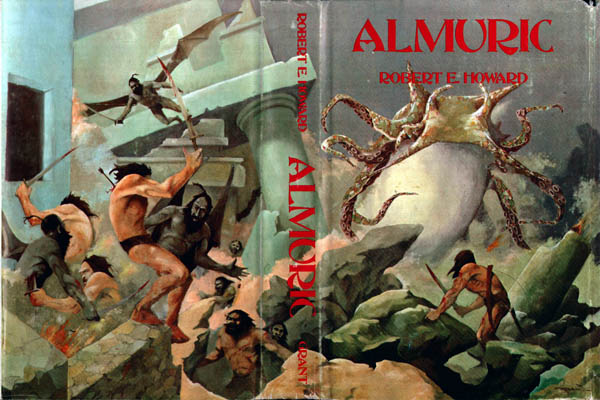
                • Cover of Almuric
                  Almuric

                  series · 1 book · 1964

                  similar bysurvivaladventuroussecondary worldfantasy+1 more

                  Published posthumously in 1964, Robert E. Howard's Almuric is a single planetary-romance novel rather than an ongoing series: Earthman Esau Cairn is transported to the savage world of Almuric, where he fights beast-men and wins the love of Altha, in a story indebted to Edgar Rice Burroughs' Barsoom books.

                • Cover of Watership Down
                  Watership Down

                  series · 21 books · 1972

                  completed

                  similar bysurvivaladventurousfantasy+2 more

                  Watership Down is Richard Adams's 1972 novel following a group of rabbits who flee the destruction of their warren and cross the English countryside of Hampshire in search of a new home, developing over the journey a full rabbit culture of language, proverbs, and mythology. Adams returned to the same world in 1996 with Tales from Watership Down, a collection of nineteen short stories mixing rabbit folklore with further adventures of characters from the novel.

                • Cover of Railsea
                  Railsea

                  China Miéville · standalone novel · 2012

                  similar byadventuroussecondary worldfantasy+2 more

                  Railsea is a young adult novel written and illustrated by English writer China Miéville, and published in May 2012. Miéville described the novel as "weird fiction", io9 labelled its mix of fantasy and steampunk elements as "salvagepunk" and the story has been seen as an "affectionate parody" of Herman Melville's classic 1851 novel Moby-Dick, also drawing on Robert Louis Stevenson's adventure novels Treasure Island and Kidnapped.

                • Cover of The White Mists of Power
                  The White Mists of Power

                  Kristine Kathryn Rusch · standalone novel · 1991

                  similar byadventuroussecondary worldfantasy+1 more

                  Synopsis -An innocent excited boy, a prince and heir, takes his first journey to the city. It is like nothing he imagined. Hands pound against his carriage: voices call for a coin, Sir just one, spare me some money, sir, I haven’t eaten in days. The streets teem with merchants in velvet robes, magicians, half mad preachers, with life and colour and noise. He doesn’t want to miss any of it. But it is the last journey of his life as a prince. Soon he will be abandoned and declared dead. Soon with survival and what will be the driving force of his life: the quest to recover his stolen inheritance, his usurped throne. His home. A story of cities and palaces, of power hungry lords and ladies scheming inside a magically threatened land...Intricate, compelling.

                • Cover of Transit
                  Transit

                  Edmund Cooper · standalone novel · 1964

                  similar bysurvivaladventuroussecondary worldscience fiction

                  Transit... to another world. As a human being - an Earthman - Richard Avery was not particularly successful. He was mediocre as a teacher, and a failure as an artist. The rewards of Earth had passed him by. Still... Earth was home. It was where he belonged, where he could at least go his way unnoticed. Until that afternoon in Kensington Gardens, and that gleaming, hypnotic crystal that transported him - instantaneously - to a new and alien world. He was not alone, at least. There were three other Earth people marooned with him, all without a hint of the location or reason. And four more oddly assorted individuals would have been hard to imagine... Together, they faced sudden, savage onslaughts from an unknown foe. Together, they faced a fantastic implacable environment. And alone, they faced themselves - for to win, or even to survive, they had to re-discover what it meant to be human... (from the back cover of the Lancer first American edition)

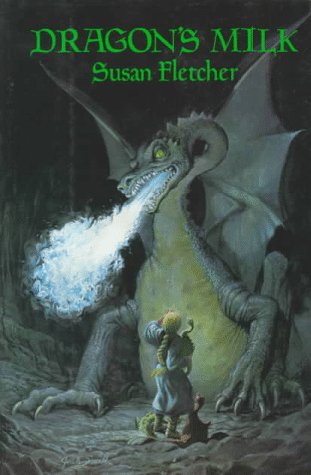
                • Cover of The Dragon Chronicles
                  The Dragon Chronicles

                  series · 4 books · 1989

                  similar byadventuroussecondary worldfantasy+1 more

                  The Dragon Chronicles opens with Dragon's Milk, Susan Fletcher's 1989 debut and the first book in this fantasy quartet. Three further books, Flight of the Dragon Kyn, Sign of the Dove, and Ancient, Strange, and Lovely, followed over the next two decades, continuing the same dragon-themed fantasy world.

                • Cover of Restoree
                  Restoree

                  Anne McCaffrey · standalone novel · 1967

                  similar bysurvivaladventurousscience fiction+1 more

                  Torn from Earth by a bizarre and nameless black force, Sara has no idea where she is or why she inhabits a beautiful new body. Controlled by brutal guards and tamed by terror, she can not comprehend her role as a nurse for a man who appears to be an idiot. She discovers that the planet she had been brought to was Lothar and that the man she was caring for was its Regent, Sara knows the restorees had to escape. When they do, they become fugitives on a world of multiple evils. (adapted from the back cover of the Baen edition)

                • Cover of Knight's Wyrd
                  Knight's Wyrd

                  Debra Doyle & James D. Macdonald · standalone novel · 1992

                  similar byadventuroussecondary worldfantasy+1 more

                  Will Odosson sets out on a series of dangerous adventures after a wizard predicts that he will meet death before a year has passed.

                • Cover of Flightless Falcon
                  Flightless Falcon

                  Mickey Zucker Reichert · standalone novel · 2000

                  similar bysurvivaladventuroussecondary worldfantasy

                  From the flaps of the DAW first edition: "Set in a land of scattered rival cities, this is the story of a poignant and dangerous quest, the tale of a man manipulated into a mission against his will in the hopes of regaining the only thing of importance in his life - his family. Tamison had been a miner until the cave-in which killed his brother and father, and left him trapped behind a wall of rubble, cut off from light and life for what seemed like eternity. When he was finally rescued, Tamison was so traumatized by the experience that he was left with a paralyzing fear of venturing underground. With the passing years and the growth of his new family, Tamison was willing to turn his hand to any trade that would feed his wife and children. But in a realm where guilds ruled - and where his own guild could no longer support him - Tamison became more and more desperate as even jobs for unskilled guildless laborers became impossible to obtain. Eventually Tamison was forced to what once would have been unimaginable to him. But he had no other choice. Either he must steal food of see his family starve. Caught in the act, Tamison is sentenced to a chain gang. And when he was finally released, he discovered that his family had vanished. Searching for them, Tamison became so despondent that when a guard named Dallan claimed to know of their fate he was only too ready to listen. And when Dallan said that he, too, had had someone taken by the same villains, Tamison agreed to join forces with him. But before setting out on their quest, Tamison visited a fortune-teller, hoping to be told that his mission would prove successful. Instead of learning about his own destiny, Tamison found himself acquiring a new alley as Rifkah, the fortune-teller, suddenly discovered a pressing need to leave the city. Together the three set out for the rival trading town where Dallan was certain the people they sought were being held. Tamison's initial search had led him into an encounter with a thief, who now seemed determined to attach himself to their group, and the unlikely foursome soon concocted a daring plan to break into the seemingly impenetrable city. Yet even if they succeeded in this venture it might well prove their doom, for gaining entrance to the town did not mean that they would find what they sought - or survive to win free of the place again!"

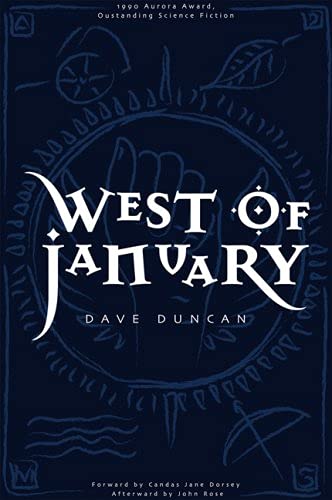
                • Cover of West of January
                  West of January

                  Dave Duncan · standalone novel · 1989

                  similar bysurvivaladventuroussecondary worldfantasy+1 more

                  West of January is a fantasy novel by Dave Duncan. The book won the 1990 Prix Aurora Award for Best Long-Form Work in English.

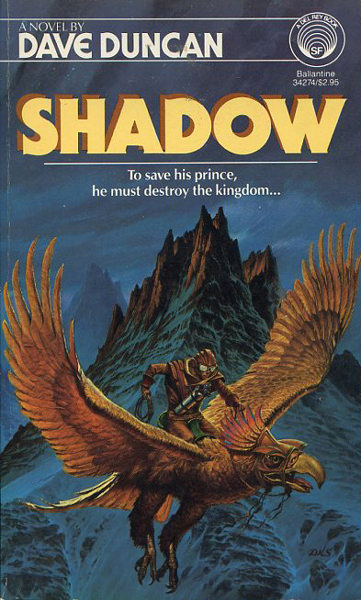
                • Cover of Shadow
                  Shadow

                  Dave Duncan · standalone novel · 1987

                  similar byadventuroussecondary worldfantasy+1 more

                  Sald Harl would like nothing more than to soar on the wings of his noble eagle, but his youthful rides in the sky are cut short by an appointment to guard the prince. Sald watches his dreams of flight fade with his name and independence as he takes over his bodyguard duties. During a perilous journey to the edges of the kingdom a dark secret comes to life. Now the great Prince Shadow is accused of treason and Sald must orchestrate a desperate plan of escape or he will lose the one thing he has been ordered to defend. The only option of freedom in sight is a dangerous flight that no one has ever survived. Once again Sald may feel the freedom of souring though the air unchained from the shackles of servitude.

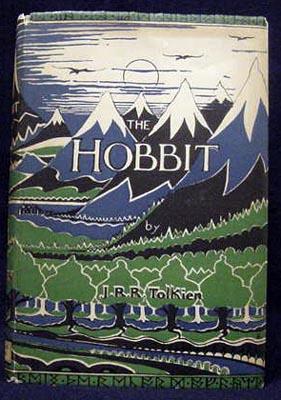
                • Cover of The Hobbit
                  The Hobbit

                  series · 2 books · 1937

                  completed

                  part of Tolkien's legendarium

                  similar byadventuroussecondary worldfantasy

                  The Hobbit (1937) is J. R. R. Tolkien's children's fantasy novel following the reluctant burglar Bilbo Baggins, who joins a company of dwarves and the wizard Gandalf on a journey to reclaim treasure guarded by the dragon Smaug. It stands as a complete adventure on its own, but shares its setting with the rest of Tolkien's legendarium and leads into the events of The Lord of the Rings.

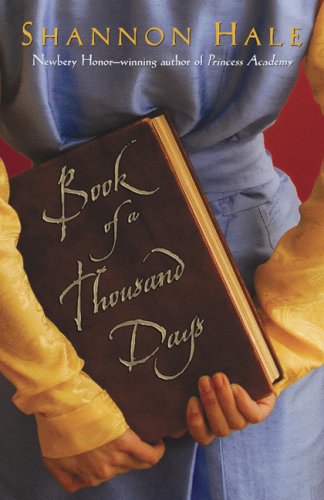
                • Cover of Book of a Thousand Days
                  Book of a Thousand Days

                  Shannon Hale · standalone novel · 2007

                  similar bysurvivaladventuroussecondary worldfantasy

                  Book of a Thousand Days is a 2007 young adult fantasy novel by Shannon Hale. It is based on the Brothers Grimm fairy tale Maid Maleen.

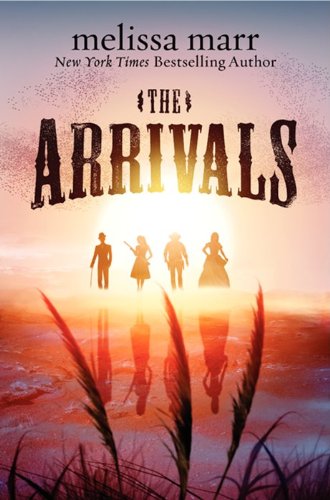
                • Cover of The Arrivals
                  The Arrivals

                  Melissa Marr · standalone novel · 2013

                  similar bysurvivaladventuroussecondary worldfantasy

                  The Arrivals is a 2013 fantasy Western novel by American author Melissa Marr. It is her second adult novel, following her 2011 novel Graveminder. It was first published on July 2, 2013, through William Morrow and follows a group of people that must find a way to survive in strange new surroundings.

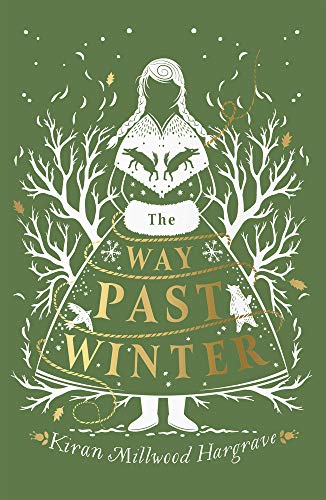
                • Cover of The Way Past Winter
                  The Way Past Winter

                  Kiran Millwood Hargrave · standalone novel · 2018

                  similar bysurvivaladventuroussecondary worldfantasy

                  "Mila and her sisters live with their brother Oskar in a small forest cabin in the snow. One night, a fur-clad stranger arrives seeking shelter for himself and his men. But by the next morning, they've gone - taking Oskar with them. Fearful for his safety, Mila and her sisters set out to bring Oskar back - even it means going north, crossing frozen wild-lands to find a way past an eternal winter." (toppsta.com)

                • Cover of Northwood
                  Northwood

                  Brian Falkner · standalone novel · 2011

                  similar bysurvivaladventuroussecondary worldfantasy

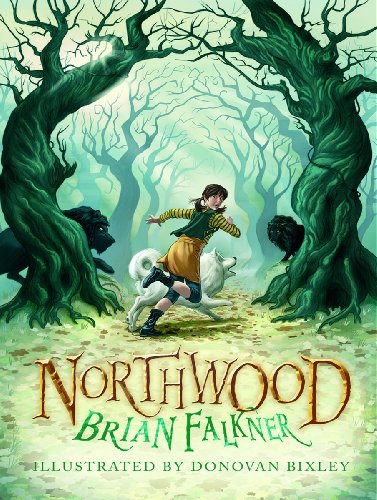
                  "Cecilia Undergarment likes a challenge. So when she discovers a sad and neglected dog, she is determined to rescue him. But here daring dog rescue lands her lost and alone in the dark forest of Northwood. A forest where ferocious black lions roam. A forest where those who enter never return. But then, Northwood has never seen the likes of Cecilia Undergarment before ..."--Page 4 of cover. Suggested level: primary, intermediate.

                • Cover of Vega Jane
                  Vega Jane

                  series · 4 books · 2014

                  similar byadventuroussecondary worldfantasy+1 more

                  Vega Jane is a series of four young adult fantasy novels written by American author David Baldacci. It follows the adventures of a teenage girl as she uncovers secrets about the fictional village of Wormwood and faces the dangers of the 'Quag', a forest filled with beasts. The series was first published in the US in 2014 by Scholastic Press. The Finisher (novel) and The Keeper spent a collective 41 weeks on The New York Times Best Seller list for Children's Middle Grade E-books with The Finisher peaking at number one, and The Keeper peaking at number three.

                • Cover of The Lost Regiment
                  The Lost Regiment

                  series · 9 books · 1990

                  similar bysurvivaladventuroussecondary worldscience fiction

                  William R. Forstchen's Lost Regiment series begins with Rally Cry, in which a Civil War Union regiment is swept onto a distant world where humans transplanted from many eras and cultures are farmed as food by an alien race. Arriving with nineteenth-century gunpowder weapons and organized tactics, the regiment's survivors fight to build a defensible nation and turn the war back on their captors, a conflict that escalates across nine novels of technology, politics, and generations.

                • Cover of Bone Universe
                  Bone Universe

                  series · 5 books · 2013

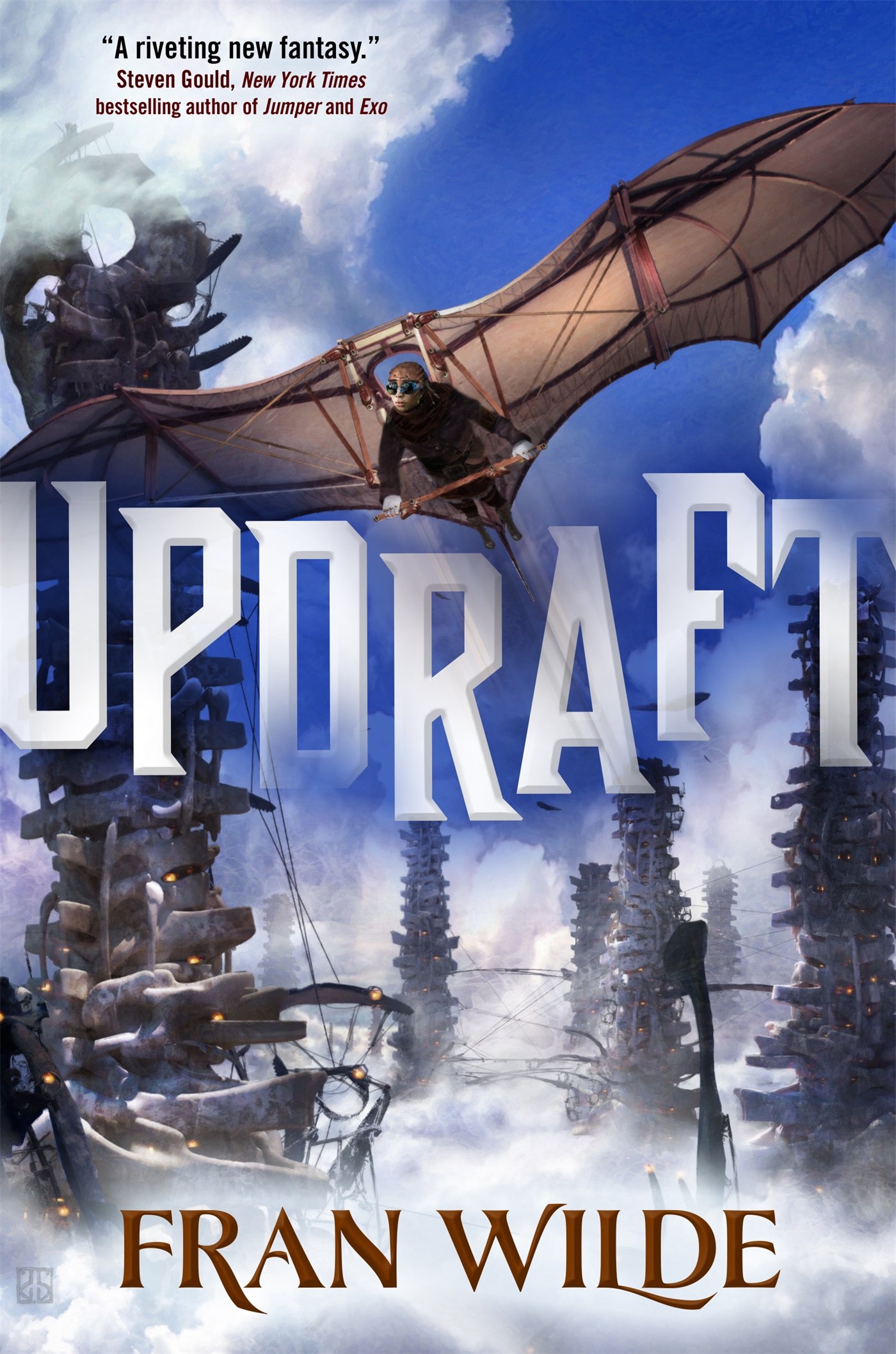
                  similar byadventuroussecondary worldfantasy+1 more

                • Cover of Odoursin
                  Odoursin

                  series · 2 books · 2005

                  similar byadventuroussecondary worldfantasy+1 more

                • Cover of WondLa
                  WondLa

                  series · 3 books · 2010

                  similar bysurvivaladventurousscience fictionfantasy+1 more

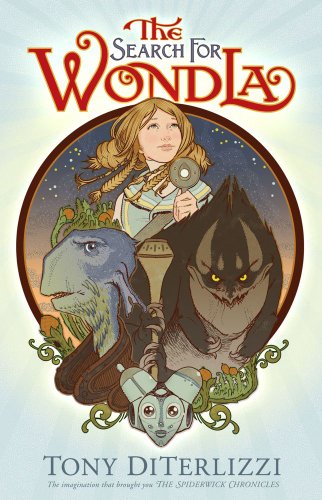
                  Tony DiTerlizzi's WondLa trilogy follows Eva Nine, a twelve-year-old girl raised in isolation underground by a robot guardian, who emerges onto a surface world populated by strange alien life and sets out to find others like herself. The Search for WondLa launches her journey, continuing through A Hero for WondLa and The Battle for WondLa.

                • Cover of The Minnipins
                  The Minnipins

                  series · 2 books · 1959

                  completed

                  similar byadventuroussecondary worldfantasy+1 more

                • ER
                  Edgar Rice Burroughs' Pellucidar universe

                  series · 24 books · 1922

                  similar byadventurous+3 more

                • Cover of Silverwing
                  Silverwing

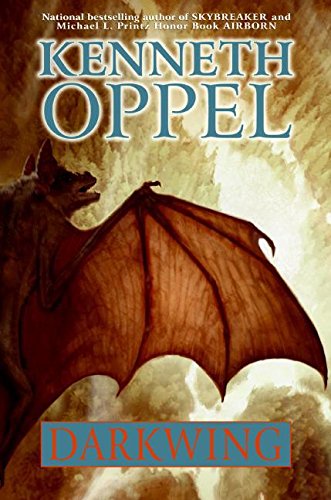
                  series · 5 books · 1997

                  similar byadventurousfantasy+1 more

                  Kenneth Oppel's Silverwing novels follow a colony of bats whose society is divided along old lines of species, faction, and belief, forcing young bats to navigate conflicts that adults have inherited rather than chosen. Across four books, the series treats bat colonies as full societies with their own history and politics, using that lens to explore tolerance and freedom of thought. It's popular enough to have been adapted into an animated television series.