More like Given
anchored on:science fictionfar futureother star systems
but
- Ender Wiggin
series14 books1977
part of Ender's Game Universe
similar byscience fictionfar futureother star systemsaliens+3 more
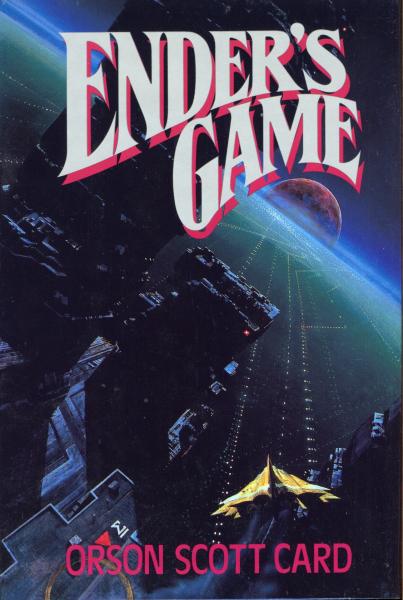
Orson Scott Card's Ender's Game (1985, expanded from his 1977 novella) follows child prodigy Andrew "Ender" Wiggin as he is recruited into a military training program built to prepare Earth's defenses for an anticipated third war against an insectoid alien species known as the Formics. The saga continues years later through Speaker for the Dead and Xenocide, following an older Ender as he confronts the moral weight of his role in that earlier conflict, and concludes the core arc in Children of the Mind, with Ender in Exile filling in the years between the first two books. Set within the wider Ender's Game universe, the series shifts from military coming-of-age story to slower, more philosophical science fiction as it progresses.
- Tunnel in the Sky
Robert A. Heinleinstandalone novel1955
similar byscience fictionfar futureother star systemsadventurous+2 more
As the final test of a survivalist/explorer class, teenagers are dumped on an alien planet to use their skills while awaiting pickup. But something has gone wrong, and they find they are on their own.
- Against a Dark Background
Iain M. Banksstandalone novel1993
similar byfound familyscience fictionfar futureother star systemsadventurousspace operaspace
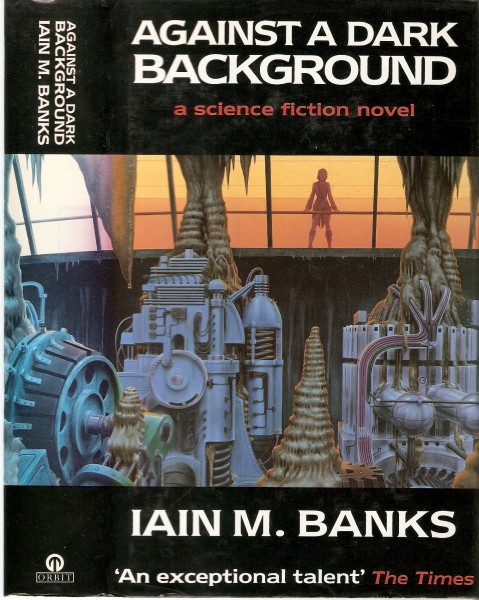
The daughter of an impoverished noble house and her squad of soldiers become thieves of antiquities; long after their retirement and separation she must assemble them again in order to find and steal the most powerful weapon ever created, or pay with her life.
- Hainish
series33 books1964
completed
similar byscience fictionfar futureother star systems+1 more
The Hainish Cycle consists of a number of science fiction novels and stories by Ursula K. Le Guin. The cycle is set in a future history that features civilizations of human beings on planets orbiting a number of nearby stars, including Terra ("Earth"); these humans are contacting each other for the first time and establishing diplomatic relations, as well as setting up a confederacy under the guidance of the oldest of the human worlds, the peaceful planet Hain. In this history, human beings did not evolve on Earth, but they were instead the result of interstellar colonies planted by Hain in the distant past, after which interstellar travel ceased for an extended period. Some of the human races have new genetic traits, a result of ancient Hainish experiments in genetic engineering; this includes people who can dream while awake, and a world of hermaphroditic people who only enter active sexuality once per month, not knowing which sex will manifest in them. In keeping with Le Guin's narrative approach, she uses varied social and environmental settings to explore the anthropological and sociological outcomes of human evolution in those environments. The author often discounted the characterization of a so-called "Hainish Cycle".
- Lunar Chronicles
series15 books2011
similar byscience fictionfar futureother star systemsadventurous+2 more
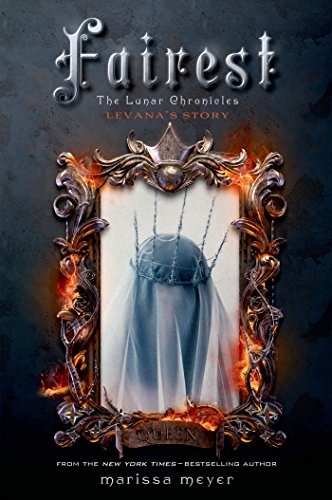
The Lunar Chronicles is a series of four young adult science fiction novels, a novella, and a short story collection written by American author Marissa Meyer and published by Feiwel & Friends. Each book entails a science fictional twist on a classic fairy tale, including "Cinderella", "Little Red Riding Hood", "Rapunzel", and "Snow White". Set in a futuristic world inhabited by various species and creatures, tensions are rising between Earth and its former colony Luna, while both attempt to manage an ongoing pandemic.
- The Great Migration Duology
series2 books2005
part of Liaden
similar byscience fictionfar futureother star systemsadventurousspace opera+3 more
- Ringworld
series5 books1970
part of Known Space
similar byscience fictionfar futureother star systemsaliensadventurousspace operaspace
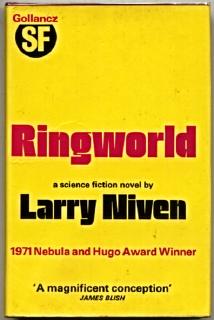
The Ringworld series is a series of science fiction novels written by American author Larry Niven. It is part of his Known Space series of stories. Its backdrop is the Ringworld, a giant artifact 3 million times the surface area of Earth circling a star. The series is composed of four standalone science fiction novels, the original award-winning book and its three sequels:1970: Ringworld 1979: The Ringworld Engineers 1996: The Ringworld Throne 2004: Ringworld's Children
- Moties
series4 books1974
part of CoDominium
similar byscience fictionfar futureother star systemsaliensspace operaspace+1 more
Larry Niven and Jerry Pournelle's The Mote in God's Eye (1974) depicts humanity's first contact with an alien species, the Moties, set within the far-future interstellar setting of Pournelle's codominium future history. The Gripping Hand continues that first-contact crisis years later, and Outies, written by J. R. Pournelle, carries the story forward into a new generation. Together the three books trace an escalating encounter between human and Motie civilizations within the codominium universe.
- Tower and the Hive
series7 books1959
completed
part of The Talents
similar byscience fictionfar futureother star systemsspace operaspace+2 more
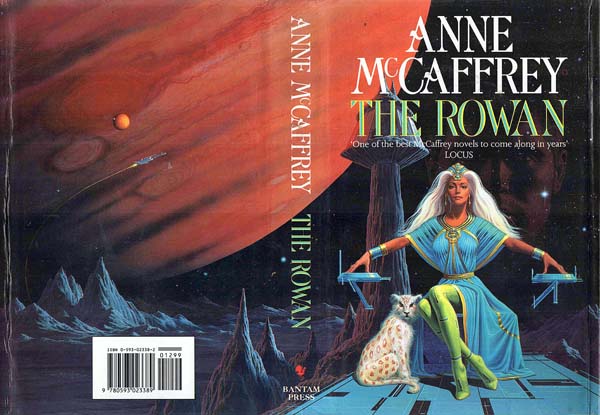
The Tower and the Hive series opens with The Rowan (1990), following an isolated but powerful telepath who is drawn out of her loneliness by a psychic call for help from a distant Talent facing an alien threat. Anne McCaffrey continued the story across four more novels, Damia, Damia's Children, Lyon's Pride, and the concluding The Tower and the Hive (1999), following later generations of a telepathic family staffing the Prime Towers that give a starfaring human civilization instant communication. The series is set later in the same Talents universe as McCaffrey's earlier Pegasus books.
- Starman Jones
Robert A. Heinleinstandalone novel1953
similar byscience fictionfar futureother star systemsadventurousspace operaspace+1 more
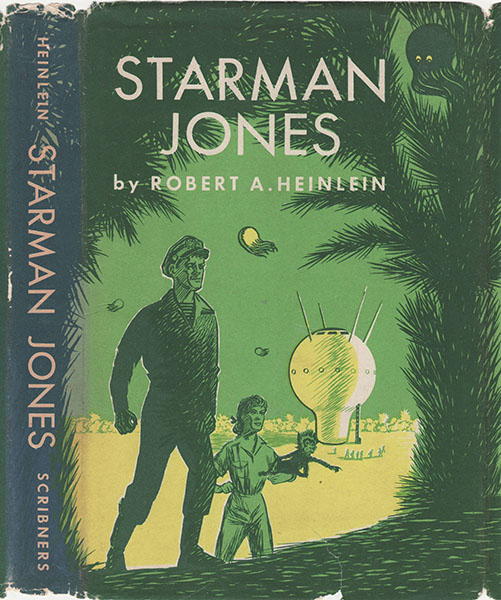
Starman Jones, a 1953 science fiction novel by Robert A. Heinlein, features a farm boy who wants to go to the stars. Charles Scribner's Sons published the book as part of the Heinlein juveniles series.
- Anna Nestor-Sigrid / The Aighors
series4 books1975
completed
similar byscience fictionfar futureother star systemsaliensadventurousspace+2 more
Beyond Heaven's River follows Yoshio Kawashita, a soldier abducted mid-battle during World War II and stranded by unknown aliens on a distant world he can never leave, whose only tie back to meaning is Anna Nestor, a ruthless interstellar power broker who first treats him as a curiosity before the two are forced to confront who took him and why. Greg Bear wrote it as a standalone 1980 novel rather than the start of a series.
- Dune
series20 books1963
part of Dune Universe
similar byscience fictionfar futureother star systemsspace opera
Frank Herbert's Dune Chronicles opens with 1965's Dune, set on the desert planet Arrakis where House Atreides takes control of the only source of the vital spice melange and young Paul Atreides is pulled into a struggle over its politics and religion. Herbert carried the story forward across five further novels — Dune Messiah, Children of Dune, God Emperor of Dune, Heretics of Dune, and Chapterhouse: Dune — following Paul's line over the following millennia, before Brian Herbert and Kevin J. Anderson later extended the saga. Many other editions of these six novels are omnibus and box-set repackagings rather than separate stories.
- Dune Universe
universe78 books1963
Start hereDune · Start here
similar byscience fictionfar futureother star systemsspace opera
Arrakis. Dune. The desert planet, where empire runs on a single substance: the spice melange, which folds space, prolongs life, and unlocks prescience, and which exists nowhere else in the known universe. Frank Herbert's saga is a meditation dressed as an adventure — feudal houses and a secret sisterhood, engineered messiahs and the patient ecology of a world without water, all turning on the terrible gravity of who commands the spice. It reads like scripture and schemes like a war room, ten thousand years hence, among people who have outlawed the thinking machine and made instruments of themselves instead. At its heart stand Herbert's original six — Dune, Dune Messiah, Children of Dune, God Emperor of Dune, Heretics of Dune, Chapterhouse: Dune — a single deepening arc across millennia, arguing the whole way between prophecy and free will. Around that spine his son Brian Herbert and Kevin J. Anderson have raised a vast prequel architecture: Prelude to Dune, tracing the great houses a generation before Paul; Legends of Dune, reaching back to the crusade that broke the machines; the Schools of Dune cycle on the founding of Bene Gesserit, Mentat, and Navigator; the Caladan Trilogy and Heroes of Dune filling years the originals left in shadow. Many hands, dozens of volumes, one desert. What sets Dune apart is its refusal of the simple: religion is manufactured, heroes are hazards, and the sand itself — worm, water, ecology — acts as a political power. Begin where the universe did, with Frank Herbert's Dune (1965), and read the original six in order; you need nothing else to feel the full weight. The prequels are a country to explore afterward, taken by era. Beginnings are delicate times.
- Heechee
series19 books1972
completed
similar byscience fictionfar futureother star systemsaliensspace operaspace+1 more
The Heechee Saga, also known as the Gateway series, is a series of science fiction novels and short stories by Frederik Pohl. The Heechee are an advanced alien race that visited the Solar System hundreds of millennia ago and then mysteriously disappeared. They left behind bases containing artifacts, including working starships, which are discovered and exploited by humanity.
- The Alliance (S. E. Smith)
series6 books2014
similar byscience fictionother star systemsfar future+2 more
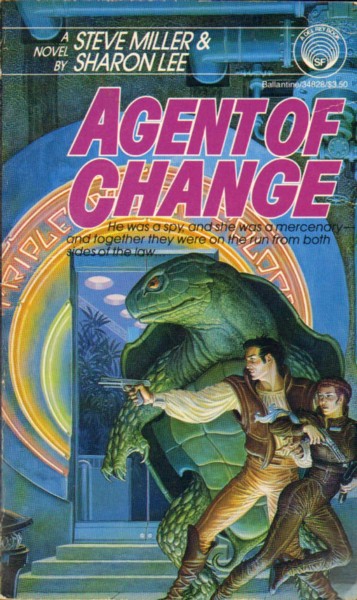
- Agent of Change
series10 books1988
part of Liaden
similar byscience fictionfar futureother star systemsspace operaspace+1 more
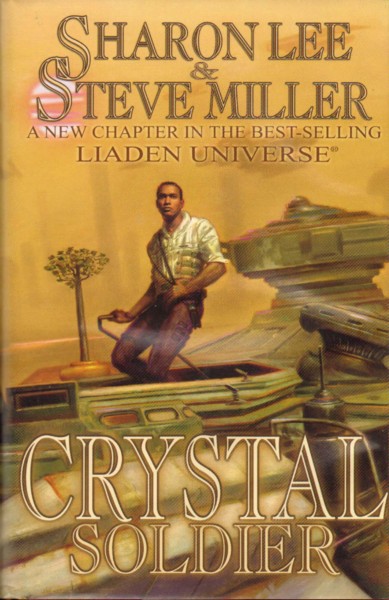
Agent of Change opens Sharon Lee and Steve Miller's long-running Liaden Universe sequence with Val Con yos'Phelium, a covert agent of the Liaden clans, and Miri Robertson, a mercenary soldier, forced into an uneasy alliance while fleeing assassins across space. It's the foundational quartet of a much larger set of novels blending space opera, clan intrigue, and a slow-burn partnership between its two leads. The series belongs to the wider Liaden universe, a shared future history of trade clans, mercenary companies, and human/alien contact spanning dozens of books.
- Uplift
series5 books1980
part of Uplift Universe
similar byscience fictionfar futureother star systemsaliensadventurousspace operaspace
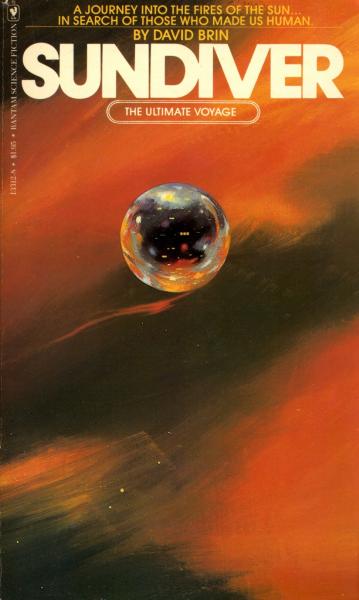
David Brin's Uplift trilogy opens with Sundiver, sending human explorers into the Sun itself, then follows a dolphin-crewed starship on the run from hostile aliens in Startide Rising and a fight over the colony world Garth in The Uplift War. The books sit inside Brin's wider Uplift Universe, built on the idea that spacefaring "patron" species genetically engineer younger "client" species into full sapience, with humanity an anomaly that reached the stars without a patron of its own.
- Aurora Cycle
series3 books2019
similar byscience fictionfar futureother star systemsspace operaspace+3 more
- Uplift Universe
universe13 books1980
Start hereUplift · Start here
similar byscience fictionfar futureother star systemsaliensadventurousspace operaspace
No species, the Galactics insist, ever climbs to sapience alone. For a billion years the elder races have "uplifted" their chosen clients — reshaping some promising animal, gene by patient gene, into a thinking being, then binding it through long ages of indenture. Patron lifts client; client one day becomes patron; and every lineage traces back through the vast Galactic Library to the vanished Progenitors who began it all. Then a ragged band of primates arrives at the stars with no patron to claim them — wolflings, self-made, an affront to a hundred thousand years of law — and worse, these humans have already started uplifting neighbors of their own: the neo-dolphins and neo-chimpanzees of Earthclan. David Brin builds this galaxy across two trilogies. The first — Sundiver, the Hugo- and Nebula-winning Startide Rising, and the Hugo-winning The Uplift War — sends an expedition into the Sun, then follows the dolphin-crewed survey ship Streaker as it flees a discovery that sets fanatical star-clans at war, and a chimp-led resistance on an invaded colony world. The second sequence, Uplift Storm — Brightness Reef, Infinity's Shore, Heaven's Reach — descends to Jijo, a forbidden world where six fallen races hide as illegal settlers, and draws every loose thread toward a reckoning. Short fiction fills the margins. This is space opera with an ecologist's conscience: teeming with invented biologies, wry cross-species banter, and real unease about what we owe the minds we make. Begin with Startide Rising — the saga's beating heart, and readable on its own — or take Sundiver first and read straight through in publication order.
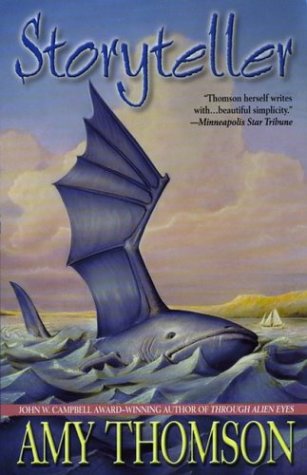
- Storyteller
Amy Thomsonstandalone novel2003
similar byscience fictionemotionalfar futureother star systemsspace operaromancespace+1 more
Storyteller is a book by Amy Thomson published in 2003 by Ace Books. The book follows the story of an orphan who is adopted by a storyteller, a member of the Storytelling Guild who travels the stars in a historian like capacity. In contrast to her earlier books which were very hard science fiction Storyteller was much more romantic, the novel focuses on themes such as longevity and environmentalism ignoring technological focus. One reviewer wrote "Some readers will find this book immensely touching. However, readers who prefer a harder edge are liable be put off by sentimentality, weak conflict and a too-readily resolved plot that smacks of wish fulfillment".
- The Final Architecture
series6 books2021
similar byscience fictionfar futureother star systemsaliensadventurousspace operaspace
The Final Architecture is a series of science fiction novels by British writer Adrian Tchaikovsky. It contains the books Shards of Earth, Eyes of the Void, and Lords of Uncreation. The series focuses on a group of humans fighting against the mysterious Architects, who destroy inhabited planets. The series has been well-received critically, with Shards of Earth winning the 2021 BSFA Award for Best Novel. The entire series was a finalist for the 2024 Hugo Award for Best Series.
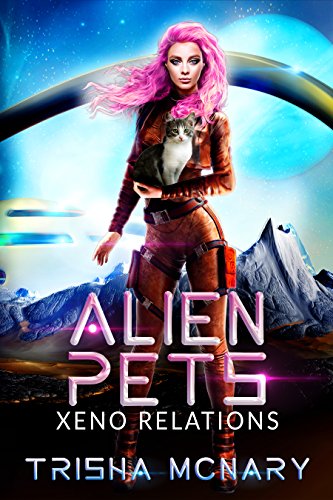
- Xeno Relations
series5 books2014
similar byscience fictionfar futureother star systemsaliensadventurousspace operaspace+2 more
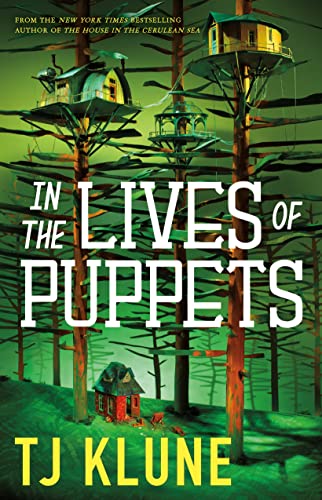
- In the Lives of Puppets
TJ Klunestandalone novel2023
similar byfound familyscience fictionemotionalfar future
In a strange little home built into the branches of a grove of trees, live three robots--fatherly inventor android Giovanni Lawson, a pleasantly sadistic nurse machine, and a small vacuum desperate for love and attention. Victor Lawson, a human, lives there too. They're a family, hidden and safe. The day Vic salvages and repairs an unfamiliar android labelled "HAP," he learns of a shared dark past between Hap and Gio-a past spent hunting humans. When Hap unwittingly alerts robots from Gio's former life to their whereabouts, the family is no longer hidden and safe. Gio is captured and taken back to his old laboratory in the City of Electric Dreams. So together, the rest of Vic's assembled family must journey across an unforgiving and otherworldly country to rescue Gio from decommission, or worse, reprogramming. Along the way to save Gio, amid conflicted feelings of betrayal and affection for Hap, Vic must decide for himself: Can he accept love with strings attached?
- Vorkosigan
universe27 books1986
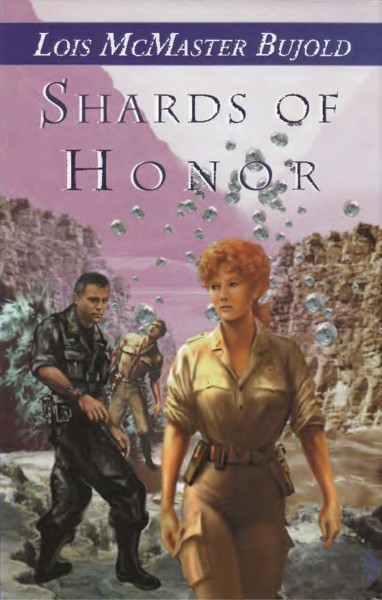
Start hereShards of Honor · Chronological start
similar byscience fictionfar futureother star systemsspace opera+2 more
On Barrayar they will tell you that a man is measured by his forebears and the straightness of his spine — which is a difficulty for Miles Vorkosigan, born brittle-boned and half-height into the highest military caste of a planet that not long ago left such infants on the hillside to die. Beyond his backwater lies the wormhole nexus: a scatter of human worlds strung along unstable jump-routes, where a blood-and-honor warrior aristocracy, a coolly egalitarian utopia, and a hundred lesser polities trade, spy, and go to war. Miles cannot pass the physicals. So he builds himself a fleet, a false name, and a career out of sheer talky brilliance and a constitutional refusal to sit still. Lois McMaster Bujold has spent decades on this future, and it reads as one long life more than a franchise. It opens a generation early with Miles's mother, Cordelia — a level-headed survey captain from Beta Colony who marries into Barrayaran politics — before handing the saga to Miles himself, from teenage con-artist admiral to Imperial troubleshooter, and eventually to the next generation. Around that spine stand companion novels set elsewhere in the nexus: Falling Free, among the engineered zero-gee "quaddies"; Ethan of Athos; and the later books. Many volumes are gathered into omnibuses; several have taken Hugo Awards. The pleasure is voice and heart more than hardware — comedies of intrigue that turn, without warning, into hard questions about disability, ambition, biology as destiny, and what honor costs the people who keep it. Newcomers have two clean doors: Shards of Honor (paired with Barrayar as Cordelia's Honor) for the chronological start, or The Warrior's Apprentice to meet Miles at full velocity.