More like Gladiator
anchored on:middle grade
but
- Kairos
series11 books1962
completed
similar by+4 more
The Time Quintet is a science fantasy series of five young adult novels written by American author Madeleine L'Engle and made up of A Wrinkle in Time (1962), A Wind in the Door (1973), A Swiftly Tilting Planet (1978), Many Waters (1986), and An Acceptable Time (1989).
- Narnia
series26 books1950
part of Narnia Universe
similar byfantasyadventurouscoming of age+2 more
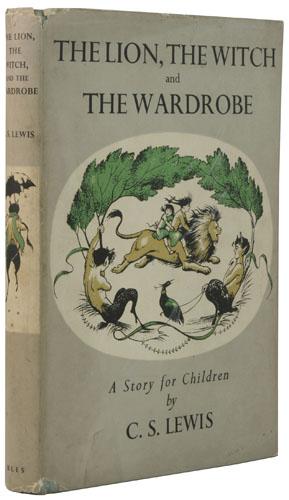
The Chronicles of Narnia is a series of seven portal fantasy novels by British author C. S. Lewis. Illustrated by Pauline Baynes and originally published between 1950 and 1956, the series is set in the fictional realm of Narnia, a fantasy world of magic, mythical beasts, and talking animals. It narrates the adventures of various children who play central roles in the unfolding history of the Narnian world. Except in The Horse and His Boy, the protagonists are all children from the real world who are magically transported to Narnia, where they are sometimes called upon by the lion Aslan to protect Narnia from evil. The books span the entire history of Narnia, from its creation in The Magician's Nephew to its eventual destruction in The Last Battle.
- The Indian in the Cupboard
series5 books1980
completed
similar byfantasyadventurousour worldcoming of agemiddle grade
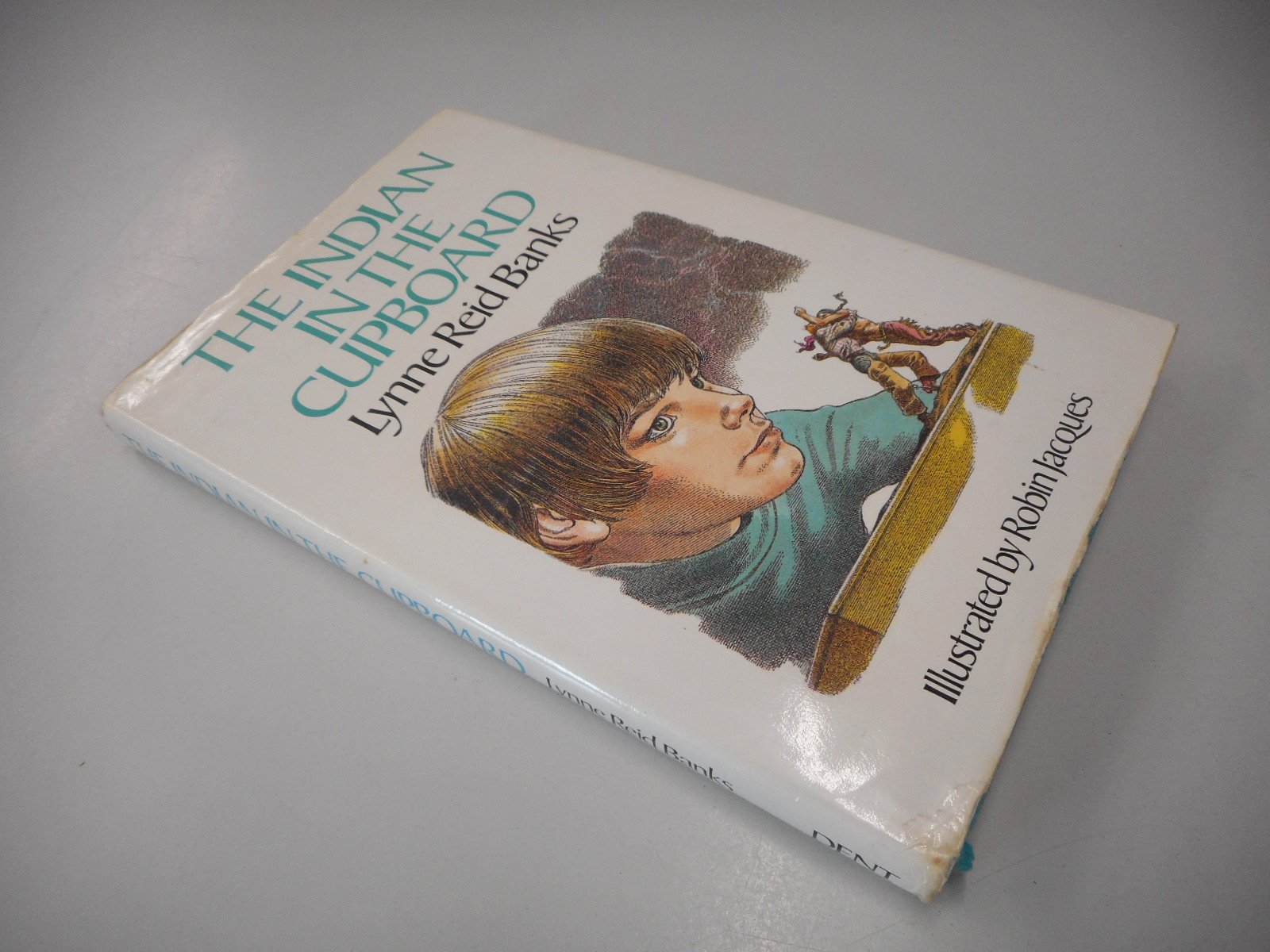
Lynne Reid Banks' Indian in the Cupboard series begins with the 1980 children's novel in which a boy discovers that an old cupboard can bring his plastic toy figures to life. The low-fantasy series, which inspired a 1995 film adaptation, continues across Return of the Indian, The Secret of the Indian, The Mystery of the Cupboard, and The Key to the Indian.
- Bromeliad
series3 books1989
completed
similar byfantasyadventurousour worldtransported to another world
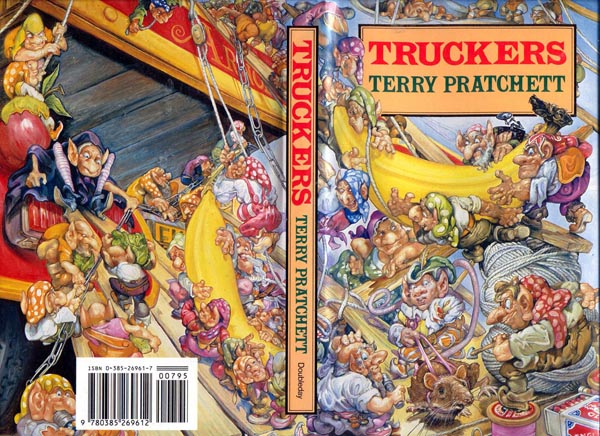
The Nome Trilogy, also known as The Bromeliad, is a trilogy of children's books by British writer Terry Pratchett, consisting of the books Truckers (1989), Diggers (1990) and Wings (1990). The trilogy tells the story of the Nomes, a race of tiny people from another world who now live hidden among humans. Through the books they struggle to survive in the human world and, once they learn of their history from an artefact known as "The Thing", make plans to return home.
- Magic (Andre Norton)
series7 books1965
completed
similar byfantasymiddle grade+3 more
Andre Norton's Magic sequence gathers six lightly linked fantasies for younger readers - Steel Magic, Octagon Magic, Fur Magic, Dragon Magic, Lavender-Green Magic, and Red Hart Magic - published between 1965 and 1976, each centered on a different child's brush with magic tied to an old object or place rather than a shared cast or continuing plot. The books were later regrouped into two-volume omnibus editions under the same Magic banner.
- Five Children Universe
series27 books1902
completed
similar byfantasy+4 more
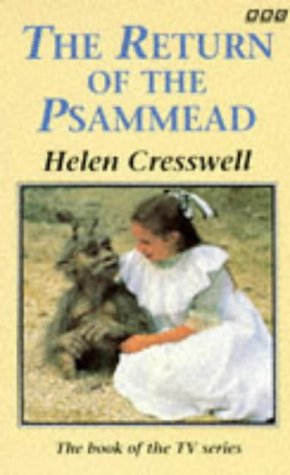
Two separate modern continuations of E. Nesbit's Psammead stories were written decades apart by different authors: Helen Cresswell's The Return of the Psammead (1992) brings the wish-granting sand fairy back for a new set of children, while Kate Saunders's Five Children on the Western Front (2014) follows the now-grown Lamb and his siblings as the First World War arrives, in a more somber sequel to Nesbit's original trilogy. Neither book is by Nesbit herself, and the two have no direct connection to each other beyond both drawing on her creation. Later writers have kept returning to Nesbit's premise long after her own trilogy ended.
- Fionavar Universe
series5 books1984
similar byfantasy+3 more
Ysabel is a 2007 standalone contemporary fantasy novel by Guy Gavriel Kay, following teenager Ned Marriner as he stumbles into a centuries-old rivalry playing out around the cathedral of Aix-en-Provence. It marked Kay's turn toward urban fantasy and briefly brings back two adult characters from his earlier Fionavar Tapestry trilogy, though it is not itself part of that trilogy and can be read on its own.
- The Hobbit
series2 books1937
completed
part of Tolkien's legendarium
similar byfantasyadventurousmiddle grade+1 more
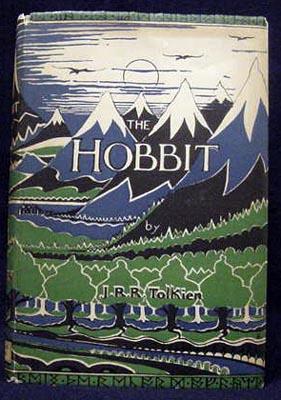
The Hobbit (1937) is J. R. R. Tolkien's children's fantasy novel following the reluctant burglar Bilbo Baggins, who joins a company of dwarves and the wizard Gandalf on a journey to reclaim treasure guarded by the dragon Smaug. It stands as a complete adventure on its own, but shares its setting with the rest of Tolkien's legendarium and leads into the events of The Lord of the Rings.
- Peter Pan Universe
universe112 books1902
Start herePeter Pan · Start here
similar byfantasy+2 more
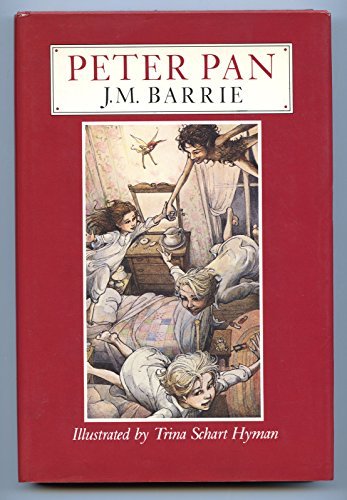
Second star to the right, and straight on till morning — and there it is, the island that every child dreams once and then, growing up, contrives to forget. Neverland: mermaids in the lagoon, a ticking crocodile with a clock in its belly, a pirate nursing his severed hand, and above it all the boy who will not grow up, forever flying, forever heartless in the lovely careless way that only children are. It begins with J. M. Barrie — the 1904 stage play, the chapters of Kensington Gardens, and the novel Peter and Wendy that fixed Peter, Wendy, Tinker Bell, Hook and the Lost Boys in place. From that small window a wide world has flown. Dave Barry and Ridley Pearson supply the how-it-all-began in their Starcatchers books, chasing falling starstuff aboard a doomed ship to explain why one orphan came to fly and never age. A whole bright shelf tends Tinker Bell's Pixie Hollow — the Disney Fairies and Fairy Haven tales, Kiki Thorpe's Never Girls — while Heidi Schulz hands the wheel to Hook's own daughter, and stranger, dimmer corners carry the island into far darker weather. Many hands, one archipelago; no single map governs them all. What sets it apart is the sweetness with a blade in it — wonder shadowed always by the ache of leaving, of mothers who keep the window open and children who fly home too late. Newcomers should begin where it began, with Barrie's Peter and Wendy, then, for the origin, take the Starcatchers books in their own order. The rest of Neverland waits, as it always does, for whoever still remembers how to reach it.
- Spiderwick
universe17 books2003
Start hereSpiderwick Chronicles · Start here
similar byfantasymiddle grade+2 more
Do not read this book. So warns the note bound into Arthur Spiderwick's Field Guide to the Fantastical World Around You — which is exactly why Jared Grace opens it, and why the hidden world opens onto him. Move into a crumbling family estate with your mother, your twin brother, and your fencing-champion sister, and you may find the walls already occupied: a testy house brownie, goblins with a taste for cats, and an ogre named Mulgarath who wants the Guide for himself. Holly Black writes and Tony DiTerlizzi draws this small, densely illustrated world across two linked cycles. The Spiderwick Chronicles runs five slim volumes — The Field Guide, The Seeing Stone, Lucinda's Secret, The Ironwood Tree, and The Wrath of Mulgarath — a single mounting emergency told at a breathless clip. Beyond the Spiderwick Chronicles carries the danger south to swampy Florida across three more books, where new children meet giants, nixies, and a wyrm stirring underground. The companion Field Guide itself catalogues every sprite and troll in loving naturalist detail. The pleasure here is the specimen-collector's: faerie treated as a taxonomy to be sketched, labelled, and survived, cozy domestic scale shot through with real teeth. Begin with The Field Guide and read straight through in publication order — the five originals first, then the Beyond trilogy. Slender enough to finish in an afternoon, sharp enough to send you checking the cupboard afterward.
- Songs of Earth and Power
series2 books1984
completed
similar byfantasy+3 more
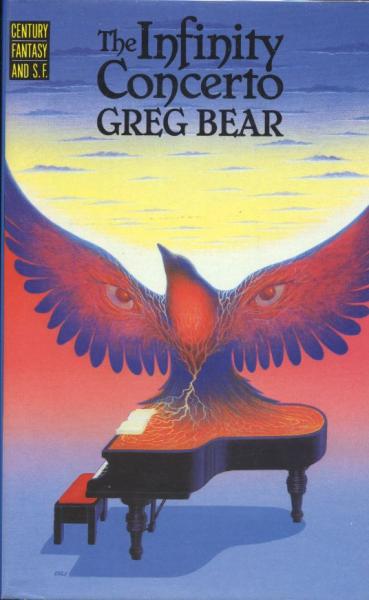
Greg Bear's two-book Songs of Earth and Power series opens with The Infinity Concerto, in which teenage Michael Perrin is drawn into the realm of the Sidhe — beings once said to have inspired Coleridge's 'Kubla Khan' — while searching for a mythic Song of Power. The sequel, The Serpent Mage, continues Michael's story in that world.
- James and the Giant Peach
Roald Dahlstandalone novel1961
similar byfantasyadventurousour worldcoming of age
James and the Giant Peach is a children's novel written in 1961 by British author Roald Dahl. The first edition, published by Alfred Knopf, featured illustrations by Nancy Ekholm Burkert. There have been re-illustrated versions of it over the years, drawn by Michael Simeon, Emma Chichester Clark, Lane Smith and Quentin Blake. It was adapted into a film of the same name in 1996 which was directed by Henry Selick, and a musical in 2010.
- Jungle Book Universe
universe44 books1893
Start hereThe Jungle Book · Start here
similar byadventurous+3 more
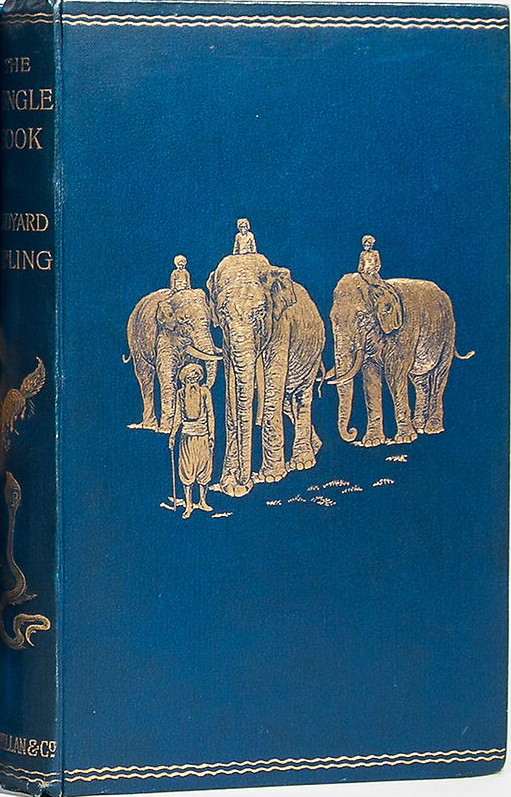
The Law of the Jungle is older than any animal reciting it, and a naked man-cub who wandered into a wolf den at dusk will have to learn every clause of it. Mowgli grows up between two peoples and belongs entirely to neither — the pack that took him in, Baloo who teaches him the words, Bagheera who bought his life with a bull, Kaa who is the most dangerous friend a boy ever had, and Shere Khan, who has been waiting since the first page. Rudyard Kipling wrote these as two books of stories, and the stories run well past Mowgli. Rikki-Tikki-Tavi fights cobras in a bungalow garden; a white seal searches the ocean for an island where men do not come; Toomai watches the elephants dance where nobody is meant to see them; and the beasts of the army explain, in Her Majesty's Servants, exactly why they obey. Verse runs between the tales, and the Jungle Books have been reissued, excerpted and adapted ever since. The voice is the whole point — biblical cadence, animal dignity, and a hard moral world in which the Law protects you precisely as far as you keep it. Read The Jungle Book first and take the Mowgli stories in their order within it; the rest stand alone and can be picked up in any mood. It is a children's book that never once talks down.
- Young Wizards
series24 books1983
similar byfantasyadventurousour worldcoming of age
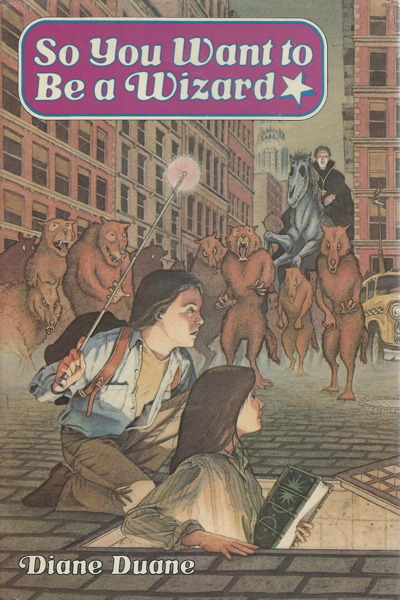
Diane Duane's Young Wizards series begins with thirteen-year-old Nita, bullied and friendless, who borrows a library book on wizardry and discovers it's the real thing: an apprenticeship into a covert order that fights entropy, alongside a classmate named Kit. Across fifteen books published between 1983 and 2019, the two age forward in something close to real time as their missions escalate from New York streets to alien worlds and beyond. The series centers on the wizard's Oath and the idea that magic is a responsibility taken on to slow the universe's decay, not a power to be enjoyed for its own sake.
- Artemis Fowl
series15 books2001
similar byfantasyadventurousour worldmiddle grade
Artemis Fowl is a series of eleven fantasy novels by Irish author Eoin Colfer, revolving around various members of the Fowl family. The first cycle, the Artemis Fowl series, consists of eight books, and the second cycle, The Fowl Twins series, is a trilogy. Both releases have received commercial success and positive critical reception in the children's literature genre, and also originated graphic novel adaptations. As of 2013, the novels have sold more than 21 million copies in 44 languages, and are one of the best-selling series of all time. In 2010, Artemis Fowl was voted by readers as their favorite Puffin Books title of all time.
- Alderley
series4 books1960
similar byfantasy+3 more
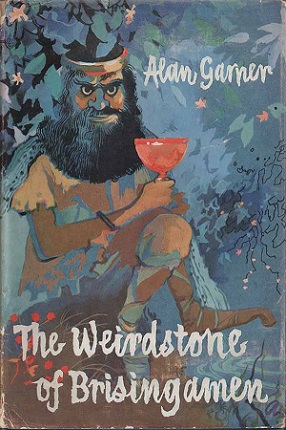
Alan Garner's Alderley books begin with The Weirdstone of Brisingamen (1960) and The Moon of Gomrath (1963), children's fantasies set around the real Cheshire hill of Alderley Edge and drawn from its local legends. Garner returned to the same setting and characters decades later in Boneland (2012), a far darker novel for adults in which the now-grown Colin, afflicted with amnesia covering his entire childhood, tries to piece together what really happened to him and his sister. The three books span most of Garner's writing life rather than forming one continuous trilogy.
- Stephen King multiverse
universe46 books1967
Start hereThe Gunslinger · Start here
similar by+1 more
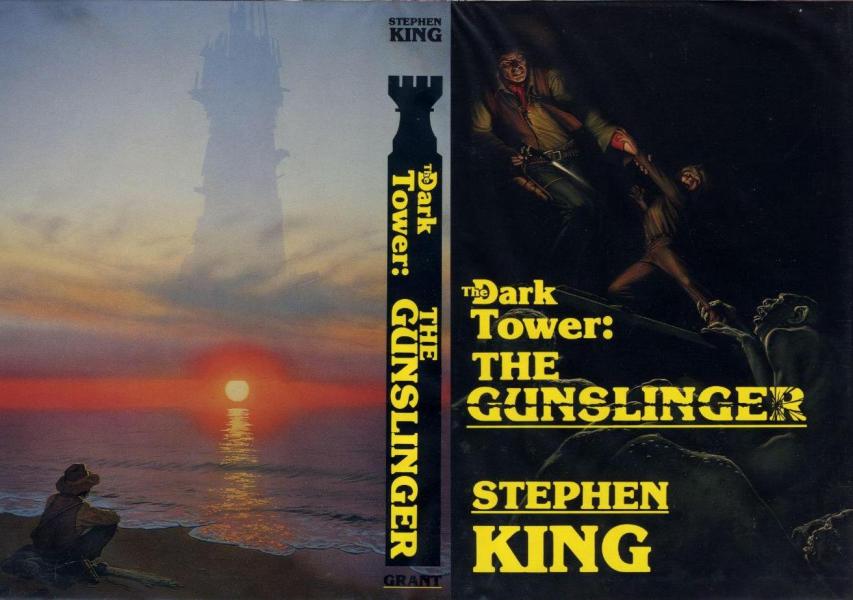
The man in black fled across the desert, and the gunslinger followed. So begins the long walk of Roland Deschain, last of an order of knight-errant pistoleers, across a land that has "moved on" — where the compass points drift, dead machines rot toward sentience, and the weave of what's real wears thin. His quest is the Dark Tower itself: a spire standing at the hub of every world that exists, the linchpin that holds all of them back from ruin. Roland's road runs eight volumes, from The Gunslinger through the closing Dark Tower, with the later, interleaved tale The Wind Through the Keyhole folding a story-within-a-story back into his youth. Along the way he draws a ka-tet — a fellowship bound by fate, not choosing — through doorways between worlds: a heroin-shackled New Yorker, a woman of two minds, a boy who dies twice. The Tower is also the secret axle around which the wider shelf of King's work turns; threads from The Stand, 'Salem's Lot and beyond wind quietly toward it. Expect a mongrel of Western, high fantasy, horror and decayed science fiction, told in a dusty, incantatory dialect all its own — ka, thankee-sai, the world that has moved on. This is King at his most mythic and most personal, a decades-spanning circle that rewards a patient reader. Begin at the beginning: The Gunslinger, then walk forward in publication order. There are other worlds than these — but this door opens first.
- Underland Chronicles
series5 books2003
similar byfantasyadventurouscoming of agemiddle grade
The Underland Chronicles is a series of five epic fantasy novels by Suzanne Collins, first published between 2003 and 2007. It tells the story of a boy named Gregor and his adventures in the "Underland", a subterranean world located under New York City. The Underland is inhabited by humans who traveled below hundreds of years ago, along with various giant versions of creatures like bats, cockroaches, and rats. According to the author, the series involves many topics relating to war, including biological warfare, genocide, and military intelligence.
- Barsoom
series53 books1917
similar byadventurous+1 more
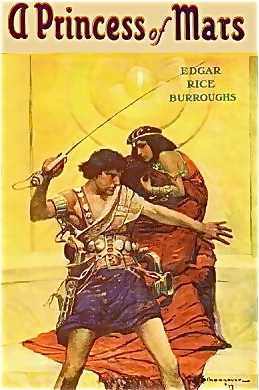
Barsoom is a fictional representation of the planet Mars created by American pulp fiction author Edgar Rice Burroughs. The first Barsoom tale was serialized as Under the Moons of Mars in pulp magazine The All-Story from February to July 1912 and published compiled as a novel as A Princess of Mars in 1917. It features John Carter, a late-19th-century American Confederate veteran who is mysteriously transported from Earth to the dying world of Mars where he meets and romances the beautiful Martian princess Dejah Thoris. Ten sequels followed over the next three decades, further extending his vision of Barsoom and adding other characters.
- The Keys to the Kingdom
series7 books2003
similar byfantasyadventurousmiddle grade+1 more
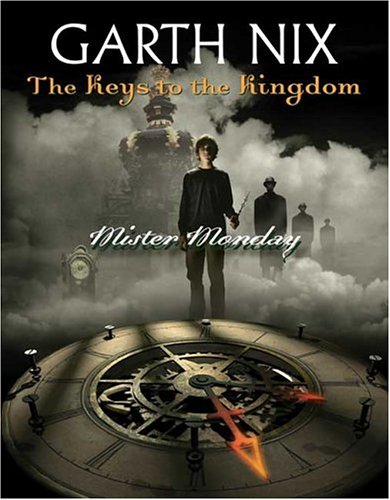
The Keys to the Kingdom is a fantasy-adventure book series written by Garth Nix, comprising seven books published between 2003 and 2010. The series chronicles the adventures of a boy named Arthur, who becomes involved with a magical world called the 'House'; he is on a quest to take back the House from seven antagonistic 'Trustees'.
- Talisman
series4 books1984
similar byfantasy+3 more
Stephen King and Peter Straub's The Talisman follows twelve-year-old Jack Sawyer as he crosses between our world and the Territories, a parallel realm, on a cross-country quest to save his dying mother. The 2001 sequel Black House catches up with Jack decades later as a retired detective drawn into a serial-murder case in small-town Wisconsin that pulls the Territories back into his life. A third book, Other Worlds Than These, was announced in 2025 to complete the trilogy.