More like Grimspace
anchored on:science fictionspace operaspacefar futureadventurousfirst person+5 more
but
- Chanur
series7 books1982
part of Alliance-Union Universe
similar byfar futurescience fictionadventurousspace operatensespacespaceshipother star systems
The Chanur novels are a series of five science fiction novels, forming three separate stories, written by American author C. J. Cherryh and published by DAW Books between 1982 and 1992. The first novel in the series is The Pride of Chanur (1982), which was nominated for both the Hugo and Locus Awards in 1983. The Pride of Chanur, originally a stand-alone story, was followed by the Chanur's Venture trilogy, Chanur's Venture (1984), which was shortlisted for a Locus Award in 1985; The Kif Strike Back (1985) and Chanur's Homecoming (1986). These were followed by a later sequel, Chanur's Legacy (1992). The five novels were also published in two omnibus editions: the first three in The Chanur Saga in 2000 and the next two in Chanur's Endgame in 2007.
- Vatta's War
series6 books2003
part of Vatta
similar byfar futurescience fictionspace operaadventuroustensespaceother star systems
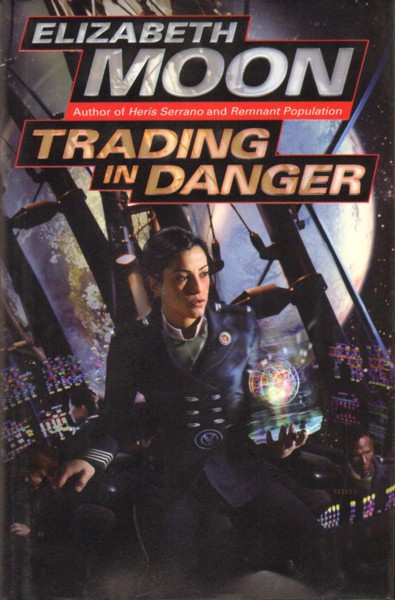
Vatta's War is a science fiction series by American writer Elizabeth Moon, comprising five books: Trading in Danger (2003), Marque and Reprisal, Engaging the Enemy (2006), Command Decision (2007), and Victory Conditions (2008). They have been characterized as military science fiction similar in style to the works of Lois McMaster Bujold, David Weber and Walter Jon Williams.
- Space Beagle
series5 books1939
completed
similar byfar futurescience fictionadventuroustensespace operaspacespaceship+1 more
The Voyage of the Space Beagle is a 1950 fix-up novel by A. E. van Vogt, stitched together from four previously published pulp stories into a single continuous account of the exploration ship Space Beagle's encounters with a series of dangerous alien life forms. Its episodic, crew-versus-monster structure reads as a loose sequence of adventures rather than one continuous plot.
- Fifth Imperium
series3 books1991
similar byfar futureadventurousscience fictionspace operatensespace+1 more
David Weber's Fifth Imperium series opens with the discovery that Earth's Moon is in fact a disguised alien starship, the Dahak, that has orbited undetected for tens of thousands of years - a relic of the fallen Fourth Imperium, a multi-star civilization destroyed while defending against the genocidal Achuultani. Mutineers' Moon follows humanity's first contact with Dahak and the mutineers still aboard it; The Armageddon Inheritance and Heirs of Empire escalate from that discovery into interstellar war and dynastic politics as humanity inherits the old empire's legacy and its enemies. The three novels were later collected as the omnibus Empire from the Ashes.
- Starman Jones
Robert A. Heinleinstandalone novel1953
similar byfar futureadventurousscience fictionspace operaspacespaceshipother star systems
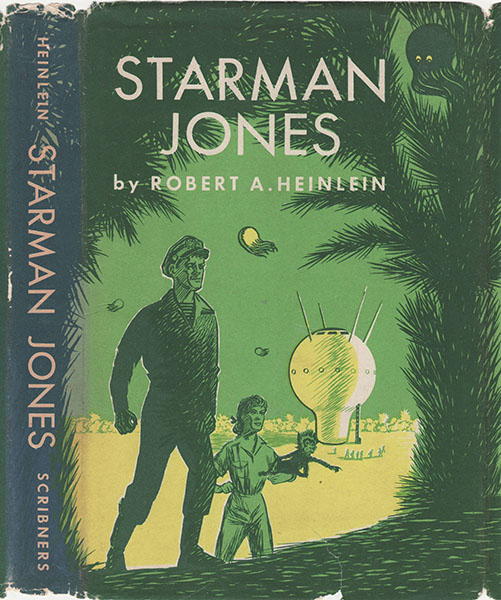
Starman Jones, a 1953 science fiction novel by Robert A. Heinlein, features a farm boy who wants to go to the stars. Charles Scribner's Sons published the book as part of the Heinlein juveniles series.
- The Final Architecture
series6 books2021
similar byfar futurescience fictionspace operaadventuroustensespaceother star systems+1 more
The Final Architecture is a series of science fiction novels by British writer Adrian Tchaikovsky. It contains the books Shards of Earth, Eyes of the Void, and Lords of Uncreation. The series focuses on a group of humans fighting against the mysterious Architects, who destroy inhabited planets. The series has been well-received critically, with Shards of Earth winning the 2021 BSFA Award for Best Novel. The entire series was a finalist for the 2024 Hugo Award for Best Series.
- Wolfling
Gordon R. Dicksonstandalone novel1969
similar byfar futureadventurousscience fictiontensespace operaspaceother star systems+1 more
From the flaps of the Baen/SFBC edition: "Is Earth merely the lost colony of a superior race? - She was well over six feet tall, and beautiful in a sculpted, abstract way. She had skin the color of white onyx, and her eyes... her eyes were large and feline - a startling lemon yellow in color. She was the Princess Afuan, one of the High-born, and she had chosen the Earthman Kim Keil to return to the Throne World with her - for she had decided that his performance in the bull-ring might amuse the Emperor. She didn't know that Jim was a bull-fighter only by virtue of six months' intensive training, nor that the bull was programmed - his behavior following and impressively fierce but unswerving pattern. Jim was just another wolfling to Afuan - a lesser being from a backward colony world. Jim, however, was keenly aware that he was playing a role, one which might prove to be extremely dangerous. Up until 10 years earlier, when their first ship had reached Alpha Centauri, the people of Earth hadn't even known that the vast Empire of human-occupied worlds existed. The discovery had been a profound shock. Had we evolved independently? Or were we merely descendants of the Empire's first space pioneers - a lost colony found at last, perhaps with devastating consequences? That's what Jim Keil had to find out. Chosen from among numerous highly qualified candidates - an anthropologist trained, mentally and physically, beyond the limits of his profession - it was his mission to observe the Throne World and the High-born... to determine whether or not they posed a threat to Earth. One thing was apparent from the start. The High-born were superior beings - physically taller and stronger than other humans, endowed with faster reflexes, superior mental capacity... and extraordinary technological resources. Their contempt for the new wolfling in their midst was open, their intrigues complex. An enormous gulf separated the people of the Throne World from Earthlings. But that gulf was not so wide that Jim couldn't recognize an enemy when he met one. Clearly, if he remained merely a passive observer of the High-born, he'd never survive among them."
- Revenger
series3 books2016
similar byfar futureadventurousscience fictionspace operaspaceother star systems+4 more
- Catteni Sequence
series5 books1970
completed
similar byfar futurescience fictionadventurousspace operaother star systems+4 more
The Catteni series is a tetralogy of science fiction novels by American writer Anne McCaffrey. In this universe, humans are slaves of aliens, the humanoid Catteni. Woven through all four of the books are details of the relationship between Kristin Bjornsen, a former slave, and Zainal, a renegade Catteni.
- Empire of Man
series4 books2001
similar byfar futureadventurousscience fictionspace operatensesurvivalother star systems
The Empire of Man is a series of science fiction books by David Weber and John Ringo published by Baen Books. It combines elements of space opera and military science fiction.
- Vatta
universe10 books2003
Start hereVatta's War · Start here
similar byfar futurescience fictionspace operaadventuroustensespaceother star systems+1 more
Get kicked out of the Academy and the family still hands you a ship. That is the arithmetic Kylara Vatta lives by. Born into Vatta Transport, Ltd. — a dynasty of interstellar traders who reckon their honor in delivered cargo and honored contracts — Ky wants a soldier's commission and gets a merchant hull instead. Then someone starts murdering her relatives and burning the ledgers, and the daughter learns that a trade fleet, armed and angry, is its own kind of war. This is military science fiction run on a merchant's books. The core cycle, Vatta's War, moves in five volumes — Trading in Danger, Marque and Reprisal, Engaging the Enemy, Command Decision, Victory Conditions — as piracy, a sabotaged faster-than-light communications network, and a scattered family push Ky from cautious captain to fleet commander. The later duology Vatta's Peace (Cold Welcome, Into the Fire) drops her, older and decorated, into a colder survival ordeal on her own homeworld. Moon writes clean, competent, procedural: supply lines and boarding actions, chains of command, the cost of a signature on a bad contract. Expect capable women, hard decisions costed to the last credit, and space combat that respects physics and paperwork alike. Begin at the beginning — Trading in Danger — and read straight through in publication order; the arc is chronological and cumulative, no side doors required.
- Nova
Samuel R. Delanystandalone novel1968
similar byfar futureadventurousscience fictionspace operaspaceother star systems
Nоva is a science fiction novel by American writer Samuel R. Delany published in 1968. The plot concerns the spaceship captain Lorq Von Ray's search for a nova, which will produce the essential power source Illyrion, and his vendetta with the Red family, who seek to kill him. Nominally space opera, it explores the politics and culture of a future where cyborg technology is universal, yet making major decisions can involve using tarot cards. It has strong mythological overtones, relating to both the Grail Quest and Jason's quest for the Golden Fleece.
- Moties
series4 books1974
part of CoDominium
similar byfar futurescience fictionspace operaspaceother star systems+2 more
Larry Niven and Jerry Pournelle's The Mote in God's Eye (1974) depicts humanity's first contact with an alien species, the Moties, set within the far-future interstellar setting of Pournelle's codominium future history. The Gripping Hand continues that first-contact crisis years later, and Outies, written by J. R. Pournelle, carries the story forward into a new generation. Together the three books trace an escalating encounter between human and Motie civilizations within the codominium universe.
- Imperial Galaxy
series2 books2012
similar byfar futurescience fictionspace operaadventurousspacefirst personother star systems+1 more
Prince Khemri has spent his life as one of ten thousand princes bred and trained by a sprawling galactic empire, expecting eventual rule -- until he learns just how disposable princes actually are, and how routinely they're assassinated by their own siblings. Garth Nix's A Confusion of Princes follows Khemri through the empire's ruthless military, its secret intelligence service, and a deadly, decades-long competition to determine who might one day take the throne. It's a single, self-contained space opera rather than an ongoing series.
- Tunnel in the Sky
Robert A. Heinleinstandalone novel1955
similar byfar futureadventurousscience fictiontensesurvivalother star systems+1 more
As the final test of a survivalist/explorer class, teenagers are dumped on an alien planet to use their skills while awaiting pickup. But something has gone wrong, and they find they are on their own.
- Keiko / Dark Run
series3 books2015
similar byfar futureadventurousspace operascience fictiontensespacespaceship+2 more
- The Stars My Destination
Alfred Besterstandalone novel1956
similar byfar futurescience fictionadventurousspace operasurvivalspaceother star systems
When a passing spaceship refuses to rescue the lone survivor from the drifting wreck of another ship, he dedicates his life to discovering who made that decision and exacting his revenge, in the process altering human history and his own character.
- Slow Train to Arcturus
Eric Flint & Dave Freerstandalone novel2008
similar byfar futurescience fictionadventuroustensespace operasurvivalspacespaceship+1 more
Sending a spaceship to rendezvous with an enormous vessel made up of a series of globular habitats approaching its star system, the aliens find a savage race calling themselves "humans" who promptly slaughter the exploration team, except for a single survivor who escapes to another habitat, where he finds more friendly humans whose help he requires to get back to his own ship.
- Old Man's War
series16 books2005
similar byfar futurescience fictionadventurousspace operaspaceother star systems+2 more
The Old Man's War series is a series of science fiction novels by John Scalzi. The first book in the series, Old Man's War, was first published in 2005 by Tor Books, and was nominated for the Hugo Award for Best Novel in 2006. In 2026 it was a finalist for the Hugo Award for Best Series.
- Dune Universe
universe78 books1963
Start hereDune · Start here
similar byfar futurescience fictionspace operaother star systems+1 more
Arrakis. Dune. The desert planet, where empire runs on a single substance: the spice melange, which folds space, prolongs life, and unlocks prescience, and which exists nowhere else in the known universe. Frank Herbert's saga is a meditation dressed as an adventure — feudal houses and a secret sisterhood, engineered messiahs and the patient ecology of a world without water, all turning on the terrible gravity of who commands the spice. It reads like scripture and schemes like a war room, ten thousand years hence, among people who have outlawed the thinking machine and made instruments of themselves instead. At its heart stand Herbert's original six — Dune, Dune Messiah, Children of Dune, God Emperor of Dune, Heretics of Dune, Chapterhouse: Dune — a single deepening arc across millennia, arguing the whole way between prophecy and free will. Around that spine his son Brian Herbert and Kevin J. Anderson have raised a vast prequel architecture: Prelude to Dune, tracing the great houses a generation before Paul; Legends of Dune, reaching back to the crusade that broke the machines; the Schools of Dune cycle on the founding of Bene Gesserit, Mentat, and Navigator; the Caladan Trilogy and Heroes of Dune filling years the originals left in shadow. Many hands, dozens of volumes, one desert. What sets Dune apart is its refusal of the simple: religion is manufactured, heroes are hazards, and the sand itself — worm, water, ecology — acts as a political power. Begin where the universe did, with Frank Herbert's Dune (1965), and read the original six in order; you need nothing else to feel the full weight. The prequels are a country to explore afterward, taken by era. Beginnings are delicate times.
- Legion of Space
series7 books1947
completed
similar byfar futureadventurousscience fictionspace operaspaceother star systems+1 more
The Legion of Space is a space opera science fiction series by American writer Jack Williamson. The story takes place in an era when humans have colonized the Solar System but dare not go farther, as the first extra-solar expedition to Barnard's Star failed and the survivors came back as babbling, grotesque, diseased madmen. They spoke of a gigantic planet, populated by ferocious animals and the single city left of the evil "Medusae". The Medusae bear a vague resemblance to jellyfish, but are actually elephant-sized, four-eyed, flying beings with hundreds of tentacles. The Medusae cannot speak, and communicate with one another via a microwave code.
- Honor Harrington
series14 books1993
part of Honorverse
similar byfar futurescience fictionspace operatensespaceother star systems+1 more
David Weber's Honor Harrington novels follow the title character's rise through the Manticoran navy in the 'Honorverse,' a space-opera setting built around Age-of-Sail-style naval combat, interstellar politics and a decades-long war between rival star nations. Beginning with On Basilisk Station, the core series runs to fourteen books, alongside spin-off subseries, prequels and shared-world anthologies also set in the Honorverse. It's one of the longest-running modern military science fiction series, published by Baen.
- The Interdependency
series3 books2017
similar byfar futurescience fictionspace operaadventuroustense+4 more
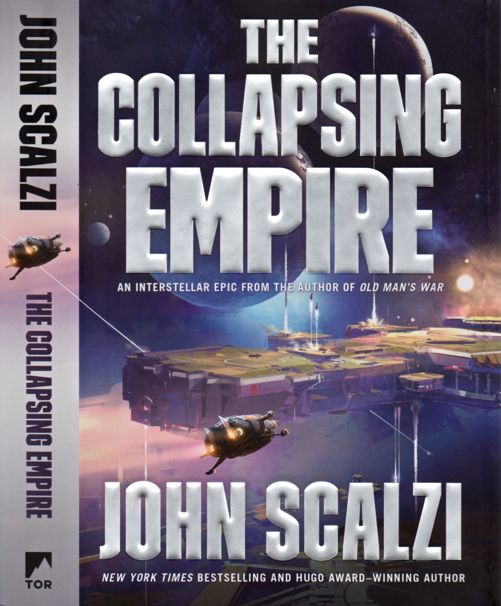
The Interdependency follows the collapse of a wormhole-linked network called the Flow that connects humanity's scattered, otherwise-uninhabitable colonies, forcing an emperox, a scientist studying the collapse, and a scheming trading family to confront a looming interstellar crisis. John Scalzi's trilogy, beginning with The Collapsing Empire, follows the political and personal fallout as the empire's foundations unravel.
- Have Space Suit - Will Travel
Robert A. Heinleinstandalone novel1958
similar byadventurousscience fictiontensespace operasurvivalfirst personspace+1 more
From the back cover of the Del Rey 9th printing: "Skyjacked - Everything happened at once. One minute Kip Russell was walking about in his own backyard, testing out an old space suit and dreaming about going to the moon - and the next he was out cold and the captive of an insidious space pirate. The whole thing seemed like a very bad dream until he discovered he wasn't the only prisoner on board. Then the reality of the situation became inescapable. He - along with the daughter of a world-renowned scientist and a beautiful creature from an alien planet - had been skyjacked by a monstrous extraterrestrial and they were on their way to the Moon... a journey toward a fate worse than death!"