More like Groovy
anchored on:science fictionprison escapealternate earthadventurousalternate historyzombie horror+3 more
but
- Eden (Harry Harrison)
series5 books1984
completed
similar bysurvivalalternate earthscience fictionalternate history+2 more
Harry Harrison's Eden trilogy imagines an Earth where the dinosaurs never died out, evolving instead into the Yilane, a technologically advanced reptilian civilization that shares the planet uneasily with early humans. West of Eden (1984) introduces the clash between the two species; Winter in Eden and Return to Eden carry it forward as a shifting climate forces both sides to adapt or die. It's an alternate-evolution saga more than a conventional dinosaur adventure.
- The Hunger Games
series3 books2008
part of The Hunger Games Universe
similar bytotalitarianismsurvivalscience fictiondarknorth americadystopiapost-apocalyptic
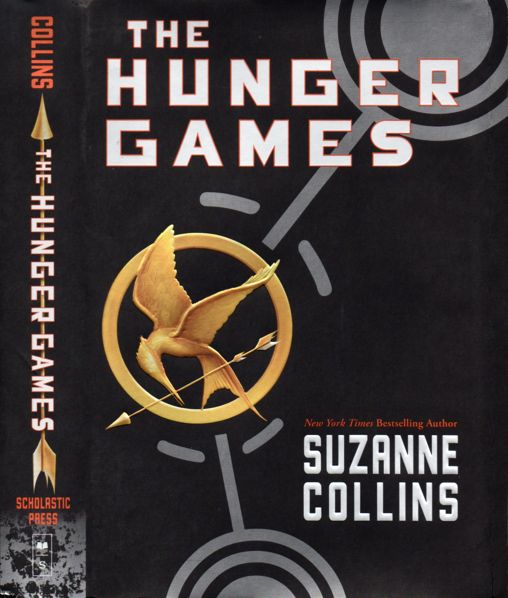
The Hunger Games is a series of young adult dystopian novels written by American author Suzanne Collins. The series consists of a trilogy that follows teenage protagonist Katniss Everdeen, as well as two prequels. The Hunger Games universe is a dystopia set in Panem, a post-apocalyptic North American country consisting of the wealthy Capitol and 12 districts in varying states of poverty. As punishment for rebellion, the Capitol hosts an annual battle royale competition called The Hunger Games. Each of the 12 districts must send two children between the ages of 12 and 18 to participate, and the last surviving child is dubbed the victor.
- Damnation Alley
Roger Zelaznystandalone novel1969
similar byadventuroussurvivalscience fictionnorth americapost-apocalyptic+1 more
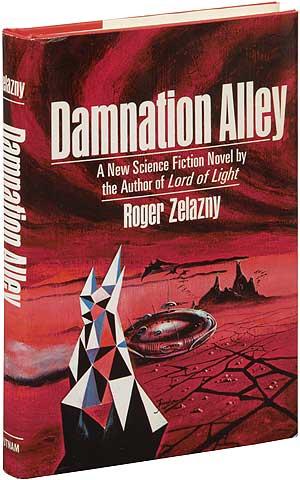
Damnation Alley is a 1969 science fiction novel by American writer Roger Zelazny, based on a novella of the same name published in 1967. A film adaptation of the novel was released in 1977.
- The Hunger Games Universe
universe5 books2008
Start hereThe Hunger Games · Start here
similar bysurvivaltotalitarianismscience fictiondarknorth americadystopia+1 more
Panem, they call it now — a nation raised on the drowned bones of North America, a glittering Capitol ringed by twelve districts it once starved into obedience. Every year the Capitol collects its debt in children: two tributes from each district, drawn by lottery, dropped into an engineered arena, and made to kill one another on live television while the whole country is required to watch. This is the Hunger Games — entertainment, punishment, and government at once. Suzanne Collins tells it in a compact, unified body of work. The founding trilogy — The Hunger Games, Catching Fire, and Mockingjay — follows Katniss Everdeen, a girl from the coal-mining District 12 who volunteers in her sister's place and becomes something the Capitol never scripted. Two prequels reach back into the same machinery: The Ballad of Songbirds and Snakes traces a young Coriolanus Snow long before he is President, and Sunrise on the Reaping returns to District 12 a generation ahead of Katniss. Begin with the trilogy, in order — it is Katniss's voice, close and present-tense, that makes Panem breathe, and the prequels land hardest once you know how her story ends. Beneath the spectacle sits one steady, uncomfortable question: who profits when we agree to look away.
- The Sound of His Horn
Sarbanstandalone novel1952
similar bysurvivaltotalitarianismalternate earthscience fictiondarkalternate historydystopia
The Sound of His Horn is a 1952 dystopian time travel/alternative history novel by the senior British diplomat John William Wall, written under the pseudonym Sarban. The novel has been included in several lists of the greatest fantasy novels of all time.
- Hello America
J. G. Ballardstandalone novel1981
similar byadventuroussurvivalscience fictionnorth americapost-apocalyptic+1 more
Hello America is a science fiction novel by British writer J. G. Ballard, published in 1981. First edition cover designed by Bill Botten. The plot follows an expedition to a North America rendered uninhabitable by an ecological disaster following an energy crisis.
- Have Space Suit - Will Travel
Robert A. Heinleinstandalone novel1958
similar byadventuroussurvivalscience fictionnorth america
From the back cover of the Del Rey 9th printing: "Skyjacked - Everything happened at once. One minute Kip Russell was walking about in his own backyard, testing out an old space suit and dreaming about going to the moon - and the next he was out cold and the captive of an insidious space pirate. The whole thing seemed like a very bad dream until he discovered he wasn't the only prisoner on board. Then the reality of the situation became inescapable. He - along with the daughter of a world-renowned scientist and a beautiful creature from an alien planet - had been skyjacked by a monstrous extraterrestrial and they were on their way to the Moon... a journey toward a fate worse than death!"
- Earthseed
series7 books1993
similar bysurvivalscience fictiondarknorth americadystopiapost-apocalyptic+1 more
Octavia E. Butler's Earthseed novels, Parable of the Sower and Parable of the Talents, follow Lauren Olamina as she survives the collapse of a climate-ravaged, near-future United States and founds a belief system built on the idea that "God is Change." The two-book series was left unfinished at Butler's death; a planned third novel, Parable of the Trickster, was never completed. Later graphic-novel adaptations retell the same two stories rather than continuing the narrative.
- The Long Walk
Stephen Kingstandalone novel1979
similar bysurvivaltotalitarianismalternate earthdarknorth americascience fictiondystopia
The Long Walk is a dystopian horror novel by American writer Stephen King, published in 1979, under the pseudonym Richard Bachman. Set in a dystopian alternative version of the United States ruled by a totalitarian regime, the plot follows the contestants of a grueling annual walking contest. While not the first of King's novels to be published, The Long Walk was the first novel he wrote, having begun it in 1966–67 during his freshman year at the University of Maine, some eight years before his first published novel, Carrie, was released in 1974.
- The Running Man
Stephen Kingstandalone novel1982
similar bysurvivaltotalitarianismscience fictiondarknorth americadystopia
The Running Man is a dystopian thriller novel by American writer Stephen King, first published under the pseudonym Richard Bachman in 1982 as a paperback original. It was collected in 1985 in the omnibus The Bachman Books. The novel is set in a dystopian United States during the year 2025, in which the nation's economy is in ruins and world violence is rising. The story follows protagonist Ben Richards as he participates in the reality show The Running Man, in which contestants win money by evading a team of hitmen sent to kill them.
- The Iron Dream
Norman Spinradstandalone novel1972
similar bytotalitarianismalternate earthscience fictiondarkalternate history+1 more
Contains "The Lord of the Swastika", a Science Fiction Novel by Adolf Hitler, plus an afterword by Homer Whipple. In this universe, Adolf Hitler (1889-1953) emigrated to the US in 1919 and became a popular science fiction author, fan and illustrator. "The Lord of the Swastika" won a posthumous Hugo in 1955.
- The Stars My Destination
Alfred Besterstandalone novel1956
similar byadventuroussurvivalscience fictiondark
When a passing spaceship refuses to rescue the lone survivor from the drifting wreck of another ship, he dedicates his life to discovering who made that decision and exacting his revenge, in the process altering human history and his own character.
- Pax / Astra
series2 books1954
completed
similar byadventurousscience fictionsurvival+3 more
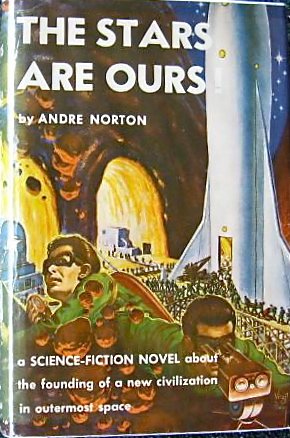
Andre Norton's The Stars Are Ours! (1954) and its sequel Star Born (1957) follow a group of scientists and their families who flee a repressive future Earth to colonize a distant world they name Astra, and then the next generation, who must contend with that world's original inhabitants. Star Flight appears to be a later omnibus or reissue rather than a third original novel.
- Conquistador
S. M. Stirlingstandalone novel2003
similar byadventurousalternate earthscience fictionnorth americaalternate history+1 more
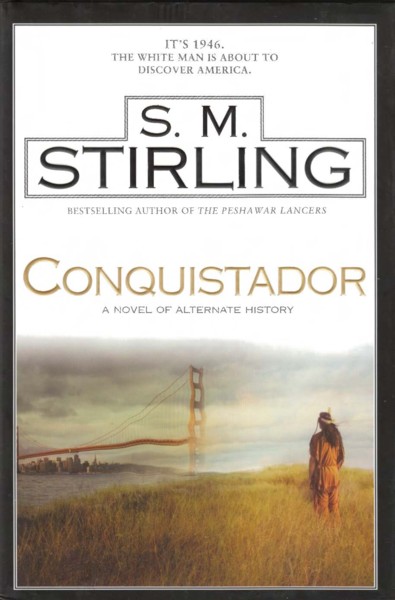
From the dust jacket flaps of the first edition: Oakland, California, 1946. Ex-soldier John Rolfe, newly back from the Pacific, is about to make a fabulous discovery. It happens with a flip of his shortwave radio switch, a thunder crack of sound, and a blinding light. He blinks his eyes to discover a portal to an alternate world where Europeans have never set foot on the land he knows as America. Able to return a will to the modern world, Rolfe summons the only people with whom he is willing to share his discovery: his war buddies. And tells them to bring their families... What mistakes would you repeat? Los Angeles, twenty-first century. Fish and Game warden Tom Christiansen is involved in the bust of a smuggling operation. What he turns up is something he never anticipated: a photo of authentic Aztec priests decked out in Grateful Dead T-shirts, and a live condor from a gene pool that doesn't correspond to any know in captivity or the wild. These finds soon lead to a woman named Adrienne Rolfe - and a secret that's been hidden for sixty years. As danger brews on both sides, two realities are threatened, and so to are the lives of everyone who crosses the boundary between them...
- Hungry City Chronicles / Mortal Engines
series5 books2001
part of Mortal Engines Universe
similar byadventuroussurvivalscience fictionpost-apocalyptic+1 more
The Mortal Engines Quartet, also known as the Predator Cities Quartet, is a series of epic young adult science fiction novels by the English novelist and illustrator Philip Reeve. He began the first volume of the series, Mortal Engines, in the 1980s, and it was published in 2001. Reeve then published three further novels, Predator's Gold (2003), Infernal Devices (2005), and A Darkling Plain (2006).
- The Status Civilization
Robert Sheckleystandalone novel1960
similar byprison escapesurvivalscience fictiondarkdystopia
"Will Barrent had no memory of his crime ... but he found himself shipped across space to a brutal prison-planet. On Omega, his only chance to advance himself -- and stay alive -- is to commit an endless series of violent crimes. The average inmate's life expectancy from time of arrival is three years. Can Barrett survive, escape, and return to Earth to clear his name?" - From the cover of the 2007 Wildside paperback edition.
- Fahrenheit 451
series2 books1951
completed
similar bytotalitarianismscience fictionnorth americadystopia+1 more
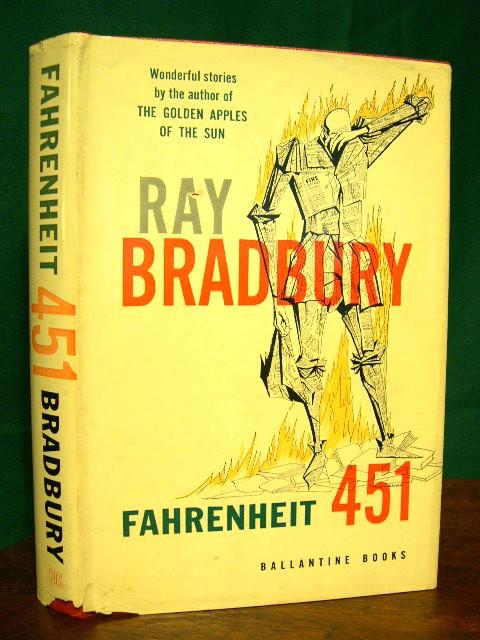
Fahrenheit 451 began life as "The Fireman," a novella Ray Bradbury published in 1951, which he then expanded into the full novel released in 1953 under its now-famous title. Set in a future where books are outlawed and firemen exist to burn them, it follows fireman Guy Montag as doubts about his job push him toward the very literature he's supposed to destroy. The novella and novel are one story's evolution rather than two separate books.
- Watchers
Dean R. Koontzstandalone novel1987
similar byadventuroussurvivalscience fictionnorth america
This probably qualifies as a science-based adventure rather than a science fiction novel. The premise, and only speculative fiction element, is that a U.S. government funded laboratory creates a golden retriever that's as intelligent as a human for use in intelligence gathering and also creates a monkey hybrid that's intended for a military police dog role and as a killing machine on battlefields. The animals escape and the story plays out as a straight adventure novel with a good chunk of romance thrown in.
- After Doomsday
Poul Andersonstandalone novel1962
similar byadventuroussurvivalscience fictionpost-apocalyptic+1 more
After Doomsday is a science fiction novel by American writer Poul Anderson. It was published as a complete novel in 1962, having been serialized as The Day after Doomsday in the magazine Galaxy, between December 1961 and February 1962.
- Tunnel in the Sky
Robert A. Heinleinstandalone novel1955
similar byadventuroussurvivalscience fiction
As the final test of a survivalist/explorer class, teenagers are dumped on an alien planet to use their skills while awaiting pickup. But something has gone wrong, and they find they are on their own.
- Burning Paradise
Robert Charles Wilsonstandalone novel2013
similar bysurvivalalternate earthscience fictiondarknorth americaalternate history
"Cassie Klyne, nineteen years old, lives in the United States in the year 2015--but it's not our United States, and it's not our 2015. Cassie's world has been at peace since the Great Armistice of 1918. There was no World War II, no Great Depression. Poverty is declining, prosperity is increasing everywhere; social instability is rare. But Cassie knows the world isn't what it seems. Her parents were part of a group who gradually discovered the awful truth: that for decades--back to the dawn of radio communications--human progress has been interfered with, made more peaceful and benign, by an extraterrestrial entity. That by interfering with our communications, this entity has tweaked history in massive and subtle ways. That humanity is, for purposes unknown, being farmed. Cassie's parents were killed for this knowledge, along with most of the other members of their group. Since then, the survivors have scattered and gone into hiding. Cassie and her younger brother Thomas now live with her aunt Nerissa, who shares these dangerous secrets. Others live nearby. For eight years they have attempted to lead unexceptional lives in order to escape detection. The tactic has worked. Until now. Because the killers are back. And they're not human"--
- Terminal World
Alastair Reynoldsstandalone novel2010
similar byadventuroussurvivalscience fictiondarkpost-apocalyptic
Terminal World is a 2010 science fiction novel by Welsh author Alastair Reynolds. It is a standalone novel set in the distant future, which chronicles the journey of Quillon, a pathologist forced into exile. The Gollancz hardcover edition of the book was published in March 2010 in the United Kingdom. The Ace Books hardcover edition was published in June 2010 in the United States.
- Level 7
Mordecai Roshwaldstandalone novel1959
similar bysurvivaltotalitarianismscience fictiondarkdystopiapost-apocalyptic
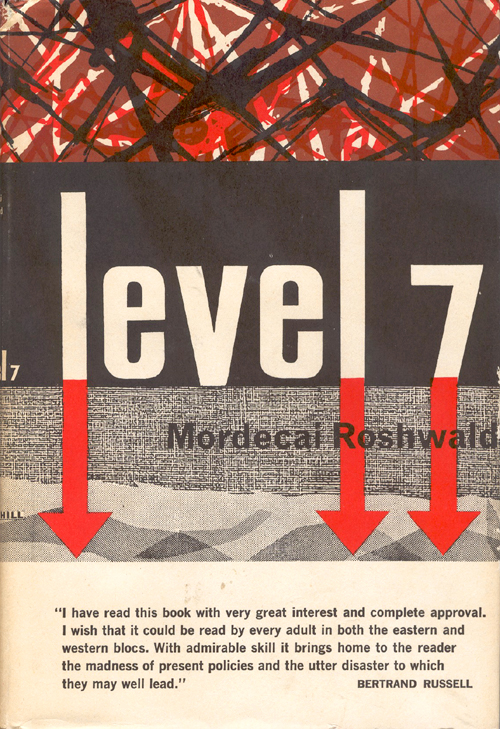
Level 7 is a 1959 science fiction novel by American writer Mordecai Roshwald. It is told from the first-person perspective of a modern soldier, X-127, living in the underground military complex Level 7, where he and several hundred others are expected to reside permanently. X-127 fulfills the role of 'push-button' offensive initiator of his nation's nuclear weapons capacity against an unspecified enemy. X-127 narrates life within a deep shelter before, during and after a nuclear war that wipes out the human species.
- The Change / The Event
series41 books1998
similar byadventurousnorth americascience fictionpost-apocalyptic+3 more
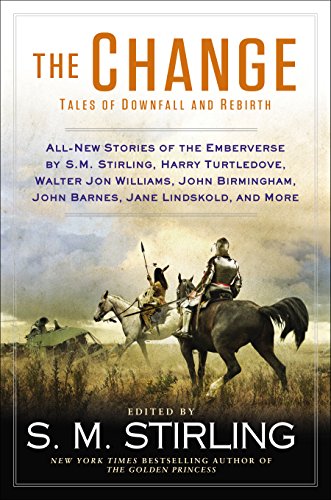
The Change: Tales of Downfall and Rebirth is a shared-world anthology of stories set in the years right after a mysterious global event instantly disables gunpowder, electricity, and combustion engines, the founding premise of S. M. Stirling's Emberverse. Sixteen different authors, coordinated by Stirling, each contribute stories set in various corners of the suddenly de-industrialized world as survivors scramble to rebuild. It's a companion volume to the Change/Emberverse novels rather than a novel itself.