More like Head Shots
anchored on:science fictionnear futureshort story cycleidentityreflective
but
- Stranger in a Strange Land
Robert A. Heinleinstandalone novel1961
similar byscience fictionidentityreflectivenear futurechallengingour world
Stranger in a Strange Land is a 1961 science fiction novel by the American author Robert A. Heinlein. It tells the story of Valentine Michael Smith, a human who comes to Earth in early adulthood after being born on the planet Mars and raised by Martians, and explores his interaction with and eventual transformation of Terran culture.
- Childhood's End
Arthur C. Clarkestandalone novel1953
similar byscience fictionidentityreflectivenear futureour world
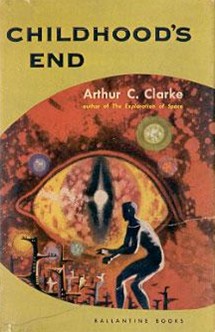
Childhood's End is a 1953 science fiction novel by the British author Arthur C. Clarke. The story follows a peaceful alien invasion of Earth by mysterious Overlords, whose arrival begins decades of apparent utopia under indirect alien rule, at the cost of human identity and culture.
- I Will Fear No Evil
Robert A. Heinleinstandalone novel1970
similar byscience fictionidentityreflectivenear futureour world
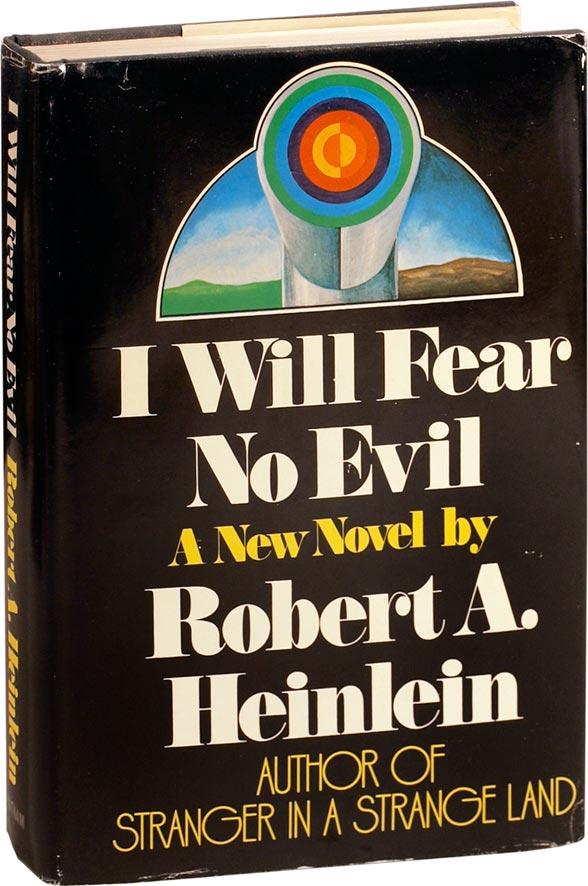
I Will Fear No Evil is a science fiction novel by American writer Robert A. Heinlein, originally serialised in Galaxy and published in hardcover in 1970. The title is taken from Psalm 23:4.
- Genesis
Bernard Beckettstandalone novel2006
similar byscience fictionidentityreflectivenear futureartificial intelligencechallenging
Genesis (2006) is a philosophical science fiction novel by New Zealand author Bernard Beckett. It won the 2007 Esther Glen Award for children's literature, and the 2007 New Zealand Post Book Awards for Children and Young Adults. As of 2008 it has been published in 22 countries.
- Blade Runner Universe
series6 books1968
similar byscience fictionidentitynear future+2 more
Philip K. Dick's 1968 novel Do Androids Dream of Electric Sheep? follows bounty hunter Rick Deckard as he tracks escaped androids through an irradiated, near-abandoned San Francisco, using the hunt to probe questions of empathy and what separates human from machine. The novel became the basis for Ridley Scott's 1982 film Blade Runner, and Marvel Comics later published an illustrated adaptation of that film. Together the two trace the story's path from prose original to screen and comic-page adaptation.
- More Than Human
Theodore Sturgeonstandalone novel1953
similar byscience fictionidentityreflectiveour worldshort story cycle
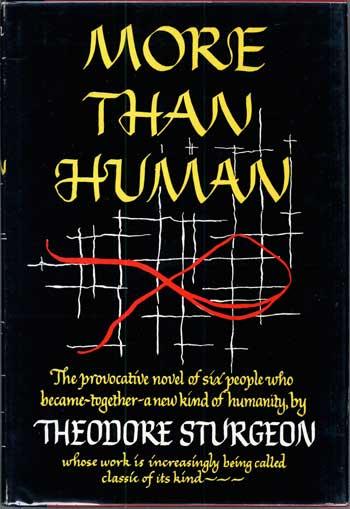
More Than Human is a 1953 science fiction fix-up novel by American writer Theodore Sturgeon. It is a revision and expansion of his 1952 novella Baby Is Three, which is bracketed by two additional parts written for the novel, "The Fabulous Idiot" and "Morality". It won the 1954 International Fantasy Award, which was also given to works in science fiction. It was additionally nominated in 2004 for a "Retro Hugo" award for the year 1954. Science fiction critic and editor David Pringle included it in his book Science Fiction: The 100 Best Novels.
- We Can Build You
Philip K. Dickstandalone novel1972
similar byscience fictionidentityreflectivenear futureour world
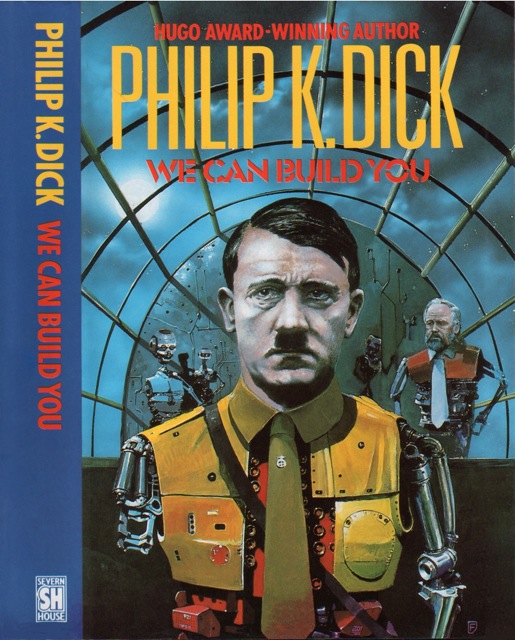
We Can Build You is a 1972 science fiction novel by American writer Philip K. Dick. Written in 1962 as The First in Our Family, it remained unpublished until appearing in serial form as A. Lincoln, Simulacrum in the November 1969 and January 1970 issues of Amazing Stories magazine, re-titled by editor Ted White. The novel was issued as a mass market paperback original by DAW Books in 1972, its final title provided by publisher Donald A. Wollheim. Its first hardcover edition was published in Italy in 1976, and Vintage issued a trade paperback in 1994.
- Void Star
Zachary Masonstandalone novel2017
similar byscience fictionidentityreflectivenear futureartificial intelligencechallengingour world
Void Star is a 2017 near-future science fiction novel by American writer Zachary Mason. It is his second novel, published after The Lost Books of the Odyssey. Set in a near-future San Francisco, the book explores themes of artificial intelligence, philosophy, linguistics and immortality.
- Never Let Me Go
Kazuo Ishigurostandalone novel2005
similar byscience fictionidentityreflectivenear futureour world
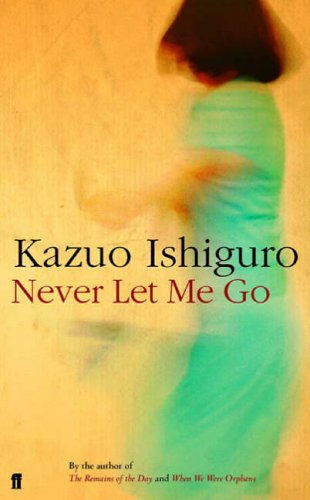
Never Let Me Go is a 2005 science fiction novel by the British author Kazuo Ishiguro. It was shortlisted for the 2005 Man Booker Prize, for the 2006 Arthur C. Clarke Award and the 2005 National Book Critics Circle Award. Time magazine named it the best novel of 2005. It included the novel in its '100 Best English-language novels published since 1923—the beginning of TIME'. It also received an ALA Alex Award in 2006. A film adaptation directed by Mark Romanek was released in 2010.
- The Collected Stories of Philip K. Dick
series11 books1987
completed
similar byscience fictionidentityour worldshort story cycle+4 more
The Collected Stories of Philip K. Dick is a collection of 118 science fiction stories by American writer Philip K. Dick. It was first published by Underwood-Miller in 1987 as a five volume set. See Philip K. Dick bibliography for information about the mass market reprints.
- Triton
Samuel R. Delanystandalone novel1976
similar byscience fictionidentityreflectivechallengingother star systems+1 more
Trouble on Triton: An Ambiguous Heterotopia (1976) is a science fiction novel by American writer Samuel R. Delany. It was nominated for the 1976 Nebula Award for Best Novel, and was shortlisted for a retrospective James Tiptree, Jr. Award in 1995. It was originally published under the shorter title Triton.
- The Speed of Dark
Elizabeth Moonstandalone novel2002
similar byscience fictionidentityreflectivenear futureour world
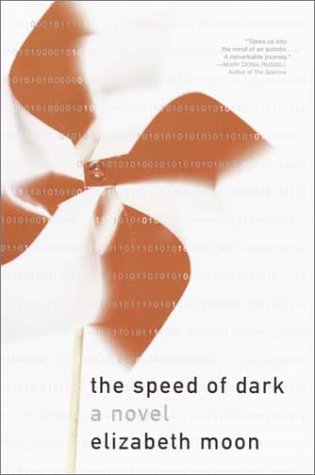
From the Penguin Random House website In the near future, disease will be a condition of the past. Most genetic defects will be removed at birth; the remaining during infancy. Lou Arrendale, a high-functioning autistic adult, is a member of the lost generation, born at the wrong time to reap the rewards of medical science. He lives a low-key, independent life. But then he is offered a chance to try a brand-new experimental "cure" for his condition. With this treatment Lou would think and act and be just like everyone else. But if he was suddenly free of autism, would he still be himself? Would he still love the same classical music — with its complications and resolutions? Would he still see the same colors and patterns in the world—shades and hues that others cannot see? Most important, would he still love Marjory, a woman who may never be able to reciprocate his feelings? Now Lou must decide if he should submit to a surgery that might completely change the way he views the world ... and the very essence of who he is.
- Venus Plus X
Theodore Sturgeonstandalone novel1960
similar byscience fictionidentityreflectivechallenging+1 more
Charlie Johns wakes in a featureless silver room with no memory of how he got there and a watch that's inexplicably running backward. He's been brought, how and by whom is never explained to him, to Ledom, an isolated, technologically advanced society whose members are all both male and female and have done away with fixed sex roles entirely. Guides walk him through Ledom's customs and machinery while making clear he's there to judge them before he can go home. Interwoven with Charlie's tour are chapters following an ordinary mid-century American family, setting the utopia against the world it's implicitly critiquing. Theodore Sturgeon's provocative novel about gender and social design.
- A Time of Changes
Robert Silverbergstandalone novel1971
similar byscience fictionidentityreflectiveother star systems+1 more
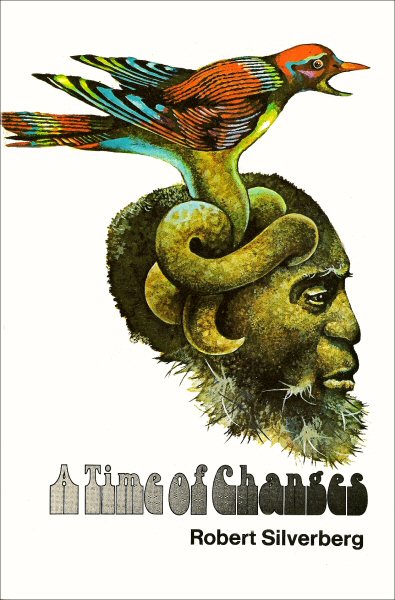
A Time of Changes is a 1971 science fiction novel by American writer Robert Silverberg. It won the Nebula Award for that year, and was also nominated for the 1972 Hugo and Locus Awards.
- Bête
Adam Robertsstandalone novel2014
similar byscience fictionidentityreflectivenear futureartificial intelligencechallengingour world
A man is about to kill a cow. He discusses life and death and his right to kill with the compliant animal. He begins to suspect he may be about to commit murder. But kills anyway. It began when the animal rights movement injected domestic animals with artificial intelligences in bid to have the status of animals realigned by the international court of human rights. But what is an animal that can talk? Where does its intelligence end at its machine intelligence begin? And where might its soul reside?
- The Dream Master
Roger Zelaznystandalone novel1966
similar byscience fictionidentitynear futureour world+1 more
The Dream Master (1966) is a science fiction novel by American writer Roger Zelazny, based on the novella He Who Shapes. Zelazny's original title was The Ides of Octember. He Who Shapes won the 1965 Nebula Award for Best Novella.
- Service Model
series3 books2024
similar byscience fictionidentitynear futureartificial intelligenceour world+1 more
- Holy Fire
Bruce Sterlingstandalone novel1996
similar byscience fictionidentityreflectivenear future+1 more
Holy Fire is a 1996 science fiction novel by American writer Bruce Sterling. It was nominated for the British Science Fiction Award in 1996, and for both the Hugo and Locus Awards in 1997.
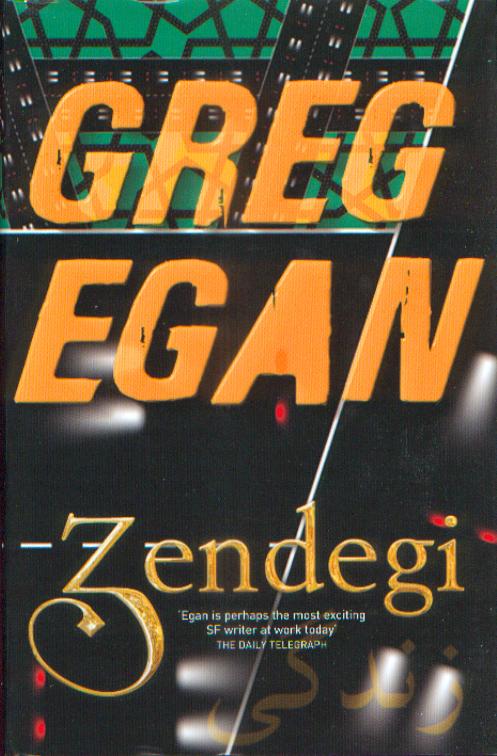
- Zendegi
Greg Eganstandalone novel2010
similar byscience fictionidentityreflectivenear futureartificial intelligence
Zendegi is a science fiction novel by Australian author Greg Egan, first published in the United Kingdom by Gollancz in June 2010. It is set in Iran in the near future and deals with mapping the human brain, virtual reality and the liberalization of Iran. The title of the book means "life" in Persian; the name of the virtual reality system featured in the story is Zendegi-ye Behtar, Persian for "better life".
- The Light of Other Days
Arthur C. Clarke & Stephen Baxterstandalone novel2000
similar byscience fictionnear futurechallengingour world+2 more
An industrialist devises a technique to use tiny wormholes as light pipes to enable viewing of any event anywhere; and subsequently it becomes possible to use them to view any event in the past as well. The effects on society are enormous.
- Imperial Radch
series7 books2012
part of Radchaai Universe
similar byscience fictionidentityartificial intelligenceother star systems+1 more
Ann Leckie's Imperial Radch trilogy (Ancillary Justice, Ancillary Sword, Ancillary Mercy, 2013-2015) follows Breq, the sole surviving fragment of an AI that once inhabited both a troop-transport starship and dozens of soldier bodies, now alone and hunting for revenge inside the vast, expansionist Radch empire. Breq's quest widens across the trilogy into a conflict with the empire's own fractured ruler, and the books use her alien difficulty perceiving gender to unsettle the space-opera conventions around her.
- VALIS
series4 books1981
completed
similar byscience fictionidentityreflectivechallenging+1 more
The VALIS trilogy is a set of science fiction/philosophical novels by author Philip K. Dick which include VALIS (1981), The Divine Invasion (1981), and The Transmigration of Timothy Archer (1982). Dick's first novel about the VALIS concept originally titled "VALISystem A", was published as Radio Free Albemuth after Dick's death in 1985.
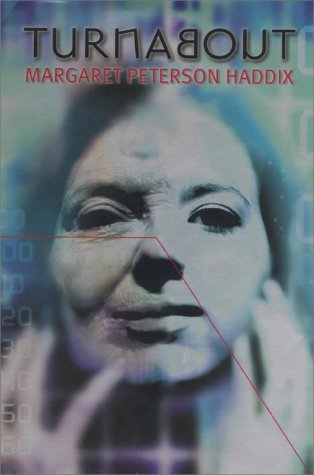
- Turnabout
Margaret Peterson Haddixstandalone novel2000
similar byscience fictionidentityreflectivenear futureour world
Turnabout is a novel by Margaret Peterson Haddix, set in the future. It was first published in 2000 by the Aladdin division of Simon & Schuster, Inc. The novel switches between 2002 and 2085 by chapter.