More like Heist
anchored on:fantasysecondary world
but
- The Old Kingdom / Abhorsen milieu
series11 books1995
similar byfantasysecondary world+1 more
The Old Kingdom, or Abhorsen in North America and the UK, is a fantasy series written by Australian author Garth Nix. It originated in 1995 with the novel Sabriel and has continued in the novels Lirael (2001), Abhorsen (2003), Goldenhand (2016), and Terciel & Elinor (2021), as well as a prequel novel titled Clariel (2014). The Old Kingdom also consists of the novella The Creature in the Case (2005) and various other short fiction.
- The Hobbit
series2 books1937
completed
part of Tolkien's legendarium
similar byfantasysecondary worldadventurous+1 more
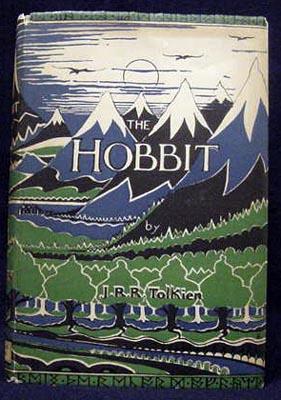
The Hobbit (1937) is J. R. R. Tolkien's children's fantasy novel following the reluctant burglar Bilbo Baggins, who joins a company of dwarves and the wizard Gandalf on a journey to reclaim treasure guarded by the dragon Smaug. It stands as a complete adventure on its own, but shares its setting with the rest of Tolkien's legendarium and leads into the events of The Lord of the Rings.
- Earthsea Cycle
series18 books1964
completed
part of Earthsea
similar byfantasywizardssecondary world
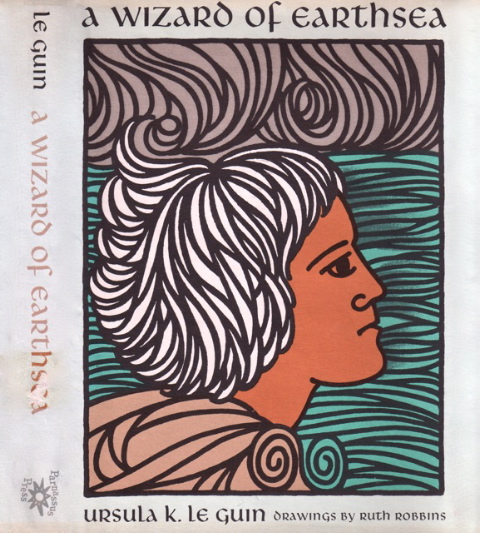
The Earthsea Cycle, also known as Earthsea, is a series of high fantasy books written by American author Ursula K. Le Guin. Beginning with A Wizard of Earthsea (1968), The Tombs of Atuan (1970), and The Farthest Shore (1972), the series was continued in Tehanu (1990), and Tales from Earthsea and The Other Wind. In 2018, all the novels and short stories were published in a single volume, The Books of Earthsea: The Complete Illustrated Edition, with artwork by Charles Vess.
- The Traitor Spy Trilogy
series3 books2010
part of Kyralia series
similar byfantasywizardssecondary worldadventurous+1 more
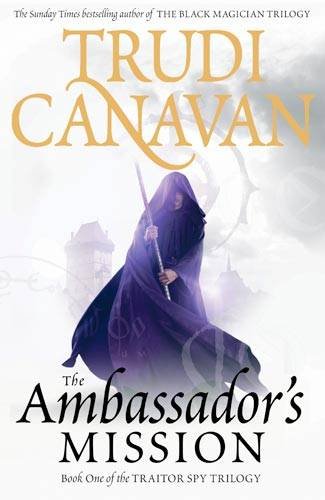
Trudi Canavan is an Australian writer of fantasy novels, best known for her best-selling fantasy trilogies The Black Magician and Age of the Five. While establishing her writing career she worked as a graphic designer. She completed her third trilogy, The Traitor Spy trilogy, in August 2012 with The Traitor Queen. Subsequently, Canavan has written a series called Millennium's Rule, with a completely new setting consisting of multiple worlds which characters can cross between. Though originally planned as a trilogy, a fourth and final book in the Millennium's Rule series was published.
- Six of Crows
series3 books2015
part of Grishaverse
similar byfantasytenseheistsecondary world
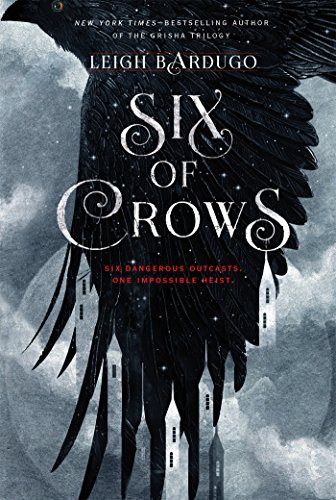
Leigh Bardugo's Six of Crows duology (2015-2016) follows a crew of six criminal teenagers in Ketterdam, a city modeled on the Dutch Republic, as they pull off a near-impossible heist and then deal with its fallout. Told from multiple points of view, the books lean on the found-family bond between the crew members as much as the caper plotting, and sit within Bardugo's wider Grishaverse alongside her Shadow and Bone books.
- Elenium
series3 books1989
completed
part of Sparhawk
similar byfantasysecondary worldadventurous+1 more
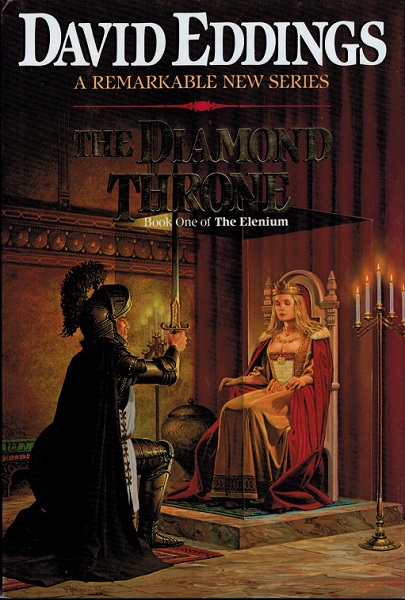
The Elenium is a series of fantasy novels by American writer David Eddings. The series consists of three volumes: The Diamond Throne, The Ruby Knight, and The Sapphire Rose. The series is followed by The Tamuli. The Elenium is Eddings' third fantasy series.
- The Immortals
series6 books1992
part of Tortall
similar byfantasywizardssecondary worldadventurous+1 more
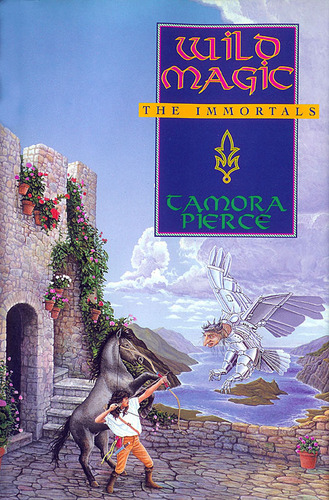
Tamora Pierce's Immortals quartet follows Daine, a young woman whose 'wild magic' lets her communicate with and shapeshift among animals, as she's drawn into the kingdom of Tortall's defense against immortal creatures -- griffins, dragons and darker things -- released back into the world after centuries sealed away. Beginning with Wild Magic, the four books pair Daine's personal coming-of-age with an escalating magical threat, and connect to Pierce's earlier Song of the Lioness quartet through several shared characters.
- The Riftwar Universe
universe44 books1982
Start hereRiftwar Saga · Start here
similar byfantasysecondary world+2 more
On the world of Midkemia a tear opens in the air itself, a rift hung between stars, and through it march the armies of an empire from another world entirely. So begins the chronicle Raymond E. Feist has kept for three decades: the tale of Pug, a castle kitchen boy apprenticed to a magician on the very day the invasion lands, and of Tomas, his friend, who inherits the armor and the ancient fury of a dead dragon-lord. Around these two the Riftwar Cycle turns, widening book by book from one besieged frontier keep into the whole history of a world of kingdoms, guilds, thieves' dens and mage-towers. The cycle runs to roughly thirty novels, gathered into arcs a newcomer can enter and finish on their own. The founding Riftwar Saga (Magician, Silverthorn, A Darkness at Sethanon) sets the board; the Serpentwar Saga, Krondor's Sons and the Conclave of Shadows carry the story down the generations; the Darkwar, Demonwar and Chaoswar sagas bring it toward its close. Crossing the rift to the rival world of Kelewan, Feist and Janny Wurts wrote the Empire trilogy, opening with Daughter of the Empire, a court intrigue told wholly from the invaders' side and for many the finest thing here. Shorter Legends of the Riftwar and the game-born Riftwar Legacy fill the corners; later still, Feist opens an altogether new world in the Firemane books. Feist writes fantasy in its most companionable key: apprentices who grow into archmages, tavern boys who become spies and dukes, a world you return to the way you return to an old inn. The mood is adventure before dread, friendship and rank and hard-won craft, wars that cost something, all of it rendered plainly and at a gallop. Begin where it began, with Magician, then follow the arcs in the order they were written, and the rift will carry you the rest of the way.
- Darwath
series7 books1982
similar byfantasysecondary world+2 more
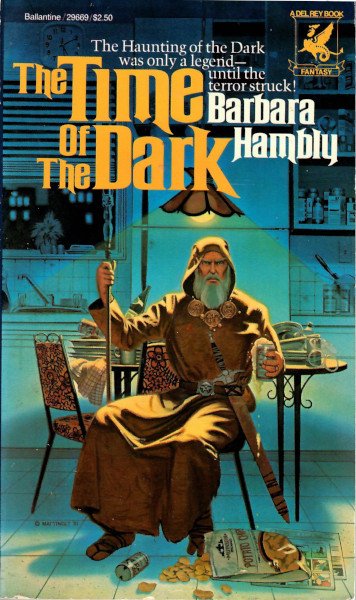
Darwath begins with two modern-day Californians pulled through a portal into a dying medieval world under siege from the Dark, shape-shifting monsters that hunt by night and are driving civilization underground. The Time of the Dark, The Walls of Air, and The Armies of Daylight make up the original trilogy; Barbara Hambly returned to the same characters decades later in Mother of Winter and Icefalcon's Quest. It's portal fantasy built around practical, unglamorous survival rather than chosen-one heroics.
- The Black Magician Trilogy
series3 books2001
part of Kyralia series
similar byfantasysecondary world+3 more
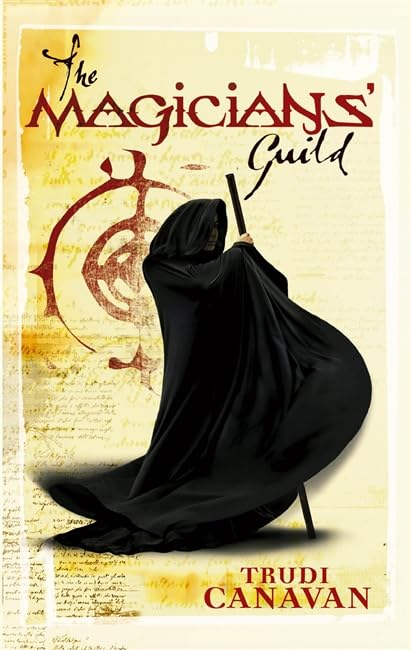
Trudi Canavan's Black Magician Trilogy (The Magicians' Guild, The Novice, The High Lord, 2001-2003) opens in the city of Imardin, where the ruling magicians' guild's annual purge of the slums goes wrong when a street girl named Sonea unknowingly shatters their protective shield with raw, untrained power. The guild must hunt her down and decide whether to control her or train her, and the trilogy follows Sonea's forced initiation into magical society and the guild's internal politics. It's Canavan's best-known trilogy and the founding story of her Kyralia setting.
- The Scholomance
series3 books2020
similar byfantasytensewizardssecondary worldfirst person
The Scholomance Trilogy is a series of three fantasy novels written by American author Naomi Novik. The books follow the adventures of Galadriel "El" Higgins during and after attending a dangerous and magical boarding school for wizards named after the magic school Scholomance from Romanian folklore.
- Sun Wolf and Starhawk
series7 books1984
similar byfantasywizardssecondary worldadventurous+1 more
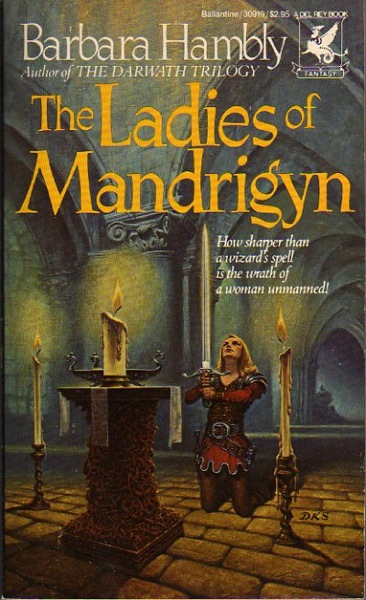
Barbara Hambly's series begins with the city of Mandrigyn conquered and its men enslaved in the mines of the wizard-king Altiokis, forcing surviving noblewoman Sheera Galernas to kidnap the mercenary captain Sun Wolf and press him into training the city's women as fighters. Sun Wolf's partnership with his lieutenant Starhawk carries across The Ladies of Mandrigyn, The Witches of Wenshar, and further volumes as both are drawn deeper into magic neither originally wanted.
- Gentleman Bastard Sequence
series7 books2006
similar byfantasyheistsecondary world+1 more
Scott Lynch's Gentleman Bastard sequence follows Locke Lamora, an orphan-raised master thief and con artist, and his gang of 'Gentleman Bastards' as they run elaborate grifts on the nobility of Camorr, a canal city modeled on Renaissance Venice. The Lies of Locke Lamora and its two sequels braid heist capers with flashbacks tracing how the gang was trained, escalating into a wider conflict involving crime lords and sorcerers. Lynch has planned seven books in total; three have been published so far, with long gaps between installments.
- Dragon Trilogies
series6 books1988
similar bytensefantasysecondary world+1 more
The Dragon Prince and Dragon Star trilogies comprise six connected fantasy novels written by Melanie Rawn. The Dragon Prince trilogy focuses on Prince Rohan of the Desert and his Sunrunner wife, Sioned, while the Dragon Star trilogy focuses on their son, Pol. The Dragon Prince trilogy consists of novels Dragon Prince, The Star Scroll, and Sunrunner's Fire. The books in the Dragon Star trilogy are Stronghold, The Dragon Token, and Skybowl.
- The Lord of the Rings
series13 books1954
part of Tolkien's legendarium
similar bysecondary world+3 more
The Lord of the Rings is an epic high fantasy novel written by the English author and scholar J. R. R. Tolkien. Set in Middle-earth, the story began as a sequel to Tolkien's 1937 children's book The Hobbit but eventually developed into a much larger work. Written in stages between 1937 and 1949, The Lord of the Rings is one of the best-selling books ever written, with over 150 million copies sold.
- Knight's Wyrd
Debra Doyle & James D. Macdonaldstandalone novel1992
similar byfantasytensesecondary worldadventurous+1 more
Will Odosson sets out on a series of dangerous adventures after a wizard predicts that he will meet death before a year has passed.
- Song of the Lioness
series5 books1983
part of Tortall
similar byfantasysecondary worldfirst personadventurous
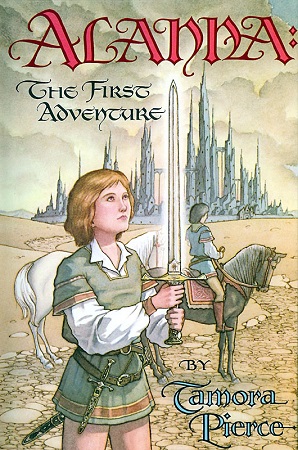
The Song of the Lioness is a young adult series of fantasy novels published in the 1980s by Tamora Pierce. The series consists of four books: Alanna: The First Adventure (1983), In the Hand of the Goddess (1984), The Woman Who Rides Like a Man (1986) and Lioness Rampant (1988).
- Queen's Thief
series41 books1996
similar byfantasysecondary world+1 more
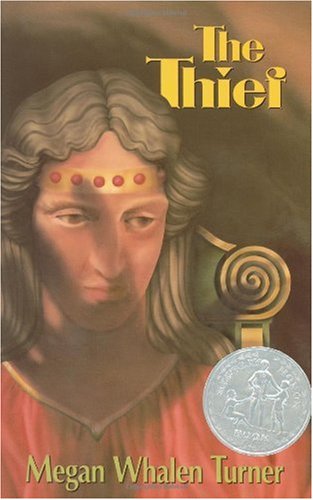
Queen's Thief begins with The Thief, in which a boastful, underestimated young thief is pulled from prison to steal a legendary stone for the king's scholar, only for the story to reveal by its end that its narrator has been playing a much longer game than the reader realized. Megan Whalen Turner's series expands from that single heist into court intrigue and small-scale warfare among a set of Mediterranean-flavored kingdoms, with later books often shifting whose perspective the reader trusts. It's known for close, deliberately withheld narration as much as its plotting.
- Flightless Falcon
Mickey Zucker Reichertstandalone novel2000
similar byfantasysecondary worldadventurous+2 more
From the flaps of the DAW first edition: "Set in a land of scattered rival cities, this is the story of a poignant and dangerous quest, the tale of a man manipulated into a mission against his will in the hopes of regaining the only thing of importance in his life - his family. Tamison had been a miner until the cave-in which killed his brother and father, and left him trapped behind a wall of rubble, cut off from light and life for what seemed like eternity. When he was finally rescued, Tamison was so traumatized by the experience that he was left with a paralyzing fear of venturing underground. With the passing years and the growth of his new family, Tamison was willing to turn his hand to any trade that would feed his wife and children. But in a realm where guilds ruled - and where his own guild could no longer support him - Tamison became more and more desperate as even jobs for unskilled guildless laborers became impossible to obtain. Eventually Tamison was forced to what once would have been unimaginable to him. But he had no other choice. Either he must steal food of see his family starve. Caught in the act, Tamison is sentenced to a chain gang. And when he was finally released, he discovered that his family had vanished. Searching for them, Tamison became so despondent that when a guard named Dallan claimed to know of their fate he was only too ready to listen. And when Dallan said that he, too, had had someone taken by the same villains, Tamison agreed to join forces with him. But before setting out on their quest, Tamison visited a fortune-teller, hoping to be told that his mission would prove successful. Instead of learning about his own destiny, Tamison found himself acquiring a new alley as Rifkah, the fortune-teller, suddenly discovered a pressing need to leave the city. Together the three set out for the rival trading town where Dallan was certain the people they sought were being held. Tamison's initial search had led him into an encounter with a thief, who now seemed determined to attach himself to their group, and the unlikely foursome soon concocted a daring plan to break into the seemingly impenetrable city. Yet even if they succeeded in this venture it might well prove their doom, for gaining entrance to the town did not mean that they would find what they sought - or survive to win free of the place again!"
- A Song of Ice and Fire
series14 books1996
part of World of Ice and Fire
similar byfantasysecondary world+1 more
A Song of Ice and Fire is a series of high fantasy novels by the American author George R. R. Martin. Martin began writing the first volume, A Game of Thrones, in 1991, and published it in 1996. Martin, who originally envisioned the series as a trilogy, has released five out of seven planned volumes. The most recent entry in the series, A Dance with Dragons, was published in 2011. Since then, Martin has been working on the sixth novel, titled The Winds of Winter. A seventh novel, A Dream of Spring, is planned to follow.
- The Imager Portfolio
series12 books2009
similar byfantasywizardssecondary world+2 more
The Imager Portfolio is a 12 book series of fantasy novels by American novelist L. E. Modesitt, Jr. The series is published by Tor Books. The first novel, Imager, was first published in 2009; Endgames, the final volume, was completed in February 2019. The entire series is available in hardcover, mass market paperback, e-book (Kindle), Audible audiobook, and various other electronic formats. Tantor Audio employed William Dufris to narrate the series.
- Tiger and Del
series10 books1985
similar byfantasysecondary worldadventurous+1 more
Jennifer Roberson's fantasy series pairs Tiger, a desert-born sword-dancer from the south, with Del, a Northern swordswoman trained in her own tradition of blade-magic, as reluctant partners across a hostile borderland. Beginning with Sword-Dancer and continuing across six numbered novels, the series follows their partnership, and eventual romance, through decades of adventures and shifting political stakes.